

Welcome to the World’s Coziest Showroom
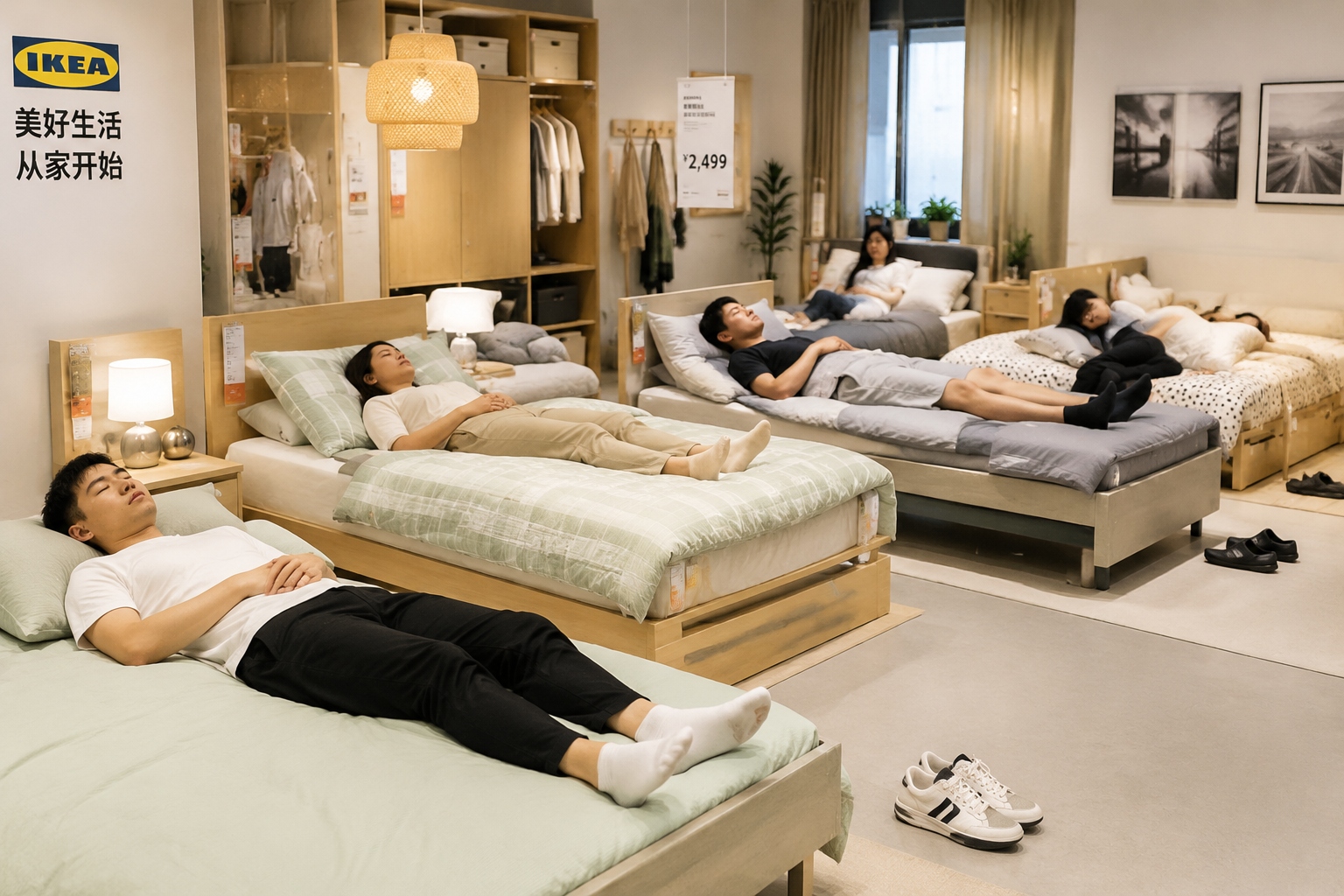
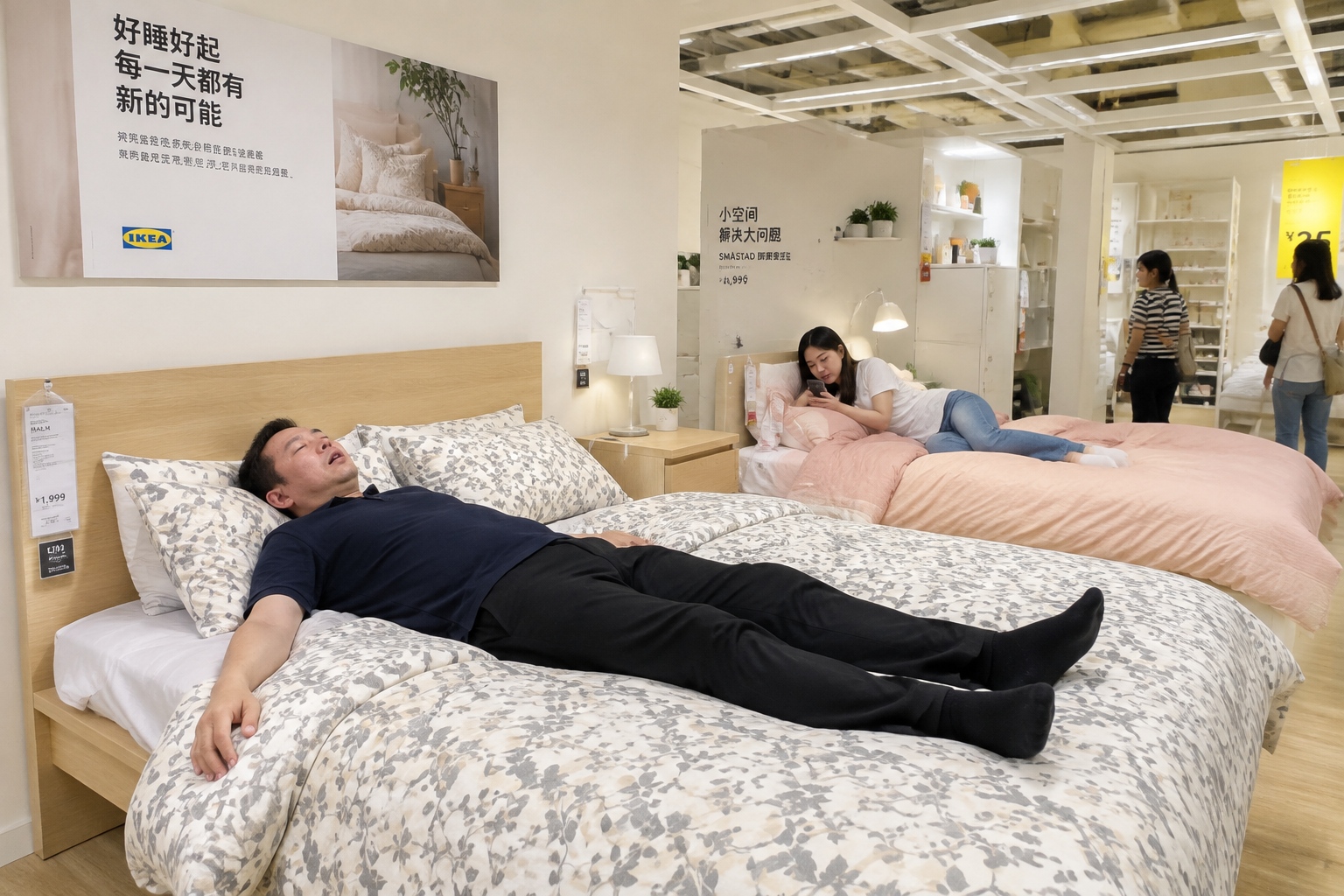
It’s a typical Saturday afternoon at an IKEA store in Beijing. In the bedroom section, a middle-aged man is fully stretched out on a Malm bed frame, snoring softly. Next to him, a young woman has kicked off her sneakers and is curled up under a display duvet, scrolling through her phone. A toddler is bouncing on a nearby mattress while her parents lie on either side, eyes closed, enjoying a moment of peace.
If this sounds like a scene from a surreal sitcom, it’s actually a perfectly normal sight in IKEA stores across China. Visitors don’t just sit on the sofas or test the chairs—they treat the entire store as one giant nap zone. And here’s the twist: the company not only tolerates it, it quietly encourages it.
The Great Chinese Bed Test
Walk into almost any IKEA in China, and you’ll see a range of sleeping positions: the “full supine” (legs straight, hands on stomach, eyes shut), the “fetal curl” (on the side, knees bent, one hand under the pillow), and the “royal sprawl” (arms and legs wide, claiming maximum territory). Some customers even bring their own eye masks and earplugs. One viral video showed a man setting an alarm on his phone, then lying down for a scheduled 20-minute power nap.
This behavior might baffle IKEA shoppers in Europe or the US, where touching the displays is often frowned upon and sleeping would definitely get you a tap on the shoulder from staff. But in China, it’s become a cultural phenomenon—a free, air-conditioned rest stop in the middle of a shopping trip.
Why has IKEA adopted such a laissez-faire attitude? The answer lies in understanding Chinese consumer behavior and the company’s clever localization strategy.
Experience First, Buy Later
In China, shopping is a highly sensory activity. Consumers want to touch, smell, and (apparently) sleep on products before deciding to buy. This is especially true for big-ticket items like beds and sofas, where comfort is key. Unlike Western shoppers who might order a mattress online with just a few reviews, Chinese shoppers often spend hours in showrooms, comparing the firmness of different springs, testing the bounce of various foam types, and yes, taking a real nap to see if the bed truly delivers a good night’s sleep.
IKEA China recognized this early on. Instead of fighting the nappers, they chose to embrace them. The logic is simple: a customer who sleeps comfortably on an IKEA bed for 20 minutes is far more likely to buy it than one who just glanced at the price tag. Besides, those napping customers are walking advertisements—when other shoppers see people sleeping peacefully, they think, “That must be a comfortable bed.”
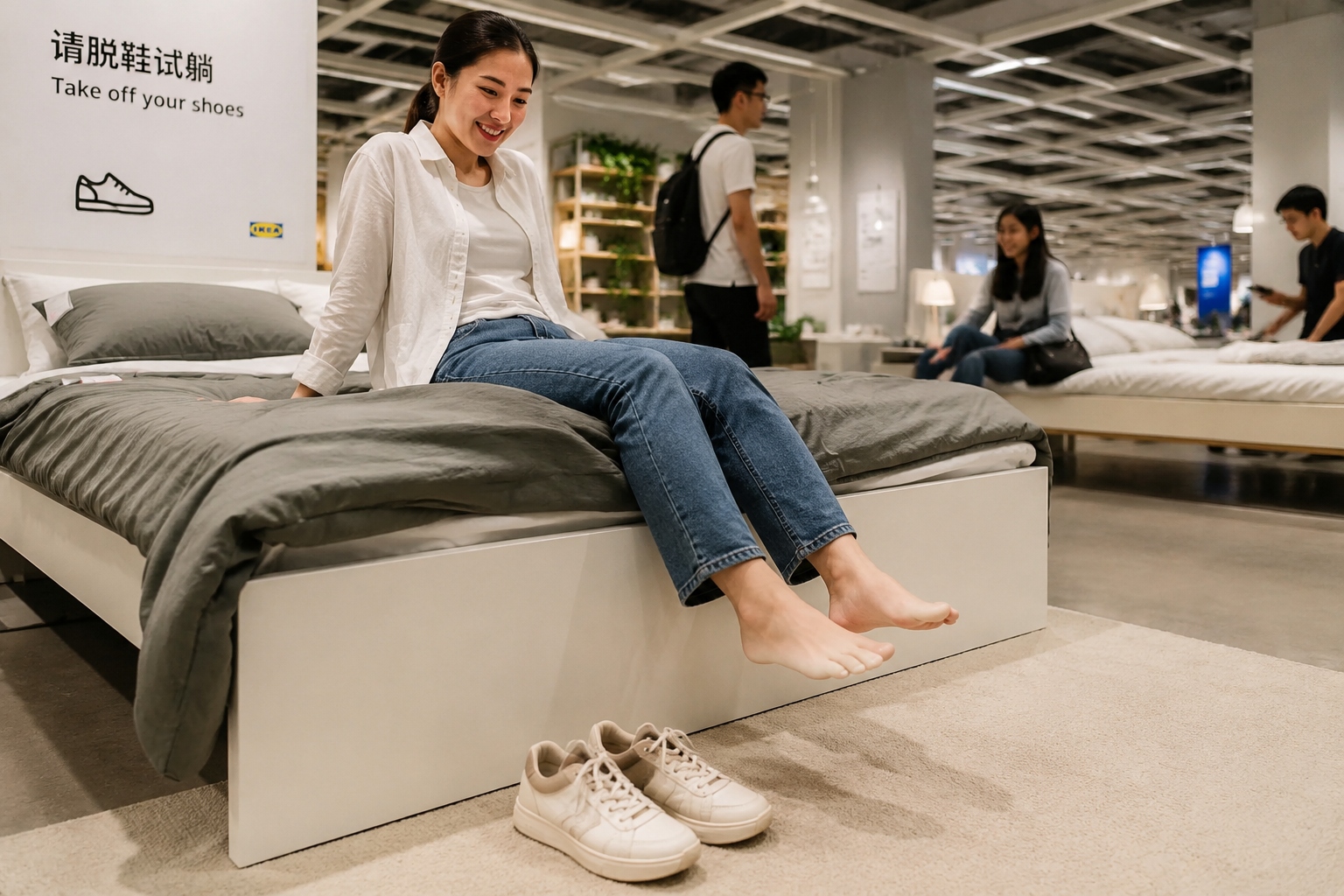
Signs in the store politely ask customers to remove their shoes before lying down, but staff rarely disturb sleepers unless they’re blocking an aisle or have been there for hours. Some stores even provide pillows and blankets, turning the showroom into a quasi-hostel.
Localization: When in China, Do as the Chinese Do
IKEA’s global brand image is about affordable, minimalist design. But in China, the company learned that to win hearts, they had to adapt to local customs. The beds-as-napping-zone policy is one of the most visible examples of this localization.
Another factor: Chinese cities are dense, and many families live in relatively small apartments. Air conditioning is common, but not always used frugally. So an IKEA store—clean, cool, and quiet—becomes an unexpected public refuge. For elderly people who need an afternoon rest, parents with tired toddlers, or shoppers simply exhausted from navigating the sprawling maze of the showroom, the beds offer a welcome break.
IKEA also understands that in China, a store visit is often a family outing. Grandparents, parents, and children all come together. While the parents shop, the kids might play in the children’s section, and the grandparents might take a quick nap. By accommodating all generations, IKEA builds loyalty—and eventually, sales.
In contrast, IKEA in Western countries tends to be more strict. In Germany, for example, staff will politely ask customers not to lie down on beds, as it’s considered unhygienic and disruptive. In the US, the policy varies but generally sleeping is not encouraged. The difference highlights how IKEA tailors its rules to local expectations.
The Psychology Behind the Nap
Chinese consumers place a premium on “real experience.” Online shopping is huge, but for big purchases, seeing is believing—and sleeping is believing even more. Taking a nap on a bed is the ultimate test: does it support your lower back? Does the pillow smell fresh? Is the mattress too soft or too firm? There’s no better way to judge than to actually drift off for a few minutes.
This behavior also reflects a broader cultural attitude toward public spaces. In many Chinese cities, people are used to resting in parks, on benches, or even on the floor in train stations. The IKEA bed is just an upgraded version of a public rest spot. And because IKEA is perceived as a friendly, family-oriented brand, customers feel comfortable enough to relax fully.
Of course, not everyone is thrilled. Some shoppers complain that sleeping customers take up all the display beds, making it impossible to test them. Cleaning crews have to work extra hard to keep the bedding fresh. And occasionally, a slumberer might drool on a pillow cover—gross, but part of the deal. Still, the overwhelming response from Chinese consumers is positive: they love that IKEA trusts them enough to let them nap.
Is This a Good Business Strategy?
From a cold business perspective, allowing sleeping might seem risky: increased wear and tear, higher cleaning costs, potential hygiene issues. But IKEA China data suggests it works. The company has reported strong sales in its bedroom furniture lines, and customer satisfaction surveys often cite the “try-before-you-sleep” experience as a key reason for choosing IKEA.
Moreover, the napping phenomenon has become a viral marketing tool. Social media is full of funny videos and photos of people sleeping in IKEA, which generate free publicity. The story is so unusual that international media have picked it up, giving IKEA China a unique brand image that combines Swedish practicality with Chinese hustle—or rather, Chinese rest.
The Bottom Line: It’s All About Trust
At its core, the IKEA nap policy is a gamble on trust. By treating customers like responsible adults (even when they sprawl across a queen-size bed), IKEA invites them to return the favor. And judging by the crowds in the bedroom section, the strategy is working.
So next time you’re in an IKEA in China and see a row of people snoozing under the spotlights, don’t be surprised. They’re not being lazy—they’re just conducting some very thorough product research. And who knows? Maybe you’ll be tempted to join them. Just remember to take off your shoes.
Start the discussion at forum.chinacomes.com