

A grain of dust that traveled 380,000 kilometers
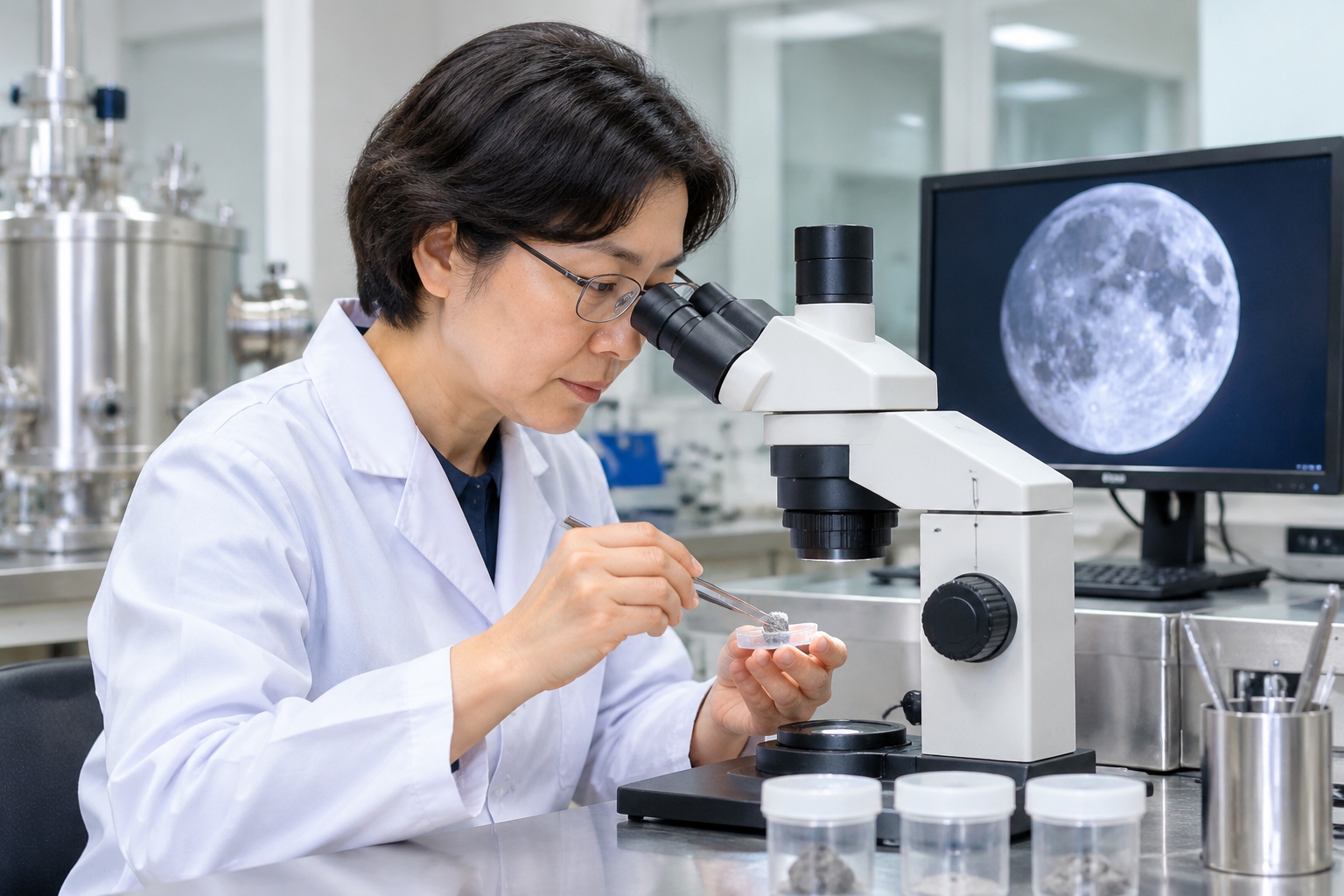
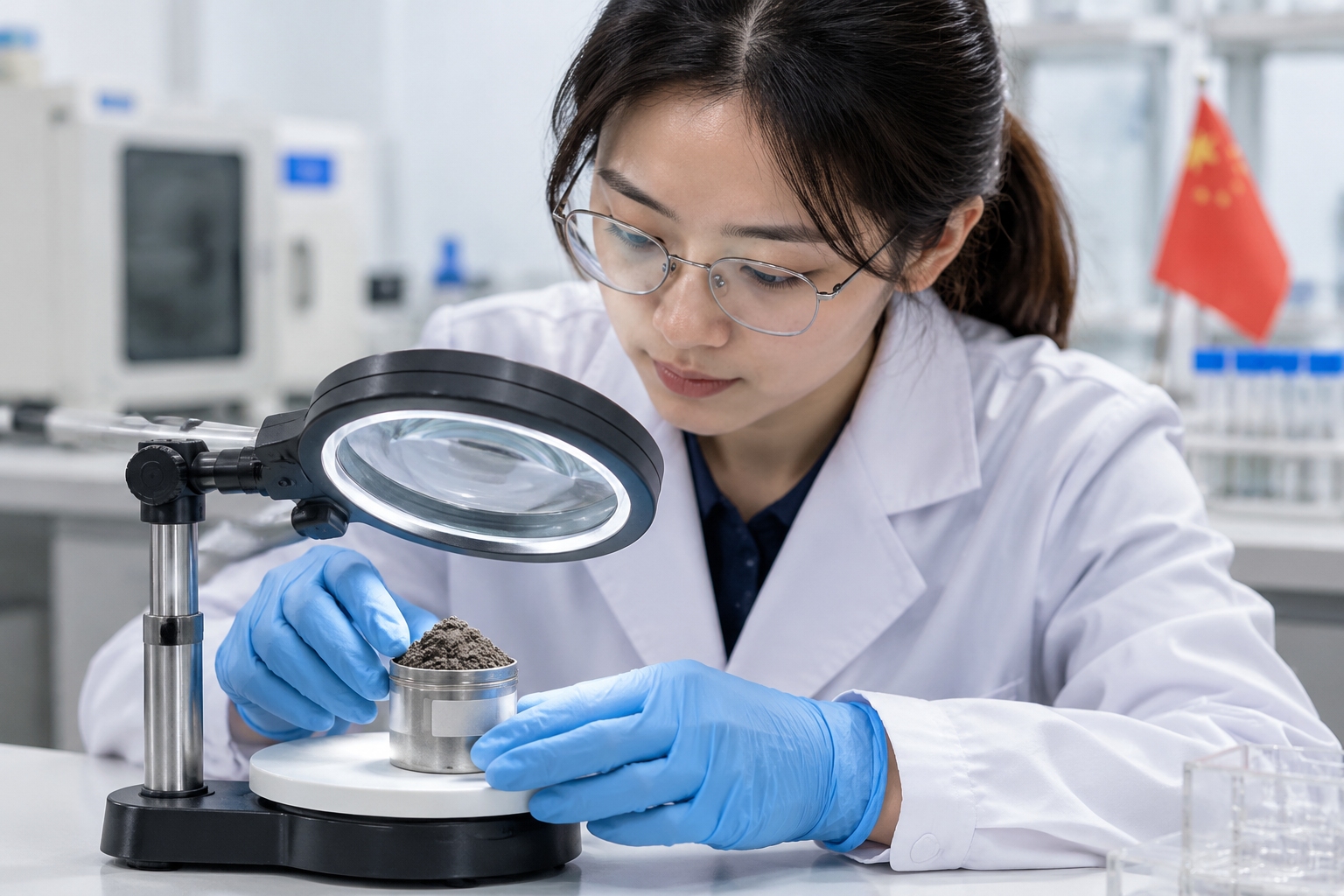
In a clean room in Beijing, Dr. Chen Wei peers through a microscope at a tiny black grain. It is smaller than a grain of rice, but it came from the far side of the Moon. Chen is a planetary scientist at the Institute of Geology and Geophysics, Chinese Academy of Sciences. For months, his team has been preparing to study the samples returned by Chang’e-6, the first mission in human history to bring material from the lunar far side back to Earth.
The grain sits in a sealed container, surrounded by stainless steel and filtered air. To Chen, it is not just a rock. It is a piece of a story that began 4.5 billion years ago and took a 1.9-kilogram capsule to deliver.
The mission: a round trip to the hidden side
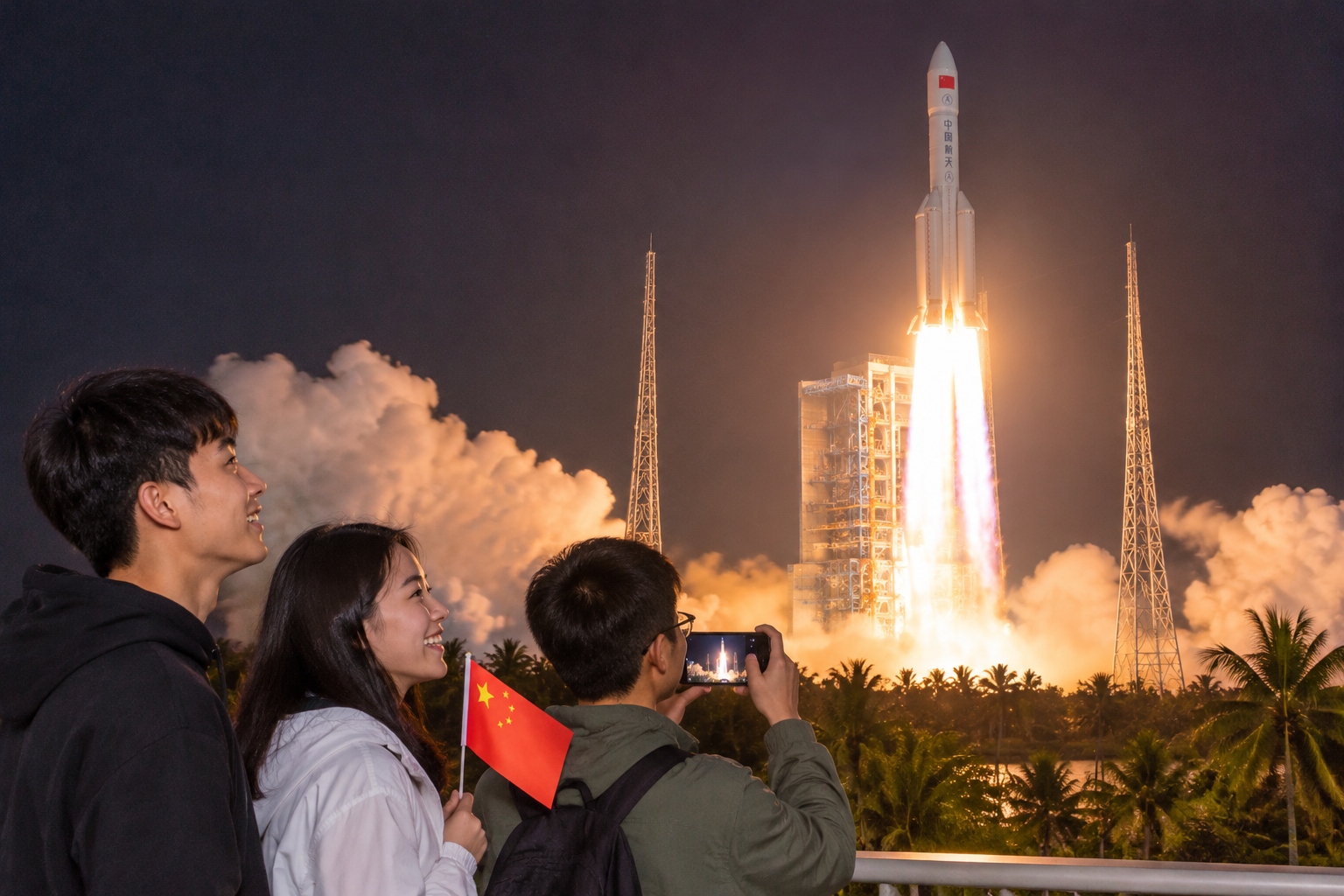
Chang’e-6 launched on May 3, 2024, from the Wenchang Space Launch Site in Hainan Province, China. The spacecraft entered lunar orbit five days later. On June 2, its lander touched down in the Apollo crater, inside the South Pole-Aitken Basin—a vast impact structure on the far side that is one of the largest in the solar system. The lander used a scoop and a drill to collect surface and subsurface material. An ascender then lifted off from the Moon, carrying the samples to a waiting orbiter. The returner separated and brought the capsule back to Earth, landing in Siziwang Banner, Inner Mongolia, on June 25. The total haul: 1,935.3 grams.
Because the Moon is tidally locked to Earth, the far side never faces us directly. Radio signals cannot pass through the Moon, so the mission relied on the Queqiao-2 relay satellite, which had been placed in a special orbit earlier in 2024 to maintain communication with the lander and ascender. The mission also carried international payloads from France, the European Space Agency, Italy, and Pakistan, a reminder that lunar exploration is increasingly a shared endeavor.
Why the far side is not the “dark side”
People often call the far side the “dark side,” but that is a misunderstanding. The Moon’s far side receives just as much sunlight as the near side. “Dark” here means “unseen from Earth,” not “without light.” The far side looks different: it has a thicker crust, fewer dark plains of basaltic lava (called maria), and more craters. The near side, by contrast, is dominated by large maria that give the Moon its familiar “face.”
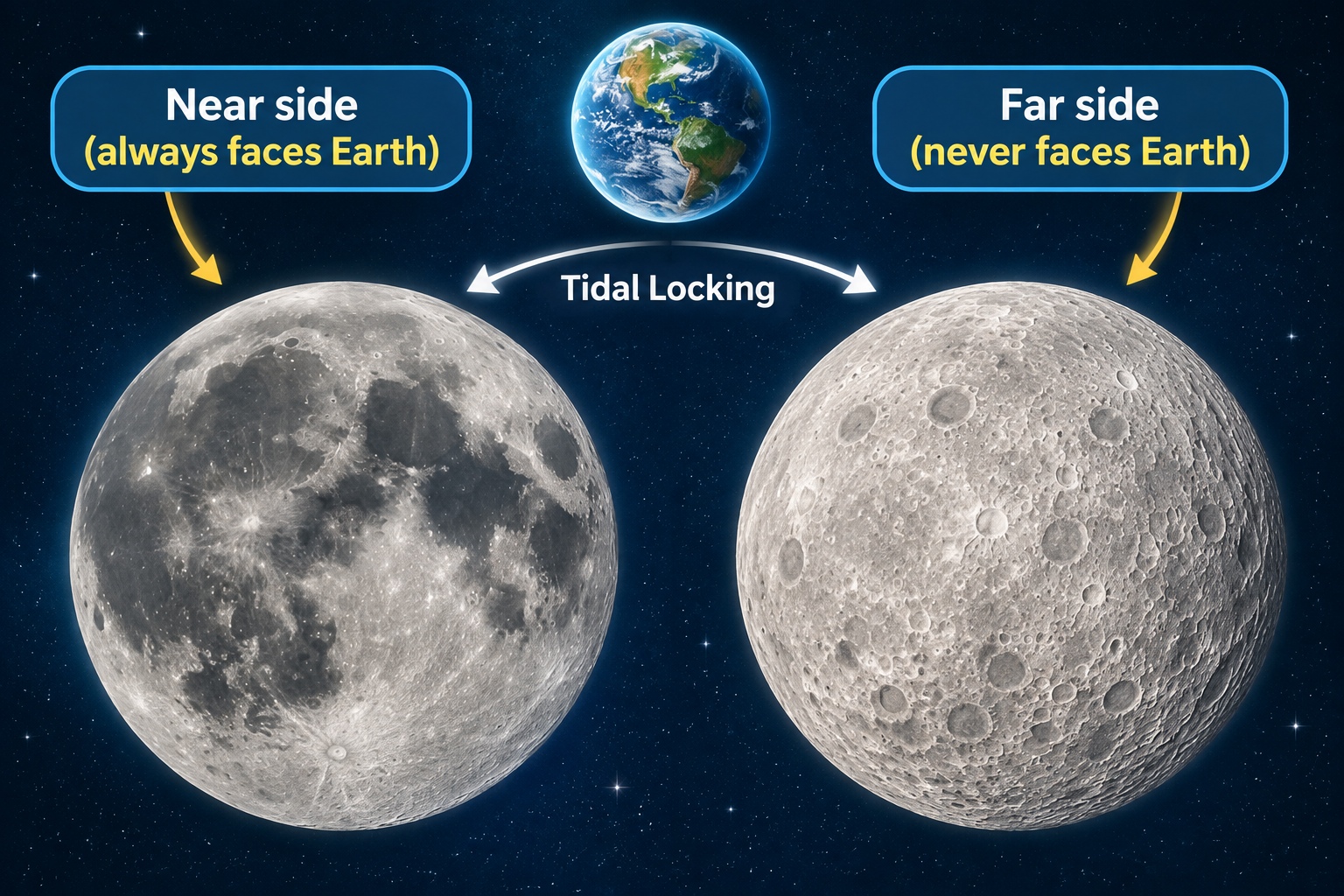
This asymmetry has puzzled scientists for decades. Why are the two hemispheres so different? Samples from the far side are essential to answering that question. Before Chang’e-6, all lunar samples returned by Apollo, Luna, and Chang’e-5 came from the near side. The far side remained a blank spot on the map.
What the samples have revealed
The first papers based on Chang’e-6 samples began appearing in late 2024. Two findings stand out: a weakened ancient magnetic field and a surprisingly dry mantle.
A magnetic field that had already faded
Some of the basalts collected by Chang’e-6 are about 2.8 billion years old. By analyzing the magnetic signals trapped in these rocks, researchers can reconstruct the strength of the Moon’s magnetic field at that time. The results show that the field was weak—on the order of a few microtesla, far weaker than Earth’s current field of about 50 microtesla. This suggests that the lunar dynamo, the mechanism that generated the field, had already declined significantly by 2.8 billion years ago.
This is important because the Moon’s magnetic field history is still poorly understood. Previous data from near-side samples hinted that the field may have persisted longer or even strengthened at times. The far-side samples provide a new data point from a different location, helping scientists build a more complete picture of how the lunar core evolved.
A dry mantle
Water in the Moon’s interior is another hot topic. Studies of Chang’e-6 basalts indicate that the mantle source beneath the far side was extremely dry—water content on the order of a few parts per million, much lower than many near-side samples. This challenges the idea that the lunar mantle is uniformly wet. It also raises questions about how water is distributed inside the Moon and how that distribution affects volcanic activity and the Moon’s thermal evolution.
Together, these findings are not just about the Moon. They help us understand how rocky planets form and evolve, and how a small body like the Moon can preserve a record of processes that have long vanished from Earth.
How scientists study the samples
Back in Beijing, Dr. Chen’s team works in a clean room that is kept at positive pressure, with filtered air to prevent contamination. The samples are first examined non-destructively using techniques like X-ray computed tomography and electron microscopy. Then, small portions are extracted for destructive analysis, including radiometric dating and chemical and isotopic measurements.
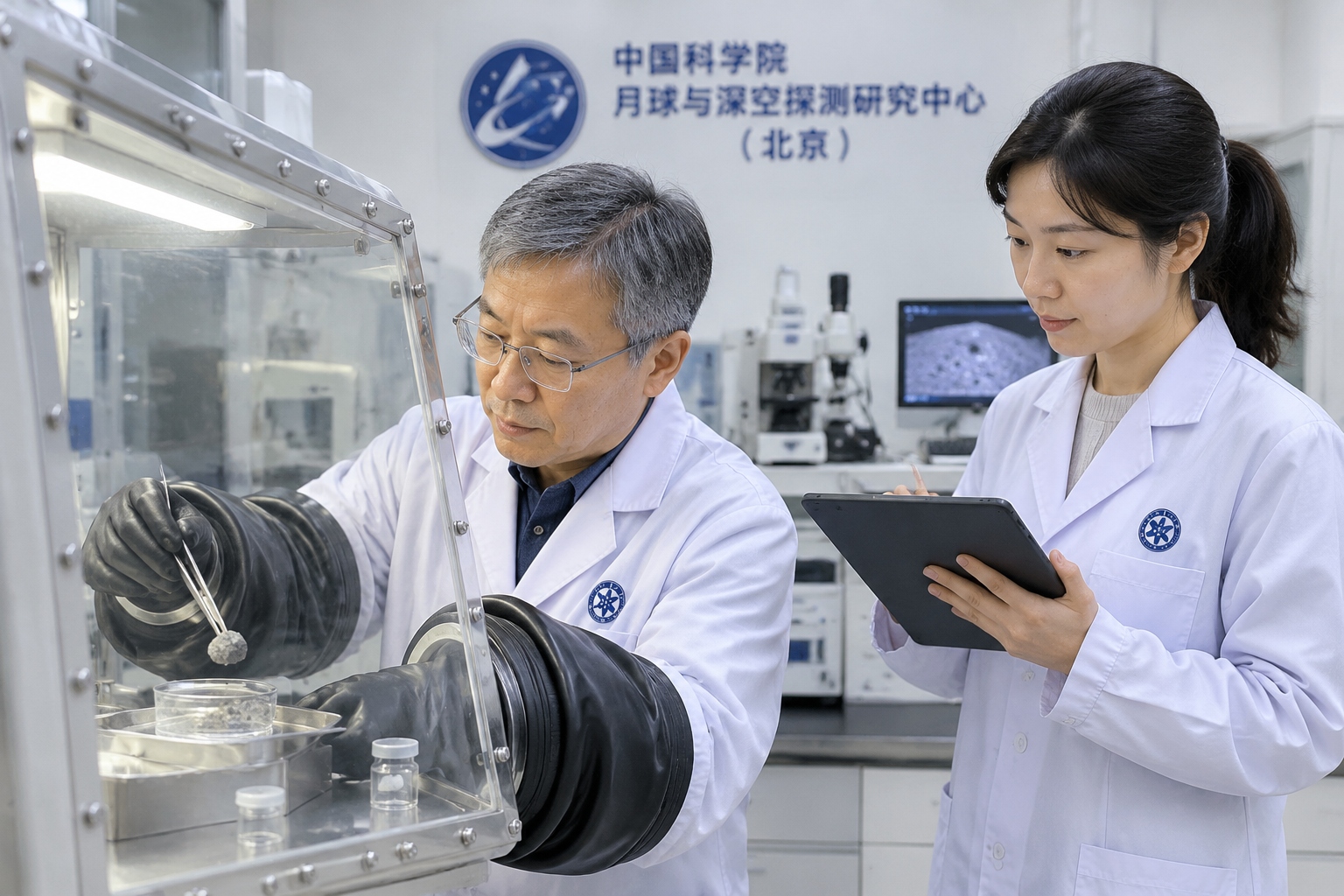
Age dating is crucial. By measuring the ratios of radioactive isotopes and their decay products, scientists can determine when the basalts crystallized. The Chang’e-6 samples yield ages around 2.8 billion years, filling a gap between the older Apollo samples (3 to 4 billion years) and the younger Chang’e-5 samples (about 2 billion years). This helps calibrate the crater-counting method used to date surfaces across the solar system.
Comparing near-side and far-side samples is equally important. Why does the near side have more maria? Why is the crust thicker on the far side? The samples provide ground truth for remote sensing data and help test models of lunar evolution.
Why it matters for future exploration
The far side is not just a scientific curiosity. It is a promising location for future radio astronomy, because it is shielded from Earth’s radio interference. Understanding the far side’s geology and resources—including the presence of water ice in permanently shadowed polar craters—will be essential for long-term human presence on the Moon.
China’s upcoming Chang’e-7 and Chang’e-8 missions will target the lunar south pole, and the International Lunar Research Station (ILRS) is planned for the 2030s. The knowledge gained from Chang’e-6 samples will inform those efforts. The samples are also being shared with international scientists, following a process of application and review, a sign that lunar science is becoming more collaborative.
The view from a microscope
Dr. Chen places the grain back into its container. He says the sample is small, but the questions it answers are large. “Every grain has a story,” he says. “We are just beginning to read it.” For the first time, that story includes the far side of the Moon—a place that, until now, we could only see from a distance.