
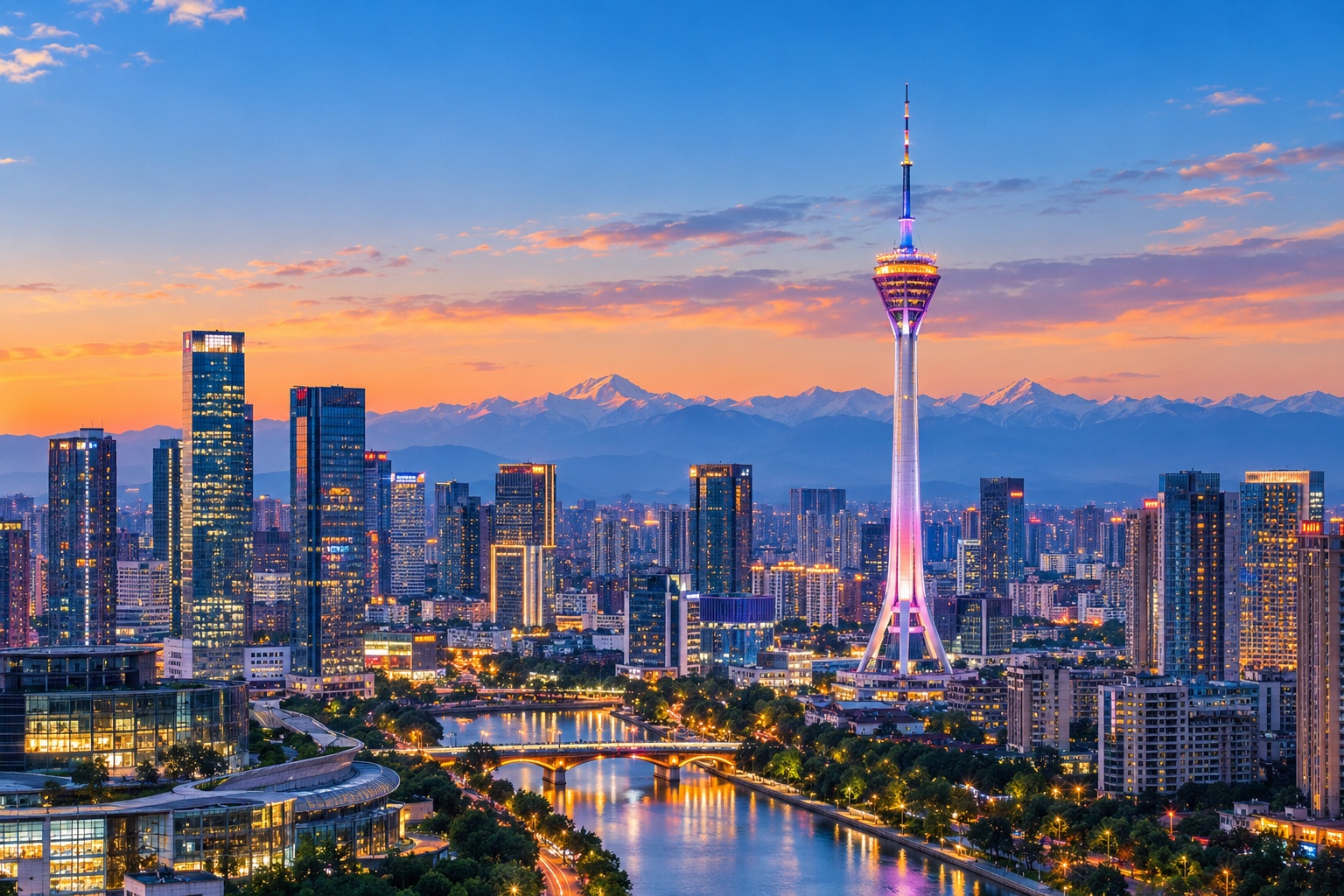

Why Chengdu Surprises First-Time Business Visitors
You land in Chengdu expecting a laid-back city of teahouses and giant pandas. You are right — but not completely. The taxi from Tianfu International Airport glides through broad avenues lined with glass towers. Inside one of those towers, engineers at Tencent and Huawei are debugging cloud systems and AI models. Outside, a group of retirees practice sword tai chi in a riverside park. That contrast is exactly why Chengdu matters today.
For international business travelers, Chengdu is not just a place to see pandas and eat hot pot. It is a fast-growing tech hub, an inland logistics gateway, and China’s most livable mega-city. Understanding this city means understanding how China’s development is no longer only a coastal story.

Meet the Pandas Up Close — Without the Crowd
The Chengdu Research Base of Giant Panda Breeding, usually called the Panda Base, is about a 30-minute drive from downtown. Go early. The pandas are most active in the morning, especially when they are fed bamboo or play with enrichment toys. If you arrive after 10 a.m., you will likely find them napping in the trees — which is adorable in photos, but not exactly a moving encounter.
The base is not a zoo in the traditional sense. It is a breeding and research center with a naturalistic landscape of bamboo groves and gentle hills. You follow winding paths through different enclosures. Red pandas, smaller and fox-like, often wander close to the railings. The visitor center explains conservation efforts clearly, so you leave with a genuine understanding of how China is working to protect its national symbol.
For a business traveler with a tight schedule, you can do a focused visit in two and a half hours. Hire a golf-cart shuttle inside the park to save time. And if you want to see panda cubs, plan around August to October, the peak breeding season.
Kuanzhai Alley and Jinli: Where Old Chengdu Still Lives
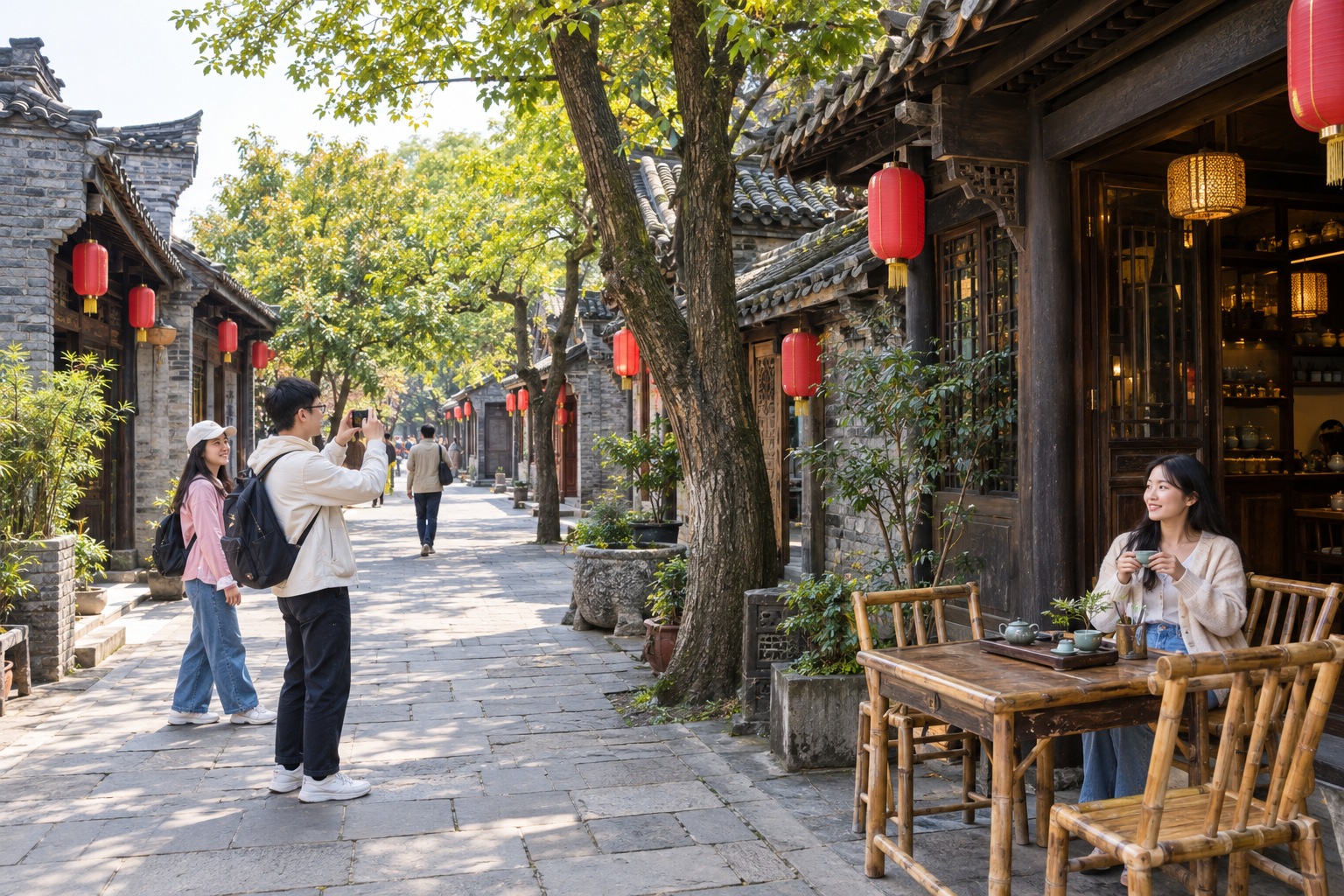
After the panda base, set aside an afternoon to walk through Kuanzhai Alley (宽窄巷子). It is actually three parallel streets: Kuan Zhai Zi, Zhai Zhai Zi, and Jing Zhai Zi. They were built during the Qing Dynasty, about 300 years ago. The reconstruction preserves the old courtyard houses, but the interiors have been turned into trendy cafes, boutiques, Sichuan opera stages, and design stores. Yes, it is touristy. But it remains a good place to absorb the rhythm of Chengdu life: friends gathering for tea, couples taking photos in traditional dress, and street musicians playing folk songs.
Jinli, near the Wuhou Shrine, is older in style but more commercial. It is a narrow lane of red lanterns, puppet shows, and food stalls serving spicy jelly, sweet rice wine balls, and Sichuan-style skewers. For a business visitor, Jinli is best in the evening, when the lanterns glow and the crowds feel festive rather than suffocating. Order a bowl of dandan noodles, stand at a small table, and you’ve tasted local street food without a formal dinner commitment.
Why do these places matter for a business trip? Because Chinese colleagues often bring guests here. If you already recognize the architecture and know the history, you will feel more confident in conversation. You can even suggest a teahouse for an informal chat instead of a formal meeting room.
Sichuan Hot Pot: The Social Philosophy of a Boiling Pot
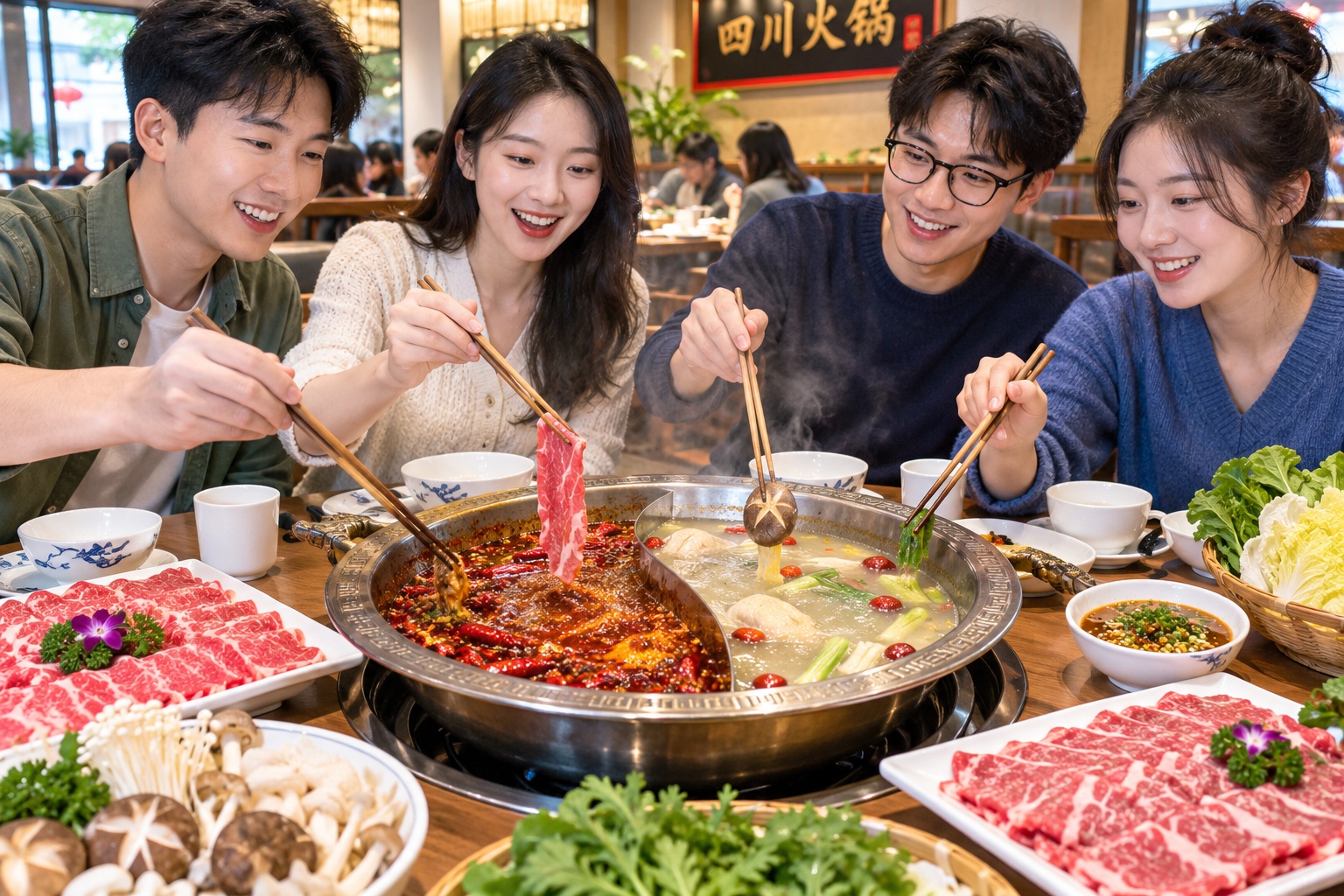
No visit to Chengdu is complete without hot pot. The local style is famous for its numb-and-spicy (麻辣) broth, seasoned with Sichuan peppercorns and dried chilies. A red pot boils in the center; raw ingredients — thinly sliced beef, beef tripe (maodu), lotus root, mushrooms, and greens — are cooked at the table. It is not rare to share a table with strangers in larger restaurants, especially in a crowded lane when there are no seats. That is the point: hot pot breaks down formal distance.
Western visitors may be surprised that hot pot is not a meal but a long social event. People joke that the length of a hot pot dinner reflects the closeness of a relationship. If you are on a business trip, do not schedule anything right after. Let your host pour you tea and introduce you to the traditional dipping sauce — a mix of sesame oil, minced garlic, and vinegar to cool the spice.
A quick tip: when you order, choose a yuanyang (鸳鸯) pot, which splits the broth into spicy and mild chicken or mushroom stock. That way you can control your heat level while still tasting the authentic side. Also, many local restaurants serve a cold dessert like bingfen (ice jelly) or rice cakes to balance the spiciness.
The Rise of a Tech Hub: Why Chengdu Is More Than a Tourist City
Travelers often ask: why is Chengdu becoming a tech hub? The short answer is cost, talent, and government policy.
Starting around 2010, the Chinese government pushed to develop the country’s western regions, encouraging companies to set up operations far from the expensive coastal cities. Chengdu benefited from relatively low office rents, a large pool of university graduates, and better-than-average living quality. Today, it hosts dozens of global innovation centers.
Intel’s Chengdu facility is one of its largest assembly and test sites in the world. It has been running since 2003, packaging and testing microprocessors that are shipped globally. Huawei, the telecom giant, has a major research center here focused on storage, cloud computing, and wireless technology. Tencent, the company behind WeChat, chose Chengdu for its western headquarters. Its campus houses teams working on online games, artificial intelligence, and digital culture. The games industry, in particular, has grown naturally here: the successful game “Honor of Kings” was developed in Chengdu by Tencent’s TiMi Studio.
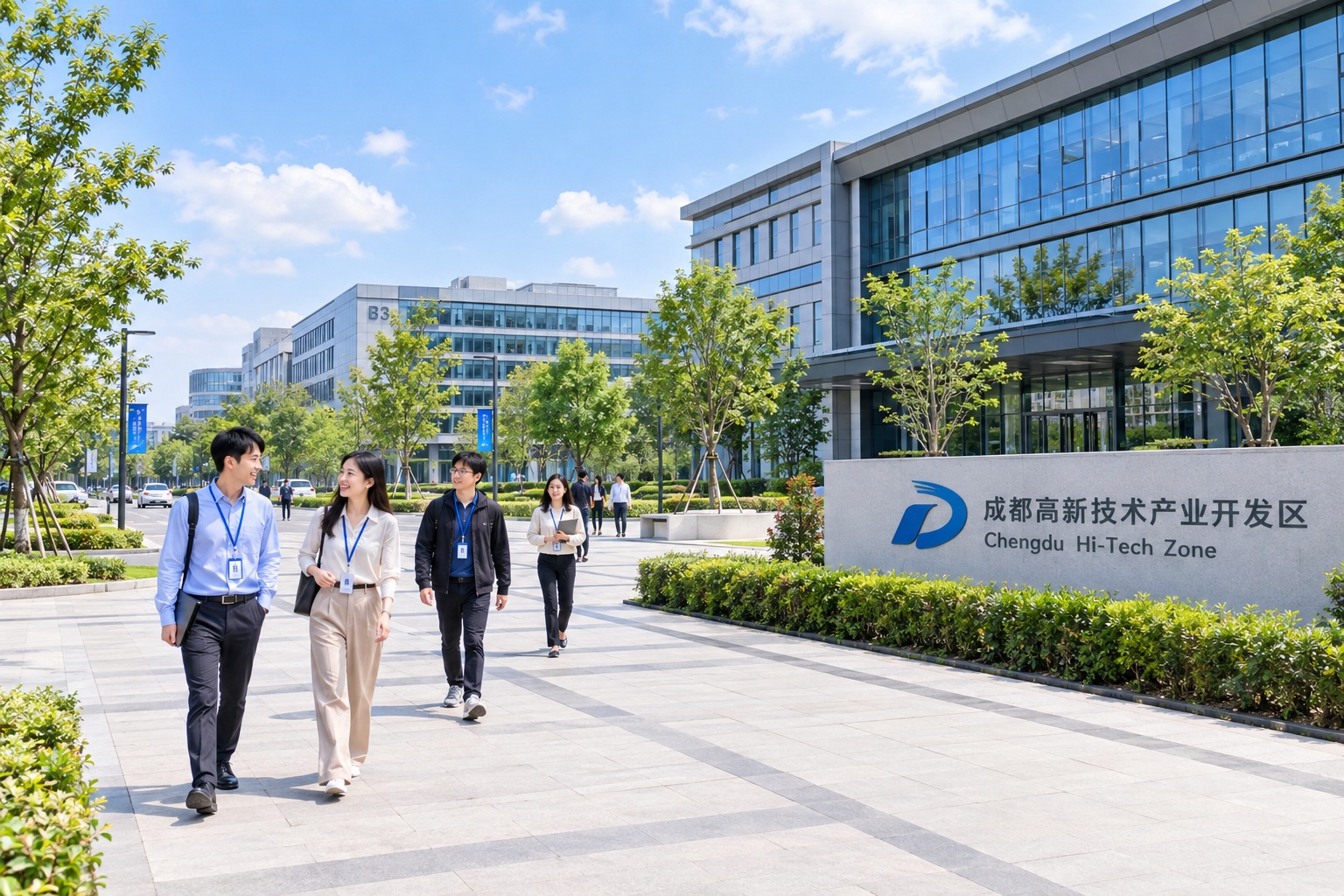
There are also homegrown companies in the biomedical and livestreaming sectors. The Chengdu Hi-tech Industrial Development Zone is the primary engine, attracting foreign engineers, product managers, and supply-chain specialists. If you are coming for a site visit, odds are your host will arrange a trip to this district. It does not look exotic — just modern glass buildings and broad sidewalks. But seeing it helps you recalibrate your image of China’s interior.
Headquarters Effect and the Landing-Base Logic
Why set up a western headquarters here instead of just opening a small office?
First, Chengdu sits at the middle of China’s geography, but it is also the anchor of the Chengdu-Chongqing economic circle. This region has around 100 million people. Airlines connect it to nearly every major Asian city, and since Tianfu International Airport opened in 2021, Chengdu has become one of the few Chinese cities with two international airports. That is a sign of how much demand there is for quick business travel.
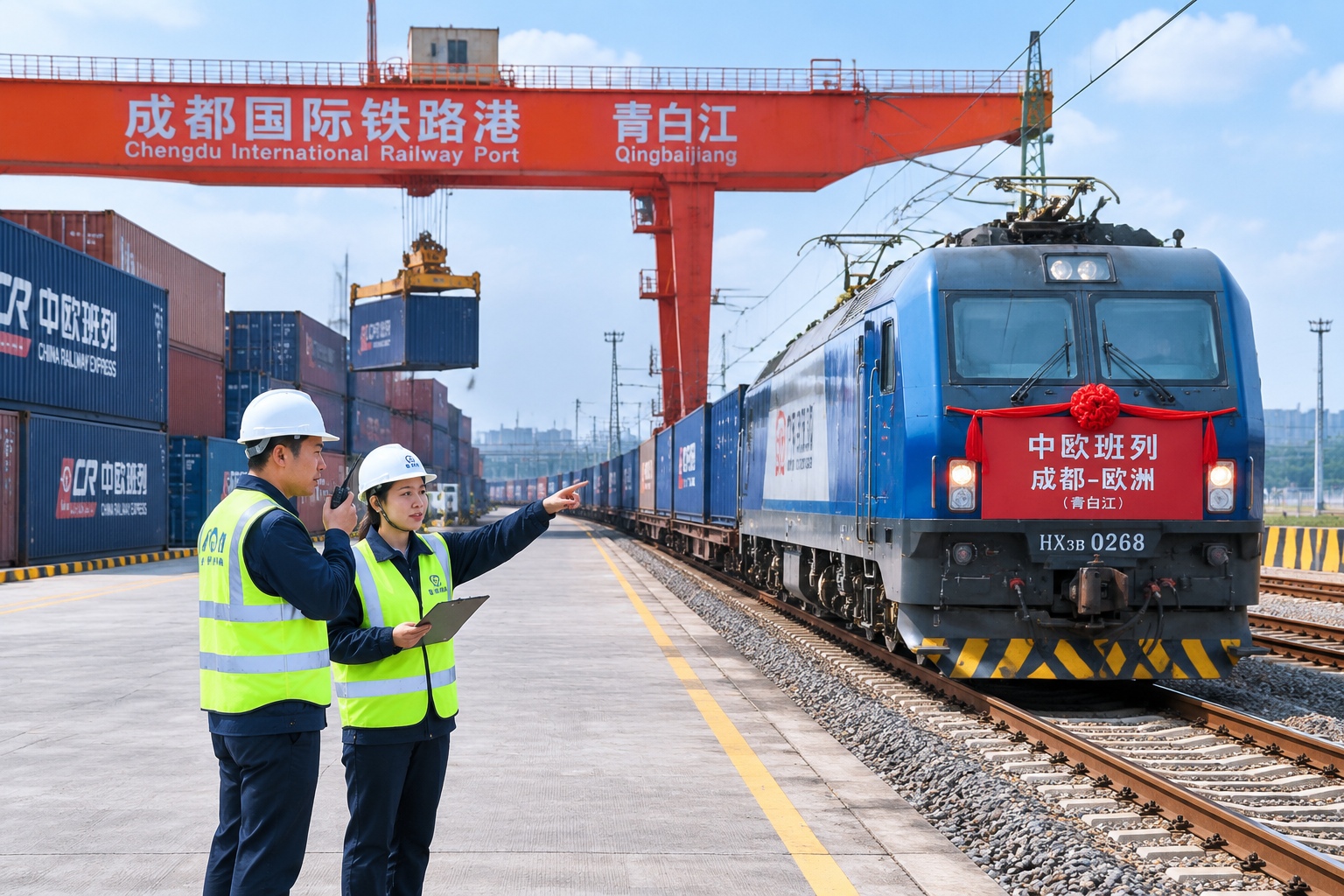
Second, the China Railway Express to Europe passes through Chengdu. Freight trains reach Lodz in Poland, Duisburg in Germany, and other destinations in 10–15 days. This makes Chengdu a useful place to handle cross-border logistics for e-commerce and manufacturing.
Third, talent from the local universities stays because the cost of living is much lower than in Shanghai or Shenzhen. A software engineer who would struggle to buy an apartment in Shenzhen can afford a comfortable home in Chengdu. That creates a stable workforce with lower turnover — a big selling point when you present the city to your overseas board.
How to Combine Business with Leisure: A Sample Itinerary
If you are coming to Chengdu for a trade visit or a conference, here is a balanced way to allocate two days:
Day 1: Orientation, Panda Base and Relaxed Dinner
Arrive the day before, sleep early. The next morning at 7:30, leave for the Panda Base before rush hour. Spend until 10:30 watching pandas feed. Then return to the central city and walk through Kuanzhai Alley before lunch. For lunch, duck into a small restaurant and order local snacks instead of a full banquet. In the afternoon, if you have time, visit the Chengdu Museum to understand the city’s 2,000-year history. In the evening, join your local business contacts for hot pot. Let them lead the conversation; hot pot is an excellent way to break into a comfortable relationship.
Day 2: Tech District and Logistics Viewing
Book a morning visit to the Hi-Tech Zone. If your connection permits, companies such as Tencent or Intel may allow a short campus tour. Otherwise, simply walk around the area to get a feel. Then in the afternoon, head to the Chengdu International Railway Port in Qingbaijiang, about 30 kilometers from the city center. You can see containers being loaded onto trains bound for Europe. This is a relatively unknown tour, but it makes the “inland gateway” concept concrete. End with a relaxed evening at Jinli, tasting street food and listening to opera.
Useful small notes
Here are a few things business travelers often overlook:
- Download the apps Amap (Maps) and WeChat before you arrive. Many local companies use these as their daily work tools, and you can even make payments with WeChat Pay once activated.
- Request an English-speaking driver through your hotel if your Chinese is limited. Taxis are cheap, but ride-hailing apps in English can still be tricky because the interface is mostly Chinese.
- Carry business cards with both English and Chinese sides. China still values the etiquette of exchanging cards, and Chengdu is no exception.
- If you like tea, buy local “Biluochun” or plain jasmine tea from a trusted shop, not from random street stalls.
In a way, Chengdu teaches you this lesson: China’s economic rise is not only about exporting from coastal ports. It is also about interior cities building their own ecosystems, and a culture that warmly invites you to make friends over a boiling pot and a shared skyline.
Start the discussion at forum.chinacomes.com