
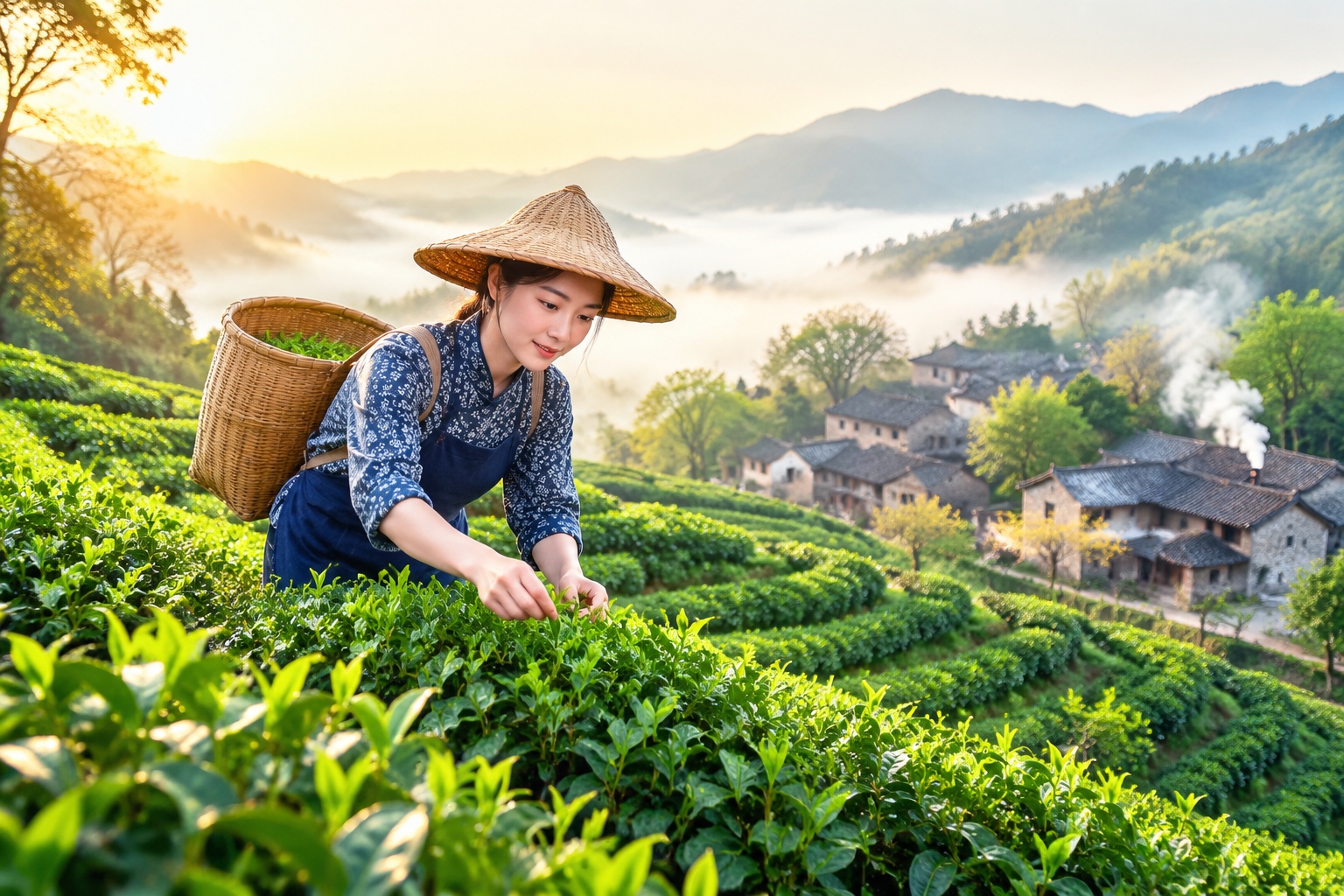

Morning in Hangzhou’s Longjing Tea Village
The first thing I noticed was the smell—wet soil, spring grass, and a thin thread of smoke rising from a stone farmhouse. The tea terraces above the village of Longjing were steep and tightly packed, their leaves shining after an early shower. A woman in a straw hat moved slowly down a row, snapping off fresh shoots with the quick pressure of her fingers. She opened her palm to show me the harvest: two small leaves and a bud, glossy with moisture.
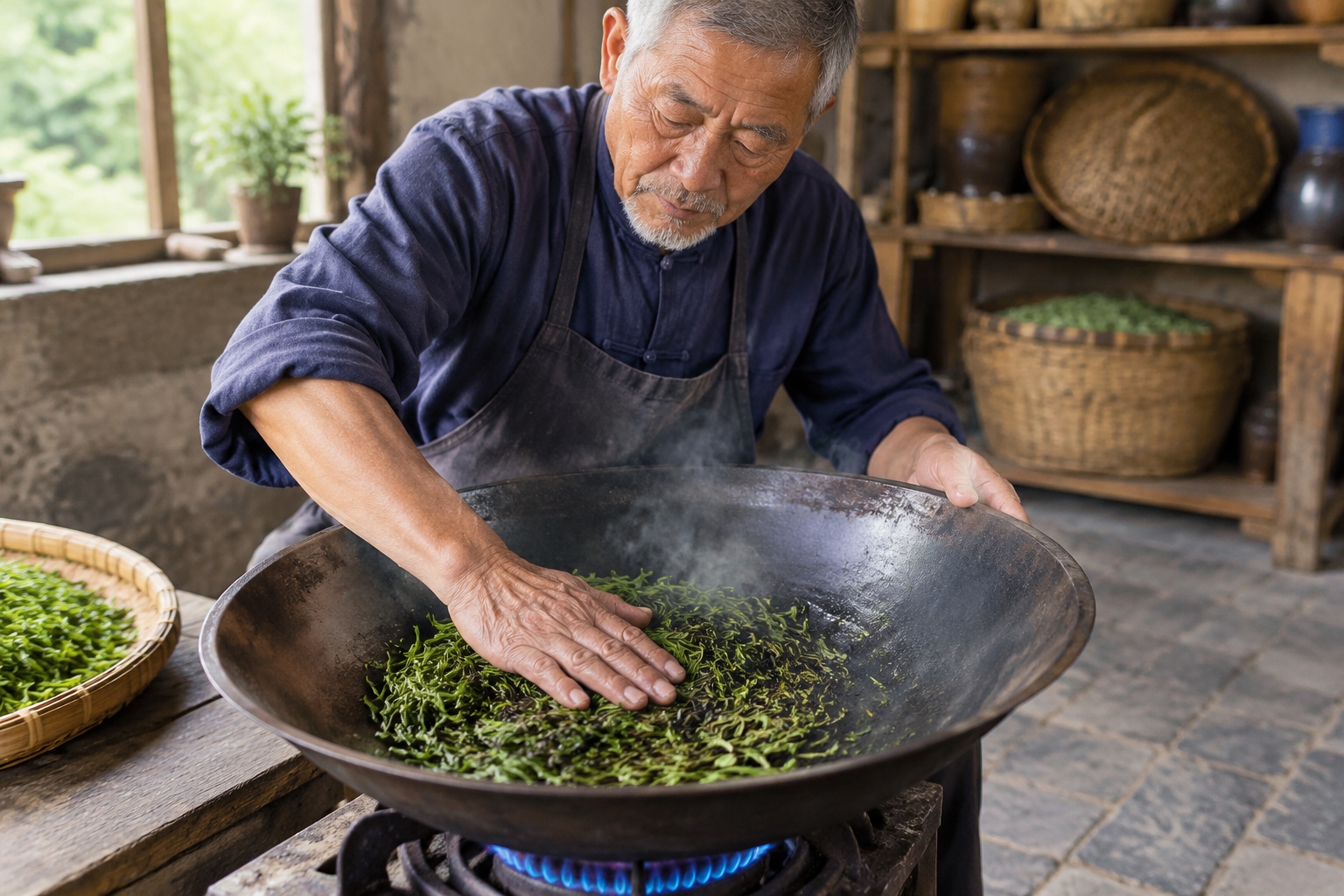
In late March and early April, the village picks before the Qingming Festival arrives. The tea harvested in this short window is called mingqian tea, and local growers believe it has a purer flavor. Behind the houses, tea workshops are heated with gas flames, where men like Wu bend over iron woks. Wu is 58 years old and has been frying Longjing since he was a teenager. He pressed a pile of tea leaves against the burning metal with his bare palm, lifting, shaking and pressing them in an unbroken rhythm. “Watch the wrist, not the heat,” he said. “You can measure with a thermometer, but your hand knows the moment.” When he finally brewed a cup, the color was pale green, and the taste left a sweet chestnut warmth at the back of the throat. That moment, I understood why a handmade leaf is still hard to replace.
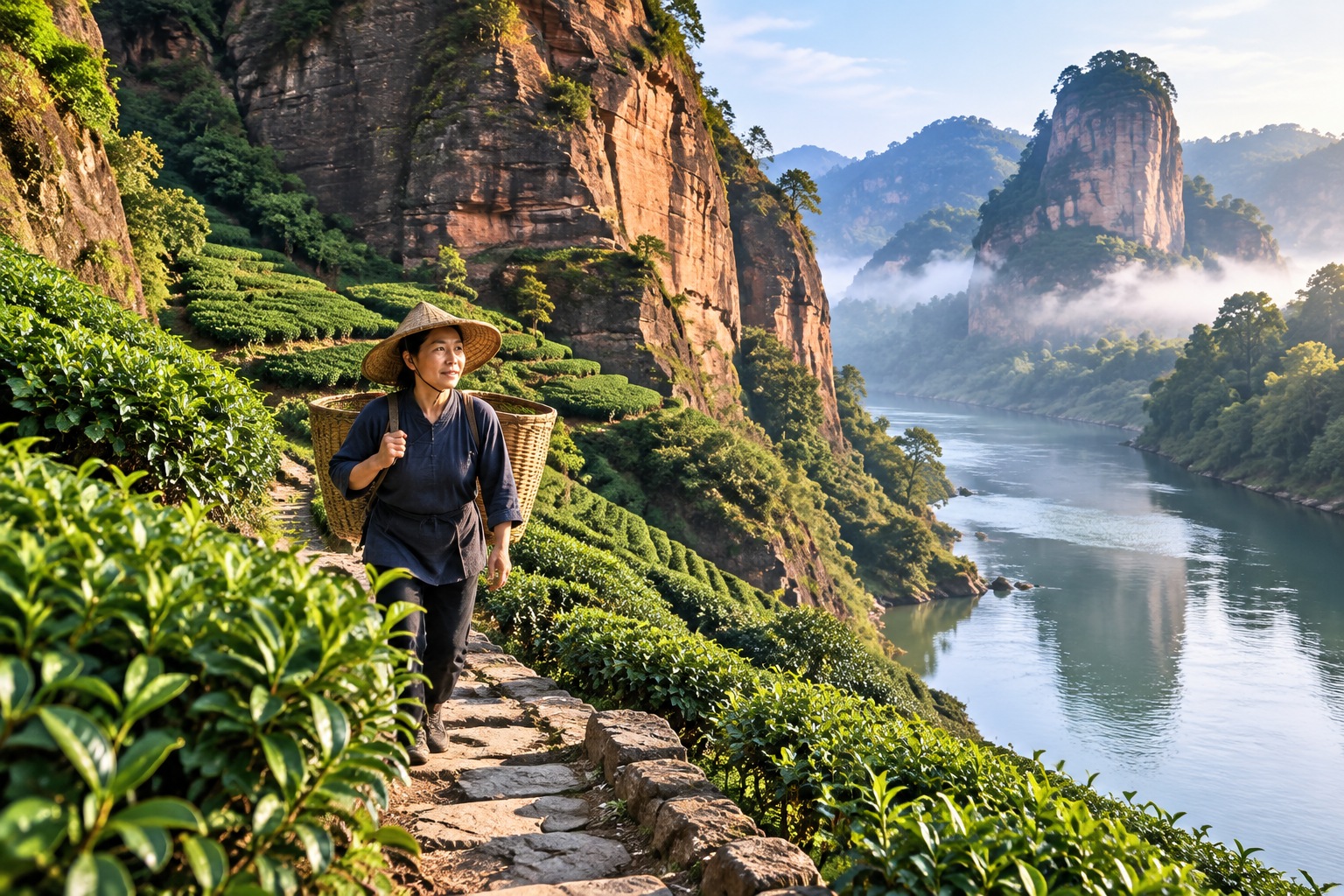
Wuyishan: Tea That Grows in Rock
From Hangzhou I headed southwest to Fujian, where the landscape turns from soft green hills to dramatic sandstone cliffs. The road to Wuyishan narrows between walls of stone, and tea gardens appear in narrow clefts, high on ledges, sometimes directly on the mountain face. Local tea growers call their oolong rock tea, yancha, because the roots push through soils mixed with broken rock and absorb minerals in the process. The result is a flavor you can almost feel as a texture.
I spent an afternoon with Lin, a young tea maker who rents a small plot up a dirt path. He bent down and picked a few dark leaves, letting me crush them between my fingers. They gave off a spicy, slightly metallic scent. Back at his home, he brewed a stream of infusions on a wooden table. The tea was dark, reddish-brown and tasted of stone, roasted grain and sweet smoke. “Same bush, two hundred meters from here, may taste different,” he said. “In Wuyishan we care about shanchang, the mountain location. It matters more than the name.”
I asked about Da Hong Pao, the legendary “Big Red Robe.” Lin laughed. He said that real Da Hong Pao from the six mother trees is no longer sold; those trees are protected. Almost everything labeled Da Hong Pao is a blend or from descendants. “Some tourists want to see the legend, but tea doesn’t need a legend,” he said. “It needs hot water and a fair cup.”
Pu’er: A Tea That Finds Its Value in Time
Yunnan is a different chapter of the tea story. The gardens look like wild rainforest, with ancient tea trees taller than houses, their trunks wrapped in moss and vines. A young woman from the Dai minority, Yajie, led me through one plantation, pointing out trees that her great-grandparents once picked. She chose a pale green bud and let me chew it slowly: bitter at first, then increasingly sweet.
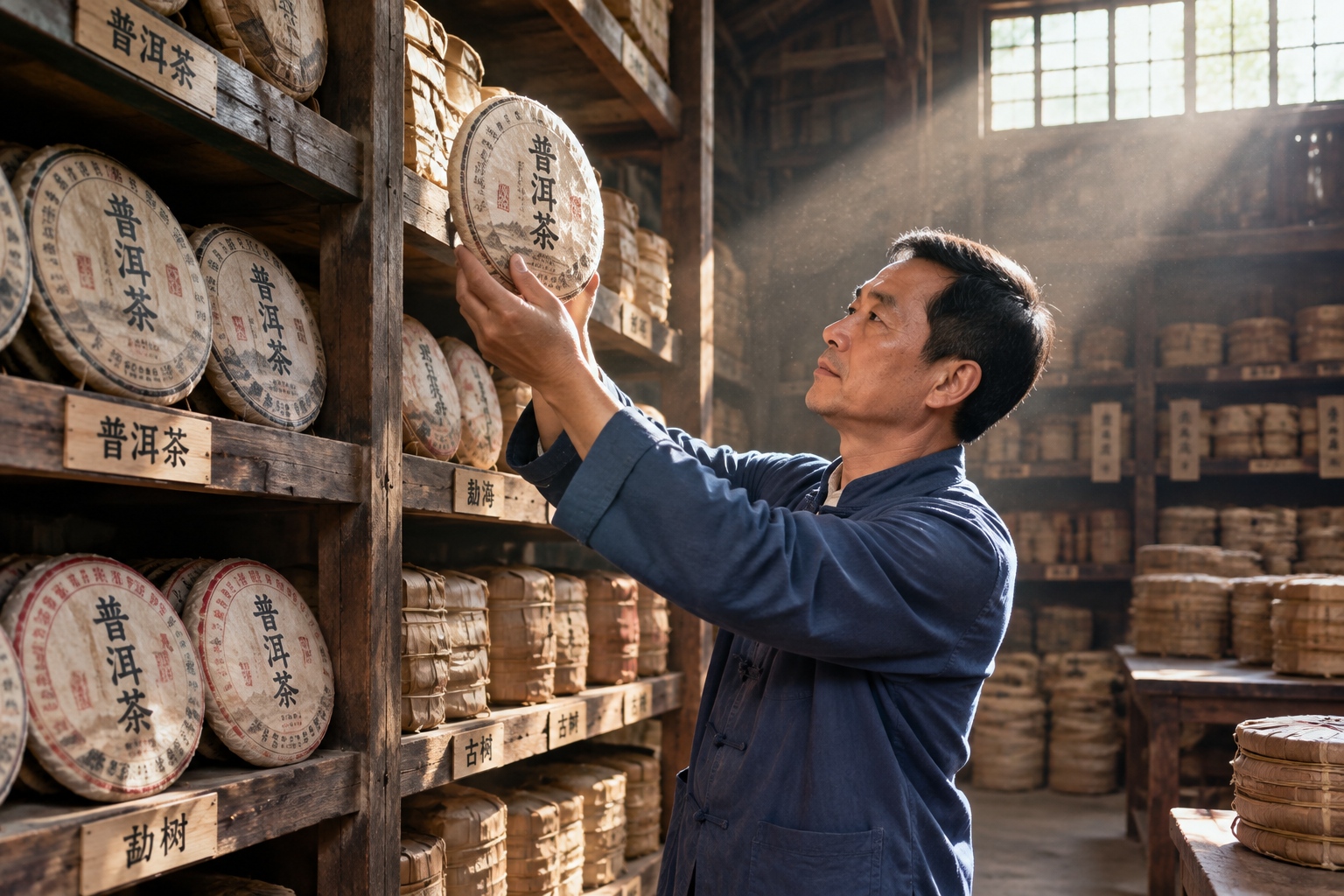
Not all pu’er is ancient tree tea, but nearly all of it is designed to change. The freshly picked leaves are fired to stop enzyme activity, rolled, then dried in the sun. Drinkers can consume the tea immediately, but the version that has created a global following is aged—stored in bales, cakes or bricks for years, sometimes decades. In an old warehouse outside the city, I saw shelves stacked with round tea cakes, each wrapped in paper and labeled by year. The manager cracked a cake from the 1990s and brewed it. The color was amber, the liquid smooth and quietly sweet, without the bitterness I expected from dark tea. “The tea becomes polite with age,” he joked.
Yajie visits that warehouse often because her village sells its rawer leaves to urban buyers. But at home, she still boils tea fresh every morning, sharing it with neighbors in a way that no market value can measure. For her, pu’er is not a collector’s ornament. It is part of the day.
Anxi: Oolong Made by Hand
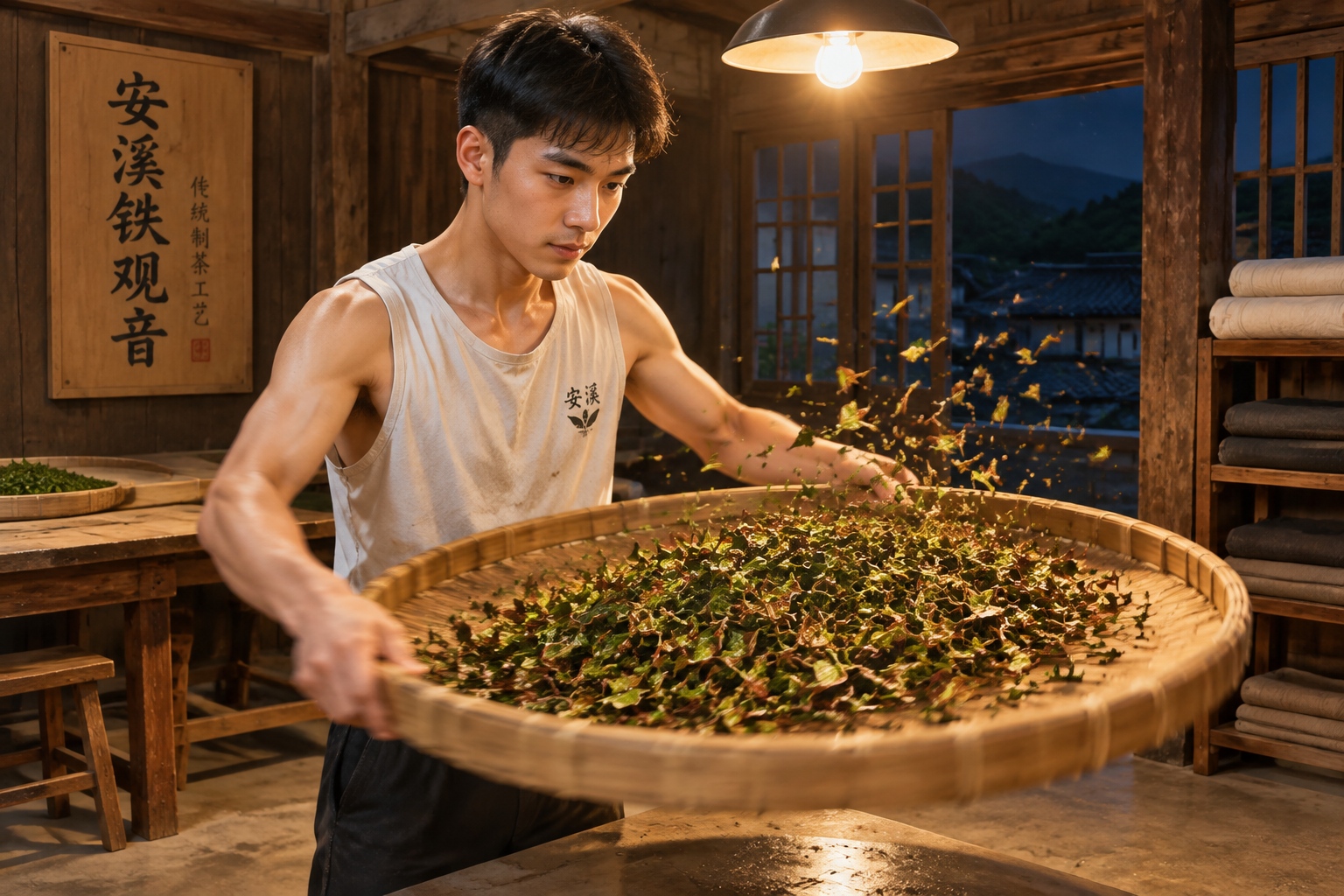
In Anxi County, also in Fujian, I wanted to learn the tactile side of tea-making. Tieguanyin, better known as the Iron Goddess, is a partly oxidised oolong famous for a floral, orchid-like aroma. The process involves several steps, but the most physical is yaoging, known as “shaking the green.” At a family workshop, Xiao Chen loaded a bamboo sieve with freshly picked leaves and started shaking it in a rhythmic circle. We worked in the cool of the evening because heat makes the leaves ferment too quickly. After about ten minutes, the edges had turned reddish while the centers remained green.
Xiao Chen then wrapped the leaves in cloth and rolled the bundles across the table, pressing the juice toward the surface. His hands moved with concentration, and the room filled with a high, grassy sweetness. Afterward, some of the tea was baked over charcoal to develop a deeper, caramelized note.
Our conversation eventually turned to the difficulty of living off tea. A few years ago prices dropped and he considered leaving the industry. His mother’s generation urged him to sell to a factory, but he decided instead to build a small brand on social media, filming his process and talking directly to buyers. It isn’t romantic, he said, but it keeps the family’s old tea garden alive—and his hands on the leaves, which is what he wants.
The Tea Table: Drinking, Sharing, and Keeping Ritual Alive
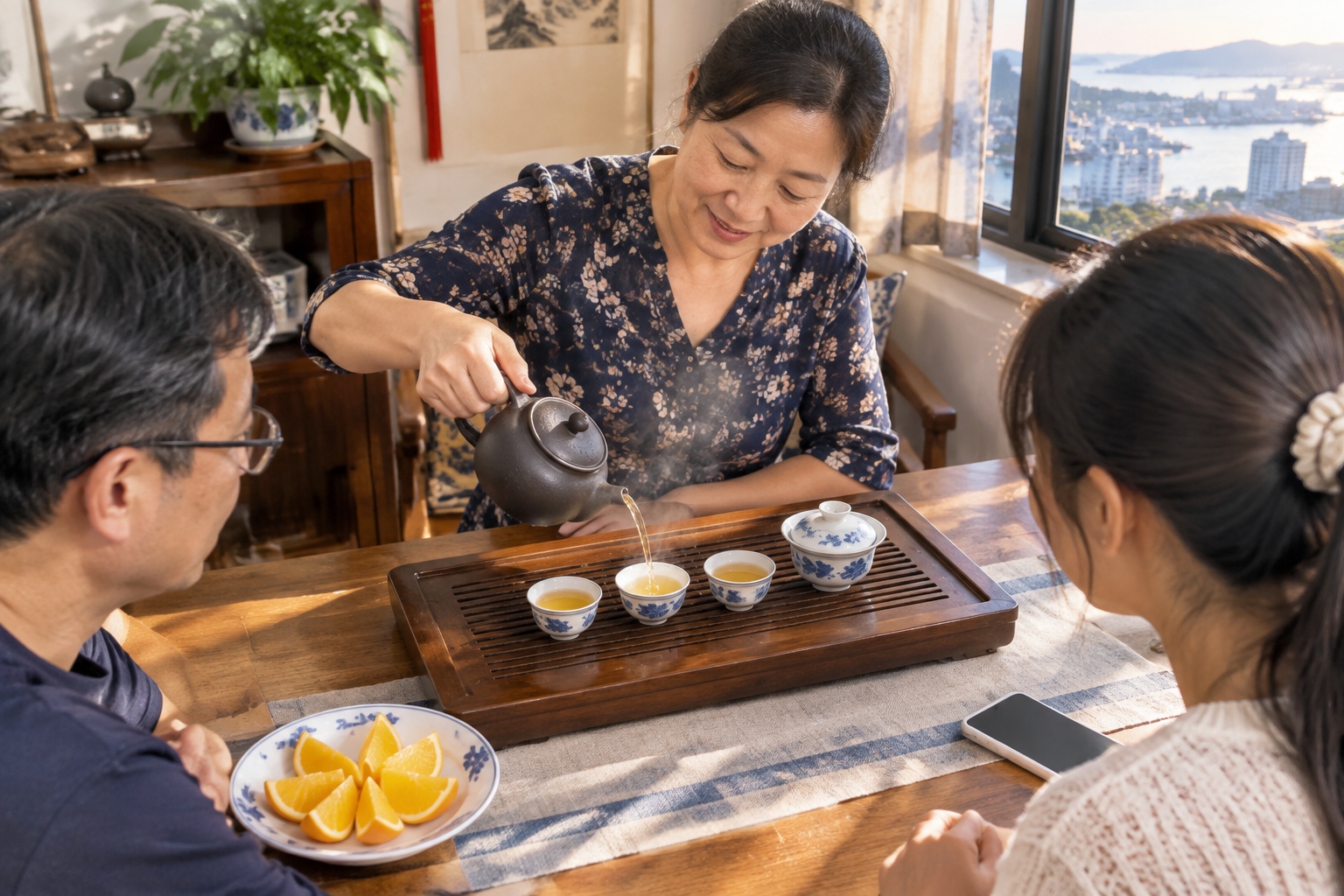
In Xiamen, I finished my trip where most Chinese tea stories end—at a home. My friend’s mother, Auntie Zhang, placed a small clay teapot and three ceramic cups on a wooden tray. She poured boiled water over the pot, filled the teapot, and immediately dumped the first brew into a bowl. “It wakes the leaves,” she said with a smile. The second cup reached my hands as steam curled upward. A full cup, she explained, is a way of pushing a guest out the door, because tea is meant to cool before you finish. Seven-tenths full is a sign of respect.
The subtle table etiquette includes a silent “thank you” when someone taps two fingers on the table after being poured tea. In modern China, some rituals have loosened, but not broken. Young people in offices carry thermoses of leaf tea, and friends often prefer cheap teahouses to crowded cafés for an evening chat. Tea is still the best excuse to pause, sit down, and be with someone.
Behind Auntie Zhang, a smartphone buzzed with notifications while the teapot released its scent. The old and the new did not feel in conflict. They simply shared the same table, and she refilled my cup whenever it found room.
One Leaf, Many Climates
On my last afternoon in Anxi, I walked back to the tea hill where I had first shaken bamboo screens. The rain had washed the air clean, and the wet mud on my shoes carried the scent of tea fields. A farmer passed and said, “The tea season is almost over, but the leaves keep their own time.” He was talking about tea plants, but he could have been talking about the culture itself.
Chinese tea culture is not a stable painting. It shifts from one village to another, from one family table to the next, and changes with the generations who carry it. But at its center is always an act that is easy to understand: a person picks a leaf, another boils water, and a cup is passed to someone else. The journey from the plantation to the tea table is not measured in miles. It is measured in how much attention you are willing to give.
Start the discussion at forum.chinacomes.com