


A rental agreement opens the door to China VAT
Imagine this: you’re an Italian product designer in Shanghai. After weeks of searching, you finally sign a lease for a two-bedroom flat. The landlord is a retired engineer who has never registered a VAT account. Your employer, a foreign technology company, agrees to reimburse the rent, but the finance department sends you an email: ‘We need a VAT special invoice to claim the tax credit.’ You don’t know what an invoice is, let alone a ‘special’ one. This is your first practical encounter with China’s value-added tax (VAT), a tax that touches almost every transaction in the country.

What is China’s VAT and why it matters
China’s VAT is a national turnover tax on the supply of goods, services, and imports. It is also the largest single source of tax revenue in China, generating roughly one-third of the country’s total tax income. You may never see it on a restaurant receipt or at the supermarket, because it is built into the price tag. Merchants charge VAT on the full value they add and are allowed to offset it against the VAT they were charged by suppliers. That mechanism — input VAT versus output VAT — is the reason China uses a special invoice system.
The three basic VAT rates at a glance
For most standard transactions, China applies one of three rates:
- 13% — the sale of most physical goods, including cars, electronics, furniture, and machinery; and the leasing of tangible property such as vehicles and equipment.
- 9% — construction, transportation, postal and basic telecom services, real estate sales and rentals, agricultural products, books, and public utilities such as water, heating and electricity.
- 6% — modern services such as IT and R&D, financial services, consulting, business support, culture and creative services, and other intangible services.
Exports are usually subject to a 0% rate, meaning exporters can get a refund for the VAT paid on their inputs. Also, some small merchants do not use these rates at all. If they qualify as small-scale taxpayers, they pay a collection rate of around 3%, with temporary reductions, and cannot offset input VAT. This difference will come back later when you pay for services.
Small-scale vs general taxpayer: the split that changes costs
Nearly every supplier registered in China is classified as either a small-scale taxpayer or a general taxpayer. The dividing line is annual taxable turnover of RMB 5 million (about 700,000 US dollars). Below this, a business can stay small-scale and enjoy lower compliance. Small-scale taxpayers use a simplified levy rate (3%, or 1% during recent relief periods) and normally cannot claim VAT credits on purchases. They are also not supposed to issue special VAT invoices unless they apply to the tax office for one-off issuance.
General taxpayers pay the standard rates listed earlier, and they can offset their output VAT with the input VAT shown on valid special invoices they receive. For a buyer, this distinction matters: if you are dealing with a supplier that is not a general taxpayer, you may not receive the invoice you need, and you may end up paying more overall.
Four everyday scenarios where VAT meets you
Renting an apartment
If you rent an apartment for yourself as an individual, VAT is generally not an explicit issue. The landlord, unless he or she runs a rental business, is usually a private person who does not collect VAT from you. However, if your employer pays the rent under a company contract, the company needs a valid invoice to record costs and recover input VAT. The landlord can go to the local tax bureau to apply for issuing a VAT invoice on your behalf, but this may bring in taxes such as VAT, property tax and income tax that landlords often try to shift to the tenant through higher rent. That is why many expat tenants negotiate a tax-inclusive or net rental price before signing. For business leases, a general taxpayer landlord normally charges 9% VAT; simplified schemes may use 5%, and individuals renting out residential housing can enjoy a preferential 1.5% levy rate. Always confirm the rate for your specific lease and city.
Buying a car
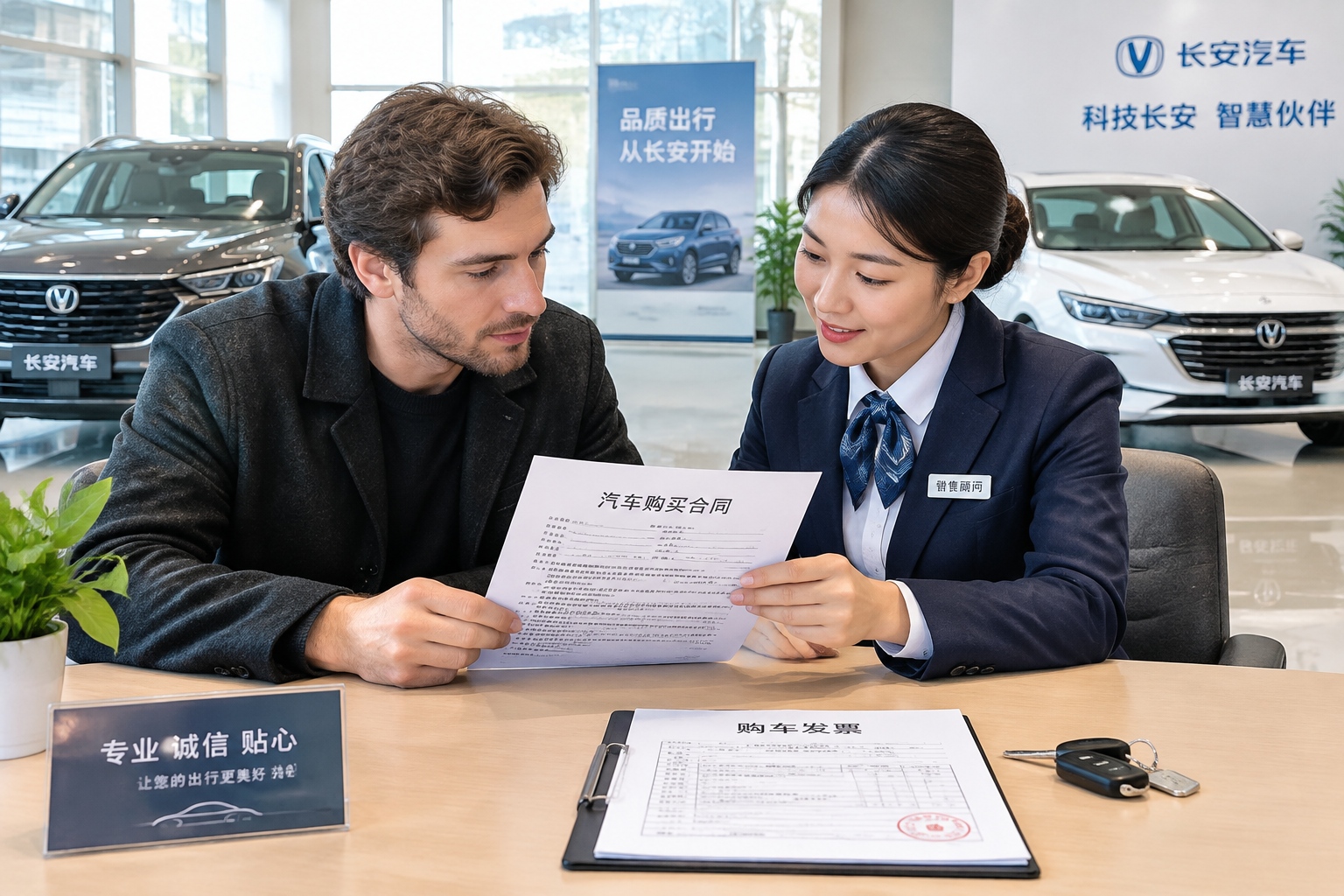
Car shopping shows how VAT hides in price. Suppose you see an advertised price of 200,000 RMB at a dealership. This price generally includes 13% VAT. The dealer must pay about 23,000 RMB in VAT to the government from that price. If you buy the car as an individual, you cannot recover this tax. If your business buys the car for business use, it can deduct the VAT as long as the dealer issues a special invoice, reducing the net cost of the purchase. Keep in mind that car buyers also pay a separate Motor Vehicle Acquisition Tax, which is calculated on the price excluding VAT.
Getting paid for consulting services
Say you freelance for a Chinese company as a foreign professional. When the company pays your consulting fee, it will usually ask you to provide a VAT invoice before releasing payment. If you don’t have a China business entity, you can apply to the tax bureau to issue the invoice under the small-scale taxpayer category on your behalf, paying a collection rate on your fee. Alternatively, you can work through a Chinese employer or agency that invoices on your behalf. For a technology or consulting service, a general taxpayer would invoice at 6% VAT. The company can claim that VAT as input tax on its side if you give it a special invoice. If not, you may find that tax is deducted from your contract amount.
Your company wants to deduct the VAT it pays
For foreign-invested enterprises, the golden rule is to check the type of invoice before entering a transaction. If your company buys equipment from a Chinese manufacturer, the seller must issue a VAT special invoice showing the 13% tax. Only that document allows you to credit the amount against the VAT you collect from customers. Without it, that VAT becomes a permanent cost. The same logic applies to domestic services, which carry 6% VAT, and to commissions, repairs and other operational expenses. Always send the finance team the taxpayer number and exact registration name to be printed on the invoice.
Special VAT invoice: the key to credit
China has two official invoice types: the VAT special invoice (增值税专用发票) and the general VAT invoice (增值税普通发票). On the surface they look similar. The special one, however, has additional columns for the tax amount and the buyer’s tax ID, making it the only document that lets a general taxpayer subtract input VAT.
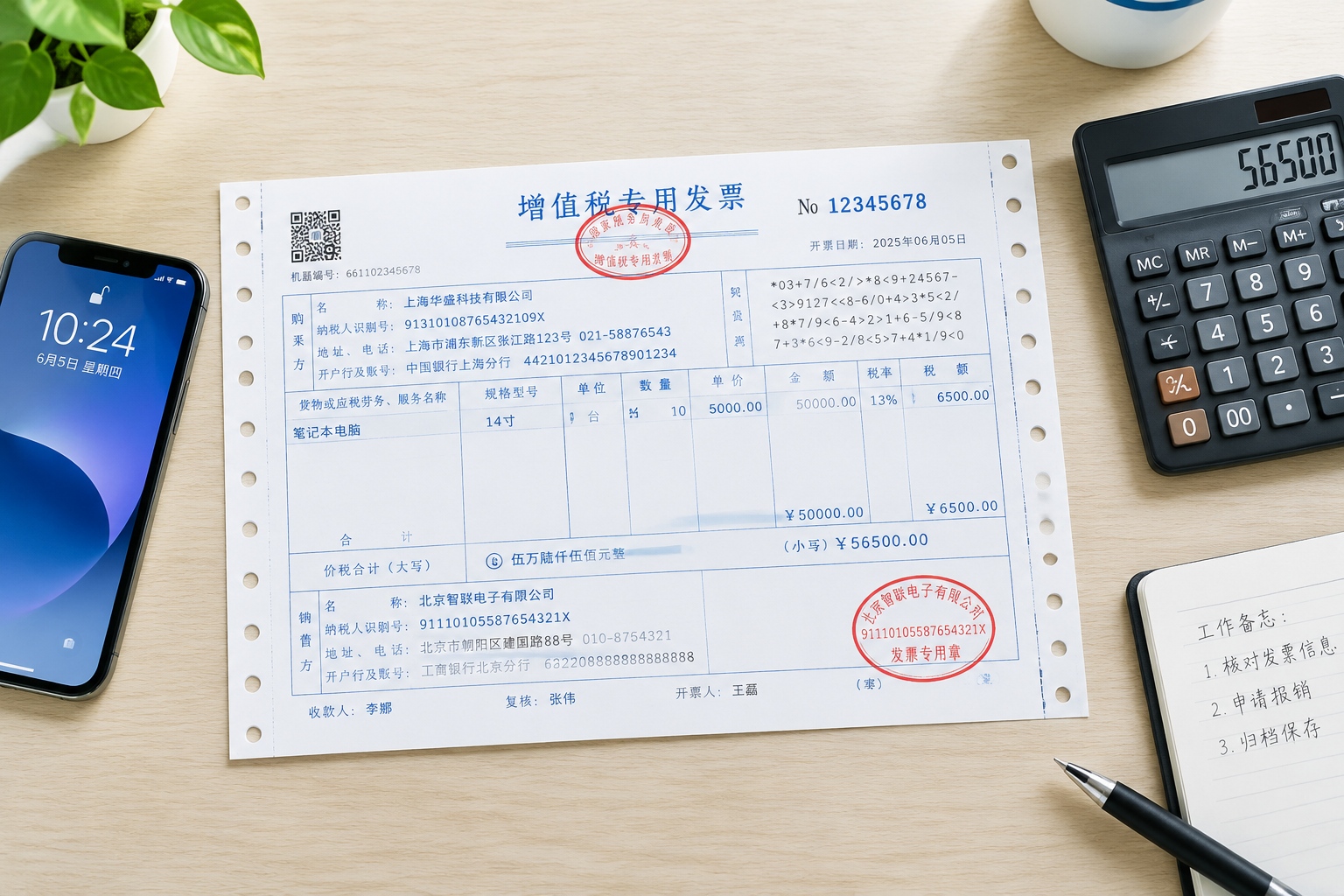
Only general taxpayers can issue special invoices directly. Small-scale taxpayers can go to the tax bureau to have the authority write it online using their own permit, but they normally need to provide the buyer’s full tax information. There are restrictions: special invoices are not allowed for tax-exempt items, purchases used for personal consumption, or goods that will be sold tax-free. If your personal landlord says he cannot issue a special invoice, he is usually right — unless he registers or goes through one-off application.
What this means for you
VAT affects expats in China in two ways: as a silent component of many prices and a visible part of business paperwork. Individuals rarely interact with the tax office directly, but anyone who signs a commercial contract in China should note whether VAT is included and which person carries the tax burden. For businesses, the critical action is obtaining and preserving valid special VAT invoices for deductible expenses. If you are on the edge of setting up a company, whether you become a general taxpayer makes a big difference to the financial flow. Chinese tax rules change from time to time; the rates and thresholds in this article describe the situation in 2024, but tax advisers will help you adjust when local implementation differs.
Start the discussion at forum.chinacomes.com