
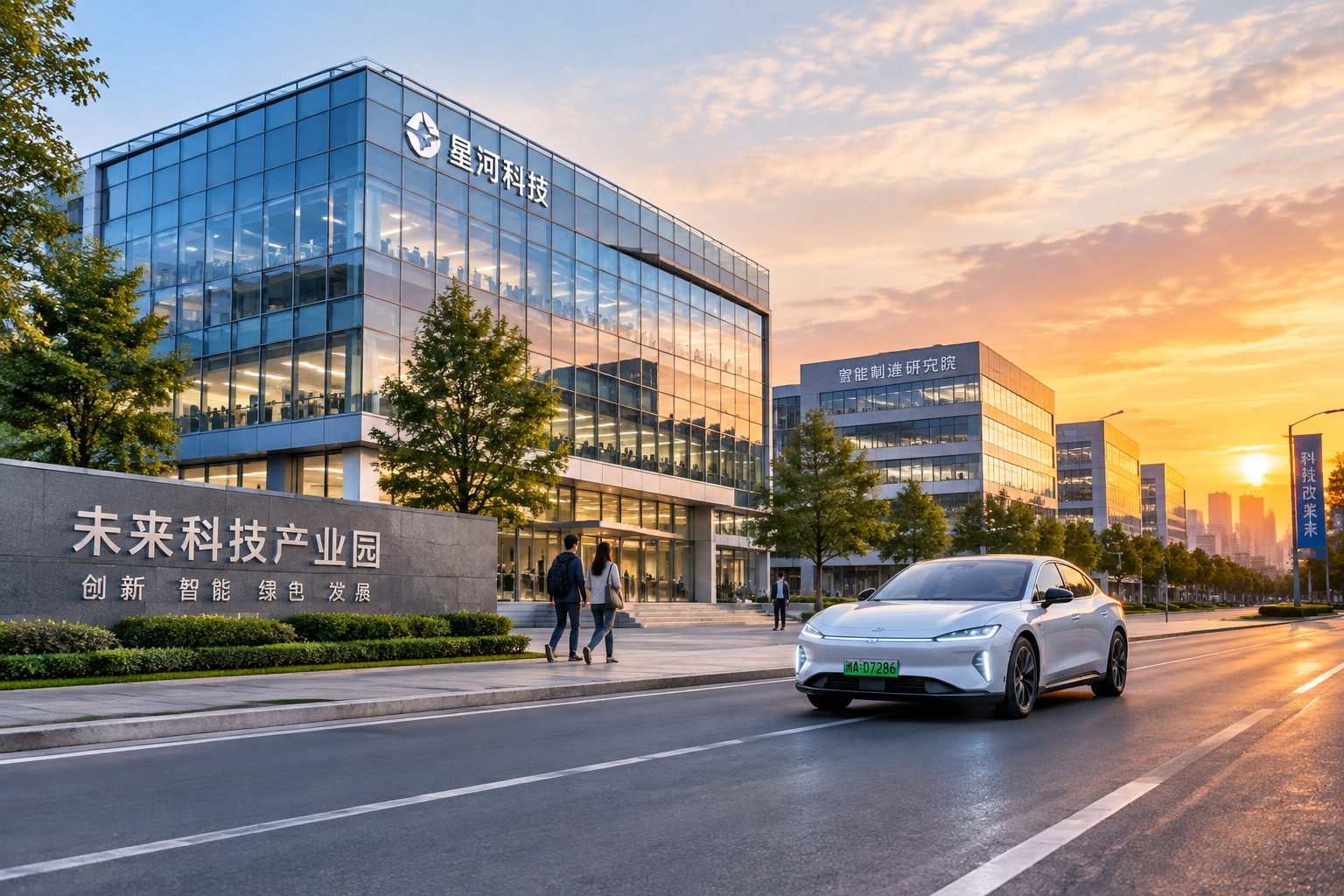

A German Engineer on a Factory Floor in Suzhou
In 2027, a factory manager in Suzhou might show you a line of robotic arms running smoothly with AI vision controllers designed in Shanghai, chips packaged in Wuxi, and software updated from a cloud server in Singapore. For many foreign businesses, the old image of China as a low-cost assembly base is outdated. What replaced it is a vast ecosystem where technologies are constantly iterated, new products are tested at breakneck speed, and market scale turns local solutions into global standards. The question is no longer ‘Can I sell to China?’ but ‘Where in China’s innovation network should I plug in?’
According to the Ministry of Industry and Information Technology, China’s core AI industry revenue grew to over 500 billion yuan in 2023 and is projected to pass the trillion-yuan mark by 2027.
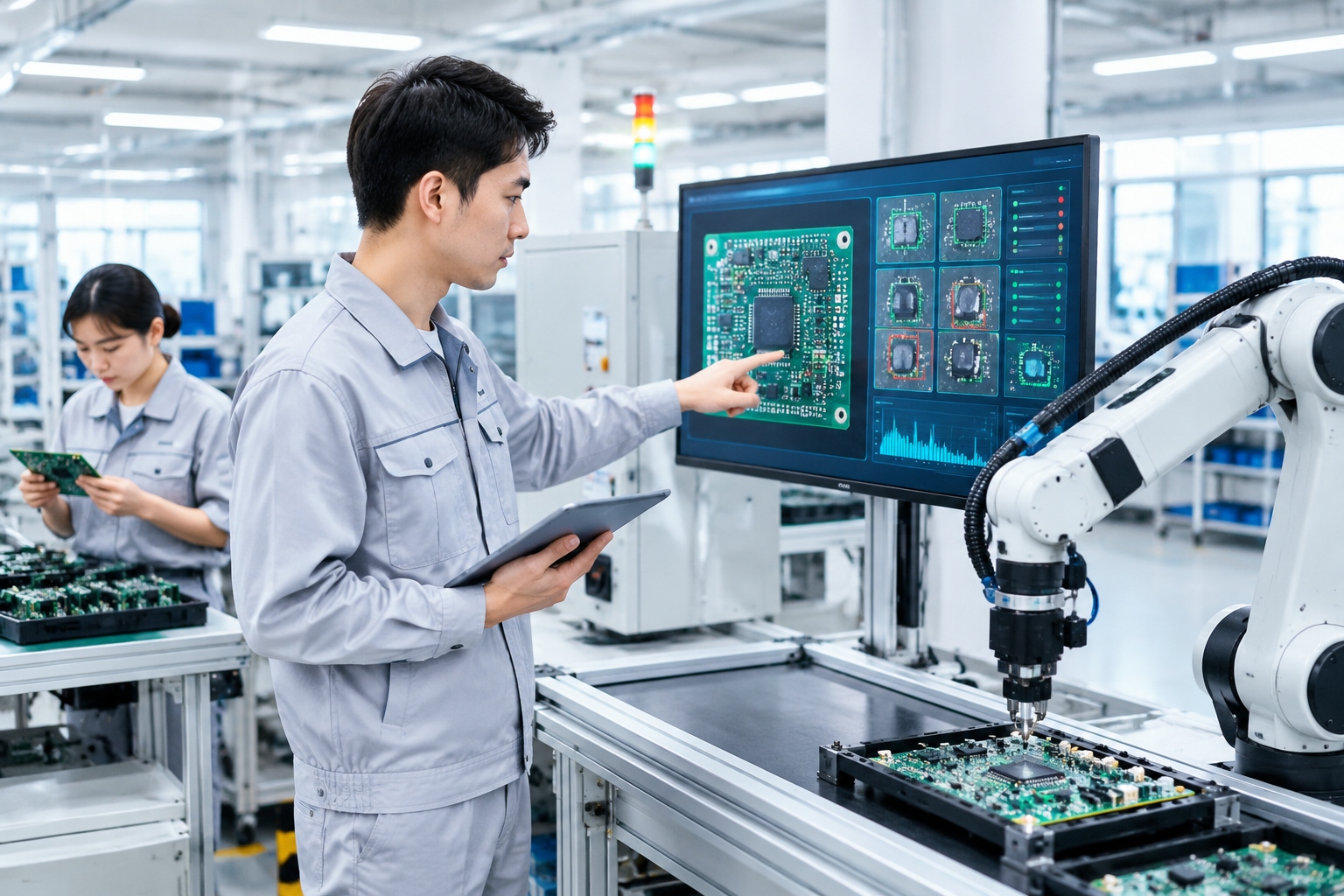
That growth is reshaping industries from autonomous trucks in coastal ports to clinical diagnosis in county hospitals. For foreign companies, that scale comes with a different set of rules—and a more subtle set of opportunities.
AI Goes Ubiquitous, and the Door Is Still Open
China is now deploying AI not just in consumer apps but in steel mills, warehouse robots, agricultural drone fleets, and old chemical plants retrofitted with smart sensors. An EU automation company, for example, might sell precision cameras to a Chinese machine builder, while another European startup supplies edge-computing software for quality inspection in Guangdong.
The opening is not in competing head-on with Chinese tech giants but in selling precision, compliance, and domain expertise. Foreign firms do well when they co-develop solutions with Chinese system integrators, especially in industrial AI, where deep knowledge of production processes matters more than raw algorithms. By 2027, the market for AI applications in manufacturing alone is expected to exceed 200 billion yuan annually.
Semiconductors: Self-Reliance Meets Global Supply Chains
Semiconductors are the most complex part of the story. China has poured hundreds of billions of yuan into domestic capacity through the National Integrated Circuit Industry Investment Fund, and annual chip output has been rising at double-digit rates. Substantial headway has been made in mature-node fabs—those in 28nm and above—while exports of such chips have surged.
Yet the gap remains wide in cutting-edge logic, electronic design automation (EDA), and high-level lithography tools. That is precisely the space where foreign companies still participate. For example, Dutch and German equipment firms continue to supply the complex modules and components that Chinese fabs need for advanced packaging and reliability testing. In design services, American and Taiwanese IP providers license their blocks to Chinese chip designers who want to stay ahead in local markets. The policy environment clearly distinguishes ‘foreign investment for domestic supply’ as encouraged, while focusing restrictions on military applications.
The real opportunity in 2027 may lie in supply chain collaboration—helping China’s domestic champions meet export-grade quality. A Japanese materials maker known for ultra-thin films can still find a market in local chip plants, provided it understands the local intellectual property regime and obtains the right approvals early.
New Energy Vehicles: A Fast Track with New Roadmaps
Electric vehicles have become China’s most familiar modern export. In 2025, over half of new car sales in the country were new energy vehicles (NEVs), and China accounted for nearly 70 percent of global EV battery capacity. That trajectory continues to 2027, with more affordable models and an expanding network of charging and battery-swapping stations.
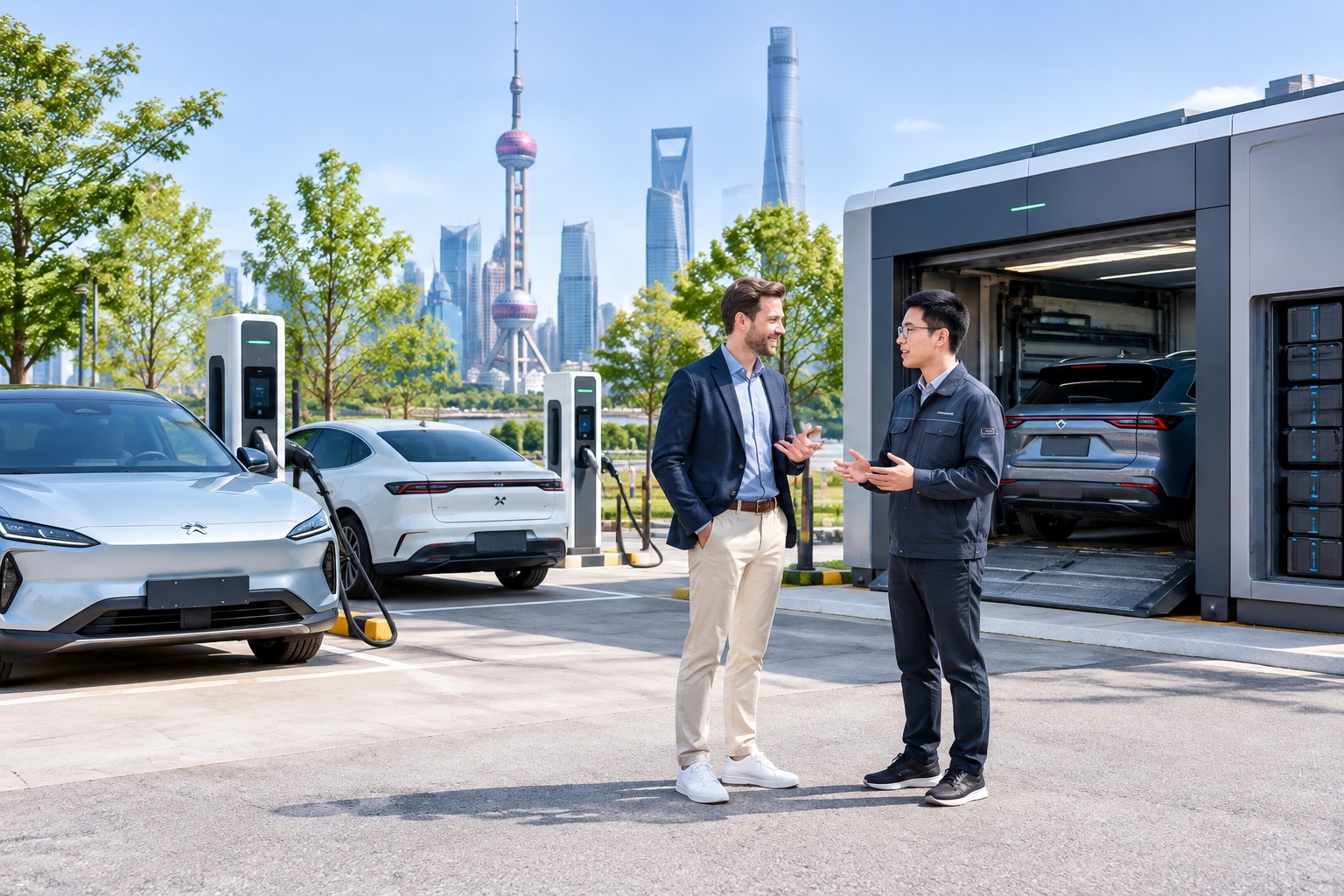
Foreign players are not absent. Europe’s largest carmaker has partnered with Chinese firms for smart cockpit and autonomous driving, because the local supplier base simply moves faster. An American powertrain manufacturer might provide high-voltage components to a Chinese EV startup that now sells in Southeast Asia. Technology development in China is no longer a one-way street; by 2027, many components ‘made by a foreign company’ will be designed in Shanghai or Shenzhen.
The breakthrough point is to adopt China as the leading market for both extreme fast charging and hybrid architectures. Rather than importing a global model, multinationals can create their biggest success by joining Chinese battery makers in building overseas plants—a collaboration that looks increasingly reciprocal.
Biotech: From Drug Approval to Real-World Data
China has quietly become the world’s second-largest pharmaceutical market. Reforms in clinical trial approval and drug registration from 2017 onward have cut the time for global new drug approval by years. By 2027, applications using Chinese patient data will be more accepted worldwide, giving foreign biotech firms a compelling reason to run early-stage trials in major Chinese hospitals.
It is here that deep-tech startups from abroad find a warm welcome. A British gene-editing company can partner with a Chinese university and a contract research organization (CRO) in Beijing to move toward clinical studies faster than in most jurisdictions. As novel therapies go digital, the country’s huge patient pools and real-world data platforms offer precise testing grounds. Meanwhile, Chinese innovators are also licensing out molecules to global pharma, creating two-way deal flow. Foreign firms that walk this path must think of compliance as a layer of their technology stack.

Policy Tailwinds: Shorter Negative Lists and Market Access
The clearest signal for foreign investment is the official negative list for foreign access. From 69 items in 2017, it had been trimmed to 31 by 2024 and is expected to shrink further by 2027. In free trade zones, the negative list is even shorter. Manufacturing is already fully open for foreign investment; now pilot programs are testing activities in healthcare, telecommunications, and value-added cloud services.
There are also encouraging signals around data. While cross-border data rules once elicited concern, the 2024 provisions established clearer safe harbors for non-personal information. By 2027, more foreign financial institutions use the Shanghai Data Port to back up data locally and connect to global headquarters under stable, predictable guidelines.
A practical entry method for smaller foreign tech firms is to join the catalog of ‘Encouraged Foreign Investment Industries,’ which grants tax breaks and easier land access. Rules vary by sector, but the trend is visibly toward reducing ownership barriers and granting national treatment.
Finding Your Position in 2027’s China
Back in Suzhou, the German engineer might now be negotiating a joint R&D agreement with the local robotics company. If she stops to think about what works in 2027 China, she would see three distinct strengths: the fastest cycle of prototyping in the world, a giant domestic market with a wide spectrum of consumer preference, and a carefully designed opening-up that rewards partners offering hard technology and clear standards.
The era of easy outsourcing is over, but the era of deep, protected collaboration has just begun. The foreign firms that succeed are those that accept China’s tech ecosystem as a top league of its own—where learning from local speed and adapting to local standards is not a compromise but a form of competitive advantage.
Start the discussion at forum.chinacomes.com