

Introduction
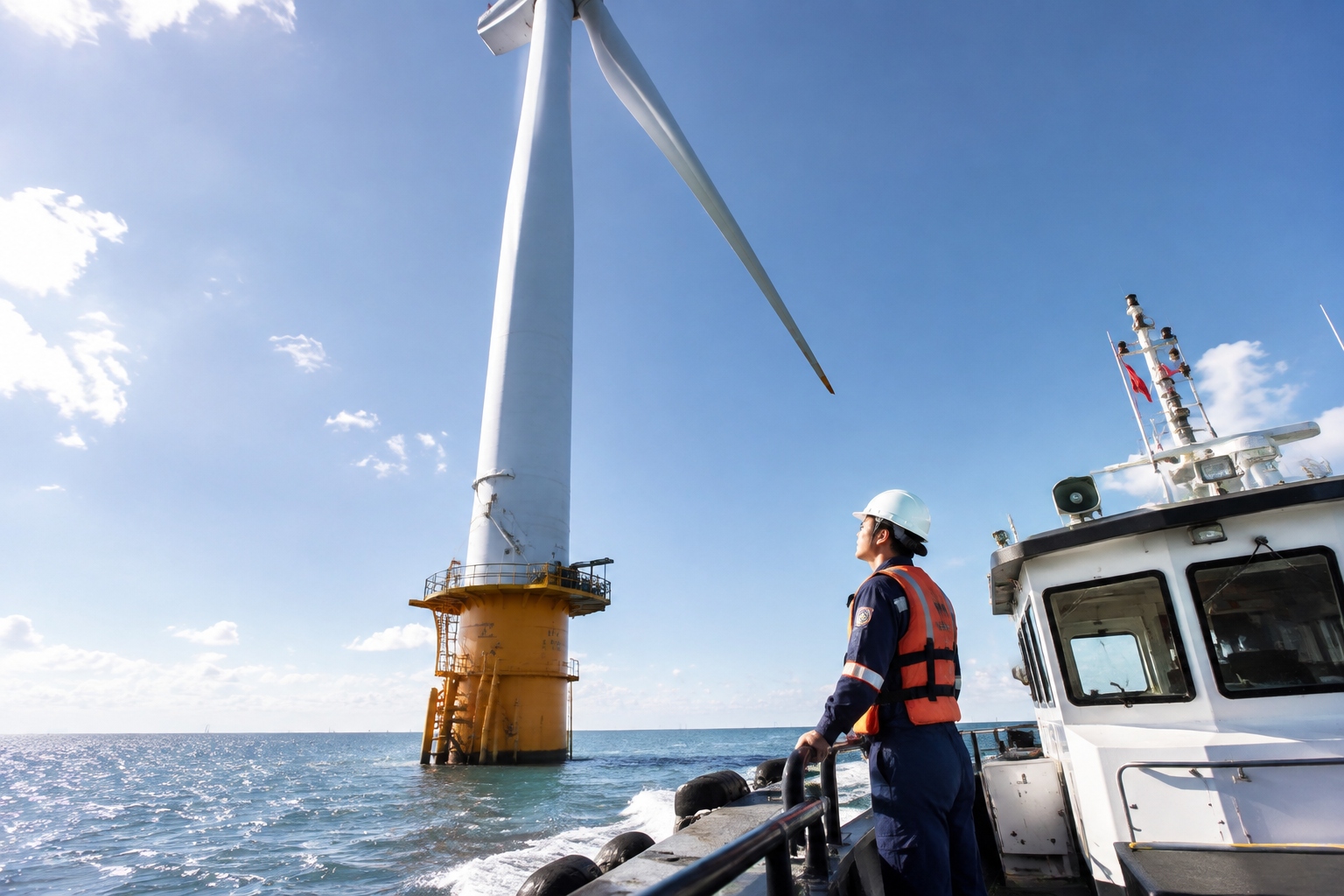
The crew boat bounces across the Taiwan Strait, spray hitting the deck. A gray shape looms on the horizon, growing larger with each wave. By the time the boat slows down, everyone on board looks up—far, far up. The white tower above them rises 160 meters out of the sea, topped by a spinning disc that could cover two football fields. This is one of the largest wind turbines ever built, and it’s feeding electricity to Chinese homes a hundred kilometers away.
China’s offshore wind industry has come a long way. In just over a decade, Chinese manufacturers moved from building onshore turbines to dominating the global offshore market. Today, they produce machines so big that the latest generation genuinely deserves a comparison once reserved for skyscrapers: this turbine is nearly as tall as the Eiffel Tower.
Size That Overwhelms
When the world’s largest offshore wind turbine, the 16-megawatt MySE16-260, was installed off Fujian province, locals described it as a mountain of steel. The numbers back them up. Its rotor diameter is 260 meters—each blade is 123 meters long, longer than a 400-meter running track is wide. The swept area is 53,000 square meters, the equivalent of about seven soccer fields. Standing on the deck of a maintenance ship at its base, you feel the scale with your whole body.
Now, Chinese engineers are pushing even further. In late 2024, a major manufacturer unveiled a design for a 22-megawatt turbine, with a rotor diameter exceeding 310 meters. The hub height will reach 185 meters, and the highest point of the blade—called the tip height—will be around 340 meters above the sea. The Eiffel Tower, by comparison, stands at 330 meters. This is the first time a wind turbine has officially surpassed the iconic Parisian monument in height.
The Science Behind the Scale
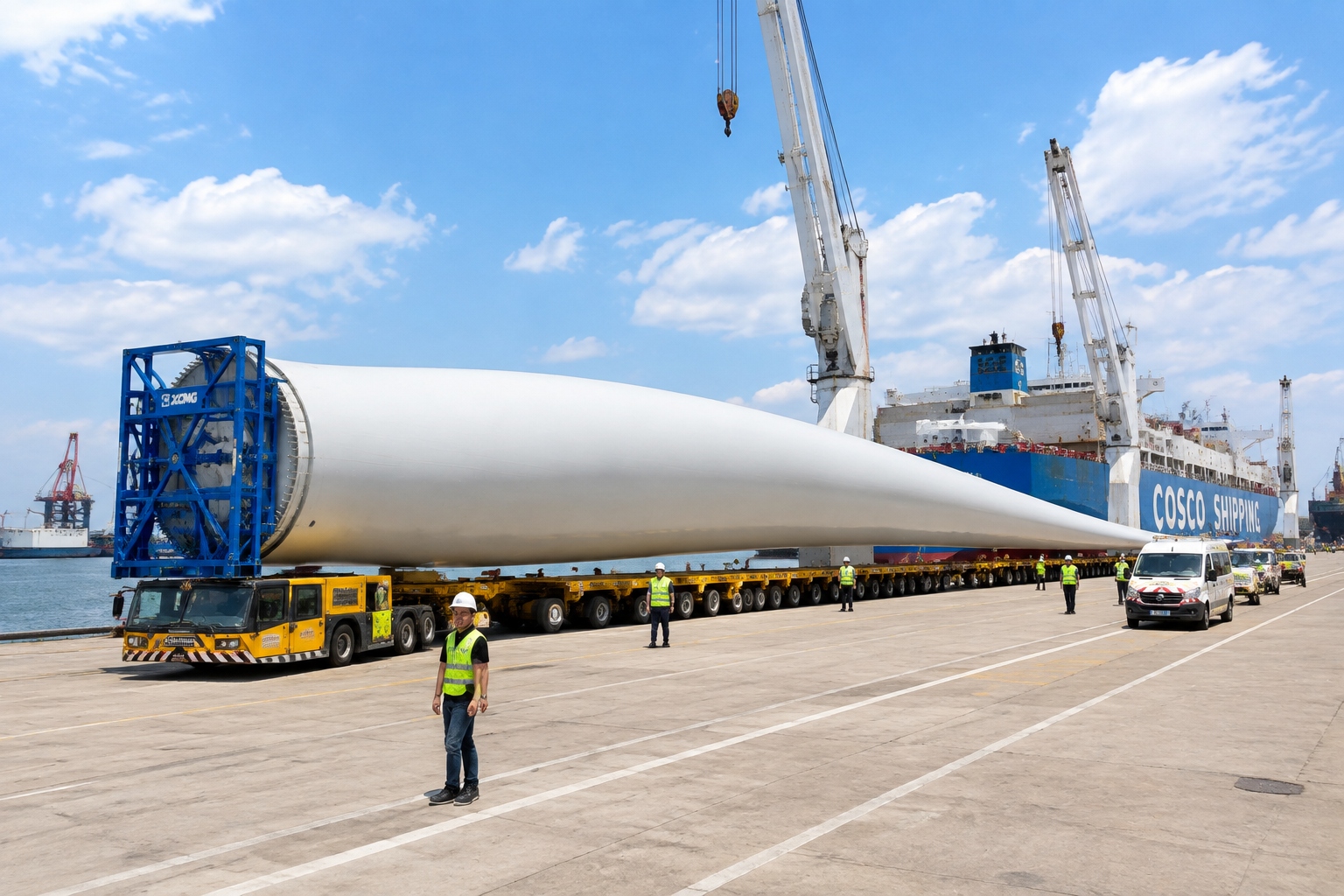
To spin such massive blades, engineers have reinvented nearly every component. The new blade, which measures over 150 meters, is made of carbon-fiber composites that keep it stiff yet light. Each blade weighs around 45 tons, which is nearly the weight of a fully loaded shipping container. The nacelle—the housing that contains the generator—is a seven-story building filled with advanced electronics, cooling systems, and a generator powerful enough to supply electricity to 40,000 households per turbine.
But scale alone is not enough. These turbines are built to survive some of the harshest offshore conditions on earth. Typhoons with winds over 70 meters per second are not uncommon in the South China Sea. The turbine detects incoming storms and automatically pitches its blades to shed lift. It also yaws the nacelle to point into the wind, reducing the aerodynamic drag. This active survival mode has proven itself: during Typhoon Talim in July 2023, a giant turbine off Fujian recorded gusts of 200 kilometers per hour, yet emerged completely undamaged.
Installation in the Open Sea
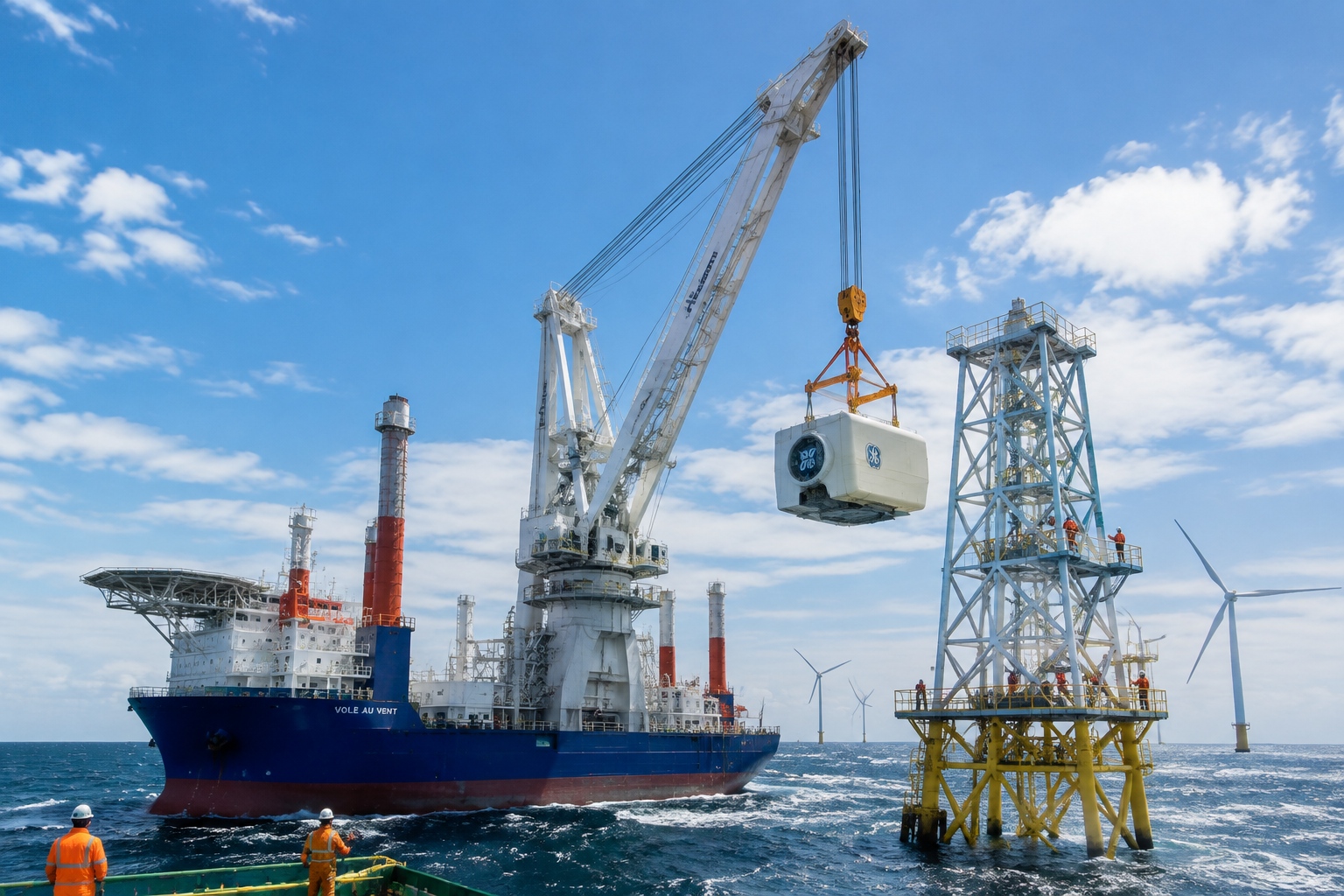
Building a structure this big is an exercise in extreme logistics. Tower sections are welded in shipyards and floated out on barges. Offshore installation vessels, some as long as 300 meters, use hydraulic grippers to lift the tower segments and pin them to the seabed with steel piles that go 50 meters deep into the seafloor. A single blade, weighing over 45 tons, must be handed into the hub with only a few centimeters of clearance while the vessel pitches in waves. An engineer compared the precision to threading a needle during a storm.
Maintenance is no less challenging. Technicians sometimes climb an internal ladder to the nacelle, a journey that can take over an hour. They work in shifts, staying in a small platform inside the tower. But increasingly, remote monitoring allows many issues to be diagnosed from shore, and drones are used for visual inspection of blade surfaces, reducing the need for human climbs.
Changing Coastal Energy Mix
The rapid expansion of offshore wind is having a real impact on China’s energy structure. Take Fujian province, where wind power now accounts for more than 15 percent of the grid’s peak electricity demand. The provincial capital Fuzhou, a city of 7 million people, receives a significant share of its daytime power from wind farms located tens of kilometers offshore. By 2030, China plans to have more than 200 gigawatts of offshore wind capacity—enough to power Japan.
This shift is not just about quantity. Offshore wind farms are located near the coast, close to populous metropolitan areas, which significantly reduces transmission losses. They also generate electricity during afternoons when solar output is falling, providing a natural complement to photovoltaic systems. Combined, they are forming a more resilient and diverse clean energy system.
Sunrise Over the Giants
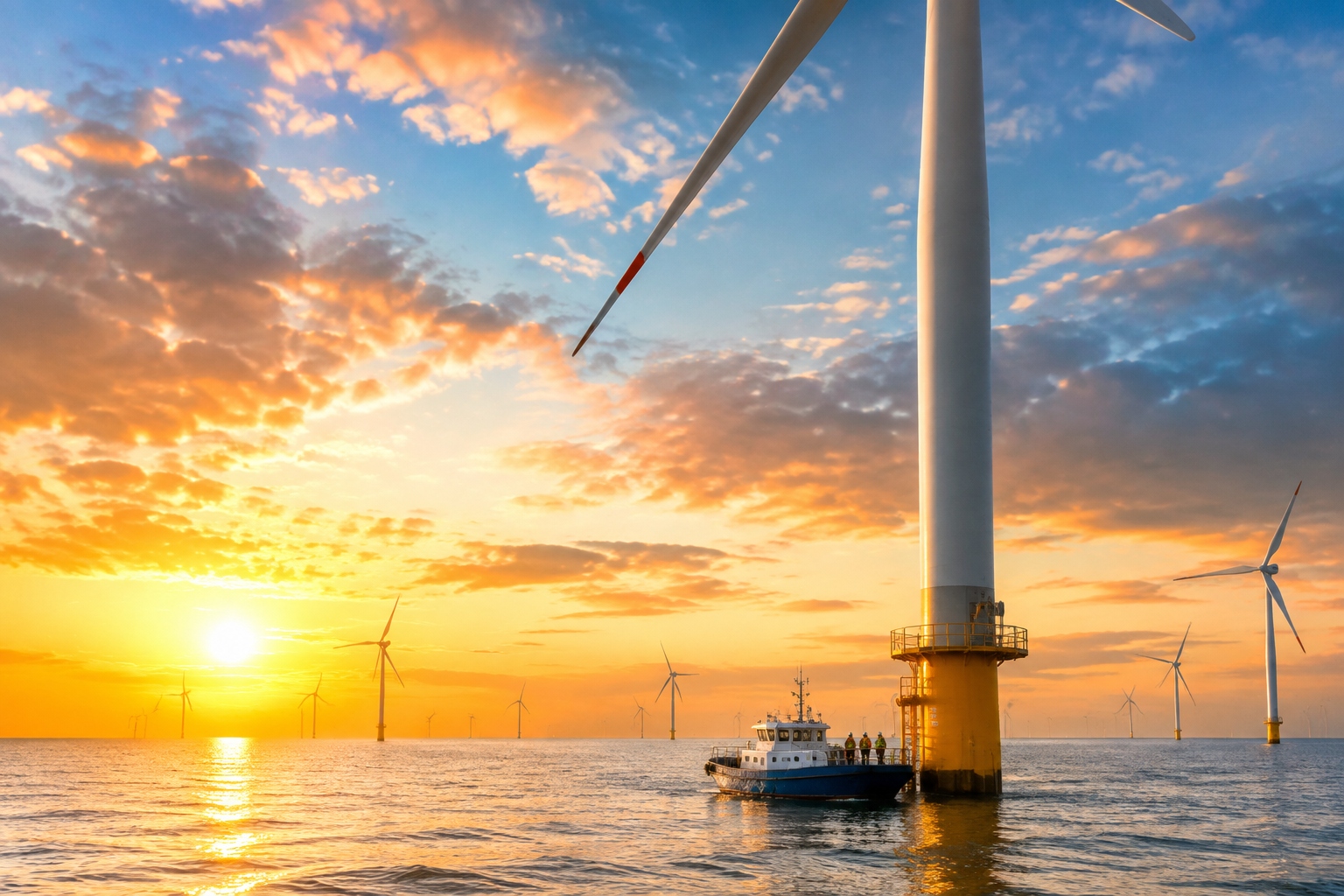
As dawn breaks over the East China Sea, the sky turns from deep blue to fiery orange. A row of turbines stands motionless, their blades catching the first light like golden ribbons. At this moment, they seem less like machinery and more like monuments—a symbol of what human engineering can achieve when it teams up with nature. For the world, these giants are a reminder that the low-carbon transition doesn’t have to be slow. It can be rapid, gigantic, and absolutely breathtaking.
Start the discussion at forum.chinacomes.com