
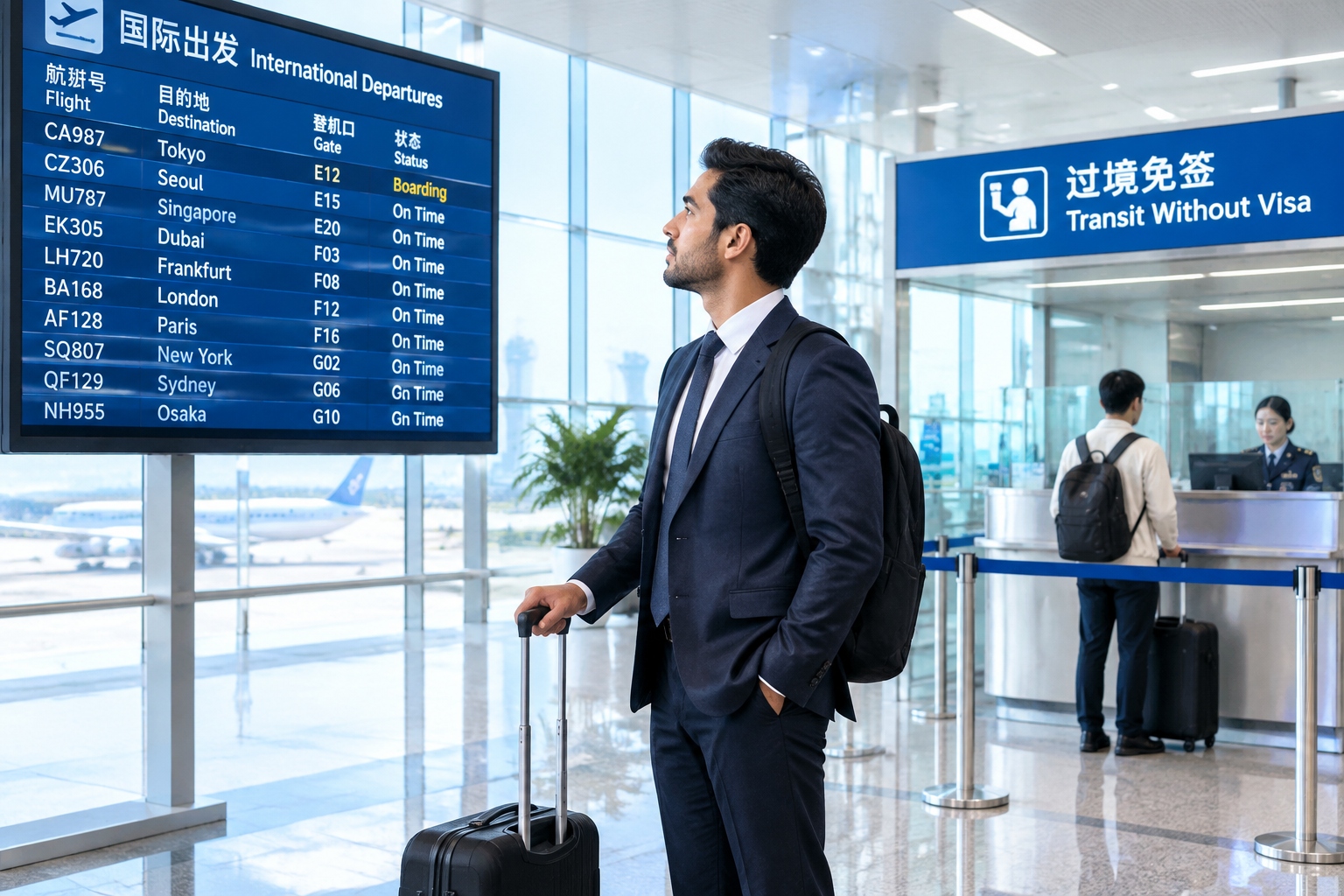

When Karl Schmidt, a German machinery sales director, landed at Shanghai’s Pudong Airport last spring, he didn’t have a Chinese visa. His plan: stay for three days, meet a potential supplier outside the city, then fly on to Singapore for a meeting with a client. It worked flawlessly. What made it possible was China’s visa-free transit policy, which allows eligible travelers to enter and stay in certain areas without a visa for up to 240 hours (10 days).
What Is the China Visa-Free Transit Policy?
The visa-free transit policy is a special entry scheme managed by China’s National Immigration Administration. It allows citizens of certain countries to enter China without a visa if they are transiting to a third country or region. As of 2027, the permitted stay has been extended to 240 hours (10 days) for many entry points. This is a change from the earlier 72-hour and 144-hour versions, and it gives you far more flexibility for business activities.
The key idea is “transit.” You must arrive from one country and leave to another—your itinerary cannot begin and end in the same place. You also need to hold a travel document (passport) from an eligible country and have confirmed connecting tickets (ticket to your next destination) ready.
Who Is Eligible for the 240-Hour Transit Visa-Free Arrangement?
The policy applies to citizens of 54 countries, including Germany, France, Russia, the United States, Canada, Australia, Japan, South Korea, and many others. If you are a passport holder of one of these countries, you can take advantage of this scheme for short-term stays for tourism, visiting friends, business negotiations, exhibitions, or factory inspections—just as long as the trip is not for long-term work or settlement.
It is also worth noting that you do not need to submit an application in advance. There is no form to fill online and no fee to pay. The visa-exemption is granted at the port of entry, based on your papers and purpose of visit.
Which Cities and Ports Offer 240-Hour Transit?
In 2027, more than three dozen cities and regions allow this visa-free transit. Some are specific ports in larger city clusters. For example, travelers entering Beijing can stay in the entire Beijing municipality. In Shanghai, you can move within the city as well as parts of neighboring Jiangsu and Zhejiang provinces (the so-called Yangtze River Delta region). In Guangzhou and the Pearl River Delta, you can visit Guangzhou, Shenzhen, Foshan, Dongguan, Zhongshan, Zhuhai, and other nearby cities.
Common arrival ports include:
- Beijing Capital International Airport and Beijing Daxing International Airport
- Shanghai Pudong International Airport and Shanghai Hongqiao International Airport
- Guangzhou Baiyun International Airport
- Shenzhen Bao’an International Airport
- Chengdu Tianfu International Airport
- Xi’an Xianyang International Airport
There are also land ports and seaports, but for business travelers, air routes are most relevant. The stay is calculated from the day after entry, so an arrival at midnight might give you an extra count day. Always check with your airline or local immigration bureau for the exact start of your allowed stay.
What Are the Conditions and Restrictions?
The visa-free transit is not a free pass to roam anywhere in China. You cannot leave the designated administrative area specified at the port of entry. For example, if you enter through Shanghai, you can go to Shanghai, and in some cases to nearby provinces if the local policy defines a larger region. But you cannot, say, fly from Shanghai to Shenzhen without a visa. Your route of exit must be through any port within the same policy area.
Staying longer than the allowed 10 days or leaving the permitted region is considered an illegal stay and may result in fines, denial of future entry, or even detention. You are also prohibited from engaging in unauthorized employment or attending school. Business activities like meetings, negotiations, factory inspections, and visiting an exhibition are generally fine.
How Does the Application Process Work at the Airport?
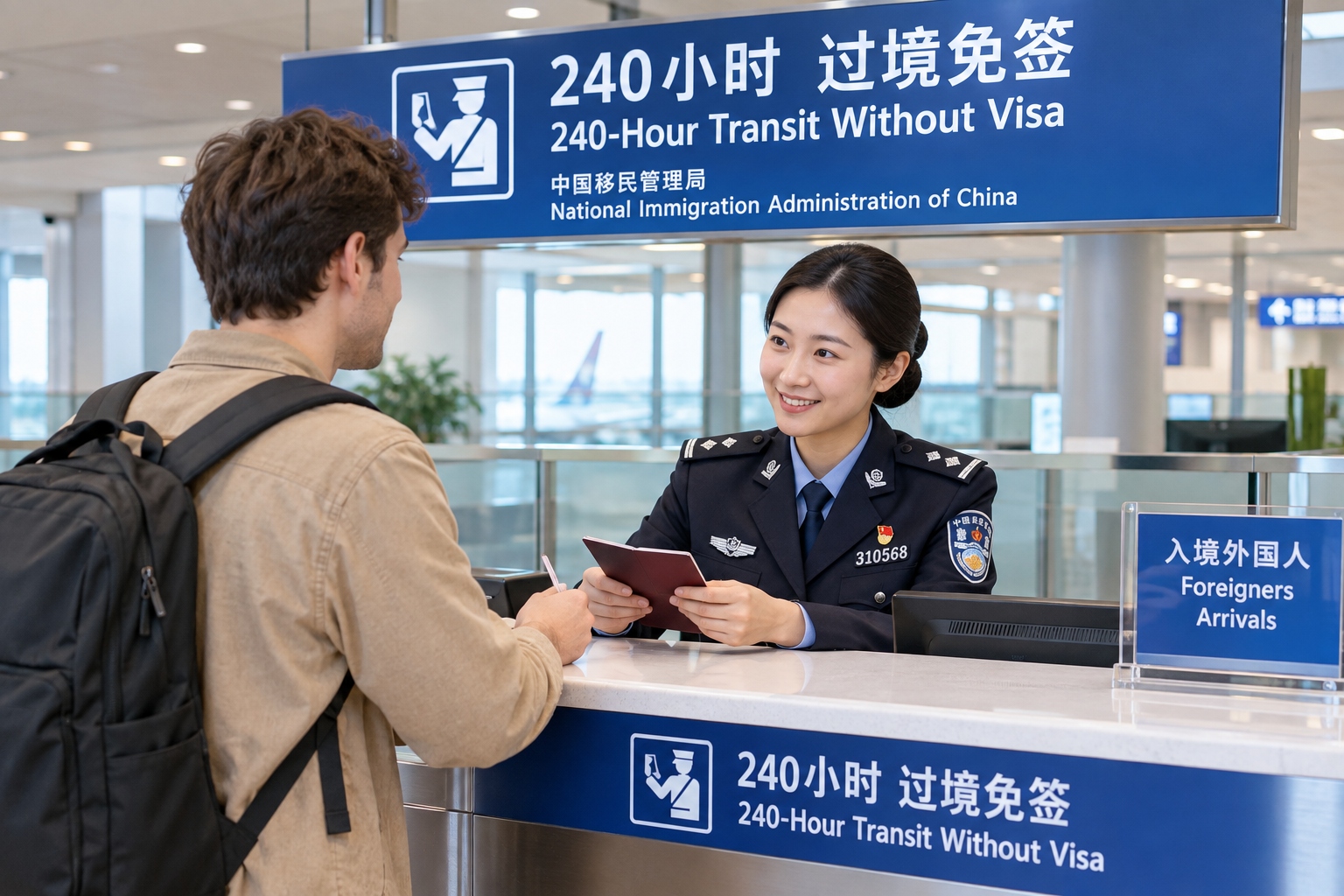
The process is surprisingly smooth. After landing, you will look for the sign that says “Transit Without Visa” or “240-Hour Visa-Free Transit” in English and Chinese. Proceed to the immigration desk specifically for this facility. Hand over your valid passport and your connecting ticket (to your next country). An officer will check your information, take your fingerprints (required for many nationalities), and stamp your passport with an entry record showing the allowed stay duration.
There is no cost. You will not need a separate visa, and you do not need to contact a Chinese embassy in advance. It is still prudent to book your onward flight before you land, because immigration may ask to see it along with booking confirmations.
How Business Travelers Can Use the Policy
For business travelers, the visa-free transit scheme is a time-saver. Instead of spending days preparing a visa application, you can land in Beijing or Shanghai and start meetings within hours. The 240-hour allowance lets you attend a trade fair that lasts several days, visit a supplier in a nearby industrial park, or combine a series of client meetings in multiple cities in one region.
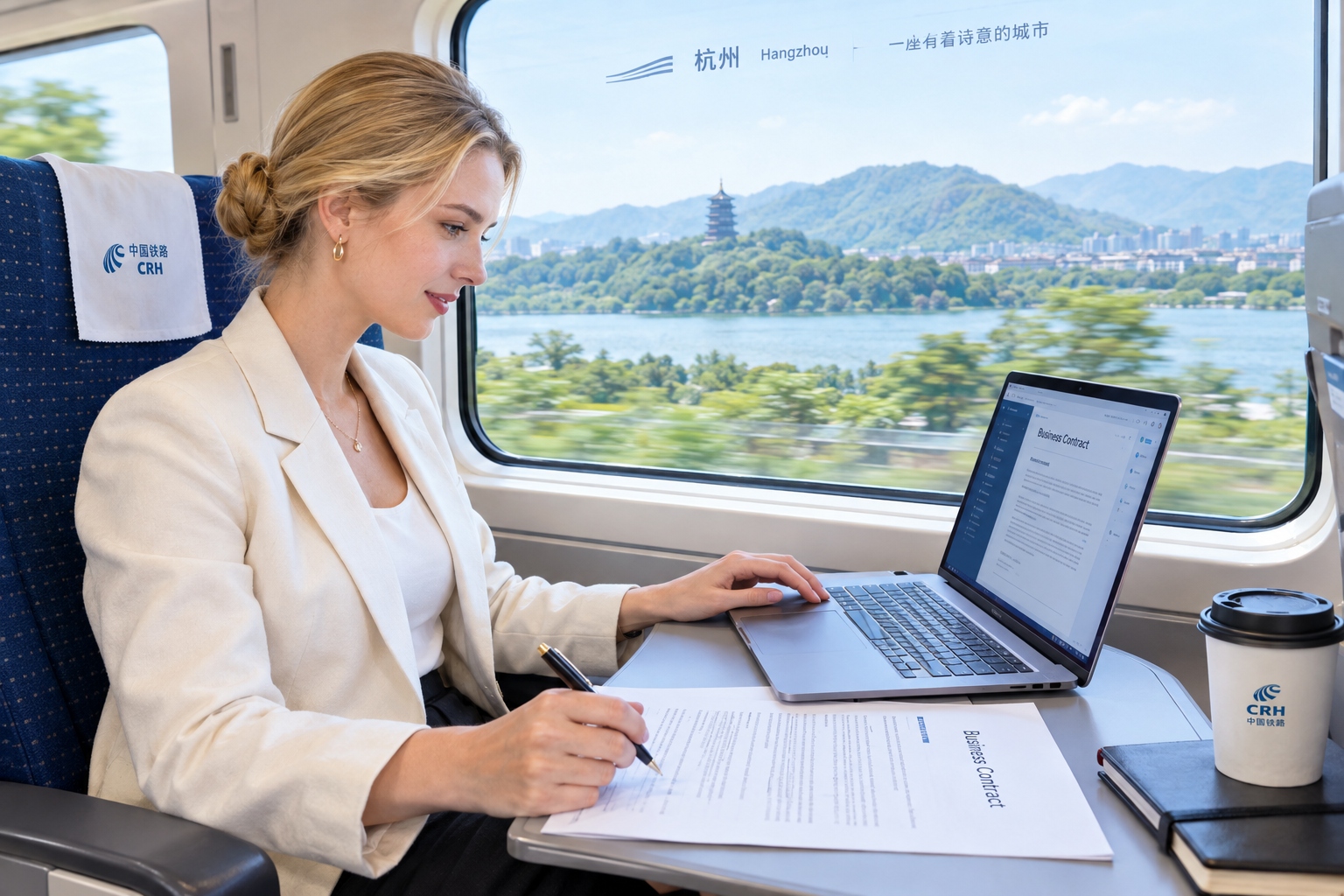
Let’s return to Karl. He used his Shanghai stopover to visit a casting factory in Ningbo (about a two-hour drive from Shanghai), then took a train to Hangzhou for a product demo with a procurement team, and finally flew out of Shanghai to Singapore. Because Ningbo and Hangzhou are within the Yangtze River Delta visa-free area, he did not worry about leaving the designated zone. His total trip in China: four nights. He arrived on a Tuesday and left on Saturday.

Real-Life Story: Closing a Deal Between Two Flights
Maria, an Italian packaging entrepreneur, flew from Milan to Tokyo with an overnight layover in Shanghai. Before her flight, she had contacted a Chinese packaging machinery company and arranged a meeting. She landed at 8 a.m., met the client in a hotel lobby near Hongqiao International Airport, signed a memo, and boarded her connecting flight at 3 p.m. No visa was needed. She later wrote in an email: “If I needed a visa, I would never have cut it that close. This policy genuinely opens doors for small companies with tight budgets.”
Her case illustrates that the visa-free transit is not just for large corporations; it gives small business owners a low-risk way to explore partnerships with minimal planning.
What Are the Most Common Mistakes and How to Avoid Them?
Many travelers fail because they misunderstand the “transit” rule. If you arrive from Country A and you intend to return to Country A directly (for example, Beijing–Seoul–Beijing round trip without a third country), you do not qualify. You must go to a third country or region. Another frequent mistake is ignoring the regional boundary: you might think a 240-hour stay allows you to fly from Beijing to Shenzhen for a meeting. Unless Shenzhen is within your permitted area (which is unlikely), that action is considered an overstay in parallel. Make sure your itinerary sticks to the area specified on your entry stamp or ask for a map at the immigration counter.
One more important note: If you enter visa-free but, during your stay, lose your passport or face an urgent medical situation, you must contact the local exit-entry administration bureau, not just the police. They can issue a special document to legalize your status or extend an emergency stay. Do not self-handle it by ignoring the original deadline.
2027 Policy Updates and How to Stay Informed
The 240-hour transit visa-free policy is part of China’s broader effort to facilitate business travel and tourism. In recent years, the duration has expanded from 72 hours to 144 hours, and now to 240 hours. More ports are being added, and the regional boundaries are being relaxed in some areas. It is possible that by the time you read this, the policy may have been further adjusted. Always rely on official sources such as the National Immigration Administration’s website (en.crac.gov.cn) or the Chinese embassy in your home country to get the latest operational details.
Some airlines are now checking the visa exemption eligibility at check-in, but the final decision is made by immigration officers at the port. If you have any doubt about whether you qualify, do not check in before you contact the airline’s customer service. They are required to confirm your routing meets the legal definition of transit to avoid fines for both you and them.
In addition, new policies introduced in 2025 allow a broader set of European countries to use this scheme for even shorter trips, so watch out for upcoming changes if you have a last-minute plan.
Final Tips for a Smooth Trip
- Carry printed flight bookings and hotel address.
- Double-check the exit port: you can leave from any port in the same zone, not necessarily the one you entered.
- Keep your passport stamped and do not overstay.
- If you plan to drive yourself, remember that a Chinese driver’s license is required; international permits are not always recognized, so consider using a car service or public transport.
- Make sure your passport is valid for at least six months from the date of entry.
The visa-free transit policy is a great chance for business people to integrate China into an international travel itinerary with minimum hassle. By knowing the rules and the area you are allowed to visit, you can turn a simple layover into a productive business opportunity.
Start the discussion at forum.chinacomes.com