

An Evening in Lianghu Village
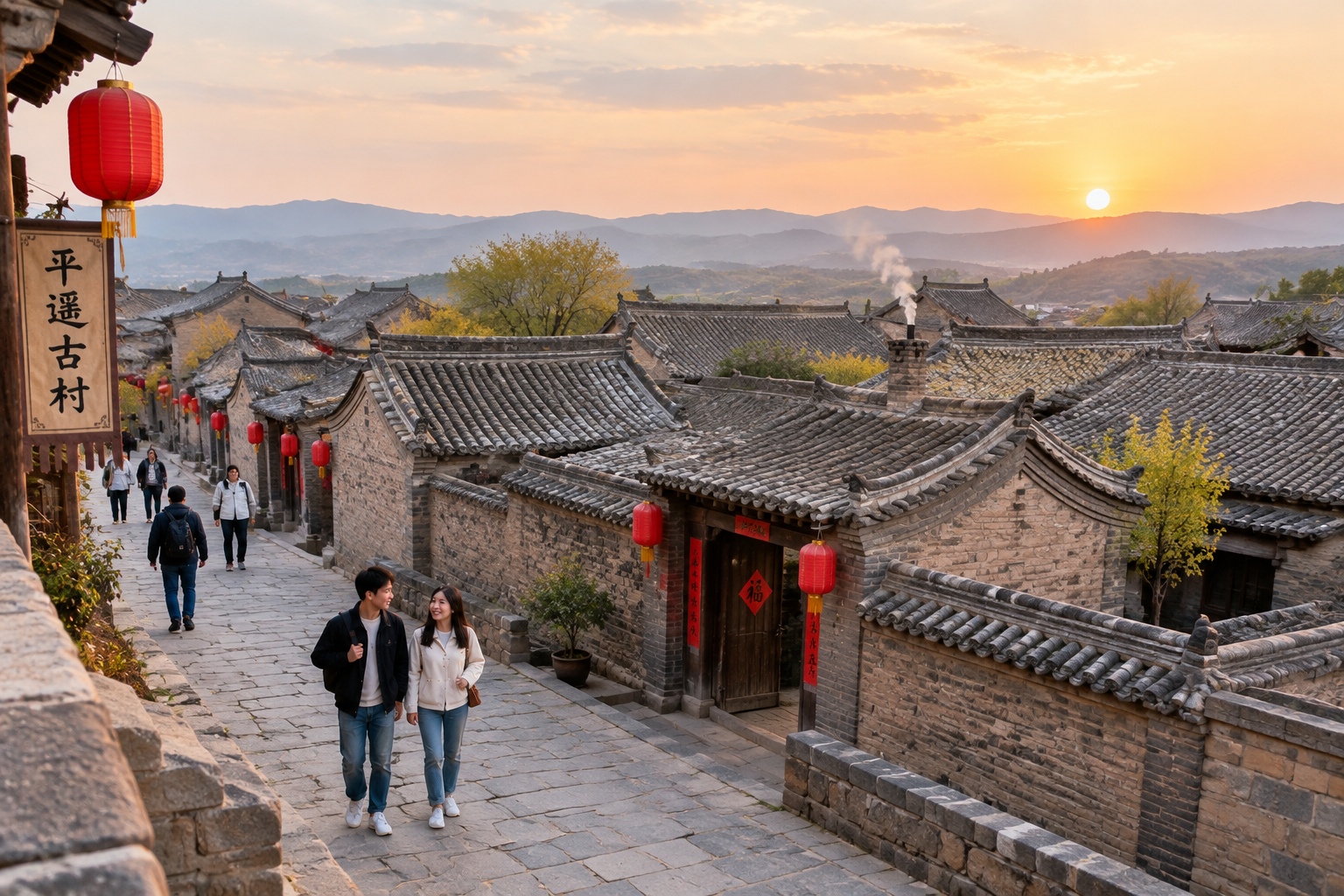
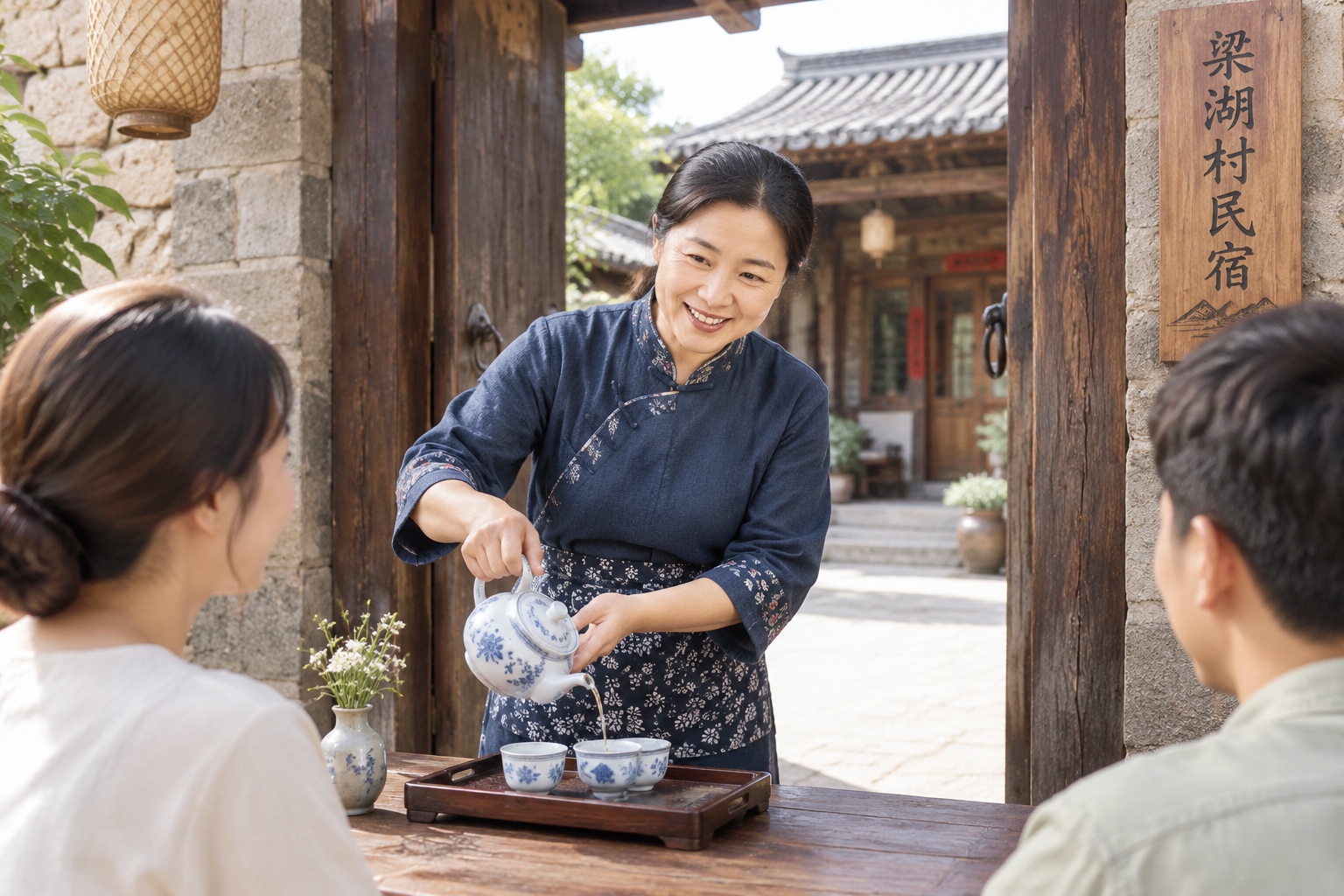
At dusk, the stone-paved alleys of Lianghu Village in Gaoping, Shanxi Province, are lit by the warm glow of lanterns. Li Lanxiang, 54, stands at the door of her family’s 200-year-old courtyard house, now a small guesthouse, and pours tea for a couple from Shanghai. Ten years ago, the roof leaked, the beams were rotten, and she was working as a live-in cleaner in Taiyuan, the provincial capital.
“Now I’m my own boss,” she says, laughing. “I serve breakfast in the morning, clean the rooms, then walk guests up the hill to see the Ming-era temples and the old cypress grove.” She earns about 5,000 yuan (about $700) a month in peak season — almost double what she made in the city. Her daughter, now in college, comes home in summer and helps her post short videos of their courtyard on Douyin, the Chinese TikTok. “She shows the old beams and the pink locust tree,” Li says. “That’s how the couple from Shanghai found us.”
Why Shanxi? Because It Has More Old Villages Than Anywhere Else
Shanxi is to China what Umbria is to Italy: a region with so many centuries-old stone villages that local people sometimes forget they are special. According to official listings, the province has 550 traditional villages designated at the national level — more than any other Chinese province. The most famous one, the walled town of Pingyao, draws tens of thousands of tourists every year. But behind that famous face, there are dozens of humbler, smaller communities that only survived the 1990s demolition wave because they were too poor to rebuild.
For decades, “too poor” also meant too stagnant. Young people left; old houses sagged. In the last ten years, a new development model began to take shape. Local governments, working with tourism companies, started connecting these villages into a broader map. Today more than 50 of them in Shanxi have some form of real tourism operation — guesthouses, museums, study tours, craft workshops. Locals now call it the “ancient architecture economy” (古建经济). This is not the state-planned megaproject you might imagine; it is a slow, messy, often improvisational effort where each village tries a slightly different formula.
From Mining Town to Museum Village: Zhangbi
In Zhangbi Village, at the southern edge of Shanxi’s central basin, the past runs deeper than courtyards. Beneath the village lies a 1,600-meter network of tunnels carved into the loess earth, with living rooms, a granary, a water well, even an escape hatch. The castle above was built in the late 16th century, and the village was once a regional stronghold for a wealthy merchant family.
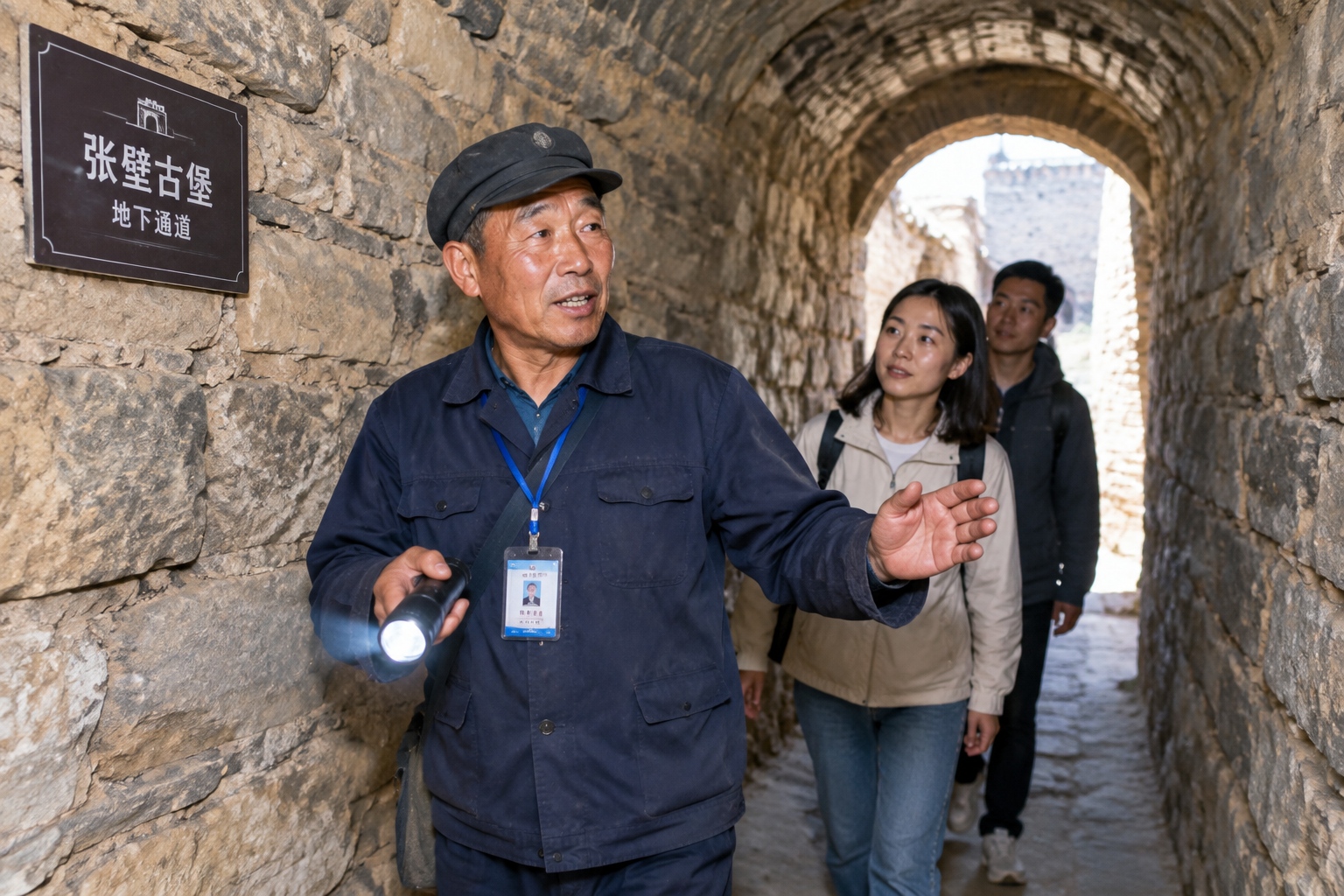
For many years, the main employer was a coal mine. Zhang Guanghai, now 60, worked in that mine from the age of 18. When the underground tunnels were discovered and the government ordered the village to turn the site into a tourist area, he decided to stay and become a guide.
Now he begins his shift every morning at eight with a flashlight. “I show visitors the grain silo where the defenders slept, the false road that led attackers into a dead end, and the stone tablet written in eight different scripts,” he says. “We timed the tour. It takes ninety minutes, and I never repeat myself.” Zhang earns about 3,000 yuan a month, slightly less than his mining salary was, but he says the job has something coal never had: “You end the day clean and with stories.”
Zhangbi’s model is typical for the special villages: the local government pays for renovation, a development company operates ticketing and maintenance, and the villagers either rent out their old houses to the company or hold jobs in the park. Every winter, the village board pays a dividend from ticket sales to each household — about 2,000 yuan last year.
When an Old House Gets a Second Life
In a restored courtyard in the Taihang foothills of southern Shanxi, the main hall is now a shop selling bags of dried persimmons and miniature stone carvings. The east wing is a workshop where a local potter teaches children to make black-glazed bowls, a craft that nearly vanished. The west wing, with a heated brick bed, has been turned into a reading corner where visitors sit and sip a hot, sweet brew of millet wine.
The transformation usually works like this: a tourism company leases the old house from the village collective, pays for renovations, and receives a share of ticket sales. The villagers keep the property — and often get an annual rent plus a job if they want it. It is not all art galleries and coffee. But this is a second life for buildings that would otherwise have collapsed, and it gives ordinary villagers a small reason to stay.
What the Numbers Look Like
The so-called ancient architecture economy is still small, but it is growing. According to tourism officials in Shanxi, the 50-plus villages in the program welcomed more than 4 million visits in 2023, up 35% from 2022. Those visits are thought to support at least 20,000 jobs in the villages — guides, cleaners, cooks, shopkeepers, drivers, carpenters and craftspeople. In Lianghu, several families have doubled their annual income since they started converting their old homes into inns and serving “farmhouse meals” made from vegetables grown in the same courtyards.
Study trips have become an especially strong engine. School districts in cities like Taiyuan, Xi’an and Beijing send students for one-day excursions to draw the wood carvings, practice light calligraphy on stone tablets, and learn how a grain mill used to work. On any weekday in spring, you will see bright blue school uniforms scattered among the grey courtyards.
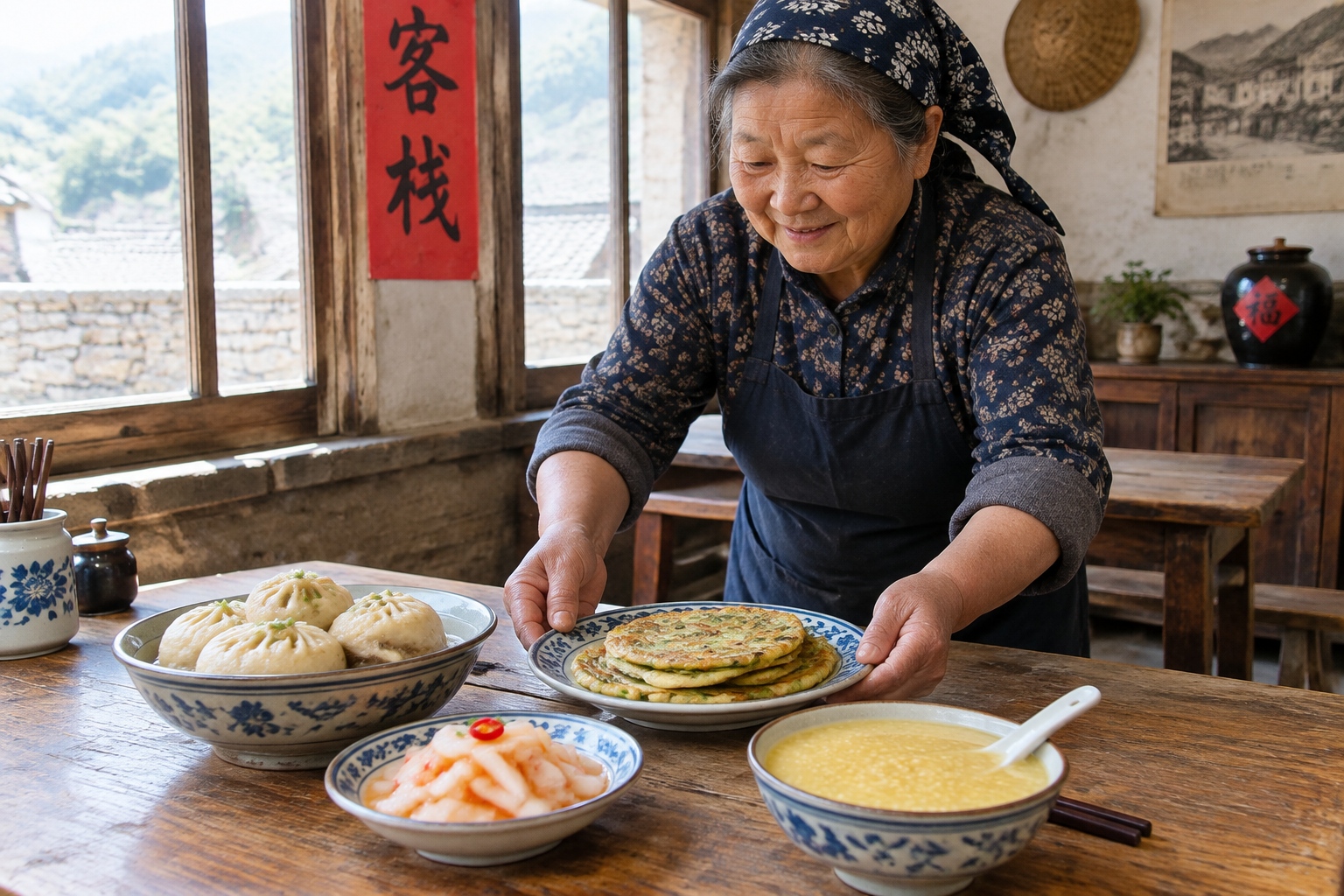
Food is part of the pull. Many inns serve a mix of local dishes that people in the cities no longer cook at home. In Lianghu, for instance, the signature is gaoping shi wan (高平十大碗), a set of ten steamed, braised and fried bowls once served at wedding feasts. Li Lanxiang makes only three of them — “too much work for one person,” she says — but the recipe came from her mother-in-law, and visitors often ask for it repeatedly. Often, after a meal, a guest walks to the next village to buy a jar of local sesame oil or a bag of wild apricots.
What’s Not Going Well
Honesty requires saying that not every village is a success story. Some villages, especially ones without a famous castle or a celebrity connection, are still quiet even on weekends. Old houses need constant, costly structural repairs, and a ticket office alone rarely pays for proper conservation. Some places have gone too far in the other direction, adding plastic flowers and neon signs, or replacing old clay tiles with cheap green roofing, which makes visitors angry. “They are turning history into a decoration,” wrote one travel blogger earlier this year.
There is also the demographic reality. In many villages, over half of the permanent residents are above 60. Tourism creates jobs, but those jobs are often seasonal, and young people still leave. Li Lanxiang’s son works in Xi’an and only comes back for the Chinese New Year. “I don’t expect him to run this guesthouse,” she says. “But I hope it will still be here when he changes his mind.”
Even the developers are beginning to adapt. The newer programs in southern Shanxi now put conditions in contracts: no plastic signage, no new structures taller than the roof ridge, and any guesthouse renovation must keep the original wood beams visible. Some villages are also trying to bring back shared cooking spaces, where grandmothers cook specialties like zhaoji (a fried wheat dish) and old recipes are recorded in small booklets for guests to take home.
Evening on the Stone Path
Whatever the numbers say, the ancient architecture economy is best seen on a weekday evening, when the tour buses are gone and the village goes back to being a village. On a street in Lianghu, an old woman sits on a carved stone threshold, peeling corn for dumplings. A group of schoolchildren kneels in a courtyard with sketchbooks, copying the copper door knockers. A carpenter fits a fresh oak beam into an old wall, using a chisel and a spirit level. Outside the guesthouse, Li Lanxiang switches on a string of lanterns and hangs a handwritten chalkboard with tomorrow’s breakfast menu: millet congee, vegetable pancakes, pickled radish, and a hard-boiled egg.
These villages are not theme parks, and they are not stuck in time. They are places where people are trying to stay on their own land — and support themselves — while surrounded by their own history. Whether they’ll still work in fifty years is uncertain. But for now, the lantern light, the smell of cooking, and the sound of foot traffic in the evening are enough.
Start the discussion at forum.chinacomes.com