

A mining truck that gains charge on the way down
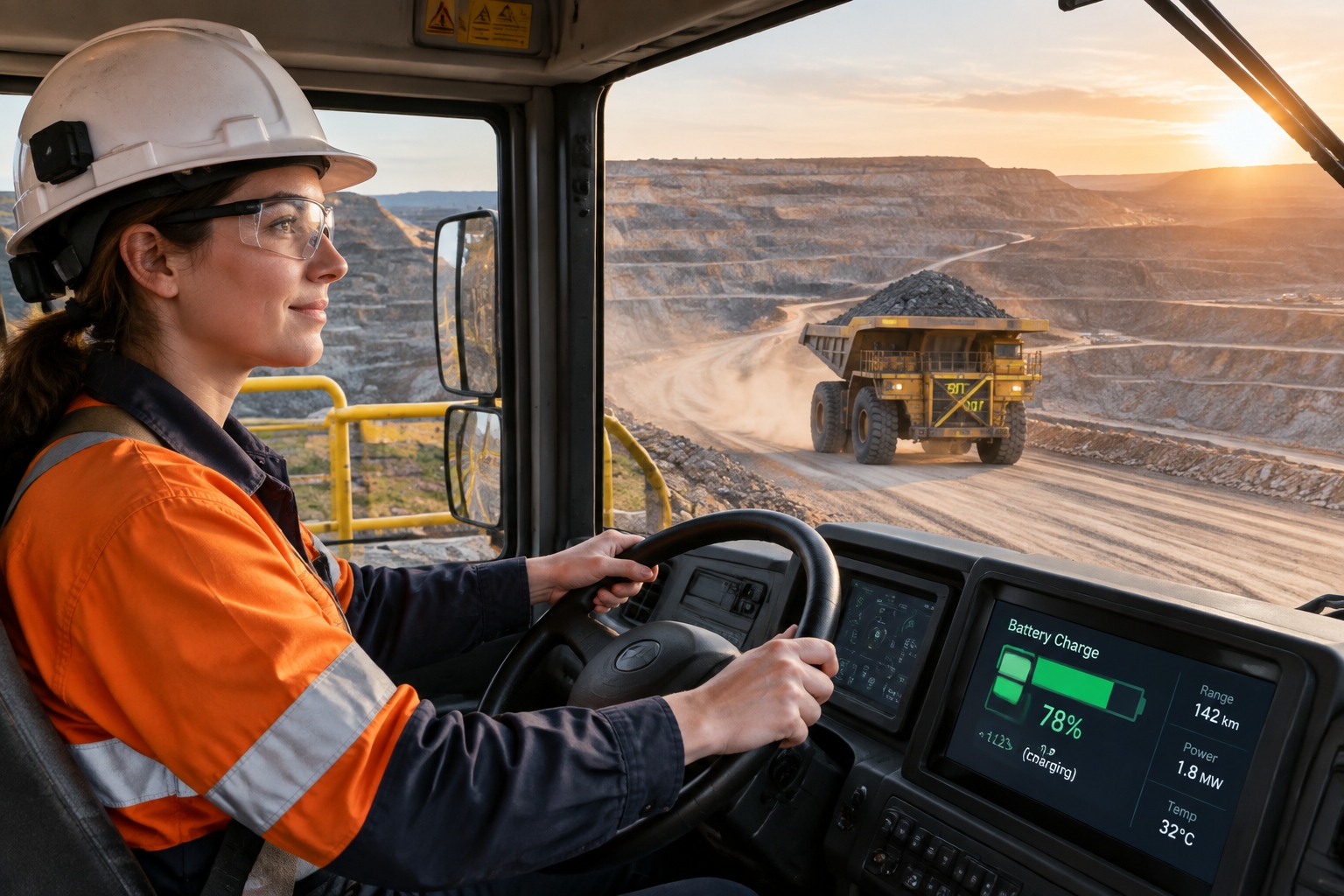
In an open-pit copper mine in northern Chile, 3,800 meters above sea level, a driver named Luis Morales makes about 20 trips a day between the loading bench and the crusher. The road drops for five kilometers. In his old diesel truck, the descent meant riding the brakes and watching the temperature gauge. In the new electric truck he drives now, the battery gauge does something he had never seen: it climbs.
At the top, after loading 150 tons of copper ore, the battery reads 62%. At the bottom, before dumping, it reads 71%. The truck has recovered 9 percentage points of charge on the way down. The motors, running in reverse as generators, turned gravity into electricity.
Why mines are the ideal place for gravity energy recovery
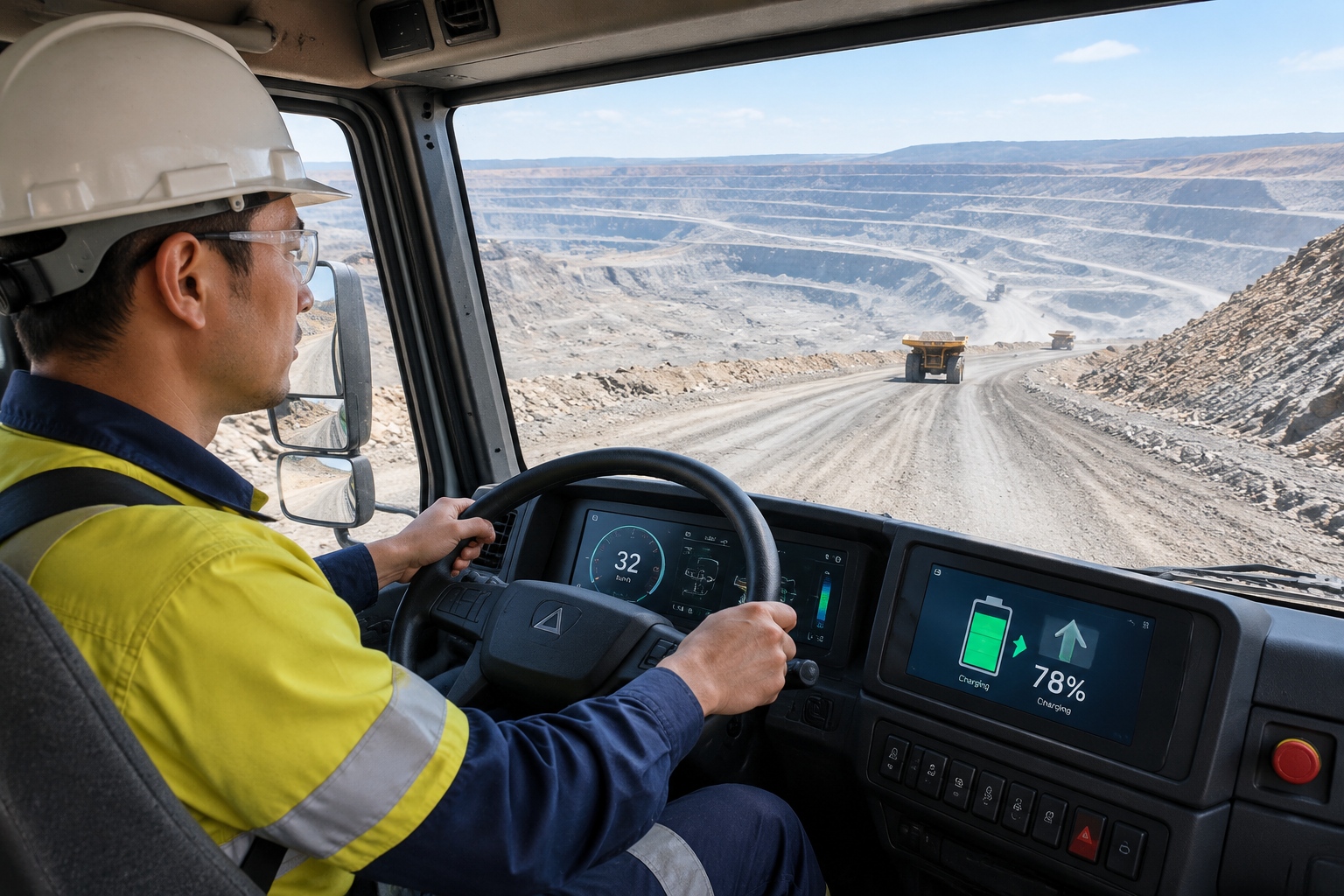
Regenerative braking is not new. Hybrid cars and electric buses have used it for years. What makes mining different is the scale and the predictability. A haul truck in an open-pit mine follows the same route hundreds of times a day. It goes up empty and comes down loaded. The grade is steep enough—typically 8% to 12%—to generate meaningful power on the descent. And the payload is enormous: 100 to 200 tons in a single run.
On a 10% grade, a 150-ton truck descending at 20 kph can produce 300 to 500 kilowatts of regenerative power. That is enough to run the truck’s auxiliary systems and put a substantial charge back into the battery. The heavier the load, the more energy the descent returns. Some sales pitches claim the truck only needs to be plugged in once between purchase and scrappage. That is an exaggeration, but the underlying idea is real: on the right route, gravity does most of the recharging.
“The mine’s own topography becomes a power plant,” one Chinese engineer working in Indonesia put it.
The numbers that make mine managers pay attention
Here is how a round trip works out for a typical 90-ton electric mining truck on a Chinese-operated mine, using local electricity and diesel prices.
- Loaded climb uphill: about 90 kWh consumed
- Empty descent downhill: about 33 kWh recovered
- Net energy for the round trip: 57 kWh
- Electricity cost (at 0.6 yuan per kWh): 34.2 yuan, about $4.70
Now compare a diesel truck on the same route:
- Loaded climb: about 22 liters
- Empty descent: about 4 liters
- Total fuel: 26 liters
- Diesel cost (at 7.5 yuan per liter): 195 yuan, about $27
The difference is 160.8 yuan per trip, roughly $22. At 20 trips a day, that is 3,216 yuan saved daily. Over 300 working days, the annual saving reaches 964,800 yuan—about $133,000.
That is energy cost alone. Mines also save on diesel storage, fuel deliveries, and the workers who manage them. One Chinese mining operator in Guinea told local media that the electric trucks pay for themselves in three years compared with diesel.
Why not every mine can do this
The physics only works under specific conditions. A mine with a flat haul road or a very short descent will not recover enough energy. The economic case depends on slope, distance, and electricity price.
Battery life is another factor. Most electric mining trucks use lithium iron phosphate (LFP) batteries, which are cheaper and more heat-tolerant than nickel-based chemistries. In mining use, LFP packs typically last 3,000 to 4,000 full charge cycles. A truck doing 20 round trips a day might complete one to two full cycles, depending on how much the descent recovers. That translates to four to eight years of service before a battery replacement—roughly the same interval as a diesel engine overhaul, but with lower ongoing cost.
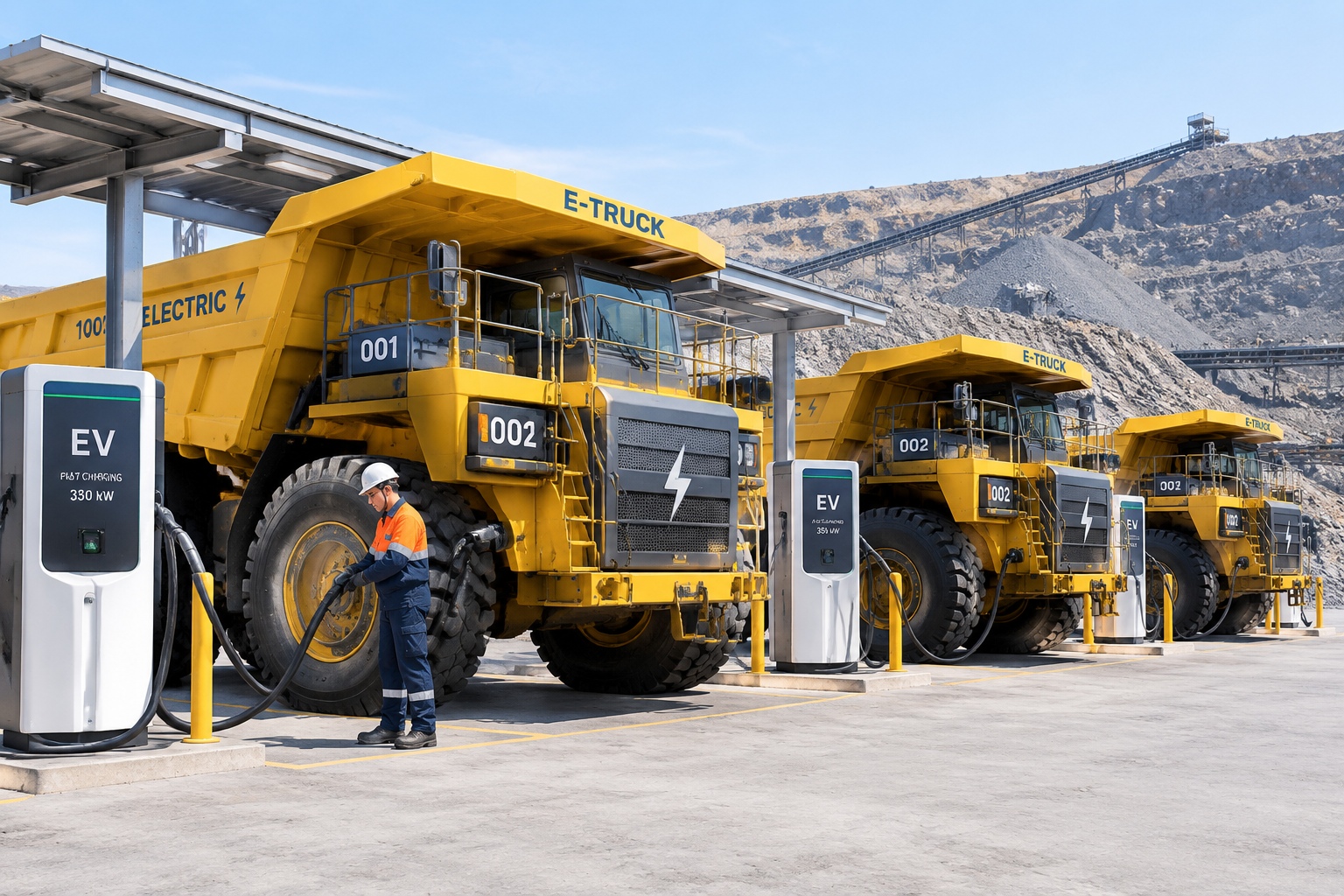
Cold weather is a real constraint. Below minus 20 degrees Celsius, battery performance drops, and the truck needs heating. Mines in Inner Mongolia and Siberia still rely heavily on diesel for winter operations. Weak grid connections are another barrier. A fast-charging station for a mining truck can draw 250 to 500 kilowatts. Mines far from transmission lines need on-site generation or battery storage, which changes the economics.
China’s heavy truck export wave
China exported roughly 300,000 heavy trucks in 2024, according to industry data. That is a small fraction of the domestic market, but a significant shift for global mining. Chinese manufacturers like XCMG, SANY, Tonly, and Yutong now sell electric haul trucks to copper mines in Chile and Peru, nickel mines in Indonesia, bauxite operations in Guinea, and cobalt mines in the Democratic Republic of Congo.
The sales pitch is straightforward: show the mine manager the energy bill. In markets where diesel is expensive and electricity is cheap—which describes many mining regions in Latin America and Africa—the payback period can be under three years. Chinese brands do not carry the decades of loyalty that Caterpillar, Komatsu, and Volvo have built. But the cost gap is wide enough that loyalty becomes secondary.
What this means beyond mining
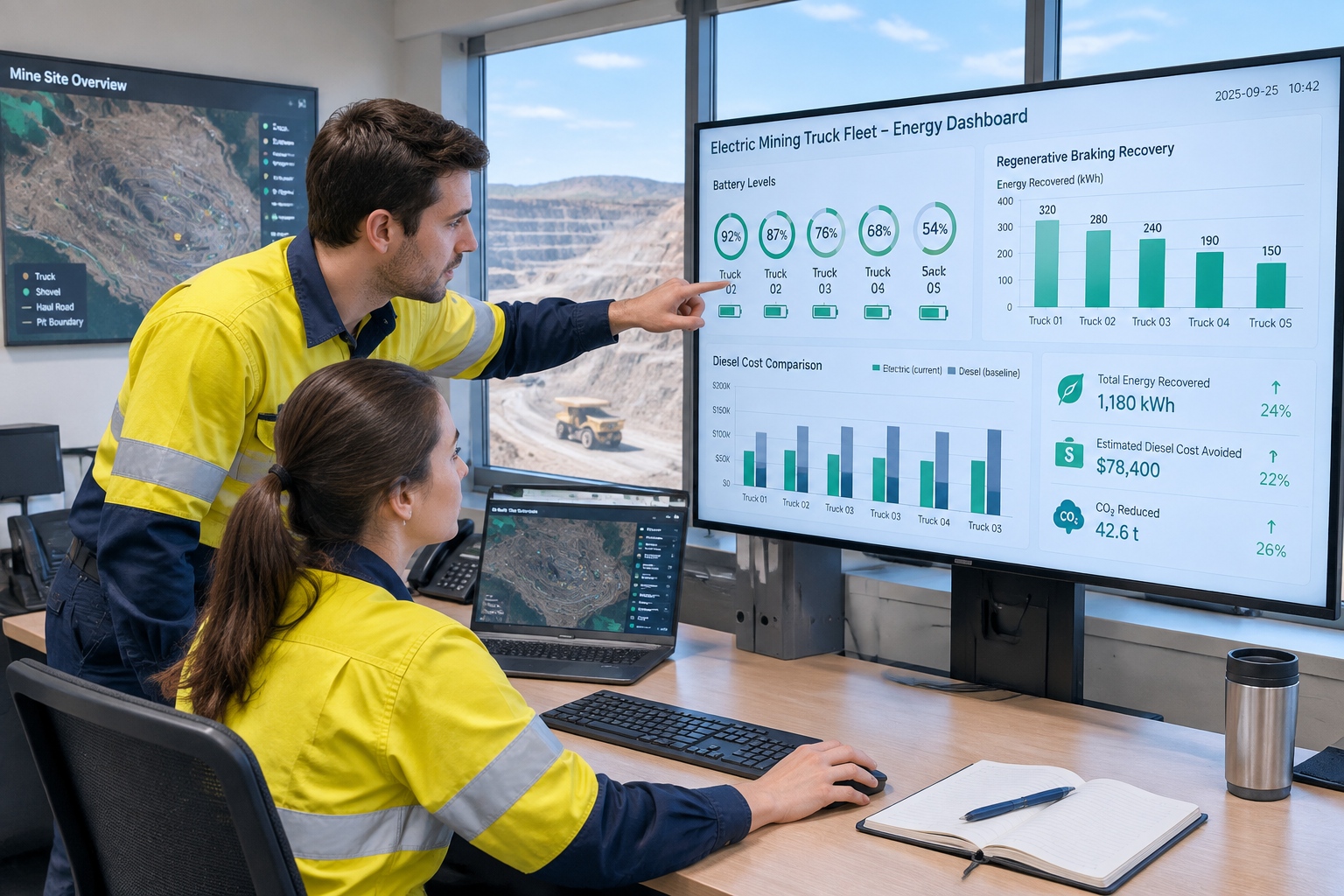
Electric mining trucks are a niche within a niche. But they show something that applies more broadly: the energy transition is not only about passenger cars and solar panels. It is also about heavy industry, where the economics of diesel are being challenged by batteries and software.
The same regenerative technology is appearing in electric excavators, port cranes, and delivery trucks on hilly routes. In each case, the question is not whether the technology works. It is whether the local conditions—slope, distance, electricity price, battery life—make the math work.
For a mine manager in Chile or Indonesia, the calculation is simpler. Every downhill run is a free charge. The mountain pays part of the fuel bill.
Start the discussion at forum.chinacomes.com