
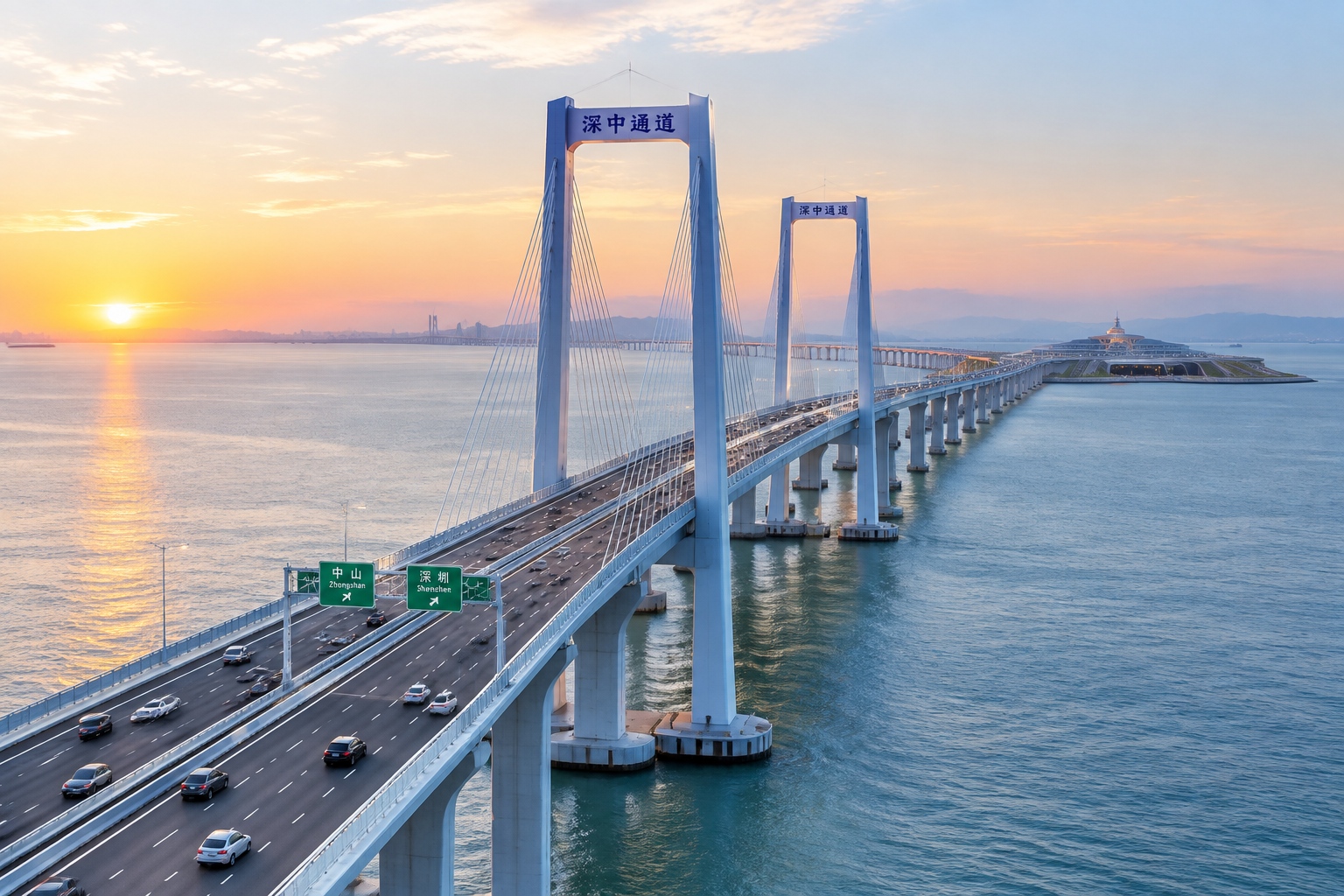

A Commute That Changed Overnight
For years, Li Wei, a logistics supervisor in Shenzhen, dreaded his weekly trip to his company’s factory in Zhongshan. The 100-kilometer journey around the Pearl River Estuary took at least two hours—often more with traffic. He would leave before dawn and return after dark. Then, on June 30, 2024, the Shenzhen-Zhongshan Link opened. Now, Li crosses in about 30 minutes. “I can have breakfast in Shenzhen and be at the factory before my morning meeting,” he says. “It’s not just faster; it changes how we plan our work.”
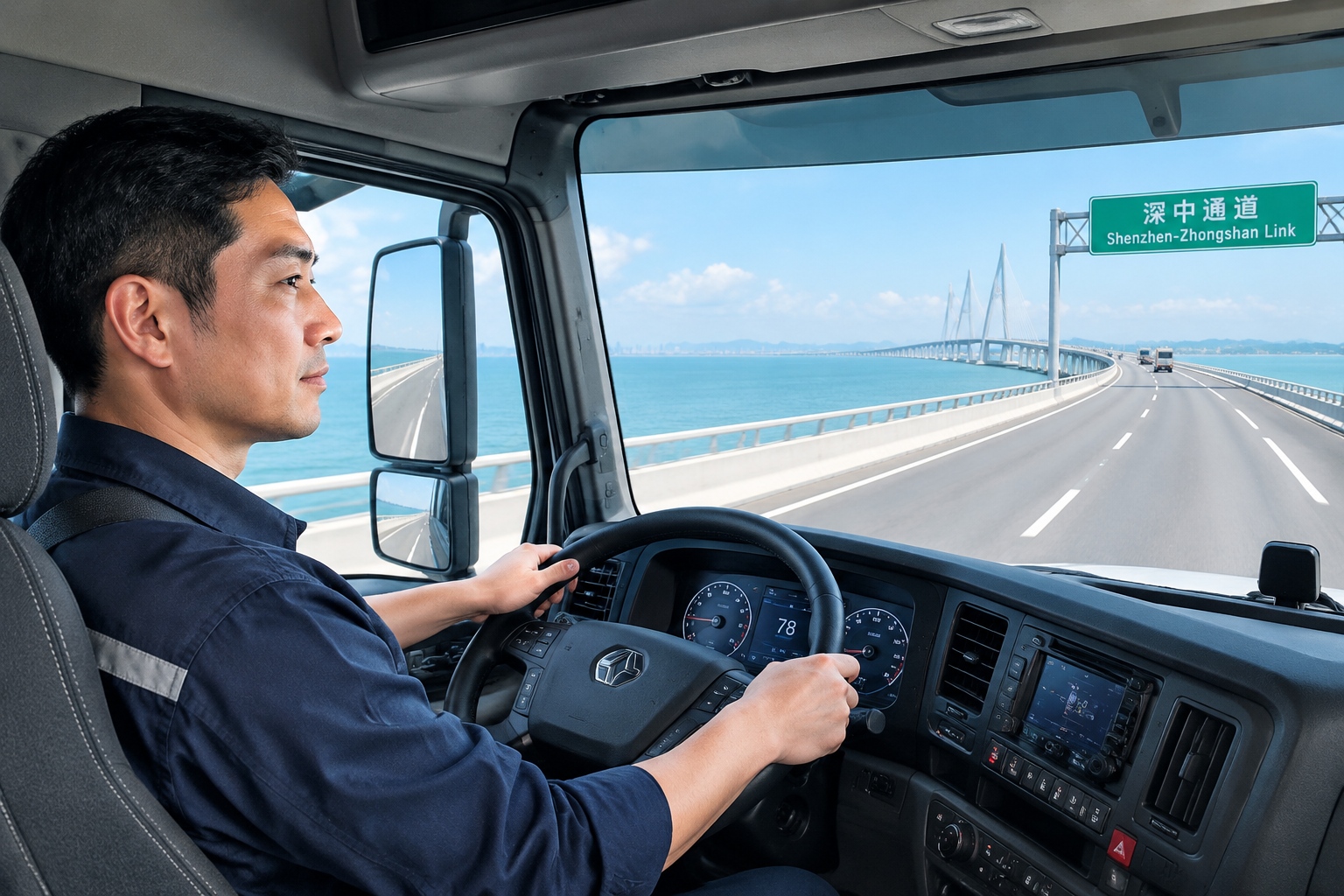
Li’s experience is exactly what the new link was designed to deliver. But behind that 30-minute crossing is one of the most complex infrastructure projects China has ever built—a combination of bridge, artificial islands, an underwater tunnel, and a first-of-its-kind underwater interchange.
What Is the Shenzhen-Zhongshan Link?
The Shenzhen-Zhongshan Link (深中通道) is a 24-kilometer (15-mile) highway connection across the Pearl River Estuary in southern China. It links Shenzhen, a tech hub of over 17 million people, with Zhongshan, a manufacturing city of about 4.4 million. Before the link, drivers had to take a long detour north over the Humen Bridge or use ferries. The new route slashes the drive from roughly two hours to 30 minutes.
It’s part of the Greater Bay Area (GBA) initiative, a plan to integrate Hong Kong, Macao, and nine Guangdong cities into a single economic zone. But unlike the Hong Kong-Zhuhai-Macao Bridge (HZMB), which mainly connects Hong Kong and Macao to the mainland, the Shenzhen-Zhongshan Link is built for daily commuting and domestic freight. It’s a people-and-goods mover, not just a symbolic ribbon.
Bridge, Island, Tunnel, Underwater Interchange: Four Parts, One System
Driving the link is a sequence of engineering surprises. The route starts in Shenzhen, rises onto a 17-kilometer bridge, dips onto an artificial island, plunges into a 6.8-kilometer underwater tunnel, passes through an underwater interchange, and emerges on another artificial island near Zhongshan before connecting to the mainland highway.
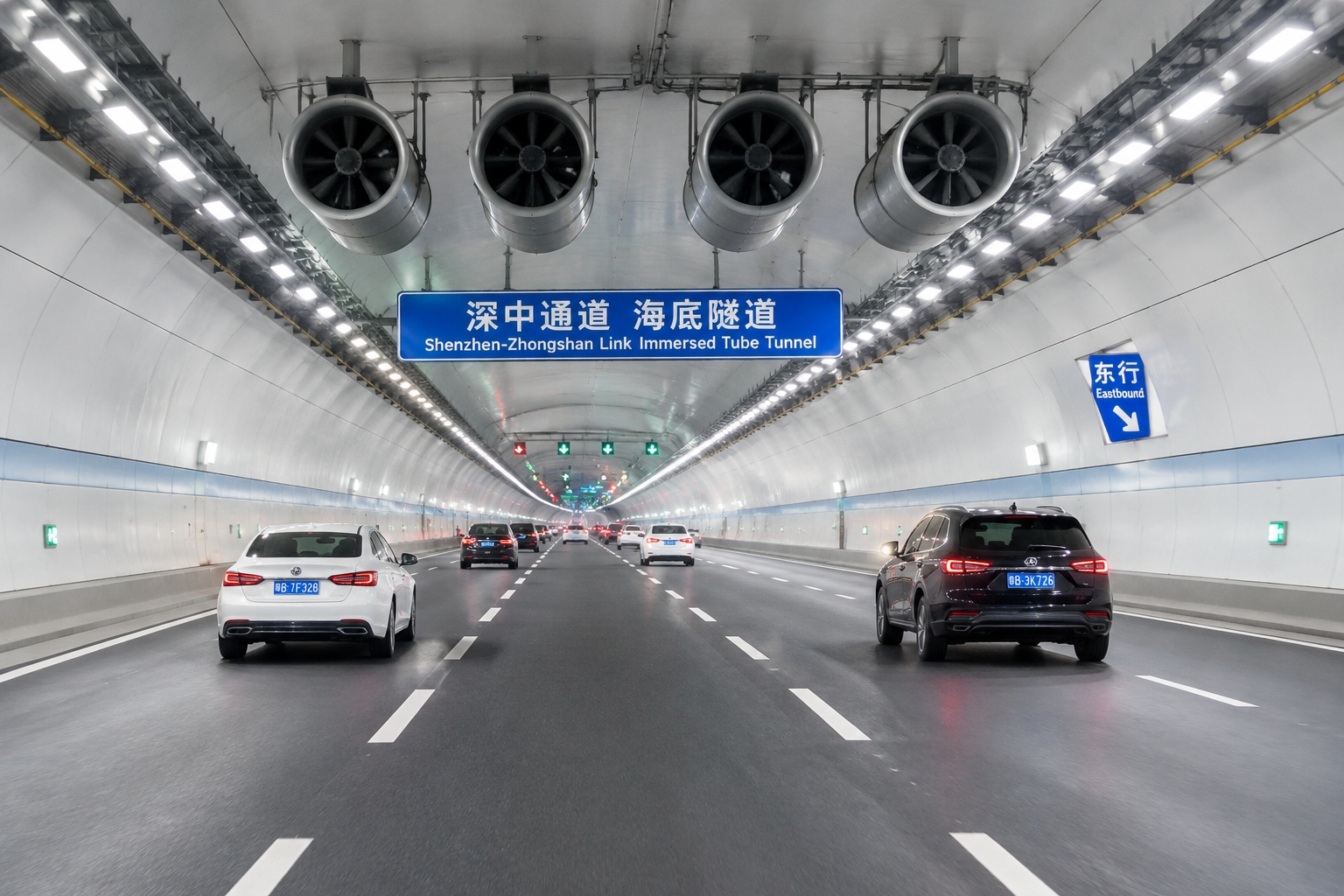
Each component plays a specific role:
- The bridge carries traffic over the shallow waters and busy shipping lanes near the coast. Its two 270-meter-tall towers are visible for miles.
- The artificial islands serve as transition points between the bridge and the tunnel. They also house ventilation equipment and emergency services.
- The immersed tube tunnel is the core of the crossing. It’s 6.8 kilometers long and 46 meters wide—the widest immersed tube tunnel in the world, with eight lanes. It was built by sinking 32 prefabricated tube sections into a trench on the seabed and joining them underwater.
- The underwater interchange is a world first. Inside the tunnel, a branching passage allows vehicles to switch between the main line and a connecting ramp—like a highway interchange, but underwater. This avoids building additional artificial islands and reduces disruption to shipping.
The Numbers That Make It Real
Key technical specs:
- Total length: 24 km (bridge: 17 km, tunnel: 6.8 km, plus approaches)
- Lanes: 8 (four each direction)
- Design speed: 100 km/h (62 mph)
- Travel time saved: from 2 hours to 30 minutes
- Immersion depth: up to 40 meters
- Project cost: about 44.7 billion yuan (US$6.2 billion)
For a daily commuter, the difference is stark. A trip that used to eat half a day now fits into a lunch break. For freight companies, it’s a game-changer. A truck carrying electronics from Shenzhen to Zhongshan no longer needs to circle the estuary—it can cross directly, saving fuel, time, and tolls.
Building in a Typhoon Zone and a Busy Shipping Lane
The Pearl River Estuary is one of the busiest waterways in the world. The Lingdingyang Channel, which the link crosses, sees over 4,000 ships daily. Engineers had to design a structure that wouldn’t disrupt this flow. The solution—a tunnel under the main channel and a bridge over the side channels—keeps the shipping lanes clear.
Then there’s the weather. The region is hit by typhoons almost every summer. The immersed tube tunnel had to withstand waves, currents, and the threat of typhoons during construction. To install each 165-meter, 80,000-ton tube section, engineers used a massive floating crane and precise positioning systems. They also built a temporary island to shield the installation work.
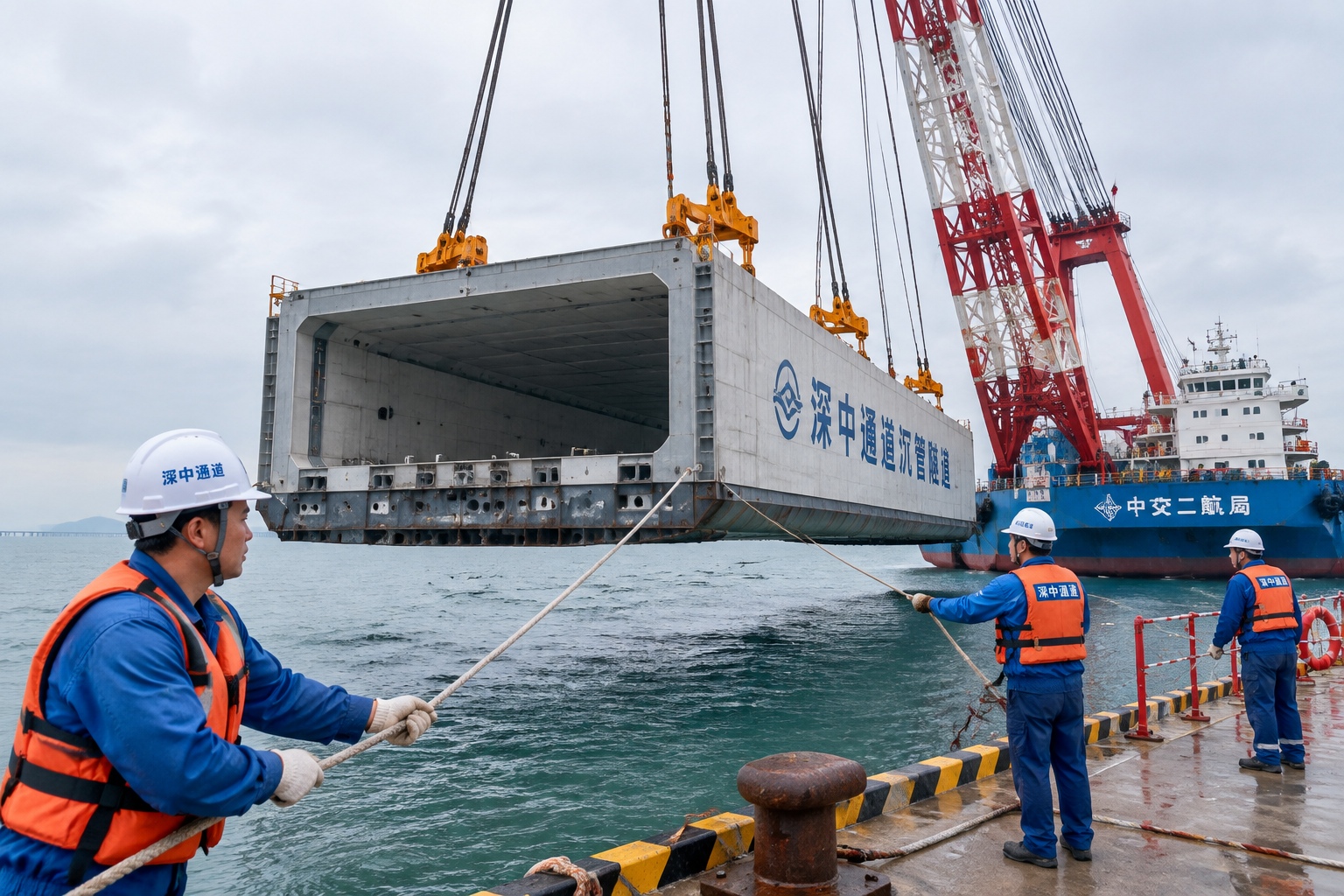
Another challenge: the tunnel had to be built without interrupting the flow of the Pearl River. The solution was to prefabricate the tubes on land, float them to the site, and sink them into a pre-dug trench. This method, called immersed tube tunneling, is common for underwater crossings, but doing it on this scale in a typhoon-prone, high-traffic area was unprecedented.
Safety and Smart Features Inside the Tunnel
The tunnel is not just a tube. It’s equipped with advanced ventilation, fire suppression, and traffic monitoring systems. More than 200 jet fans circulate fresh air, and a network of sensors detects incidents in real time. If an accident occurs, variable message signs and lane control signals guide drivers. The underwater interchange also has its own set of ramps and signage to prevent confusion. For drivers, the experience is similar to any modern highway tunnel—except that you’re 40 meters under the sea, and the exit might lead to a different city.
What It Means for Everyday Life
For commuters, the link has created new possibilities. Some Shenzhen workers are now considering living in Zhongshan, where housing is cheaper. “I can rent a three-bedroom apartment in Zhongshan for the price of a studio in Shenzhen,” says Chen Rong, a software engineer who started making the daily trip in July 2024. “The 30-minute drive is worth it.”
For logistics, the impact is immediate. Zhongshan’s manufacturers—furniture, lighting, home appliances—can now ship goods to Shenzhen’s ports faster. Shenzhen’s tech companies can access Zhongshan’s factories more easily. The link also connects to the Shenzhen Bao’an International Airport, making it easier for Zhongshan residents to fly.

Tourism is another beneficiary. Zhongshan’s historic towns and food streets are now a short drive from Shenzhen. On weekends, families from Shenzhen head to Zhongshan for its famous roast pigeon and traditional gardens. Bus companies have added new routes.
How It Compares to the Hong Kong-Zhuhai-Macao Bridge
The HZMB, opened in 2018, is a 55-kilometer bridge-tunnel system connecting Hong Kong, Zhuhai, and Macao. It’s longer and more famous, but its function is different. The HZMB primarily serves cross-border traffic between Hong Kong, Macao, and the mainland, with customs and immigration checks at its ports. The Shenzhen-Zhongshan Link, by contrast, is an internal route within mainland China. It has no border controls, and its purpose is to integrate the daily economic life of the GBA’s eastern and western shores.
In simple terms: the HZMB connects three regions with different systems. The Shenzhen-Zhongshan Link connects two cities in the same system, making them feel like one. That’s why it’s often called the “inner bay” connection.
The Bigger Picture: A Region That Moves Together
The Shenzhen-Zhongshan Link is more than a road. It’s a statement about how China is trying to knit together its most dynamic region. The GBA has a combined GDP of about 13 trillion yuan (US$1.8 trillion)—larger than many countries. But its cities have historically been separated by the estuary. The new link, along with other projects like the Guangzhou-Shenzhen-Hong Kong Express Rail Link, is turning the GBA into a single labor market and supply chain.
For people like Li Wei, the logistics supervisor, the change is personal. “I used to think of Zhongshan as a distant place,” he says. “Now it’s just across the water.” That feeling—of distance collapsing—is what infrastructure does at its best. It doesn’t just move vehicles; it changes how people imagine their own lives.
Start the discussion at forum.chinacomes.com