
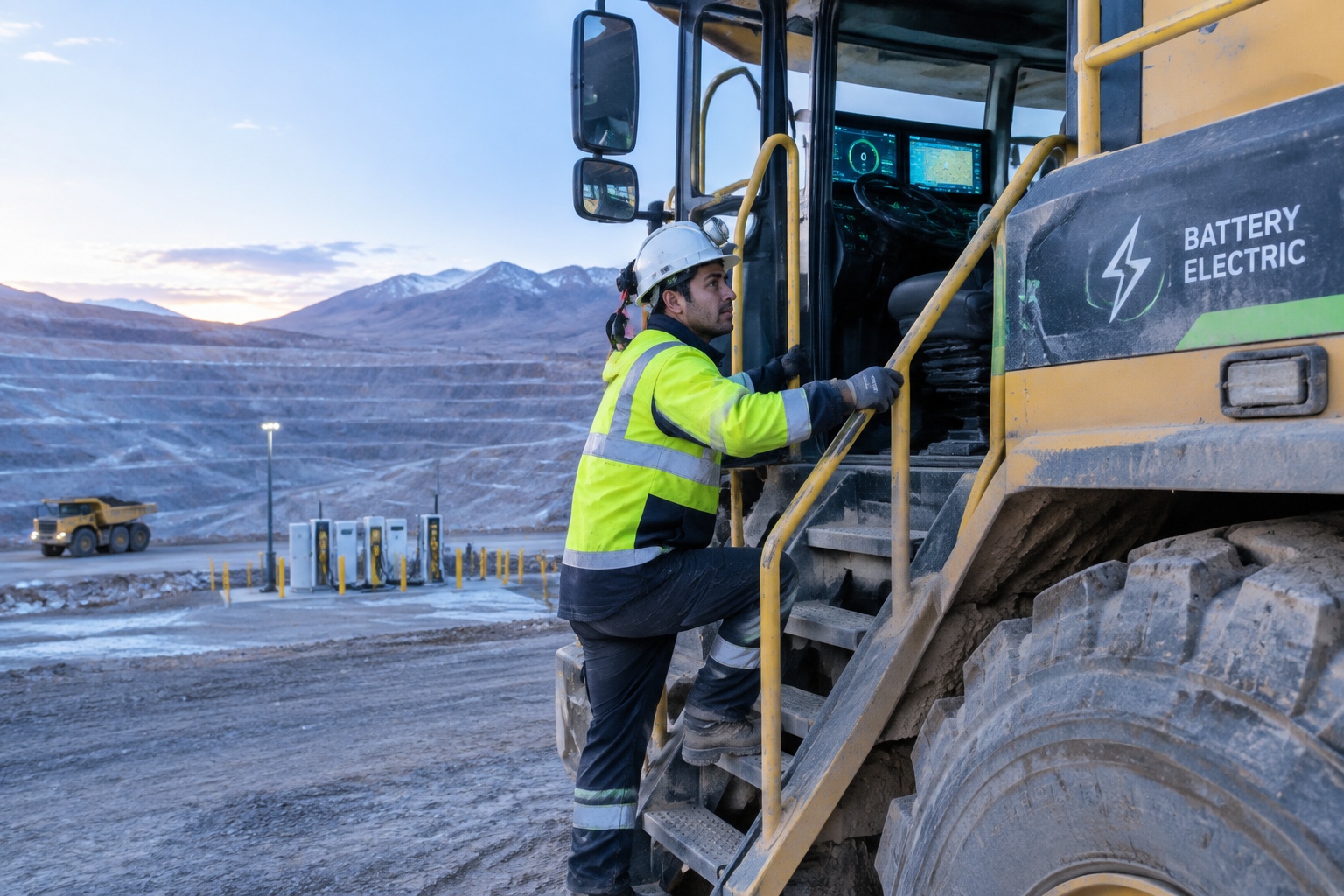

5:40 a.m., 3,200 metres, northern Chile
At 5:40 on a winter morning in the Atacama Desert, a haul truck driver climbs three metal steps into a cab the size of a small bathroom. Outside it is close to freezing and completely dark. He sets a thermos in the cup holder, hangs his jacket on a hook behind the seat, and turns the key.
Nothing roars. A fan spins up, a hydraulic pump whines at low volume, and three screens blink awake: battery charge, motor temperature, brake status. On the diesel 240-ton hauler he drove for years, this was the loudest minute of the day — a cold engine starting at altitude, loud enough that talking meant wearing a headset.
This truck is battery-electric and built in China: cab, battery pack, motors, software. Over the past two years, Chinese manufacturers have moved electric haul trucks out of demonstration yards and into production fleets at copper mines in Chile and Peru, bauxite mines in Guinea, nickel operations in Indonesia, and copper-cobalt sites in the Democratic Republic of Congo. What follows is a reconstruction of a shift, assembled from the way drivers, trainers and mine engineers describe their days. The numbers come from operators’ own energy spreadsheets.
Before the first load: what a Chinese electric mining truck driver checks in Chile
The first item on the pre-shift walkaround is not fuel. It is the cable. If the truck charged overnight at a one-to-two megawatt station, the driver unplugs it, coils it, and checks that the connector is clean and dry — fine dust in the Atacama winter is one problem, red bauxite mud in Guinea is another. Then the screens: state of charge around 96 to 98 per cent, battery temperature inside its window, tyre pressure, a brake test, a radio check with dispatch.
Dispatch itself has changed. On a diesel fleet the shift board is mostly about fuel bowsers and oil changes. On an electric fleet it is about charging windows, which one trainer compares to assigning airport gates: twenty trucks, four or six high-power chargers, and a schedule that has to survive a jammed crusher or a two-hour queue at the loading face.
The hardest skill to teach is the opposite of braking. On a long descent the electric motors run backwards, holding the truck while pushing energy back into the pack. Drivers learn to keep their foot off the service brake, let the retarder do the work, and watch the percentage climb as they go down. Get it wrong — too much speed, too much friction braking — and the energy ends up in hot brake discs instead of the battery.
The arithmetic that actually sells an electric haul truck
Mining companies do not buy trucks on brand loyalty. They buy cost per tonne moved, so the sales conversation is mostly a spreadsheet. One operator’s figures for a rigid haul truck doing a loaded climb and an empty return run like this: about 90 kilowatt-hours drawn from the pack going up loaded, about 33 kilowatt-hours recovered coming back down empty. Net for the round trip: roughly 57 kilowatt-hours, or around 34 yuan of electricity.
A diesel truck on the same route burns roughly 22 litres climbing loaded and 4 litres returning empty — 26 litres a trip. At about 7.5 yuan a litre, that is 195 yuan. The gap is close to 160 yuan per trip. At 20 trips a day and 300 working days a year, one truck saves around 965,000 yuan, about US$135,000, in energy alone. That single number is why a mine that has bought the same diesel brand for thirty years will switch in one procurement cycle.
Where the truck descends the ramp loaded, the physics gets friendlier still. A loaded descent returns far more energy than an empty one, and some sites store the surplus to run crushers, loaders, charging piles and site lighting. Gravity, in other words, becomes a fuel supplier.
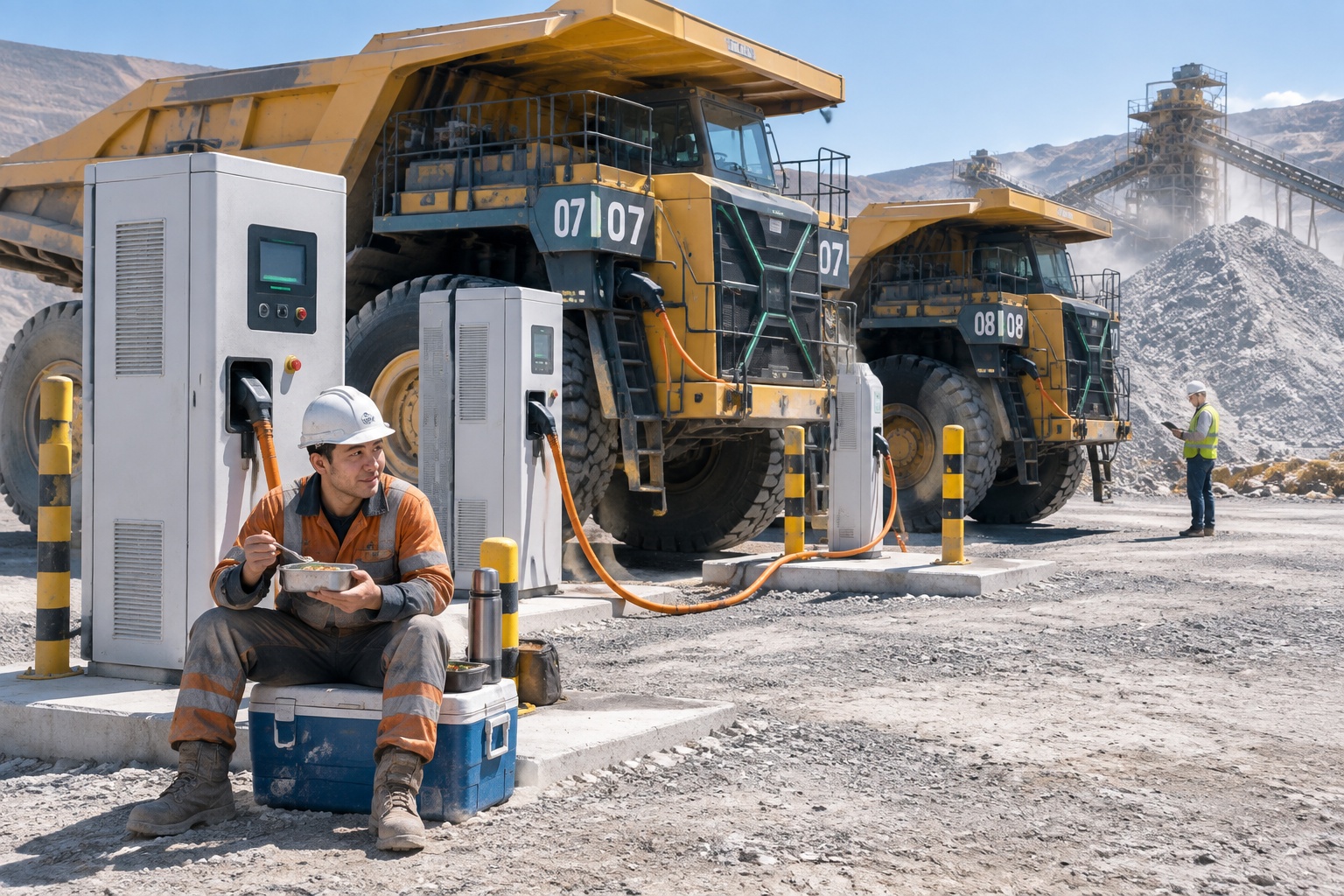
Noise, heat, dust — and a new kind of tired
The change drivers mention first is sound. A diesel haul truck at full load puts 85 to 100 decibels inside the cab; an electric one sits closer to 65 or 70. That difference decides whether you can hear the radio, whether you shout into the walkie-talkie, whether you go home with ringing ears. Hearing damage has long been treated as a normal cost of the job in mining. It is now a design problem.
Then comes dust and heat. No exhaust means no diesel particulate working its way through the cab seals, less soot on the seat cover, fewer headaches at the end of a twelve-hour shift. In Guinea, where humidity sits above 80 per cent for months and the air carries red bauxite dust, drivers notice the difference in their laundry as much as in their lungs.
What has not disappeared is fatigue; it has changed shape. Diesel drivers worry about fuel and mechanical breakdown. Electric drivers watch a number on a screen. Stall on a ramp with a full load and a low pack and you are not just late — you are a 100-tonne obstacle. Some veterans say they preferred the old trucks precisely because the tank never made them do mental arithmetic.
Guinea bauxite: a shorter leash, a wet season, and lunch by the charger
The bauxite plateau around Boké in Guinea is a different world from the Atacama. Lower altitude, brutal humidity, and a wet season that turns haul roads into red slicks. Regenerative braking depends on traction: if the wheels slip, the motors cannot hold the truck and cannot recover the energy either. Drivers say they learn to read the road surface the way they once read engine temperature.
Power is the other constraint. In Chile, many mines sit near a national grid that has absorbed a lot of solar. In Guinea, electricity often comes from on-site generation — sometimes diesel, sometimes solar plus storage. If the power itself is made from diesel, the economic case weakens sharply. That is the honest edge of this story: the truck is only as green as the socket it plugs into.
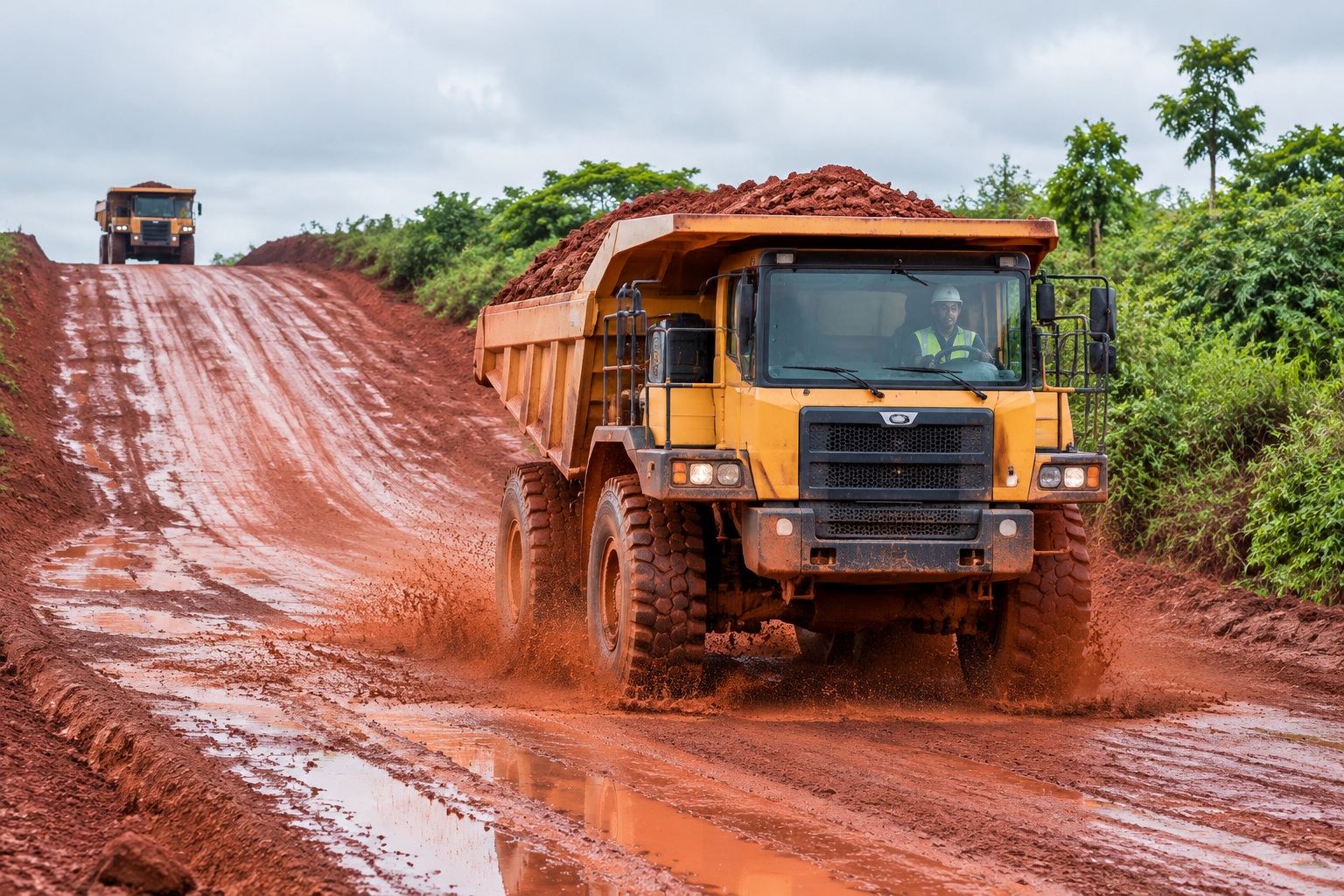
Lunch happens near the charger, because that is where the truck has to be. A 40 to 60 minute high-power session fits neatly into a meal break: rice, cassava, a thermos of tea, a hammock under a shade tree, radio chatter about the afternoon’s routes. Electric fleets push drivers into taking breaks together, at the same bay, at the same time. With diesel, refuelling took eight minutes and everyone scattered.
Fewer oil changes, and job titles that did not exist before
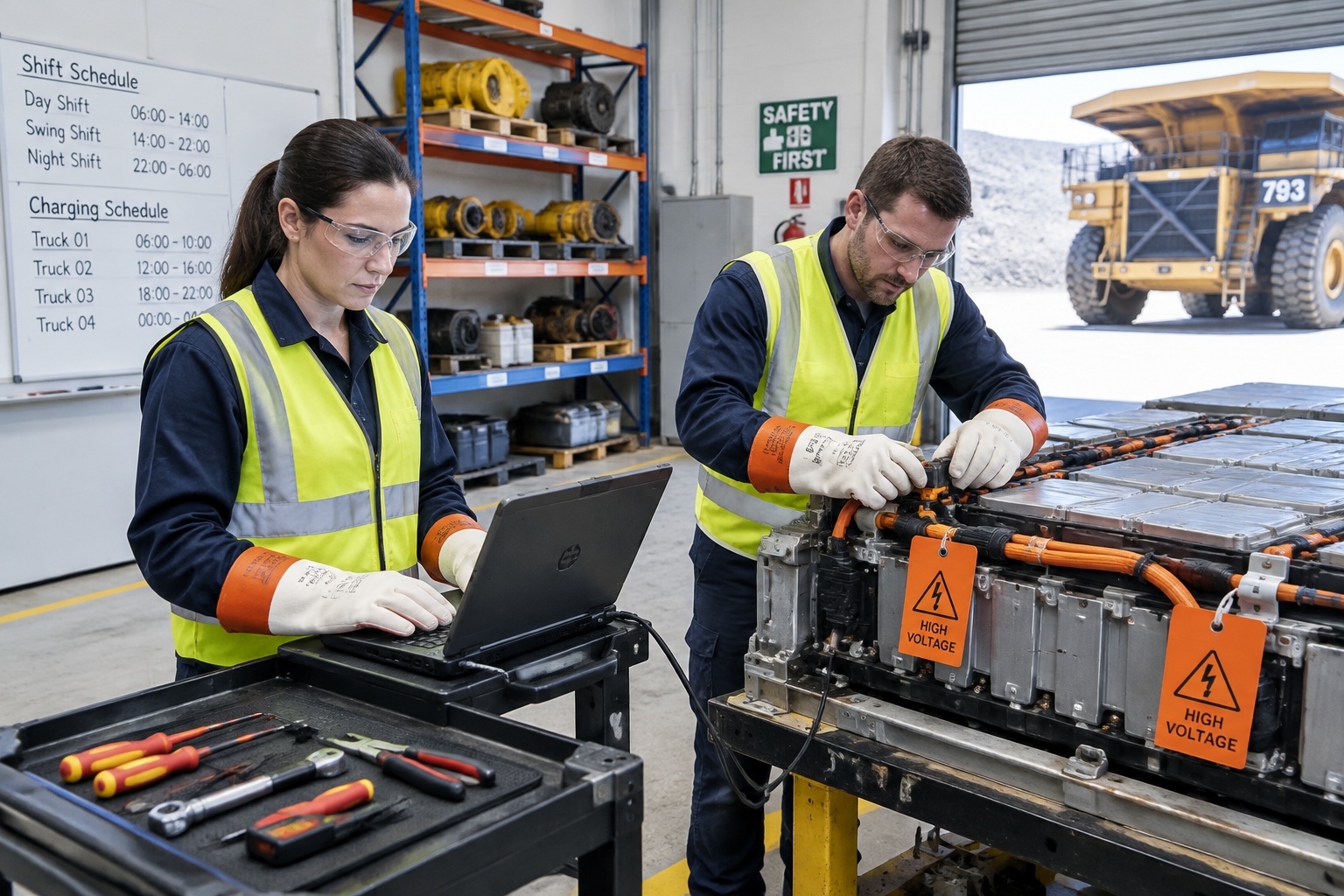
Maintenance moves in the operator’s favour. No engine oil, no oil filters, no fuel filters, no exhaust aftertreatment, and regenerative braking stretches brake life. What replaces them is a different category of work: high-voltage safety certification, insulated tools, battery diagnostics, and technicians who can read a fault code sent over the network from a control centre thousands of kilometres away.
Spare parts are the recurring complaint. A mine that can pull a diesel injector from a regional warehouse in two days may wait weeks for a replacement power module. Chinese manufacturers are building parts hubs and training local crews in Chile, Peru and Guinea, but aftersales depth remains the weak point of the pitch — and the thing that most often decides whether a pilot fleet becomes a permanent one.
Why Chinese heavy trucks are winning mine fleets
Chinese manufacturers exported roughly 300,000 heavy trucks in the first eight months of the year, according to figures circulating in the domestic industry press — a striking number for a category where global annual sales are counted in the hundreds of thousands, not millions. Mining trucks are a small slice of that, but a visible one.
The advantage is not a single invention. It is a domestic battery supply chain, cheaper lithium iron phosphate packs, and software written in a market where electric buses and taxis have been running for a decade. Mines also happen to be the easiest customers to convert: they own their roads, control their charging infrastructure, run fixed routes, and count every litre of diesel.
End of shift, and a number that goes up
At the end of the day the driver parks, plugs in, writes the shift log, and walks to the canteen. The screens go dark. Tomorrow at dawn he will pull out of the bay with a full pack, climb empty for twenty minutes, take on 90 tonnes of ore at the loading face, and head back down the ramp with the motors holding him. On the way down, the state of charge will climb — a point or two every kilometre, from 70 back toward 80.
It is a small thing. But it changes what the cab feels like at the end of a twelve-hour shift: quieter, less soot on the jacket, and one number on a screen that keeps moving the right way while the truck goes downhill.
Start the discussion at forum.chinacomes.com