
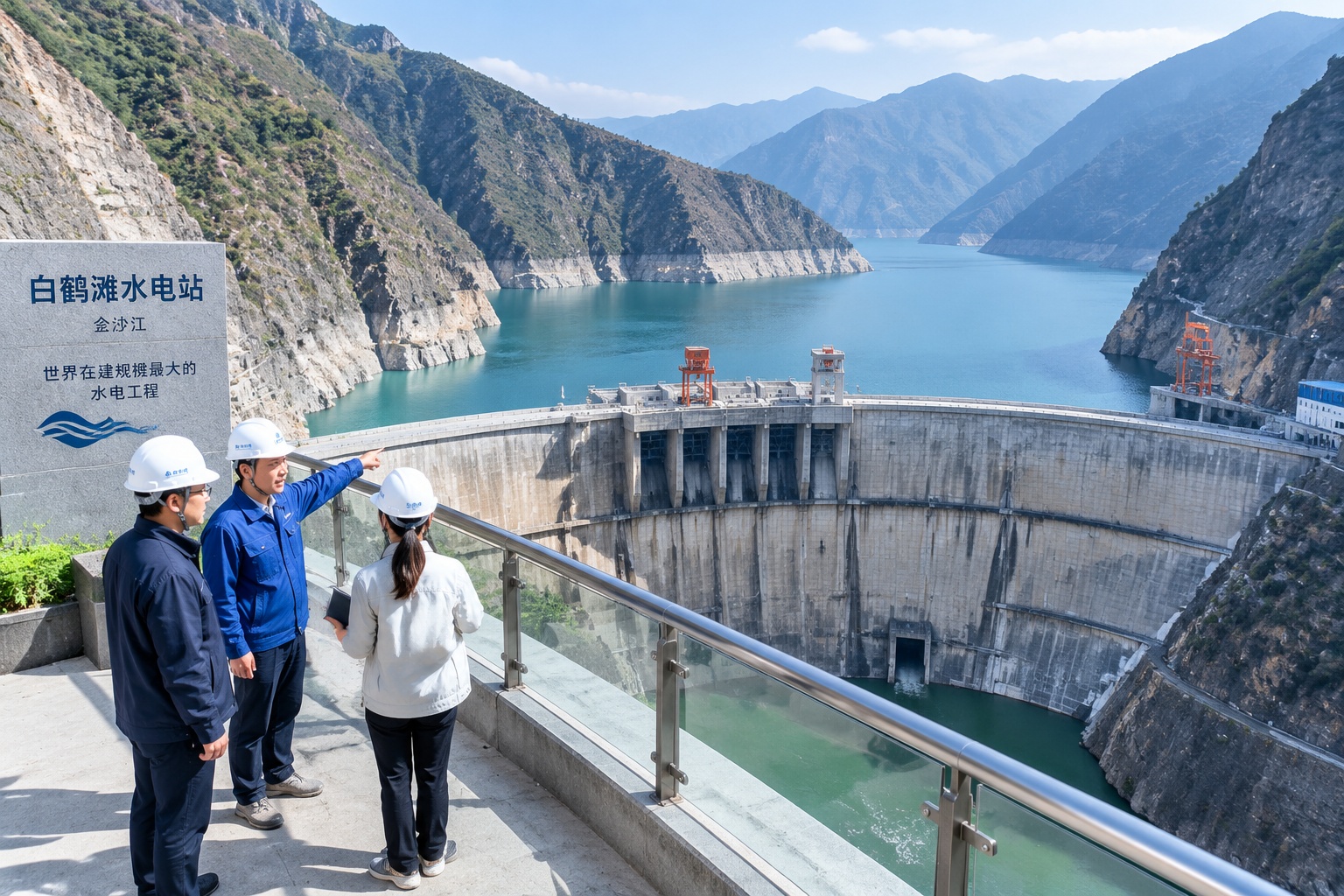

A single turbine that can power a city
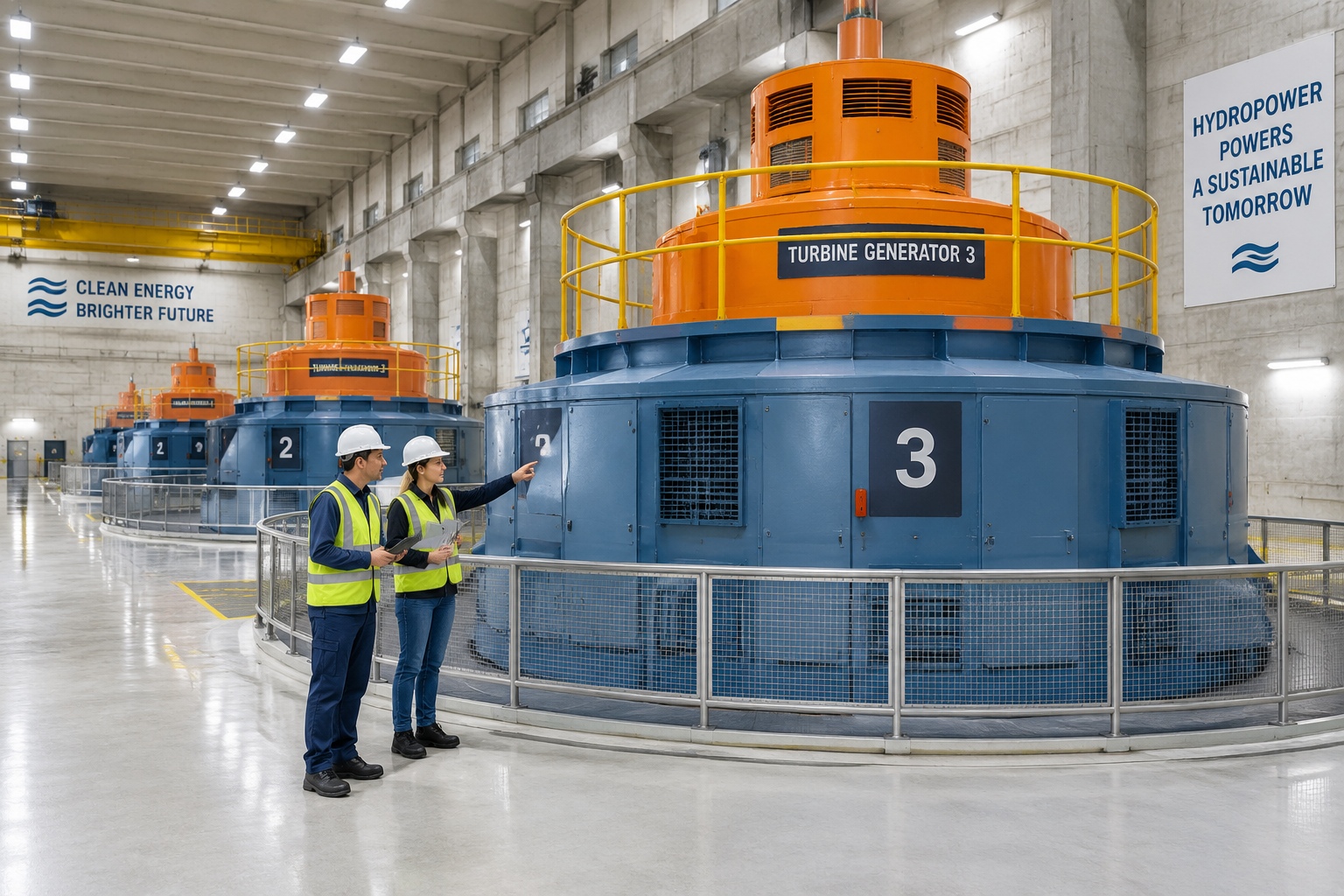
In a concrete cavern deep inside a mountain on the border of Sichuan and Yunnan, a steel shaft spins at about 107 revolutions per minute. The rotor it carries weighs roughly 2,000 tonnes — heavier than a fully loaded Boeing 747 by an order of magnitude. When it reaches full speed, this one turbine generator produces 1,000 megawatts of electricity.
That is the number that makes Baihetan different. Most large hydropower units in China and around the world are rated at 600 to 800 megawatts. Baihetan’s 16 units are each rated at 1,000 megawatts — the largest single-unit capacity ever deployed in a commercial hydropower station. The first two units began generating in June 2021; the final unit entered operation in December 2022.
The station sits on the lower Jinsha River, a major upstream tributary of the Yangtze. Its double-curvature arch dam rises 289 metres, making it one of the tallest in the world. The reservoir behind it stretches back through the steep valleys of southwestern China. Total installed capacity: 16,000 megawatts. Annual output: roughly 62.4 terawatt-hours, or about 0.7% of China’s total electricity consumption.
What “largest single-unit capacity” actually means
Capacity and generation are different things. A 1,000-megawatt unit running at full power for one hour produces 1,000 megawatt-hours. Over a year, with river flows and grid demand, one Baihetan unit can generate around 3.9 terawatt-hours. That is roughly the annual household electricity use of 2 million Chinese families.
Why does unit size matter? Fewer, larger units can lower construction and maintenance costs per megawatt. They also reduce the footprint of the powerhouse. But building a 1,000-megawatt unit is not simply a matter of scaling up a 700-megawatt design. The turbine runner — the rotating part that water pushes against — is 8.6 metres in diameter and weighs about 353 tonnes. It must handle a water flow of about 500 cubic metres per second, which is one Olympic-sized swimming pool every five seconds.
The generators are made by Harbin Electric and Dongfang Electric, two Chinese manufacturers that have spent decades moving from licensing foreign designs to developing their own. The efficiency of the turbine at its best operating point exceeds 96%. The generator rotor, suspended on a thrust bearing that must support thousands of tonnes, spins with tolerances measured in fractions of a millimetre.
Why building it was hard
Baihetan is not in an easy place. The Jinsha River cuts through a narrow, V-shaped gorge. There is little flat land for a surface powerhouse, so engineers hollowed out two massive underground caverns — one on each bank. Each cavern houses eight units. The main caverns are among the largest underground powerhouses in the world, roughly 450 metres long and 30 metres wide.
The region is also seismically active. The dam is designed to withstand a peak ground acceleration of 0.325g, a strong earthquake shaking. To make the arch dam safe, engineers poured about 8 million cubic metres of concrete, cooling it with pipes of circulating water to prevent thermal cracking. The dam’s shape transfers the water’s force into the rock walls of the gorge.
Then there is the machinery. A 1,000-megawatt turbine operates under a rated head of about 200 metres. Water enters through spiral casings and pushes against the runner blades before exiting through the draft tube. Every part must be installed with millimetre precision inside a cavern where humidity and temperature are controlled. Cranes with a lifting capacity of 1,300 tonnes — among the largest in the world — lower the rotor into place.
How the power reaches the coast
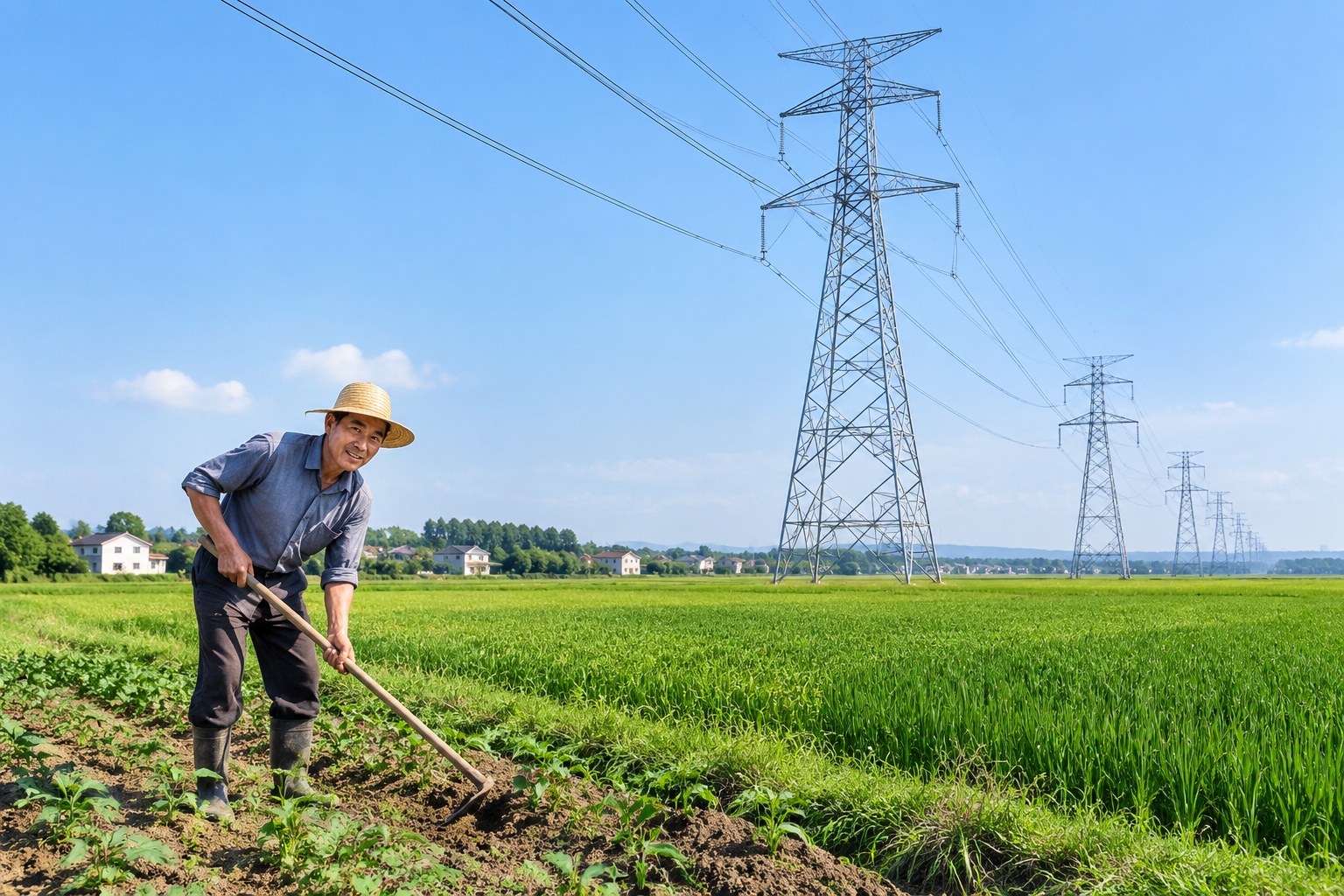
Baihetan’s electricity does not stay in the mountains. It travels to some of China’s most industrialised provinces through two ultra-high-voltage direct current (UHVDC) lines. One runs to Jiangsu province, roughly 2,000 kilometres east. The other runs to Zhejiang. Each line has a capacity of 8,000 megawatts and operates at ±800 kilovolts.
UHVDC is the technology that makes such long-distance transmission practical. Over 2,000 kilometres, transmission losses are in the range of a few percent — much lower than conventional alternating-current lines at the same distance. The lines allow hydropower from the Jinsha River to reach factories, offices, and homes in the Yangtze River Delta, where demand is highest and where coal-fired power has been a major source of emissions.
During the dry season, when river flows are low, the UHVDC lines can also carry power in the other direction if needed. But mostly they flow east. Baihetan’s output helps Jiangsu and Zhejiang meet their clean energy targets and reduces the amount of coal burned in those provinces. The Chinese government estimates that Baihetan’s annual generation replaces about 19.7 million tonnes of standard coal and avoids about 51.7 million tonnes of carbon dioxide emissions.
The river is not the same
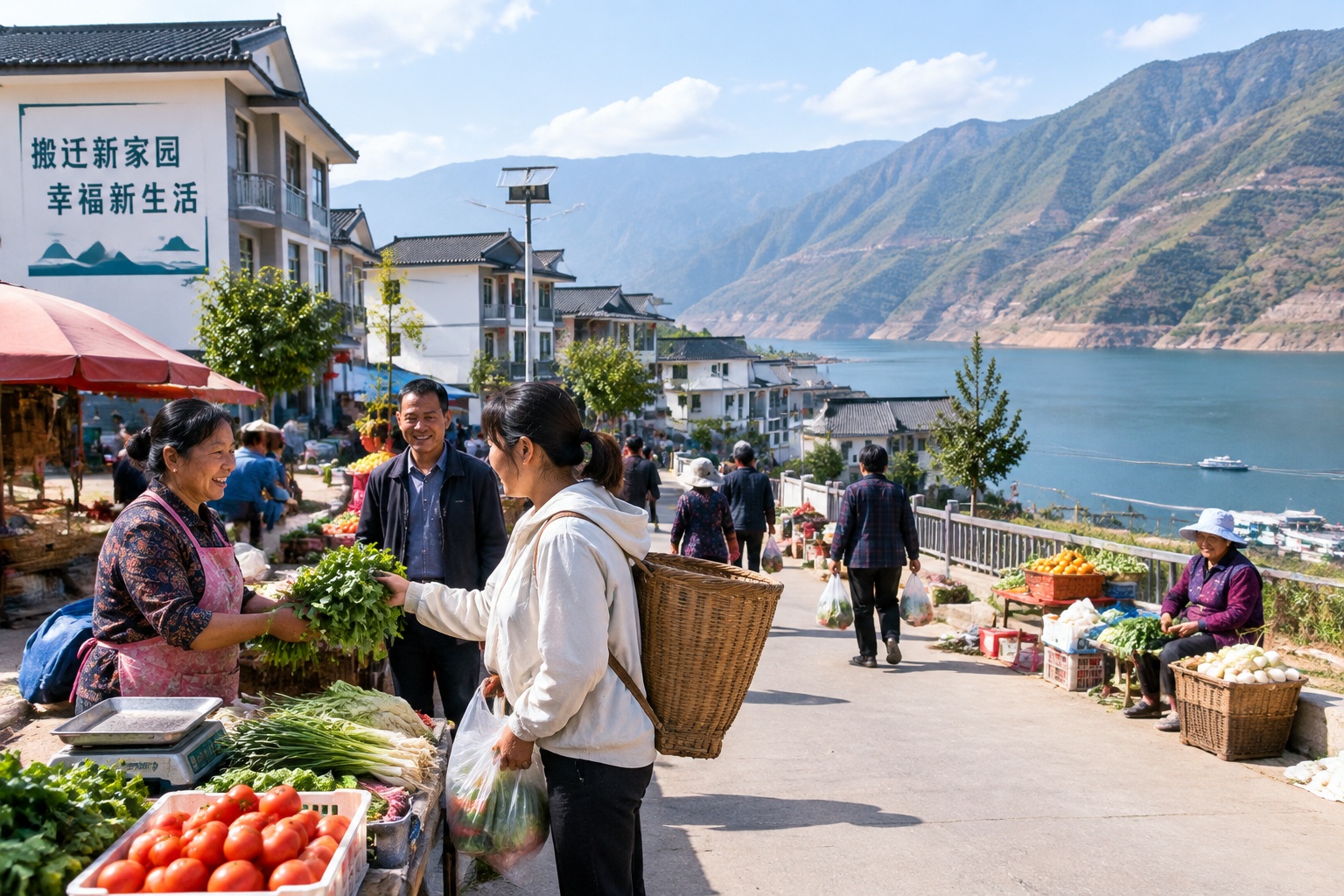
No large dam comes without trade-offs. Baihetan’s reservoir flooded valleys where about 100,000 people lived. Many were relocated to newly built towns and villages, some nearby, some farther away. The resettlement process has been studied and criticised. Farming families received compensation and new land, but adjusting to different soil, different markets, and different social networks takes years. Some new towns have thriving markets; others have struggled to attract businesses.
The dam also changes the river itself. The Jinsha River once carried a heavy load of sediment downstream to the Yangtze. Now much of that sediment settles in the reservoir, which can lead to erosion of riverbanks and the Yangtze delta downstream. The cascade of dams on the lower Jinsha — Wudongde, Baihetan, Xiluodu, and Xiangjiaba — traps sediment on a vast scale.
Ecological scheduling is one response. Reservoir managers release water in patterns that mimic natural floods, which can help trigger spawning in fish species downstream. Fish breeding stations release millions of fingerlings each year to supplement wild populations. But the river’s ecology has already changed. Some endemic fish species in the upper Yangtze are now confined to smaller stretches or protected reserves.
What Baihetan says about China’s energy transition
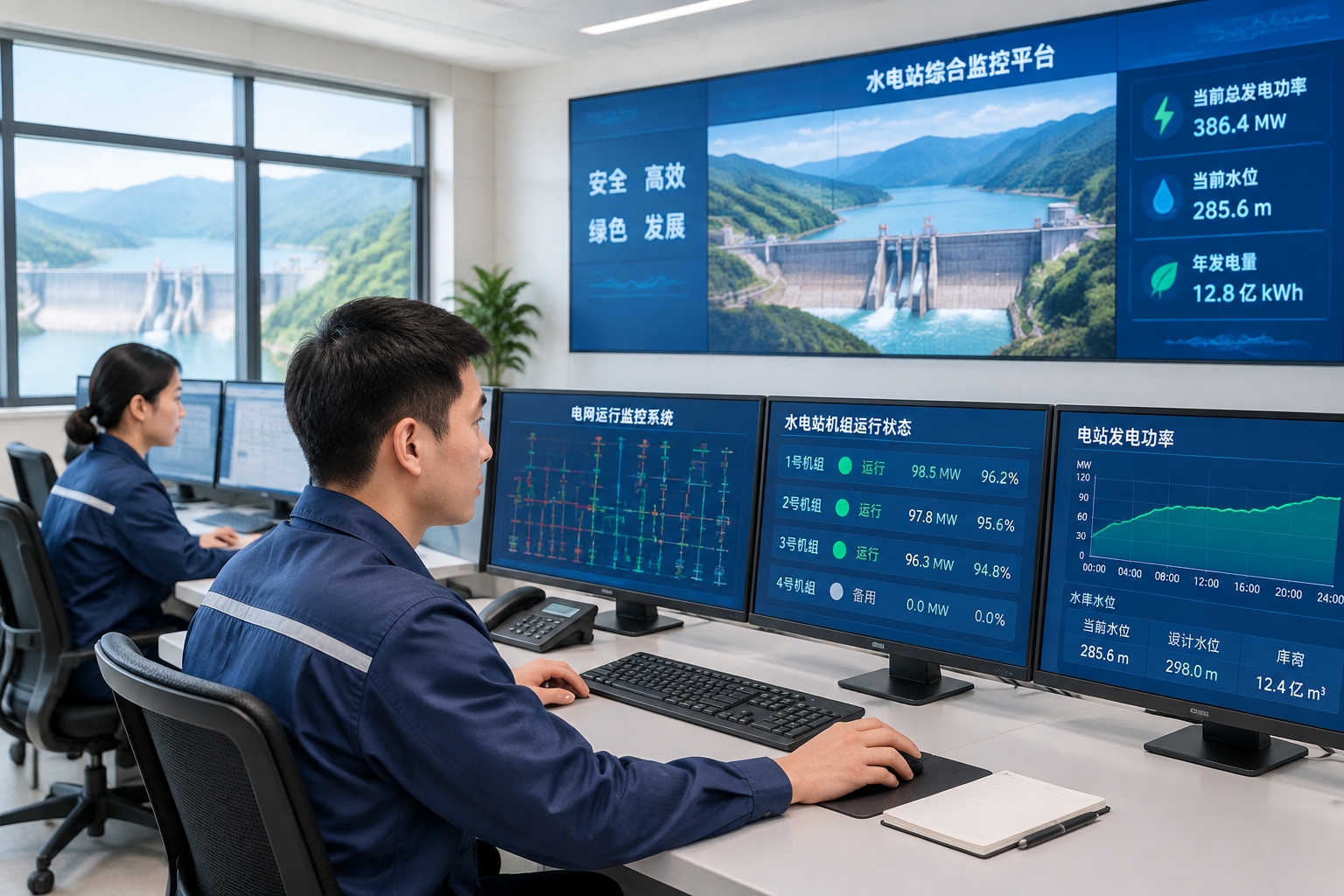
Hydropower is often called the backbone of China’s clean electricity system. It is not just a source of energy; it is a source of flexibility. A hydro unit can start, stop, and change output in minutes, which helps balance the grid when solar and wind power fluctuate. Baihetan’s 16 units give grid operators in eastern China a powerful tool for integrating more renewables.
But the era of giant new hydropower stations on the Jinsha River is largely over. Most of the best sites have been developed. The focus is shifting to solar, wind, nuclear, and storage. Baihetan is a capstone of a decades-long build-out that made China the world’s largest hydropower producer by a wide margin.
For a reader outside China, the station may seem remote — a dot on a map of southwestern China. But the lights it keeps on are in factories in Suzhou, offices in Hangzhou, and homes in Nanjing. The distance between a spinning turbine in a mountain and a switch on a wall in a coastal city is about 2,000 kilometres, and about 10 milliseconds. That is the quiet work of infrastructure: to make something enormous feel ordinary.
Start the discussion at forum.chinacomes.com