
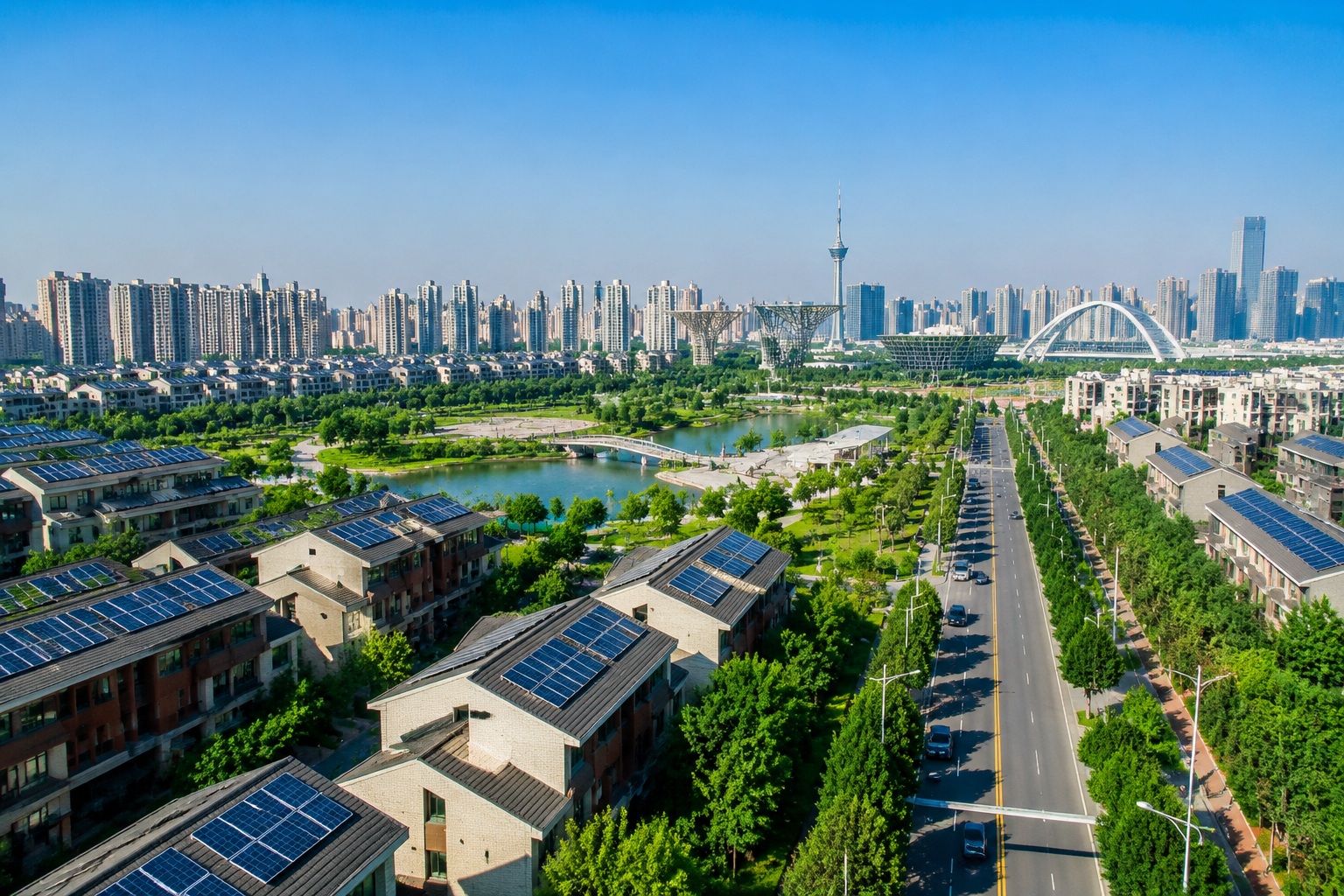

Introduction: A Green Oasis on Salt Flats
On a bright morning, a group of residents in the Sino-Singapore Tianjin Eco-City are practicing tai chi in one of its many parks. Around them, solar-powered street lamps line the paths, and the air smells of freshly cut grass — a stark contrast to the city’s industrial past. Just fifteen years ago, this land was a salt-affected wasteland dotted with shallow ponds and heavy industry pollution.
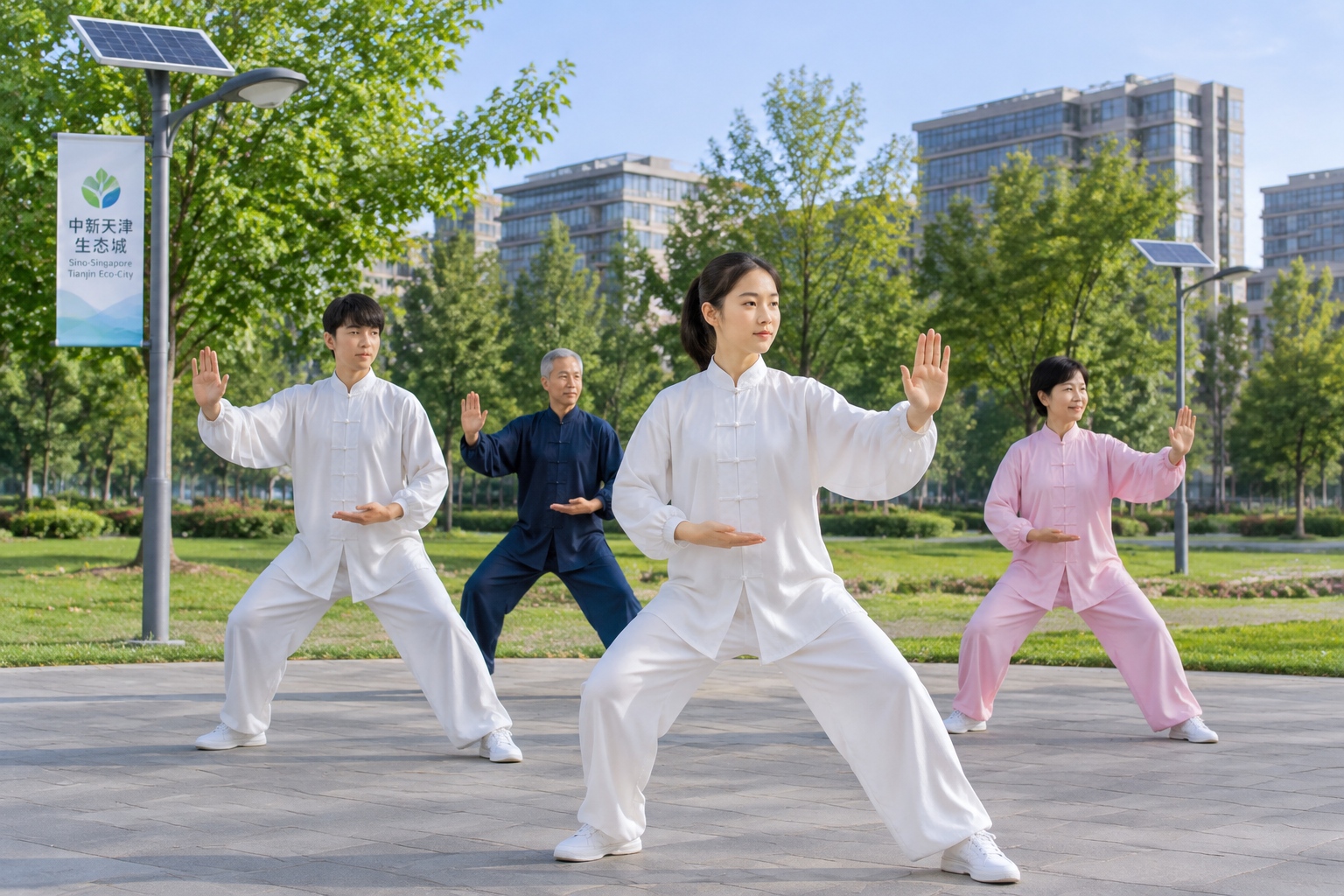
This is one of China’s most ambitious experiments in urban sustainability. Built as a joint project between China and Singapore, the eco-city is not a futuristic fantasy but a liveable community with more than 150,000 residents. It offers a rare look at how Chinese cities are trying to balance growth with environmental limits.
From Wasteland to Green Model
The eco-city sits in Tianjin’s Binhai New Area, about 40 kilometres from the city centre. In 2007, leaders from China and Singapore signed an agreement to develop a “socially harmonious, environmentally friendly, resource-efficient city” on a site that seemed anything but. The land was covered with salt crystals, abandoned factories, and a polluted reservoir known as the “blue trash can”.
Instead of simply tearing down and rebuilding, the project used soil improvement techniques, replaced toxic sludge with clean fill, and constructed a network of canals that turn the tidal flats into a wetland ecosystem. A desalination plant and a wastewater recycling system now supply most of the city’s water — a crucial feat in a region that experiences chronic water scarcity.
The project set up a 22-indicator system for eco-development, jointly designed by Chinese and Singaporean assessors. These indicators—such as carbon emissions per unit of GDP and the share of green buildings—are audited annually, ensuring that the city does not drift from its promises.
Today, every building in the eco-city is certified as “green” according to Chinese standards. Roads are designed for pedestrians and cyclists, and a district-scale heating system uses geothermal energy. The city also runs a pneumatic waste collection system that sucks household trash through underground pipes to a central processing centre, eliminating the need for garbage trucks.
Living in the Eco-City: What It Actually Feels Like
For residents like Wu Fang, a 42-year-old mother of two, the eco-city feels less like an experiment and more like home. “My children walk to school along greenways that have no cars. We have a community garden where we grow vegetables, and the air quality is noticeably better than in downtown Tianjin,” she says. Her apartment is equipped with solar hot water, and the building’s rooftop panels generate electricity that feeds back into the grid.
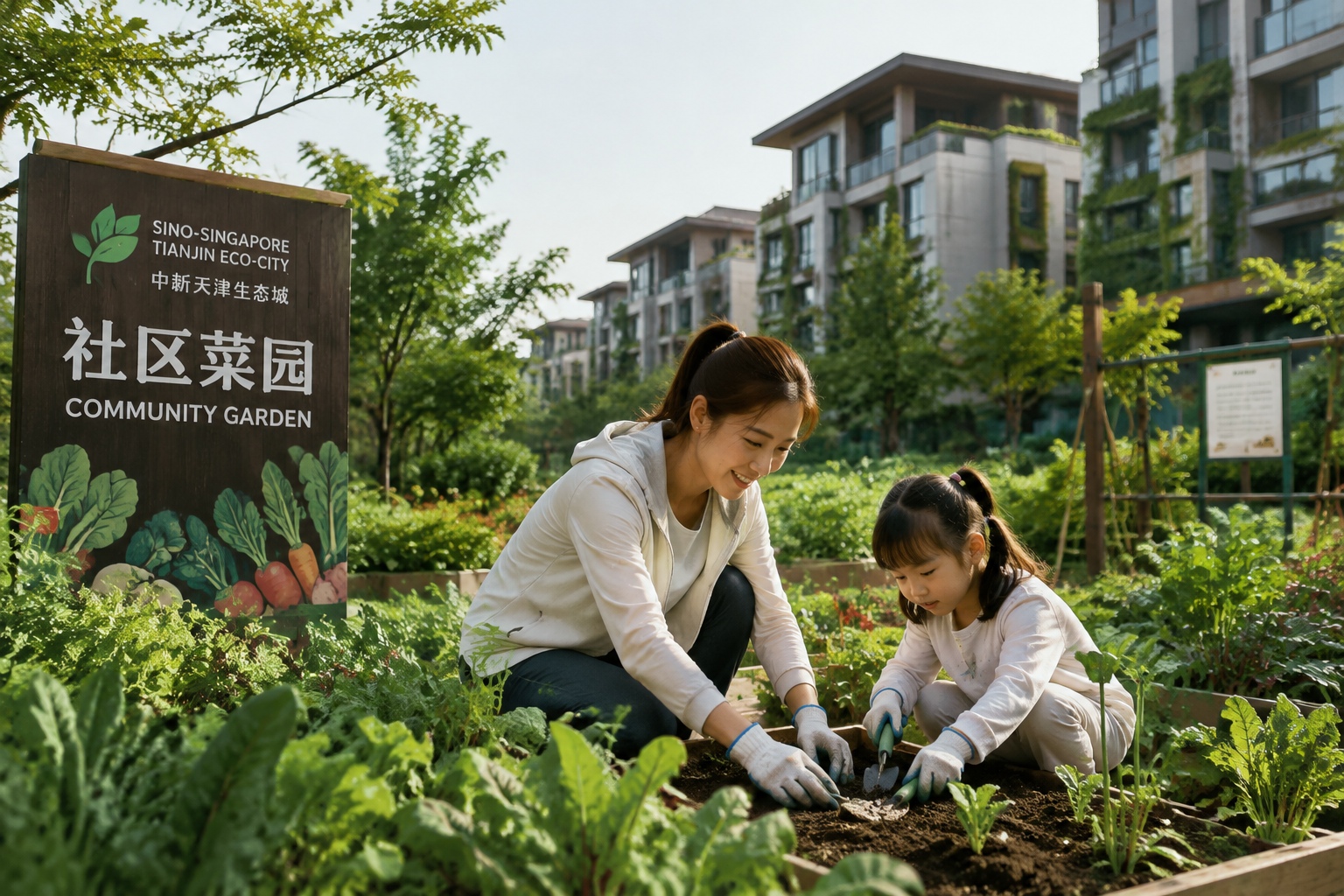
The eco-city was designed around the concept of “eco-cells” — self-contained residential clusters where schools, shops, clinics and parks are all within a 10-minute walk. This reduces the need for cars. In fact, the city promotes a green transport system with a network of bike paths, electric shuttle buses, and charging stations for electric vehicles. Public transport ridership is high, and nearly 90% of trips are made by non-motorised or low-carbon modes, according to local statistics.
Waste management is a daily habit. Every residential compound has separate bins for recyclables, kitchen waste and hazardous materials, and a pneumatic tube system carries trash from buildings to a central plant. The city even grants ‘eco-points’ to residents who sort properly, which can be exchanged for public transport vouchers or green products.
Work is also changing. The eco-city has attracted research institutes, software firms and green-tech companies, offering jobs that don’t require commuting to the old city. Startups working on solar panels, low-carbon construction materials and smart grid systems have set up offices here. The city even offers subsidies and tax breaks for companies that meet strict sustainability criteria.
The Hard Numbers Behind the Green Promise
Numbers help to explain what has actually been achieved. By 2023, the eco-city had built 30 square kilometres of urban development, with a green coverage rate of 55%. Over 100,000 people call it home, a figure that continues to grow. Renewable energy — from rooftop solar, geothermal heat pumps and a waste-to-energy plant — accounts for more than 20% of the city’s total energy use. All new buildings are required to meet a green building standard, and the city recycles or reuses over 90% of its construction waste.
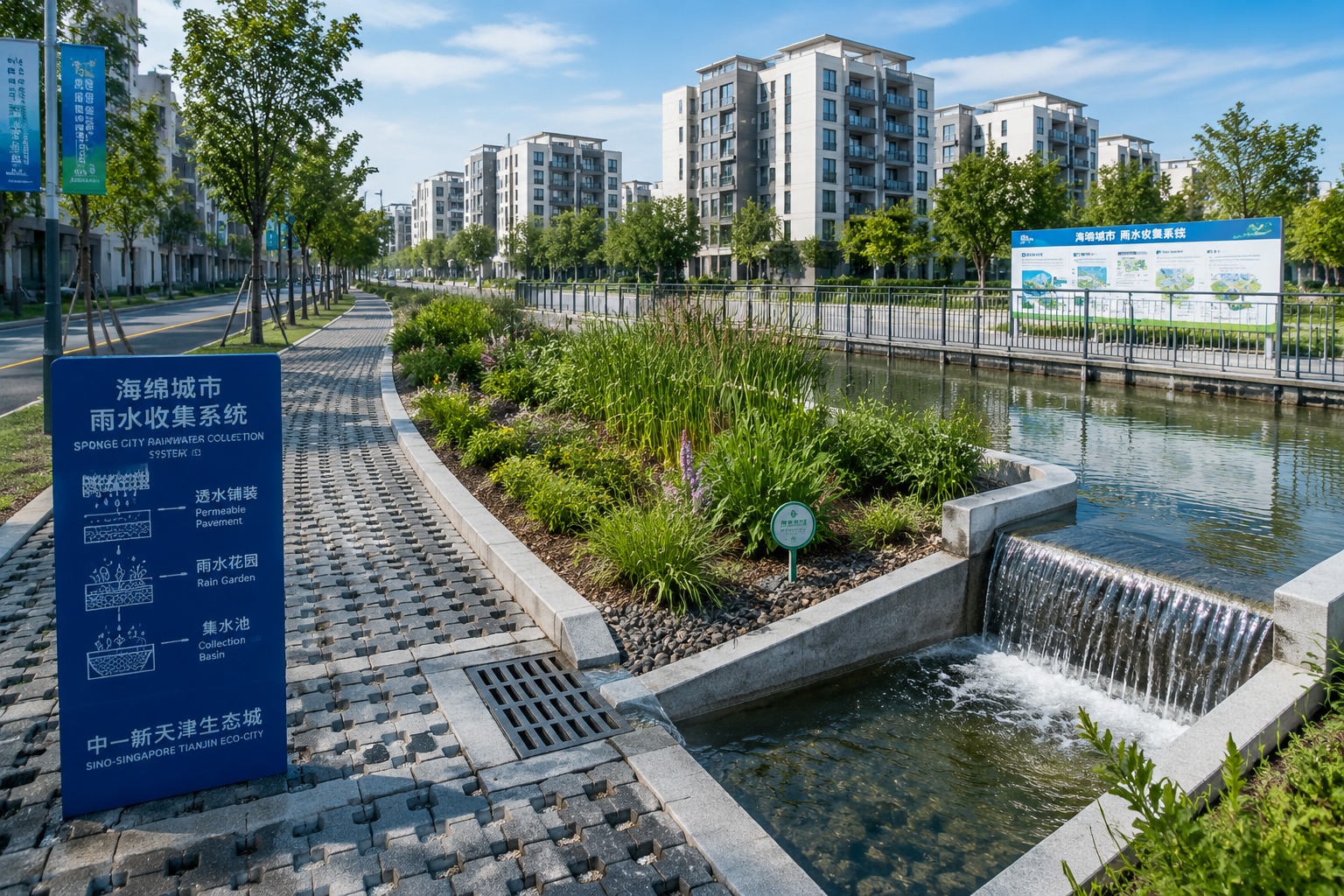
One of the most impressive achievements is water management. The eco-city collects rainwater through a “sponge city” system of permeable pavements and storage tanks, then uses it for irrigation and street cleaning. Treated wastewater is reused, cutting per capita water consumption by about one-third compared with the Chinese urban average.
Planting has been a priority: more than 5 million trees were planted by 2023, creating a carbon sink and shading streets. The eco-city also runs a ‘zero-waste’ scheme, where old concrete is crushed for road base and food waste is composted. Officials say these actions have cut per-capita waste by a quarter.
These figures are not just abstract metrics. They translate into lower utility bills, cleaner streets, and a more comfortable environment for residents. For instance, using district cooling and heating reduces the energy needed for air conditioning in summer, an important factor given Tianjin’s hot and humid climate.
Not Everything Is Perfect
Despite these achievements, the eco-city has faced real challenges. Critics point out that the population is still small compared with the original target of 350,000, and that many residents commute to jobs in Tianjin’s main urban area, undermining the idea of a self-contained community. The job ecosystem is still developing, and some amenities have been slow to appear.
“It can feel quiet and isolated at night,” says a young entrepreneur who prefers to remain anonymous. “The housing is affordable, but there’s a limited nightlife and cultural scene. It’s getting better, but it’s not yet a vibrant urban centre.”
Such criticisms are part of the learning process. Eco-city’s managers have adjusted plans, adding more commercial developments and investing in metro Line Z4, which will eventually connect the city to downtown Tianjin and the airport. The project is also intended to be a “living lab” — lessons learned here are being applied in other Chinese cities, from Xiong’an New Area to Wuhan’s ecological districts.
Why Tianjin Eco-City Matters Beyond China
For international observers, the Sino-Singapore Tianjin Eco-City offers a rare window into how China approaches sustainability at a city scale. It demonstrates that environmental goals can be integrated into urban planning without sacrificing economic growth. The partnership with Singapore brought international expertise in water treatment, green building and public housing, creating a cross-border model for cooperation.
The eco-city is also a reminder that China’s urbanisation is not just about cement and steel. It is about whether millions of people can live comfortably while using fewer resources. By testing ideas like zero-waste blocks, renewable energy microgrids and green finance, Tianjin Eco-City provides a blueprint for the next wave of Chinese cities — and for some other developing countries facing rapid urban growth.
As the sun sets over the artificial lakes, a group of children ride their bikes home from a nearby school. The streetlights flicker on, powered by solar energy. In a nation where dozens of new cities are being built, this small experiment on former salt flats may end up influencing much more than its own 30 square kilometres.