
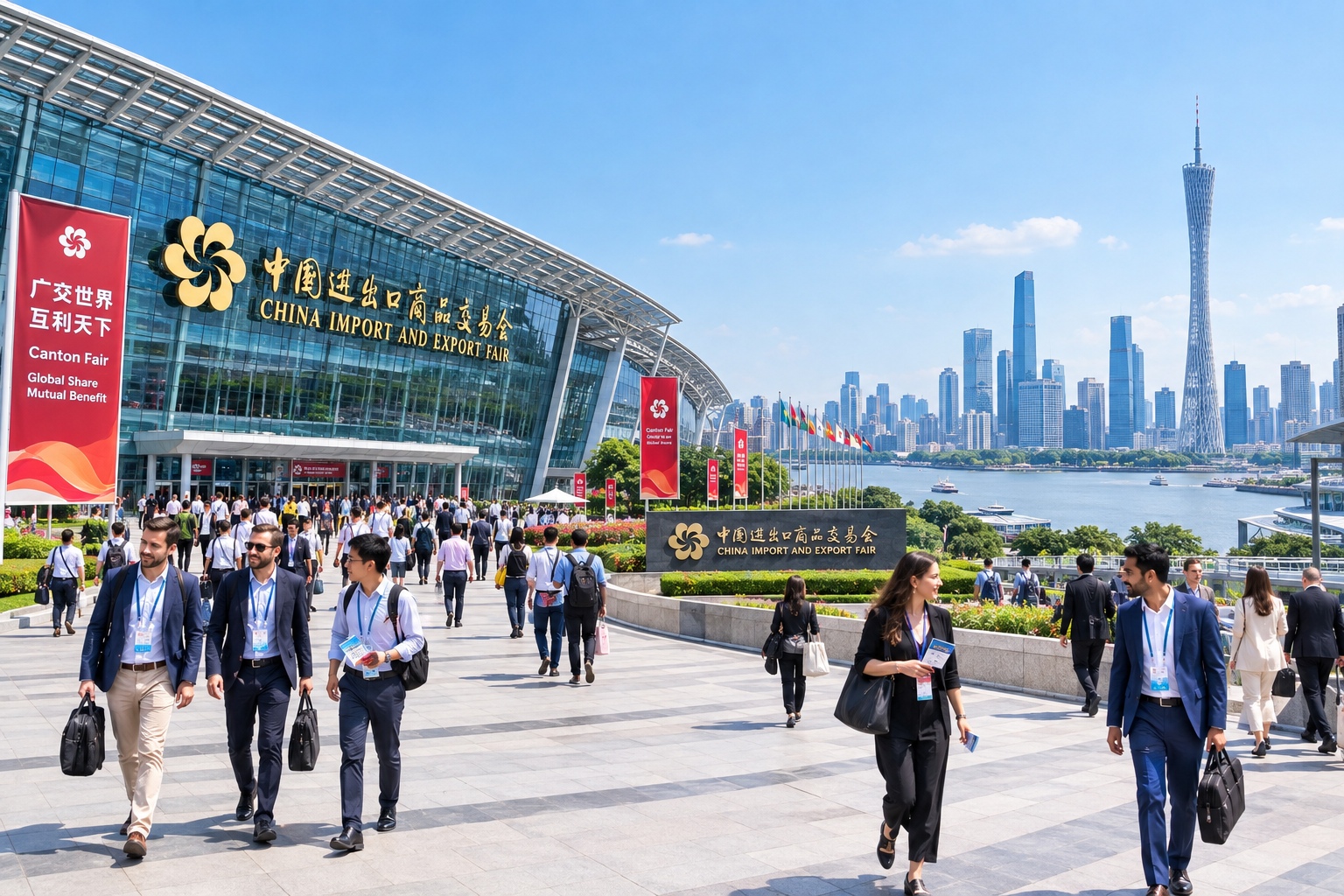

There is a moment every Canton Fair traveler knows. It’s often after lunch, when you’ve collected a dozen brochures and shaken hands with three new suppliers. You step out of the airy exhibition halls, and the familiar smell of sesame oil and fried garlic drifts in from somewhere. Guangzhou is calling you to eat.
That reaction is no accident. For over two thousand years, this southern Chinese city has been a trading hub. Traders from ancient Rome, then Arab merchants, and later Portuguese, British, and French firms all came to Canton to buy silk, porcelain, and tea. The city learned early that business runs on hunger—and on goodwill created around a table.
Today, the continuation of that story is the China Import and Export Fair, better known as the Canton Fair. Held twice a year in spring and autumn, it attracts over 250,000 buyers from more than 200 countries and regions. The fair makes Guangzhou, at least for those three weeks, a tiny global village. But you wouldn’t want your whole visit to stay inside the exhibition halls. Between meetings, you’ll find one of China’s most vibrant streets, a historic island for quiet walks, and the country’s most legendary dining scene.
The Canton Fair Complex: Your Business Base
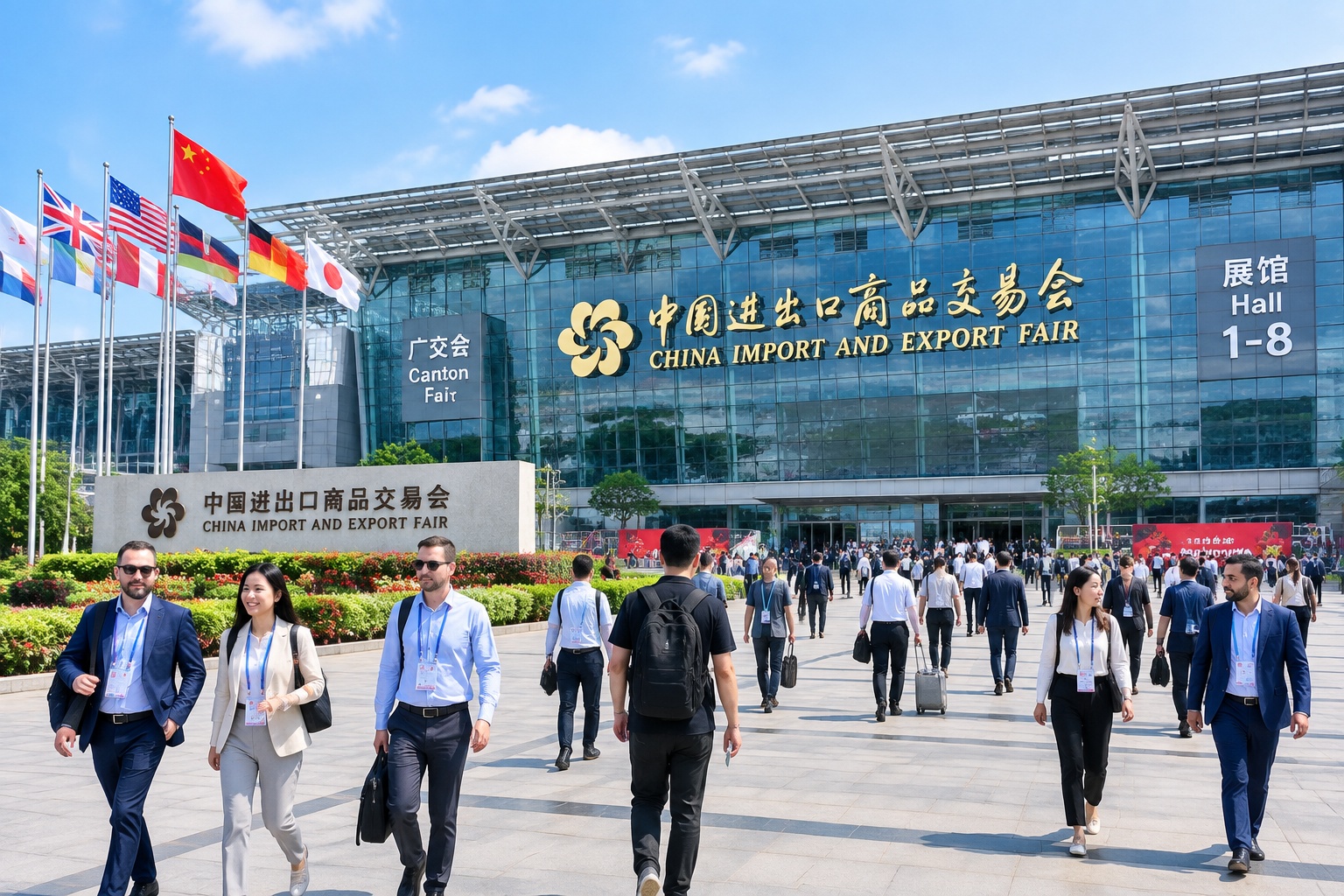
The fair is held at the Canton Fair Complex (also called the Pazhou International Exhibition Centre), located on an island in the Pearl River. The scale is impressive: covering roughly 1.18 million square meters, the complex is one of the largest exhibition venues on earth. You’ll need a map, a comfortable pair of shoes, and a strategy.
Each phase of the fair targets a different industry. Phase 1 covers electronics, appliances, machinery, and new-energy products—this is the busiest phase. Phase 2 focuses on consumer goods, gifts, and home decor. Phase 3 features textiles, shoes, foodstuffs, and medical products. Foreign buyers normally register online before they arrive to save time and get their badge quicker.
Getting to the fair is straightforward. Metro Line 8 drops you off right at Xingang Dong station, a short walk from the entrance. If you’re running late, taxis and DiDi ride-hailing apps are available all day, but expect congestion near the gates during morning rush. Allow an extra 15 minutes if you’re taking a car.
Shamian Island: A Colonial Respite
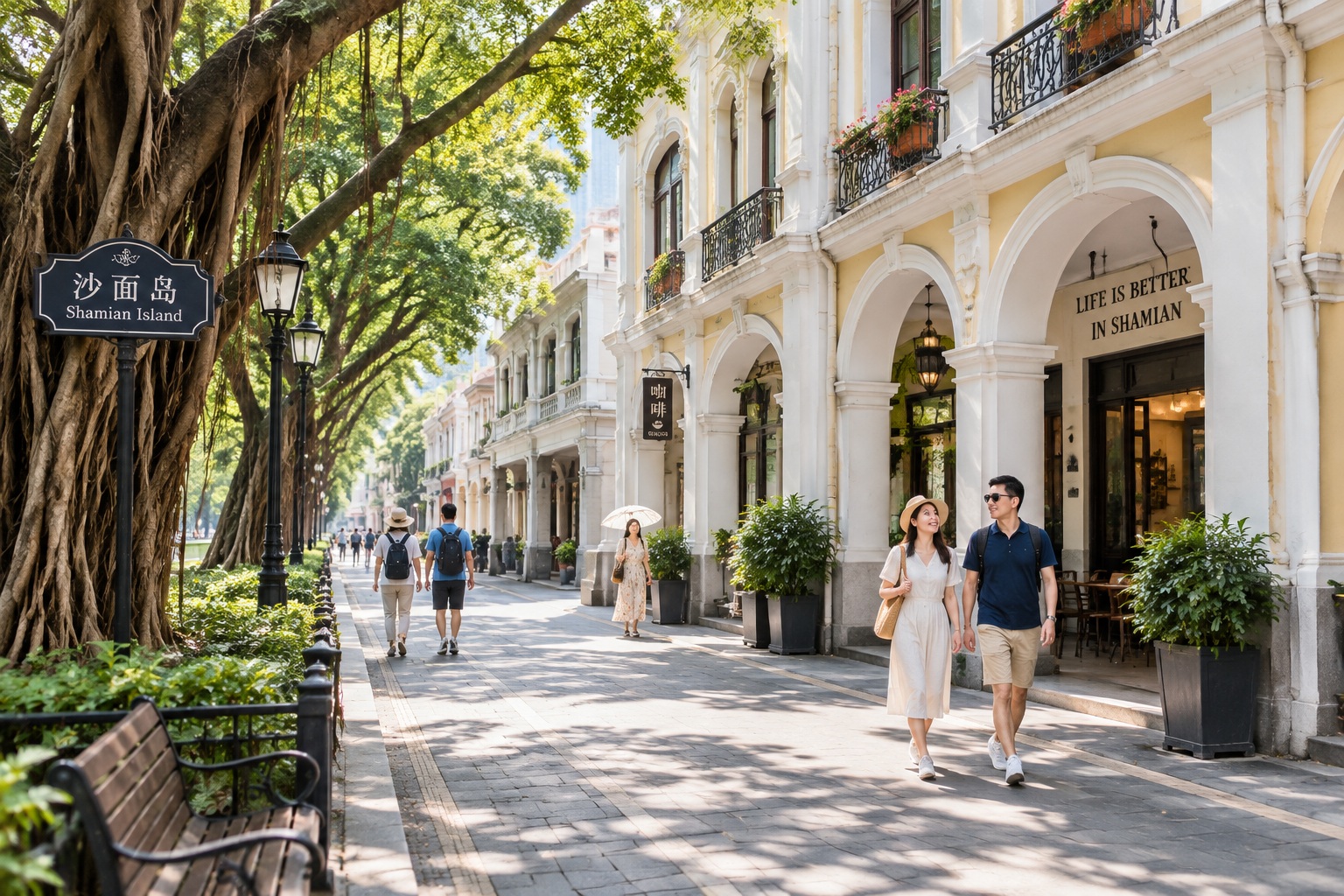
A short taxi ride from the fair or the city center takes you to Shamian Island, a peaceful patch of land that was once partitioned between French and British concession zones. Today, it looks like a living museum of 19th-century architecture: tree-lined avenues, townhouses with columns and balconies, and a distinctly unhurried pace. The contrast with the fairground’s frenzy is part of the appeal.
Spend an hour or two walking along the island’s main road, Shamian Street. You’ll pass old churches, small gardens, and a handful of galleries. Cafes and ice cream parlors fill the ground floors of colonial buildings, making this a pleasant spot for a reviving coffee or an early dinner before returning to work.
Shangxiajiu: A Street Full of Flavor and History
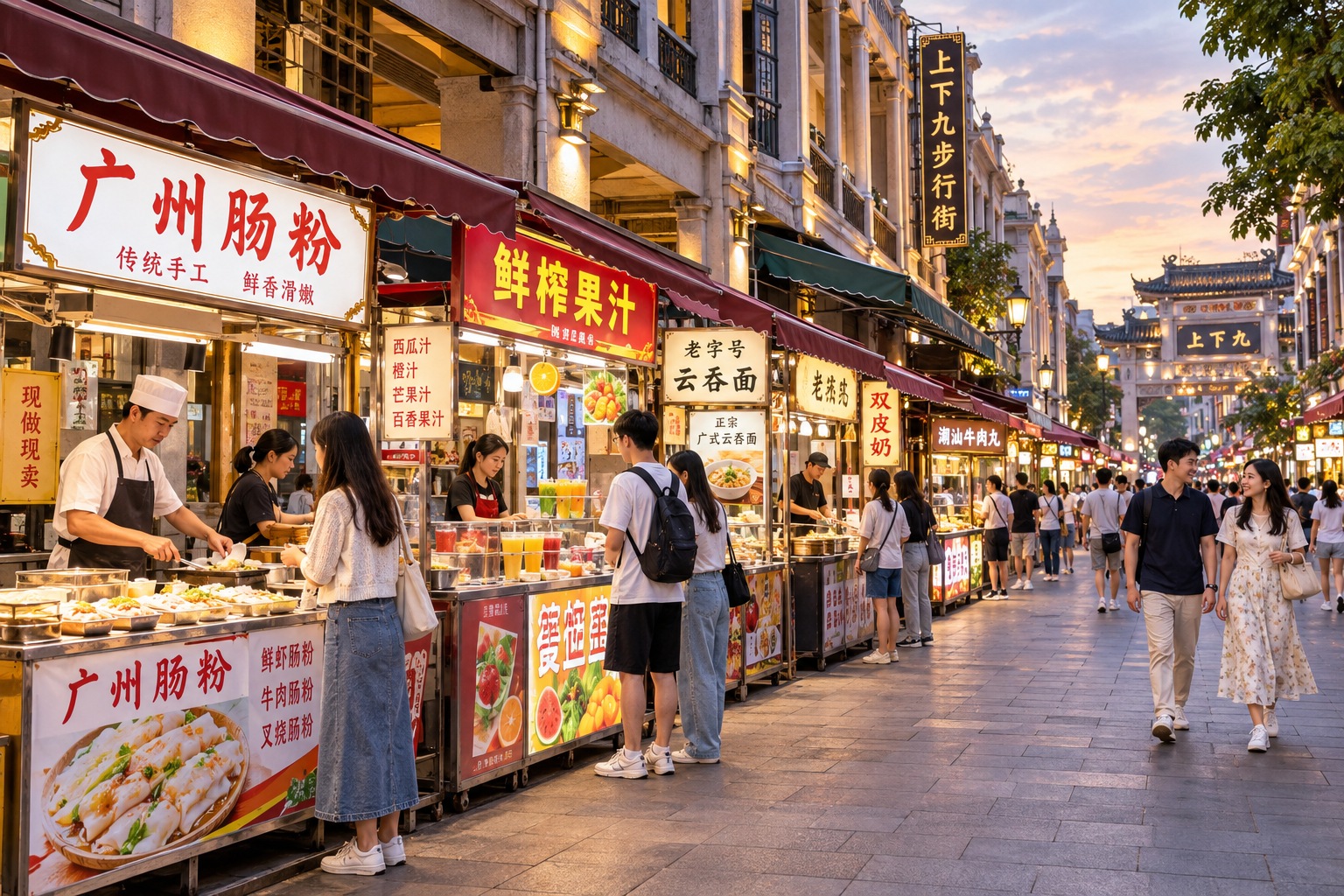
For a taste of what Guangzhou is like outside the trade show circuit, take the metro to Shangxiajiu Pedestrian Street. This is a lively shopping quarter that has thrived for over a century. Its long, covered arcades—known as qilou in Cantonese—are designed to protect pedestrians from the sun and the rain. The style is distinctly southern Chinese and has spread to other countries in the region.
The real reason food lovers come to Shangxiajiu is the street food. Many of Guangzhou’s oldest culinary brands have stores here. Look for tong sui (sweet soups) like double-skin milk or mango pomelo sago. Try traditional omelet dishes and rice noodle cheese from local vendors. Even if you end up buying more than you can eat, the buzz is addictive.
Eating Guangzhou: From Morning Tea to Midnight Snacks
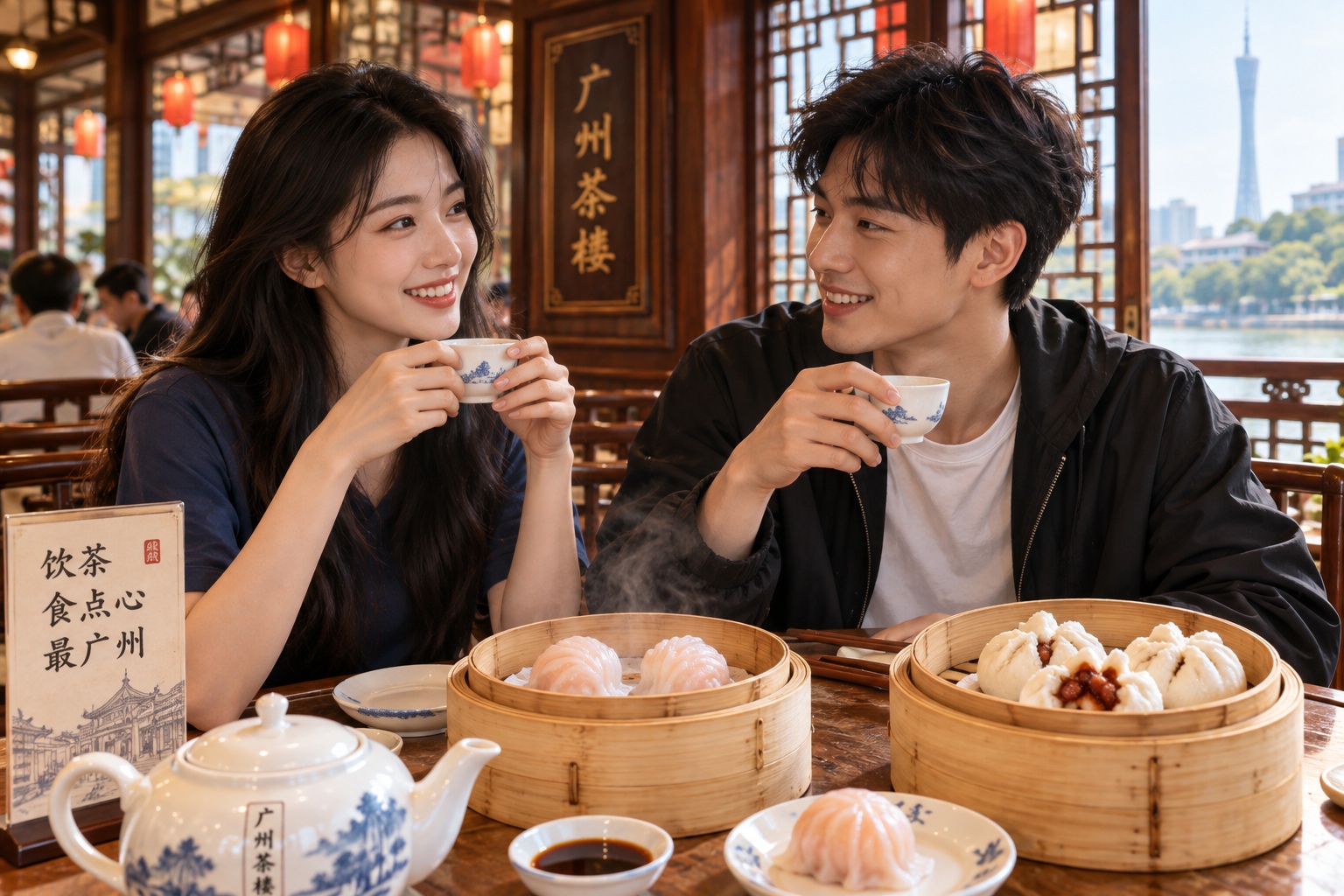
No visit to Guangzhou is complete without morning tea, or yum cha. The Chinese phrase means ‘drink tea’, but the activity involves tea plus a rolling parade of small dishes called dim sum. In Cantonese restaurants around town, you’ll find bamboo steamers with translucent shrimp dumplings (har gow), pork-and-chive dumplings (siu mai), and fluffy barbecue pork buns. It’s a relaxed, social way to start the day, and many business meetings happen over these very tables.
If yum cha is for mornings, roast meats carry you through lunch and dinner. Walk into any casual cha siu joint and you’ll see rows of glossy roasted ducks, crackling pork belly, and glazed char siu hanging in the display window. Ask for a portion of roast goose with a bowl of rice, and you’ll taste why locals refer to their city as the ‘food capital of China’.
For snacks between meals, try cheung fun, a smooth sheet of rice noodle roll topped with sweet sauce and sesame seeds. Or grab an egg tart from a local bakery—flaky and warm, the perfect dessert after a bowl of noodles. Guangzhou’s food stalls are busiest after dark, especially in the neighborhoods around Beijing Road and the older residential streets.
The Pearl River at Night: A Lantern-Lit Skyline
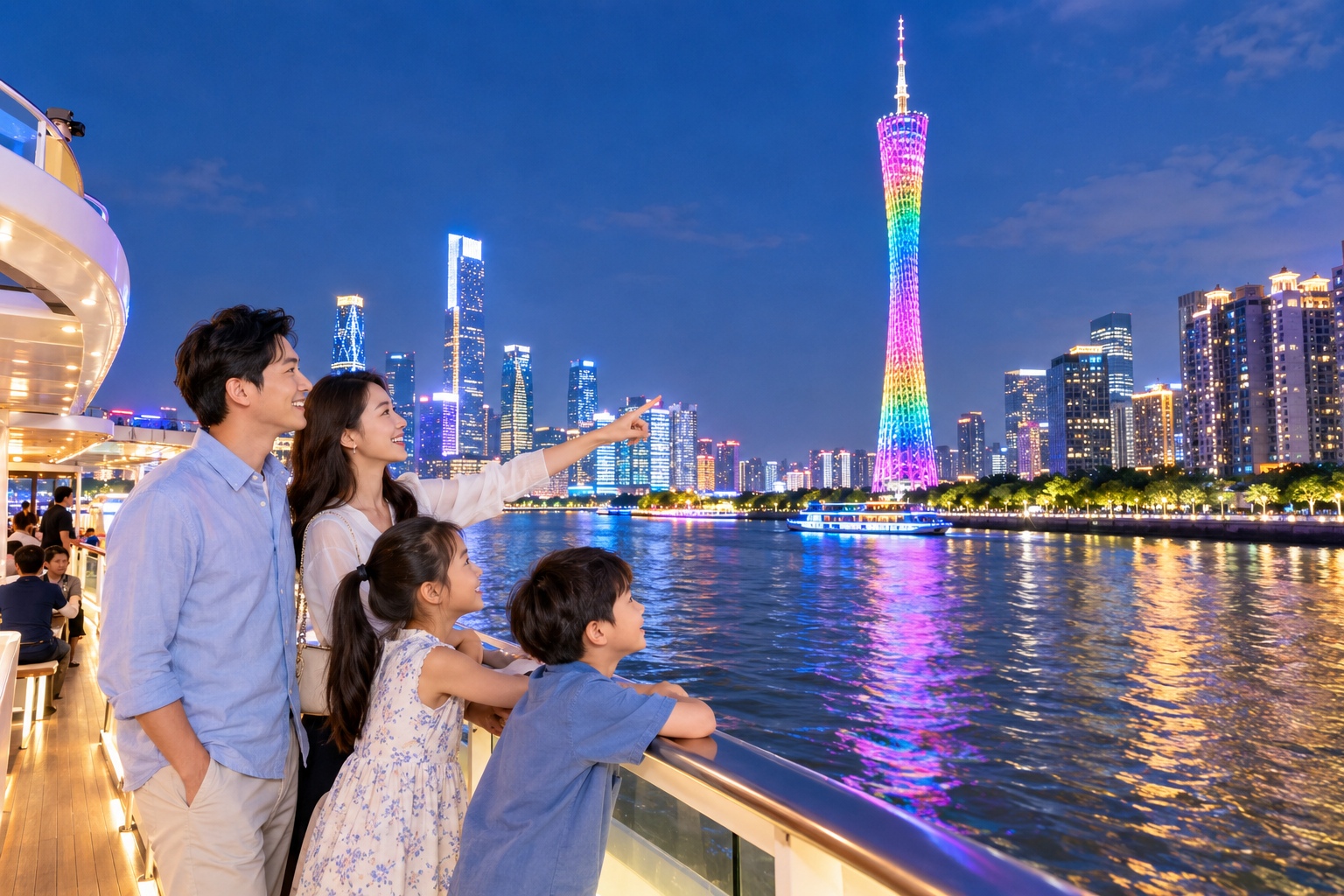
After a busy day, the best way to decompress is on the water. Night cruises along the Pearl River depart from a number of piers, including Tianzi Pier and Dashatou Pier. The trip takes one to two hours and passes beneath illuminated bridges and along both banks of the city. You’ll see the 600-meter Canton Tower glow in rainbow colors, and the modern towers of Zhujiang New Town reflecting on the water.
Tickets are cheap—starting around 50 RMB per person—and some boats include a buffet dinner. Remember to reserve your spot in advance, especially on clear weekends when visitors stay out late. Alternatively, stroll along Liede Bridge for a similar view without the boat.
Practical Etiquette and Language Tips for Business Travelers
Business culture here is warmer than it appears. While standard Chinese (Mandarin) is used at most official events and offices, catching even a few Cantonese words helps build rapport. Try ‘nei hou’ for ‘hello’ and ‘m goi’ for ‘thank you’ when someone does you a favor. Small smiles and a laugh about your bad pronunciation go a long way.
At the fair, English is widely spoken, but it is still wise to have your company’s information in Chinese on your business cards and on a simple WeChat contact card. WeChat is the standard communication tool for almost every conversation, from arranging meetings with suppliers to paying for a cup of coffee at a convenience store. Download it before you land, and make sure your app is linked to a passport or bank card for payments.
Finally, remember that business equals food. Most suppliers will invite you to dinner, and refusing outright may cause embarrassment. If you have dietary restrictions, learn how to say ‘I don’t eat pork/seafood’ in Mandarin. Sometimes, lunch meetings lead to afternoon factory visits; dinner meetings extend into late-night camaraderie. That’s how trust gets built. And that’s also how you discover the hidden food corners of Guangzhou.
Canton Fair is your reason to arrive. Let Guangzhou’s dining tables and canal-side paths be your reason to remember the trip forever.
Start the discussion at forum.chinacomes.com