
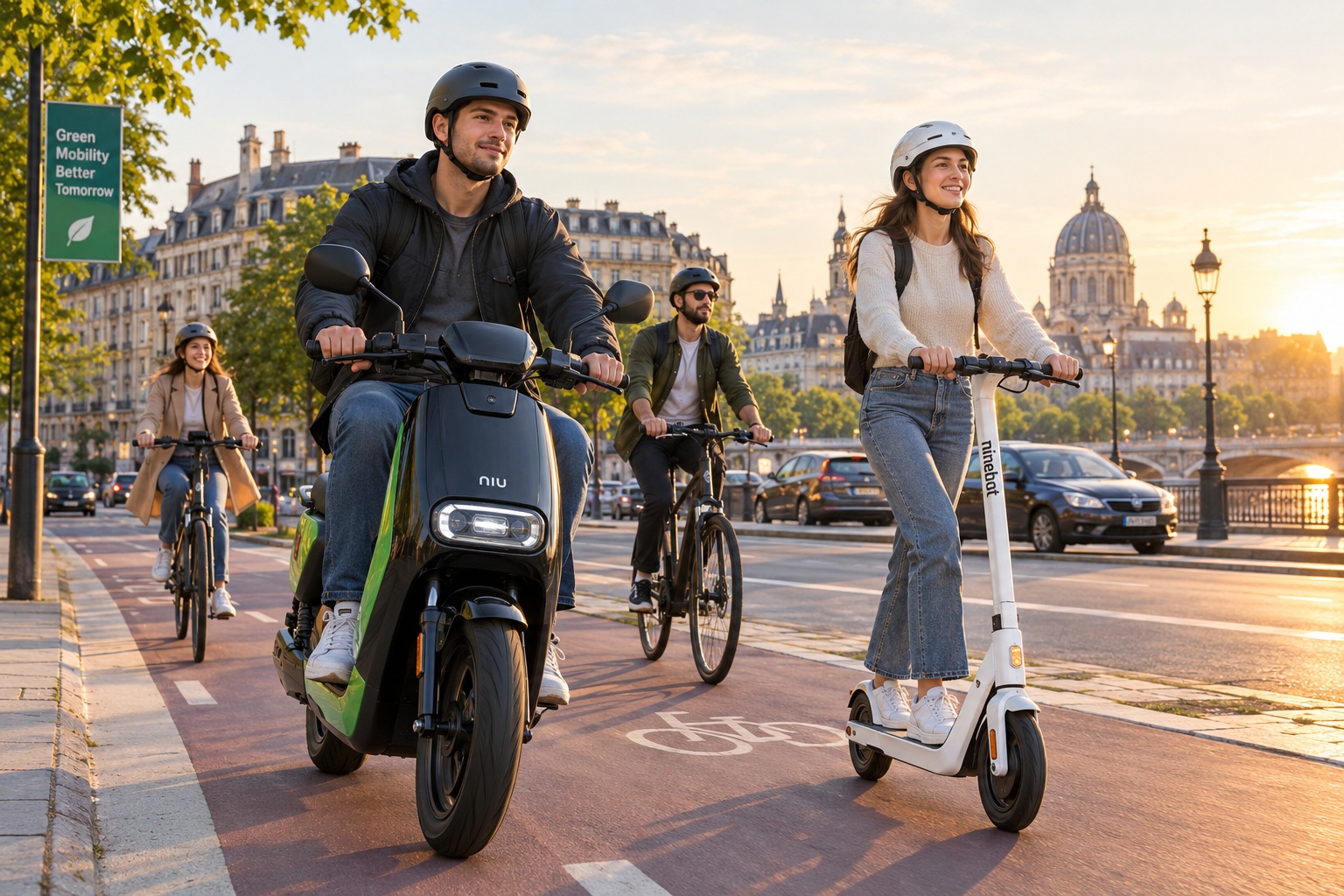

A Morning Commute, Reimagined
On a damp mid-October morning in Berlin, a steady stream of commuters glides along the cycle paths. Many are riding electric bicycles and kick-style scooters, their riders often shielded from the drizzle by company-branded jackets. Look closely at the frames, hubs and screens — a good number carry Chinese brand names like Niu, Ninebot or Yadea, or the original-equipment labels of countless lesser-known manufacturers.
This is no passing fad. Chinese electric two-wheelers have evolved from a domestic curiosity into a serious export force. According to customs data, China exported over 10 million electric two-wheelers in 2023 — and the trend continued to climb in 2024. Europe has become the single largest overseas market, while North America and Southeast Asia follow closely.
Why is a country often associated with high-speed rail and massive infrastructure suddenly dominating the micro-mobility world? The answer lies in decades of manufacturing experience, a brutally competitive home market, and an ability to package modern technology in affordable, rider-friendly designs.
From Domestic Saturation to Global Discovery
China did not wake up to two-wheelers last year. The country embraced electric bicycles in the 1990s as petrol prices rose and urban congestion worsened. Today, an estimated 350 million electric two-wheelers are in daily use across Chinese cities. That enormous domestic base created something unusual: a supply chain that can turn out nearly every component of an e-bike — from lithium-ion cells to brushless motors, controllers, and custom moulded frames — within a single province, sometimes within a single industrial park.
But home demand has gradually levelled off, and local competition among hundreds of manufacturers grows more cutthroat by the season. For mature players, expanding internationally is no longer optional; it is the logical next step.
The shift moves beyond traditional export models. Chinese firms are not simply shipping boxes of finished products. They are investing in overseas warehouses, after-sales service stations, and even assembly plants. The goal is to become a trusted neighbour, not a distant supplier.
Three Companies, Three Ways to Win Overseas
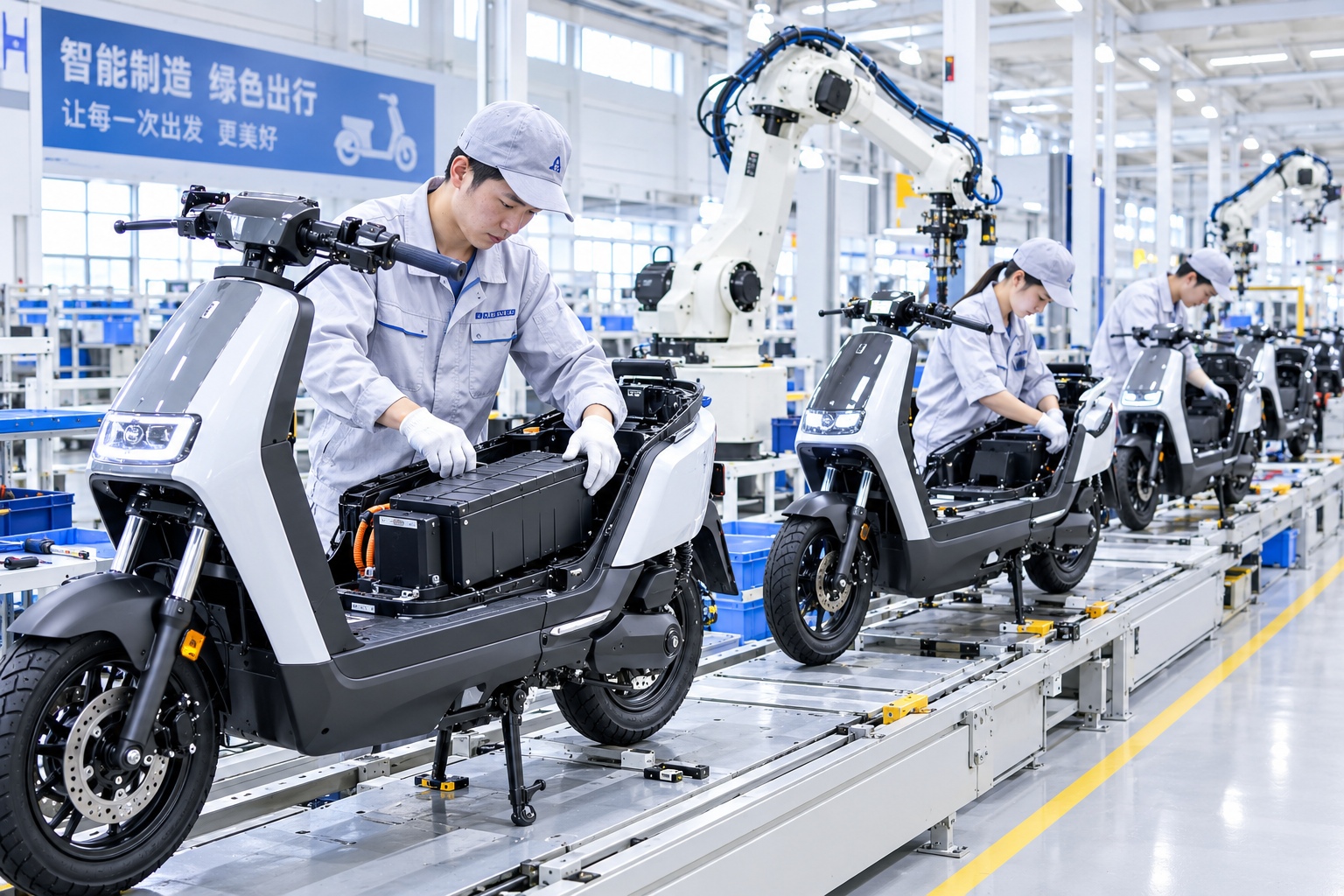
A closer look at the strategies of three major players shows how different market segments are being served.
Ninebot: Riding the Shared-Mobility Wave
Ninebot — better known in the West through its Segway brand — basically defined the shared e-kick scooter boom. Its machines roll (and often remain parked) on streets in dozens of countries, managed by operators such as Lime, Bird, Voi and Tier. Ninebot began as a self-balancing vehicle firm, then acquired Segway in 2015, gaining both expert know-how and a global sales network. Its consumer-grade scooters, from the compact Segway Ninebot F20 to the more capable P100S, have become popular for personal use too.
The company’s edge rests on software integration: smart unlock by phone, dynamic torque control, and predictive battery management. In many cities, the small scooter is no longer a toy but a reliable way to avoid traffic.
Niu: Bringing Design and Connectivity to the E-Moped
Niu, founded in 2014, approached the market from a different angle. Instead of the cheapest product, Niu pushed lithium-ion batteries, powerful hub motors, and a sleek body designed in Beijing. It also treats each vehicle as a connected device. Riders can locate their e-moped, check battery health and remotely disable the motor through a mobile app.
In Europe, Niu focused on the e-moped / moped segment, where riders between 16 and 18 years can use a lightweight two-wheeler without a full car licence. Sales in Germany, Italy and the Netherlands have been robust, and Niu now operates brand stores in several European capitals, offering test rides and servicing.
Yadea: Scale, Price, and a Global Footprint
Yadea is the world’s largest electric two-wheeler maker by volume, selling over 10 million units each year. Its vehicles dominate the low- to mid-priced segment in many emerging markets. Yadea’s playbook relies on aggressive manufacturing and local partnerships: it has set up assembly plants in Vietnam and Malaysia, and entered India through a joint venture with a local partner.
Yadea’s recent push into higher-end products, especially performance e-mopeds with swappable batteries, shows how a mass-market giant adapts. The company also sponsors international motorsport and collaborates with designers, moving away from a price-first reputation.
Why the World Is Suddenly Ready for Chinese E-Bikes
Consumer readiness is as important as product quality. During the COVID-19 pandemic, bicycles and e-bikes saw a global renaissance, as people avoided buses and trains. European governments responded by introducing purchase incentives for e-bikes, expanding dedicated cycle lanes, and tightening auto emissions standards. This opened a pocket of demand that Chinese manufacturers could serve quickly.
Germany stands as an example. More than two million e-bikes are sold annually there, accounting for a very large slice of all new bike sales. Although domestic brands like Riese & Müller or Canyon form a strong local ecosystem, their premium pricing (often above €3,000) leaves a huge price-sensitive segment for Chinese-made e-bikes priced between €1,200 and €2,500. In France, subsidies for buying an e-bike can cover up to 40% of the purchase price, especially for low-income citizens, while most shared scooter operators source their fleets from Chinese suppliers.
In the United States, e-kick scooters and e-bikes have filled a gap in micromobility, along with practical battery-powered models used for food delivery. A US-based rider typically pays $800–$1,500 for an entry-level scooter from a Chinese company, whereas comparable models from domestic startups often cost much more.
Across Southeast Asia, the shift to electric two-wheelers takes another shape. With petrol prices volatile and traffic dense, Vietnamese city dwellers are increasingly swapping their petrol scooters for electric alternatives produced locally by Chinese joint ventures. Yadea’s factory near Hanoi started with an annual capacity of a quarter of a million units and has already been expanded. Similar partnerships have been signed in Thailand and Java.
Product Upgrades that Appeal to Global Riders
The typical Chinese e-bike of today shares little with the utilitarian bikes used by factory workers a decade ago. Modern models are packed with smart sensors, integrated displays, and swappable lithium batteries that can be charged in apartments, keeping them safe and legal.
Battery management has become a particular strength. Chinese manufacturers were among the first to standardise 48-volt systems with modular cells, enabling low-cost replacement. Some brands, such as Yadea, have introduced a ‘grab-and-go’ battery swap service at dealership networks, effectively eliminating the need to wait for a recharge.
Design also received thorough treatment. Niu’s award-winning bodywork came from collaborations with Italian design studios. Ninebot’s line-up borrows from the clean aesthetics of Scandinavian product design, with integrated lighting and robust tyres. Even budget-oriented models now benefit from corrosion-resistant frames and waterproof connectors — important for riders in rainy northern cities.
The quiet excellence of Chinese electronics firms helps too. Companies like Huawei, DJI, and CATL have pushed miniaturisation and battery tech, giving two-wheeler builders access to reliable sensors, wireless communication chips, and fast-charging lithium cells without paying import duties.
Localisation: The Hard Work after Market Entry
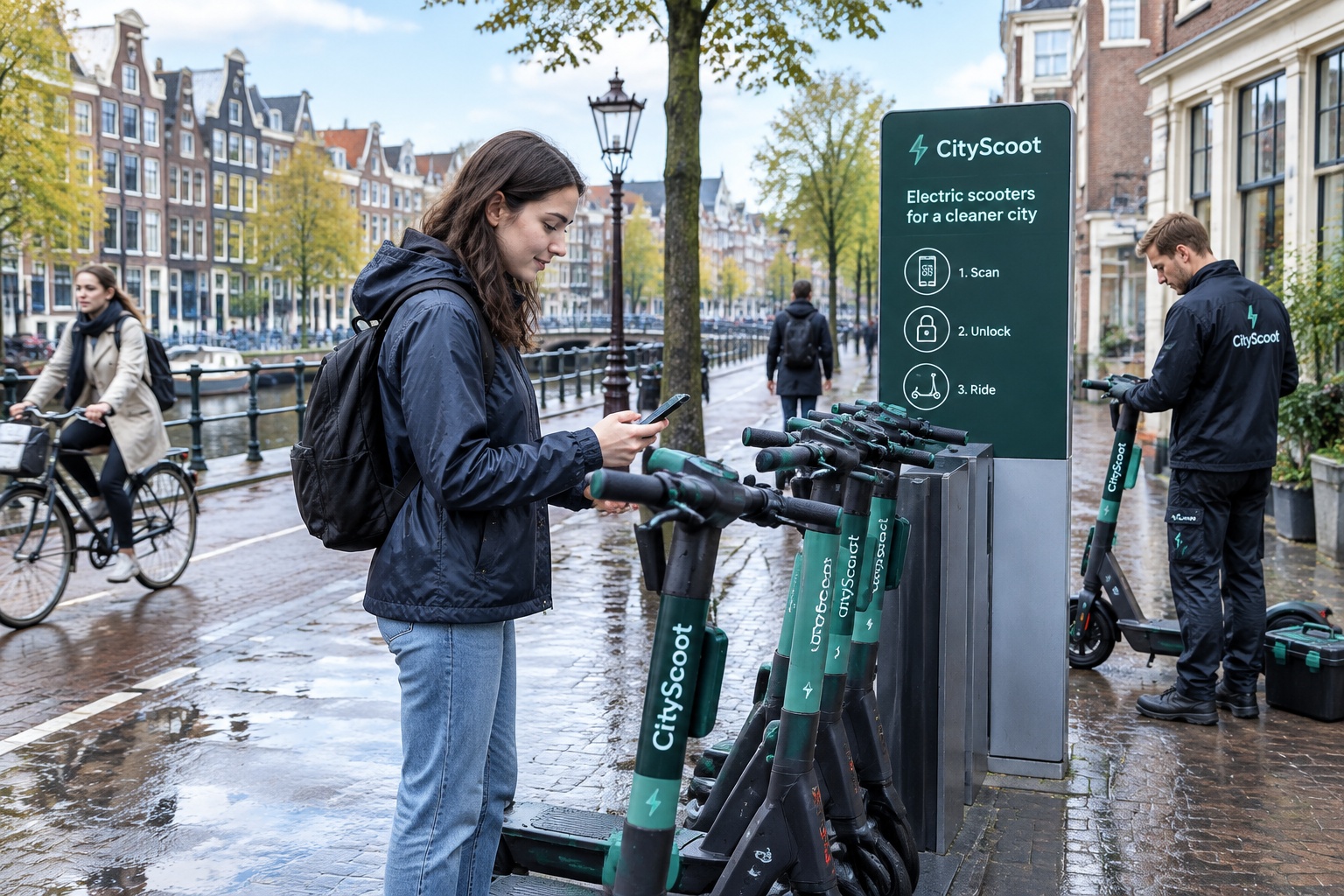
Yet selling well means more than making a good product. European and American markets enforce strict safety certifications. An e-bike sold in Europe must pass EN 15194, which governs power limits, braking and electrical safety; an electric moped needs EU type approval. Chinese companies have invested heavily in testing labs and certification departments, achieving compliance in a matter of months rather than years.
Service infrastructure is also being built. Niu’s European outlets offer tune-up services and genuine spare parts. Ninebot maintains regional repair hubs in Rotterdam, Los Angeles and Sydney, promising a 48-hour turnaround in major cities. Yadea uses its network of authorised dealers to run training and maintenance clinics. In Southeast Asia, where the lead-acid battery still dominates many old two-wheelers, brands organise battery collection and recycling under local environmental rules.
Assembling closer to the customer is another strategy. Not to lower labour cost — that is usually higher outside China — but to avoid import tariffs, simplify logistics, and illustrate a long-term commitment. Yadea’s Vietnamese plant, located in Bac Giang province, remains a symbol of how far the industry has come.
A Crowded Field: Who Wins in the Next Era?
The landscape is already competitive. European premium manufacturers still dominate the top shelf of e-bikes, with advanced frame geometry, highly reliable Bosch and Yamaha drive systems, and a decades-old reputation. Japanese majors, such as Yamaha or Honda, bring expertise in petrol mopeds but have been slow to electrify their lightest vehicles.
Chinese brands are not waiting to be labelled as cheap. Niu is moving from a single product line into a full ecosystem of light e-vehicles, including electric motorbikes for professional couriers. Ninebot and Xiaomi (which had a brief but notable presence) are blending consumer electronics logic with transport. The coming battle is about brand loyalty, data connectivity, and seamless servicing.
Conclusion: The Learning Goes Both Ways
China’s electric two-wheeler export rise is sometimes framed as an economic war of conquest. The reality is more nuanced: powerful industrial networks, honest market feedback, and local partnerships have shaped a competitive advantage. As European cities cut car traffic and Asian megacities curb pollution, the simple machine of two wheels on a charged battery is becoming modern infrastructure.
Chinese companies that continue to innovate and listen to global riders may soon be recognised not as ‘alternative’ choices but as mainstream brands in their own right. And for anyone watching from abroad, the next big upgrade in urban mobility may well ride on lithium cells assembled in the same factories that once taught China to walk slowly towards the modern age.
Start the discussion at forum.chinacomes.com