

How Many Meals Do Chinese Astronauts Eat a Day?
If you think astronauts survive on tasteless paste squeezed from a tube, China’s space kitchen will quickly change your mind. Somewhere between Earth and the Tiangong space station, a small heater is probably warming up Kung Pao Chicken while the crew watches the planet drift past their window. So, how many meals do Chinese astronauts actually eat in a day? The simple answer is three—but the menu, the packaging, and the reasons behind each bite are a lot more interesting than a number.
A Daily Rhythm That Seems Familiar
Chinese astronauts keep a regular schedule that looks a lot like life on Earth: breakfast, lunch, and dinner, with about four to five hours in between. Meals are not just random food breaks; they are designed to keep the crew’s energy stable during long hours of experiments, exercise, and station maintenance. Each meal includes a carbohydrate-rich staple, usually rice or noodles, plus two or three side dishes, a soup, and sometimes a fruit cup or dessert.
Since microgravity can make the body feel a bit confused, meals also act as a clock. A regular meal time helps astronauts maintain their circadian rhythm and morale. And because the station orbits Earth every 90 minutes, they actually see 16 sunrises and sunsets a day. So having a structured eating plan becomes even more important.
There are also snacks between meals—mixed nuts, dried fruit, or small crackers—stored in the galley for spontaneous cravings. But the official count stays three meals a day, plus snacks.
From One-Day Trips to a 120-Item Menu
Chinese space food did not start with this level of abundance. When Shenzhou V carried China’s first astronaut, Yang Liwei, into orbit in 2003, his meals were simple and a little bit basic: a few foil pouches of compressed foods, some rice-like cubes, and a small serving of kongxin vegetables, ideal for a short one-day mission. There were no heating stations or sophisticated menus. He famously said that the food was edible but “not really memorable.”
Today, Tiangong space station astronauts enjoy a revolving menu of over 120 dishes and condiments. According to the China Astronaut Research and Training Center, the food selection is designed to cover both nutritional needs and emotional comfort. The menu is carefully rotated every four or five days so that no one gets too tired of any dish—though repeats are inevitable.
A Home-Style Menu Flying 400 Kilometers Above
The dishes themselves read like a restaurant menu in Chengdu or Beijing. Confirmed favorites include Kung Pao Chicken (宫保鸡丁), fish-flavored pork strips (鱼香肉丝), mapo tofu (麻婆豆腐), braised beef with potatoes, and even sautéed Shanghai greens. For celebrations, there are eight-treasure rice (八宝饭), zongzi for the Dragon Boat Festival, and mooncakes around Mid-Autumn Festival. There are also semi-soft drinks like herbal teas and fruit juices, along with a collection of Chinese condiments such as Sichuan chili paste and vinegar.
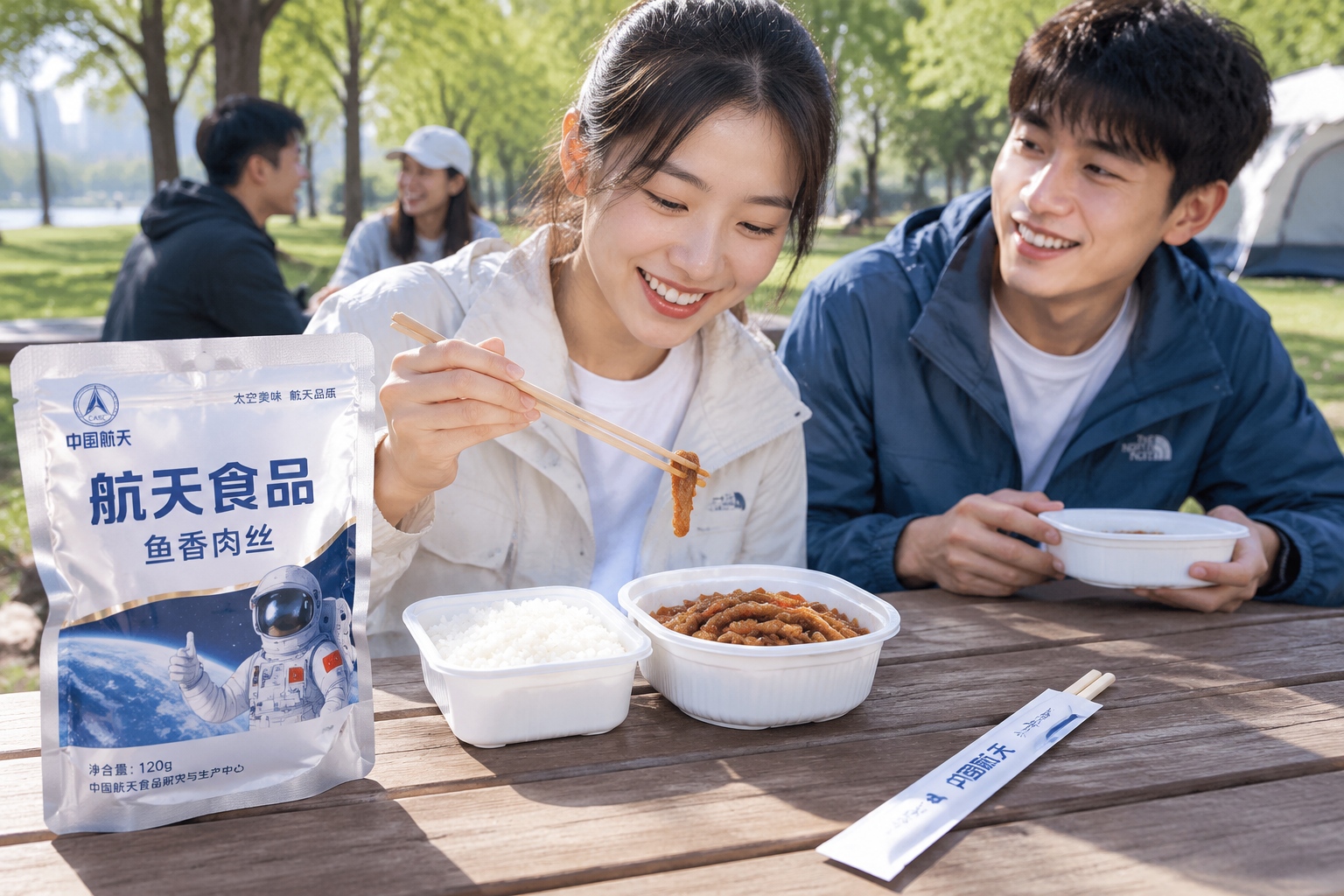
Unlike Western space menus, where food often comes in generic pouches, many Chinese space dishes are prepared with the same technique you would use at home—stir-frying, braising, steaming—and then stabilized for space travel. The result is that the food not only smells like home but also looks like it could have just come from a wok.
How to Get a Hot Meal to Stay Delicious in Orbit
To survive the harsh environment of space, food goes through a few stages of transformation. Freeze-drying is the most common method. Ingredients are cooked, then quickly frozen in a vacuum, causing water to sublimate out. The resulting dried meal is lightweight and can last up to a year. To serve, astronauts inject a measured amount of warm water back into the pouch, which rehydrates the meat and vegetables in about ten minutes.
Other foods are thermally stabilized, meaning they are sealed and cooked under high pressure, rather like a camping-sourced “boil in the bag” meal. Fresh fruits and vegetables are delivered periodically on resupply ships, but they have a short shelf life, so the crew enjoys them quickly. During the Shenzhou and Tiangong missions, fresh apples and oranges are occasionally carried up as small treats.
Reheating is handled by a compact wall-mounted heater. Each meal pouch goes in, and within twenty minutes the temperature climbs to a satisfying 70 to 80 degrees Celsius. There is even a special “oven” drawer for making bread-like snacks, though Chinese space engineers tend to favor rice and noodle dishes that don’t produce crumbs.
Chopsticks, Scissors, and the Art of Eating Without Crumbs
One of the biggest challenges in microgravity is controlling floating food. Crumbs are dangerous since they can get into instruments or be breathed in. So the food packaging is designed with a small opening that fits the mouth. But the real innovation is the “space chopsticks”: a pair of small scissors-like clamps, made of a durable plastic, that lets astronauts pick up individual pieces of meat or vegetable with surprising precision. It takes practice, but after a few weeks, crew members report that eating feels almost normal.
Liquid meals and soups come in special pouches with a straw-like valve. Because water behaves differently in space, the package has a non-spill spout, and the crew sips the soup as if it were a thicker smoothie. A spoon is used for chunks, but the bowl is actually a plastic bag.
Nutrition, Taste, and a Dash of Comfort
A dedicated team of nutritionists at the China Astronaut Research and Training Center creates a personalized eating plan for every crew member. They calculate energy needs—roughly 2,600 to 3,000 kilocalories per day—and adjust the ratios of carbohydrates, protein, and fat. Nutrients like calcium, vitamin D, and fiber are closely monitored to prevent the bone and muscle loss that happens in weightlessness.
But nutrition is only half the equation. Microgravity affects taste sensation: fluid shifts toward the head, sinus-like pressure makes the nose feel stuffy, and flavors become dull. That’s why space versions of familiar dishes tend to be seasoned a bit more generously. Spicy dishes like mapo tofu, sour-and-hot soup, and fried rice made with pickled vegetables do double duty—they stimulate the appetite and lift spirits.
Before each mission, astronauts fill out preference forms with a simple question: what foods remind you of home? The answers are turned into recipes by the space kitchen. Some ask for a particular hometown-style vegetable, while others request a jar of hot sauce that has been with their family for years. Engineers then stabilize and package those personal favorites along with the official menu.
Food as Ritual: Festivals Above the Atmosphere
Space may be a neutral place, but Chinese culture follows. On traditional festivals, the space menu gets a special upgrade. During the Spring Festival, astronauts have been known to eat dumplings (jiaozi) and “nian gao”—sticky rice cake—that chefs have specially prepared and freeze-dried. On Mid-Autumn Festival, mooncakes make an appearance. For the Dragon Boat Festival, zongzi are tucked into the food locker, wrapped in silvery space-safe foil instead of bamboo leaves.
This tradition of festive food is not just for photography. It helps the crew share a meaningful day with their families on the ground, even while it spins around Earth. Video calls during dinner, with each side raising dumplings to the camera, are becoming a small ritual in Chinese space missions.
From Museum Cases to Everyday Tables
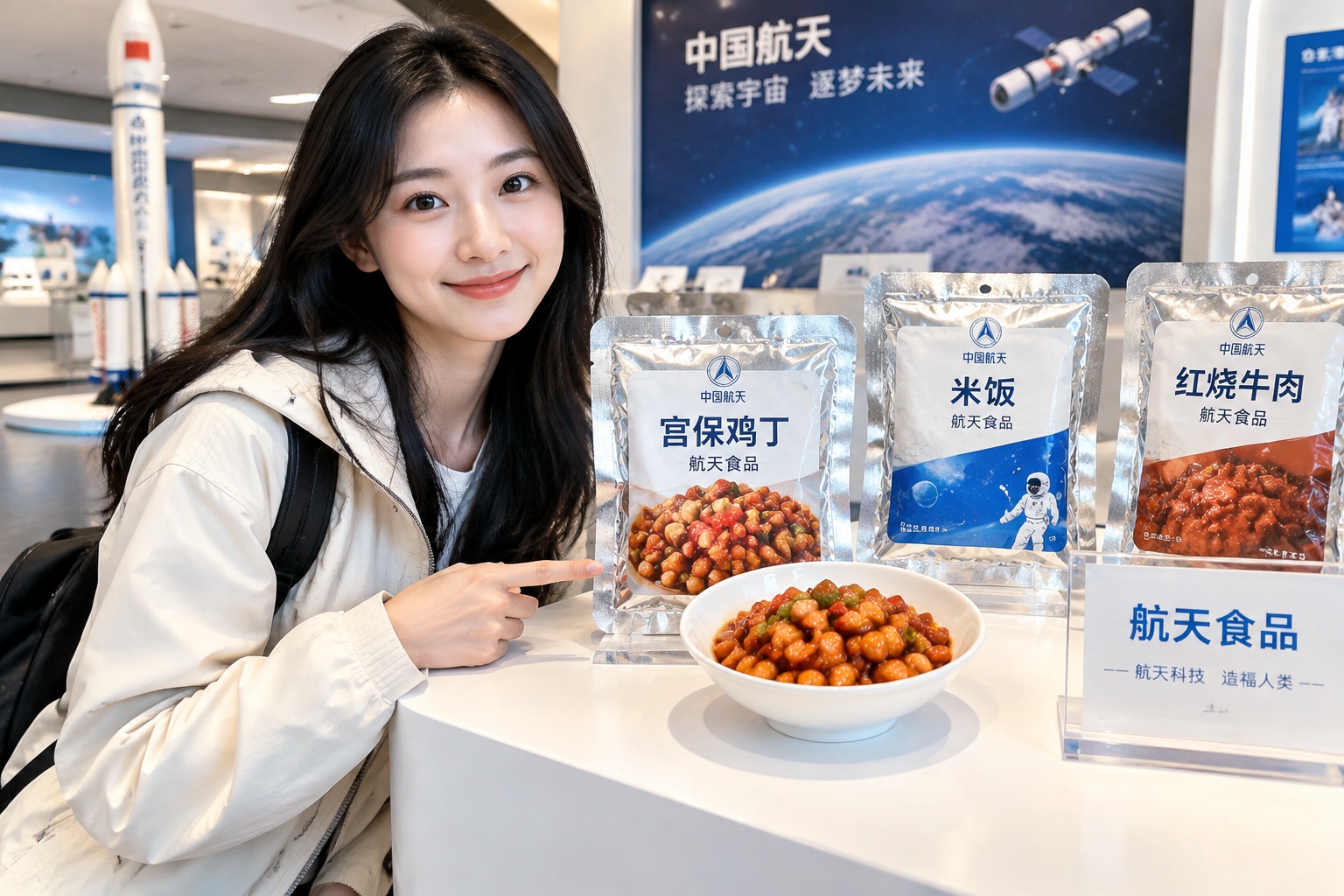
Space food has also become a playful part of public life. At science museums across China, visitors can see rows of packaged space meals that look like futuristic snack packets. Some exhibitions invite the audience to try a rehydrated sample of “space rice with Kung Pao Chicken,” paired with a short cartoon explainer about how the food reaches orbit. It’s a soft, friendly way for ordinary people to connect with high-tech engineering.
Online, Chinese netizens often joke that “Kung Pao Chicken has the highest altitude of any dish on Earth.” The sense of pride is real; behind the humor is the knowledge that their grandparents might have lived in times when meat was a rare luxury. A space menu full of colorful dishes is, in a way, a mirror of how far everyday life in China has come.
One Bite, A World Away
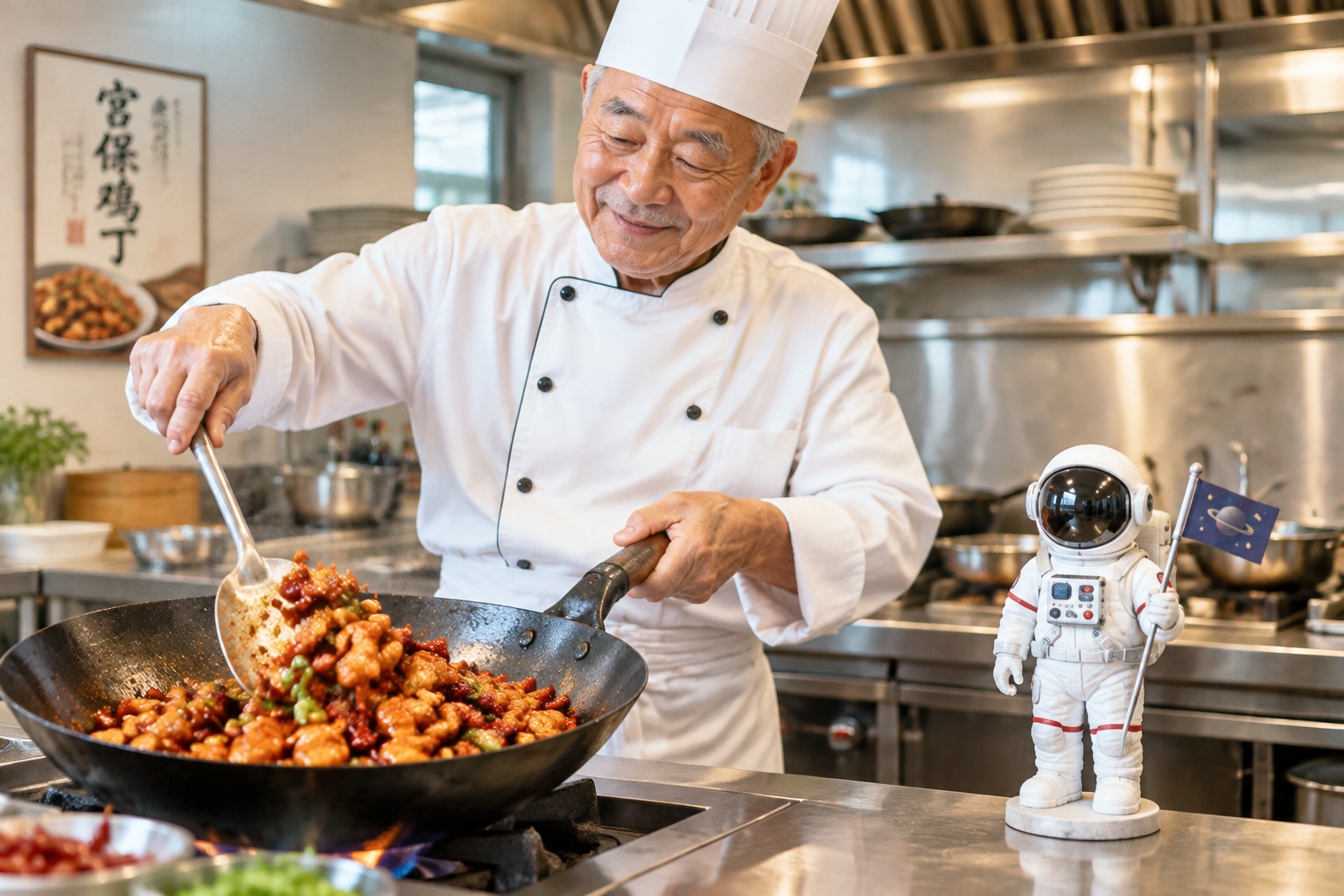
So, how many meals do Chinese astronauts eat a day? Three real meals, plus snacks. But the more meaningful answer is that every meal is a small bridge between the stars and the kitchen tables of China. From early instant bites to today’s heated Kung Pao Chicken, the food has evolved alongside the country’s story. If you close your eyes for a second and imagine the smell of soy sauce and Sichuan pepper drifting through a floating metal canister, you might feel that even in the silence of low Earth orbit, home is never too far away.
Start the discussion at forum.chinacomes.com