

One Night in a County Hospital
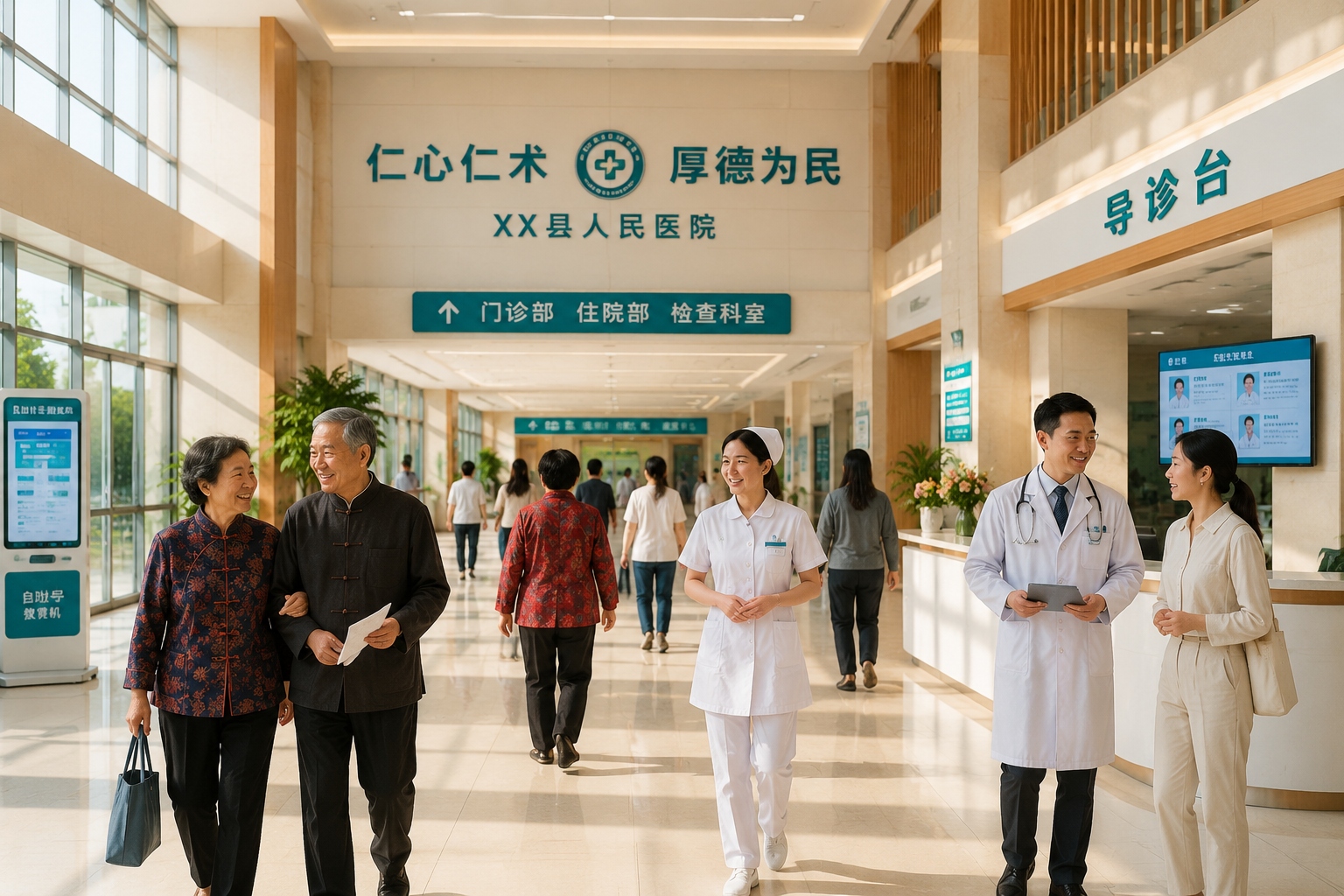
At 2 a.m., a farmer in central China arrives at his county hospital clutching his chest. Ten years ago, he would have been rushed to a city hospital two hours away, losing precious minutes. Tonight, the county hospital has a catheterization lab and an on-call cardiac team. Within 45 minutes, a stent is placed in his blocked artery. He is awake the next morning, and returns home three days later.
This scene is quietly repeating itself across China, where a vast network of county hospitals is being expanded and upgraded at a pace rarely seen anywhere else. It is not just a story of new buildings — it is a measurable shift in how medical resources are distributed, and it may be one of the most important changes in China’s public life today.
The Numbers Behind the Boom
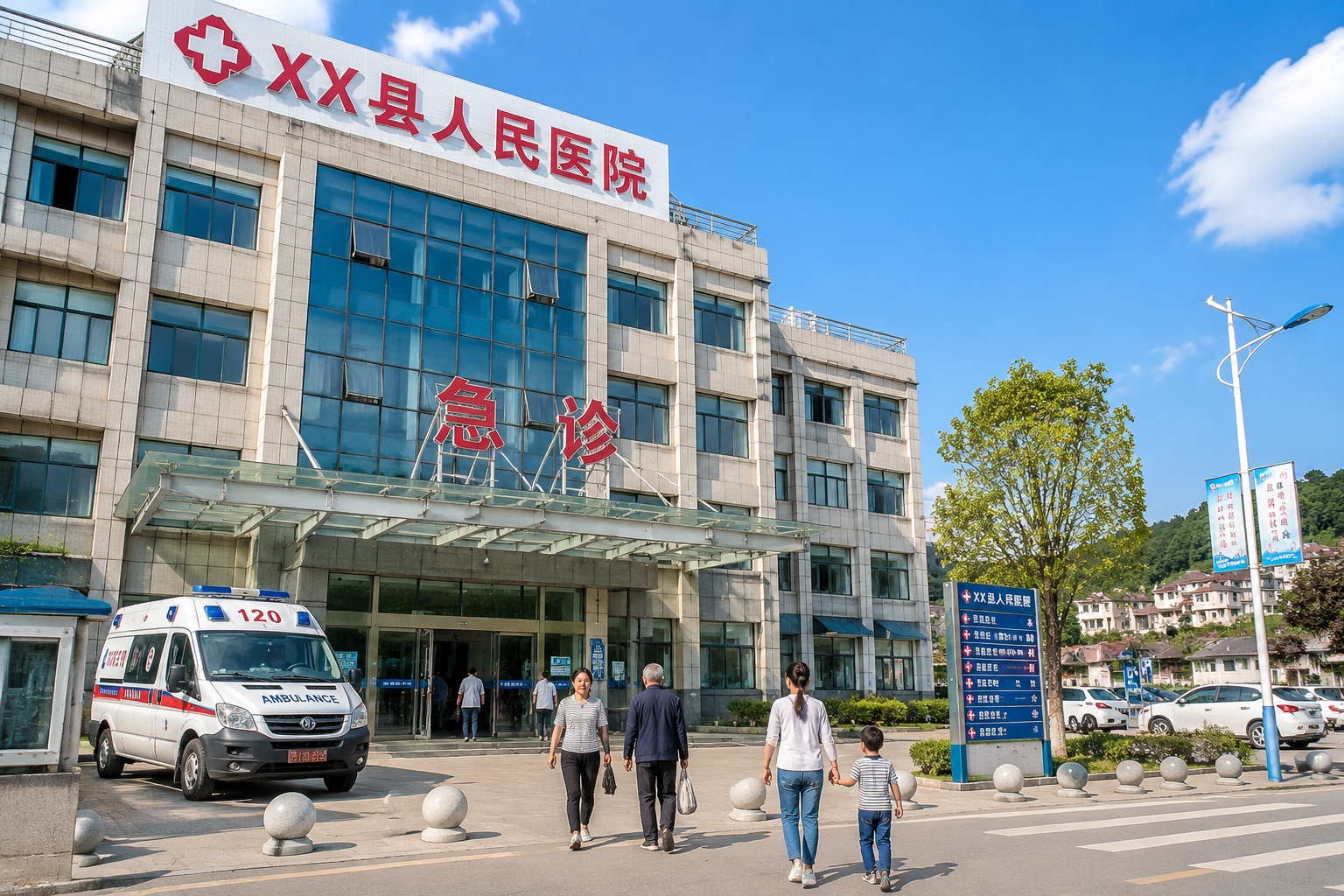
So how many county hospitals does China add each year? The answer depends on what you count. According to the National Health Commission, the total number of county-level hospitals (including general hospitals, traditional Chinese medicine hospitals and maternity and child health hospitals) grew from 11,409 in 2015 to 15,871 in 2022. That is an average net increase of about 640 per year. The increase includes both new hospitals and existing facilities that were upgraded or reclassified from township health centers.
For a more focused measure, consider that in 2023 alone, the central government approved 208 new county hospital construction projects, with a combined investment of over RMB 40 billion (USD 5.5 billion). Some are entirely new hospitals; others are expansions of older facilities. The Ministry of Health also launched the “Thousand County Hospital Project” in 2021, aiming to bring 1,000 county hospitals up to the top-level Grade-3 national standard by 2025.
To put this in perspective: China has about 2,800 county-level administrative units. The United States, with roughly a quarter of China’s population, has about 2,900 rural hospitals, many of which are closing. China is building and renovating hundreds of county health facilities every year.
Why County Hospitals Are Central to Chinese Healthcare
About 1.1 billion people in China live in county-level jurisdictions and rural areas. That is a population almost three times that of the European Union. Yet for decades, the best medical talent and equipment were concentrated in a few hundred flagship city hospitals. A patient from a small town would travel overnight to Beijing or Chengdu, only to wait a week for a specialist appointment and pay for expensive accommodation.
County hospitals are the middle and most crucial layer of China’s three-tier healthcare system: village clinics, township health centers and county hospitals. If these county facilities cannot provide dependable care, patients crowd into provincial capitals and the whole system becomes overwhelmed. That is exactly why Beijing has made county hospital development a national priority, embedding it in the “Healthy China 2030” strategy and the most recent Five-Year Plan.
How China Is Rebalancing the System
The rebalancing is not just a matter of pouring concrete. It relies on three interlocking strategies.
1. County Medical Communities
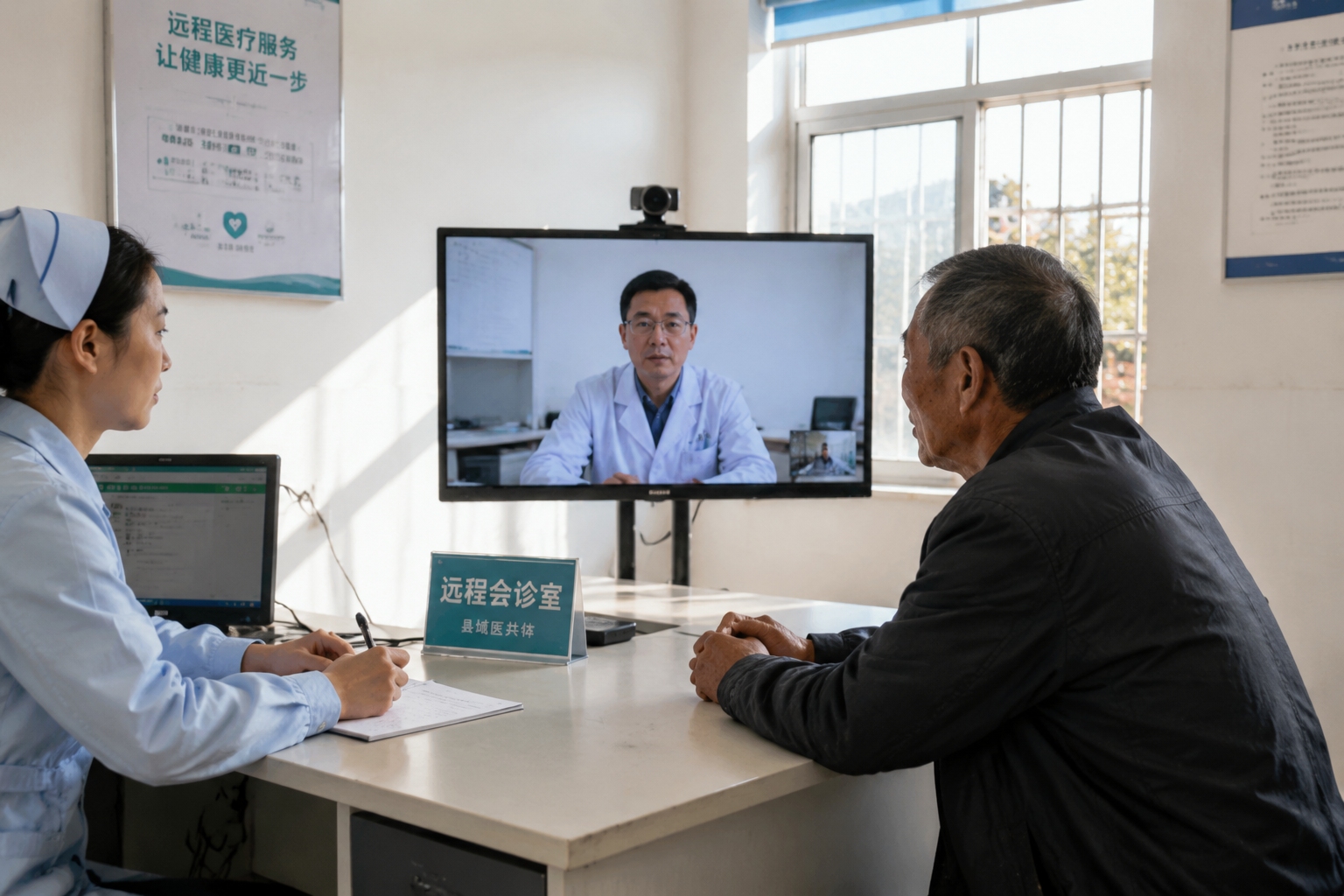
County hospitals are now forming networks with township clinics and village health rooms. In these “county medical communities,” a patient can get a CT scan at a small township clinic, and the image is read immediately by a radiologist at the county hospital. If necessary, the case is shared with a city hospital via telemedicine. This integration effectively gives rural patients access to a multi-level medical team without leaving their hometown.
2. Sending Specialists Down
A nationwide program has rotated thousands of urban physicians into county hospitals for six-month stints. Dr. Zhou, a cardiologist from a provincial hospital in Shandong, now spends several days a week at a county hospital 80 kilometers away. “I helped set up a chest pain center and trained three local doctors to perform coronary interventions,” he says. “Within six months they could run it themselves.” Similar programs exist for surgery, obstetrics, radiology and oncology.
3. Better Equipment and Technology
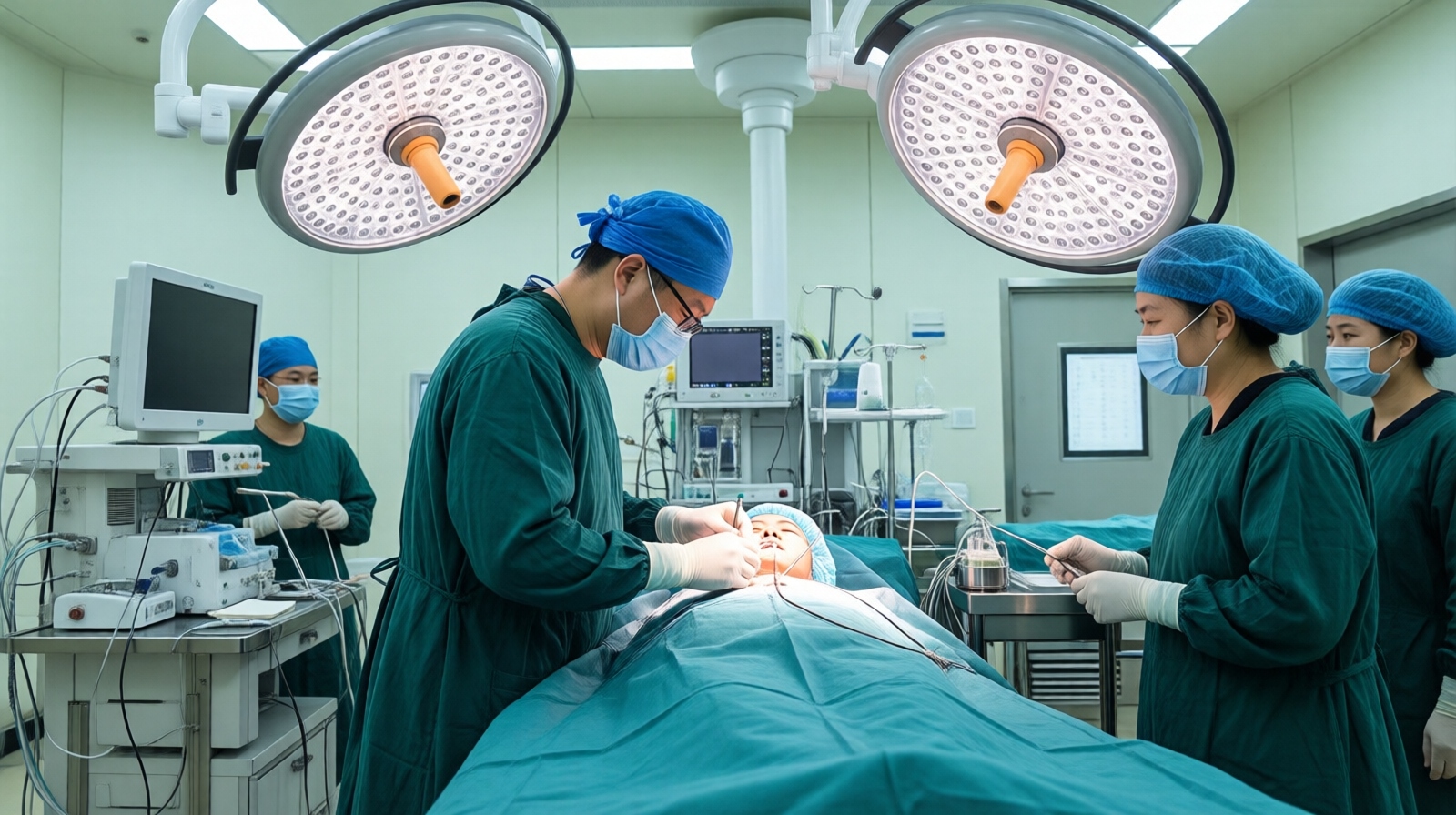
High-end equipment is no longer a big-city monopoly. By 2023, more than 1,200 county hospitals had CT scanners, and 85% could perform basic laparoscopic surgery. Many have opened modern intensive care units, dialysis centers and neonatal wards. Some leading county hospitals in Zhejiang and Guangdong have even acquired surgical robots.
What the Change Feels Like On the Ground
Patients notice the difference almost immediately. In a new county hospital in Jiangxi province, the maternity ward has private rooms, a modern delivery suite and a team that handles high-risk pregnancies. Local women no longer need to rent an apartment in the provincial capital to give birth safely. Hospital satisfaction scores have risen by 30% in two years.
Doctors feel it too. A young physician at a Sichuan county hospital recalls feeling professionally isolated. Now, through 5G-based remote mentoring, he can watch a live surgery at a top hospital in Chengdu and ask questions in real time. “We’re not forgotten anymore,” he says.
Progress Is Real, But So Are the Limits
The new facilities are impressive, yet the rebalancing is far from complete. The biggest challenge is human resources. Many county hospitals struggle to recruit and retain skilled specialists, especially in inland and western regions. Some new equipment sits idle for lack of trained staff. Patients still often choose to travel to a city hospital for complex surgery, simply out of habit or distrust.
Regional disparities persist. Counties in the wealthy eastern provinces invest far more than their western counterparts. And many county hospitals have taken on debt to build new buildings; long-term sustainability depends on patient volumes and government subsidies.
Finally, there is the question of overbuilding. In some areas, planners have overestimated demand. A hospital manager in a sparsely populated county admits, “Our new building is bright, but half the beds are empty.” These complications remind us that infrastructure alone does not cure an uneven healthcare system.
A Quiet Revolution
Ask a Chinese person about healthcare, and they will still point to crowded city hospitals. But the direction of travel is clear. Hundreds of county hospitals are being added or upgraded each year, and the effects are reaching average families. A farmer in a remote county can now get a stent inserted at midnight; a grandmother in a small town can have a CT scan without leaving the county. This is not a hospital-building boom for its own sake. It is an ambitious attempt to rebalance medical resources across 9.6 million square kilometers, so that a patient’s hometown becomes a safe place to be treated.
For the rest of the world, it is a reminder that China’s rise is not only about skyscrapers and high-speed rail. Some of the most meaningful change is happening quietly, in small-town health centers that are opening their doors to patients who, a decade ago, would have had to travel hundreds of kilometers for care.
Start the discussion at forum.chinacomes.com