
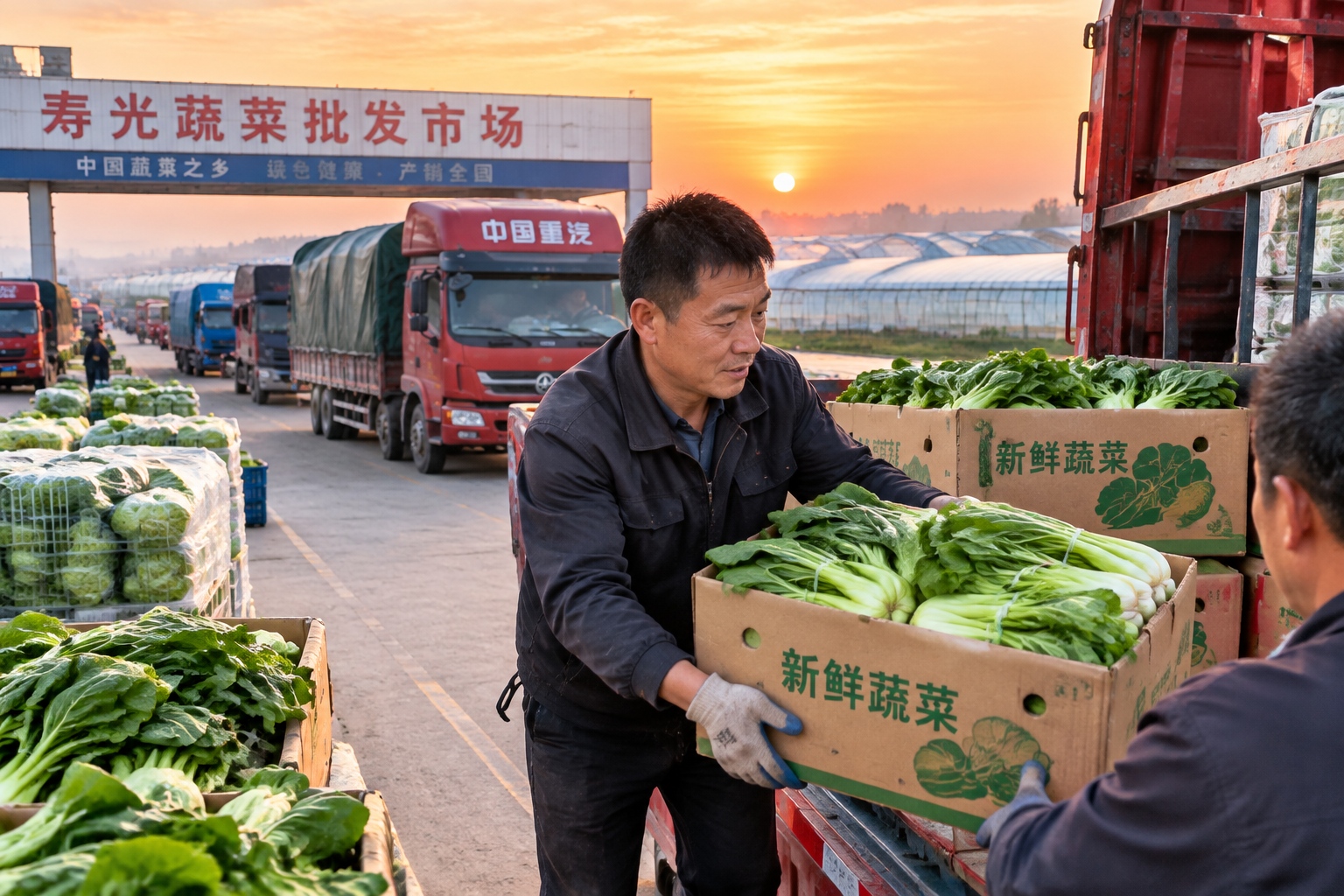

A Truck Leaves Shouguang at Dawn
It is 3 a.m. in Shouguang, and the agricultural logistics park is already buzzing. A driver named Wang walks around his truck, tapping the side of the refrigerated trailer. Inside, the temperature is set to 4°C. The load is a mixture of tomatoes, cucumbers, and peppers, harvested only a few hours earlier. His destination is Shanghai, roughly 1,000 kilometers to the south. If everything goes well, the vegetables will be in a wholesale market before the next sunrise.
That drive is a routine event, repeated thousands of times every day across the province. But for an outsider, it is a window into something big: how Shandong, a province on China’s east coast, built one of the most efficient logistics networks in the world. The story of one truck can explain a lot about modern China.
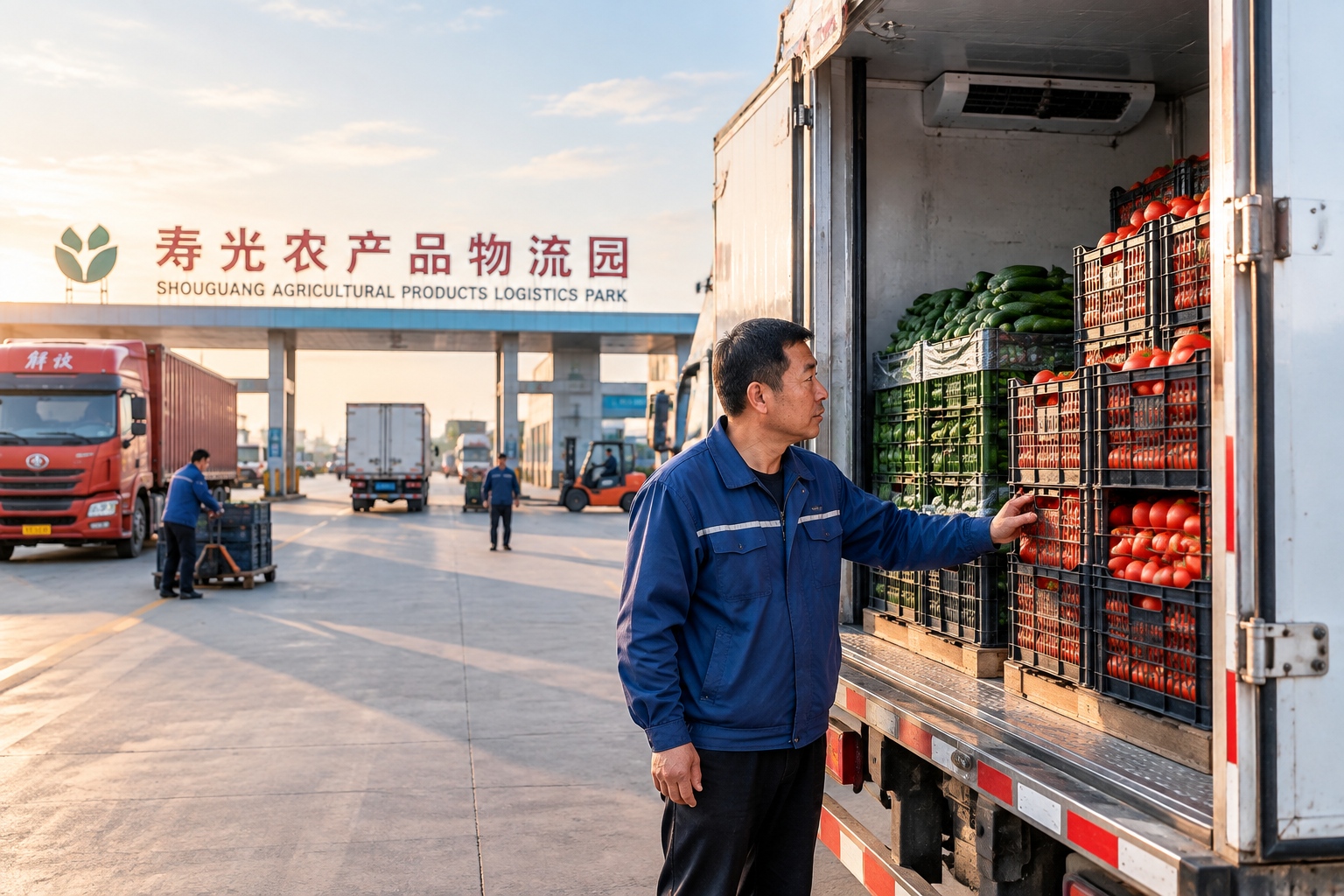
Why Shouguang Feeds China
Shouguang is a county-level city in Shandong. It calls itself China’s “vegetable capital,” and the title is not idle boasting. The city produces around 4.5 million tons of vegetables each year, including many kinds that few people outside China have heard of, like bitter melon and Chinese broccoli. Every day, about 3,000 trucks leave the main logistics park, heading to almost every province in the country.
This status was not achieved overnight. In the 1980s, local farmers became pioneers of plastic-greenhouse farming, which allowed them to grow summer vegetables in the cold northern winter. The greenhouses expanded over the decades, and so did the ecosystem around them: seed companies, fertilizer suppliers, brokers, auction halls, and logistics firms. Shouguang became a giant farmer’s market with a production base attached.
The key to making it all work is not just farming, but movement. A vegetable is valuable only if it reaches a customer before it spoils. So the infrastructure that moves vegetables is as important as the soil.
A Highway Network That Never Sleeps
Shandong has over 8,000 kilometers of expressways, one of the highest densities in China. The roads radiate from the provincial capital, Jinan, and connect every county and major town. For a truck driver, this means no narrow country roads, no mountain passes; just smooth, wide, well-marked highways.
Driving from Shouguang to Shanghai takes about ten hours, mostly on the Shenyang-Haikou Expressway and the Beijing-Shanghai Expressway. The driver can pay tolls with an ETC tag, which registers automatically at the toll gate, so there is no stopping. Rest areas along the way are clean and busy, with restaurants, fuel stations, and even shower rooms for long-haul drivers. Many drivers drive through the night, and the highways are lit, guarded, and constantly maintained.
Rail is also part of the mix. High-speed passenger trains dominate the tracks, but slower freight services carry bulk produce. In recent years, specialized cold-chain rail routes have been introduced, linking Shandong to southern cities and taking some pressure off the roads during peak harvest times.
Keeping It Cool: The Cold Chain in Action
Vegetables are perishable, which is why cold-chain logistics has become a core part of Shandong’s freight business. The province is dotted with temperature-controlled warehouses, some as large as aircraft hangars. Inside, shelves are stacked with crates of produce, each labeled with barcodes that track the farm of origin and the destination.
Reefer trucks like Wang’s are equipped with GPS and temperature sensors. The driver can see the interior temperature on a smartphone screen and receive alerts if it drifts outside the safe range. This technology has turned fresh food delivery into a highly reliable process.
E-commerce companies have taken this to the next level. Platforms like JD.com, Alibaba’s Freshippo, and Meituan operate their own cold-chain networks in Shandong. They buy directly from farming cooperatives, pack the goods in nearby packing centers, and promise that urban customers will receive their fresh groceries within 24 hours. Some services even allow users to track their order from the field to their door.
The same cold chain serves seafood. Qingdao and other coastal cities land huge catches of fish, shrimp, and shellfish. Within hours, the catch is packed with ice and sent by air or high-speed road transport to cities across China. That is how a diner in inland Chengdu can eat “live-from-the-sea” shrimp that were swimming in the Yellow Sea the same morning.
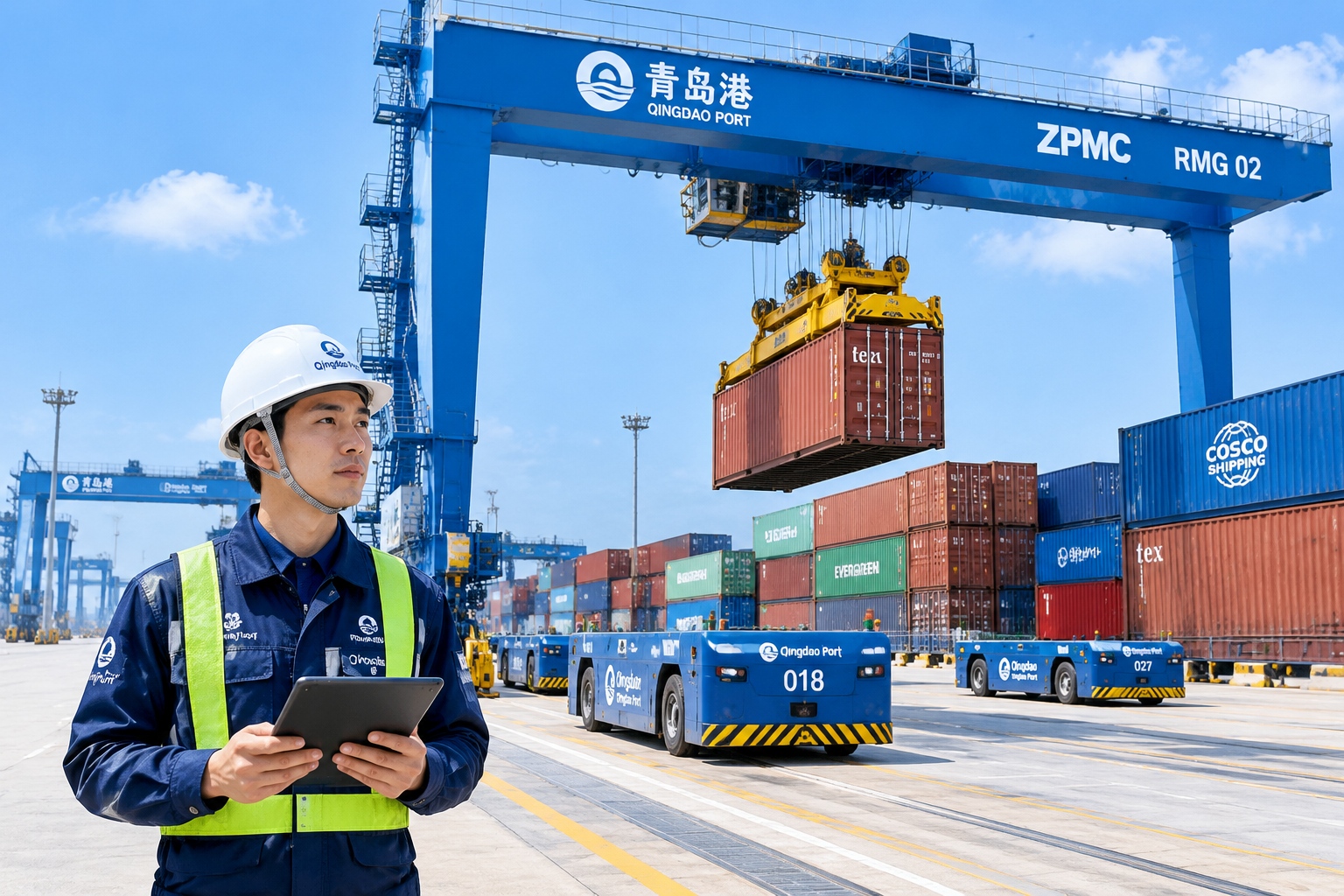
Qingdao Port: Where the Region Meets the Sea
Roads and railways cover the domestic side of the story. When it comes to overseas trade, the hub is Qingdao, a port city on the Yellow Sea. Qingdao Port is among the busiest in China and the world. Its newest terminals are fully automated: giant gantry cranes swing containers onto driverless carts, all controlled by a central computer. The docks look almost eerily empty compared to older ports, because there are hardly any workers on the ground.
Shouguang vegetables, Shandong apples, and farmed seafood are packed into refrigerated containers and loaded at Qingdao for export to Japan, South Korea, Europe, and the Americas. Inbound, the port receives beef from Australia, milk from New Zealand, and tropical fruits from Southeast Asia. These imports then travel inland along the same highways and railways that move Shandong’s produce.
The port also anchors the province’s “sea-rail intermodal” system. A container can be unloaded from a ship and placed on a freight train within hours. The train can then head west, crossing China to Central Asia or even Europe. Shandong is thus not just a regional logistics center; it is a link in international trade corridors.
What This Means for Ordinary People
For most Chinese consumers, the logistics network is invisible. They just see abundant, cheap, and fresh food. In a Beijing supermarket, you can buy tomatoes harvested in Shouguang the day before, at a price that would be unthinkable in many countries. In a Shanghai restaurant, a fish that was caught off Qingdao the previous evening is served for dinner. The system has made food cheaper and more varied.
The network also changes lives beyond the city. A farmer in Shouguang can sell produce to brokers who have contracts with e-commerce companies, and see their crop go directly to a metro store. A truck driver like Wang can earn a stable income without leaving the province, because the highways make round trips possible in a few days. Port workers in Qingdao handle goods from every continent, a daily reminder that this part of China is connected to the world.
Of course, the system has limits. Winter storms can slow down the highways and push up prices. Cold-chain coverage in some poor rural areas is weaker. Small farmers may still face high distribution costs. But the direction is clear: logistics is being treated as a public service, with new investments rapidly filling the gaps.
The journey of that tomato from Shouguang to Shanghai is not a special event. It is the routine result of years of infrastructure building, private enterprise, and the determination to make things move faster. Next time you’re in a Chinese supermarket, look at the vegetables. Somebody drove a long way, through the night, to get them there.
Start the discussion at forum.chinacomes.com