


An ad that reads like a dare
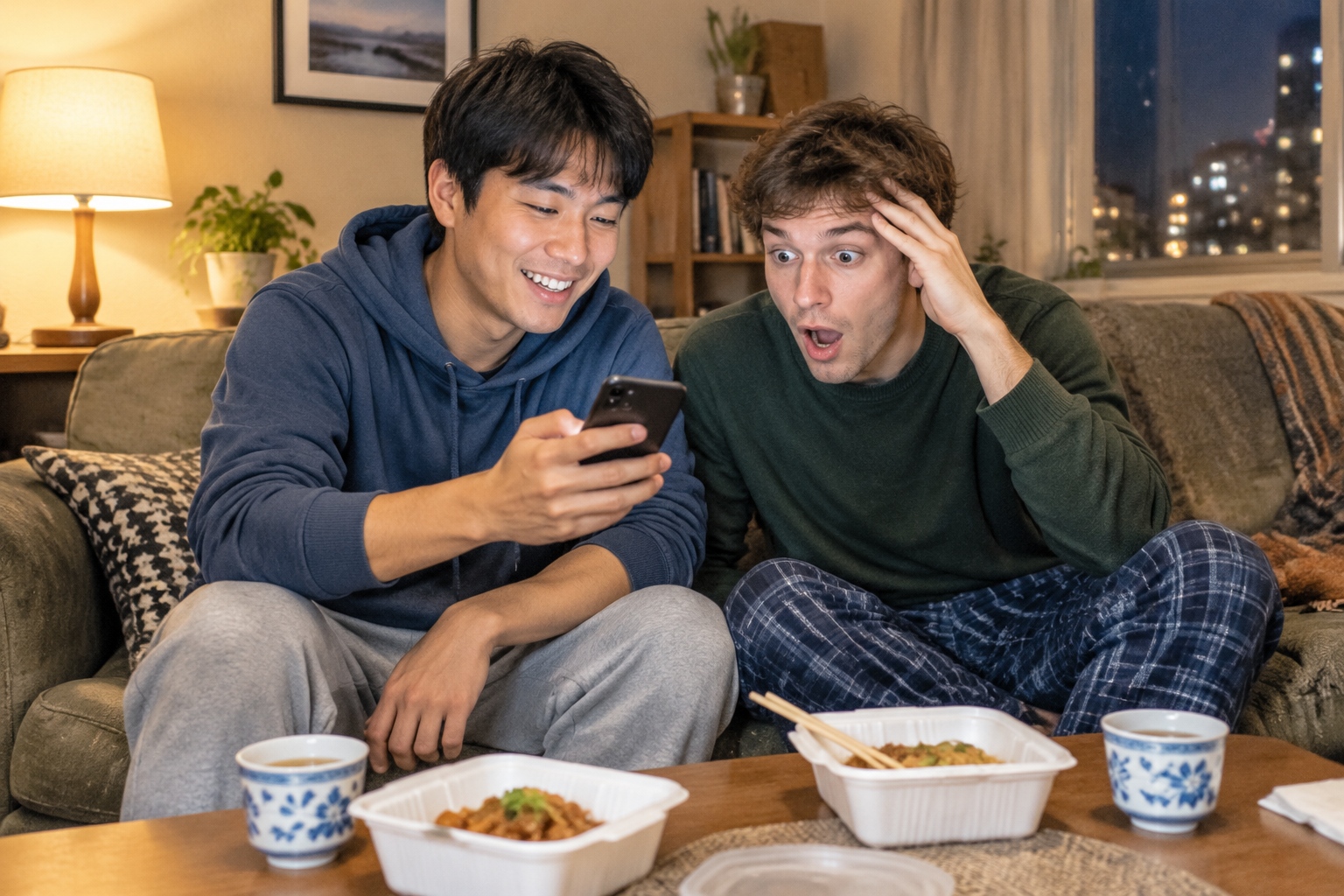
My friend Dan lives in Manchester and has never been to Asia. At 11:40 on a Tuesday night, he sent me a screenshot of an ad he had just been served. The line across the top read: “She signed the divorce papers. Then she found out her ex-husband’s company belonged to her.”
“Do people actually talk like this?” he wrote. “Who writes this stuff?”
The answer: a headline writer in Hangzhou, probably, who is paid to make you stop scrolling in under two seconds — and who has just discovered that the same trick works on an accountant from Manchester.
Chinese headlines are their own genre
If you read Chinese, you’ve known this grammar your whole internet life. It’s called 标题党 (biāotí dǎng), literally “the headline party,” and it’s less a crime than a dialect, with rules you can learn.
Here’s a starter kit. Every one of these ran, in some form, on Chinese portals, WeChat or Xiaohongshu in the past decade:
- The colon reveal. 《离婚后我成了亿万富翁》 — “After Divorce, I Became a Billionaire.” Everything before the colon is setup, everything after is the payoff, and the colon itself is the sound of a door opening.
- The “just now” timestamp. “刚刚,央行宣布了” — “Just now, the central bank announced…” It turns a press release into a live event you’re standing inside.
- The second person. “你的手机,正在偷听你” — “Your phone is listening to you.” Congratulations, you are now a character in the story.
- The number stack. “30岁,存款50万,我辞职了” — “30 years old. 500,000 yuan saved. I quit.” Three facts, no verbs, all tension.
- The premature goodbye. “再见了,共享单车” — “Goodbye, shared bikes.” The bikes are not going anywhere. “Goodbye” is just bait for nostalgia.
- The trailing ellipsis. “她只回了我一句话……” — “She replied with just one sentence…” and the sentence is, obviously, not in the headline.
Add a couple of exclamation marks, a pair of 【】brackets, and a question the article refuses to answer until paragraph six, and you have a native format that millions of readers recognize, resent and click anyway.
It grew up in a click war
To understand why this style got so sharp, you have to know what Chinese editors were competing for. Through the 2000s and 2010s, portals like Sina, Sohu, NetEase and Tencent fought over page views, and later so did UC Browser and Toutiao. Nobody paid for news. Attention was the only currency, and editors were measured on it — often literally, with bonuses tied to open rates.
WeChat public accounts, introduced in 2012, made things worse and better at once. A single article could reach millions of readers, but only if the headline earned the tap. Writers started treating titles the way novelists treat first chapters.
Then came the correction. In 2017, Chinese regulators published rules aimed squarely at 标题党, requiring headlines to match the story underneath. Words like 震惊 (“shocking!”) turned from a tactic into a national joke; the “Shocking Department” at UC Browser became a meme that still circulates.
The grammar survived the crackdown. It simply found new hosts: short video, livestreams, e-commerce — and eventually English.

Then it got a passport
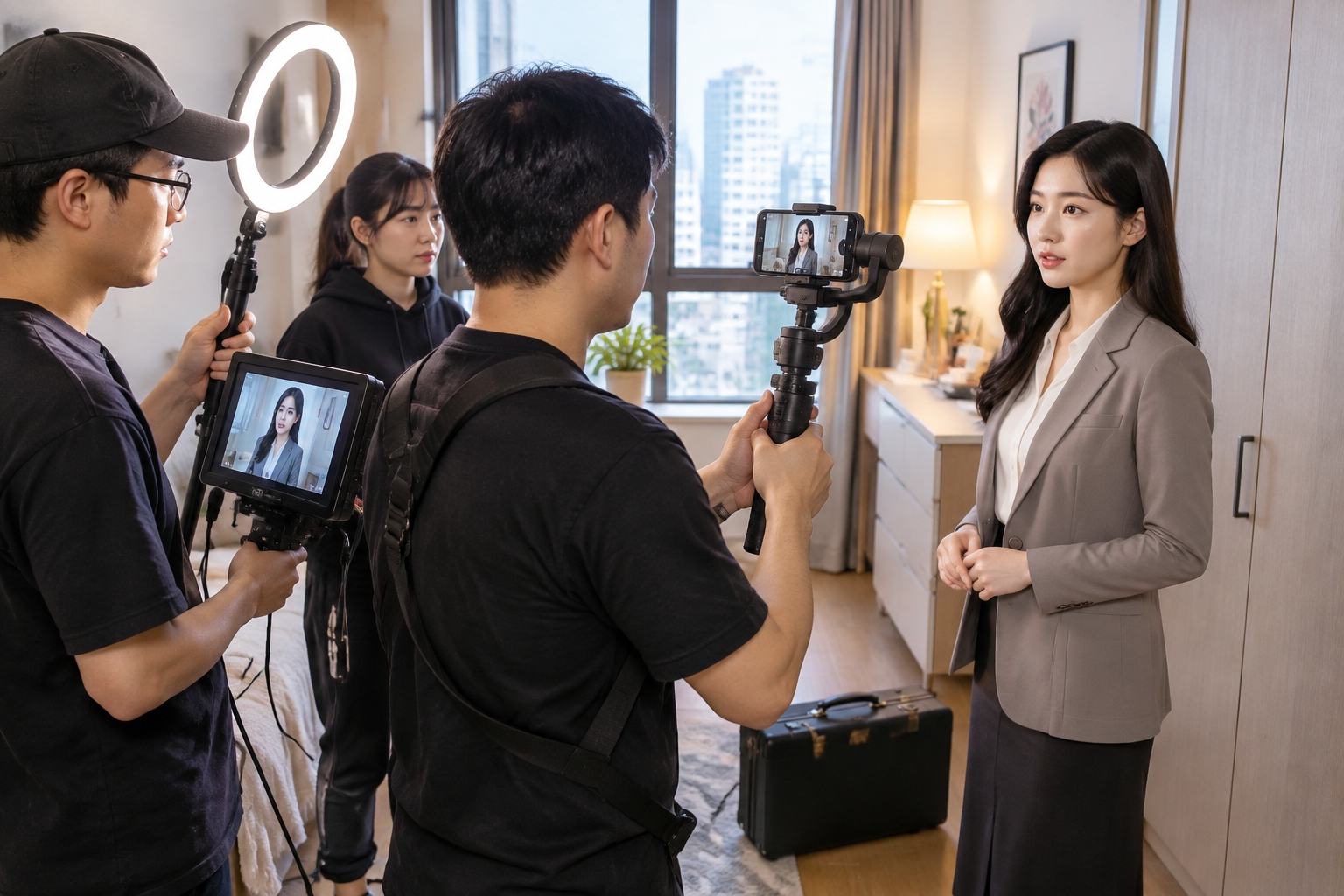
The most efficient delivery vehicle turned out to be micro-dramas, the vertical soap operas Chinese studios began mass-producing around 2021. Each episode runs one to two minutes. A series runs 60 to 100 episodes. The first ten are free; after that you pay, usually a few coins at a time, and finishing a series can cost anywhere from $10 to $30.
It’s a big business at home. Industry estimates put China’s micro-drama revenue at roughly 50 billion yuan in 2024 — about US$7 billion, a figure that edges past the country’s entire cinema box office that year. Hundreds of millions of people watch them.
The overseas versions are run by Chinese companies. ReelShort, built by Crazy Maple Studio, hit the top of the US App Store free chart in November 2023. DramaBox, from the Chinese firm Dianzhong Technology, sits right behind it. Industry trackers put overseas short-drama app revenue in the hundreds of millions of dollars in 2024, and the United States is the single biggest market.
You may have already seen the titles in English: “Never Divorce a Secret Billionaire Heiress,” “The Double Life of My Billionaire Husband.” Those aren’t translations. They’re Chinese title logic, applied directly to an English sentence.
The apps didn’t just translate the fantasy, they localized it. The 总裁 — the domineering CEO of Chinese web fiction — became a werewolf alpha, a mafia heir, or, more often, just “billionaire.” A plot device called 重生 (“rebirth,” waking up inside your own past) turned into “I woke up in 1987 and married the wrong man.” The hook stayed Chinese; the nouns went American.
Why the tricks work on everybody
Here’s the unfashionable part: this is not a Chinese disease. In 1994, the psychologist George Loewenstein described curiosity as an “information gap” — the itch you feel when you know you’re missing something specific. A headline that says “She opened the letter” is a hole. Your brain wants it filled.
Chinese product teams simply industrialized the itch. Writers for web novels on sites like Qidian, which launched in 2002 and charged readers by the chapter, learned that every chapter must end on a hook or the reader leaves. That craft migrated to WeChat, then to short drama. Today, Chinese short-drama platforms test thousands of title and thumbnail variants per show, watching the first three seconds the way a chef watches a pot of water.
There’s even a name for the emotional engine: 爽 (shuǎng), a kind of gleeful satisfaction. Humiliation, reversal, revenge — ideally all inside 90 seconds. It’s a genre, not a con, and the genre has fans.
The eye-roll economy
Chinese readers are not fooled, and they are not quiet about it. 标题党 is an insult you throw at a publication. Comment sections have a standard punchline — “看完标题,文章就不用看了” (“the headline was the whole article”) — and there are browser extensions built to flag offenders.
At the same time, headline writing is a paid, competitive job. New-media editor listings in Chinese cities openly post salary plus KPI: your bonus rides on the open rate your title earns. Somebody has to write 20 options before lunch. That somebody is very good at it.
The rest of the world is now doing the thing it once mocked. Reddit threads dunk on short-drama ads while the apps keep climbing the charts. Nobody is a victim in this transaction. The click is mutual.
What this actually means
It would be easy to read all this as a story about manipulation from abroad. It isn’t quite that. China exports attention engineering the way Korea exports choreography and Scandinavia exports detective shows: as a consumer product, polished first by an enormous domestic market.
It’s also worth saying that clickbait is one register among many in Chinese media, not the whole voice. Financial outlets like Caixin and magazines like Sanlian Lifeweek still run 6,000-word investigations with headlines that tell you exactly what happened. Long video essays regularly collect more minutes of human attention than any 90-second drama. The loud genre is simply the one that travels fastest, because it was engineered to.
Back in Manchester, Dan clicked. He watched three episodes. “The acting is terrible,” he told me, in the slightly ashamed tone of a man explaining a habit. Then he asked what happens in episode four.
The colon had done its job. It always does.
Start the discussion at forum.chinacomes.com