

A City That Wakes Up Hungry
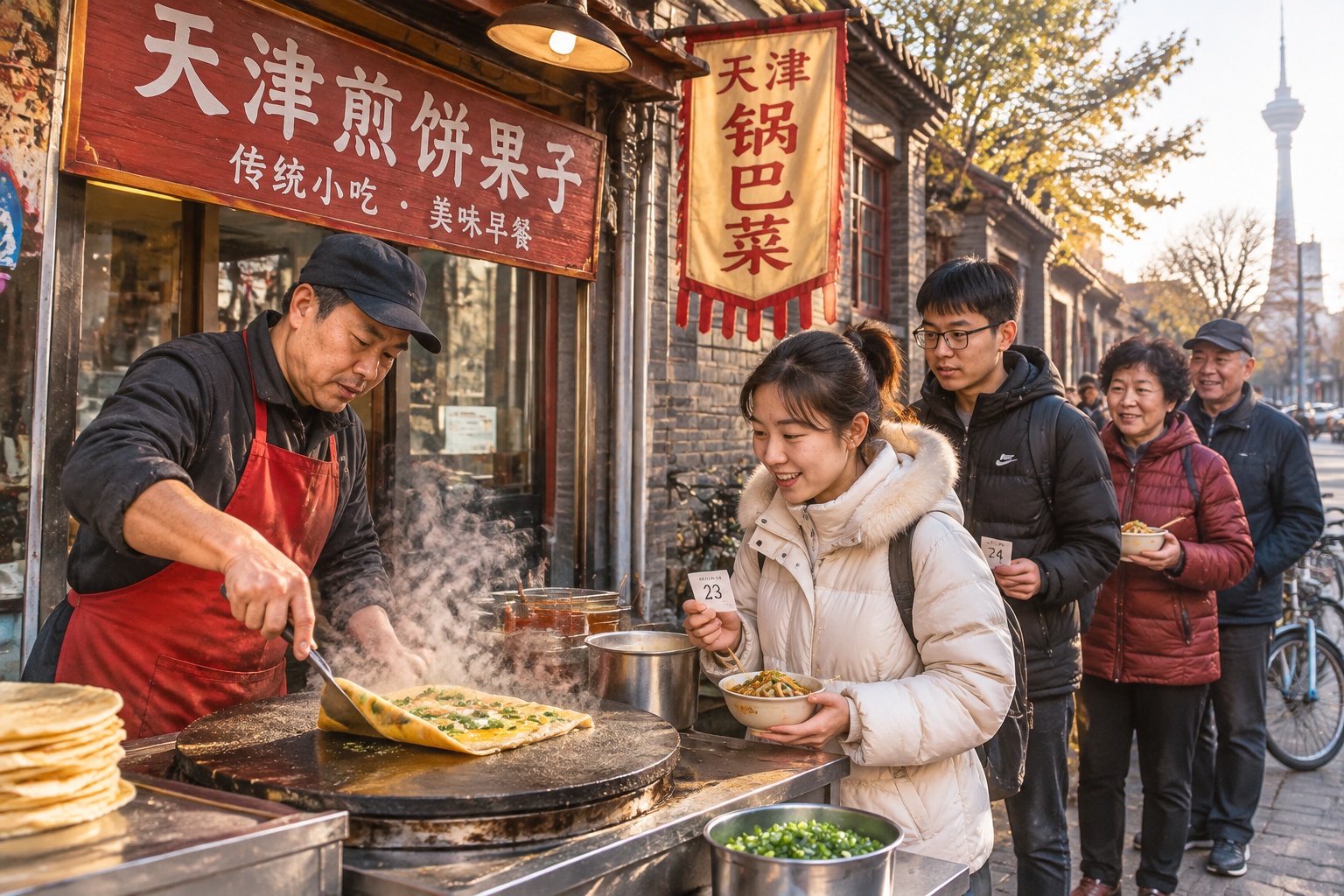
At around 6:30 a.m., the steam begins to rise from a dozen small food carts on a narrow street in Tianjin, a port city of about 11 million people two hours southeast of Beijing. The sound of batter sizzling on a hot griddle mixes with the clatter of spatulas and the chatter of customers in worn winter coats. This is not a tourist experience. This is my morning — and for most Tianjin residents, breakfast is a daily ritual.
What Is Tianjin Breakfast?
Tianjin or its food culture is not about light muesli or a quick toast. It’s about jianbing guozi (煎饼果子) — a savoury crepe filled with crispy fried dough sticks — and guobacai (锅巴菜), a warm, thick soup made with sliced bean jelly sheets and a sesame-laced sauce. These have been the city’s shared breakfast for generations. Tourists often order them, but so do office workers, students, and retirees who line up on their way to work or exercise in the park.
Jianbing: A Portable Staple
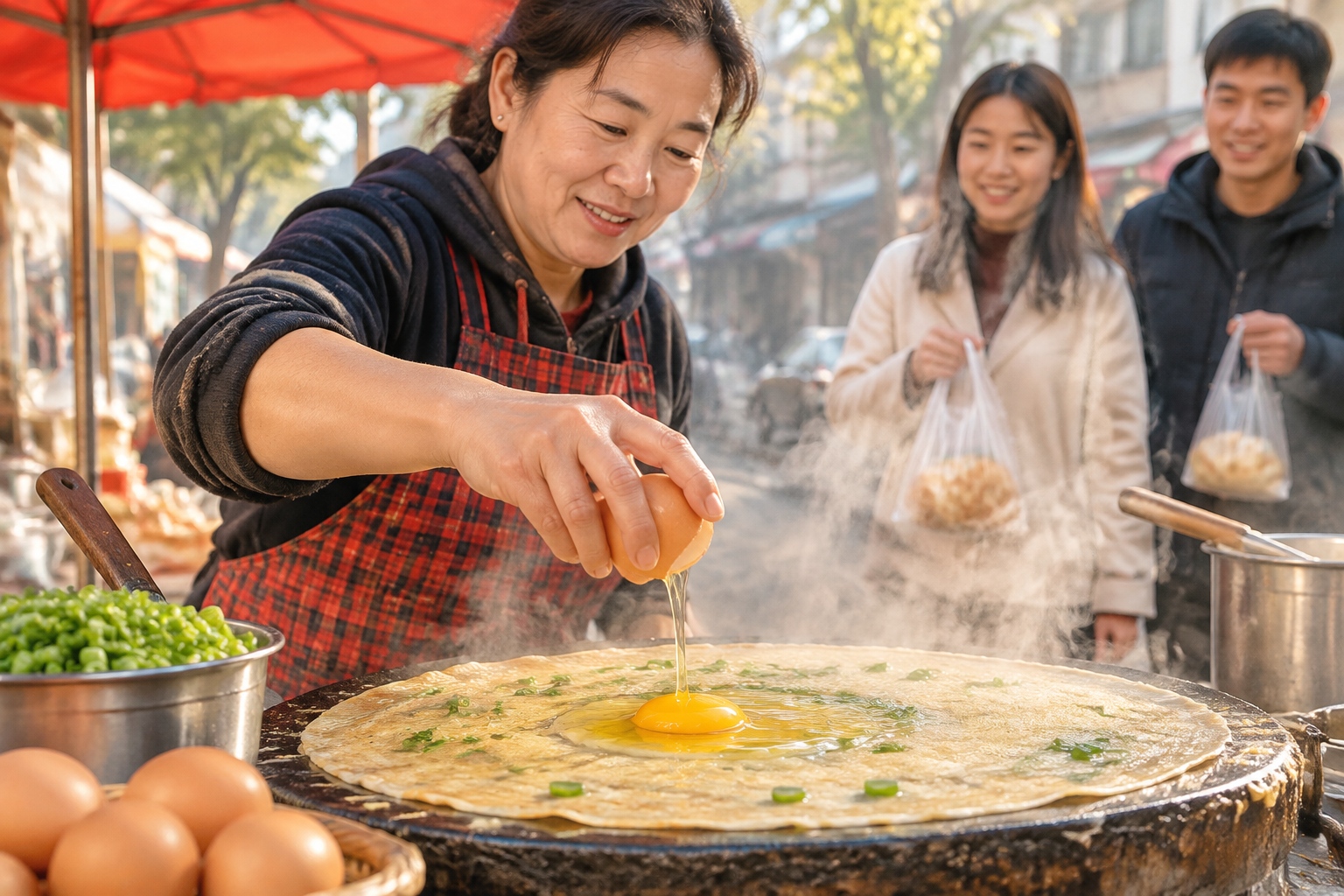
Jianbing (or jianbing guozi, as it’s called here with the added crullers) is unlike its southern cousin, the more common Shanghai-style pancake. The Tianjin version uses a thin layer of mung bean flour, spread evenly on a hot circular griddle, then topped with an egg, a sprinkle of scallion, a tiny pile of coriander, and a spoonful of sweet bean sauce or chilli paste, and then the crispy youtiao (fried dough) is wrapped in. There’s no lettuce, no ham, no cheese — the ingredients purists will tell you. Any extra filling is often viewed with suspicion.
I have watched Mr. Liu, a 35-year-old bing maker from the Hebei district, perfect the flip dozens of times in five minutes. “The key is the mung bean batter,” he says. “Too thick and it tastes like a brick. Too thin and it falls apart. And the cruller has to be crisp, otherwise it’s just tissue paper.” He learned the trade from his father-in-law, who sold bing from the same street corner for twenty years.
Guobacai: The Soul of a Winter Morning
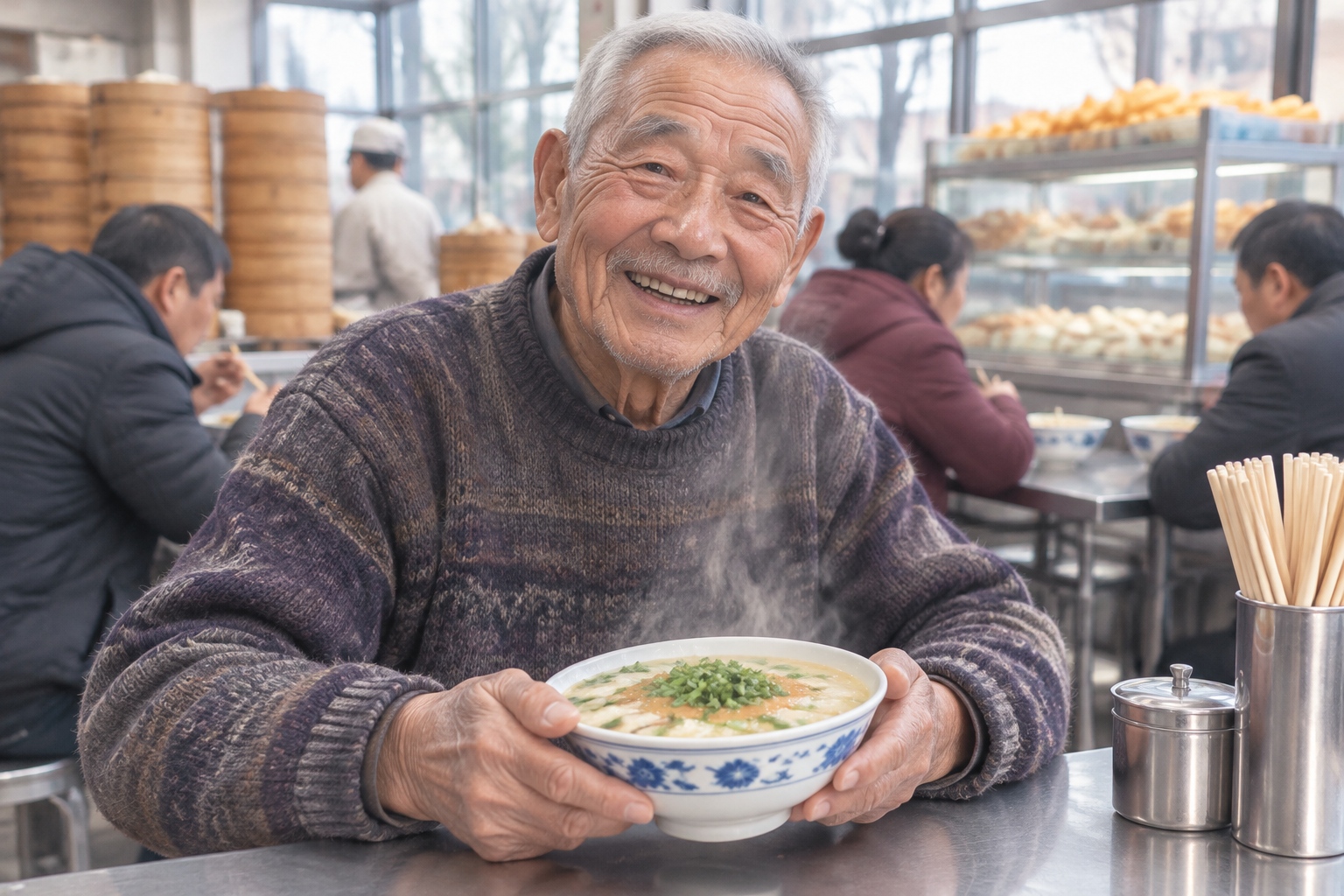
Guobacai can be harder to understand for newcomers. It’s a soup topped with pieces of soft, slightly springy sheets made from mung bean milk, then cut into strips. They are dredged in a dark, glossy sauce and topped with sesame paste, chilli oil, and chopped pickles. It is not spicy, but flavorful, and it is often eaten with a warm bread. Waiters in old-school breakfast shops will ask, “Plain or with chilli?” as if it’s the most serious choice of your day.
At the morning shop near the Litang subway station, Ms. Yang has been wearing white apron and rolling out guobai for 15 years. “Every day, I can sell around 200 bowls, especially in winter. People want something hot that stays in their stomach. You feel the warmth in your chest you know?”
Why Tianjin Breakfast Is More Than Food
For visitors, tasting Tianjin breakfast is also a way to understand the city’s identity. This is northern China’s old industrial hearth, with a history of foreign settlements and an attitude that favours practicality over show. The food matches. It fills, warms, reassures. In many Tianjin restaurants, you can see a chalkboard that proudly says: “If you’re in a hurry, order breakfast. If you’re not in a hurry, it’s still breakfast — plus talk.”
The city breakfast is affordable. A full meal consisting of jianbing, a bowl of guobacai, and a small soy milk or toasted bread costs around 8 to 15 yuan (about 1.1 to 2.1 US dollars). This kind of accessibility shows instead how food serves as a social leveller — in the market, office managers and construction workers often queue side by side, betting on who finishes first.
The Changing Breakfast Scene
Like many Chinese cities, Tianjin is also seeing newer breakfast habits spread. Delivery platforms deliver breakfast to offices; global coffee houses offer cakes; young people sometimes trade traditional breakfast for a more trendy bowl of whole grains yogurt. Yet the old remains everywhere. At weekends, families return to old street wet markets for breakfast, and new cafes add jianbing as a twist — hoping to introduce local flavors to a younger, social-media-savvy generation.
In 2021, local authorities designated jianbing and other breakfast foods as intangible cultural heritage, protecting the traditional recipes. The heritage period has drawn more tourists, who often take photos of the frying process, but even the most curious visitors quickly realise: in Tianjin, breakfast is not just about the food—it’s about the daily gesture of belonging.
An Invitation to the Breakfast Table
If you ever travel to Beijing or Shanghai, take a short bullet-train ride to Tianjin. Get up early, walk to a busy market or stand in line in front of a weathered shop entrance with no English menu. When the stall owner nods, say “yí gè jiānbǐng” (one jianbing) and “yì wǎn bái jiān” or “quality”. If they repeat back to be with a smile, you’ve just passed a Tianjin citizenship test.
You may wipe crumbs from your jacket, feel the steam on your glasses, and realise that even in a country changing at the speed of construction, some mornings never lose their taste.
Words like “jìng chá” (quiet tea) might be exchanged between regulars before leaving. And the sounds of sizzling, biting into the crisp cruller, and the warm sleazy rush of the soup stay in you long after you leave the table. That is Tianjin breakfast. That is the everyday ritual that tells you more about this city than any history book could.
Start the discussion at forum.chinacomes.com