

Morning at the Port
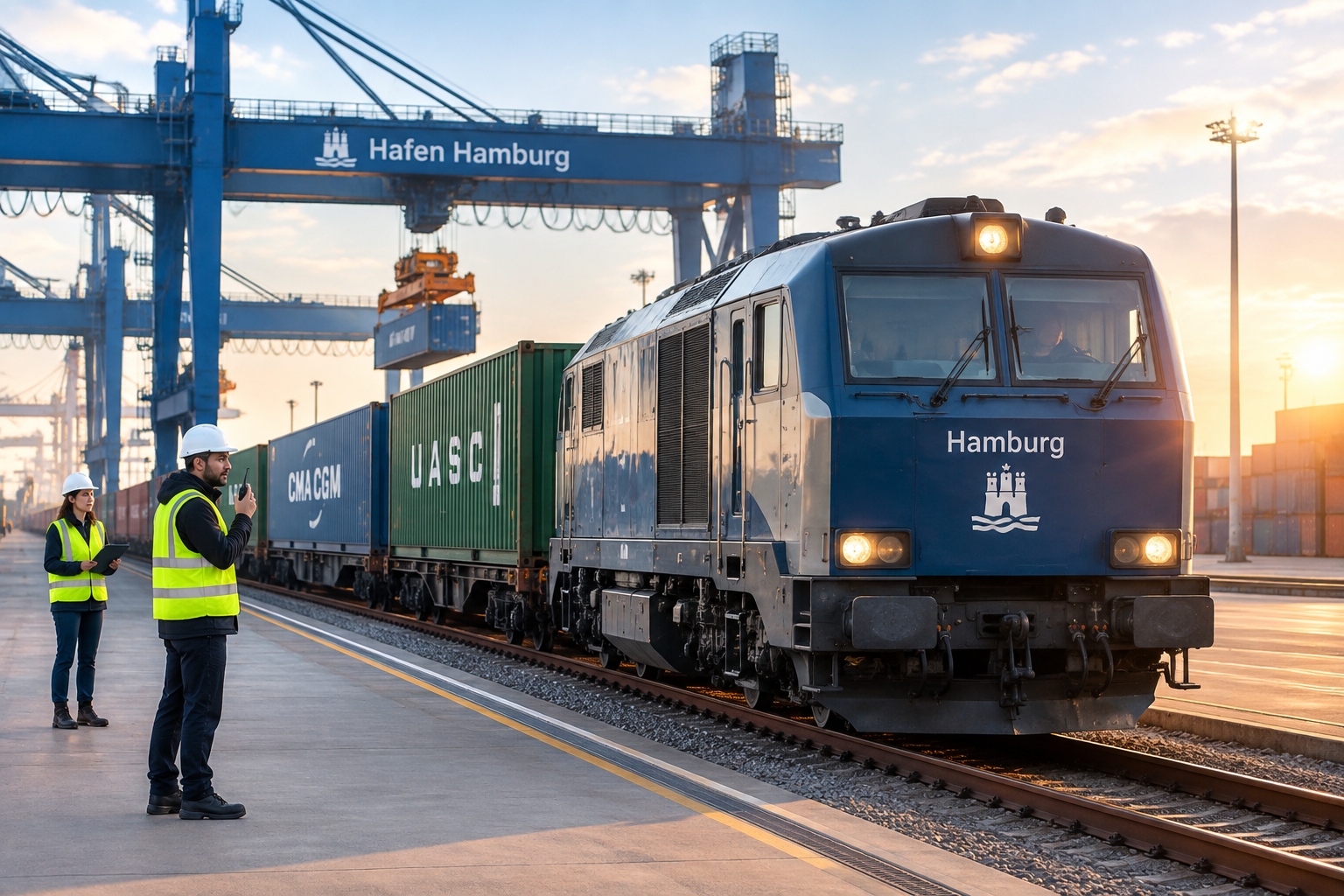
It’s just after sunrise, and the air around the logistics terminal at the Port of Hamburg smells of diesel and salt water. A China-Europe freight train has arrived from Chongqing, 11,000 kilometers away, and now sits motionless on a long concrete track. For a moment, nothing moves. Then a gantry crane swings into action, lifting one container off the car and lowering it onto a waiting truck chassis with a low metallic groan.
This is the last mile of a journey that began in southwestern China, crossed half a dozen borders, and ended here, not at a passenger station but at a working rail yard that most visitors to Hamburg will never see.
The Quiet Corridor Nobody Planned
Just a decade ago, this particular track was used mostly by trains carrying parts for German automakers or chemicals for European factories. The idea of a container train grinding through the steppes of Kazakhstan, the wilderness of Poland, and then into Germany still sounded like a novelty. Today the corridor is part of the global supply chain, with a hundred or more trains arriving every month from cities like Chengdu, Wuhan, and Zhengzhou.
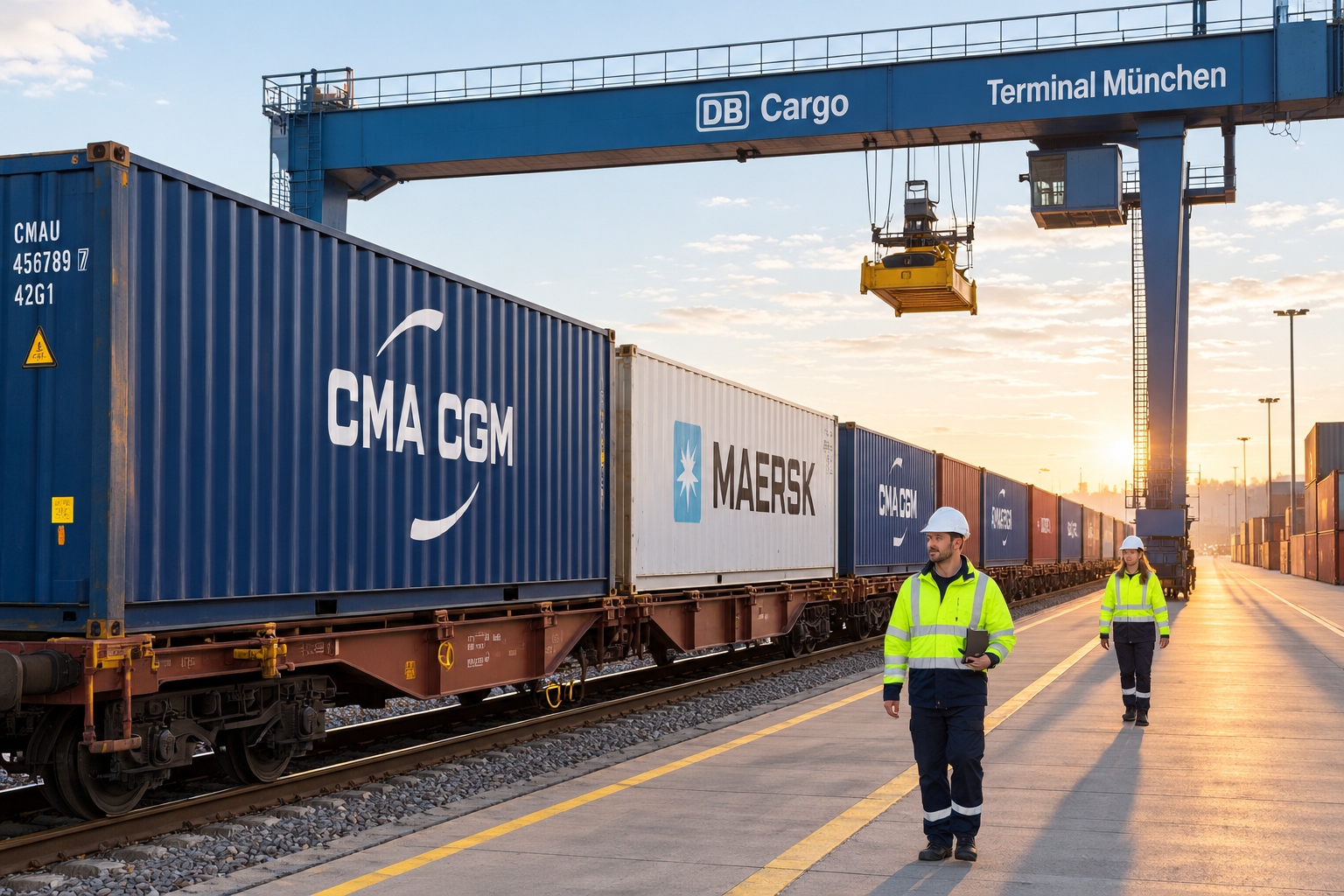
The Port of Hamburg has adapted faster than most. It already had the rail infrastructure, the customs procedures, and the space to handle containers. What it didn’t have was a steady stream of trains from the east. Now the railroad tracks that cross the Elbe River are busy at all hours, not with passengers, but with long strings of gray and blue containers stacked two high.
For workers at the terminal, the trick is to keep the flow moving. A train that stops for too long can clog a ramp and delay a dozen others behind it. So the schedule is tight, the radios keep chattering, and the cranes operate with a rhythm that feels almost like a street dancer’s routine — precise, energetic, and surprisingly graceful.
Customs, Where the Paperwork Meets the Steel
Customs handling is the silent gatekeeper of the last mile. At any given hour, there is a line of inspection bays where officials check shipping manifests against the cargo. The documents were transmitted digitally long before the train arrived, a result of something called the “information system for customs,” which allows pre-arrival clearance. For many containers, this means the paperwork is already done when the wheels stop rolling.
But the checks are not total. A small percentage of containers are pulled for physical inspection. Containers with suspicious imagery on the scanning equipment get opened; others are randomly chosen. The inspection building is a long, low structure with a concrete floor and a series of yellow-marked positions. A forklift stops at a bay, drops a container, and a customs officer walks around it with a flashlight and a crowbar.
One officer, a woman who has worked in Hamburg for fifteen years, explained that modern customs work is less about hunches and more about data. “We look at risk patterns. If a company that usually ships car parts suddenly declares toys, that’s interesting. If a consignee in a small town gets a huge container from a new supplier, that’s interesting. The algorithm gives us hints, but we still have to look.”
Drivers, the Men on the Edge
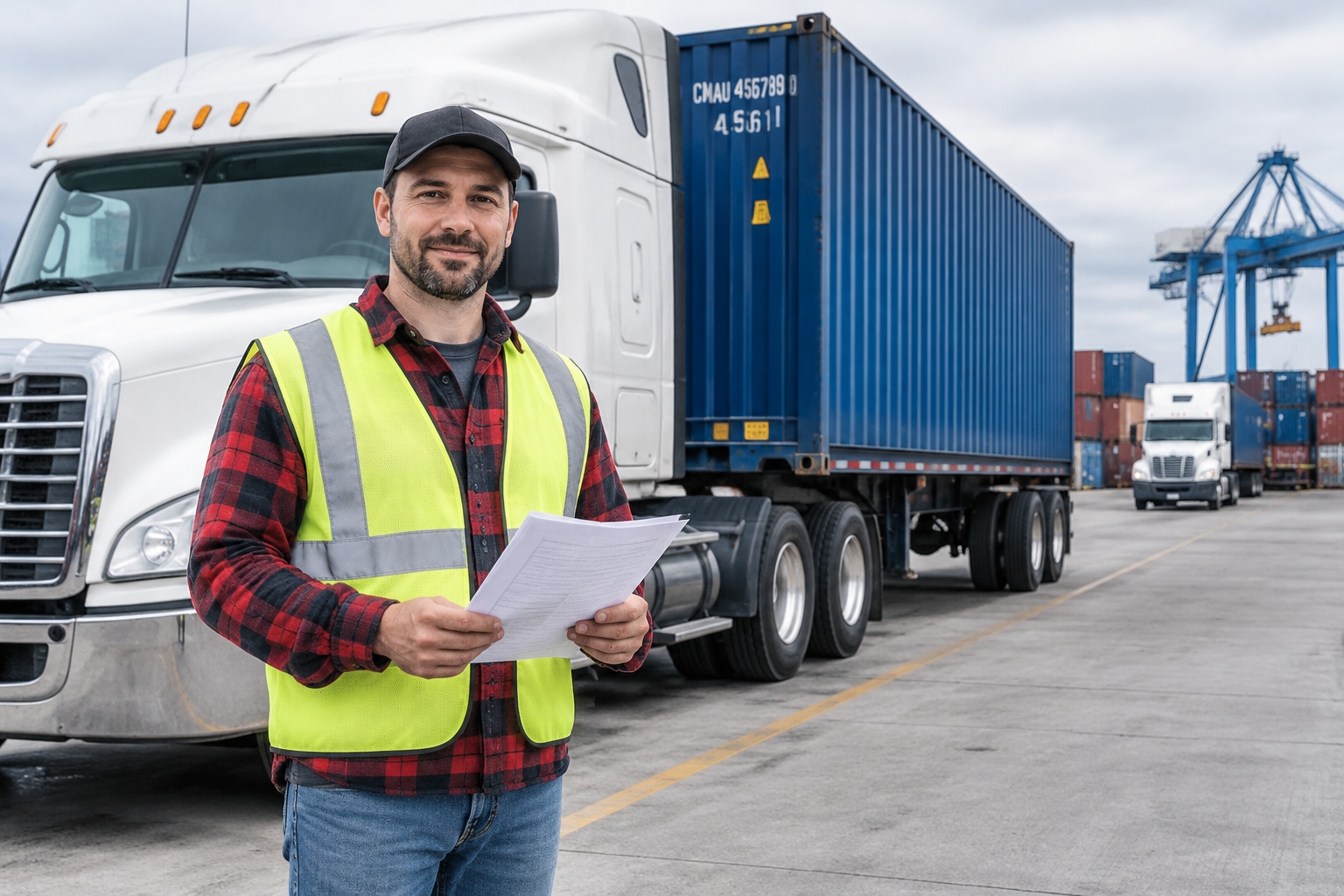
Outside the customs barrier, the truck drivers wait. Their trucks are parked in rows, lined up like soldiers. Many of them have been on the road for days, and they eat, sleep, and even shower in their cabs. The terminal has a few bathroom blocks but no lounge, so drivers cluster near the café that serves strong coffee and cold sandwiches.
Jacek, from Warsaw, has been driving for eleven years. He parks his white Volvo in the same parking slot every Tuesday. “I usually carry nothing on the way here, but sometimes I bring machine parts from Poland that need to go to a port warehouse. Then I pick up a Chinese container and take it to a DHL depot in Frankfurt. Sometimes I go all the way to the Netherlands.” He shows a paper with a barcode. “This is my release note. I show it at the gate, they assign me a dock, I back up, they put the container on my trailer, I drive out. It used to take a whole day. Now it’s four hours at most.”
The last mile is heavy with routine, but the stakes are high. A late delivery can shut a factory in Stuttgart or a warehouse in Lyon. The drivers know this, and they carry the urgency in their shoulders. They brake, accelerate, and wait in the same traffic as commuters, but their cargo connects thousands of kilometers of steel rail and road.
Hamburg’s Hidden Face
For the casual tourist, Hamburg is the city of the Speicherstadt, the old warehouse district, and the Elbphilharmonie concert hall. But just a few kilometers southeast, the port is still a living, breathing industrial machine. The rail terminal is scattered across several suburbs, tucked between shipyards, logistics parks, and wind turbine loading docks. Here, the glamour of old architecture gives way to functional concrete and the smell of metal and rubber.
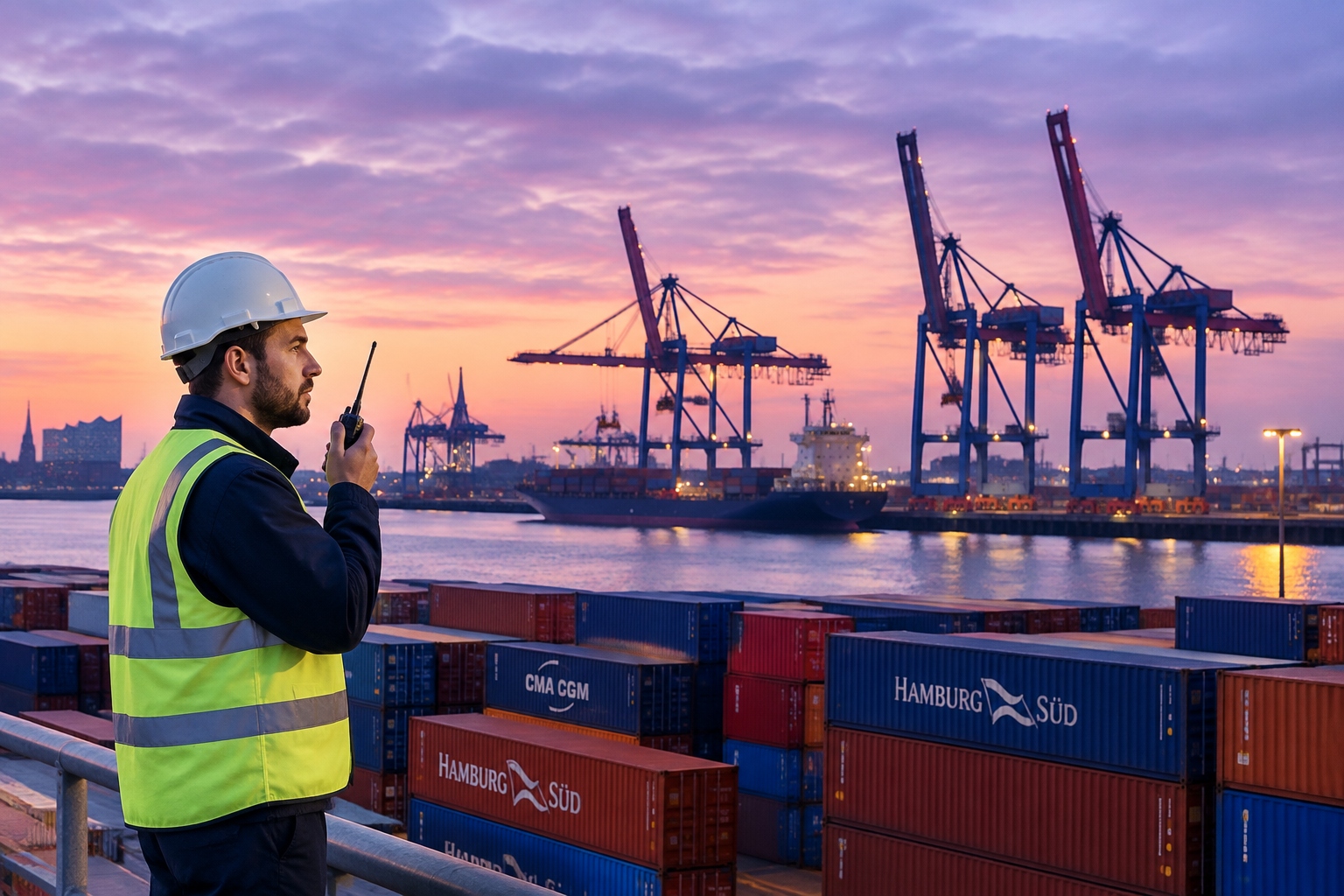
Still, there is a kind of beauty in this working landscape. At dusk, when the last lift has ended, the gantry cranes stand like abstract sculptures against a purple sky. The containers, stacked in grids, reflect the last sunlight, turning into a giant mosaic of colored rectangles. It is a photographer’s dream, but hardly anyone photographs it. They are too busy loading, checking, and heading out.
Numbers Behind the Quiet
The scale is easy to miss if you only watch a single train. In 2023, the China-Europe rail route carried 1.23 million TEU (twenty-foot equivalent units), according to China State Railway Group. Hamburg handles about a third of that entering Germany by rail. That means roughly 400,000 containers passed through this port area, each one representing a pair of cities, a manufacturer, and a customer.
These numbers are not just statistics. They translate into work for dockworkers, customs officers, truckers, warehouse staff, and freight forwarders. They keep small trucking companies in Poland in business and fill the trays of the café in the parking lot. The China-Europe train may be a grand diplomatic storyline, but for people here, it is simply a Tuesday morning.
The Journey Continues
Back at the eastern edge of the port, another train approaches, its lights dimmed. It is a train from Xi’an, carrying solar panels and e-bikes. The terminal supervisor, a short man with a crew cut, watches the train for a moment and then turns to the next task on his tablet. “Every day is the same,” he says, with no melancholy. “And every day is different.”
The last mile is not a metaphor. It is a set of concrete steps, repeated thousands of times, moving goods from a railcar to a truck, from a customs bay to a customer in a far corner of the continent. And Hamburg, the old merchant city on the Elbe, is exactly where that distance begins to shrink.
Start the discussion at forum.chinacomes.com