

Why the animator’s next upload carries a red stamp
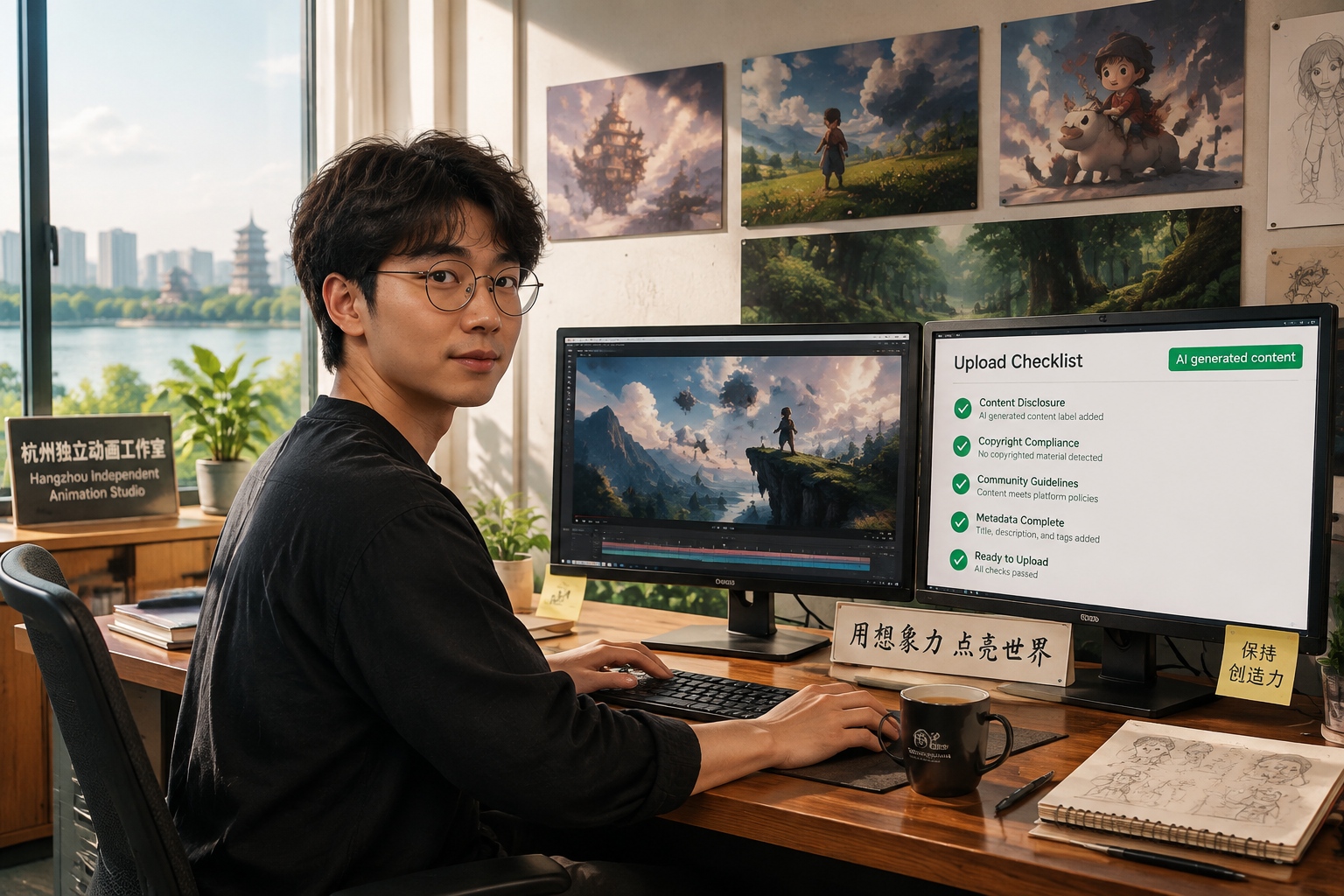
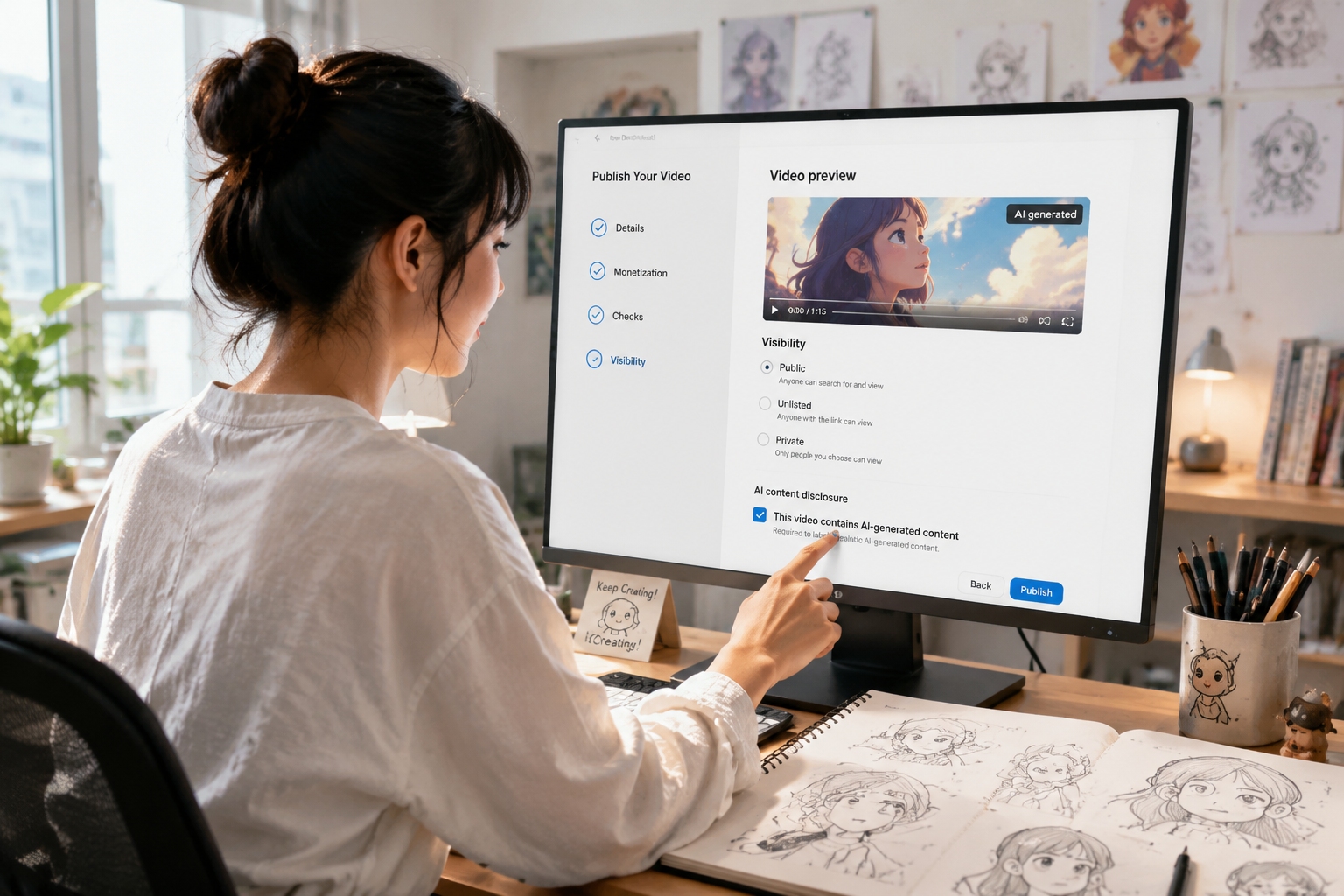
Zhu Lin had spent four months in her Hangzhou studio making an eight-minute animated short. Most of the visuals were generated or expanded by AI tools; she wrote the story, designed the visual mood, cut every scene and selected the voices. On the morning she uploaded the film to a Chinese streaming platform, the final page asked: “Does this content contain AI-generated or synthetic material?” She clicked yes, and the platform automatically placed a small label next to the title: “AI-generated content.”
Her first reaction was mixed. Would the label make audiences think the film was fake? Would it make her human choices seem irrelevant? Three months later, she says it changed her work in an unexpected direction: viewers trust her more. “When the label is there, people no longer ask if I am trying to fool them. They ask how I made it. That is a much better conversation.”
Why regulation arrived at this particular moment
Zhu’s release date was not the reason the rule existed. By late 2024, a few text-to-video apps could generate realistic five-second clips of public figures saying things they never said. What had been a screenwriter’s toy started to look like a disinformation machine. In March 2025, the Cyberspace Administration of China, together with several ministries, released the Measures for Labelling AI-Generated Synthetic Content, effective September 1, 2025. It applies to any image, audio, video or text that could be mistaken for real scenes or real human statements.
The policy was addressed to the whole digital environment, not to “artificial intelligence” in general. The term used in official documents is “synthetic content,” and the deeper logic is straightforward: when a machine can imitate a human face or a public person’s voice, the audience has the right to know that what they see is not evidence.
Beijing regulators pointed to three concrete risks during consultation: hyper-realistic fake news that could move stock markets, cloned voices used for telephone fraud, and the use of synthetic copies to cheat an artist’s original work. The goal was never to ban AI-generated film; it was to make invisible creation visible.
The rulebook is lighter than most foreign coverage suggests
For a person who makes short videos, the policy has three practical obligations.
Visible labels and invisible watermarks
If a clip shows a recognizable person or could pass for live footage, uploaders must put an explicit label on the screen—for example, “AI generation”—where an ordinary viewer will see it. At the same time, files carry an implicit label encoded in their metadata. This helps platform systems identify synthetic material even if someone crops the frame or compresses the video. A purely fantasy cartoon, one that does not pretend to show a real event, has a lighter burden: mostly a hidden watermark is enough.
Algorithm filing is for service providers, not every artist
Headlines saying that every Chinese AI project needs “algorithm registration” have caused a lot of unnecessary fear. Filing is required for companies that publicly provide generative services, such as an image generator, a video synthesis tool, or a face-swap application. A single filmmaker who uses a subscription to one of those tools does not register the algorithm. The director’s responsibility instead is to avoid hiding the machine’s contribution in her own work.
Platforms are the traffic police
Video apps and sites themselves must check whether uploaded files contain synthetic content, add labels where users forget, and remove or block illegal deepfakes when reported. For a creator, the process usually is as simple as checking a box and later seeing an automatic label. A surreal or artistic piece does not require the script to be approved by the state. China’s existing online content review rules still apply, but the AI-label rule does not turn independent filmmakers into civil servants.
The system has a familiar analogy: the allergen label on packaged food. You rarely worry about which farm grew the wheat, but you are entitled to know whether the final package contains peanuts. A moving image is now a package too, and the Chinese label rule says what matters is the final screen, not the intention in the prompt box.
At the policy level, Chinese regulators often use the phrase “inclusive and prudent” to describe their attitude. They say they do not want to smother a young industry; they want it to grow with fewer dangerous shortcuts. In practice, that means the regulation concentrates on the back end—how content flows to millions of screens—rather than restricting the words one types at two in the morning.
Under the stamp: what creators actually feel
Cheap and convincing images are now available to nearly everyone, so the complaint “the label ruins my art” appears less often than it did in 2024. More creators say the label has become part of their craft.
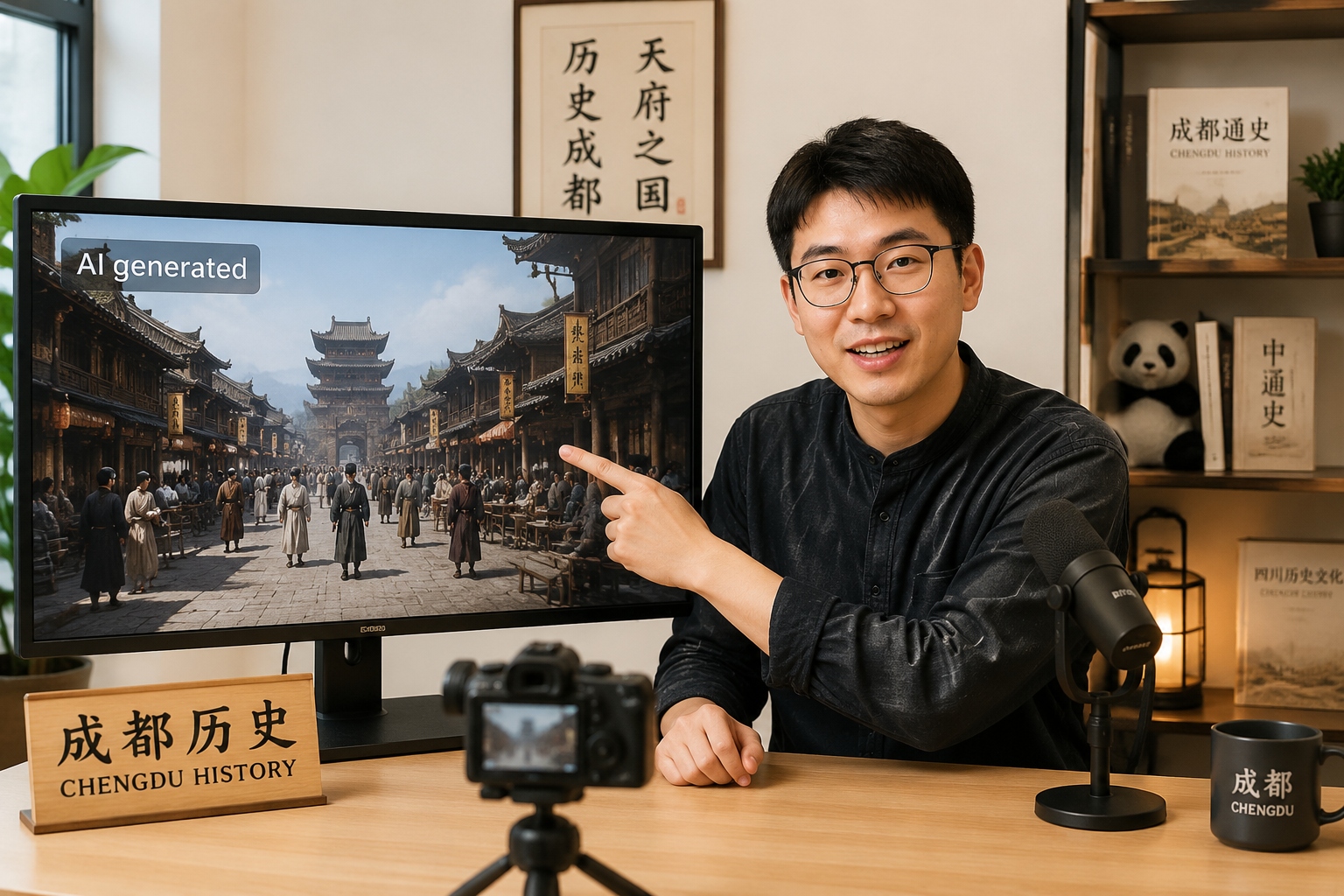
Wang Lei makes short history videos in Chengdu and uses AI to reconstruct old streets. Hiring a full 3D team would cost more than his channel earns in a year. When the label rule went into effect, he added “AI reconstruction” to the opening of every video. The added seconds cost him little. The result surprised him: audiences started asking what to look for in the reconstructed scenes and how he checked historical sources. “Before, they accepted the images as real and did not ask,” he explains. “Now they watch with curious eyes and treat my videos as a starting point for their own research.”
Zhu Lin has developed an equally unglamorous habit: she keeps a production journal. Every meaningful prompt, every original drawing she feeds into the AI, and every footage arrangement is logged. When China’s courts are still setting boundary lines around copyright in AI-assisted work, the log is her evidence that a human made enough decisions to claim originality. “Rules force you to document your process,” she says. “Later, you find the habit actually helps you notice what your own contribution is.”
The required label also created a small social side effect. After Zhu put “AI-generated content” on her previous project, an older viewer in the comments asked whether the AI had cloned the voice actor’s voice without permission. That question led Zhu to introduce her voice actor publicly, along with raw recordings. Instead of replacing human talent, the label helped the audience see that a collaboration was taking place behind the screen.
Mirror effect: how China’s route compares with the EU
Outside China, the country’s AI-film rules are often depicted as a particularly strict cage. But a viewer in Berlin or Paris is also meeting a similar call for transparency. The European Union’s AI Act requires synthetic voices, images or videos that appear convincingly real to be clearly labelled. The difference between Brussels and Beijing is not the destination; it is how the road is built.
EU regulation is product-oriented, dividing artificial intelligence into risk categories, and it demands considerable pre-market compliance for high-risk uses. China’s rules are scenario-oriented, attaching legal duties to the act of releasing synthetic content inside a social network. Platforms—instead of software vendors—carry the hardest enforcement burden. That is why in Brussels the debate stays close to citizen rights, while in Beijing it stays close to social order and market credibility. Both systems are asking one shared question: how can an ordinary person know what is real?

Back in the animation studio
Zhu Lin is now at work on her second AI-assisted short film. The label is just part of the file, like running time or frame rate. For her, the regulation now feels less like handcuffs and more like road markings. A road marking does not tell you where to drive, but it gives you a much better chance of getting there without crashing.
Does Beijing’s rulebook leave all the space an experimenter could want? No, and no regulation anywhere in the world could promise that. But for a growing group of Chinese independent filmmakers, the current “chain” has a useful side effect: it separates artists who care about whether their images can be trusted from the imposters who hide behind a model. That is exactly what a rule for digital dreams should do.
Start the discussion at forum.chinacomes.com