

One Bowl to Start the Day: The Everyday Warmth of Shanxi Snacks
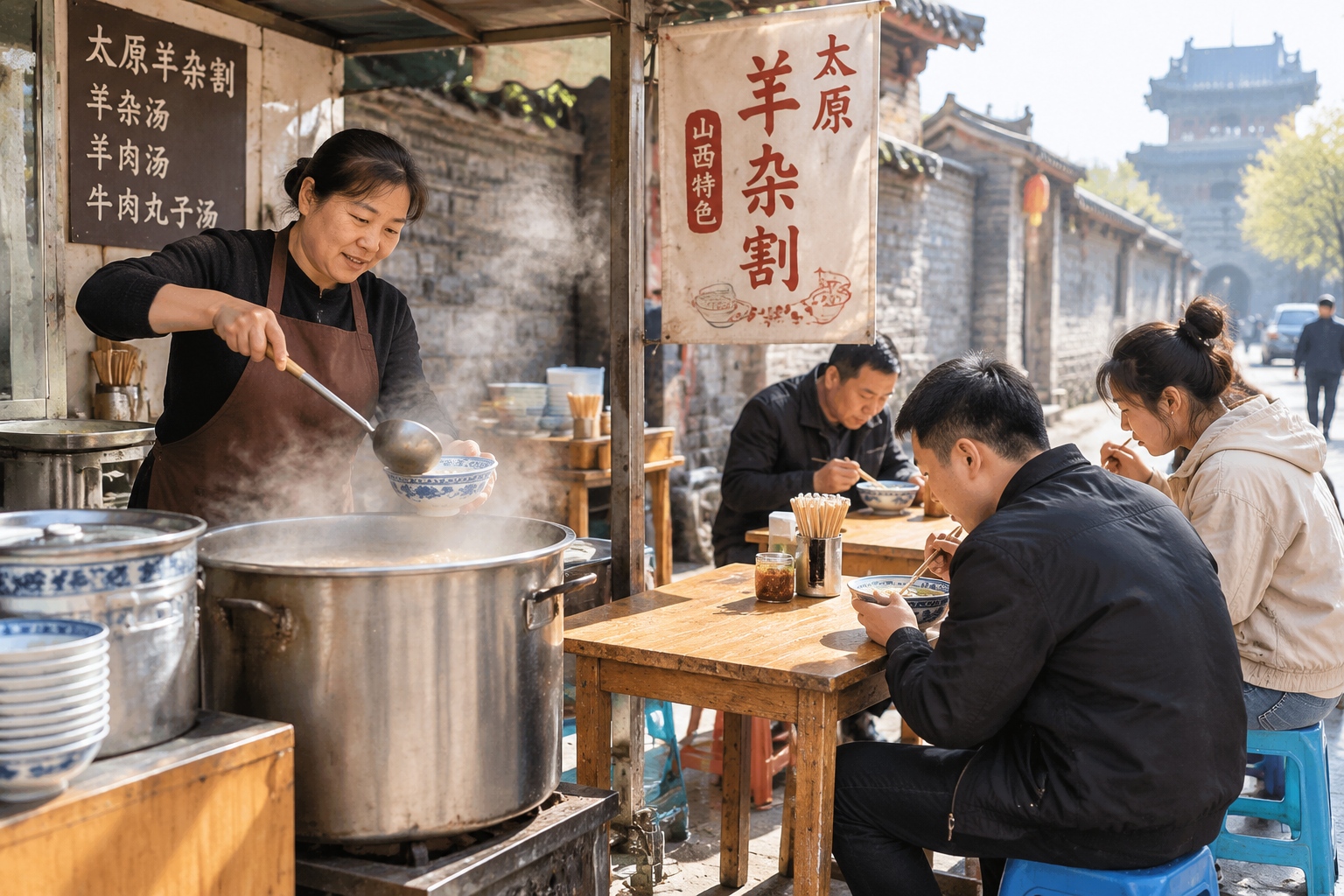
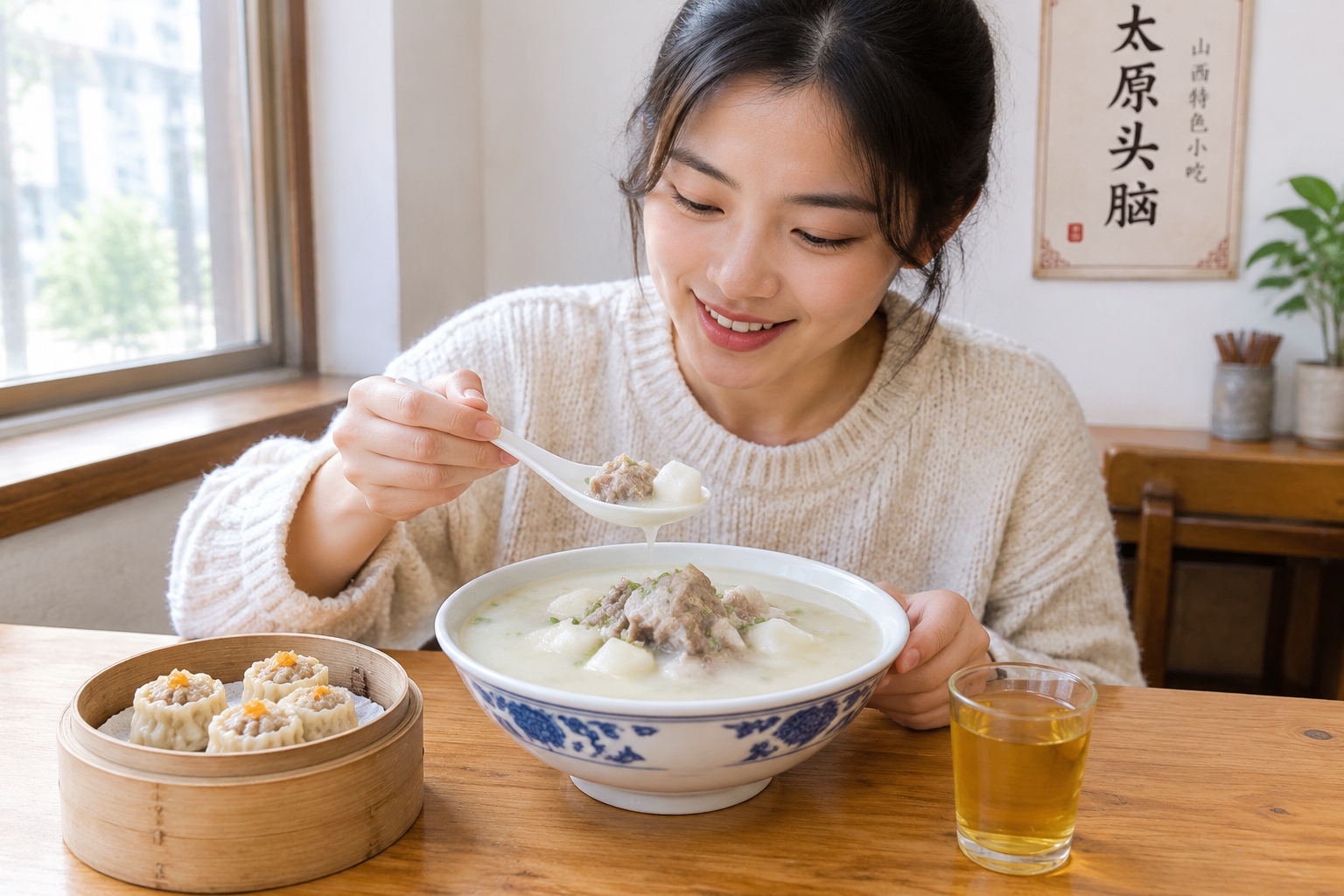
At 7 a.m. in Taiyuan, a line forms outside a modest shop with no English sign. Inside, a woman ladles a pale, steaming liquid into bowls. It looks like soup, but smells faintly of wine and herbs. This is tounao—literally ‘brain’—a breakfast dish made with mutton, yam, lotus root, and a fermented rice broth. Locals eat it with a side of shaomai and a small glass of yellow rice wine. For many, it is the only way to start a winter morning.
This is not the Shanxi you find in travel brochures. There are no famous noodles here, no vinegar factories on the tour bus route. This is the hidden menu—the food locals eat when no one is watching.
What Is Shanxi’s ‘Hidden Menu’? The Local Flavors Not on Any Travel Guide
Shanxi is known for its noodles and aged vinegar. But beyond the tourist trail, each city and county has its own snack culture—dishes that rarely leave the province. They are not secret because they are exclusive, but because they are deeply local: tied to a specific dialect, a specific morning routine, a specific grandmother’s recipe.
To find them, you have to look for the shops with no English menu, the ones where the owner knows every customer by name. These are the places where food is not a performance—it is a habit.
Taiyuan: Tounao, Guan Chang, and Dalumian—The Old City’s Morning Ritual
Taiyuan’s breakfast scene is built on three pillars: tounao, guan chang (steamed blood sausage), and dalumian (gravy noodles). Each has its own dedicated following.
Tounao is the most intimidating. The name means ‘brain,’ and its texture is thick, almost porridge-like. The key is the jiu—a fermented rice liquid that gives it a slight tang. First-timers often add too much vinegar or chili, but locals will tell you: eat it slowly, with a spoon, and let the warmth spread.
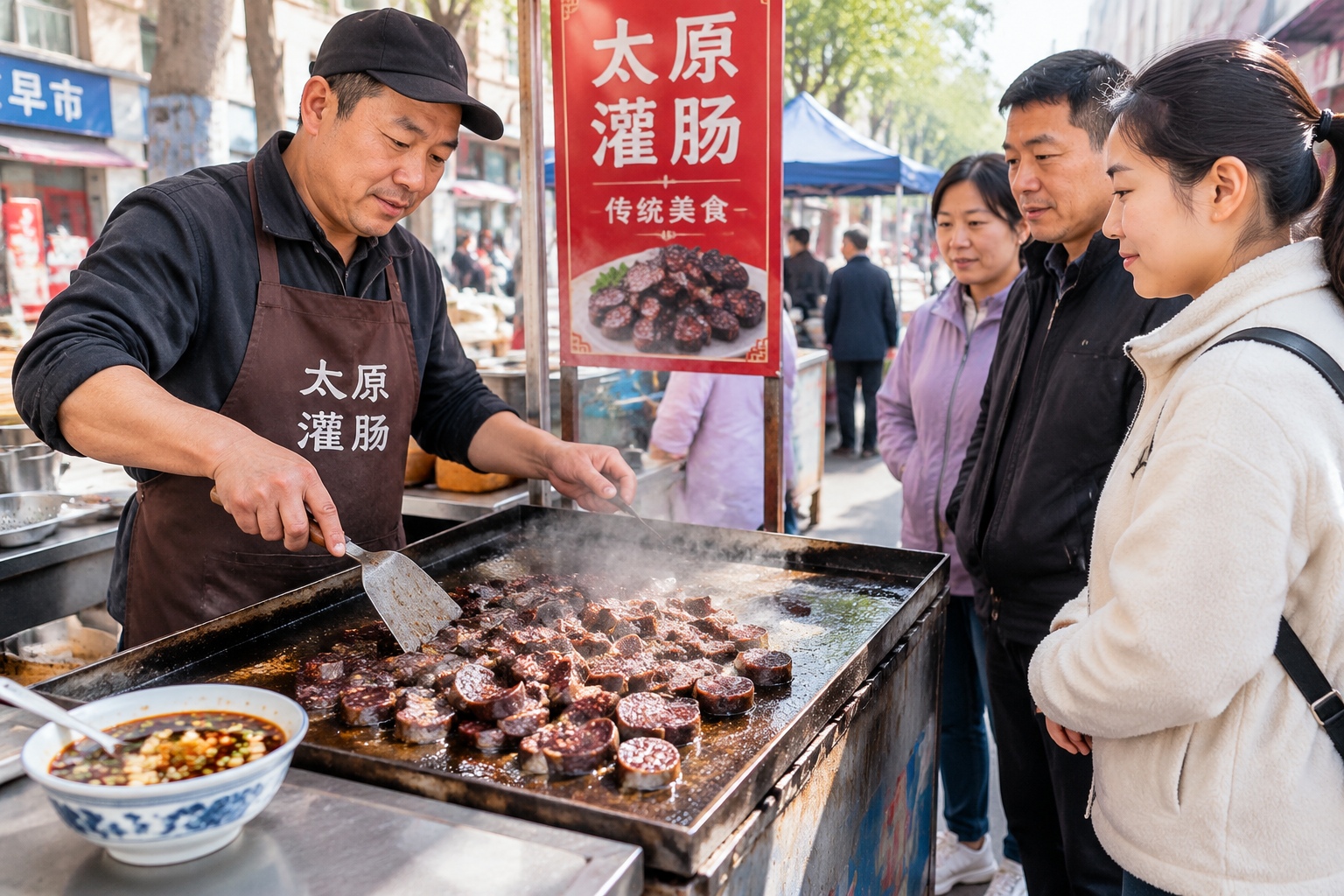
Guan chang is simpler: steamed blood sausage, sliced and pan-fried until crispy, served with a garlic-vinegar dip. It is cheap, filling, and found in every neighborhood market. Dalumian is a thick noodle soup with a gravy-like broth, often topped with pork, tofu, and mushrooms. It is the kind of breakfast that keeps you full until dinner.
Jinzhong: Yuci Guan Chang and Taigu Bing—The Persistence of Corner Shops
An hour south of Taiyuan, in Yuci, guan chang takes a different form. Here, it is steamed in a large flat tray, then cut into strips and stir-fried with bean sprouts and leeks. The texture is chewier, the flavor smokier.
Further along, in Taigu, the local specialty is taigu bing—a flaky, slightly sweet pastry made with sesame oil and maltose. It has been made in the same family-run shops for generations. The best ones sell out by 10 a.m.
These shops do not advertise. They do not need to. Their customers have been coming for decades.
Jinnan: Yuncheng Mutton Pao and Wenxi Boiled Cakes—Surprises Beyond Noodles
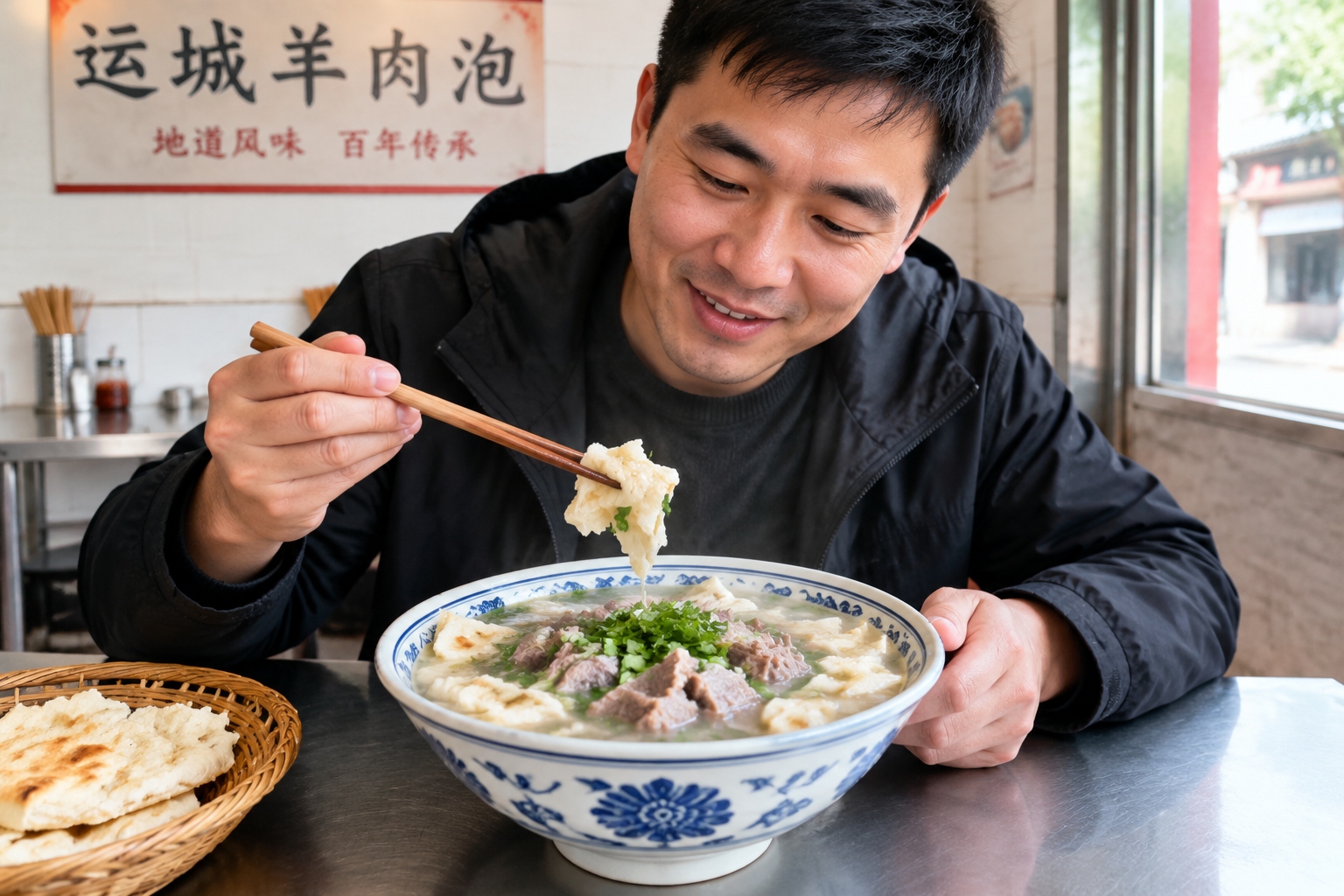
In the south, wheat gives way to other grains, and the flavors shift. Yuncheng is known for mutton pao—a lamb soup with torn pieces of flatbread soaked in it. It is similar to Xi’an’s famous version, but locals insist theirs is lighter, with more emphasis on the broth.
Wenxi county has its own claim to fame: wenxi zhubing, a boiled cake made with sesame and honey. It is soft, sweet, and often given as a gift during festivals. For outsiders, it is a surprising find—a sweet snack in a region famous for savory noodles.
Jinbei: Datong Knife-Shaved Noodles and Hunyuan Liangfen—Delicacy in Roughness
In the north, the food gets heartier. Datong’s dao xiao mian—knife-shaved noodles—are made by holding a block of dough and slicing strips directly into boiling water. The result is thick, chewy, and perfect for soaking up rich sauces.
Hunyuan county, nearby, is famous for liangfen—cold starch noodles made from potatoes. They are served with vinegar, garlic, and a spicy oil that locals call ‘the soul of the dish.’ In summer, it is the only thing worth eating.
Why Haven’t These Snacks Gone Viral? Geography, Dialect, and the Gap of Transmission
Shanxi’s snacks are not unknown because they are bad. They are unknown because they are hard to translate. The names are dialect-heavy. The ingredients are local. The techniques are passed down by hand, not by recipe.
And unlike Sichuan or Cantonese food, Shanxi cuisine has never had a strong diaspora. There are few Shanxi restaurants abroad. The food stays home.
That is changing slowly. Social media has brought some attention—tounao has its own hashtag on Chinese platforms. But for now, the best way to eat these dishes is still to go there.
How to Order Like a Local: Practical Tips for First-Timers
1. Go early. Most breakfast snacks are sold from 6 a.m. to 9 a.m. By 10, the best shops are closed.
2. Learn three words: yi wan (one bowl), jia cu (add vinegar), bu yao la (no chili). These will get you far.
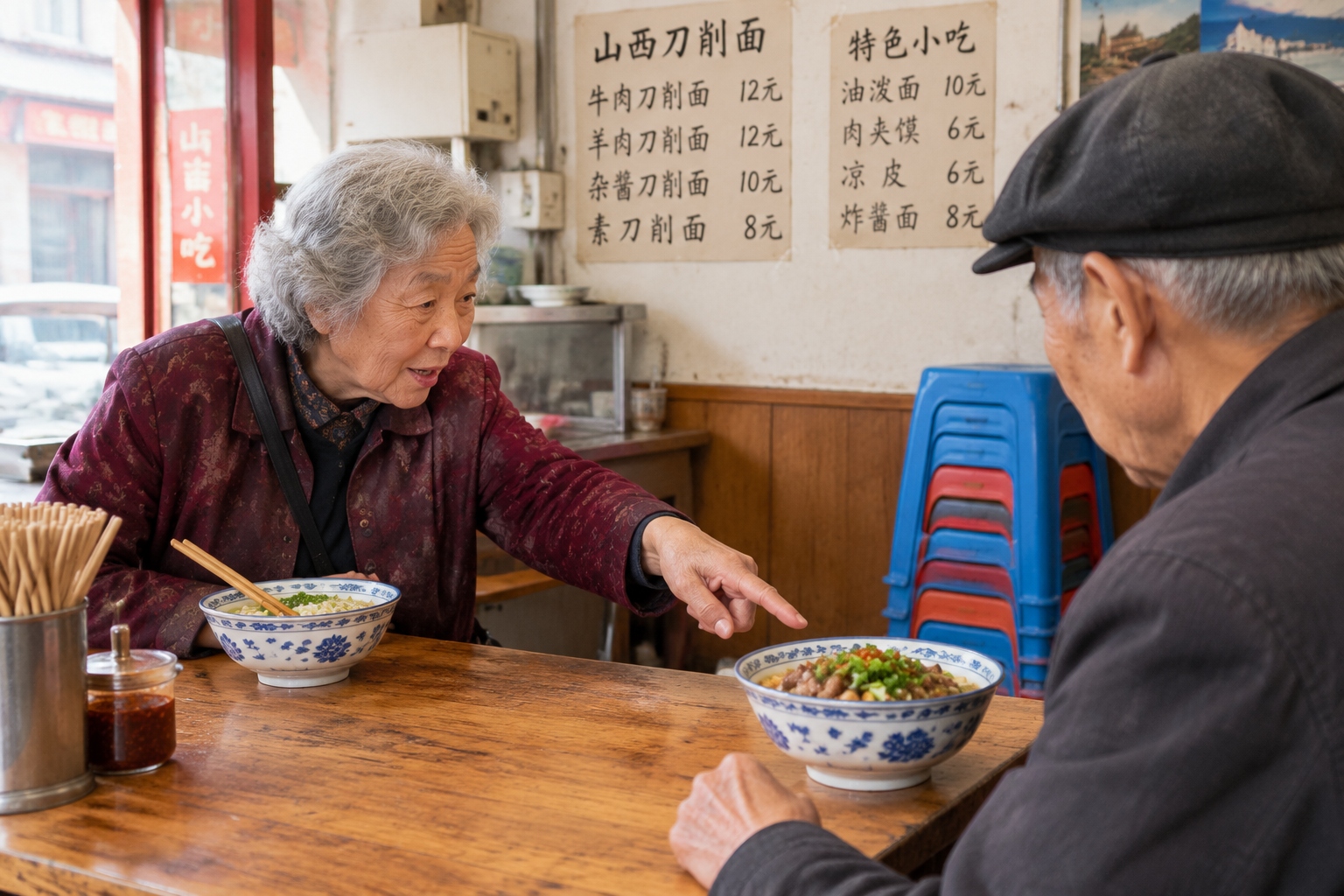
3. Do not ask for a menu. Point at what someone else is eating. It is not rude—it is how locals order too.
4. Bring cash. Some old shops still do not accept mobile payments.
People and Cities Behind the Snacks: Another Way to See the Real Shanxi
Shanxi’s hidden menu is not just about food. It is about the people who make it—the woman who has been steaming guan chang for thirty years, the man who still shaves noodles by hand because a machine cannot get the texture right.
These snacks are a map of the province’s geography and history: wheat in the south, potatoes in the north, fermentation everywhere. To eat them is to understand how people here have adapted to a dry, mountainous land.
So skip the guidebook. Find the shop with the plastic stools and the handwritten sign. Order what the person next to you is having. That is the real Shanxi—one bowl at a time.
Start the discussion at forum.chinacomes.com