
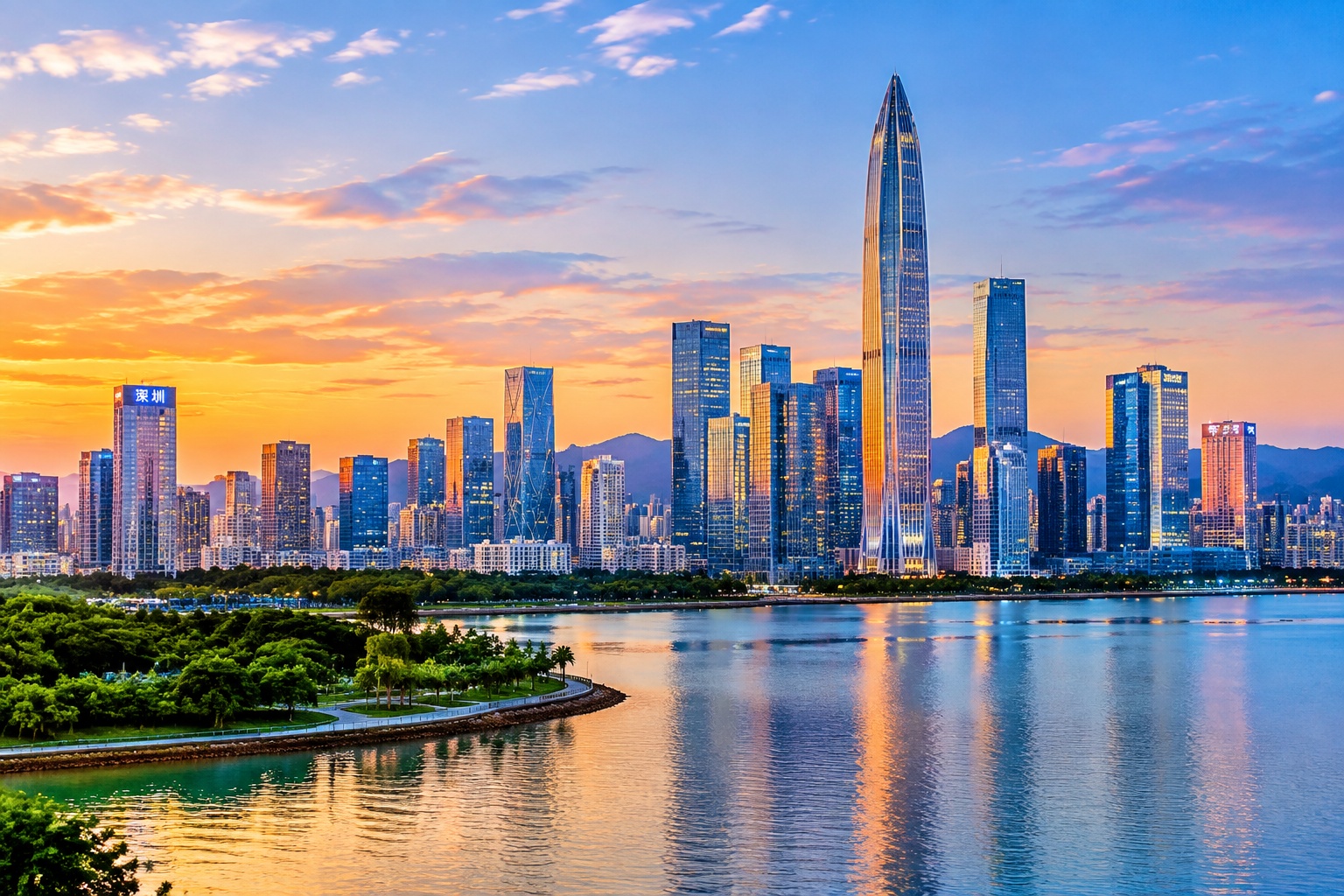

It’s impossible to walk through Shenzhen without feeling the speed of change. One day you’re staring at floating drones in a futuristic showroom, and the next you’re tasting fresh lychees at a street stall that looks like it hasn’t changed in 30 years. The city has grown from a population of about 30,000 in 1980 to more than 17 million today, becoming one of China’s largest technology and manufacturing hubs. But what does that transformation look like on the ground? What should you actually see, do, and know if you’re visiting for a tech tour? This guide maps out the essential landmarks, practical tips, and hidden corners that tell the real story of Shenzhen’s rise.
From Fishing Village to Tech Hub: How Shenzhen Changed
In 1979, Shenzhen was a sleepy county along the Pearl River Delta, with a population of around 30,000. Local farmers and fisherfolk eked out a living, and many young residents moved across the border to Hong Kong in search of factory jobs. Then came the Chinese economic reforms, and in 1980 Shenzhen was designated one of the country’s first Special Economic Zones. The result was explosive.
Here’s the scale: Shenzhen’s GDP was just 196 million yuan in 1979. By 2022, it had reached 3.24 trillion yuan — a roughly 16,000-fold increase. The city’s average age is about 32.5, and most residents are migrants who arrived with little more than ambition. Walking through the city now, you see layers of that history: the old industrial workshops in the Luohu area, the 1990s-era malls, and the gleaming central business district with headquarters of companies like Ping An and Tencent.
Huaqiangbei: The Mother of Hardware
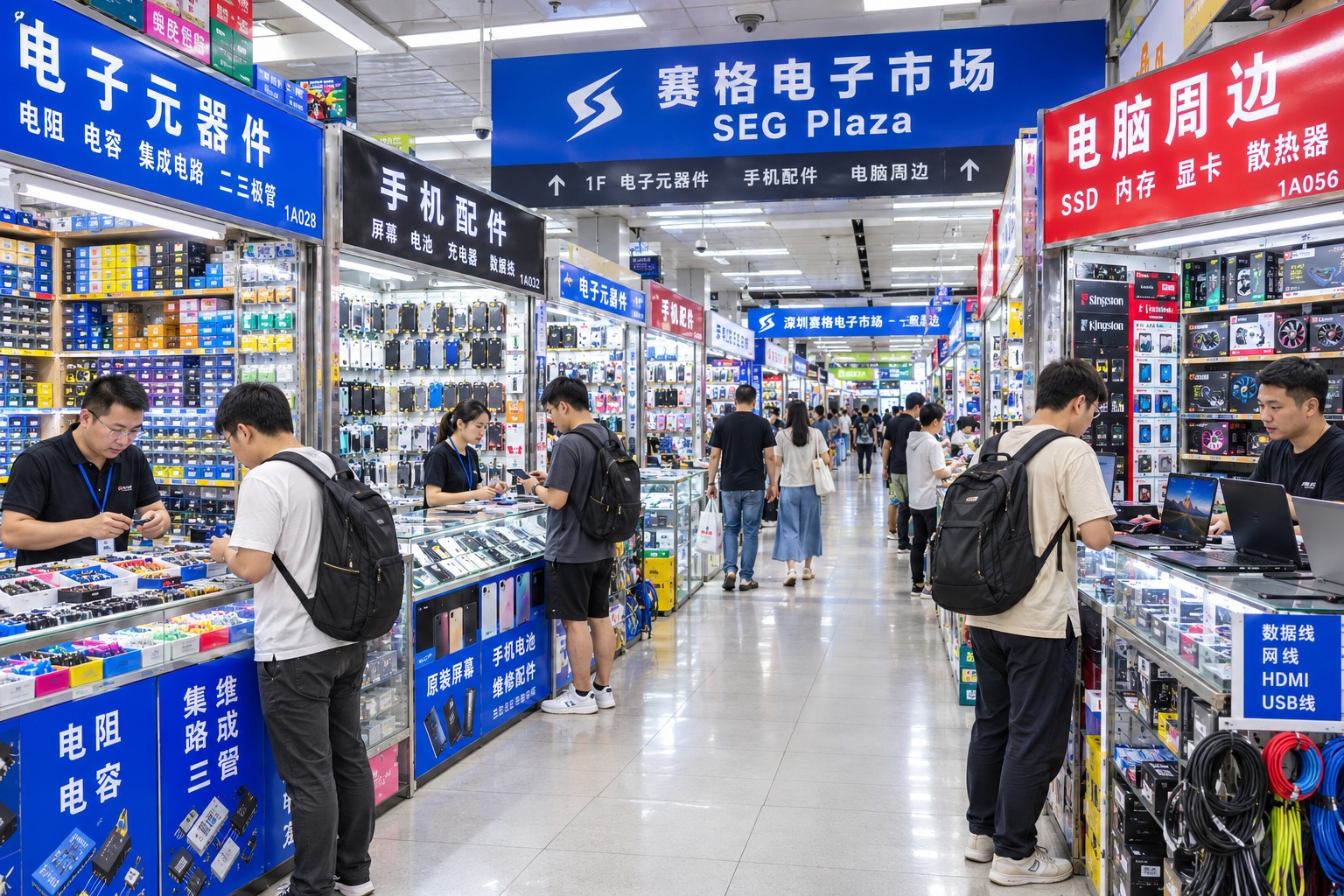
No self-respecting tech traveler should miss Huaqiangbei, the famous electronics district in Futian. More than a dozen interconnected malls sprawl over several city blocks, selling every imaginable electronic component: OLED panels, camera lenses, microcontrollers, drone motors, and batteries. It’s chaotic, loud, and endlessly fascinating.
Huaqiangbei evolved from a so-called ‘grey market’ into a legitimate innovation ecosystem. Many small startups prototype here because they can buy any piece of hardware on the spot. For visitors, the experience is part shopping, part anthropology. I once spent two hours in SEG Plaza watching vendors hand-solder a custom keyboard for a young engineer — something they did in under 20 minutes.
As a tourist, you can browse freely, but know the difference between generic components and branded goods. The second floor is mostly phone parts, while the upper floors have modules, development boards, and 3D printers. If you’re looking for a fun souvenir, buy an open-source development board or a mini FPV drone for less than Western prices. Don’t forget to practice your bargaining — asking for a ‘best price’ in Mandarin works wonders.
Nanshan Science and Technology Park: Where Tencent and DJI Live
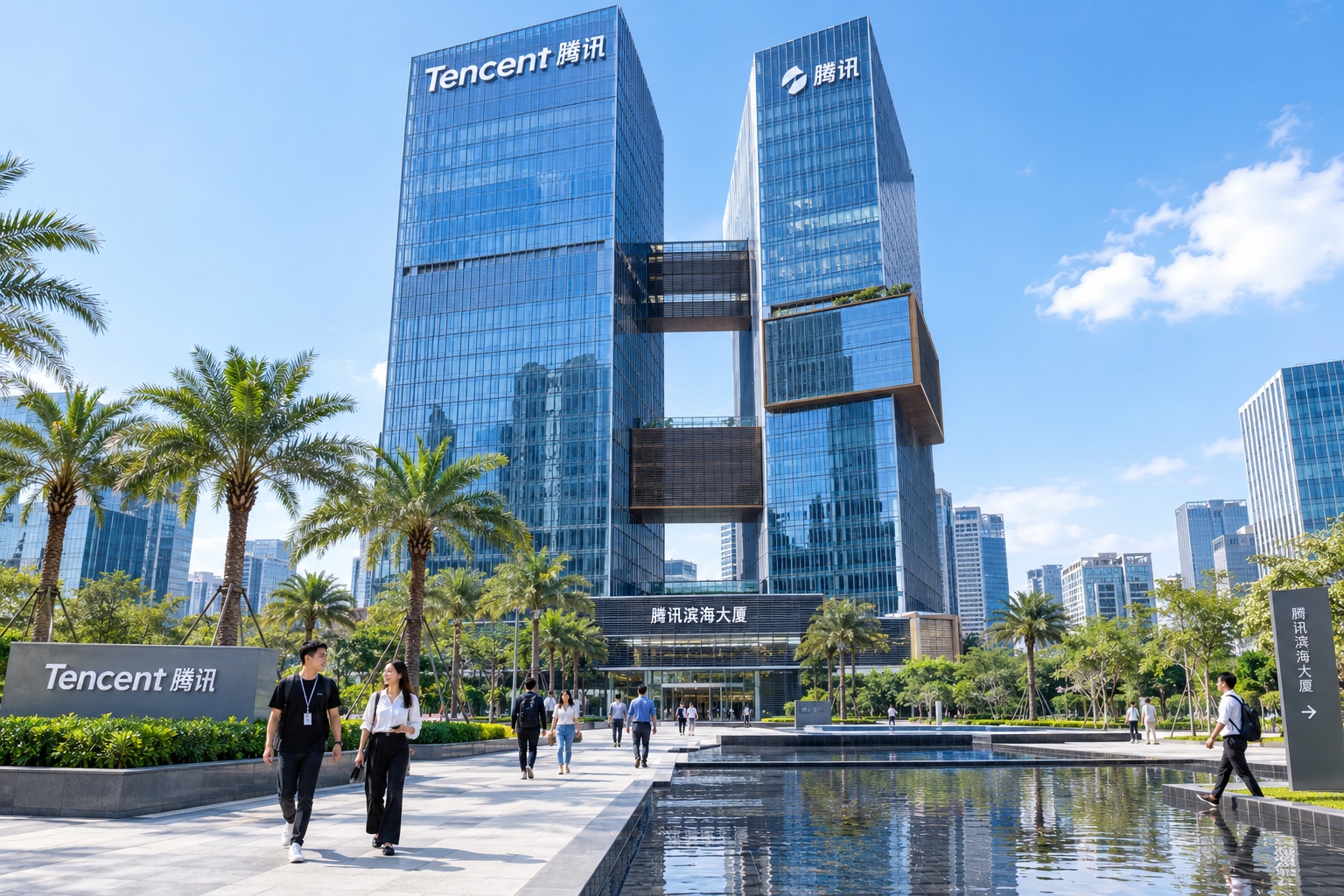
A 25-minute metro ride from Huaqiangbei takes you to Nanshan, the district that many locals call the ‘Silicon Valley of Shenzhen.’ This is where Tencent, one of the world’s largest internet companies, has its global headquarters: two distinctive towers surrounded by palm trees and water fountains. On the streets, you’ll see designers, product managers, and software engineers rushing between buildings.
Many Chinese tech giants like DJI have offices nearby, but they are not open-door structures. Instead, look for the smaller innovation incubators and public science museums in the area. The Shenzhen Bay Science and Technology Ecological Park boasts modern architecture and jogging paths. Just a short walk from the Tencent HQ, you’ll find the Shenzhen Science Museum — admission is free, but you need your passport at the entrance.
The best way to experience Nanshan’s energy is to sit in a local café and watch pitches happen on laptops. Ask around for tech meetups; many startup communities welcome foreign visitors. On weekdays, you’ll also see robot delivery vehicles testing on the sidewalks between office towers.
OCT-LOFT: Creative Renewal in Old Factory Buildings
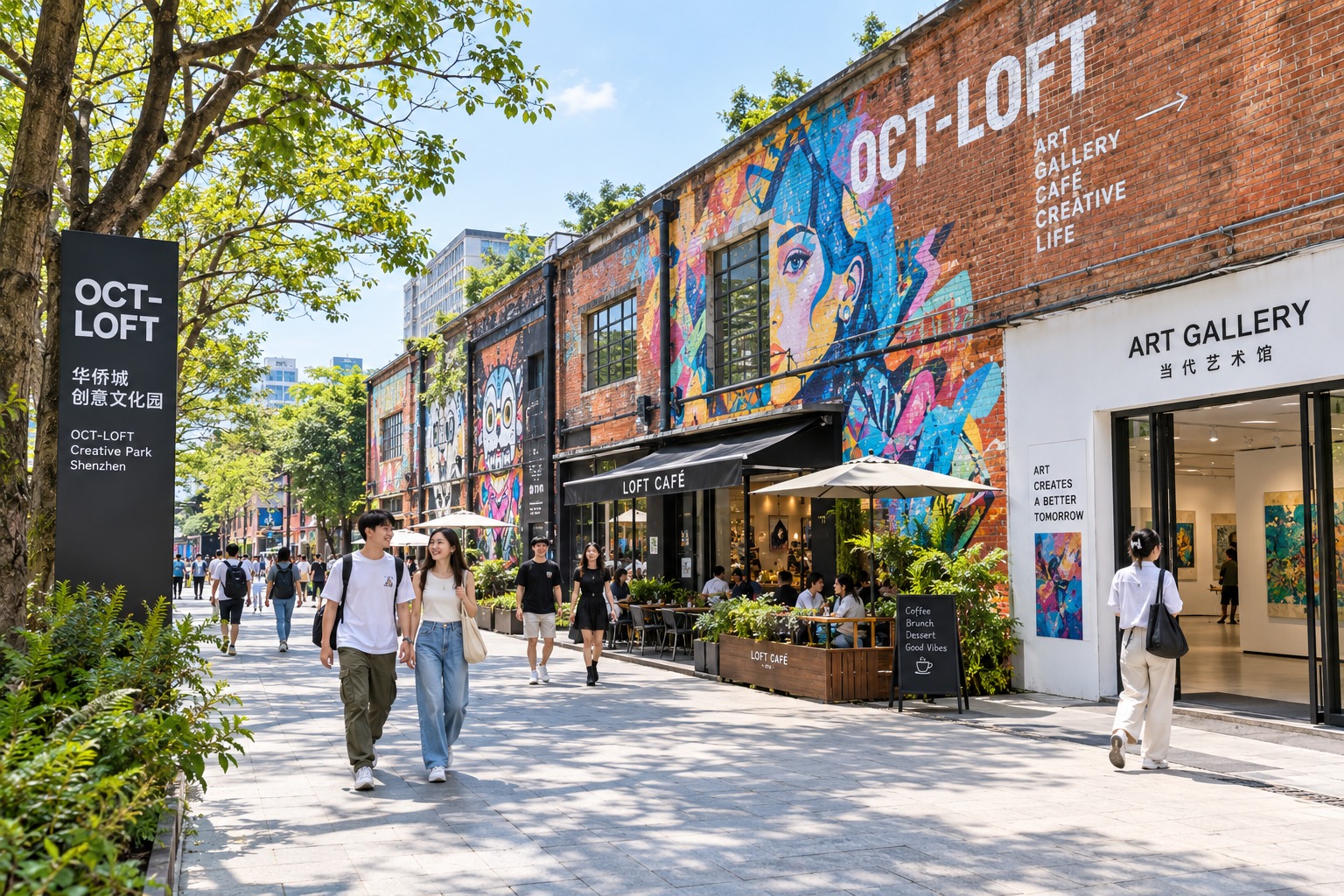
If you need a break from bytes and circuits, head to OCT-LOFT, a creative cluster built in what was once a group of printing factories. The original red-brick and concrete structures have been converted into minimalist art galleries, independent design studios, and stylish cafés. A walk through the shaded lanes feels like stepping into an European arts district, but it’s authentically Shenzhen.
OCT-LOFT is a deliberate attempt to build a cultural Shenzhen after years of focusing purely on manufacturing. Today, it hosts film screenings, design workshops, and contemporary art exhibitions. The graffiti walls make a good photo backdrop. If you have time, dip into the independent bookstore called La Vie for design magazines and art books in both Chinese and English.
Shenzhen Bay Park: Urban Seafront Calm
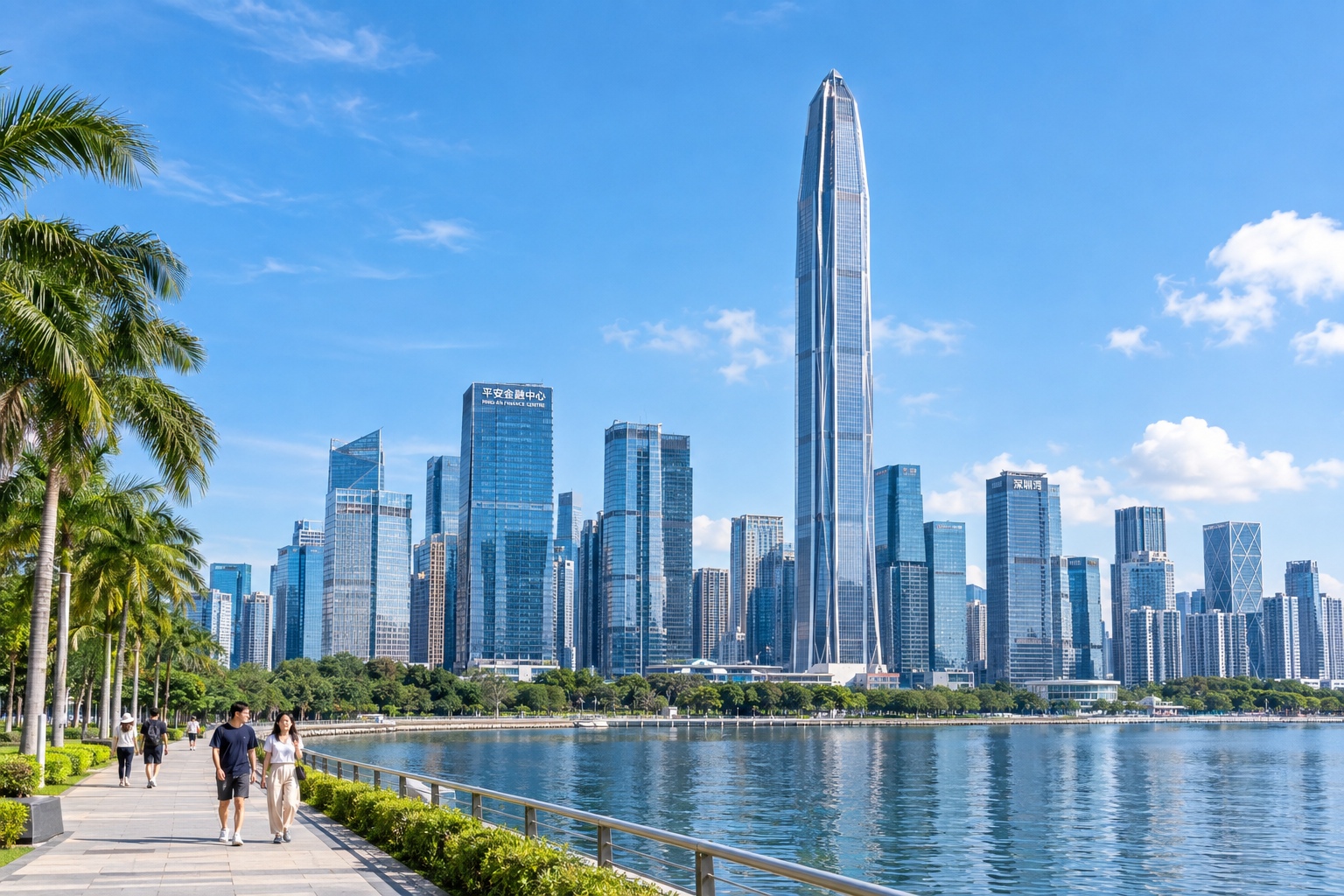
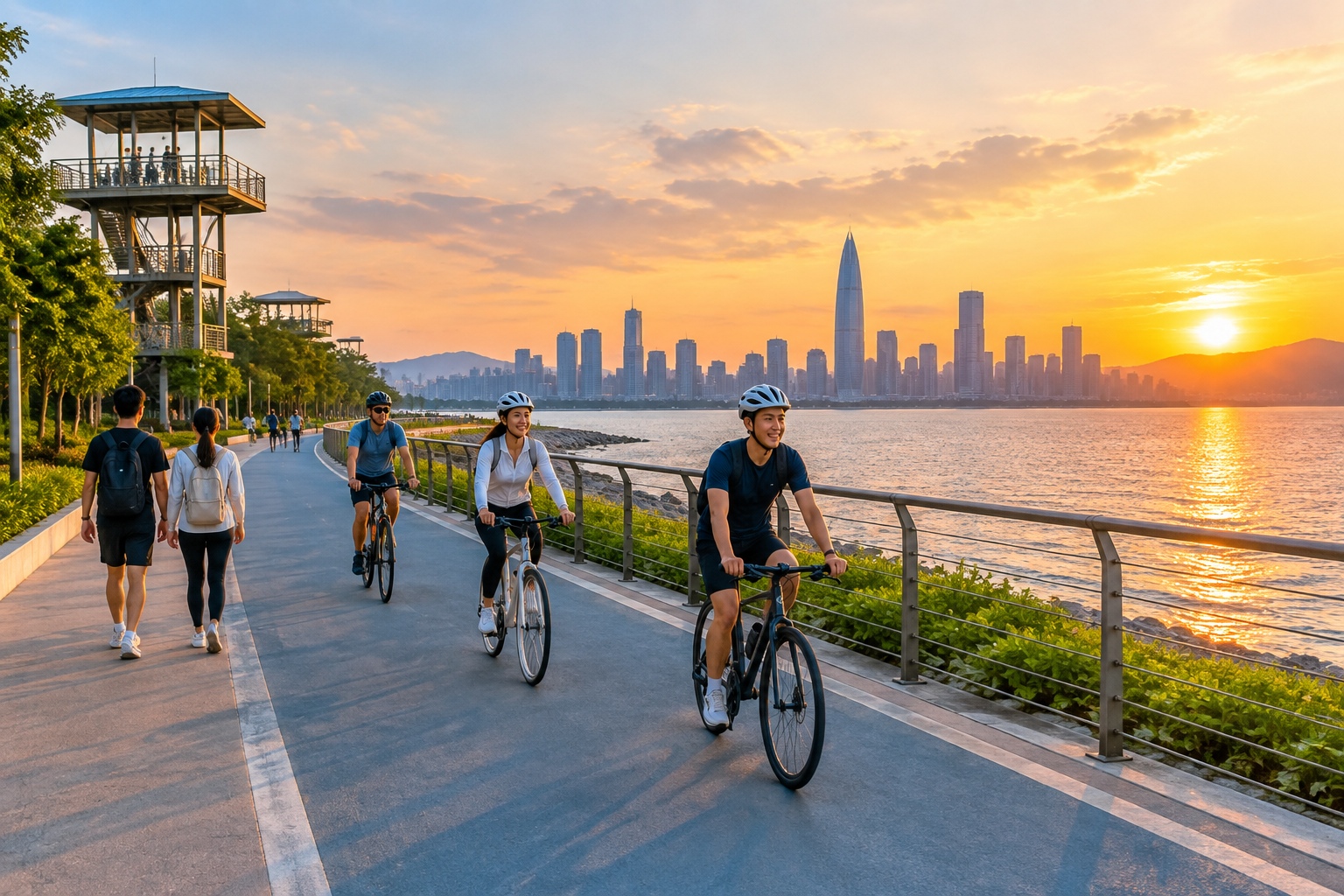
By now you’ve experienced Huaqiangbei’s intensity and Nanshan’s innovation. Give your mind some space at Shenzhen Bay Park, a 15-kilometer waterfront walkway connecting Futian to Nanshan. On weekends, locals jog, skate, and fly kites. In the evenings, the skyline across the bay turns into a glittering backdrop for sunset photographers.
The park is also an ecological zone, bordered by mangroves. If you’re lucky, you can spot egrets and other migratory birds. A bicycle ride along the dedicated lane is the perfect way to end a long day of exploration. Rent a shared bike with an app, or walk slowly — you’ll see why many residents say Shenzhen is as much a coastal city as a tech city.
Practical Tips for Your Shenzhen Tech Tour
Where to Stay
Book accommodation near the subway. A convenient choice is the Nanshan District near the Science Museum station, which puts you close to tech companies. If you prefer downtown luxury, choose Futian with its five-star hotels and direct access to Shenzhen Railway Station. Budget travelers can find decent hostels in the Huaqiangbei area from around 80 yuan per night.
Getting Around
Use Shenzhen Metro as your primary transport. Single rides cost 2 to 14 yuan depending on distance. Purchase a Shenzhen Tong card at a station or use the Shenzhen Metro app. Taxis are metered, but traffic can be heavy during rush hours. Ride-hailing services like Didi are convenient if you have a Chinese SIM card; some foreign cards can also be linked to apps. Alternatively, check if your mobile wallet supports Shenzhen public transit codes.
Tech Events and the Best Time to Visit
Shenzhen is most vibrant from October to January for tech enthusiasts. The China International High-Tech Fair (CHTF) is held every November at the Shenzhen Convention and Exhibition Center, gathering companies that showcase new AI, green energy, and robotics. Also look out for the Shenzhen Maker Faire, which often takes place in spring or autumn. Many events are English-friendly or offer translation.
Language and Payments
English is not widely used in shops and metro stations. Keep a translation app like Google Translate or Baidu Translate on hand. You’ll need a Chinese phone number for local data; alternatively, use an international roaming plan. Mobile payment via WeChat Pay or Alipay is everywhere, but setting them up with a foreign card can be complicated. Bring enough cash to exchange at banks, or ask your hotel to help you arrange digital payment.
What to Pack
Pack comfortable shoes because you’ll walk a lot. Bring a power bank for your phone, plus a universal adapter (Chinese sockets accept two-pin flat plugs). In summer, air conditioning can be strong indoors, so carry a light jacket. For the coastal park, a pair of sunglasses and a wide-brimmed hat are useful.
Whether you’re a hardware nerd or simply amazed by urban transformation, Shenzhen belongs on your travel list. This city proves that rapid development and everyday livability can coexist — if you know where to look. Follow this guide, and you’ll leave with not just gadgets in your luggage, but a vivid sense of how the future is being built.
Start the discussion at forum.chinacomes.com