

In a Control Room, Geography Becomes Electricity
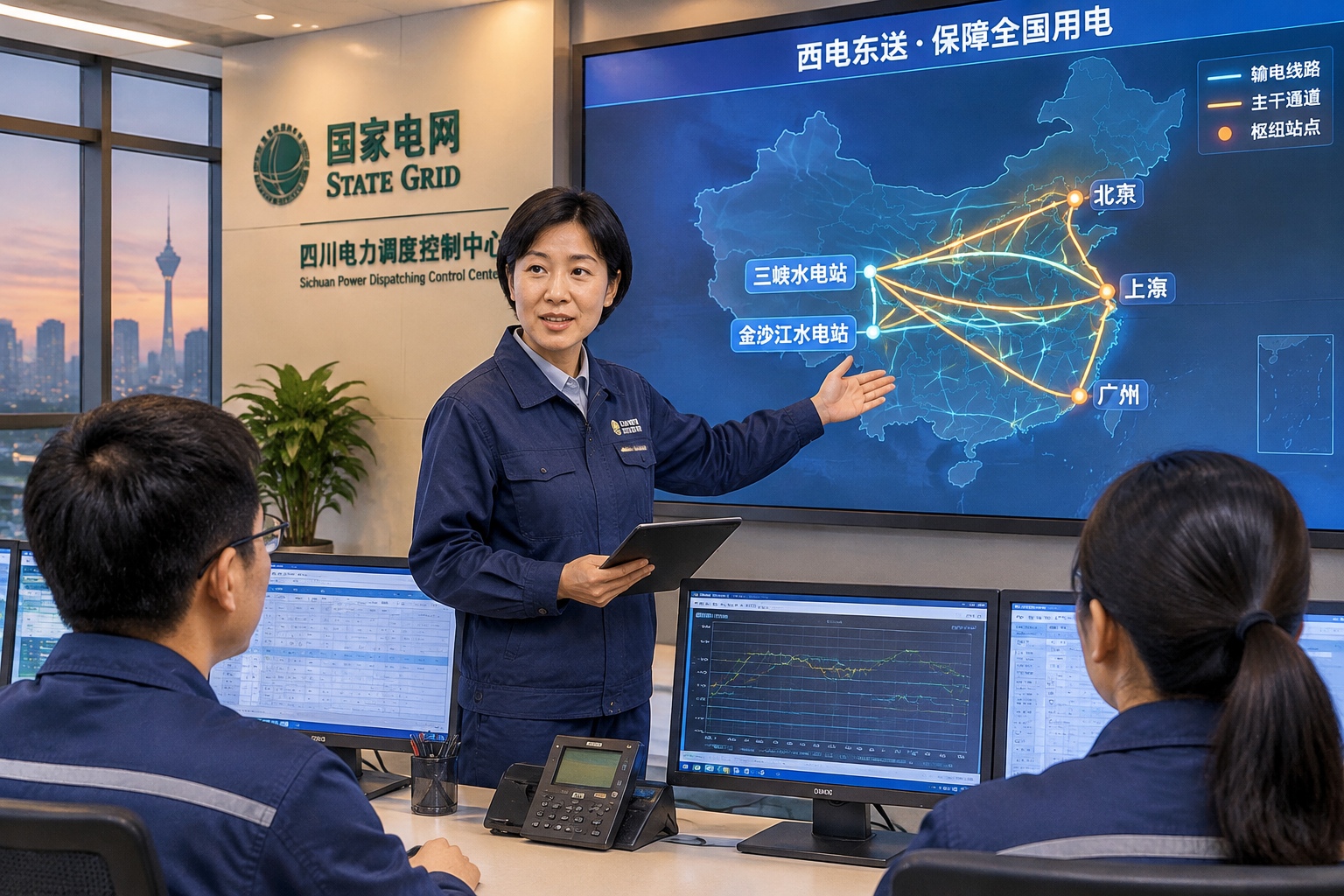
At dusk in a grid dispatch center in Chengdu, a wall screen shows water falling from the Tibetan Plateau, wind farms turning on the Inner Mongolia plateau, and factories in the Yangtze River Delta still running. A dispatcher watches lines that carry power from places with few people to places with many. Nothing about the scene looks dramatic. That is the point. China’s most important infrastructure often works by becoming invisible.
This is the physical layer beneath the country’s factories, data centers, electric vehicles, and AI ambitions. Before a chip is designed, a robot moves, or a large language model answers a query, electrons must arrive—cheaply, steadily, and in enormous volume.
Why Power Capacity Is the Base Layer of Great-Power Competition
It is easy to look at competition through chips, military spending, or GDP. Those matter. But they all sit on a simpler foundation: energy and the capacity to move it. Industrial upgrading, manufacturing scale, the digital economy, and AI computing all have a common ceiling—available power.
According to the latest public figures from China’s National Energy Administration, China’s total installed power generation capacity has passed 4.04 billion kilowatts, the largest in the world for years. That single national total is larger than the combined installed capacity of the United States, the European Union, Japan, India, and Russia. China accounts for more than one-third of global power capacity.
Within that total, renewable capacity has reached 2.455 billion kilowatts, or 60.7% of the mix. Solar stands at 1.274 billion kilowatts, wind at 679 million kilowatts, and long-distance hydropower at 454 million kilowatts. China also leads in new-energy installation, hydropower scale, ultra-high-voltage transmission, cross-regional power transfer, and grid stability.
Those numbers are impressive, but they are not the real story. The real story is where the power comes from, where it is used, and how China moves it across a continent-sized country.
Three Steps, Three National Functions
Most developed economies follow a simple rule: generate power near the cities and industries that use it. The United States has a vast central plain and a relatively even spread of resources, population, and industry. European countries are small and dense; power sources and load centers often sit almost on top of each other. Japan and South Korea are compact coastal economies with local grids. The common pattern is local generation and local consumption.
China breaks that pattern.
Its best places to generate power are often empty of people and industry. Its biggest load centers have little room for large-scale clean generation. Wind, solar, and hydro resources are concentrated in the west and north, across the second and third steps of China’s terrain. Population, cities, manufacturing, and AI data centers are concentrated in the eastern plains. Energy is in the west; demand is in the east. The distance is measured in thousands of kilometers.
The First Step: The Water Tower
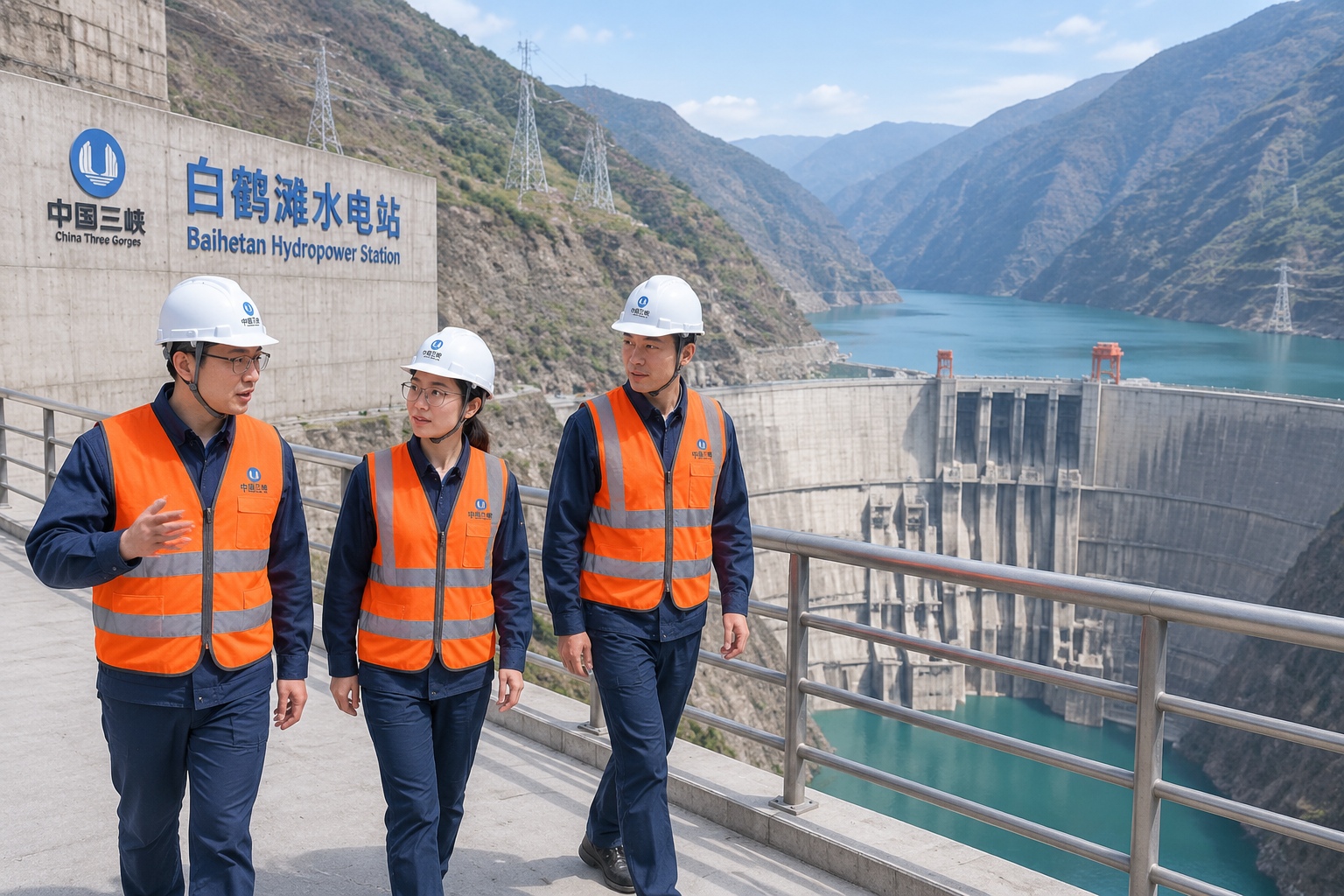
The first step is the Qinghai-Tibet Plateau and the western Sichuan highlands, mostly above 4,000 meters. This is Asia’s water tower. The Yangtze, Yellow, Mekong, and Yarlung Tsangpo rivers begin here. Steep drops, deep gorges, and monsoon rain make it one of the world’s densest areas for hydropower. It is difficult terrain for cities and large industry—but excellent terrain for generating electricity.
The Second Step: The Renewable Energy Heartland
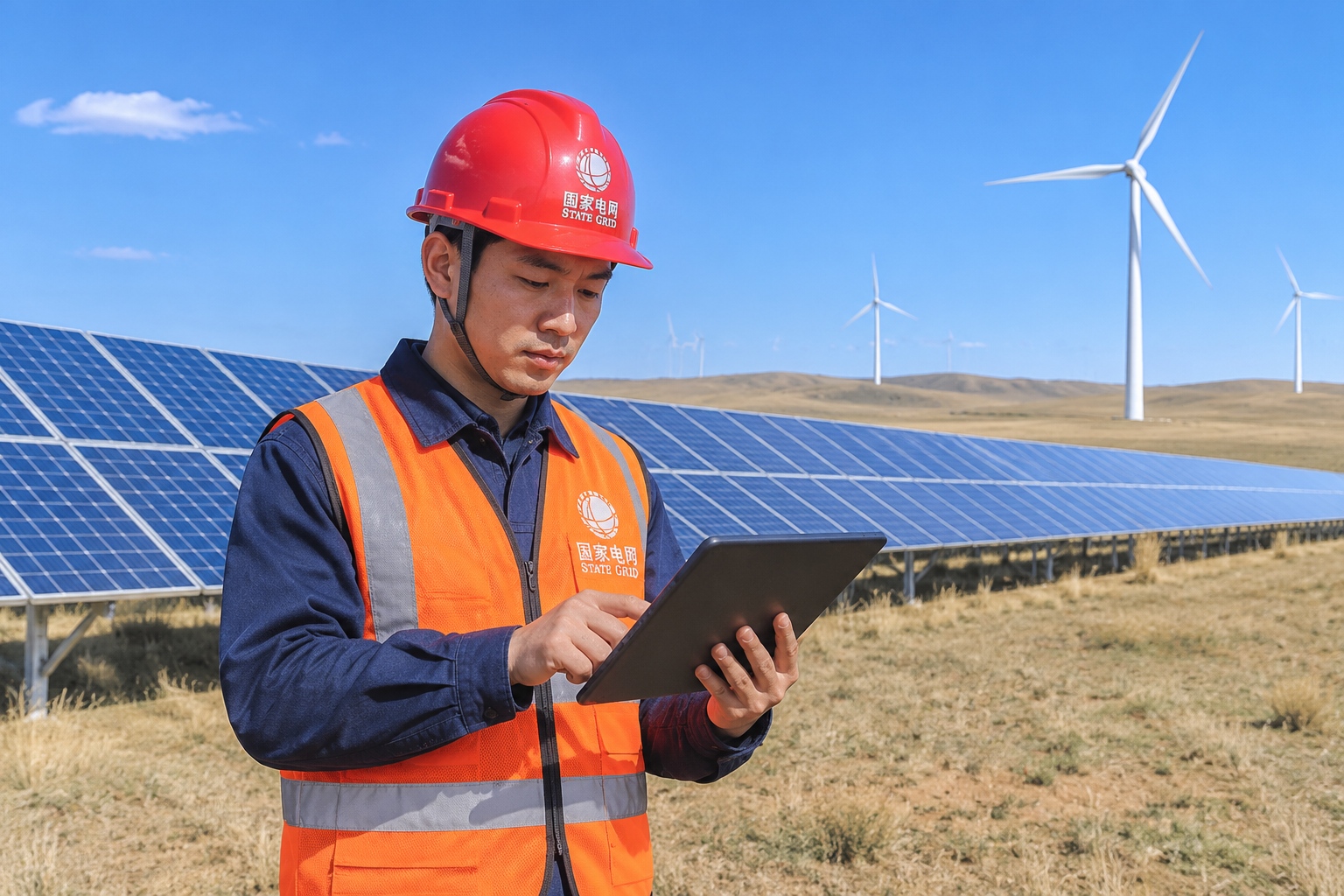
The second step includes the Inner Mongolia Plateau, the Loess Plateau, the Yunnan-Guizhou Plateau, and the deserts of the northwest. This is more than 40% of China’s land. It is open, dry in many places, sunny, and windy. It has limited farmland and sparse population. It is also one of the world’s richest regions for onshore wind and solar power.
The Third Step: The Load Center
The third step is the North China Plain, the middle and lower Yangtze plains, and the southeastern coast. These are China’s flat, densely populated, industrial heartlands. They hold the biggest city clusters, export factories, digital companies, and AI computing hubs. But they lack the steep rivers, constant winds, and intense sunlight needed for large-scale clean generation.
The result is a national division of functions: the west generates energy, the east generates national strength, and the grid connects the two. This is not a political slogan. It is a physical fact that shapes every power plan China makes.
Hydropower Is the Stabilizer
Outside China, many people assume coal alone keeps Chinese industry running. Coal still matters, especially for peak demand and energy security. But the quiet stabilizer of the system is hydropower.
Hydropower can ramp up and down quickly. It provides flexible peak shaving, frequency control, and backup. It is also low-carbon. China’s hydropower capacity is about 454 million kilowatts, and more than 75% of it sits in four southwestern provinces: Sichuan, Yunnan, Guizhou, and Tibet. The role is easy to remember: coal and other sources help meet peak demand, wind and solar grow the long-term supply, and hydropower protects the grid’s stability.
This is why southwestern hydropower is not a regional story. It is a national security buffer. When eastern factories run through the night and data centers load the grid around the clock, flexible hydro from the southwest helps keep the system balanced.
The Three West-to-East Transmission Corridors
Geography made West-to-East Power Transmission necessary. Engineering made it possible. Three giant corridors now move electricity across the country’s three-step terrain.
The Northern Corridor
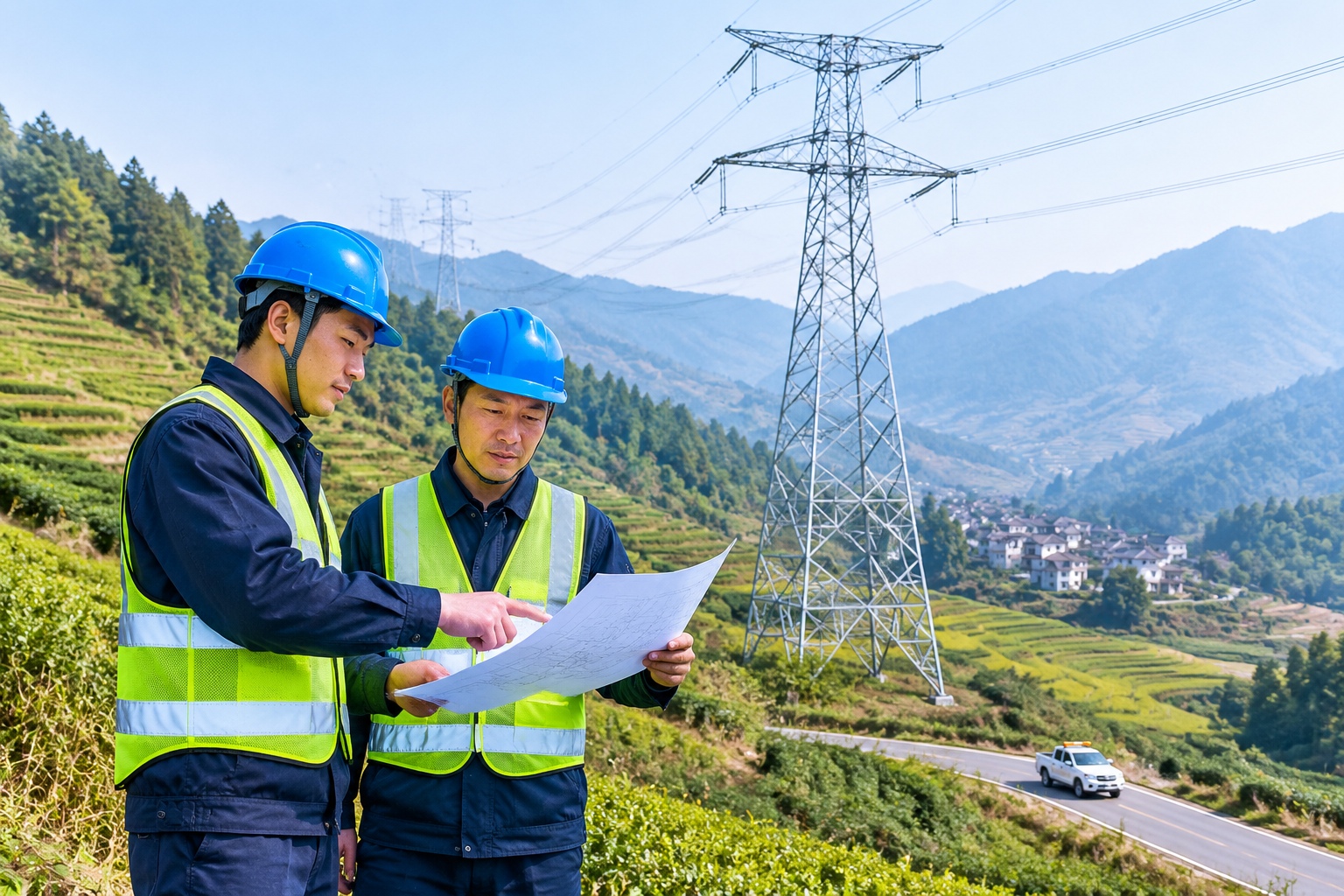
The northern corridor sends power from wind, solar, and coal-fired plants in the northwest and Inner Mongolia to Beijing-Tianjin-Hebei, Shandong, and the industrial northeast. Inner Mongolia’s open grasslands and the Gobi’s solar farms can produce far more power than local demand. The northern industrial belt, with heavy industry and winter heating, needs far more than local generation can supply. Ultra-high-voltage lines cross the Yinshan Mountains, the Gobi, and the North China Plain to connect the two.
The Central Corridor
The central corridor connects the giant hydropower clusters on the Jinsha, Yalong, Dadu, and upper Yangtze rivers to Shanghai, Jiangsu, Zhejiang, Hubei, Hunan, and Jiangxi. The Yangtze River Delta is China’s largest economic zone, manufacturing base, and computing hub. It needs power every hour of the day. Western Sichuan’s hydropower is relatively stable across seasons and can adjust quickly. That makes it a core energy base for chipmaking, AI computing, and high-end manufacturing in eastern China.
The Southern Corridor
The southern corridor links hydropower in Yunnan and Guizhou with offshore wind in Guangdong and Guangxi, sending power to the Greater Bay Area. The Pearl River Delta’s electronics, new-energy, and high-tech industries need large volumes of clean power. Yunnan and Guizhou’s hydropower is low-carbon and flexible. The corridor helps the region meet both its growth needs and its green-power goals.
What Makes China Different—and What Remains Hard
In the United States, the grid is divided into three major interconnections with limited transfer between them. Europe’s grid is more integrated than it once was, but it remains a patchwork of national systems with different rules and bottlenecks. Japan has separate grids with different frequencies. South Korea has little room for long-distance cross-regional transfers. China is the only large economy that runs a nationwide synchronized grid and dispatch system across such a huge and uneven geography.
That does not mean the system is frictionless. Curtailment of wind and solar still happens in some areas. Building transmission lines takes years. Provinces have different interests over pricing and power allocation. Local environmental costs and resettlement issues around dams and mines are real. Storage, demand response, and market reform are still being built out. The grid is strong, but it is not magic.
Still, the basic capability is unusual: China can move huge amounts of electricity from resource-rich regions to demand-rich regions, and it can plan that system at national scale.
Why This Matters for AI and the Next Industrial Cycle
AI has made electricity visible again. Data centers are not like factories that can slow down at night. They run continuously. Training large models and running inference at scale require stable, cheap, and increasingly low-carbon power. A country that can deliver clean electricity to computing hubs at scale has an advantage that is hard to replicate with software alone.
This is where the geography story becomes a technology story. Western hydropower, northwestern wind and solar, and eastern computing demand can be linked by transmission lines. The same system supports electric vehicles, battery plants, robotics, advanced manufacturing, and the next generation of industry. High technology stops being a boutique product and becomes ordinary infrastructure—powered by electrons that most people never see.
The Quiet Foundation
China’s rise is often described through factories, ports, exports, and engineers. Those are visible. Less visible is the physical foundation underneath: the ability to generate power at continental scale and move it across three steps of terrain to the places that need it most.
This foundation does not guarantee success. It does not remove the need for better markets, cleaner coal, more storage, and smarter use of energy. But it sets the outer limit of what industry, technology, and AI can become. In the coming decades, the countries that can supply large volumes of cheap, stable, and clean electricity will have a structural advantage. China’s three-step geography gave it an unusual starting point. Decades of dam building, grid construction, and dispatch experience turned that starting point into a working system.
That is the quiet material basis for China’s national renewal—and one of the hardest advantages for any other country to copy.