
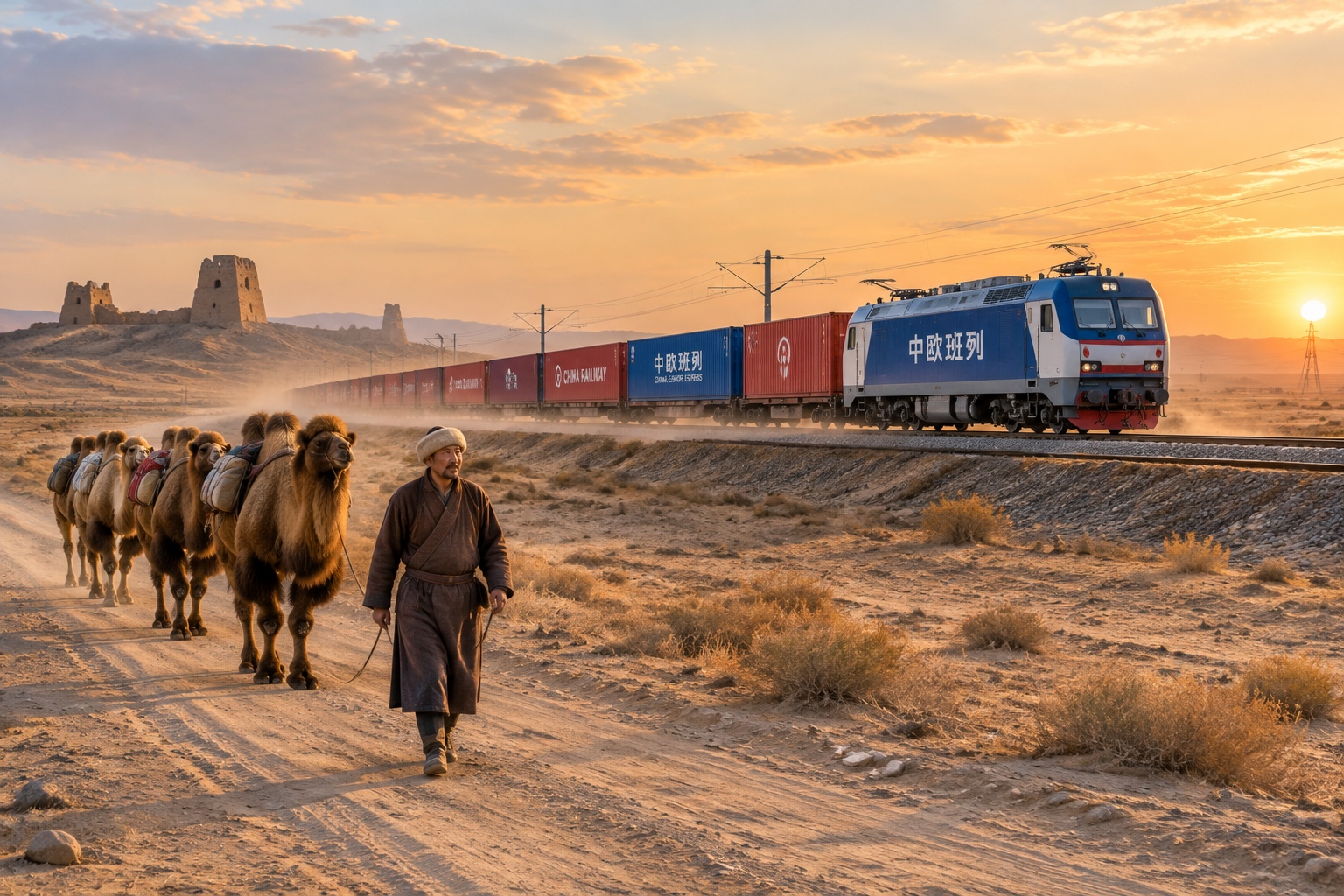

The wind was cool on my face as I pedaled along the ancient city wall of Xi’an, the morning sun turning the gray bricks golden. Below, a stream of electric scooters and bicycle delivery riders poured through the restored South Gate. My phone buzzed with a message from Qingdao: a client in Stuttgart asked if we could advance the next China-Europe freight train departure from Xi’an by two days. I stopped under a watchtower, laughing at the strange mix of ancient monument and modern logistics. I hadn’t come here to follow the camel caravans of Marco Polo; I came to follow containers, customs and the people who move them.
This article follows my ten-day trip along the modern Silk Road through western China—from Xi’an to Lanzhou, Dunhuang and Urumqi. My goal was to see how these ancient trading towns have plugged back into a globalized world through a mix of state investment, local entrepreneurship and old-fashioned hard work.
Xi’an: The Ancient Gateway Reopened
For any foreign visitor, Xi’an is often the terra-cotta warriors and the massive Ming-era city walls. For Chinese businesspeople, though, it has become something else: the anchor of an inland logistics network that now offers an alternative to coastal shipping to Europe. In the late afternoon, I stepped into an office in the high-tech zone where Greg Liu runs a service that helps European brands source auto parts from factories in Henan and Tianjin.
‘People used to send everything through Shanghai or Shenzhen,’ Liu said, tapping a wall map that showed railway corridors to Kazakhstan, Belarus and Poland. ‘Now many products go straight from Xi’an by China-Europe freight train. It’s about fifteen to eighteen days to Duisburg, which is much slower than air freight, but half the price and roughly two weeks faster than sea transport. When clients need speed but not too much, this is a sweet spot.’
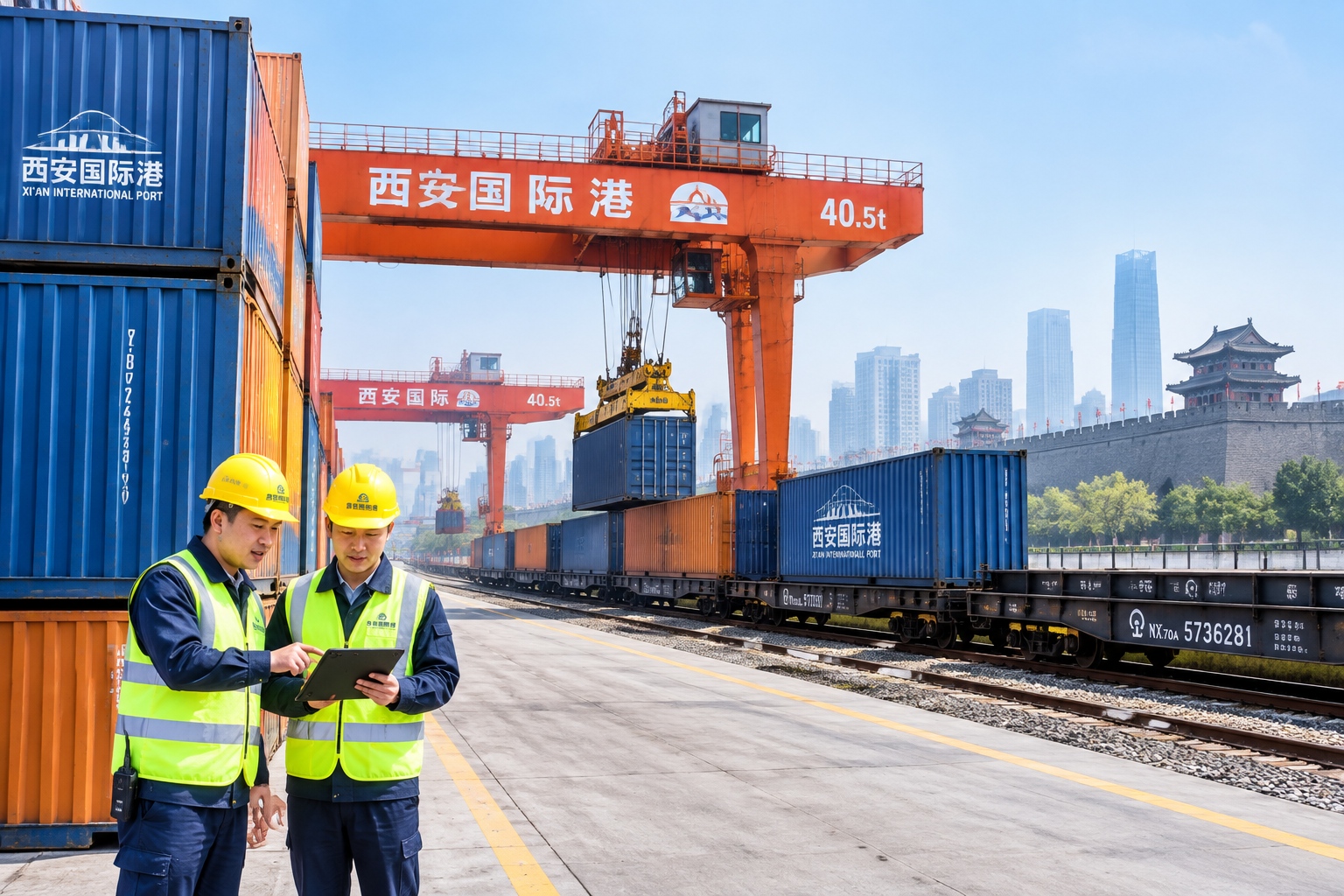
His logistics yard, under the watch of the ancient Drum Tower, still had the smell of oil and wet concrete. Forklifts were loading boxes addressed to Hamburg. I asked Liu if the name ‘Silk Road’ matters. ‘It’s good branding,’ he shrugged. ‘But the real reason is simpler: infrastructure, tariffs, and reliability. The old road was a route for merchants. The new one is a supply chain.’
Later that evening, I rode back to the city center across the moat and joined thousands of walkers on the city wall. Streetlights traced the outline of the old imperial capital while neon lanterns of modern bars flickered below. It was hard not to feel the weight of history—and the eagerness of the city to turn that history into a driver for future business.
Lanzhou: River City at the Heart of Northwest Logistics
After a quick morning on the bullet train, I arrived in Lanzhou, the capital of Gansu Province and the largest city along the middle reaches of the Yellow River. It is easy to dismiss Lanzhou as a transportation pit stop—a city sandwiched between dry hills and the muddy river. But that geography is exactly why it re-entered the trade map. Here, the valley narrows, railways and highways merge, and distribution to all of Northwest China becomes efficient.
My host was a local freight forwarder named Chen Guoqiang, who showed me a different side of the supply-chain story: the rail port some twelve kilometers north of downtown. In the port’s exhibition hall, he pointed to a terminal where a train was being loaded with household appliances, construction materials and textiles. ‘This line runs to Almaty in Kazakhstan,’ he said. ‘By March next year we’ll add permanent routes to Tashkent and Moscow.’
Chen took me to a famous breakfast shop in the city center. Over steaming bowls of hand-pulled lamian noodle soup with chili oil and slices of beef, he described a key challenge: ‘You know, the profit margins are tight. The railway transport is cheaper than air freight but still not as cheap as ocean shipping. And you need strong teams at both ends to handle customs clearance and trucking to final destinations.’ It was a reminder that trade roads don’t live on good intentions; they rely on dozens of daily decisions about cost and convenience.
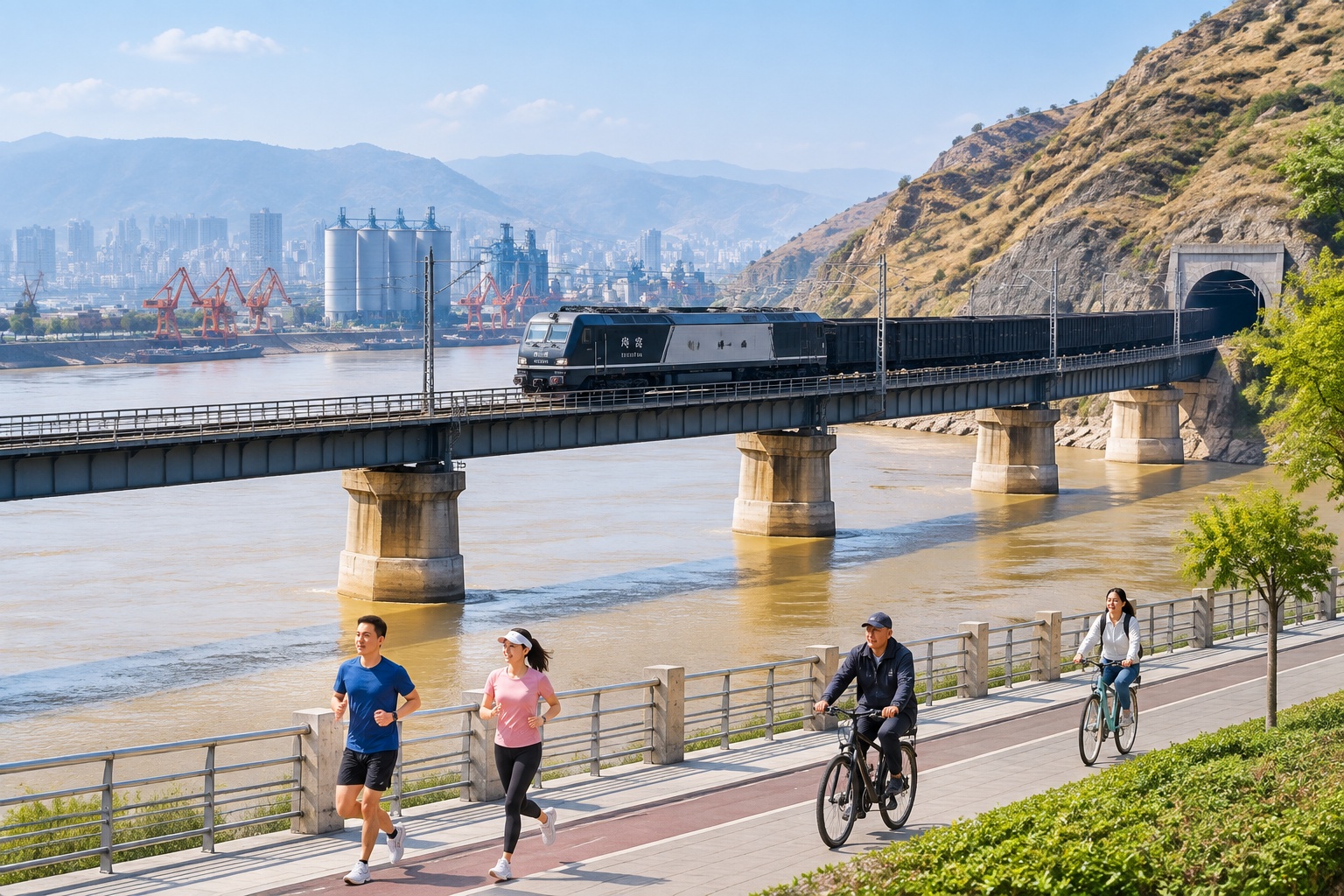
After lunch, Chen took me to the riverfront promenade, where retirees played cards and teenagers filmed short videos. The murky yellow water rolled past, a stark reminder of how hard life can be on these dusty plateaus. Yet the scene was full of the same energy I had seen in Xi’an—new buildings going up along the river, a children’s science museum packed with families. Chen noted that many of his staff are local graduates who would previously have moved east for work. ‘Now we have something here. Not everyone has to leave to be useful.’
Dunhuang: Art, Tourism and the Oasis Economy
No trip along the old Silk Road would be complete without a pilgrimage to the Mogao Caves at Dunhuang. A direct flight from Lanzhou landed me in an oasis town that feels both timeless and deeply focused on the future. The caves themselves are a marvel—a honeycomb of 735 painted grottoes cut into cliffs along the edge of the Gobi Desert. To manage crowds, the site now operates a strict timed-ticket system and a sophisticated digital visitor center.
My guide, a young woman named He Yangyang, moved to Dunhuang five years ago for a job at the research institute. ‘The number of visitors has more than doubled since 2019,’ she told me as she unlocked a small grotto. ‘The money from ticket sales goes to worldwide conservation projects and also pays local guards, painters, engineers. My department studies the chemical composition of pigments in ancient murals to better protect them. That kind of interdisciplinary work didn’t exist here before.’
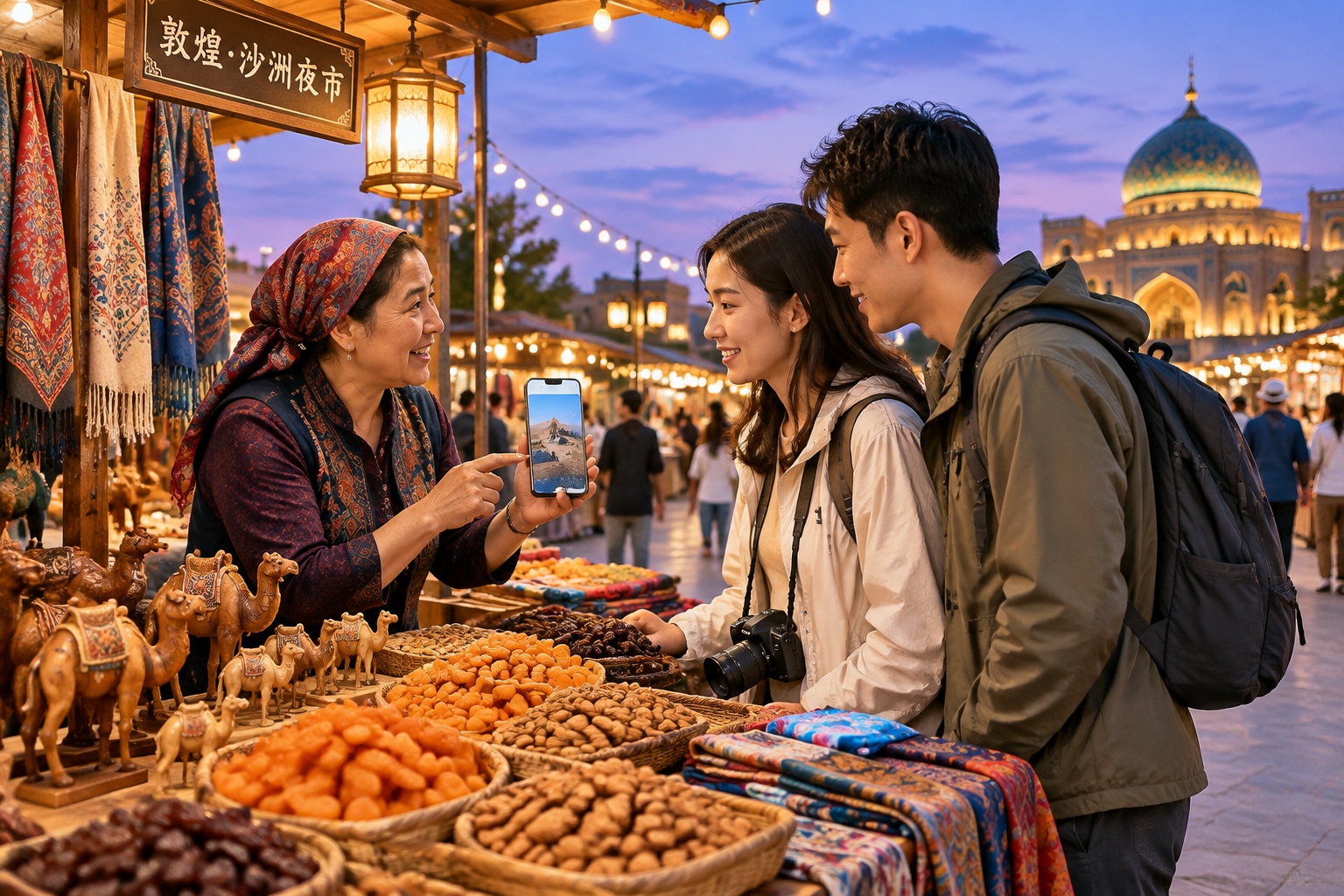
That night, I strolled through the illuminated Shazhou Night Market. Stalls sold dried apricots, hand-carved wooden camels and green jade necklaces. More interesting to me were the shops selling specialty foods in vacuum-sealed bags and luxury silk scarves printed with cave motifs—items with strong e-commerce appeal. One stall owner, Zhang Liping, showed me her phone’s customer-service app for WeChat orders. ‘I used to wait for tourists to come to me,’ she laughed. ‘Now I ship to Guangzhou and Shanghai. Last month I got a bulk order from a souvenir shop in Paris.’
Dunhuang has also had to grapple with the environmental cost of success. Water is scarce, and climate change is melting the river-fed glaciers that feed the oasis. The administration has capped daily visitor numbers and built windbreak walls around sensitive caves. For a business traveler, it was a clear lesson: tourism and heritage protection are inseparable on the new Silk Road.
Urumqi: A Cross-Border Bazaar in the Heart of Eurasia
From Dunhuang I flew westward to Urumqi, the capital of China’s far western Xinjiang region, and a city that spent centuries as a meeting point of Chinese, Central Asian and Muslim cultures. The bustling Erdaoqiao Grand Bazaar is the most authentic remnant of that history. Under tall minaret-like columns, dusty carpets, heaps of raisins, walnuts and almonds form colorful pyramids. Men in embroidered hats call out offers in a mix of Uyghur, Mandarin and pidgin Russian.
Here, I met Gulnar, a Uyghur businesswoman in her late 30s who runs a small trading company exporting packaged dates and dried fruit to Central Asia and the Middle East. She spoke enthusiastically about the China-Europe freight trains that now connect western China to Kazakhstan, Kyrgyzstan and beyond.
‘We used to rely on buyers coming to our city,’ she said, sipping tea in a cafe next to the bazaar. ‘Now we get orders through video calls and online marketplaces. Our latest deal is to ship pears and apples to a chain of supermarkets in Almaty. The freight train takes two days to get there, so we can deliver fresher products than before.’
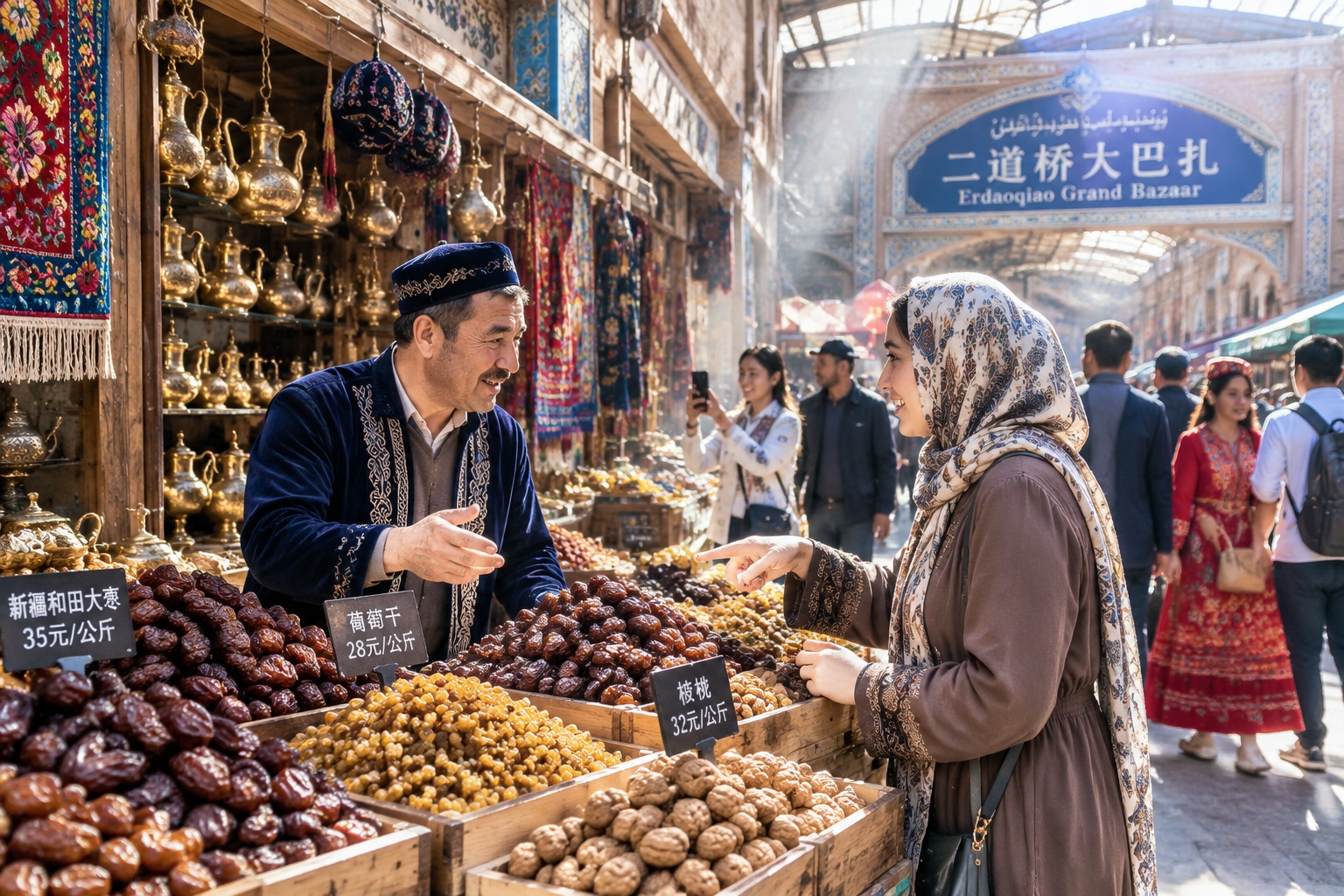
Gulnar’s story also hinted at the complexity of the region where ethnic culture and national policy overlap. Many of the newer apartment blocks are built to house migrants from other provinces. In the streets, one hears not only Uyghur but also Mandarin, Kazakh, Russian and a dozen other languages. The bazaar is no longer the main artery of cross-border trade—that role belongs to the logistics centers, but its stalls keep the human texture alive.
The New Freight Thread and the People Who Weave It
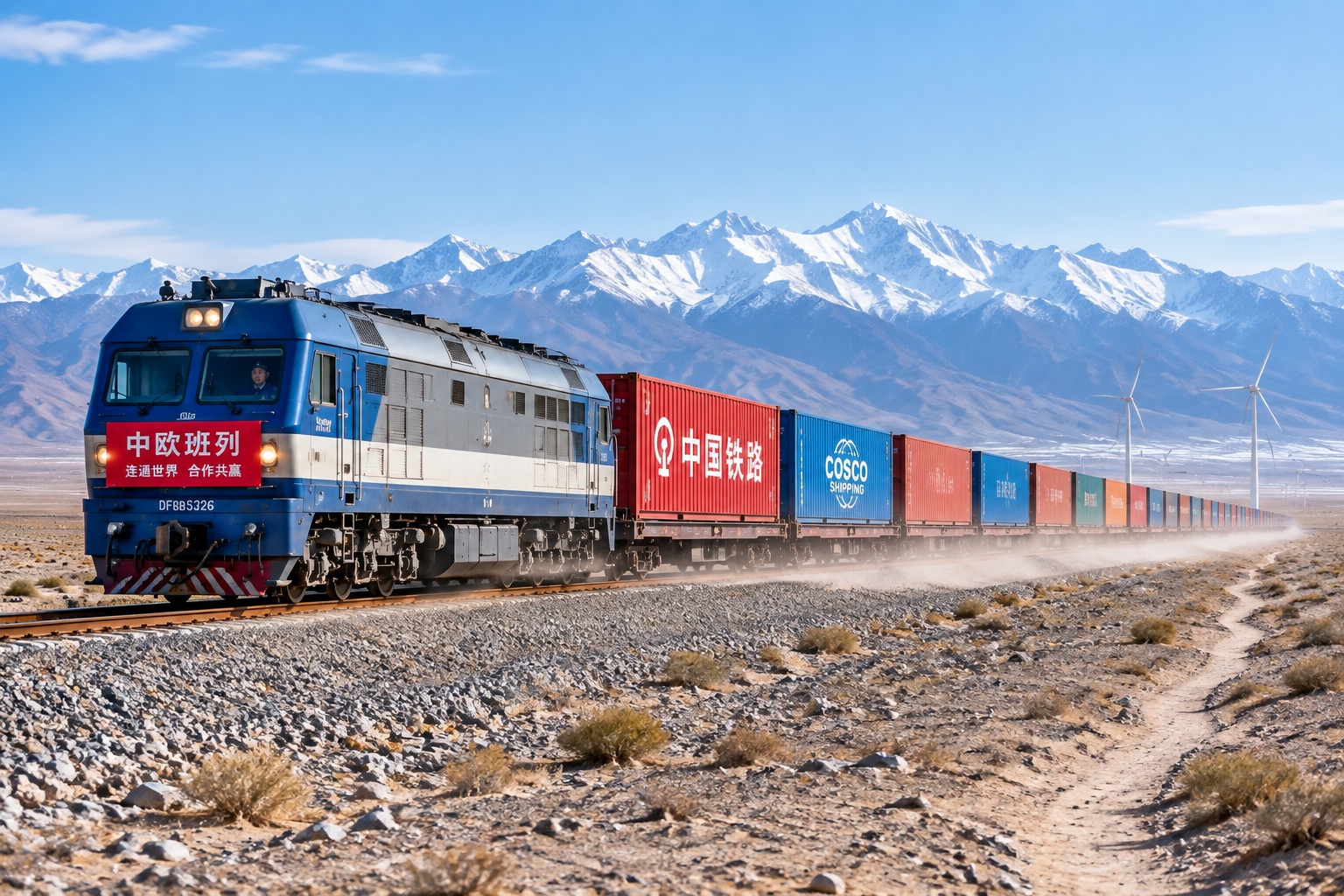
Back in Xi’an, I had stood beside a massive dry port yard where hundreds of thousands of containers pass through every year. The China-Europe freight rail network—which was launched experimentally in 2011 with a single train to Duisburg, Germany—has grown into the most visible physical symbol of the Belt and Road Initiative. In 2021 alone, more than 15,000 China-Europe freight trains traveled through Eurasia. By late 2024, the network had expanded across dozens of Chinese cities, from Chongqing to Zhengzhou to Xi’an.
Each of these trains tells a story of engineers solving problems: negotiating track gauges, aligning customs software, managing temperature-sensitive cargo. But what struck me most during my trip was that the freight-train boom is not only about government-backed mega-projects. In a Lanzhou warehouse, I listened to a self-taught trader explain how he finds new clients on WhatsApp. In a Dunhuang hotel, an e-commerce manager explained that his staff uses live-streaming to sell melons to people in Singapore. In Urumqi, a retired factory mechanic told me he now rents his spare flat on a travel platform to middle-class visitors.
The new Silk Road economy is seeping into people’s daily routines in unglamorous ways. It means a taxi driver in Lanzhou says that he now occasionally practices Russian to pick up Central Asian freight dealers. It means a young designer from Xi’an sells her hand-painted porcelain in a pop-up shop in Urumqi’s Grand Bazaar. It means a women’s cooperative near Dunhuang uses ride-hailing and pickup trucks to move camping gear to tourists heading to the Crescent Spring.
At one level, these changes are statistical: China’s trade with Central Asia surged by more than 40 percent in 2022. But they also register in daily life—more 24-hour convenience stores in western cities, faster mobile internet, new hospitals and sports centers. Behind all that big infrastructure, thousands of micro-decisions are made by men and women looking for opportunities in a rewired geography.
Ancient Road, New Coordinates
By the end of my ten days, I could no longer see the ancient Silk Road as a romantic legend. It is a stubborn set of routes that have made people richer while also exposing them to new pressures: overloaded tourism, desertification, widening income gaps and cultural friction. Yet in every city I visited, locals insisted that they want these routes to remain open and connected. As a quiet engineer at the Lanzhou rail port told me: ‘You can keep the old walls as a memory, but no one can live inside them.’
For a business traveler like me, the practical takeaway is simple. The old Silk Road was never a single road; it was a web of overlapping networks. The same could be said of today’s China, where the west is no longer a remote outpost but a bridgehead to the rest of Eurasia. It takes time to find the smaller paths—but walking them rewards you with both new trade ideas and a deeper understanding of a country that has been in contact with the outside world for much longer than many outsiders imagine.
Start the discussion at forum.chinacomes.com