

The quickest route from spec sheet to shipment
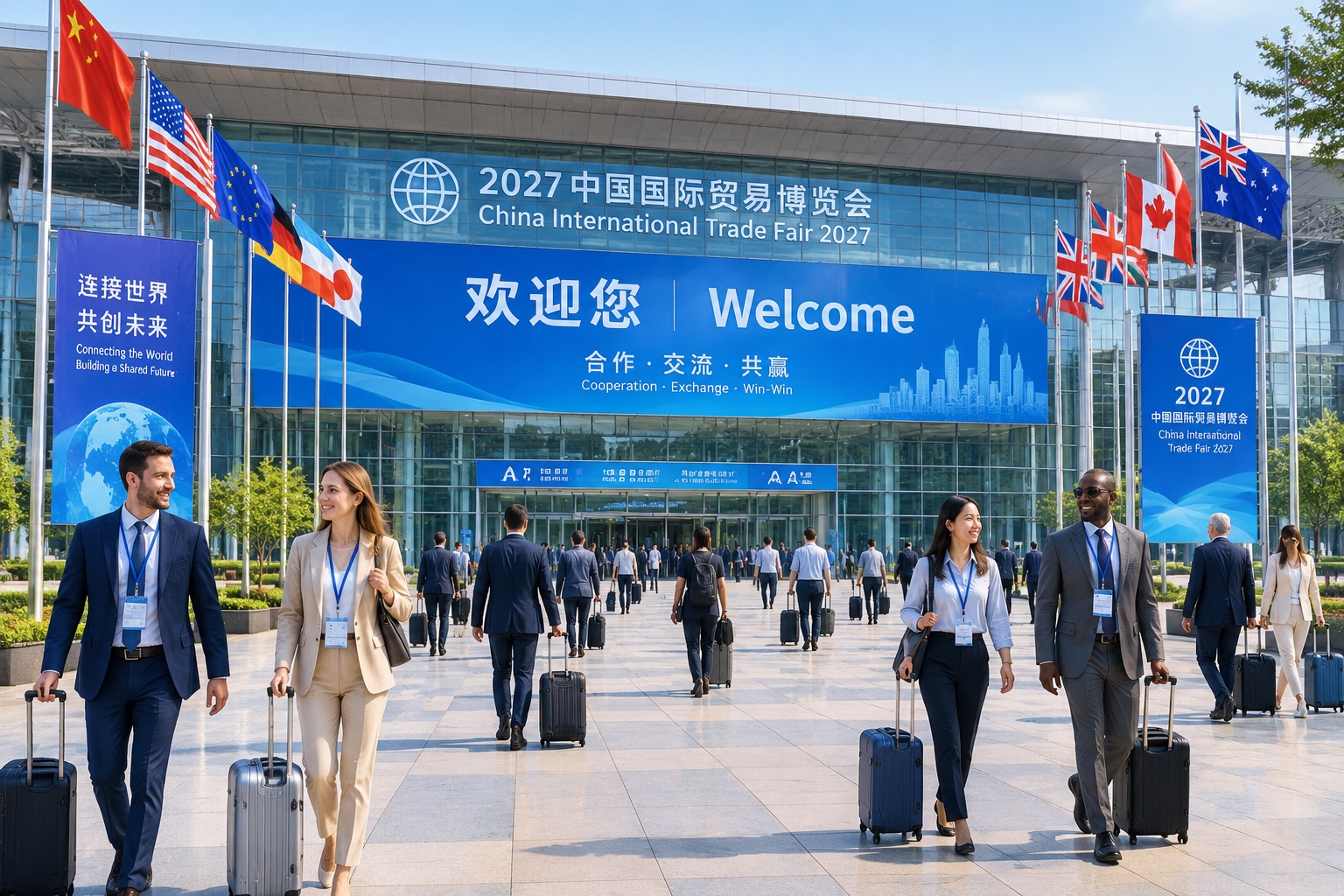
Picture a German importer stepping out of a taxi at the Canton Fair complex in Guangzhou, surrounded by luggage-toting buyers from São Paulo, Cairo, and Jakarta. His goal is to audit three LED lighting manufacturers in two days. For this to work, the fair has to be big, fast, and ruthlessly efficient. In China, it often is. That is why international companies still treat the country’s trade show circuit as the fastest route from product specification to delivery, and 2027 offers a calendar full of options.
The 2027 China trade show calendar at a glance
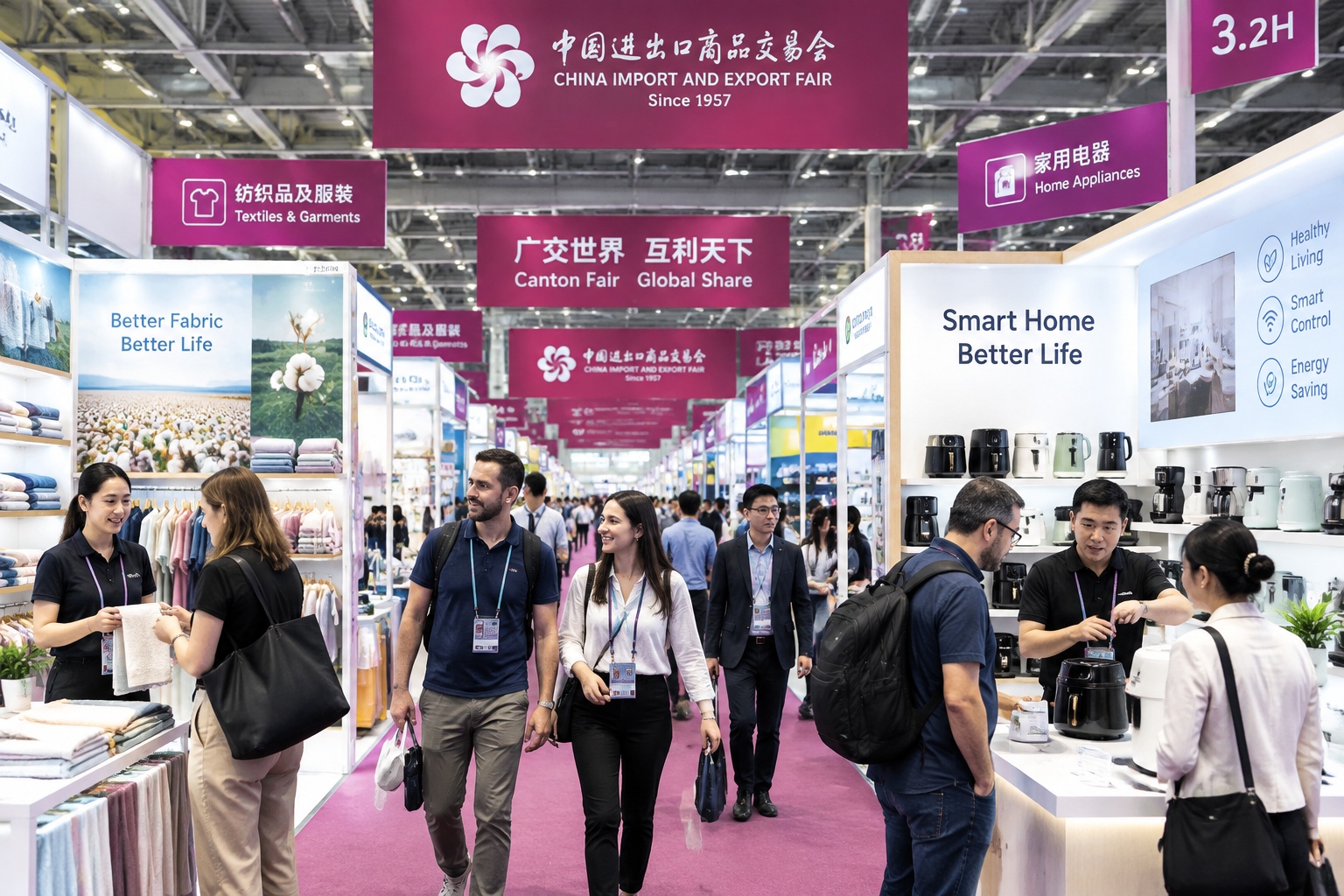
Trade show dates in China are usually announced at least six months in advance, but the following schedule follows long-standing annual patterns. Always confirm the official dates before booking flights, especially as some events shift slightly after CNY.
| Show | Expected 2027 dates | City | Main sectors |
|---|---|---|---|
| Canton Fair (Spring) | Apr 15 – May 5 | Guangzhou | Consumer goods, home products, electronics, textiles |
| Canton Fair (Autumn) | Oct 15 – Nov 4 | Guangzhou | Same broad scope, skewing to export orders |
| CIFTIS | early September (tentative) | Beijing | Services trade, digital trade, finance, culture |
| CIIF | mid-September (tentative) | Shanghai | Industrial automation, robotics, new energy |
| CIIE | Nov 5–10 | Shanghai | Imports, consumer goods, medical devices, services |
| CHTF | mid-November (tentative) | Shenzhen | High-tech electronics, IT, green tech, venture capital |
The Canton Fair alone draws tens of thousands of international buyers each year. CIIE, in contrast, places the spotlight on foreign brands selling into China. If you can only come once, choose the event that matches your direction of trade: exporting from China or importing into China.
Which fair fits your goal?
Here is a rough way to sort through the calendar:
Canton Fair (Spring & Autumn) is an exporter’s paradise. Buyers come with purchase orders and strong price sensitivity. Sectors range from small household goods to heavy machinery. The fair is split into phases, so your product placement matters.
CIIE is the reverse trade fair. Exhibitors are global companies and trade delegations from countries around the world. The audience includes Chinese retail platforms, hospital groups, and government-backed purchasing teams. If your objective is to win Chinese or regional demand, CIIE is your stage.
CIFTIS is Beijing’s high-profile showcase for services — logistics, supply chain, fintech, and consulting. It attracts Chinese provincial delegations and site owners looking for overseas expertise. You’ll spend as much time in forums as in meetings.
CIIF is heavy industry with a growing robot population. Exhibitors and visitors talk in units of “production lines” rather than “pieces”. If you sell automation parts or digital factory software, this is the setting.
CHTF (Shenzhen) is the technology proving ground. Expect startup founders scanning for investors and municipal departments exploring smart-city tech. The show is more crowded, noisier, and more vibrant than almost any other.

Budget and objectives: plan before you fly
Set a clear, measurable goal before spending money on flights and hotels. Do you want a dozen pre-qualified supplier audits? A signed local agent? Consumer feedback on a new product under development? Your answer changes how deep your pockets should be.
A typical 9-square-metre booth at a first-tier national show costs between US$10,000 and US$25,000 for bare space. With design, construction, transport of samples, translation services, and four nights for two staff members, a simple exhibition budget often starts at US$30,000. A larger 30-square-metre stand in a premium hall can exceed US$80,000.
If you’re there to source instead of exhibit, set a smaller budget for pass fees, travel and language support. The real cost tends to be time: you need multiple visits to factories before and after the fair. Plan for two or three follow-up trips.
Execution: booking, materials and people
Book your space early
Core halls sell out quickly. Many exhibitors rebook their booths during the current show for the following year. With application lists opening around August 2026 for spring 2027 events, put your deposit down as soon as the organizer opens the system.
Prepare bilingual, practical materials
Have a simple product card in Chinese and English that includes clear dimensions, load limits, and certifications. Buyers at trade shows are information hungry; they don’t want to chase after facts later. Scan a QR code to a mobile-friendly page with specifications in both languages. WeChat is the default business messaging app in China, so set up an account before you travel.
Staff your booth with technical skills
Your sales representative should be accompanied by a technical person who can answer engineering questions on the spot. A booth with only a friendly generalist misses the rapid trust-building that is essential in trade negotiations. For international attendees, include at least one person comfortable speaking Mandarin; even basic phrases ease sign-in review and logistics.
Post-show follow-up: leads are earned after the fair
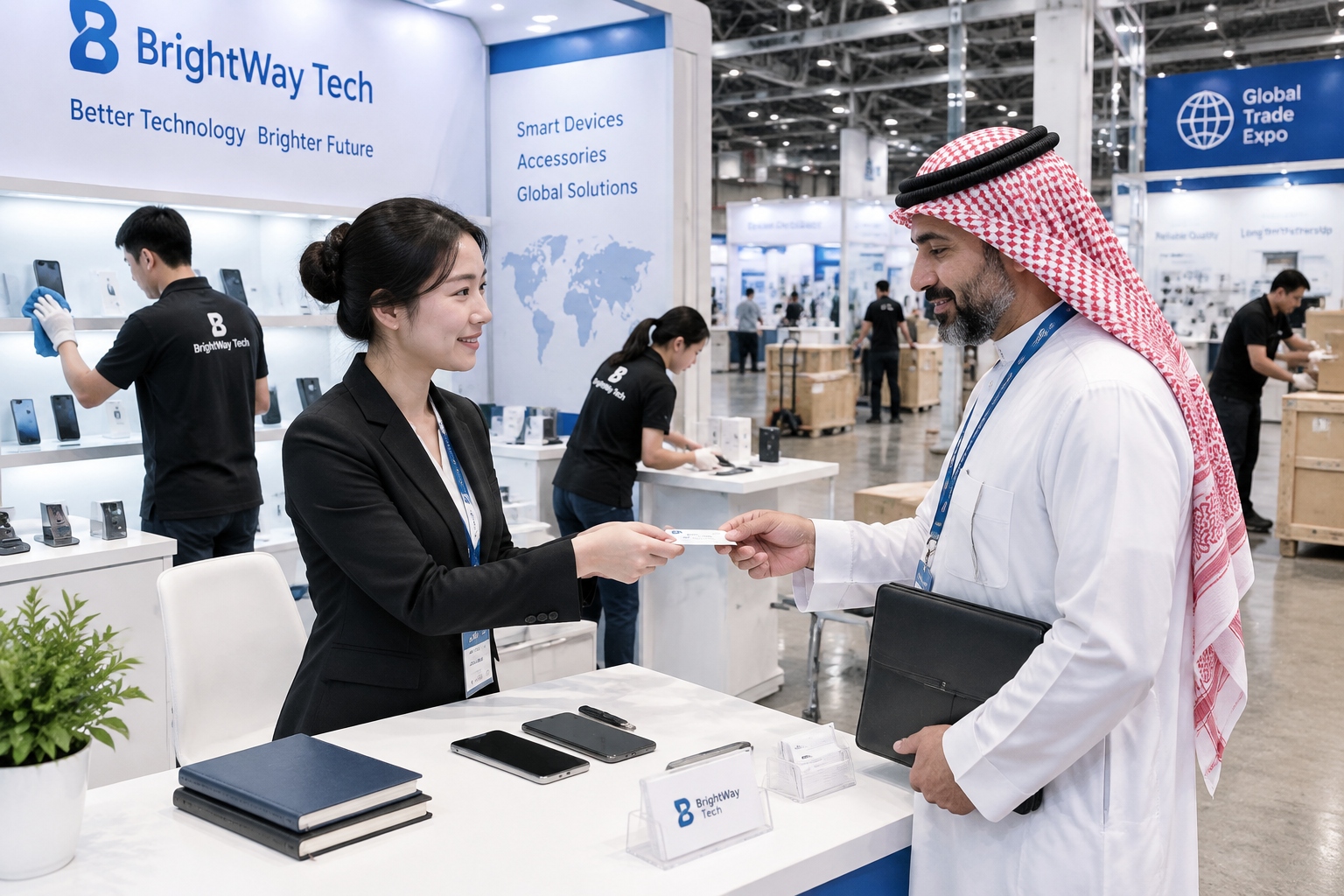
Many exhibitors make the mistake of assuming a trade show closes with the last visitor. In practice, the real relationship management starts afterward. On the final day, sort your business cards and notes into categories: hot lead, future opportunity, and reference material. Send a personalized email within 48 hours, referencing a specific conversation. Connect on WeChat for Chinese contacts. A short follow-up video of your factory or that exact sample the lead handled can be far more effective than a generic “nice to meet you” statement.
Set up a CRM or an Excel table that tracks tasks and next touchpoints. Check to see whether your target customers are active on Alibaba’s international marketplace or professional directories, and then use the data to design a channel strategy. Once expo season ends, the most systematic companies build repeat orders by treating the show calendar as a backbone for quarterly rhythm.
Plan ahead and stay flexible
Chinese trade shows reward preparation, but they also reward on-the-spot improvisation. A schedule that leaves one afternoon empty can open your eyes to a newly emerging category, a promising supporting supplier, or even a better location for next year’s booth. Use the calendar in this guide to create your own 2027 trade roadmap, and update it as soon as official announcements appear. That bit of organizational flexibility is what separates busy travelers from educated winners in the Chinese marketplace.
Start the discussion at forum.chinacomes.com