

It’s 11 a.m., and the panda is asleep
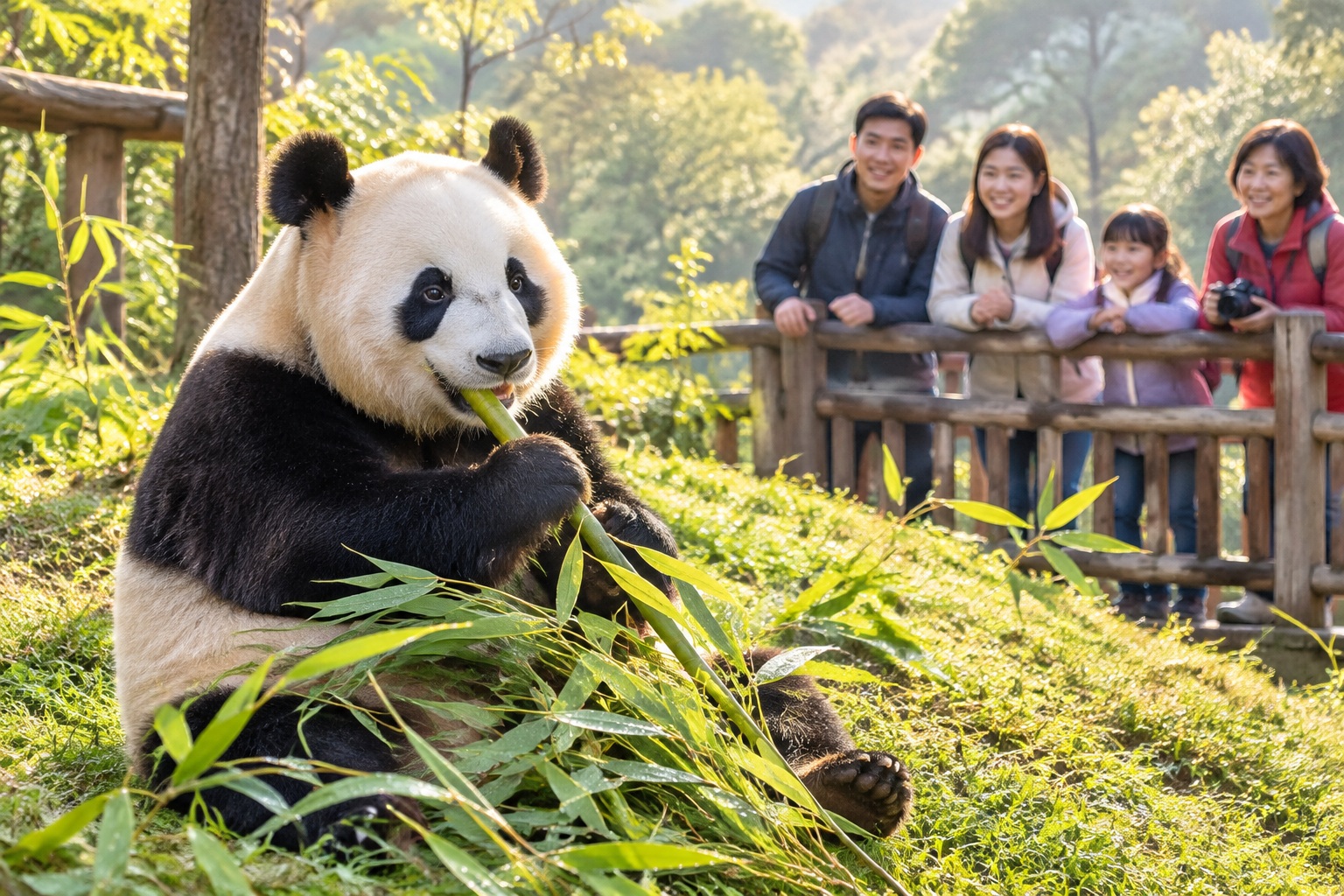
At the Chengdu Research Base of Giant Panda Breeding, by 11 a.m. the tour buses have arrived. A few hundred people line a bamboo-fenced walkway. Somewhere below, a black-and-white shape is draped over a rock like a wet towel. It has not moved in forty minutes. It will not move for another two hours.
Next to you, a man is shouting into his phone. A woman holds a selfie stick over the railing. A child taps the glass. The pandas, mostly, sleep through it.
This is the most common panda experience in China. It is also the most avoidable one. Twenty minutes of planning gets you a completely different day — animals awake, crowds thin, and your money going to conservation instead of a tour operator’s pocket.
Rule one: go early, and go when they eat
Giant pandas spend 10 to 14 hours a day eating bamboo. They also sleep a lot, and their active hours are early. At the Chengdu base, gates open around 7:30 a.m. from March to October, and 8:00 in winter. Between 7:30 and 10:30 you have a real chance of watching pandas climb, roll, chew and wrestle. After 11 a.m., you are mostly photographing fur.
Feeding times are the sweet spot: roughly 8:00–9:00, another around 10:30, and one in the early afternoon. Keepers often hide fruit and bamboo in different corners to keep the animals moving. That is when the good photos happen.
Season matters too. In summer, pandas retreat into air-conditioned indoor rooms during the day. In winter they stay outside more, and the cold makes them unusually playful. Light rain is fine. Crowds, not weather, are the real problem.
Where to go: the famous base, and the ones most tourists skip
Chengdu Research Base of Giant Panda Breeding is the big one — roughly 200 pandas, about 30 minutes from downtown. Take Metro Line 3 to Panda Avenue, then the shuttle. Tickets cost around 55 yuan and are booked online in advance with your passport.
It is wonderful, and it is a zoo-scale crowd experience. If you want something calmer, there are places most foreign visitors never hear about.
Dujiangyan Panda Base (Panda Valley)
Thirty minutes from Chengdu by high-speed rail, plus a short taxi ride. Smaller, greener, more forest than concrete. Red pandas wander the trails. The crowds are a fraction of Chengdu’s.
Bifengxia, near Ya’an
A two-and-a-half-hour drive from Chengdu, tucked into a gorge. Some cubs are raised here. It is quiet enough that you can hear pandas chewing.
Wolong and Shenshuping
Higher in the mountains, inside a reserve rebuilt after the 2008 earthquake. Cooler air, fewer people, and a stronger sense of walking through a habitat rather than past a display.
The Qinling pandas, in Shaanxi
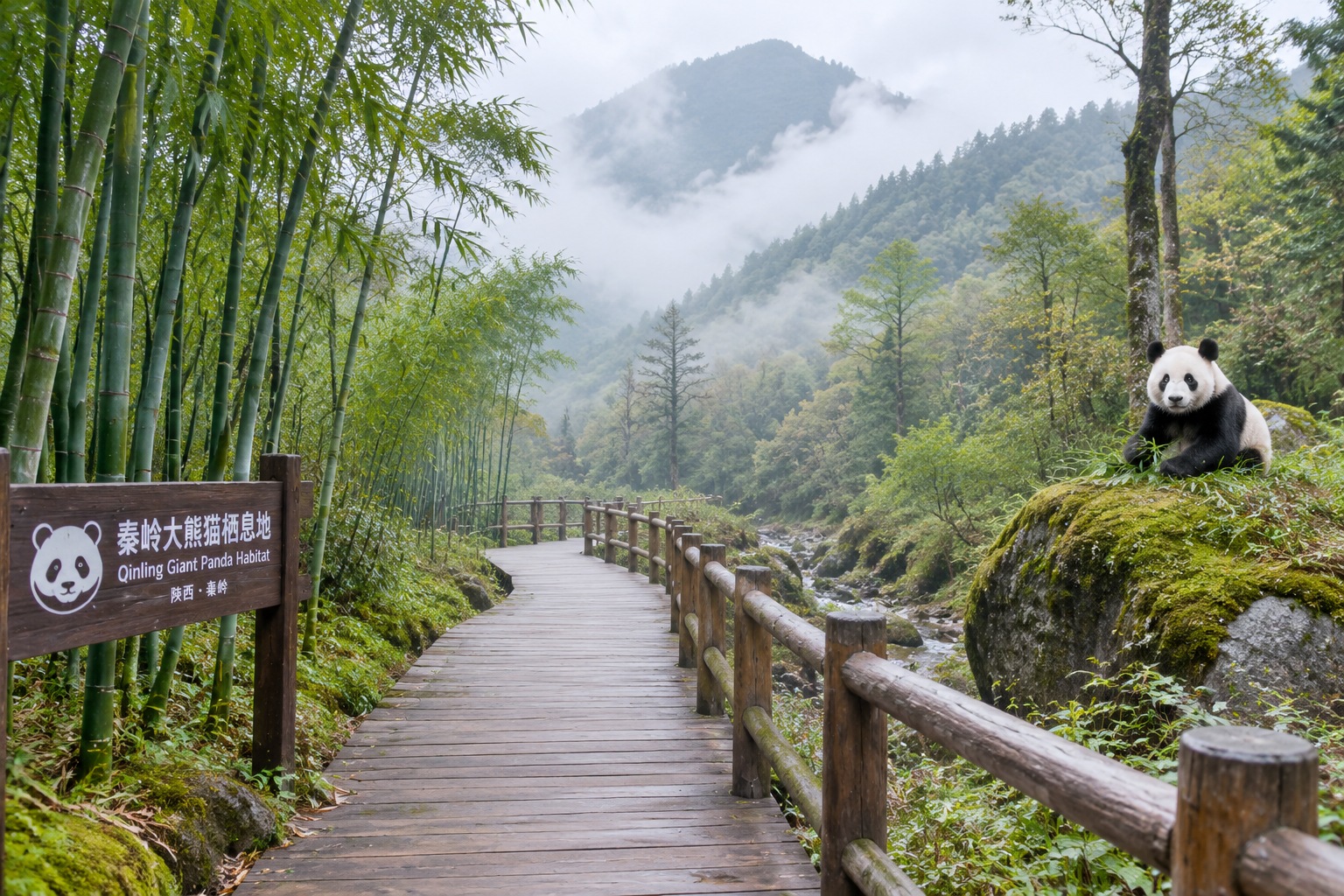
Qinling pandas are a genetically distinct subspecies — slightly different skull shape, and the only population where a brown giant panda has ever been found. Foping and the Qinling breeding bases see a fraction of Chengdu’s visitors.
The four rules that actually matter
Every base posts rules. These are the ones worth taking seriously, and why they exist.
1. Be quiet
Pandas have sensitive hearing and are solitary by nature. Shouting, whistling and banging on glass stresses them, and stressed pandas hide. Silence is not just politeness. It is the difference between seeing one and not.
2. Never feed them
A panda’s digestive system is built for bamboo. Human snacks — biscuits, bread, fruit, milk tea — can make them seriously ill. This is not a small rule. Keepers have lost animals to it.
3. No flash
Flash startles them, and repeated flashes can damage their eyes. Turn it off before you walk in, not after the first blurry shot.
4. Don’t cross the barrier
Not for a better angle. Not for your kid. Not for ten seconds.
Photography without being that person
Some practical things that help: turn off the shutter sound if your phone allows it, use burst mode during feeding when the animals move fast, and bring a zoom lens if you have one — 200mm gets you a clean portrait from the walkway. Don’t hold your phone over the glass. Don’t set up a tripod in a narrow path. Drones are banned at every base.
And the obvious one: if a keeper waves you along, go. They are managing you and the animal at the same time.
How to tell a good panda place from a bad one
Not every place with a panda in it is doing conservation work. In China, as elsewhere, “panda park” can mean anything from a serious breeding and research centre to an amusement park with two bored animals.
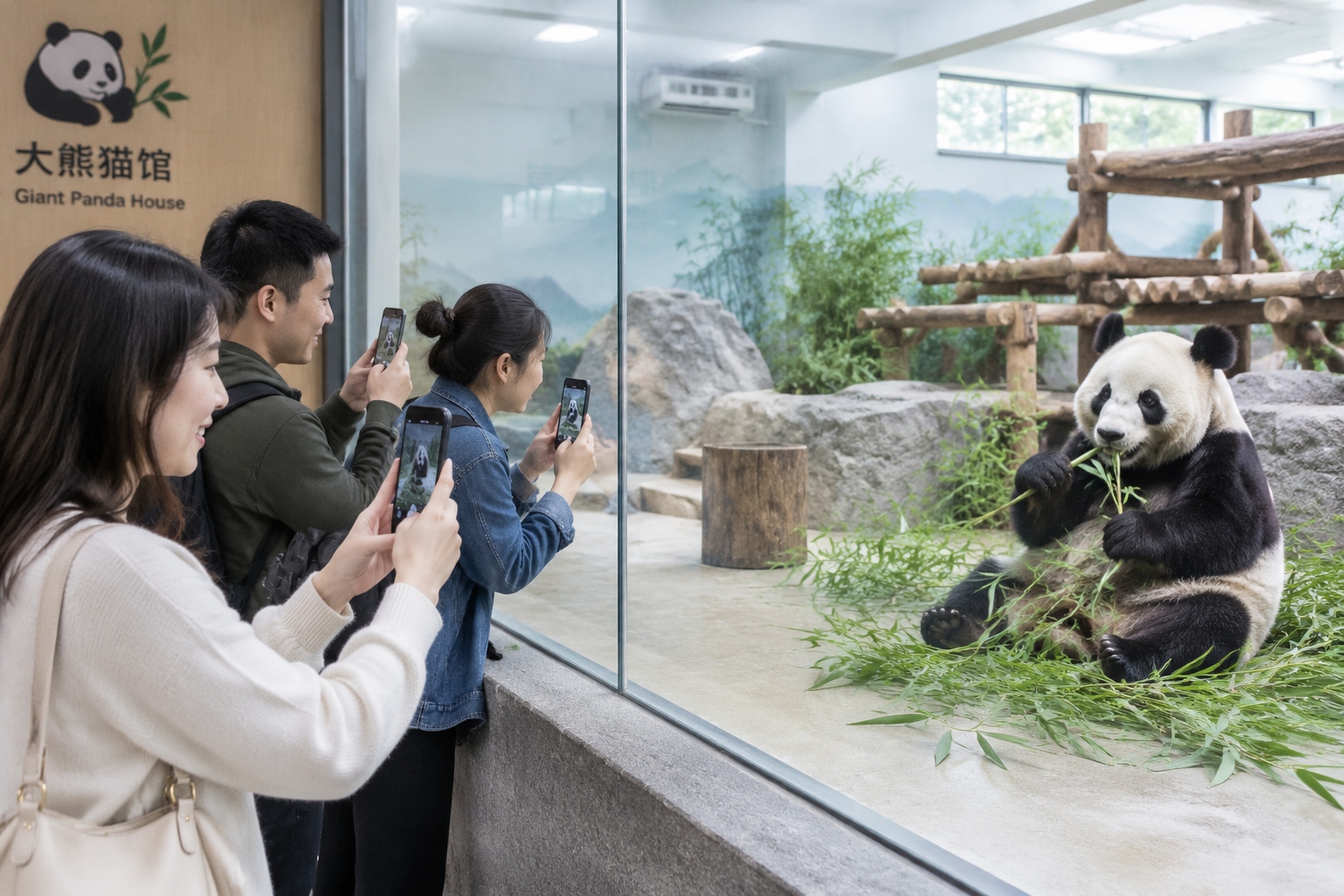
Look for: enclosures with climbing structures, shade, and a real choice between indoors and outdoors; several bamboo species growing on site; keepers who talk about individual animals by name and history; visible membership in a zoo or conservation association; published research partnerships.
Be wary of: a single concrete enclosure, pandas used mainly as photo props, loud music, and gift shops that clearly earn more than the animals receive. If the whole place feels designed around your wallet rather than the panda’s day, it probably is.
The “volunteer” question, and the hug photo
Two things confuse foreign visitors more than anything else.
The hug. For years, tourists paid to sit beside a panda cub and take a picture. In 2018, China banned close-contact photo ops like this. If a third-party tour operator still promises you a “private encounter” or a panda on your lap, treat it as a red flag. It is either outdated marketing or something you do not want to be part of.
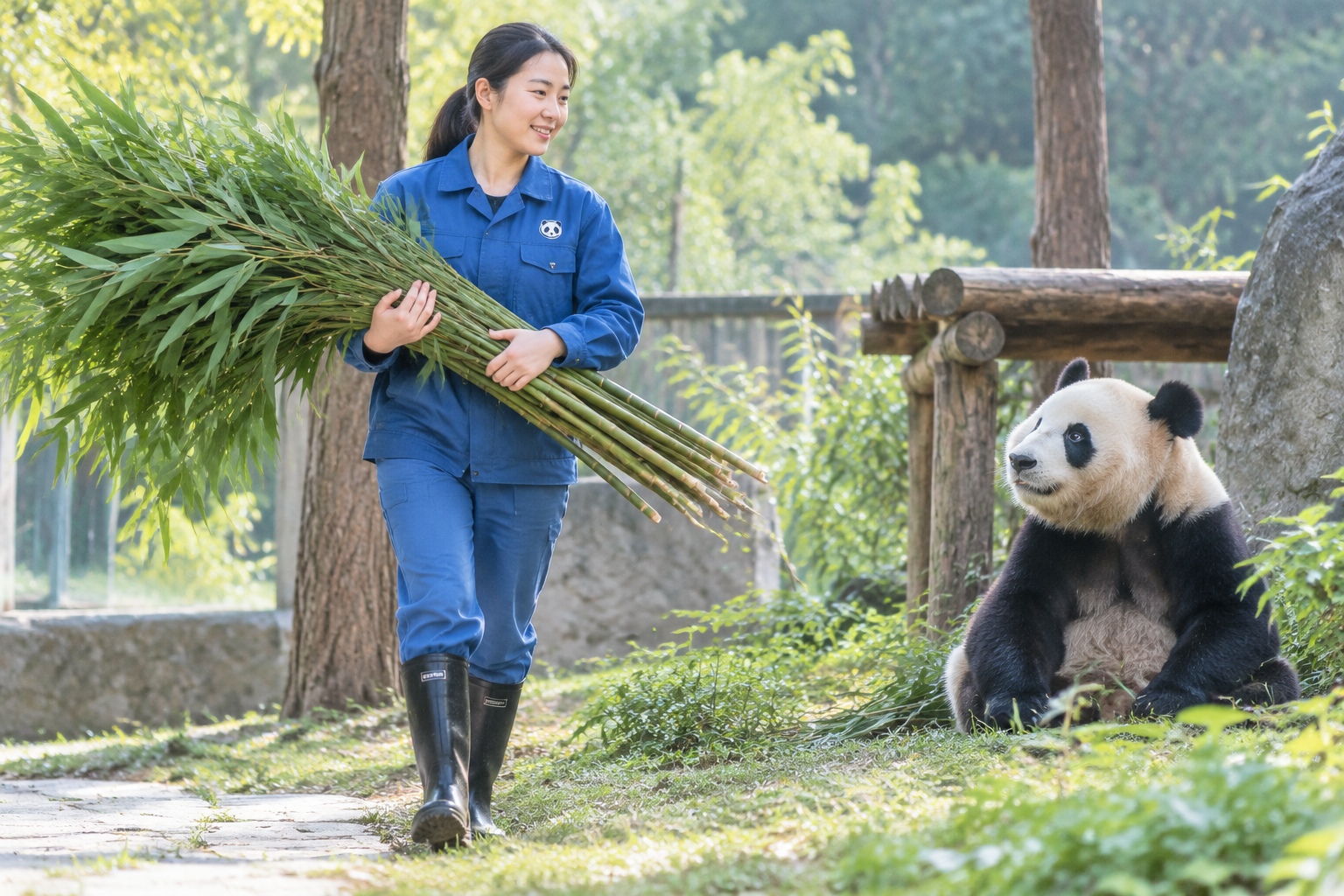
The volunteer day. Real programs exist, run by the bases themselves, usually at Dujiangyan or Bifengxia. You clean enclosures, prepare bamboo, mix “panda cake,” and listen to a keeper explain the breeding program. It costs roughly 700 to 1,000 yuan, and the money goes to the facility. It is not glamorous. It is genuinely interesting.
The version to avoid: agencies selling a “volunteer experience” that turns out to be a normal ticket plus a photo of you wearing a keeper’s hat. Check who runs it before you pay.
Supporting conservation, not just cuteness
The numbers, briefly: roughly 1,900 giant pandas live in the wild, and somewhere between 600 and 700 in captivity. In 2021, China linked a Giant Panda National Park across Sichuan, Shaanxi and Gansu — about 27,000 square kilometres of connected habitat, which matters more to the species’ future than any single breeding centre.
What a visitor can do is small but real. Buy from the official shop rather than the stall outside the gate. Look for adoption or donation programs run by the base. Visit a lesser-known reserve where your 55-yuan ticket is a bigger share of the budget. And when you get home, describe what you actually saw, not only the cute part.
A good panda day, hour by hour
6:45 a.m. — leave your hotel. 7:20 — arrive and queue. 7:35 — walk in fast, skip the first enclosure, head for the nursery and the sub-adult pandas. 8:00 to 10:00 — the window. 10:30 — second feeding. 11:30 — leave, before the tour buses unload.
Afternoon: the old town in Dujiangyan and a teahouse, or, at Panda Valley, the forest trail where red pandas appear without warning. Either way, you will have seen more in three hours than most visitors see in a whole day.
What most people get wrong
They treat a panda visit as a photo stop. They arrive at 11. They book the cheapest tour. They never ask where the ticket money goes.
Pandas really are worth the trip. But the best visits are not about getting close to one. They are about showing up at the right hour, keeping your voice down, and leaving knowing a little more about why these animals are still here.
Start the discussion at forum.chinacomes.com