
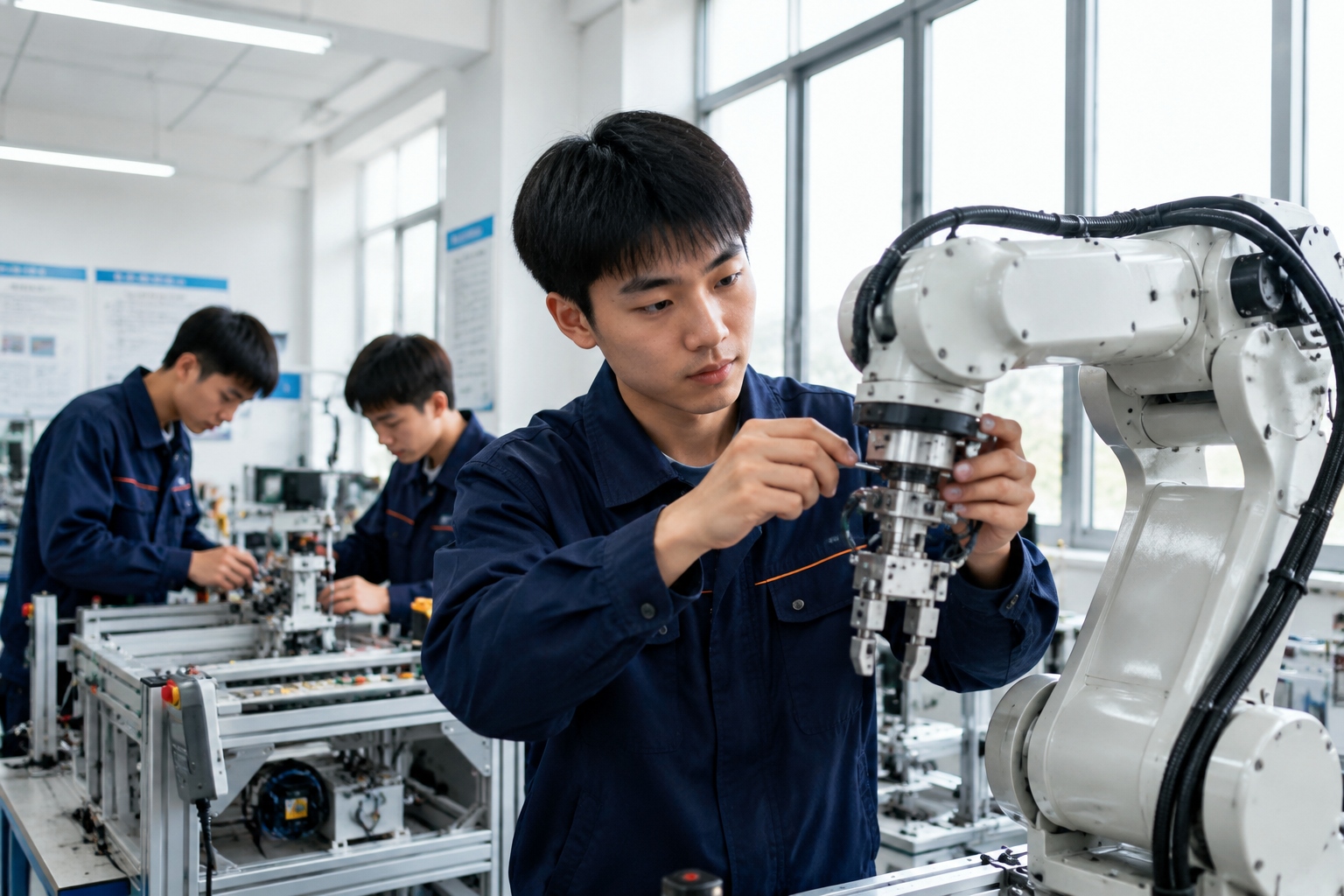

Introduction: A factory floor in Shenzhen
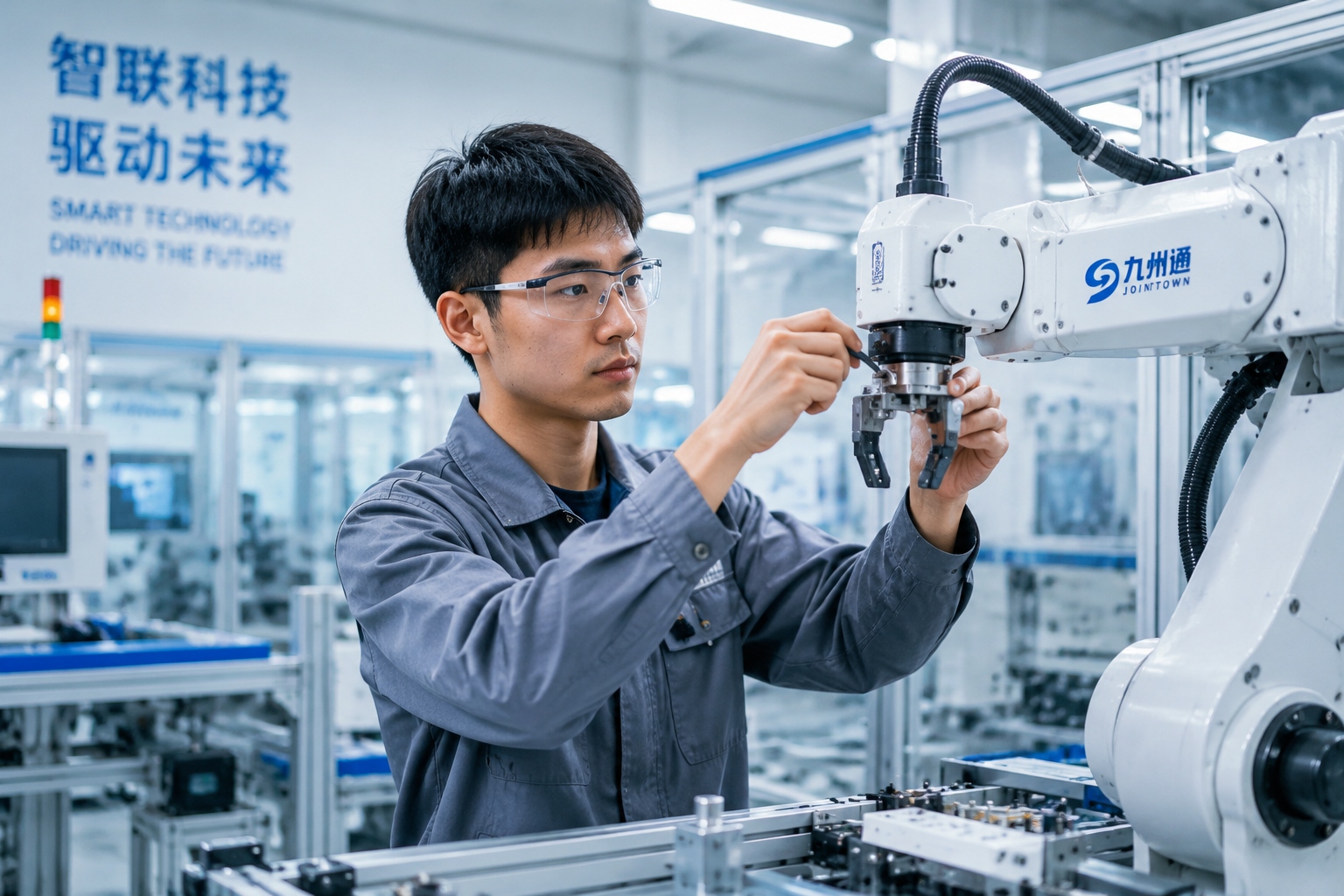
At 9 a.m. on a Tuesday, Li Ming is already deep inside a bright, quiet factory in Shenzhen’s Longhua district. He is calibrating a robotic arm that will assemble smartphone components later in the day. Li Ming is 22, with a diploma from a vocational college, not a university degree. And yet, his monthly paycheck often reaches 10,000 RMB (around $1,400) — double the starting salary of many white-collar graduates in second-tier cities.
His story is part of a much larger shift. Across China, young people are quietly rethinking one of the nation’s most powerful traditions: that the only respectable path to success is a university degree. As the job market tightens and industries demand real skills, vocational education is becoming a genuinely attractive option.
Why young Chinese are choosing the blue-collar route
The trigger is a combination of economic pressure and opportunity. In 2023, a record 11.5 million Chinese college graduates entered the workforce. Yet many struggled to land decent office jobs. Employers often demanded high degrees for positions that didn’t really need them, starting salaries were low, and ‘996’ overtime culture was common. Meanwhile, the manufacturing and technology sectors were facing a shortage of skilled workers. According to China’s Ministry of Education, there is an annual gap of roughly 30 million skilled people. This gap pushes wages up.
Technical jobs can pay very well. A skilled CNC machining operator in the Yangtze River Delta can earn 8,000 to 15,000 RMB per month. An electrician with a senior certificate can make even more. For many young people, the math is clear: four years of university, often at a high cost, and then a job hunt that may end in a 6,000 RMB salary. Or three years of vocational training, with a strong chance of a higher-paying job right away.
Inside a Chinese vocational school
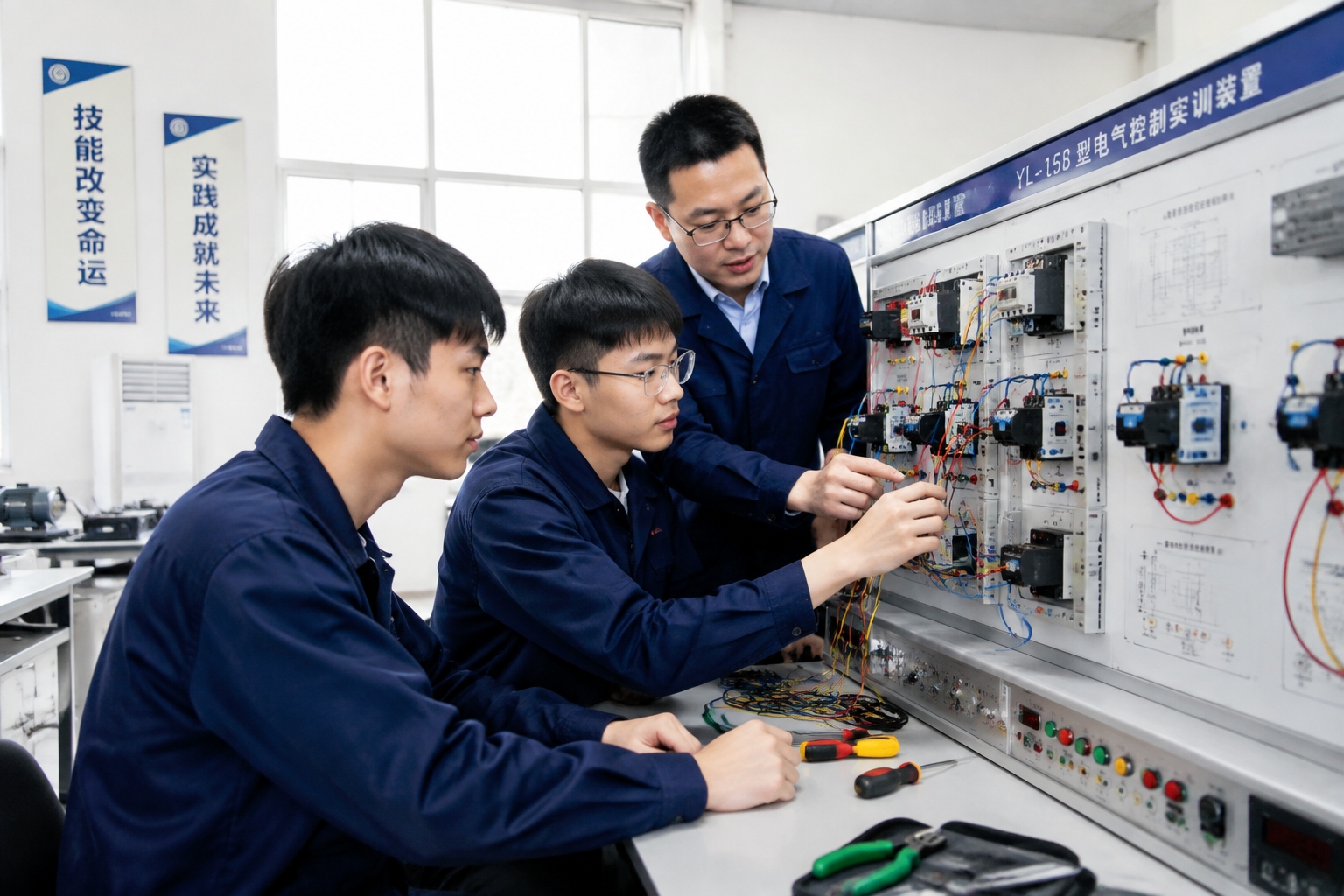
Modern vocational schools no longer look like dusty workshops. At Li Ming’s college in Wuhan, students train on industrial robots similar to the ones found in Tesla’s Shanghai factory. The classrooms are bright; the equipment is new; teachers often come from industry, not just academia. Students spend half their time on practical exercises, working individually or in small teams.
The emphasis on hands-on learning creates a different kind of classroom energy. ‘In high school, I was always told to memorize things,’ says Chen Wei, a 19-year-old studying electronic automation. ‘Here, when I wire a PLC unit, the light actually turns on. If I make a mistake, I see the problem and fix it. That gives me a sense of achievement I never felt before.’
Many schools also partner with companies. During his final year, Li Ming interned at a large electronics maker and received a job offer before graduation. This kind of ‘order-based training’ — where companies essentially hire a class in advance — is common in China’s industrial zones.
Changing mindsets: from hazy shame to wry pride
The social stigma is not gone. For a long time, vocational students were seen as ‘failures’ who couldn’t pass the gaokao. Some of that bias remains. But the conversation is changing, especially among young people themselves. They see their university-educated friends sitting in open-plan offices, complaining about ‘meaningless work,’ while they get to operate expensive machines, solve complex problems with their hands, and watch their paychecks grow.
Parents are also shifting. When Li Ming first told his parents he wanted to attend a vocational college, his mother cried. In her small town, a college diploma was a status symbol. But after Li Ming started working, relatives noticed his savings. Now, his mother proudly shows off the TV he bought for the family. ‘It’s not about the title on your business card anymore,’ Li Ming says. ‘It’s about results.’
Government policy is behind this shift
Beijing is actively pushing this transition. The 2022 revision of the Vocational Education Law formally upgraded vocational education from a second-class option to an equal alternative. It grants vocational graduates the same rights as university graduates in civil service exams and job posts. A separate college entrance exam system for vocational students now exists, linking technical colleges to specialized undergraduate programs. Provincial governments pour money into rebuilding vocational campuses, expanding workshops, and creating regional training centers.
The economic rationale is straightforward. China wants to move up the value chain, producing electric vehicles, robotics, and advanced machinery. These industries cannot be built with literature majors alone. The government has projected that by 2025, the country will need around 100 million skilled workers. That is why vocational enrollment is being actively encouraged in schools across the country.
From vocational school to vocational university
One of the biggest changes has been the rise of ‘vocational universities.’ These institutions award bachelor’s degrees in applied fields like robotics, smart manufacturing, and digital design. The first batch opened in 2019, and there are now over 30 approved campuses. For students who want the higher education experience without the theory-heavy coursework of a traditional university, these schools offer the best of both worlds.
More than men: women in trades
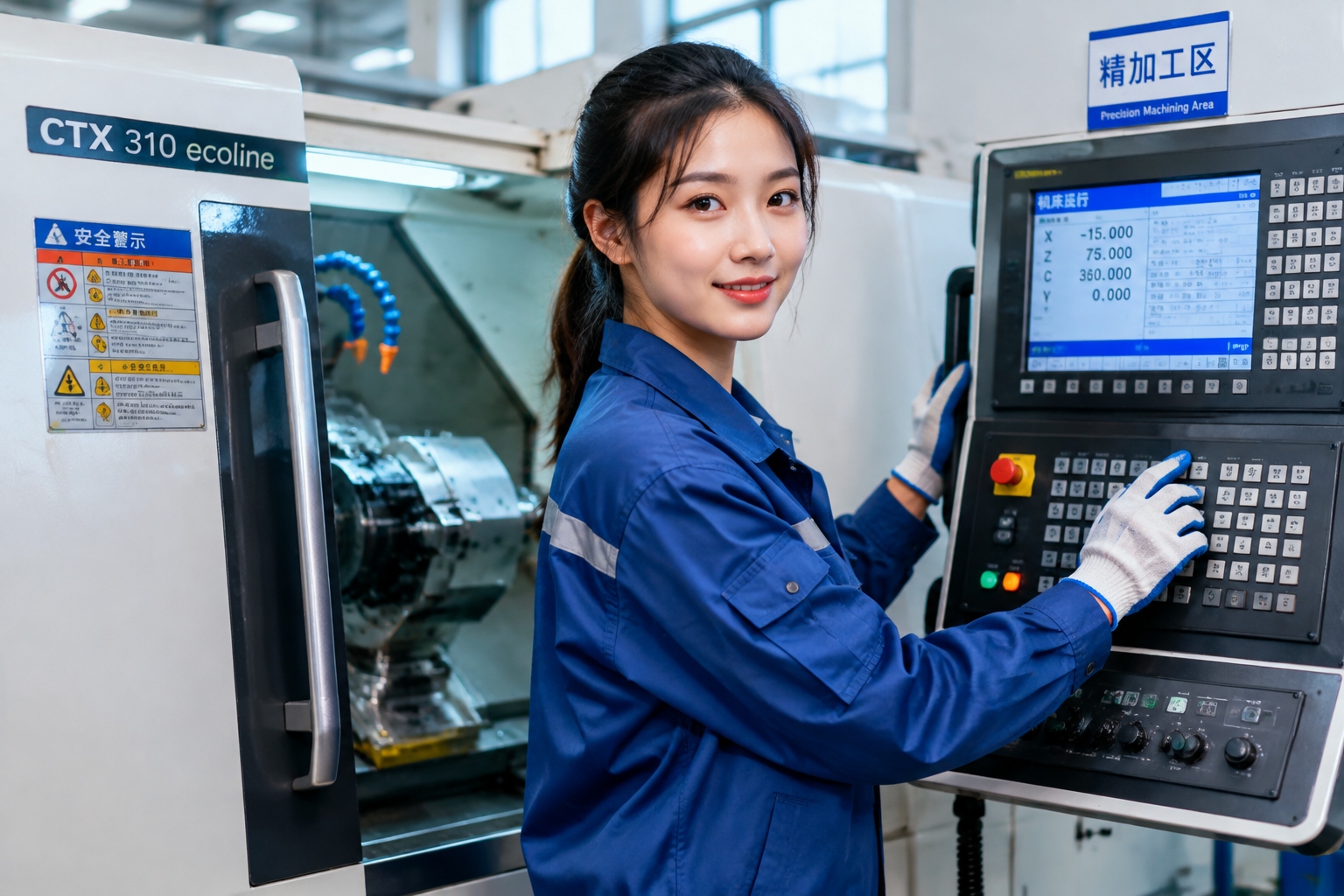
Technical work in China is no longer a male-dominated world. At a municipal skills competition in Guangzhou, I met Liang Jing, a 20-year-old student who works on computer numerical control (CNC) machines. She said her class has more than twice as many women as it did five years ago. ‘My parents thought I’d end up being a waitress,’ she laughed. ‘Now I’m going to operate a machine that costs millions.’ Women like Liang are helped by better safety standards, more automated and cleaner workshops, and a rising willingness among employers to hire female technicians for precision tasks.
The real challenges behind the rosy image
It would be dishonest to claim everything is smooth. The quality of vocational schools varies enormously. The best ones, often in richer provinces, are on par with some university labs. The worst ones are underfunded, with outdated equipment and teachers who haven’t worked in industry for years. Graduates from those schools often end up performing repetitive tasks with little upward mobility.
There is also a cultural tension that won’t disappear quickly. Many parents still see white-collar work as more secure and ‘clean.’ Even young vocational graduates sometimes feel a quiet envy when friends share photos of university campuses. Working hours can be long, and factory floors are not always well air-conditioned in the summer. These are real limitations that people weigh when making their choice.
Yet the trend is unmistakable. In some provinces, high school registration for vocational tracks has increased by double digits in recent years. Companies are signing contracts with schools years in advance. Tech-savvy young people are no longer dreaming of working in an office — they are dreaming of mastering machines.
Conclusion: a choice, not a compromise
Back in Shenzhen, Li Ming takes a break and pulls out his phone to show me a photo of his new apartment. He bought a small place near the factory, a material sign of stability that many of his office-bound college classmates can only envy. ‘University was never my only option,’ he says. ‘It was just the option people kept talking about. Now I trust my own path.’
China’s youth are discovering that blue-collar work can be respectable, well-paid, and even intellectually stimulating. That doesn’t mean the country is abandoning higher education — far from it. But the idea that a meaningful life can be built through an alternative path is taking root. Vocational education is not a compromise anymore. It’s a choice.
Start the discussion at forum.chinacomes.com