


A few Fridays ago, I walked back to my desk to grab a phone charger, and saw that the office was almost empty.
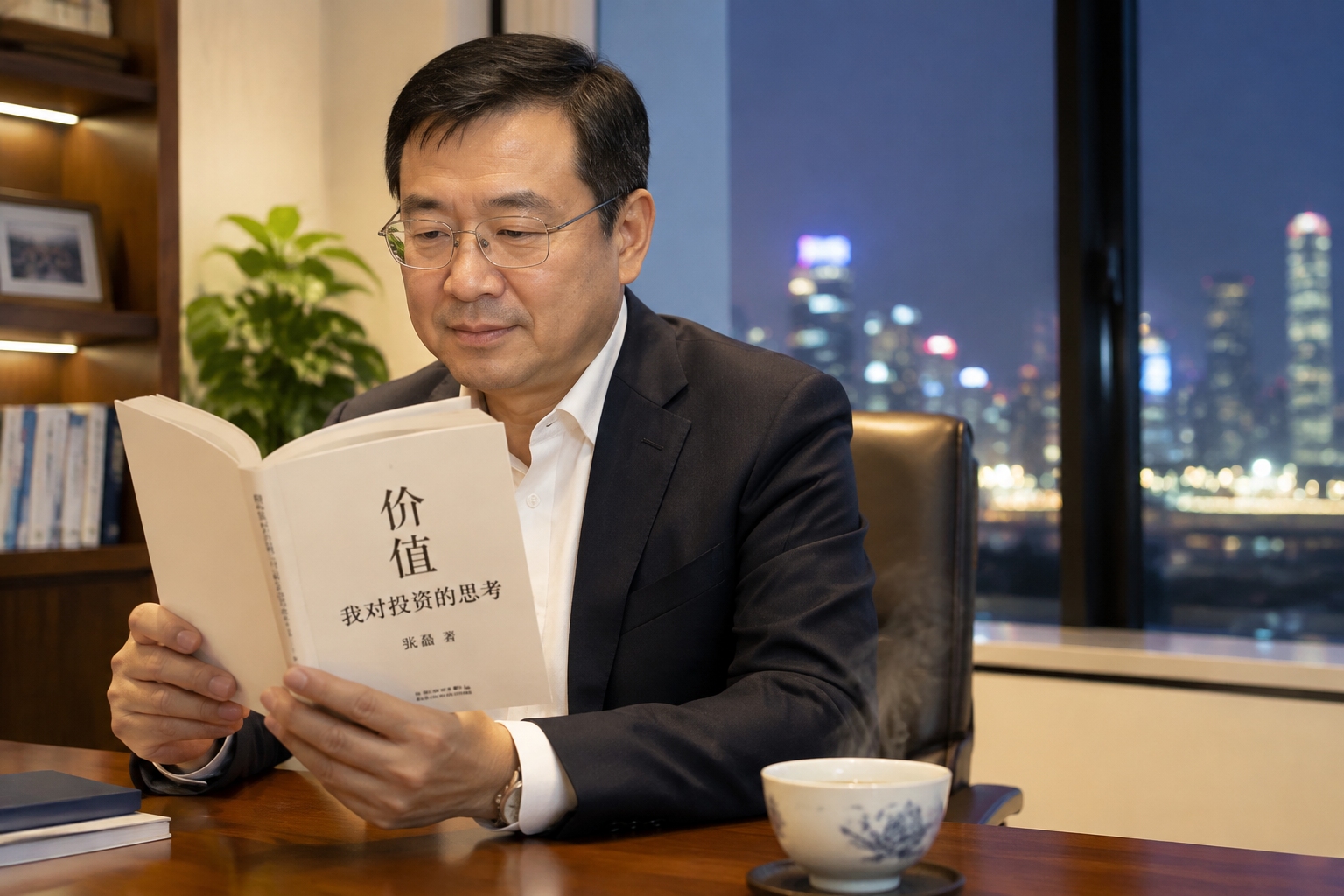
Almost, because my boss was still there. He sat in the small meeting room, reading a thin book with a cream-colored cover. The title on the spine was hard to miss: 传习录, or Instructions for Practical Living, by the 16th-century Chinese philosopher Wang Yangming. When he noticed me, he smiled and said the book was just to keep himself sane. I did not press him. But over the next few weeks I saw the same book in his backpack, on his desk, and once under his arm as he headed out for lunch. When I mentioned this to a colleague, she said, “These days a lot of bosses go back to Chinese classics for answers.” I started paying attention — and, to be honest, ended up reading Wang Yangming myself.
A 500-Year-Old Philosopher for 21st-Century Bosses
Wang Yangming (1472–1529) was a Ming-dynasty official, military commander, and one of the most influential voices in Confucian thought. He spent much of his career moving between court politics and military campaigns, at one point suppressing a large rebellion. Out of those experiences, he developed an intensely practical form of moral philosophy.
His central message was not abstract theory. Three ideas stand out again and again:
- 心即理, or “the mind itself is principle.” Wang insisted that ethical judgment is not found only in ancient books; it lives in each person’s heart.
- 知行合一, or “the unity of knowledge and action.” If you know something is right but fail to act, your knowledge is not true knowledge yet. Thinking, feeling, and doing are all intertwined.
- 致良知, or “extending innate moral knowledge.” Through self-awareness and action, people can sharpen their inner sense of right and wrong.
That philosophy may sound obscure. In Chinese business culture, however, it often reads like a practical guide to navigating messy reality.
My Boss’s Midnight Reading Plan
My boss never announced that he was studying philosophy. He is not a mystic or a scholar. He runs a company that is now about ten years old, and he is used to researching late at night. But he rarely reads purely for pleasure. When he picks up a book, it tends to be connected to a messy question in his life.
One week, we were struggling with a client presentation. The team kept postponing because the client’s brief was vague. My boss walked into a meeting and wrote a Chinese sentence on the whiteboard: 人须在事上磨,方立得住。 “People have to grind against practical tasks before they stand firm.” Then he said, “Finish a first draft by tomorrow. Don’t make it perfect. Share it with the client, collect feedback, and adjust.” We did, and surprisingly, the client appreciated the attempt. More importantly, our own questions became clearer.
Later he told me that Wang Yangming’s idea of “grinding yourself in real-world events” is close to the modern idea of learning by doing — but with an emotional layer. You cannot figure out what to do by sitting in a meeting for another hour. You need to enter the situation and let it refine you.
After that, I started hearing classic phrases whenever he talked about the team. When one employee made up a customer number, the boss did not discipline him in front of the room. He explained 良知, or conscience: if you let your actions contradict what you know is right, you lose inner balance. The employee later corrected the report on his own. To me, that felt less like moralizing and more like an attempt to keep the mind clear.

Why Are Chinese Leaders Turning to Ancient Wisdom?
One boss’s habit might be an anecdote, but he is not alone. Wang Yangming is particularly trendy among entrepreneurs, managers, and urban professionals. Search the Chinese name 阳明 on major book-buying sites, and you will see dozens of commentaries, business applications, and audio courses. Some former executives have built entire short courses around his teaching, and those courses fill up.
Partly, it is because the context has changed. In the 1980s and 1990s, Chinese managers looked outward. They imported Western management theory, enrolled in MBA programs, and studied Peter Drucker and Silicon Valley. That toolkit is still useful. But now many Chinese professionals are asking a deeper question: “What should we do about internal exhaustion, ethical pressure, and uncertainty?” Wang Yangming offers an inner-centered alternative. It does not tell you to manipulate incentives or predict the market. It tells you to clarify your intention, remove self-deception, and then act boldly.
The philosophy feels resilient in a world where growth is no longer a given. That is valuable for someone whose day includes difficult negotiations and tough personnel decisions. My boss puts it plainly: “You cannot control the market, but you can control whether you are lying to yourself.”
“Unity of Knowledge and Action” as a Corporate Reset Button
知行合一 has almost become a buzzword in Chinese business writing. Motivational posters, leadership training, and corporate videos all like to quote it. But in practice, it is demanding. It means that after discussion, executives must act decisively; only then are their decisions tested by real consequences.
My boss uses that idea to push back against a common form of workplace procrastination. Many employees would rather write long reports than make a call. He says, “I want people to say: I know what to do, and I’m doing it now.” That may sound like a basic productivity tip, but it runs deeper. It asks people to take responsibility for their own judgment and live with the outcome. That is why Wang Yangming, despite his ancient vocabulary, still speaks to modern leadership.
Beyond Wang Yangming: A Wider Cultural Revival
Wang Yangming may be the hottest classic philosopher among Chinese executives right now, but he is not the only one. Interest in Confucius, Mencius, and Taoist thinkers like Zhuangzi has also grown in workplaces. Some companies and private clubs organize weekly readings of the Analects or the Tao Te Ching. Young urban professionals sign up for classes in Chinese classics and traditional arts. Some do it to signal taste, but many treat it as a quiet space in otherwise chaotic lives.
Publishers have taken notice. Some of the best-selling non-fiction titles in China use traditional stories to talk about decisions, emotions, and relationships. Ancient sayings now appear in brand campaigns, too. The result is a mixture of commerce, Confucian values, and personal search. It is not always pure, and it can be easy to mock, but it is too widespread to ignore.
A Note From Someone Who Started With Doubts
A few nights ago, I sent my boss a line from the Instructions for Practical Living that we had just started discussing. He replied with a laughing emoji and said, “Watch out — this book really works.” I laughed, but I think he has a point. Does ancient philosophy cure modern burnout? Probably not. Yet in offices like ours, the strange act of opening a classic after a long day creates a tiny pause. And sometimes that pause is what allows us to return to tomorrow’s pressure calm enough to think.
That is how a phrase written more than 400 years ago becomes a quiet force in a modern Chinese office.
Start the discussion at forum.chinacomes.com