
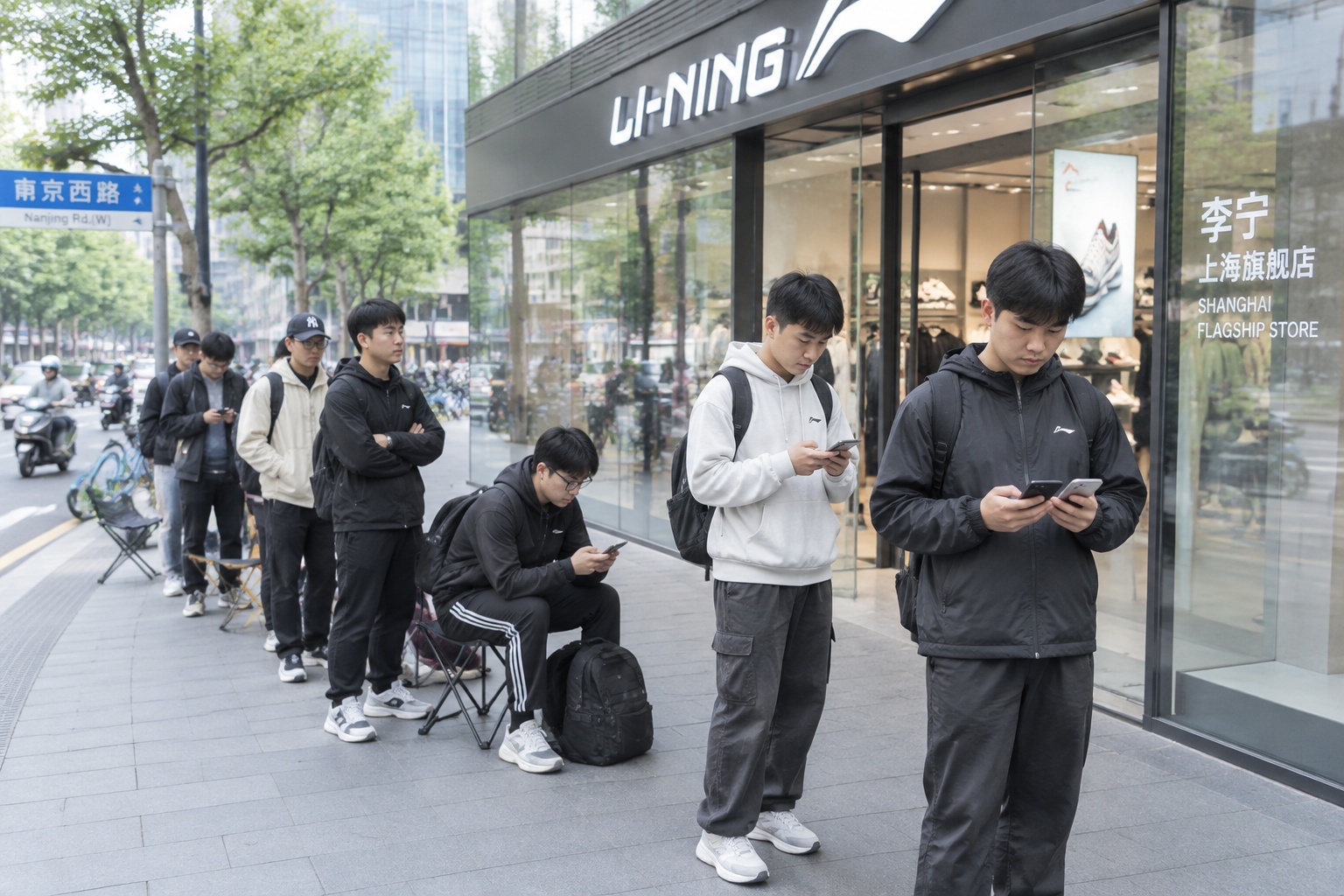

A queue, three phones, and one pair of shoes
It is 9:40 on a Saturday morning outside a Li-Ning store in Shanghai’s Jing’an district, and roughly 120 people are standing in a line that curls around the corner. A university student sits on a folding stool doing homework on his phone. Two places ahead of him, a man in his mid-thirties is holding three phones at once, refreshing the same page on each of them. He is not shopping for himself. He is shopping for the resale listing he will post before lunch.
The shoe they are waiting for retails at 599 yuan, about $83. Online it sold out in under a minute, which is now normal. By Saturday evening, pairs are listed on Dewu, China’s largest sneaker resale app, at two to three times retail. By Sunday, someone has posted a fit check on Xiaohongshu with the caption: finally got them.
Depending on who you ask, this is either a homegrown industry that has finally learned to manufacture desire, or a hype cycle running on fumes. Both readings survive contact with the evidence. The more interesting question is what is actually inside the shoe.
First, a translation: what does guochao mean?
If the word is new to you: guochao (国潮, literally “national tide”) is the shorthand Chinese media and marketers use for the drift toward domestic brands that wear Chinese cultural references on the outside. It hardened into a business category around 2018 — the year Li-Ning staged a “China Day” runway show at New York Fashion Week in February, and Tmall began running guochao shopping festivals.
It is not the same thing as patriotism, although the two get tangled together, sometimes on purpose. Ask buyers why they chose a domestic pair and most will mention design and price first, and pride second.
Anatomy of the shoe: three things that changed
1. The midsole stopped being an imitation
Peak’s Taichi line, launched in December 2018, used an adaptive foam that stays soft when you walk and firms up when you run. The first drop sold out within hours, and the company says more than a million pairs moved in the first year, at a price point around 469 yuan. Li-Ning built its flagship cushioning around a supercritical PEBA foam it calls 䨻 — a rare Chinese character made of four “thunder” radicals, chosen mostly because nobody could mispronounce the technology if they could not pronounce it at all. Anta put nitrogen-infused foam and carbon plates into its KT signature line with Klay Thompson, and Xtep’s 160X racers became a common sight at Chinese marathons, a category that barely existed domestically a decade ago.
2. The design language got local, and specific
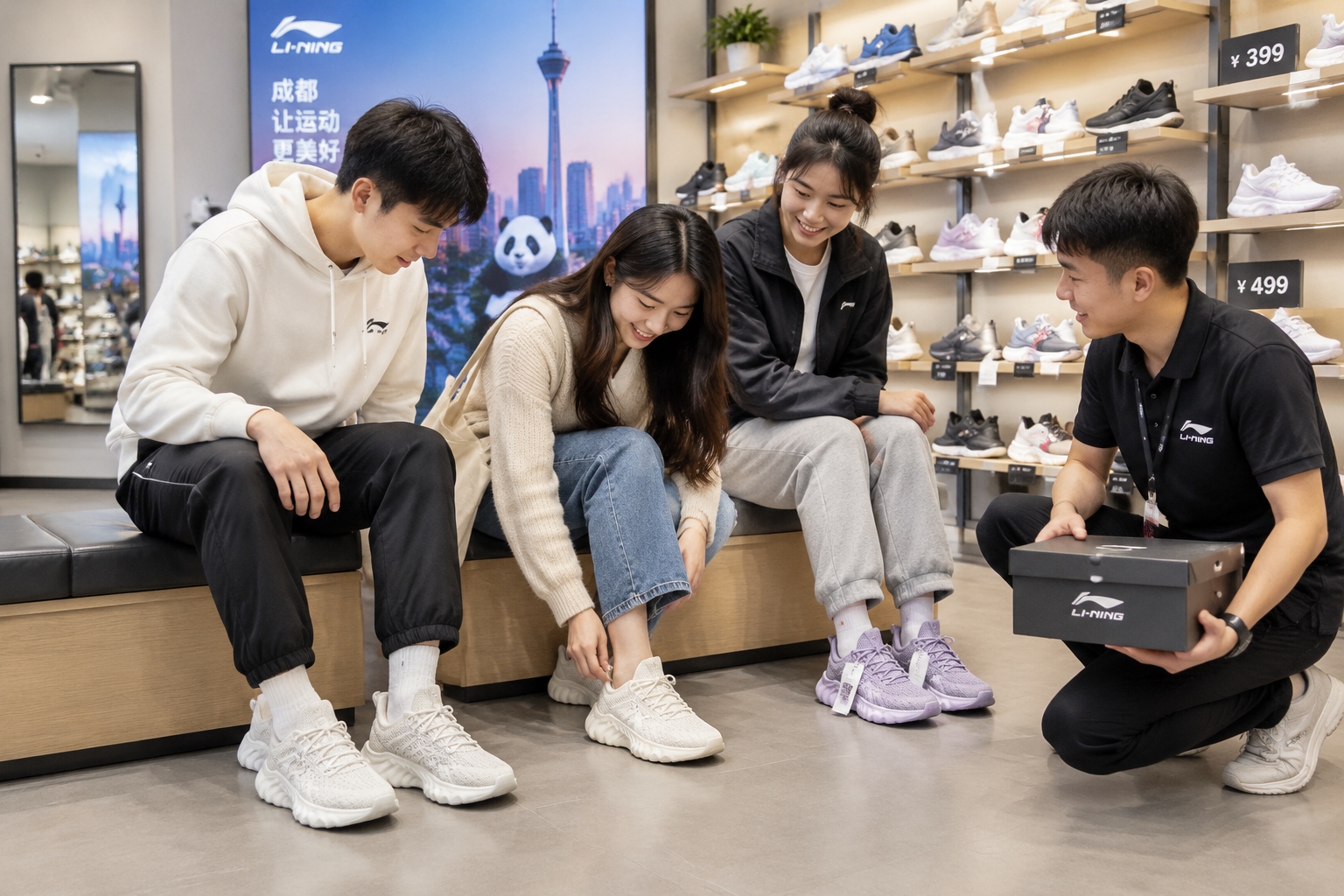
The 2018 “Wu Dao” (悟道) shoe that walked New York Fashion Week was almost aggressively un-American: chunky knit, muted colors, no swoosh-like gesture at all. Since then, the references have become narrower and more confident — seal-script characters on heel tabs, Song dynasty celadon greens, Dunhuang mural prints, white-and-gold Spring Festival colorways, and city-exclusive editions for Chengdu, Changsha and Xi’an that turn regional pride into a marketing engine.
3. The narrator changed
Anta and Li-Ning still sign Western athletes, but the storytelling has moved home. Chinese New Year drops, hometown editions, collaborations with museum shops and candy brands — the audience being addressed is no longer a Chinese consumer aspiring to look American. It is a Chinese consumer who wants to look like something she can name.
From factory floor to front row
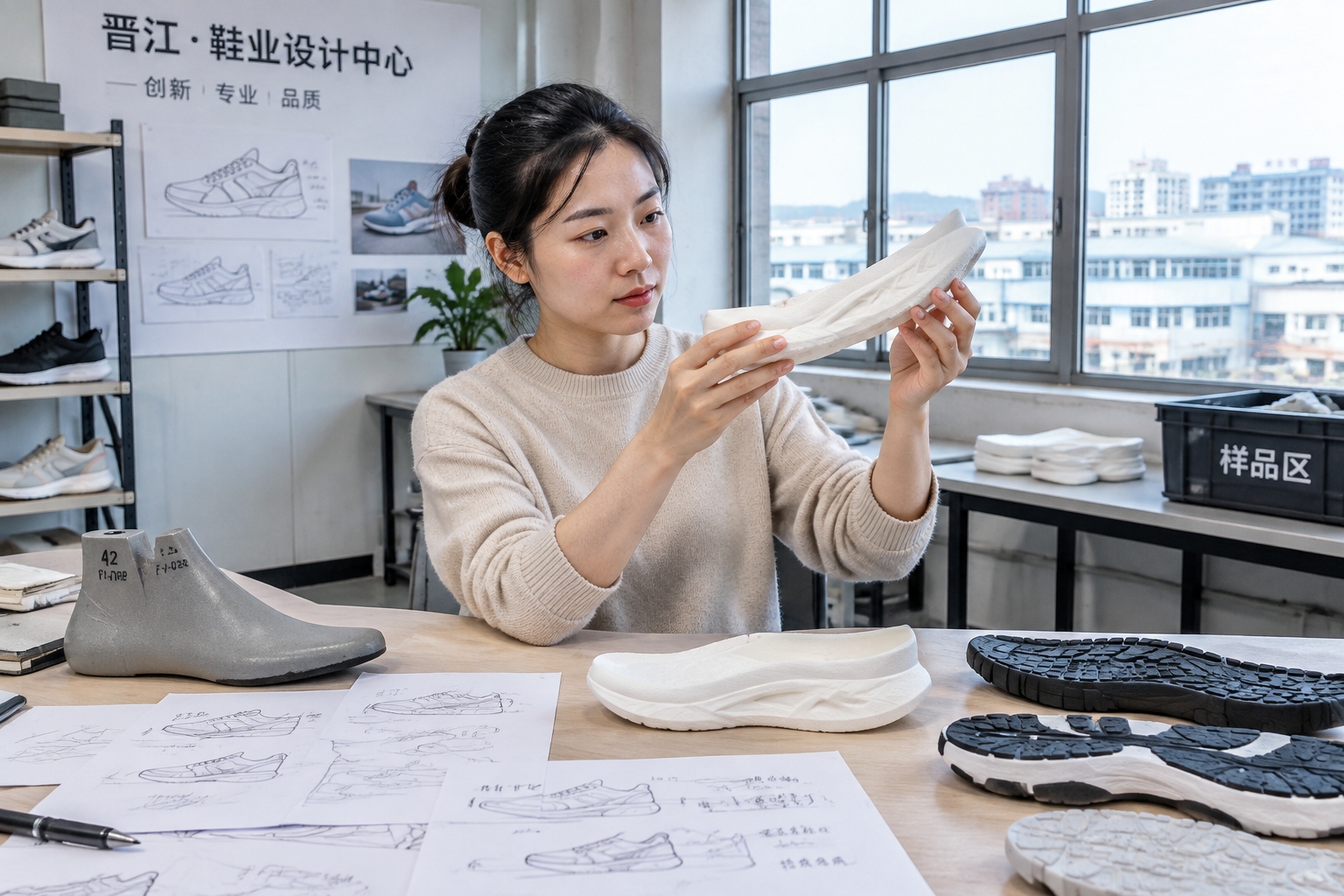
The manufacturing base sits in Jinjiang, a county-level city in Fujian province that churns out shoes for a long list of foreign labels. Anta was founded there in 1991; Li-Ning in 1990, by the gymnast whose name is on the door. For two decades, both were domestic brands doing contract work, competing on price and shelf space in lower-tier cities.
Three moments shifted the trajectory. The 2008 Beijing Olympics pushed sportswear into the mainstream and gave domestic brands their first serious scale. The 2018 New York show gave Li-Ning a global design vocabulary overnight — its share price jumped sharply in the following days. And in March 2021, when Nike and Adidas faced a consumer backlash over statements about Xinjiang cotton, domestic brands absorbed a wave of buying that no marketing budget could have bought.
The results are now large enough to argue about. Anta reported roughly 70.8 billion yuan (about $9.8 billion) in revenue for 2024, placing it among the three biggest sportswear groups in the world by revenue. Li-Ning reported around 28.7 billion yuan, about $4 billion. In 2019, Anta led the consortium that bought Amer Sports, the parent of Arc’teryx, Salomon and Wilson — a Chinese shoe company that now owns some of the technical outdoor brands Western hikers wear.
The secondary market: 599 in, 3,000 out
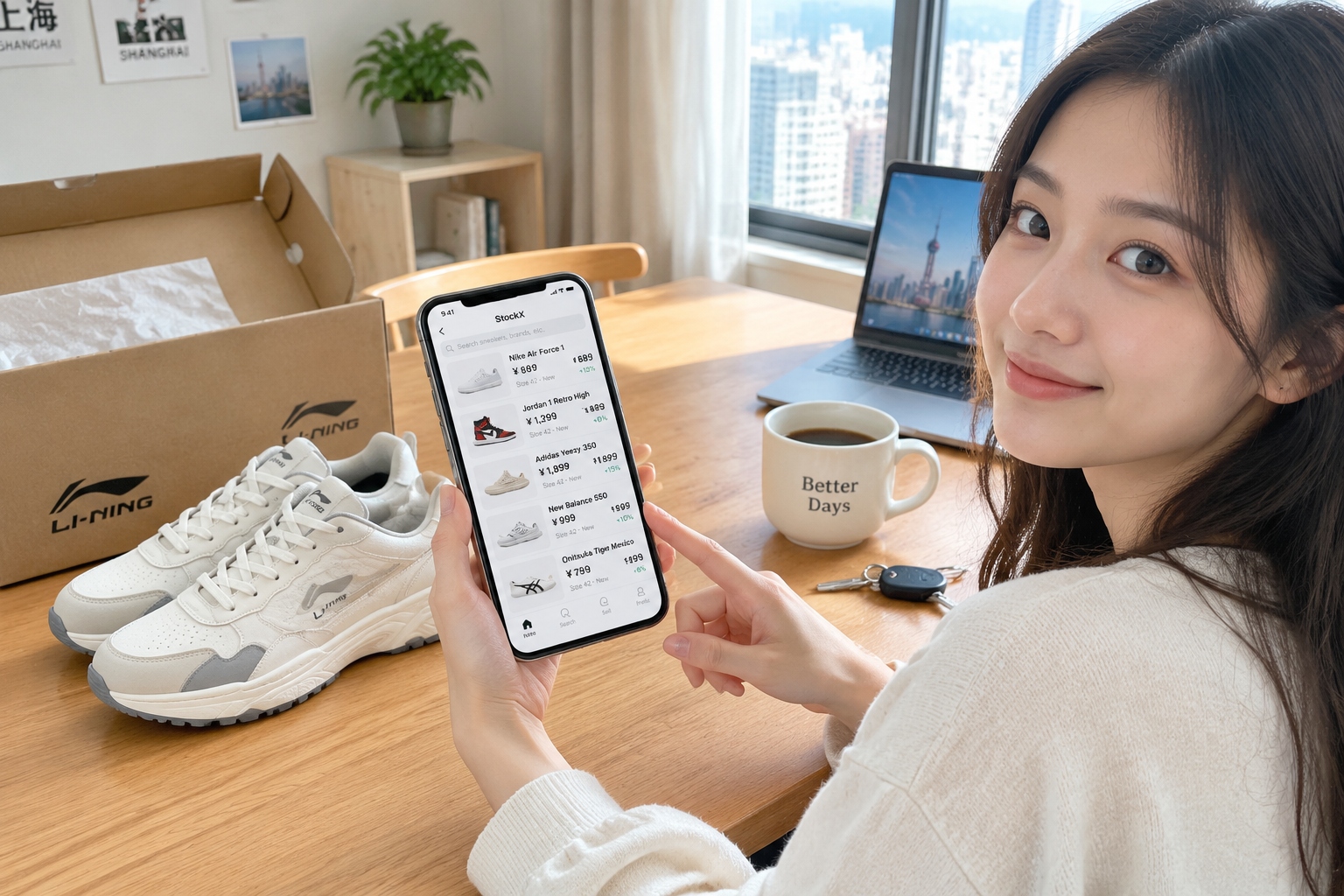
The resale layer is where the hype becomes measurable. Dewu, which built its reputation on authentication checks, claims more than 100 million registered users. Sellers there are not teenagers in bedrooms, mostly. They are organized: bot scripts for online drops, paid spots in store raffle queues, group buys coordinated in WeChat groups, university students paid a small fee to queue and collect.
Premiums vary wildly. A limited Way of Wade colorway or a Spring Festival KT edition can list at three to five times retail within a week. A standard-issue guochao sneaker usually sells at or below retail the moment the novelty fades.
And then the music slowed
By 2023 and 2024, plenty of 2021 releases were sitting on Dewu below their original price, some by a third. The regulatory mood shifted early: in April 2021, the Shanghai branch of the People’s Bank of China asked banks and payment firms to examine the financial risks of speculative sneaker trading, a signal that “cai xie” — literally frying shoes, the Chinese term for flipping them — had caught official attention. Dewu, valued at around $10 billion in 2021, has since pulled back from its expansion plans, and Chinese media have reported repeated rounds of layoffs.
The scalper queue outside the Jing’an store still forms. It is just shorter, and the markup is thinner.
Why collectors pay anyway
Chen, 31, works in advertising in Shanghai and owns about 140 pairs, roughly 60 of them domestic. He buys through a screen name and does not want his real name used, because half his collection is stored in a second bedroom his landlord thinks is empty.
“The first pair I really wanted was a Li-Ning from 2013,” he says. “I couldn’t afford it in college. I bought it in 2021 for four times retail, and now it’s worth less than I paid. I still wear it. That is not an investment, and I never pretended it was.”
His reason for staying in the game is less about the foam than about the label. “My father worked in a factory in Fujian that made shoes for other people’s logos. Now the heel of my shoe has a Chinese character on it that he can read. That’s the part I’m paying for. The resale price is somebody else’s hobby.”
That sentiment is common enough to matter commercially, and it also explains the fragility. Emotional value does not hold a price floor. When a brand’s story stops moving, the shoe becomes what it always was: a shoe.
The parts that do not fit the marketing
Two counterexamples are worth keeping in view.
In July 2021, Erke, a Fujian sportswear brand with a modest profile, donated 50 million yuan worth of supplies to Henan’s flood relief. Its social media posts went viral overnight; livestream sales reportedly passed 100 million yuan within days, and Chinese internet users coined a phrase for the behavior — “wild consumption,” buying things you do not need to express support. A year later, sales had normalized, returns had piled up, and the episode became a case study in the difference between a viral moment and a product line.
The other is price. In 2021, a joke circulated widely online: “I used to not be able to afford Nike. Now I can’t afford Li-Ning.” Domestic brands that spent a decade as the cheaper option discovered they could charge premium prices — and discovered that consumers notice. Quality complaints about glue lines and inconsistent sizing also show up regularly in reviews, more often on entry-level models than on flagship ones.
What it means beyond footwear
The global part is smaller than the domestic part, and that is the honest summary. Anta has been an official sponsor of the International Olympic Committee since 2019 and owns brands that Western consumers already buy without knowing who owns them. Li-Ning sells across Southeast Asia and parts of Europe. But in the global sneaker canon — the collabs, the auction houses, the collector forums — Chinese labels are still newcomers arguing for a seat.
What has changed is who sets the price and who writes the story. A Chinese brand can now launch a shoe at 1,299 yuan, sell it out, and not apologize for the number. Ten years ago that sentence would have been a joke in a meeting room in Jinjiang.
Three quick questions foreigners usually ask
Is it just patriotism? No, but patriotism is a genuine accelerant. Most buyers cite fit, price and looks, in that order. The nationalist spike of 2021 boosted brands that were already prepared for it, and did little for those that were not.
Are the shoes actually good? Some are, especially carbon-plate racing shoes and the mid-range flagship lines. Entry-level pairs are inconsistent, and the gap between a 399-yuan model and a 1,299-yuan model is real.
Where would I see this in real life? A mall in Chengdu on a Saturday, a Dewu listing page on someone’s phone at a coffee shop, or the line outside any Li-Ning or Anta flagship on a release morning. The line is the most honest indicator of the moment — and right now, it is a shorter line than it was three years ago.
The bottom line
A guochao sneaker is three objects at once: a product with real engineering behind it, a financial asset that mostly depreciates, and a souvenir of a decade in which Chinese companies stopped making other people’s shoes and started naming their own. Two of those three will still matter in ten years.
Start the discussion at forum.chinacomes.com