
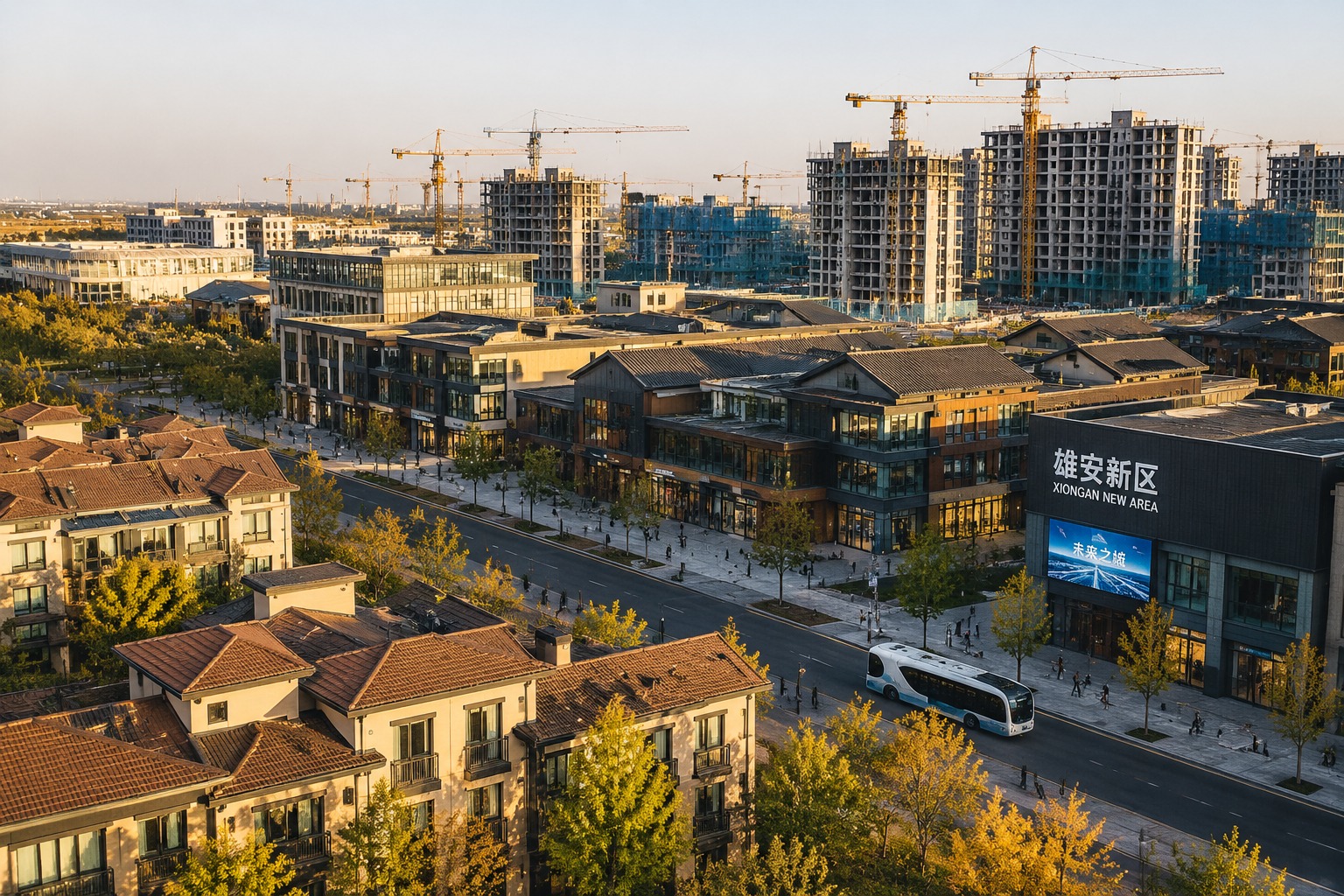

A Morning in a City That Was Built on Empty Land
At 7:40 a.m., a white self-driving bus pulls into a stop in Rongdong, the first neighborhood in Xiong’an New Area to welcome residents. Three office workers swipe their phones and step in. The bus has no steering wheel and no driver; it glides at 25 km/h past apartment blocks that were farmland when Chinese President Xi Jinping announced the city’s creation in April 2017.
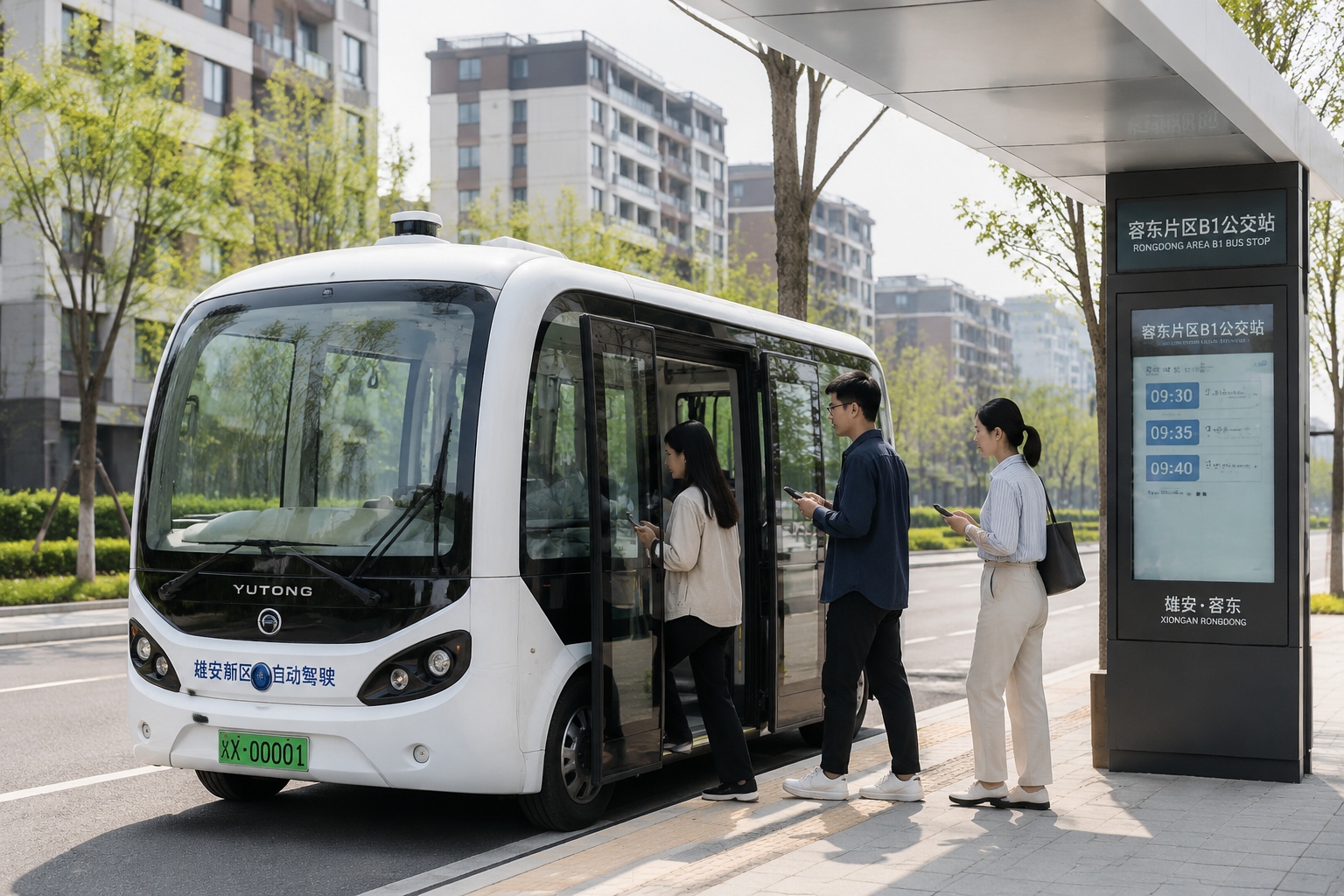
Rongdong is often the first stop for visitors. It does not look like a sci-fi city. It looks like a well-designed, mid-sized Chinese city, except that everything is new, from the underground pipes to the trees. At the curbside, digital signs show exactly when the next bus will arrive.
Why Xiong’an Was Built
Xiong’an is a national project created to ease the pressure on Beijing, which had grown congested and expensive. The plan was to build a new city roughly 100 kilometers southwest of the capital, across three rural counties in Hebei Province. Officials called it a “millennium project.” The goal is not just to move people, but to test a new model of urban development.
Seven years after the official announcement, the first phase of the city is taking shape. By the end of 2024, more than 600 billion yuan (about $84 billion) had been invested in roads, housing, transport, and utilities, according to official figures. The new city center is still quiet, but it is far from empty.
The design process was slow by Chinese standards. Planners invited international firms and conducted ecological assessments for two years before a single foundation was laid. The first group of residential buildings was completed in 2021, and roughly every few months since then, a new district opens its gates.
A High-Speed Connection to Beijing
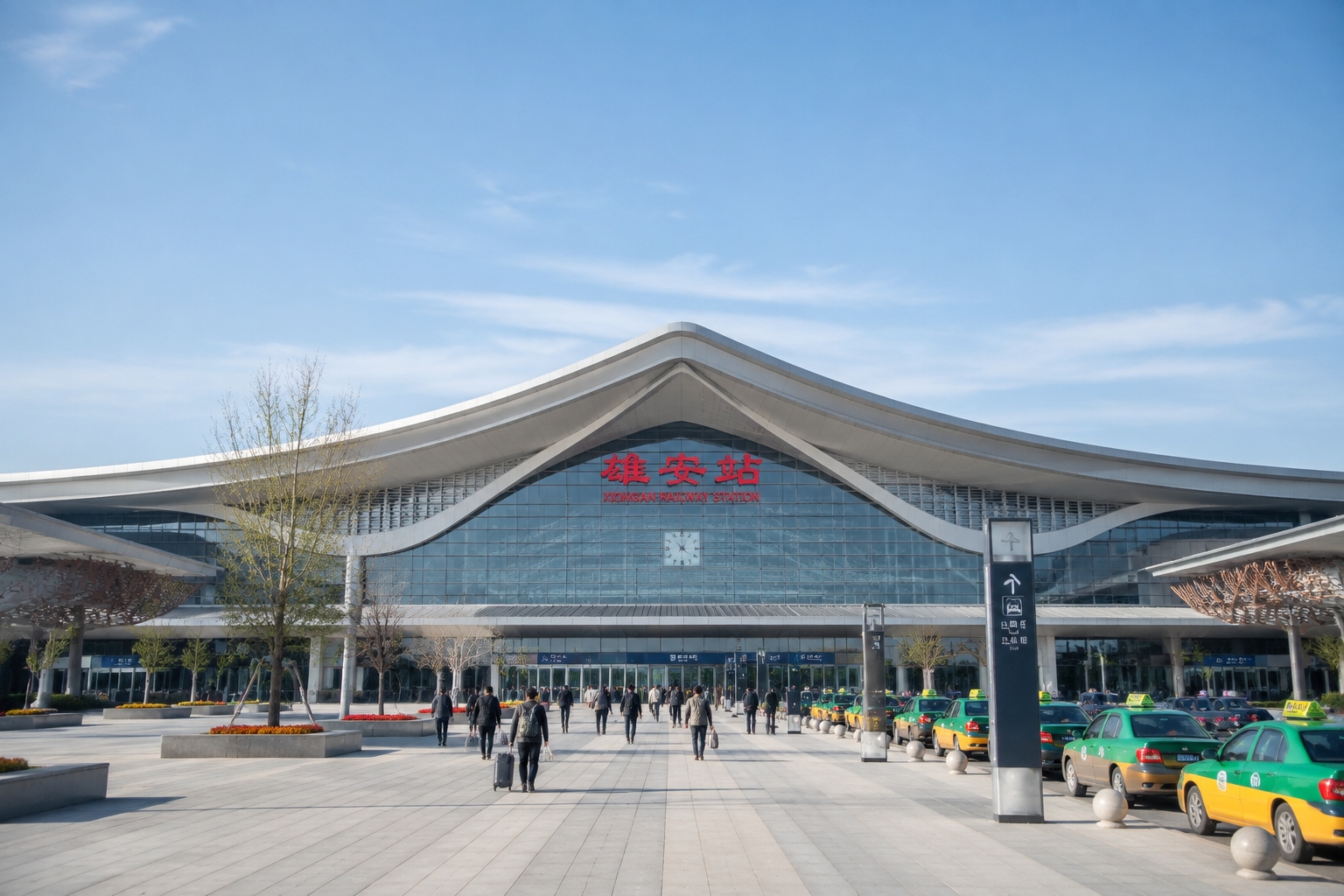
For a new city, Xiong’an has unusually good transport links. The Beijing–Xiong’an intercity railway connects the city to Beijing West Station, with the fastest trip taking just 50 minutes. The station, Xiong’an Railway Station, opened in 2020 and is one of the largest in Asia. On a weekday morning, it is busy but not packed — a sign that the city’s population is still growing.
A Smart City at Street Level
The phrase “smart city” has been used to death. Xiong’an, however, has built some tangible examples.
Self-driving buses run on designated roads. The city’s underground utility tunnels, stretching about 100 kilometers, carry cables and pipelines; small robots patrol them and send alerts when something breaks. Public bins tell garbage trucks when they are full. Streetlights dim when no one is around. Every physical asset has a digital twin in the cloud, so engineers can run the city from a screen.
The city also has a “citizen card” that links personal IDs, health records, and payment accounts. But privacy worries remain; some residents say they prefer not to use all digital services.
These technologies are not always visible, but they work quietly in the background. The city’s Urban Computing Center, a blocky building in the center of Xiong’an, processes data for traffic lights, emergency response, and even snow removal.
The Most Important Smart Move: Bring Back the Wetland
A few kilometers north of the new city lies Baiyangdian, the largest freshwater wetland in northern China. It was shrinking, polluted, and losing wildlife. Xiong’an’s plan treats the lake as the city’s green core. Over the past three years, water levels have been restored, and the water quality has improved enough that cormorants and herons return every spring.

For residents, this creates more than a pretty view. The wetland acts as a natural filter for groundwater and a flood buffer for the new city.
Who Lives Here Now?
Official plans call for 2 million residents in the near term and larger numbers later. Today, the population is a mix of construction workers, civil servants, company staff, and a growing number of “new Xiong’an people.”
During a walk through Rongdong’s commercial street, I stop at a noodle shop run by a woman in her forties. She moved from a nearby village and received a two-year rent-free period as part of a resettlement program. “Business is steady right now,” she says, “but it will pick up when more offices open.” Her story is typical: local families were the first to move in, and many now run small shops or work as cleaners and property managers.
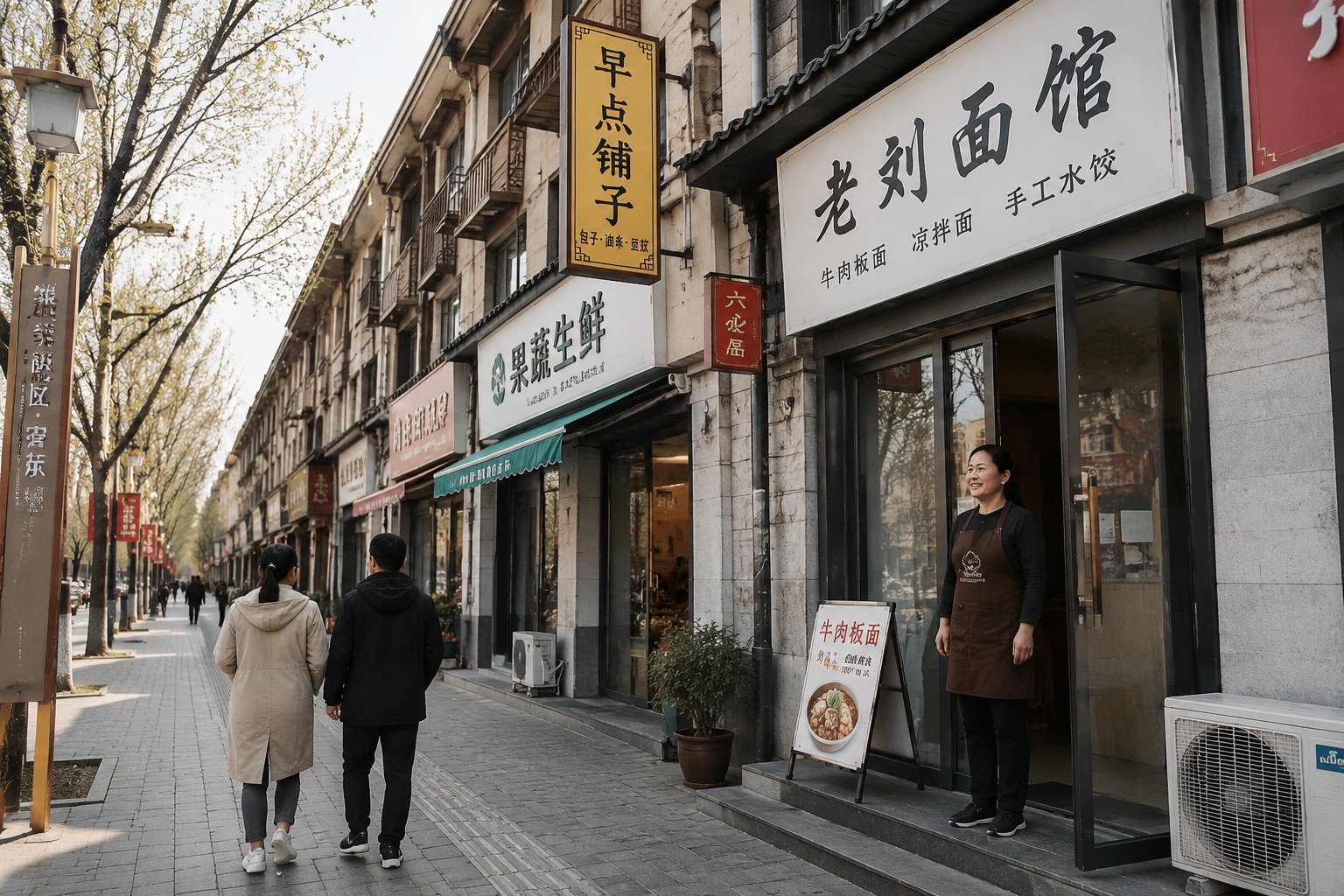
The 15-minute community circle — the civic design standard for everything from clinics to mini-markets to basketball courts — is real. In Rongdong, you are never more than a few minutes’ walk from a small park or a convenience store. But during the day, many of the public spaces are empty because a large share of the population still works outside the neighborhood.
Around the corner, a new primary school is opening. It is one of several schools built by Beijing as part of a “three schools and one hospital” package. The hospital, also from Beijing, started outpatient services in early 2024. These are tangible signs that everyday life is being built alongside the office towers.
Some residents still split their lives between Xiong’an and Beijing. A finance worker in her early thirties tells me she commutes to the capital about twice a week for meetings. The train is fast, but the door-to-door trip takes two and a half hours, and the last mile in Xiong’an remains a challenge, with few taxis after 10 p.m.
What Still Needs Time
Xiong’an has many empty buildings and quiet streets. The city’s target is ambitious: to attract an average of almost 200,000 new residents a year over the next decade. That is a heavy lift, even with strong government support.
Industry is still in its infancy. A number of state-owned companies and universities have signed deals to open campuses or offices in Xiong’an, but many are still under construction. The city wants to build a cluster of high-tech industries, including artificial intelligence and bio-manufacturing, but it will take years to produce enough jobs to support 2 million people.
There are also inconveniences that visitors notice immediately. Some roads are wide but empty; some apartment blocks look identical. Commercial services are concentrated in a few areas, and the city relies heavily on buses until the subway line opens. The local government has promised to build more affordable housing and a subway line that will run under central Xiong’an by 2027. Land for schools and hospitals is reserved, but construction schedules slip. “We are learning how to build a city while living in it,” one official told me during a visit.
The Future Is Still Being Poured
Xiong’an is not a finished city. It is a construction site for a new way of thinking about urban life. Walk past a row of brand-new schools and clinics, and you see a government that is in no hurry: the design period alone took almost four years.
On a quiet evening, as the streetlights adjust their brightness to the emptiness, you can hear the wind through the young trees. It feels less like a breakthrough and more like a patient beginning. Whether Xiong’an becomes the model its designers imagine depends on whether people choose to come — and stay.
The idea that a city can be managed with a digital twin from the ground up is unprecedented in China. If it works, it could change how Chinese planning works. If it fails, it will be remembered as an extremely expensive experiment.
Start the discussion at forum.chinacomes.com