

Your Product Might Not Be Allowed – Yet
Meet Emma, a small chocolatier from Bath, England. She is planning to sell her sea-salt truffles through Tmall Global, but before she takes a single order, she needs to check something: is chocolate on China’s positive list? That list, maintained by the Ministry of Finance and customs authorities, defines which goods can enter China through the cross-border e-commerce retail import channel. It is periodically updated; the 2025 revision lifted the number of eligible tax headings above 1,300, covering cosmetics, infant formula, snacks, wine, small household appliances and many other lines. Yet large categories remain excluded, such as fresh meat and some vitamins that have not passed China’s food safety registration. The practical reality is simple: if your product’s HS code is not on the list, you cannot use this channel at all, no matter how popular it might become.
For Emma, chocolate is fine. But even within an allowed category, her product must satisfy additional conditions. For example, any edible item needs to come from a facility registered with China’s General Administration of Customs. If the brand is new, it should check whether its EU manufacturer has the needed registration number. If not, they need to register before the first sale.
The Tax Formula: What a Chinese Customer Actually Pays
Cross-border e-commerce import tax is not the same as general trade taxes. Because the products are considered personal effects bought for personal use, the government allows a concessionary regime. Each adult buyer has a single-transaction limit of 5,000 RMB (about 700 USD) and an annual cap of 26,000 RMB. If the order value stays below both limits, customs duty is cancelled. Import VAT and consumption tax are charged at only 70% of the normal statutory rates.
Let’s use Emma’s 45 RMB box of chocolates as an example. Normal VAT on chocolate in China is 13%. With the 70% concession, the effective VAT is 9.1%. There is no export duty and typically no consumption tax for chocolate. So the customer will see the 45 RMB base, plus roughly 4 RMB in import tax, and a final price of about 49 RMB. That is a small cost. For cosmetics with a high consumption tax rate, like some perfumes, the tax portion is higher, but still clearly lower than general trade.
There is an exception: an order that contains a single item priced above 5,000 RMB but below the annual cap of 26,000 RMB is still allowed through this channel, but it is subject to full general-trade import taxes. This catches many luxury brands. A 12,000 RMB handbag, for example, will be taxed at the full VAT plus consumption tax. That reduces the price advantage, but the handbag still benefits from a much faster customs clearance and no need for a local company.
Bonded Warehouse vs Direct Shipping: A Fork in the Road
When Emma takes her chocolates to the Chinese market, she has the choice between two official operating models, known in the trade as 1210 and 9610.
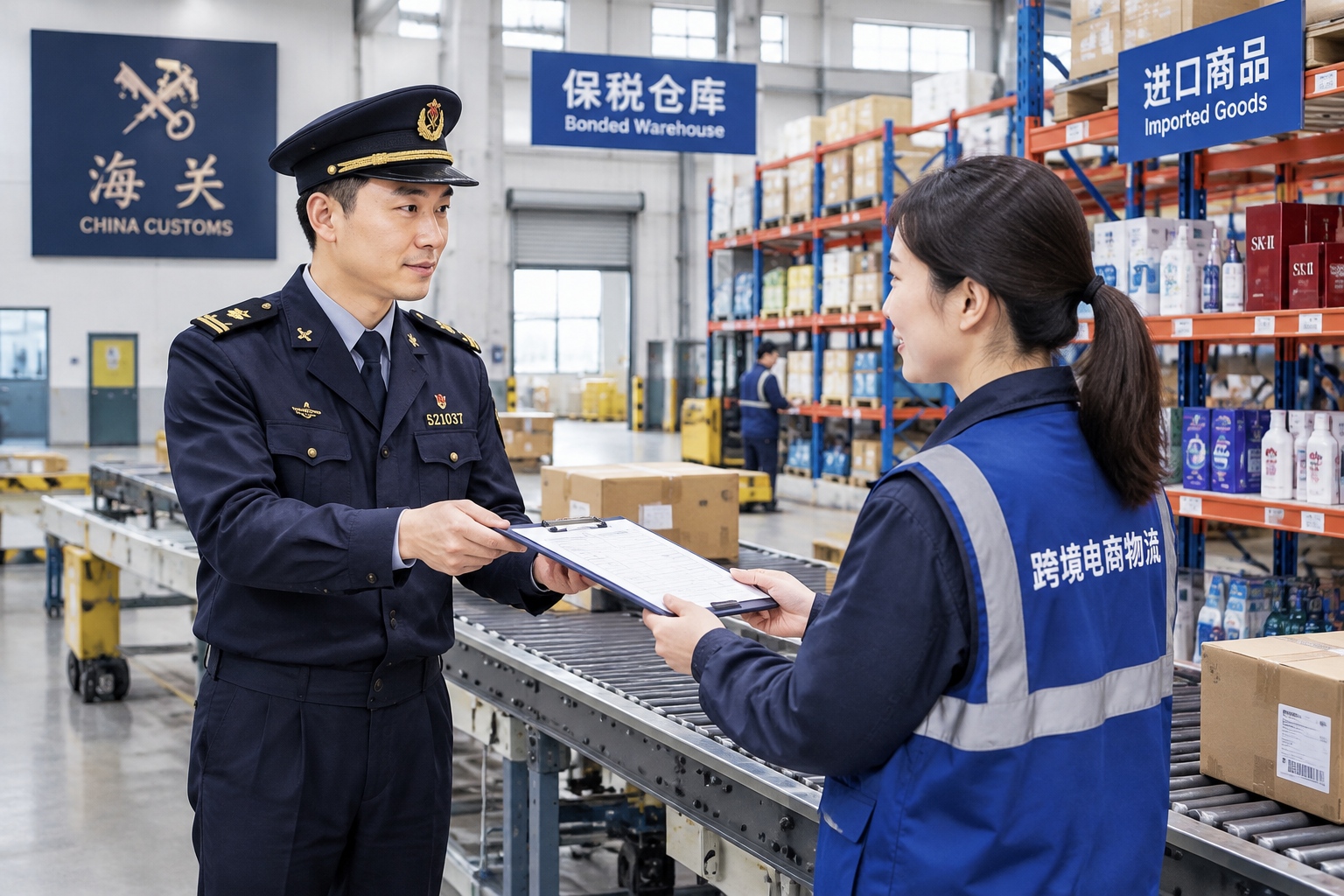
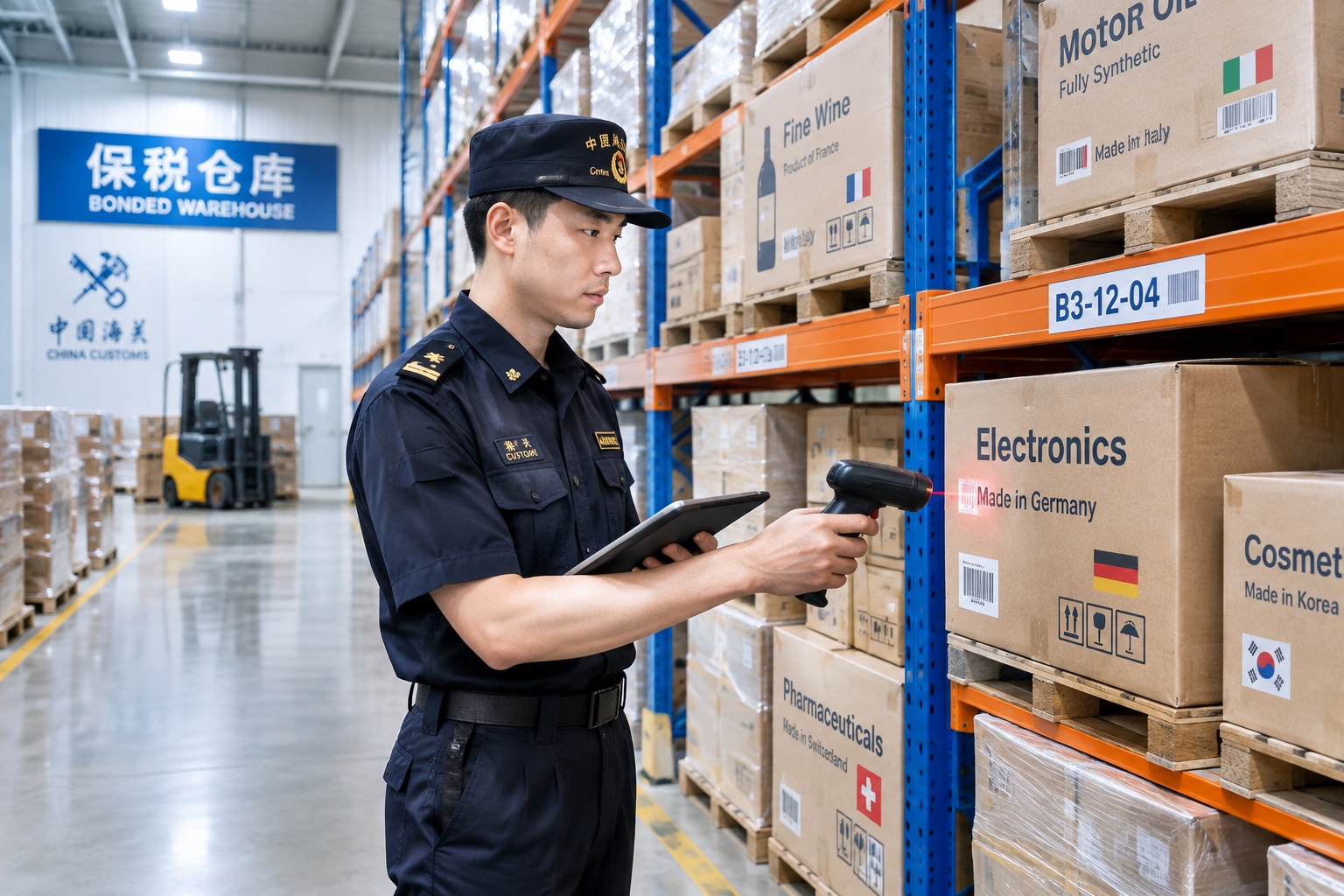
Model 1210 means bonded warehouse. Emma ships a pallet of chocolates in advance to one of China’s special customs supervision zones in a pilot city. After a customer pays, the platform sends the order, payment and logistics records to customs. Once cleared, the package moves out of the bonded warehouse and within two to four days lands at the customer’s door. This is the model used by almost every best-selling imported product on major platforms. Emma can also store many SKUs in the same warehouse and replenish them in batches.
Model 9610 is direct shipping. Chocolate stock stays in Bath. Each single customer order is packed and mailed from the UK, using international express or postal services. Customs clearance happens when the parcel arrives in China. It takes one to two weeks. This model does not require a large warehouse investment, but shipping costs are higher per unit and returns are difficult. If a customer wants to return an unwanted box, it is often not worth the return freight; platforms may simply refund her and let her keep the item, leaving you with a loss.
Choosing the right mix is not just about delivery time. It is about whether you can win customer trust. Sales of beauty products, where repeat purchases are crucial, tend to rely on bonded warehousing because a rapid delivery strengthens brand image.
Why the Cross-Border Channel Is a Strategic Doorway
For a foreign brand that has never entered China, the cross-border retail channel is the cheapest way to test the waters. Under current regulations, you do not have to set up a Chinese subsidiary. You can remain an overseas entity, sell to Chinese consumers through an approved import platform such as Tmall Global or JD Worldwide, and let the platform handle taxes, customs declaration and after-sales. The platform also ensures each buyer is properly identified.
In comparison, general trade requires a Chinese importer or a legal entity you establish in China, plus series of licences and national standards tests. A cross-border listing can be achieved in weeks, not months. Many well-known DTC brands, from Australian skincare to Japanese kitchen tools, used this entrance to determine if their product has fans in China before making bigger manufacturing and distribution commitments.
There are limitations, though. You will not see the customer’s personal data. You will not control the delivery experience. And critically, if your product has a quality defect, the Chinese platform may be the entity expected to resolve it, but ultimately they will seek compensation from your overseas entity. In 2025, authorities announced tougher liability rules, so the era of waiting for a complaint to get lost in translation is over.

Compliance and the Road Ahead in 2027
Regulation in this field is far from static. Here are the key trends any brand should follow in 2027.
The positive list continues to grow, but slowly. Medical devices are being considered, but safety reviews remain strict. Foods for special medical purposes are also under discussion. If your product belongs to an emerging category, there is a chance it will be added in the next revision, but do not build a business plan on that uncertainty.
Label requirements will tighten. Cross-border imported goods are exempt from the standard Chinese-language label, but several platforms now impose an electronic label that shows the original ingredient list, warnings, storage conditions and a translated consumer notice. If your product is consumed or applied on skin, expect the platform to ask for origin certificates and ingredient concentration data.
Customs officials are using artificial intelligence to detect illegally purchased high-value items. All transactions are compared against an individual’s annual cap in real time. Brands should remind overseas distributors not to use a single consumer identity for stock purchases, because that will be interpreted as commercial import and may result in penalties.
Finally, sustainability is becoming a second currency. Chinese consumers increasingly expect a product story to include the environmental impact of shipping. Platforms label green overseas brands only if you can show recyclable packaging and carbon-neutral delivery. A mid-2026 industry survey found that 68% of consumers in top-tier cities said they prefer such labels.
All of this adds up to one message: cross-border e-commerce in China is no longer a wild west. It is a legitimately structured market that rewards brands willing to invest in compliance and consumer trust. If you can adapt to the rules, China’s platform economy offers a unique shortcut to a quarter of the world’s online shoppers.
Start the discussion at forum.chinacomes.com