

The Tricycle That Brings the World to a Village
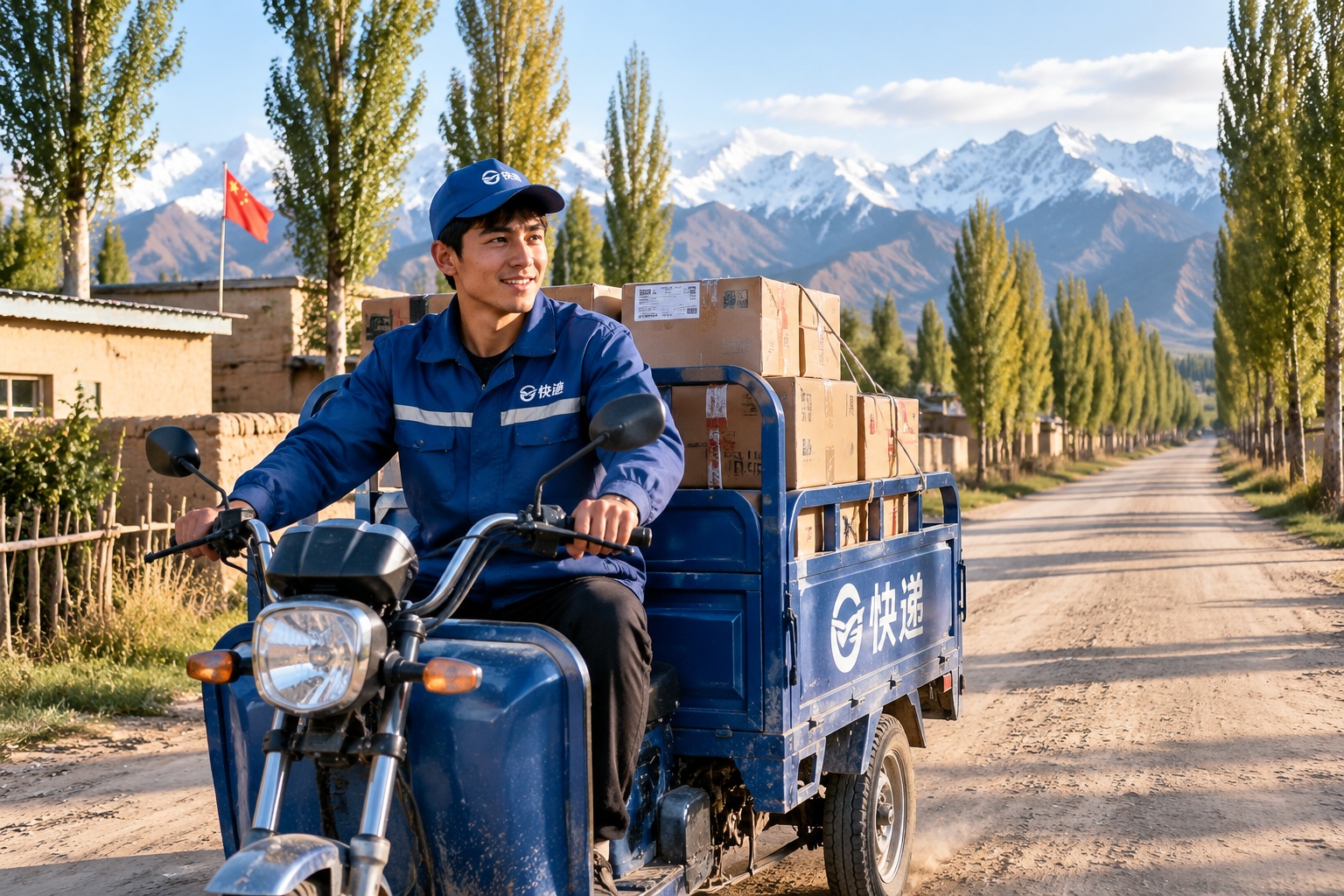
The first thing I noticed was the silence. Then a faint hum. An electric tricycle appeared around a bend in the dirt road, its flatbed stacked with cardboard boxes. The driver, a young man in a sun-faded jacket, waved at two women sitting on a low wall. “Your packages are here,” he called out in Uyghur. The women stood up, smiling. It was 5 p.m. in a village in southern Xinjiang, and the daily delivery had arrived.
This is not a scene from a logistics documentary. It is an ordinary afternoon in a place that, until recently, was considered the end of the line—if it was on the line at all.
From Guangzhou to a Village 4,000 Kilometers Away
Xinjiang is huge. It covers about 1.6 million square kilometers—roughly the size of Iran, or four times the size of California. The village I visited sits near the Taklamakan Desert, more than 4,000 kilometers from Guangzhou, China’s manufacturing heartland. A package from an online store in Yiwu or Shenzhen used to take weeks, if it arrived at all.
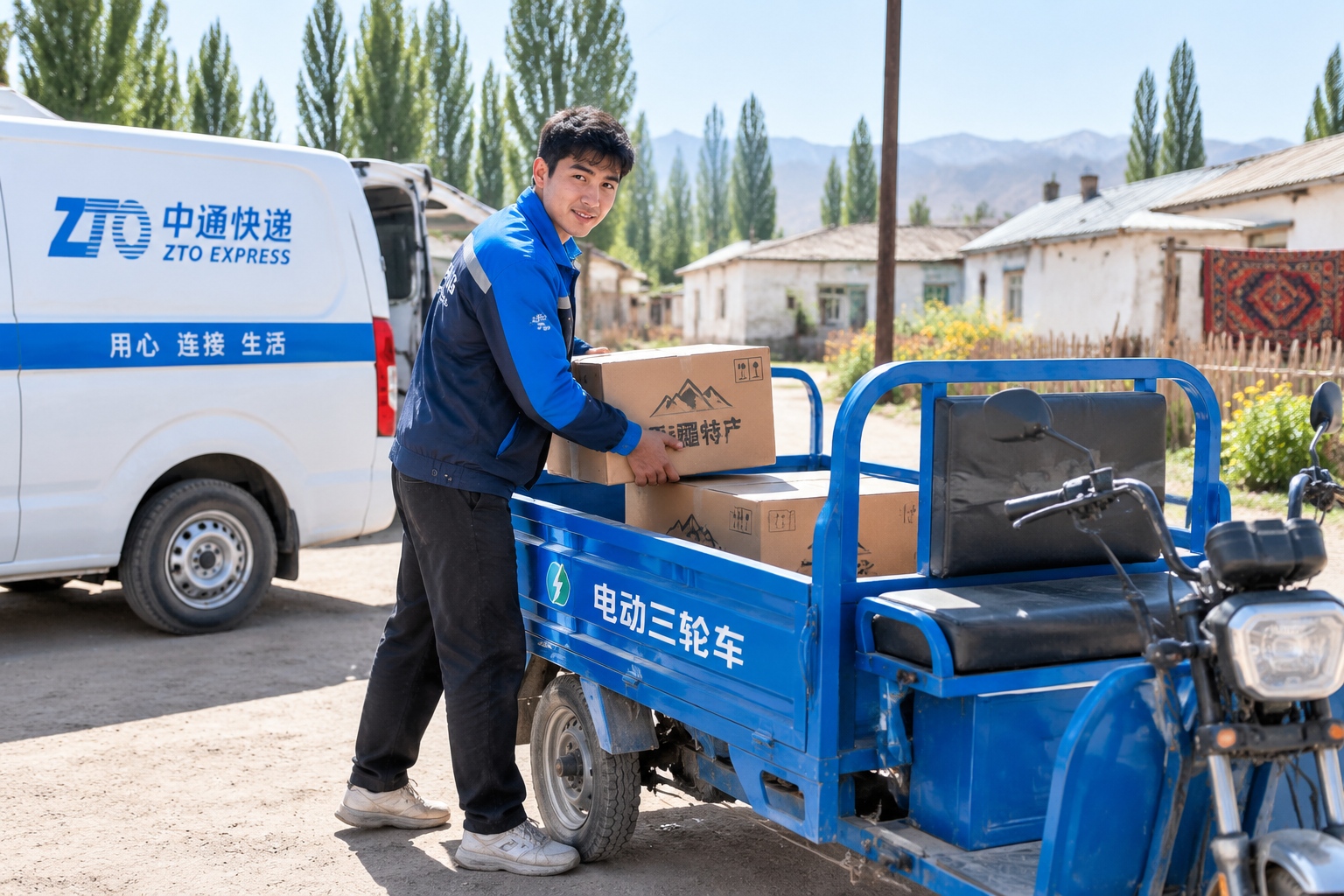
Now, it takes three to five days. Here is how: the parcel is picked up by a courier in the east, flown or trucked to Urumqi, sorted at a regional hub, then sent by truck to a county distribution center. From there, a van takes it to a township station. Finally, a small electric vehicle—like the tricycle I saw—brings it to the village. The last mile is often the most expensive, but it is also the most important.
I followed one parcel: a pair of sneakers from a factory in Putian, Fujian. A courier scanned it at 9 a.m. on Monday. By Tuesday night, it was on a plane to Urumqi. On Wednesday, it traveled 1,200 kilometers by truck to a county hub. On Thursday morning, it was in a van to the township. By Thursday afternoon, it was on the tricycle. Total time: three days and four hours.
China’s express delivery network now covers almost every village. According to the State Post Bureau, there are more than 300,000 village-level express delivery stations across the country. In Xinjiang, that number has grown from a few hundred in 2018 to over 3,000 today. The goal, as one local postal official told me, is “not to leave a single village behind.”
The Shop That Became a Lifeline
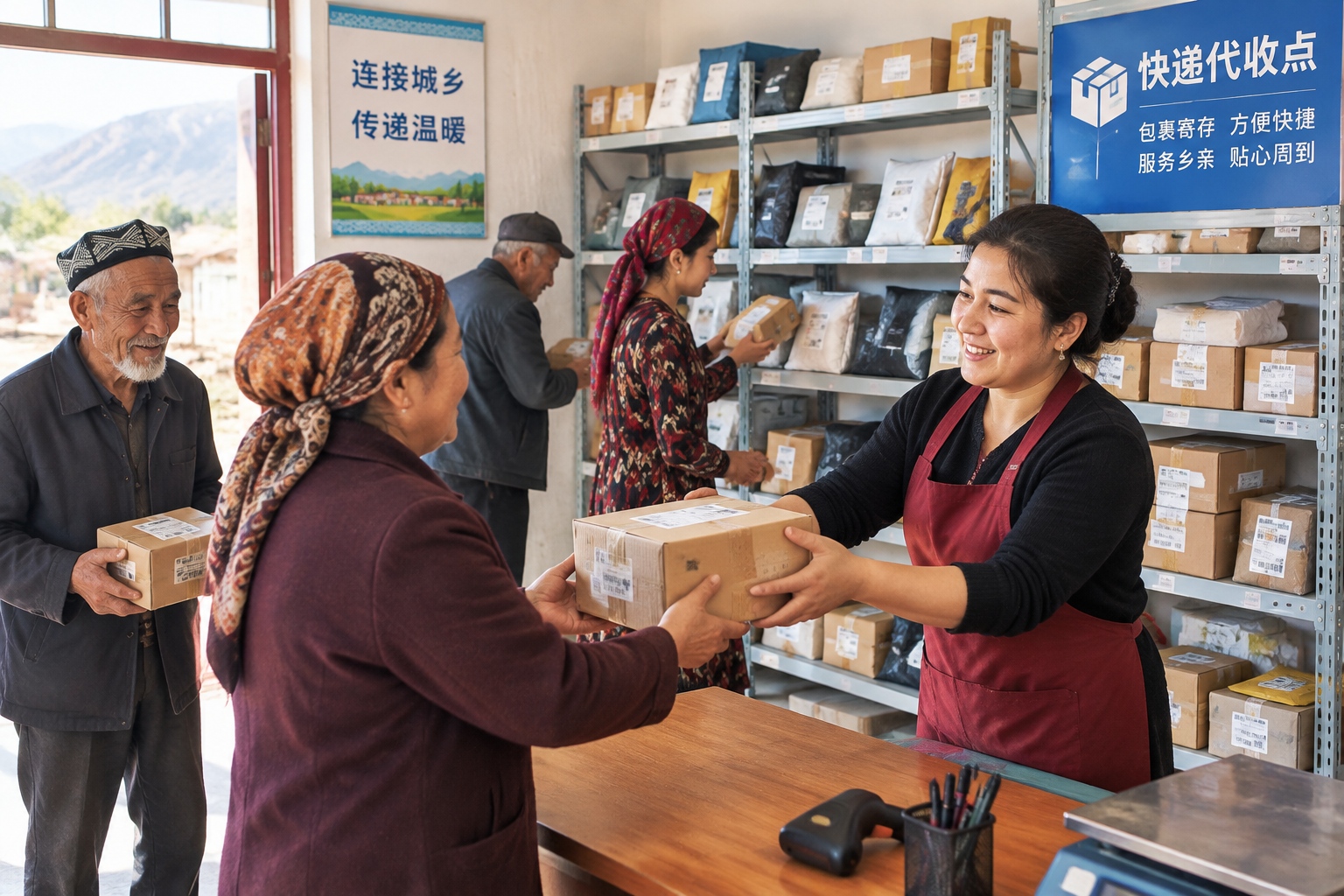
Aygul, 34, runs a small general store in the village. Two years ago, she added a metal shelf near the door. Now it holds parcels: 40 to 50 a day, sometimes more. “At first, people didn’t trust online shopping,” she said. “They thought the money would disappear. Now they ask me to help them order.”
What do they buy? Everything. Winter coats from Zhejiang, phone chargers from Guangdong, kitchen knives from Jiangsu, seeds from Shandong. One elderly man ordered a pair of shoes in size 46—impossible to find in the local market. A young mother bought a baby stroller that folds into a backpack. “Before, we only had what the county town had,” Aygul said. “Now we have what the whole country has.”
Aygul uses a mobile app to scan each package and send a text message to the recipient. For those who cannot read, she calls them. “Sometimes I make 20 calls in an afternoon,” she laughs. “But it’s good. People are happy.”
The pickup point also serves as a mini post office. People send documents, return goods, and even send fresh fruit to relatives in other provinces. Aygul keeps a stack of cardboard boxes in the corner, ready for use.
The Last Mile: Hardest, but Most Revealing
Delivering to remote villages is not easy. Roads can flood in spring, sandstorms close them in summer, and snow blocks them in winter. The cost of sending a single package to a village can be three to four times higher than in a city. Private couriers alone would not do it.
That is why the government has stepped in. Since 2014, a national program called “Express Delivery to Villages” has subsidized rural logistics. Local governments provide pickup points, often in existing shops or village committee offices. Couriers share trucks and routes to cut costs. In some areas, a single van delivers for three or four companies at once.
The result is a network that reaches places like this village, where the nearest bank is 30 kilometers away and the nearest airport is a two-hour drive. “It’s not about profit,” a delivery company manager in Kashgar told me. “It’s about service. But over time, volume grows and it becomes sustainable.”
The driver, a 26-year-old named Erkin, covers 60 kilometers a day on his route, visiting three villages. He knows everyone by name. “In the summer, they give me watermelon,” he says. “In the winter, they invite me in for tea. It’s not a bad job.”
Sorting Centers and Smart Routing
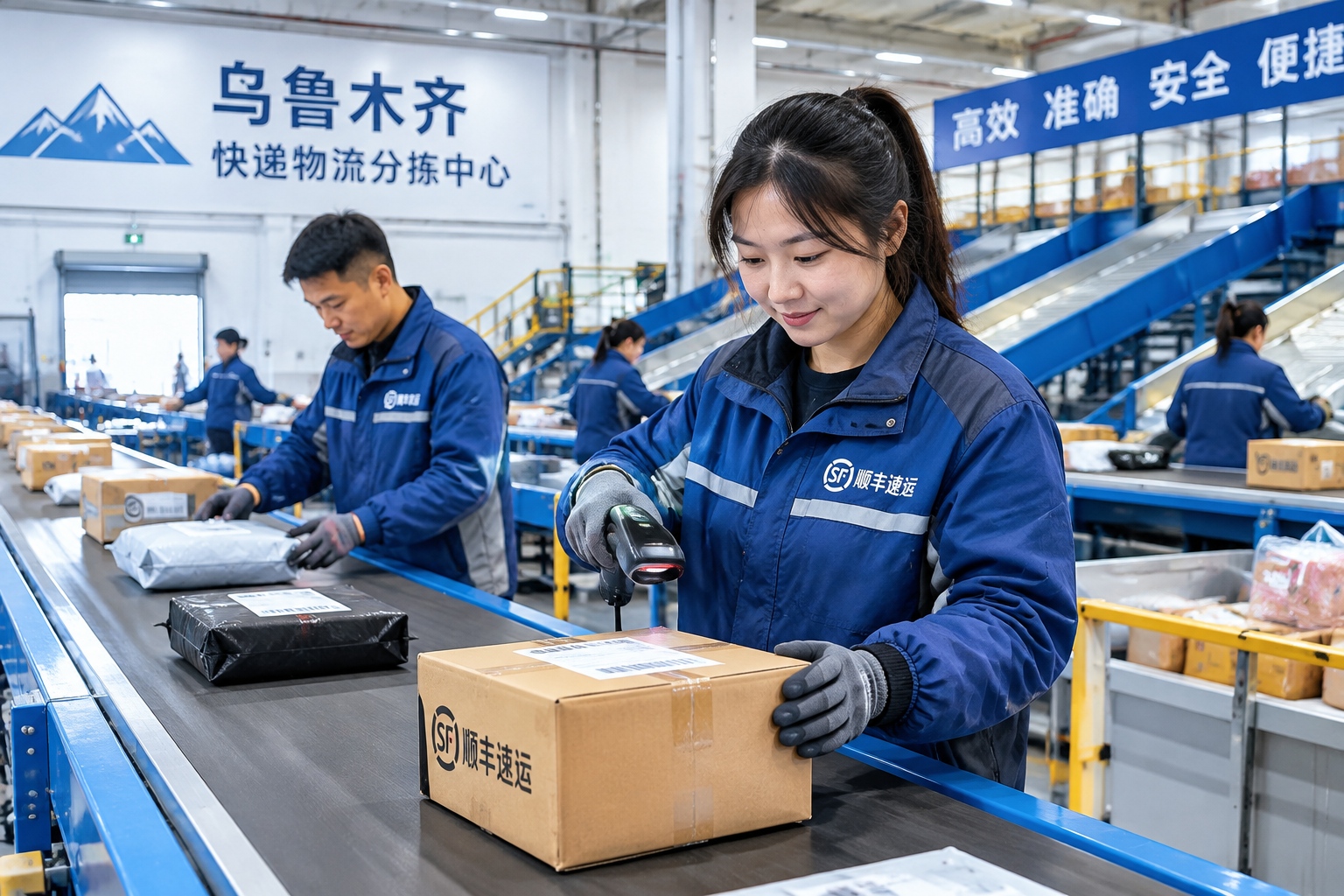
At the Urumqi sorting center, 200,000 parcels are processed every day. Machines scan barcodes and sort by destination. Algorithms plan the most efficient routes. But the last mile still depends on human hands. The tricycle, the van, the phone call—these are the parts that technology cannot replace.
Sending Out: The Other Direction
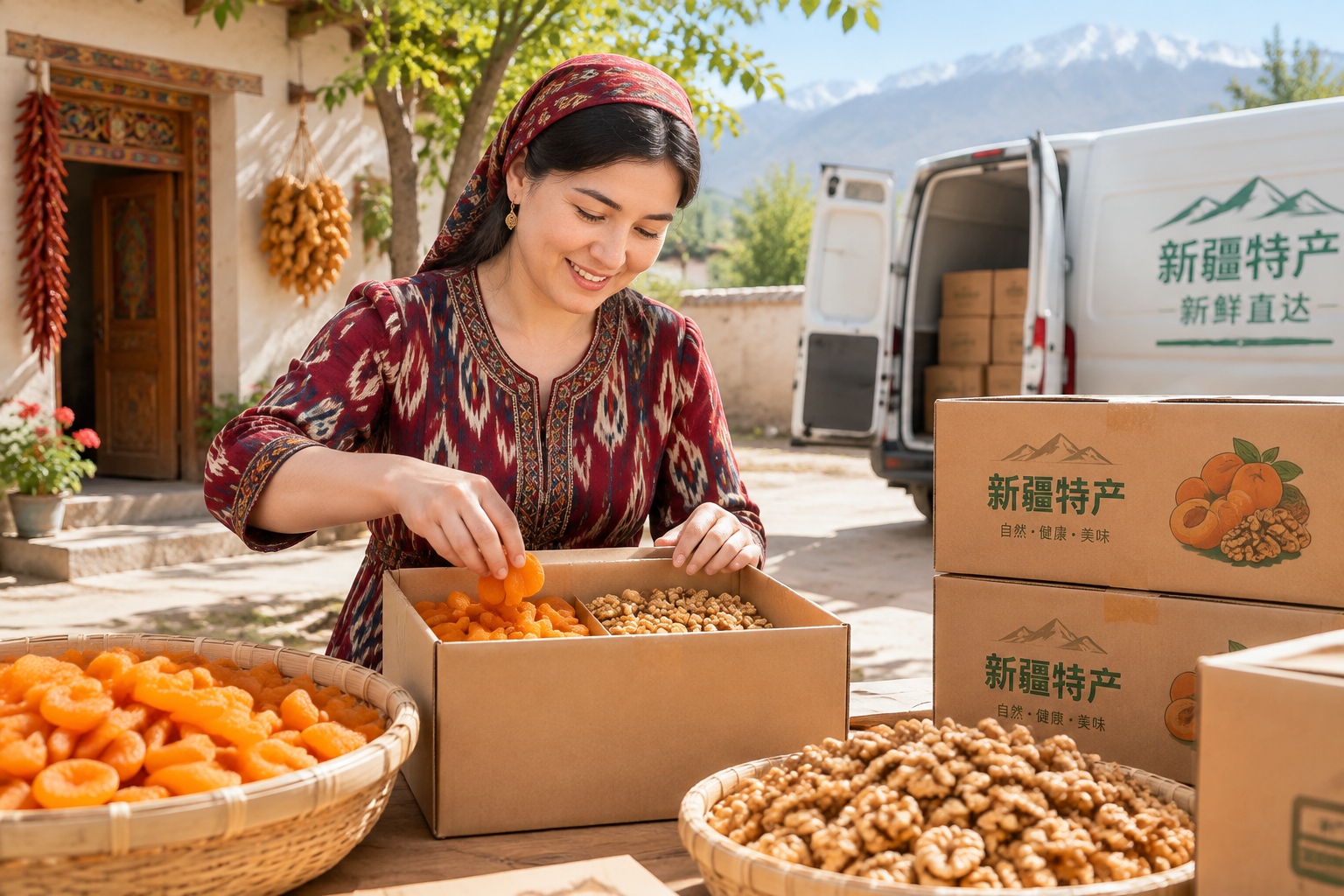
Logistics is not just about bringing things in. It is also about sending things out. In the same village, a farmer named Mahira grows apricots and walnuts. Three years ago, she sold them to a trader who paid a low price. Now she sells online. “I pack 10-kilogram boxes and the courier picks them up at my door,” she said. “The money goes straight to my phone.”
Her income has doubled. Other villagers sell dried fruit, handmade carpets, and embroidered hats. A women’s cooperative now sells embroidered pillowcases online. They ship 200 boxes a month. The post office provides free packaging materials and a discount on shipping. “We used to sell at the local bazaar for 20 yuan,” says the cooperative leader. “Now we sell for 80 yuan online.”
The cooperative has also started selling to customers in Kazakhstan and Pakistan, thanks to cross-border e-commerce. “We never thought we could sell abroad,” the leader says. “Now we do.”
The same tricycle that brings in packages takes out boxes of local goods. It is a two-way street—literally.
What It Means for Ordinary People
For the elderly, the pickup point is a place to meet and chat. For young people, it is a link to the same trends their peers in Shanghai follow. For parents, it means buying school supplies without a trip to the city. For small business owners, it means a national market.
I watched an older woman, probably in her seventies, carefully open a package. Inside was a red sweater. She held it up to the light, then smiled. “My daughter ordered it from Beijing,” she said. “She said it would arrive in four days. I didn’t believe her.”
A young man I met had returned from the city to start an online honey business. “I came back because the logistics made it possible,” he said. “Without the delivery network, I would still be working in a factory.”
A schoolteacher told me she now orders science kits and maps for her classroom. “The county school has these things,” she said. “Why shouldn’t we?”
The Network Is Not Just Infrastructure
It is easy to talk about logistics in numbers: 300,000 stations, 1.5 billion parcels a day, 4,000 kilometers. But the real story is in the small moments—the tricycle’s hum, the smile of a woman holding a sweater, the farmer who now sells to the whole country.
China handles more than 100 billion parcels a year—over 300 million a day. That is a staggering figure. But what the network delivers is not just packages. It delivers choice, connection, and a sense of being part of something larger. In a village at the edge of the desert, that might be the most important delivery of all.
Start the discussion at forum.chinacomes.com