
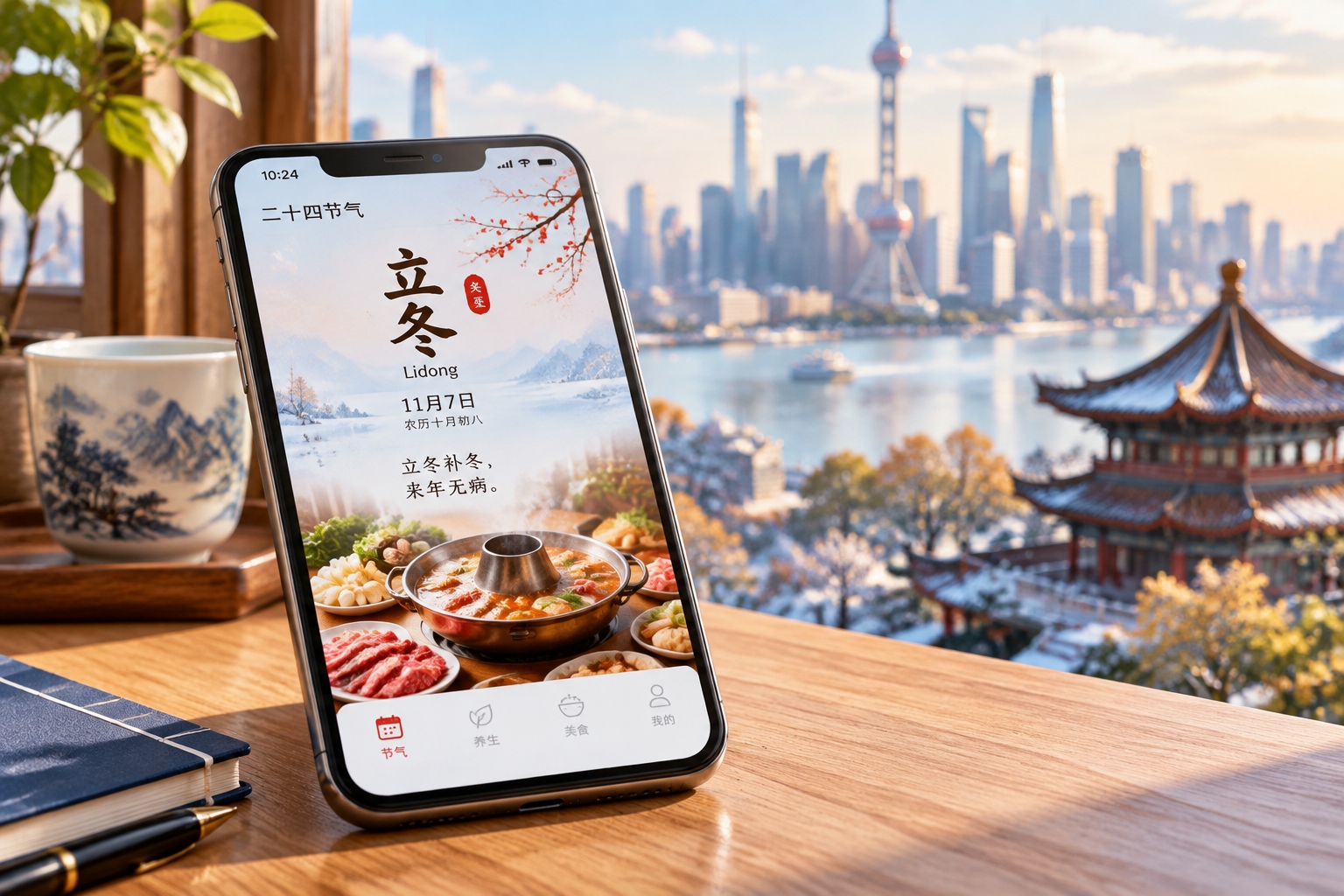

A Push Notification from Ancient China
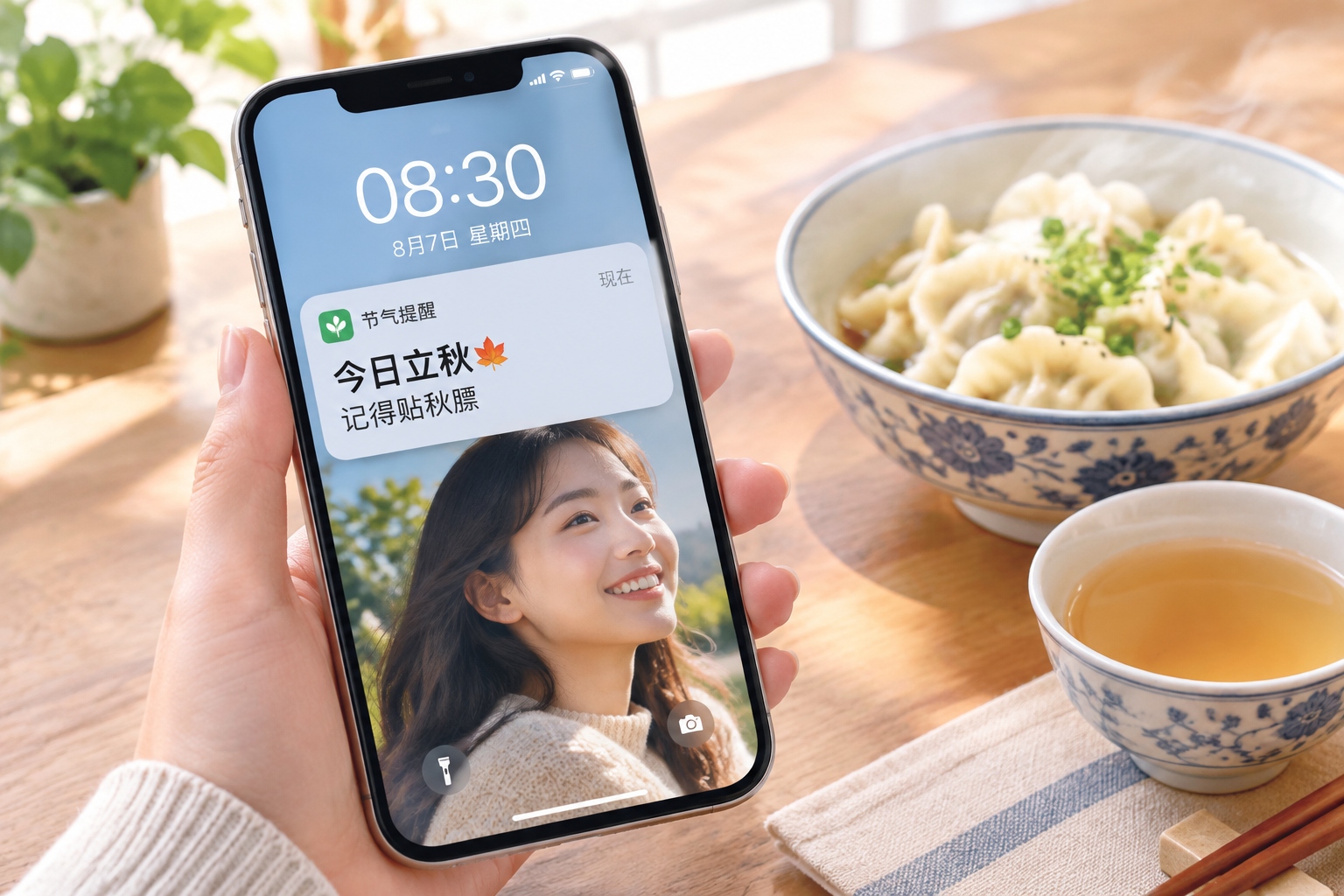
On a late August morning in Beijing, my phone screen lit up with a reminder: “Today is the End of Heat (Chushu). The hottest days are behind us. Have some duck or pear to stay comfortable.” It’s a message sent by a popular weather app, but it feels like a gentle nod from an ancient calendar.
If you live in China, you’ve probably seen these notifications too. They mark the 24 solar terms (节气), a system developed over 2,000 years ago to guide farmers through the seasons. Today, they have become a quiet digital companion for millions of city dwellers.
What Exactly Are the 24 Solar Terms?
Put simply, the 24 solar terms are a yearly calendar based on the sun’s position. Each term marks a specific point in the Earth’s orbit, roughly every 15 degrees of longitude. That’s why they fall on fixed dates each year – for example, the winter solstice is around December 22, and the spring equinox around March 20.
Unlike the Western calendar, which is tied to the moon in its folk versions (like the lunar calendar used for traditional festivals), the solar terms are purely solar. They divide the year into 24 segments, each with a name that describes a change in nature: Insects Awaken, Grain Rain, Beginning of Autumn, and so on.
These names were written for farmers. They told people when to plant, when to water, when to harvest. But they also captured a feeling – the first frost, the first warm breeze, the longest night of the year. For city residents today, they offer a reminder that nature still moves at its own pace, even when our concrete towers seem to ignore it.

Why Do Smartphones Care About Old Farmers’ Wisdom?
At first glance, a software engineer in Shenzhen might not need to know that “Grain in Ear” arrives in early June. But Chinese smartphone users do care, and app developers know it. Most weather apps, calendar apps, and even lifestyle platforms include solar term data. They send push notifications with a little food tip, a weather warning, or a historical anecdote.
Take “Winter Solstice” (Dongzhi), for example. In northern China, people eat dumplings that day. In the south, they might eat tangyuan, sweet rice balls. An app might say: “Eat dumplings to stay warm.” People laugh, but they also follow the advice. In a way, it’s a shared cultural habit that links the ancient world with the smartphone age.
Apps like Moji Weather (墨迹天气) or China Weather, along with built-in calendar apps on Xiaomi, Huawei, and other phones, have made solar terms an effortless part of daily life. They also tie into social media. Every solar term, food delivery platforms like Meituan and Ele.me roll out themed discounts. On “Lidong” (Beginning of Winter), thousands of users post photos of hotpot. On “Jingzhe” (Insects Awaken), people share tips about waking up early. The notifications aren’t just information – they’re conversation starters.

A Day in the Life of a Solar Term
Let’s follow a typical office worker in Shanghai. On a random day in early September, she checks her phone as usual. A notification from her weather app says: “Today is White Dew (Bailu). The nights get cooler, and dew appears on grass in the morning. In traditional Chinese medicine, it’s time to nourish your lungs – try some pear-based desserts.”
She scrolls a bit, then orders a pear soup from a nearby dessert shop. It’s a small gesture, but it makes her feel connected to the seasons – even if she lives in a city where the seasons are just air conditioning and heating.
This is not unique to old people. In fact, younger generations are often the most enthusiastic. On Xiaohongshu (Little Red Book), a popular lifestyle platform, hashtags like #节气分享 have billions of views. Users share artistic posters, seasonal recipes, and outfit ideas, all inspired by the solar term of the day. The ancient calendar has become an aesthetic and a mood.
More Than Just Food
The solar terms aren’t only about eating. They also shape how people plan their lives. Gardeners use them to decide when to prune. Students learn them in school. Photographers wait for the perfect light on days like “Clear and Bright” (Qingming) to catch spring flowers. Some parents even use them to pick auspicious dates for weddings or moving houses, carrying on an old tradition.
The health aspect is huge, too. In traditional Chinese medicine, each term is linked to a different organ or emotional state. Apps and wellness bloggers offer “seasonal health tips” that sound reasonable: stay calm in summer heat, keep warm in winter, etc. Whether people truly believe it or just enjoy the routine, it adds a little rhythm to urban life.
For many, observing solar terms is a way to reconnect with nature. In a country with some of the world’s biggest cities, these tiny notifications act as a window to the natural world. They say: the swallows are leaving, the peaches are ripe, the frost is coming. It’s surprising how much that can center a person on a busy day.
How to Experience the Solar Terms Like a Local
Follow the Food Calendar
The most accessible entry point is food. Each solar term has a traditional dish or fruit. In spring, there’s spring pancakes for “Beginning of Spring” (Lichun); in summer, cold noodles for “Summer Solstice” (Xiazhi); in autumn, pears and spinach for “End of Heat” (Chushu); and in winter, hotpot or glutinous rice. If you’re visiting China, just search for “today’s solar term food” and you’ll join in.
Visit a Park or Farm
Even in a huge city, you can feel the term’s change. On “Guyu” (Grain Rain), Beijing’s parks often host planting events. In “Mangzhong” (Grain in Ear), rural areas near Shanghai hold dragon boat races. And of course, “Qingming” (Clear and Bright) is both a solar term and a tomb-sweeping holiday when millions of people travel to honor ancestors.
Use a Solar Term App
Several apps are dedicated to solar terms. They send daily tips, explain the history, and even include lunar calendar dates. If you want to understand Chinese time, install one and watch your phone light up with ancient wisdom.
The Wisdom Behind the Notifications
What makes the solar terms enduring is not just their practical use, but the way they teach us to notice time. Cities can feel timeless – winter and summer look the same inside a climate-controlled building. But when a solar term notification arrives, it gently reminds you: the world outside is changing. The leaves are turning, the nights are lengthening, a certain fish is in season.
This is not nostalgia. It’s a smarter relationship with time. In a society that often moves too fast, these ancient markers give people a reason to pause, eat a special meal, and share it with friends. It’s a kind of collective mindfulness, delivered through the device we already use every day.
Conclusion
The 24 solar terms are not a dusty artifact. They are alive in the notifications on your phone, the flavors on your tongue, and the memories of a thousand seasons. Whether you’re a local or a visitor, next time your phone buzzes with a solar term, stop for a second and see what it suggests. You might learn something about China – and about the time we all share.
Start the discussion at forum.chinacomes.com