

The Man Behind the Nickname
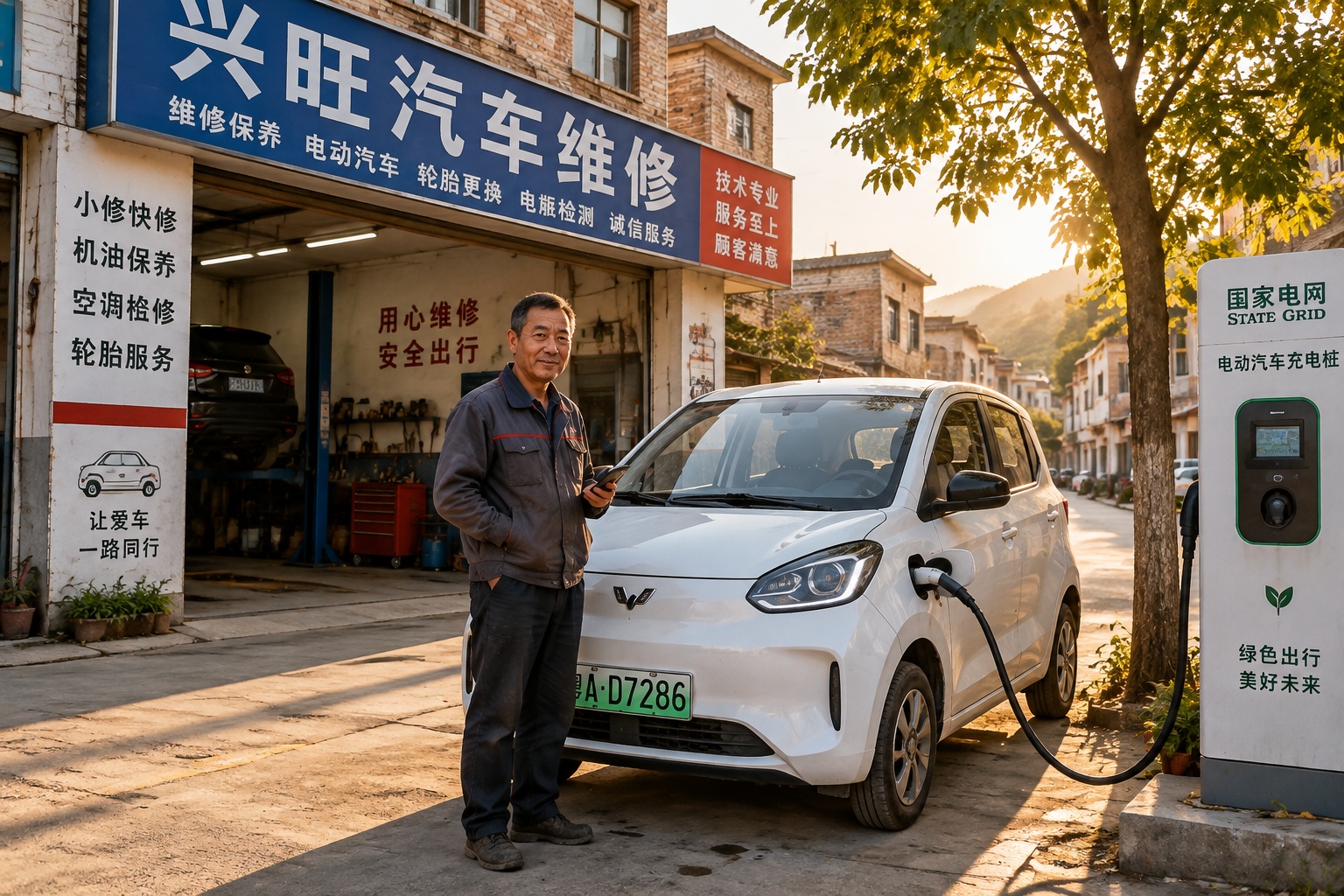
I first met Lao Zhou on a warm afternoon in Anji, a town tucked among bamboo-covered hills in Zhejiang province. He was standing outside his auto repair shop, holding a phone in one hand and a cup of tea in the other, watching a small white electric vehicle quietly charge at a curb-side pile. “See this?” he said, pointing at the blinking green light. “This is the future, but it took me two years to convince my neighbors.”
Lao Zhou, 52, used to repair diesel trucks. Three years ago, he bought his first NEV — an acronym for new energy vehicle, the term China uses for electric and plug-in hybrid cars. He liked it so much that he started recommending it to everyone he knew. Soon, villagers began calling him “diàn chē bù dào zhě,” the EV evangelist. He doesn’t mind the nickname. “I’m not preaching to save souls,” he laughs. “I just want people to stop burning gasoline for a two-kilometer trip to the market.”
Why Neighbors Thought He Was Crazy
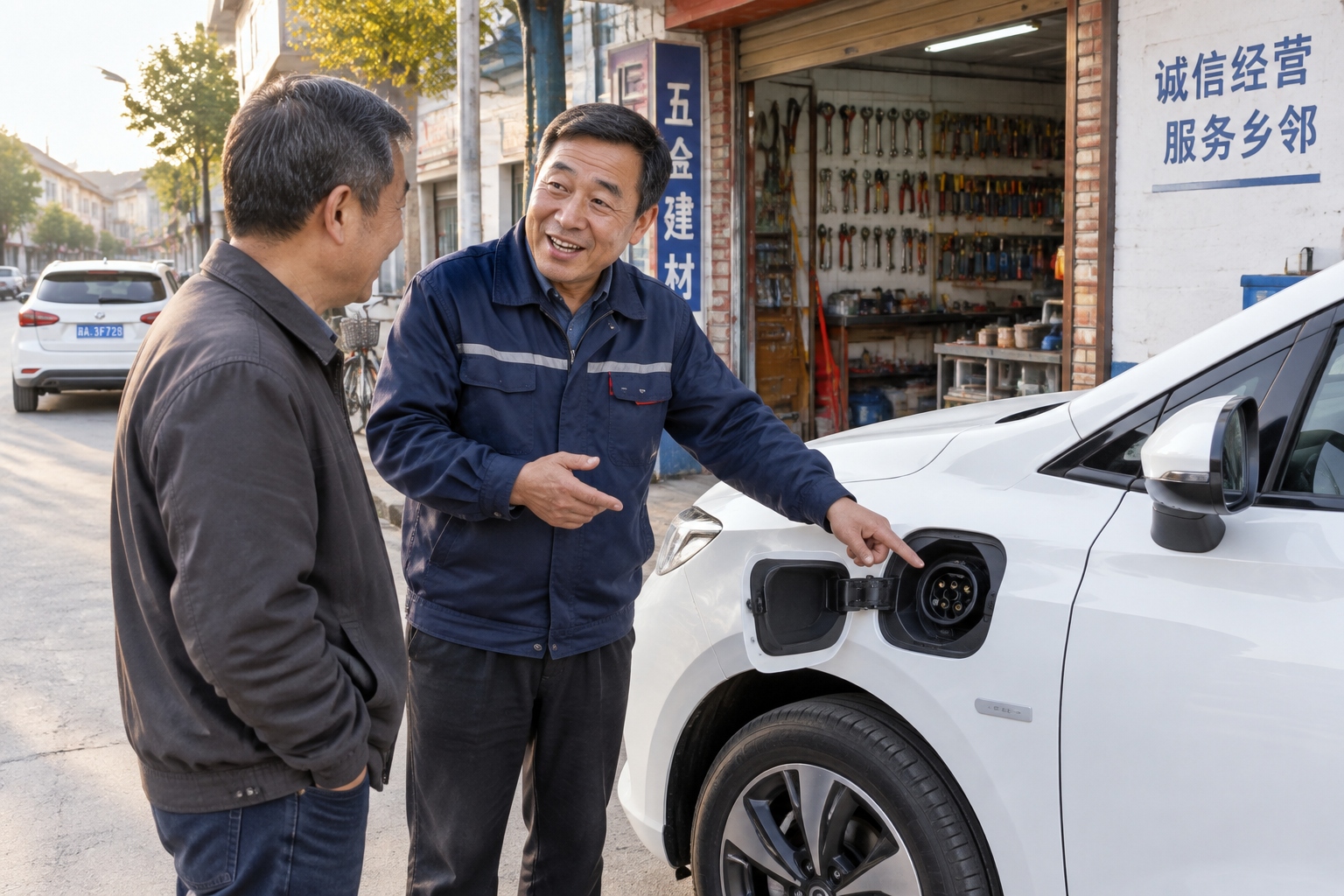
In 2021, Lao Zhou’s pitch wasn’t an easy sell. His town, like many in rural China, had almost no public chargers. People worried about running out of battery on a mountain road. Others thought electric cars were flimsy or too expensive. “They’d ask me: What if I get stuck with an empty battery at 2 a.m.?” he recalls. “I couldn’t answer that then, because the charging network really wasn’t there.”
He also had to battle a deeper skepticism. For many older villagers, a car is not just a tool; it’s a statement of stability. They wanted the familiar roaring engine of a Volkswagen or a Toyota. An electric car, with its silent motor and touchscreen dashboard, felt like an unfamiliar toy.
So Lao Zhou started doing math out loud. “I told them, every kilometer costs less than 0.1 yuan in electricity. A gasoline car costs at least 0.5 yuan. That’s a difference of 400 yuan a month if you drive 100 kilometers a day.” He also reminded them that NEVs have no oil filters, no spark plugs, and fewer parts to break. “No one argues with numbers,” he says.
Winning Over a Skeptic: The Corner Store Owner
The breakthrough came with Wang Qiang, a man who ran a small convenience store on the main street. Wang drove a beat-up gasoline van to restock shelves. He grumbled every week about fuel costs. Lao Zhou invited him for a test drive in his own car. “We drove 60 kilometers on mountain roads,” Wang told me. “When we came back, I still had 80% battery left. I was shocked.”
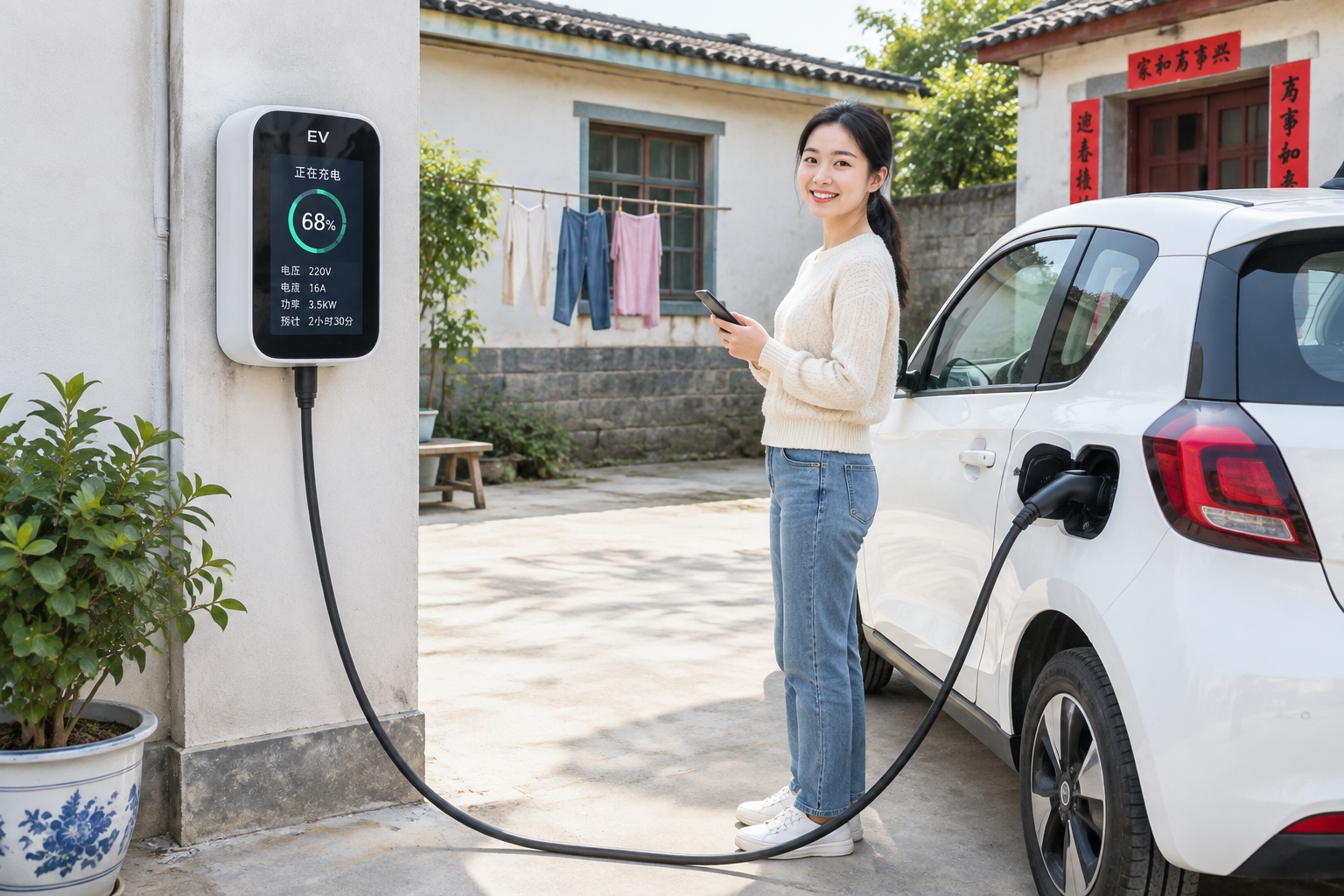
Lao Zhou helped Wang install a home charger in his concrete courtyard. Now Wang charges overnight and runs his store errands all day. “I save about 1,300 yuan a month,” he said. “That’s enough to pay for my daughter’s monthly piano lessons.” Within six months, three other shop owners on the street had bought EVs.
The Smart Charging Network Behind the Story
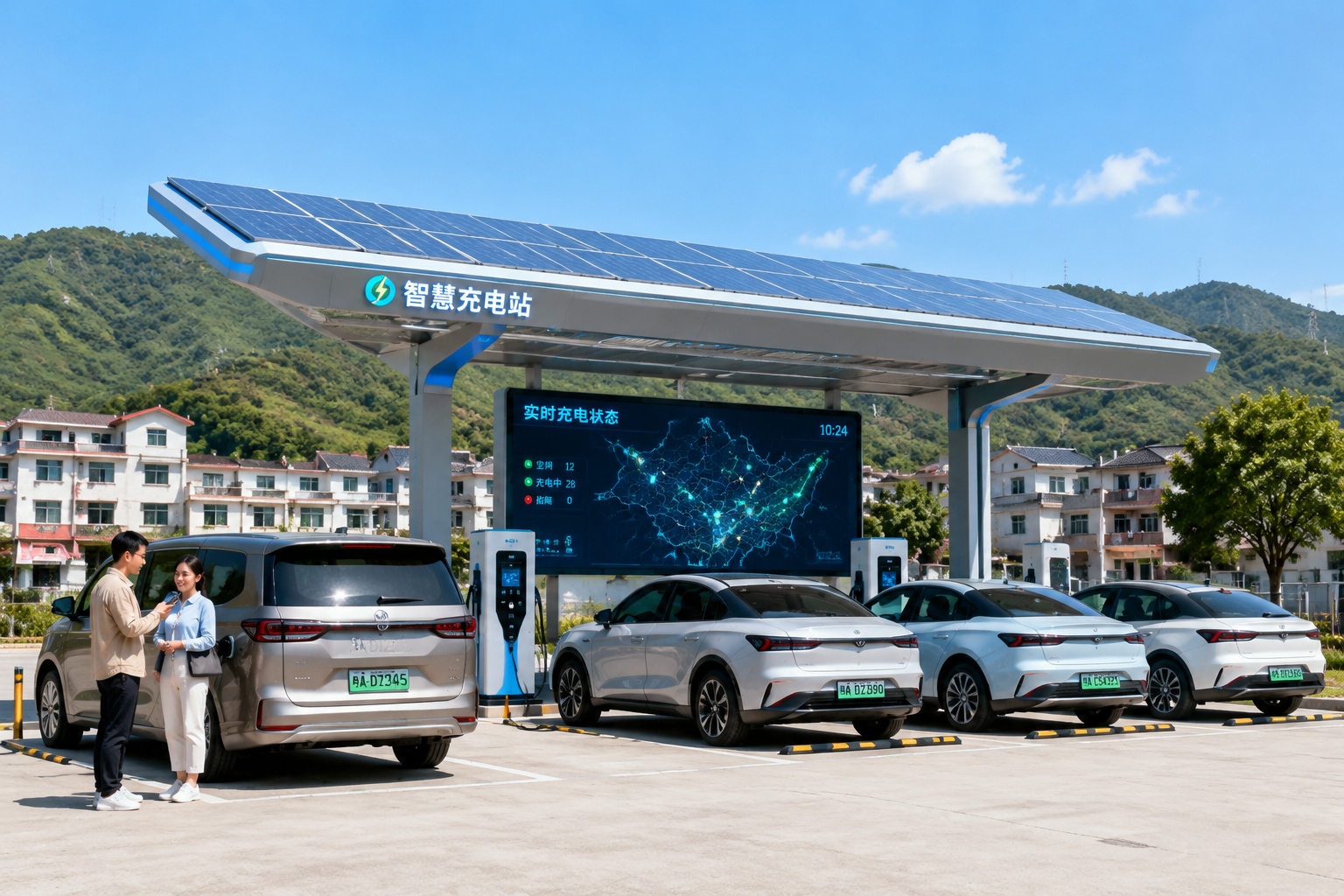
What made these conversions possible isn’t just Lao Zhou’s persuasion. It’s the quiet expansion of digital infrastructure in the background. In Anji, and across China, charging piles are no longer isolated machines. Many are smart chargers connected to a central platform that shows real-time availability on a phone app. You can reserve a spot, pay digitally, and even watch the battery status from home.
Some new stations are integrated with solar canopies, using photovoltaic panels to generate clean energy. Others are tied to the electricity grid in a way that lets them charge cars when demand is low and feed power back during peak hours. In Lao Zhou’s town, a station near the post office has been upgraded twice in the past year. “Now, there’s at least one public charger in every village,” he says, pulling up the charging app. “It’s not just about the hardware. It’s about knowing you can always find a spot.”
The Success Story: A Delivery Woman’s Business
Zhang Lili, a 43-year-old courier, used to spend a huge portion of her income on fuel for her three-wheeled motorcycle. She delivers parcels every day to remote hamlets, often covering more than 120 kilometers. Lao Zhou recommended a small, affordable electric van. She was skeptical, but he offered to drive her to the dealer and negotiate a price. She bought one with a 200-kilometer range.
The difference was immediate. “I used to spend 50 yuan a day on gas,” Zhang said. “Now I spend about 12 yuan on electricity. Plus, the van is quieter, and I don’t breathe exhaust all day.” She even set up a communal charger in front of her shop. “Neighbors come by, plug in, and pay me a few yuan. It covers my own electricity bill,” she says with a grin.
A Grassroots Movement, Not a Top-Down Push
Lao Zhou’s story is not unique. Across China, thousands of similar “evangelists” are active in small towns and villages. They are retired technicians, local car repair shop owners, or early adopters who become informal salespeople for NEV brands. They share first-hand experience, help neighbors choose models, and sometimes even install chargers for them.
This bottom-up spread matters because it reflects how China’s energy transition is happening in everyday life. According to the China Association of Automobile Manufacturers, more than one-third of the country’s NEV sales in 2023 went to users in third-tier cities and rural areas. Government policies like “NEV Going to the Countryside” play a role, but the real driver is simple economics. When a family calculates that an EV saves them thousands of yuan every year, they make the switch themselves.
What the Evangelist Taught Me
Standing next to Lao Zhou, watching a grid of colorful cables snake across the pavement to a line of electric cars, I asked him what he thinks of his nickname. “I don’t convert anyone,” he said, smiling. “I just show them that the future is cheaper and cleaner. The numbers speak for themselves.”
His story reminds me that China’s green transition isn’t just a headline about giant solar farms or futuristic city clusters. It’s also about a man in a dusty repair shop, patiently explaining to his neighbor how to plug in a car overnight. The real revolution, it turns out, is the sum of thousands of small, practical decisions made on ordinary streets.
Start the discussion at forum.chinacomes.com