

A rotor with no tower under it
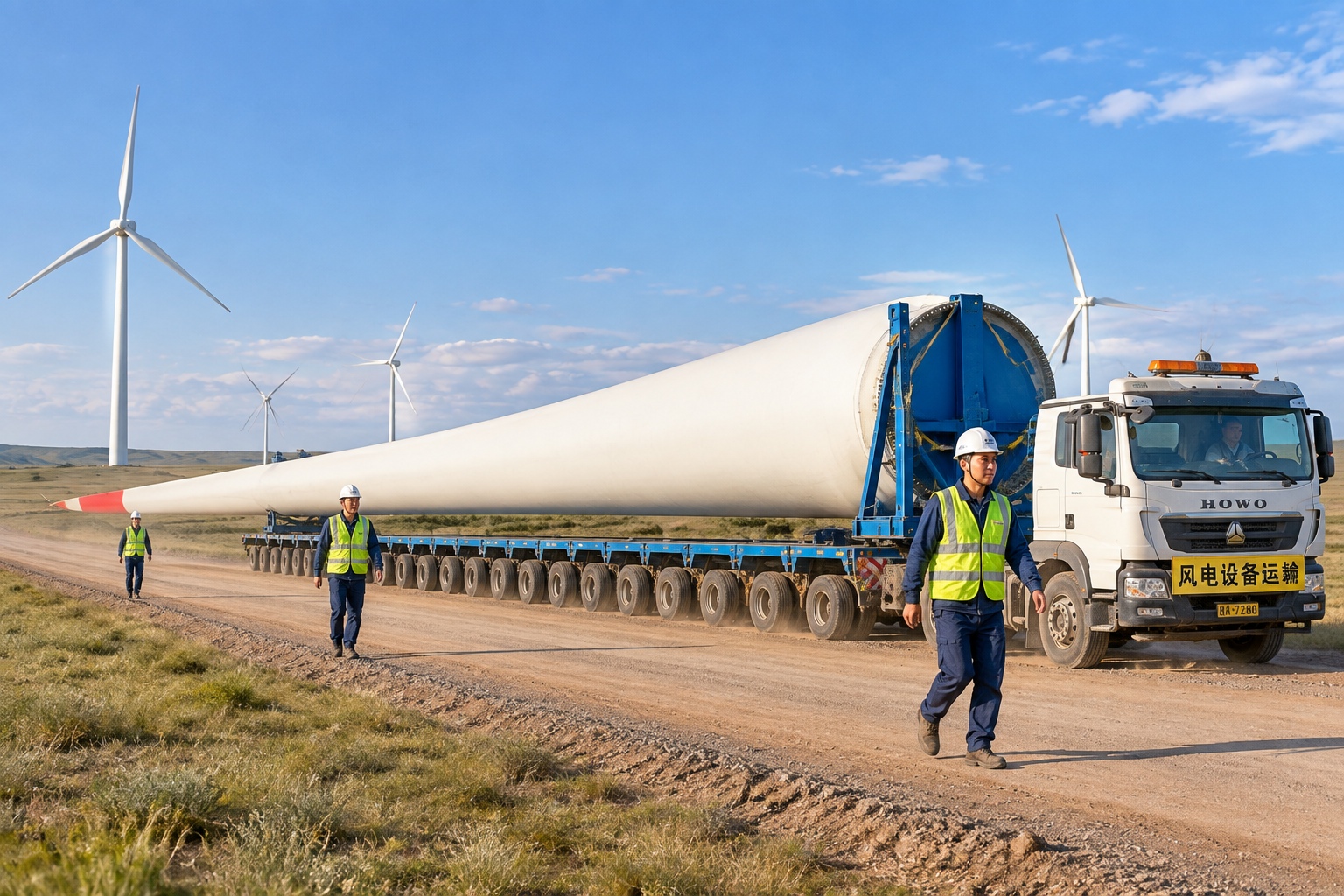
The blade on a large onshore wind turbine can run close to 90 meters long — longer than the wingspan of a Boeing 747 — and moving one up a mountain ridge takes a convoy of trucks, police escorts and, sometimes, a temporary road carved out of a hillside. In practice it is often transport, not wind, that decides where a wind farm can be built.
That constraint is one reason a small group of engineers has been chasing a different question: what if the rotor never needed a tower at all?
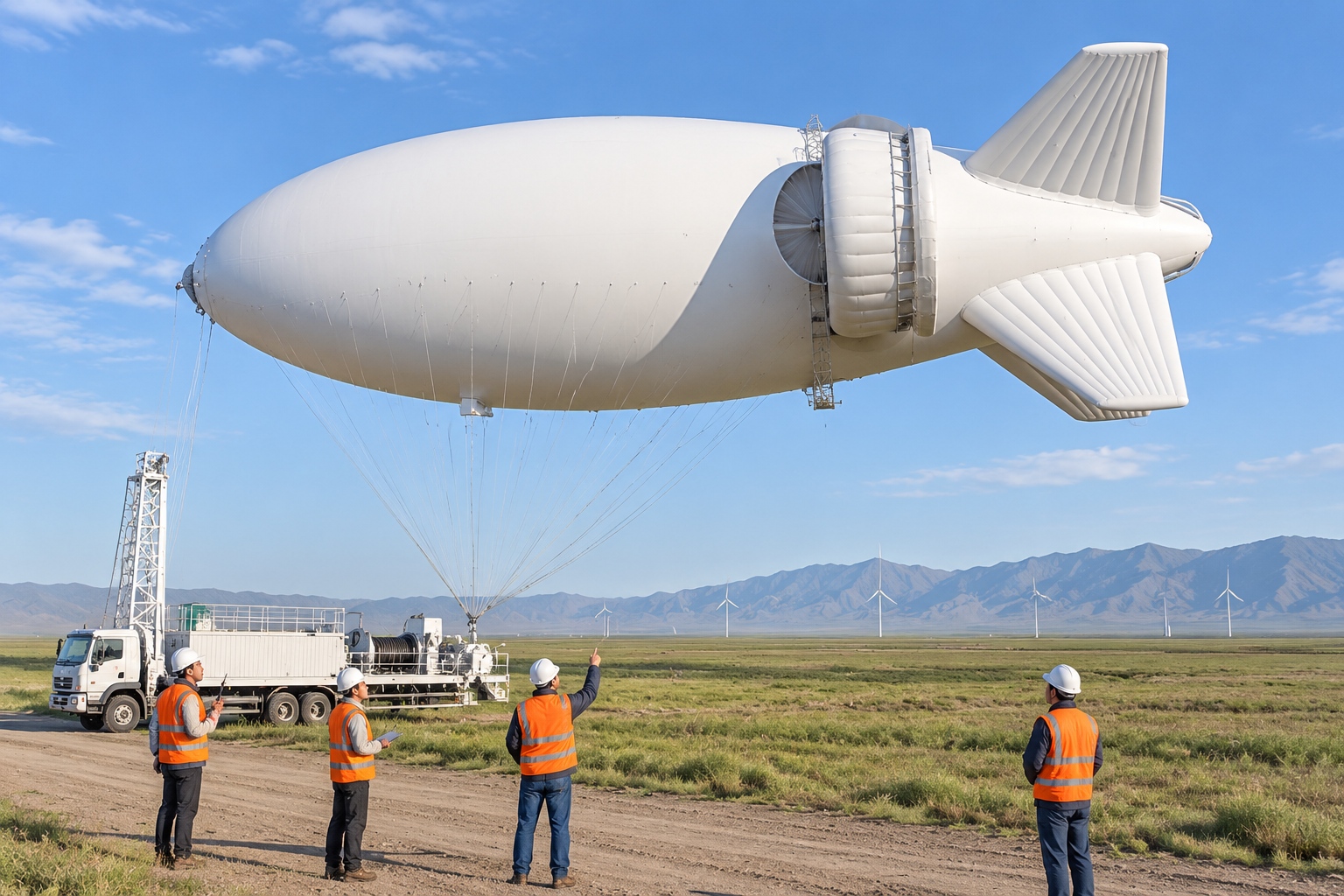
China’s S4000 airborne wind system is one attempt at an answer. The project says the machine has now completed full-process verification — launch, climb, hover, power generation, transmission of electricity down the tether, and recovery. Each of those steps has been demonstrated somewhere before, by someone. Doing all of them in one continuous cycle, on one machine, is the part that is new.
“Floating wind” here does not mean offshore wind
In most energy reporting, “floating wind” refers to turbines mounted on floating platforms anchored in deep water. The S4000 belongs to a different category, usually called airborne wind energy or high-altitude wind power.
A kite explains the principle better than any diagram. A kite stays up because moving air pushes against it and a string keeps it from flying away. Replace the kite with a rigid wing or a helium-filled aerostat carrying turbines, and run the line down to a winch on the ground. The tower is now a few hundred meters of cable.
Designs generally fall into two families. In the first, the flying part is essentially a wing that pulls on the tether and drives a generator on the ground as cable pays out and is reeled back in. In the second, the turbines and generator ride on the airborne platform itself, and the electricity travels down a conductive tether. The S4000 belongs to the second family. The number in the name tracks design capacity, putting S4000 in the megawatt class — part of a Chinese S-series that runs from small prototypes up toward the larger S6000.
What full-process verification actually covered
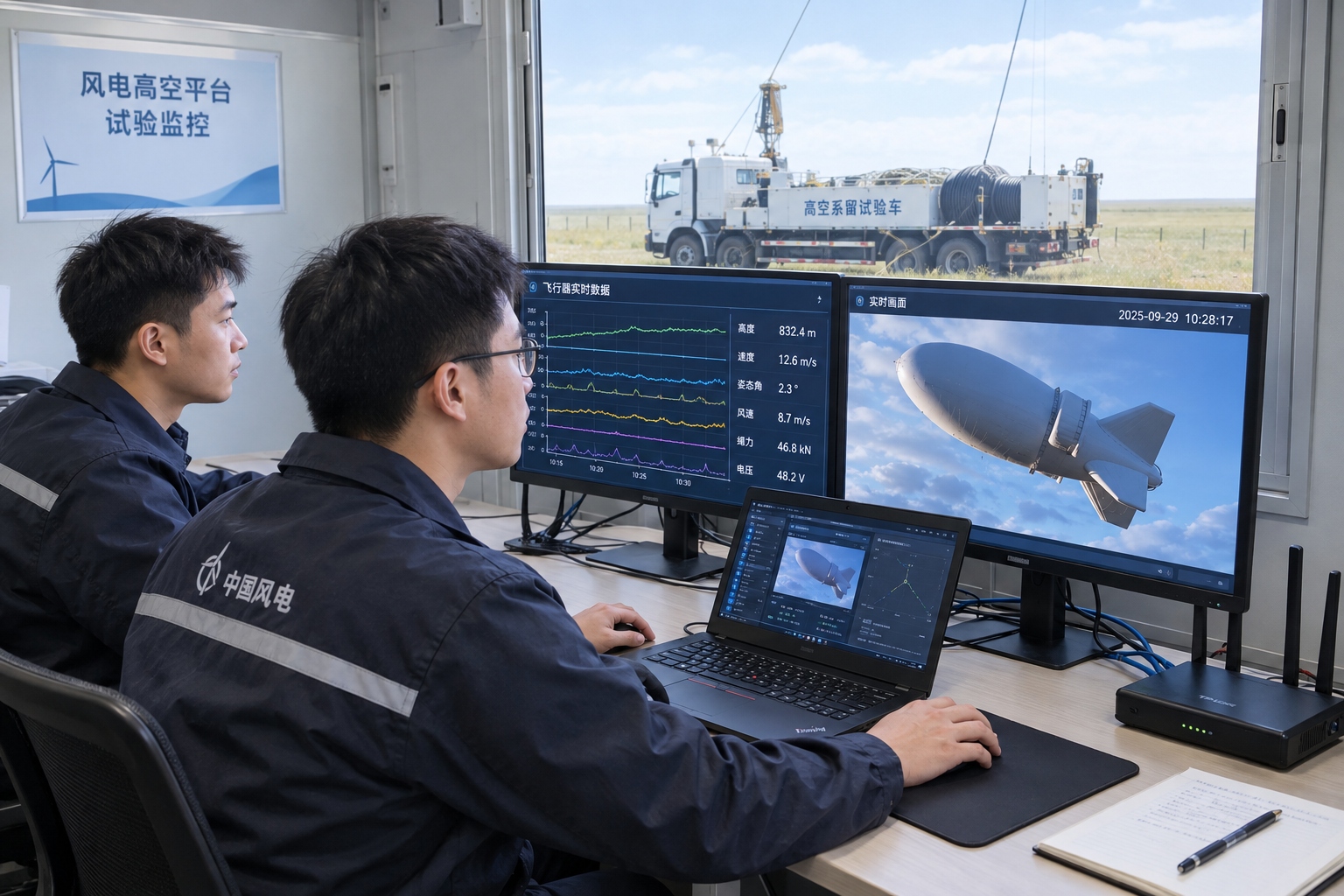
Rocket engineers have a term for the moment a machine finally does everything at once — an all-up test — and it is usually when the expensive surprises show up. Airborne wind systems carry a similar risk profile. A tether can pass every static test in a workshop and still fail the first time it is loaded, unloaded, twisted and charged with static electricity in the air.
The S4000 verification covered the whole sequence:
- ground preparation and release
- controlled ascent to operating altitude
- holding a stable position in real wind
- generating at the designed output
- sending power down the tether to a ground station
- safe recovery and landing
A complete loop matters more than a set of good individual results, because complex machines tend to fail at the handoffs — the transitions between one phase and the next. A generator that performs flawlessly in a hover test is worth little if the recovery procedure cannot be repeated in a fresh breeze. Verifying the entire cycle is the difference between a demonstration and a machine someone could imagine operating.
Why put a turbine in the sky at all
Wind gets stronger and steadier with height. The energy available in moving air rises with the cube of its speed, so doubling wind speed means roughly eight times the power in the same slice of sky. Ground-based turbines sit on towers 100 to 150 meters tall, where wind is slowed by trees, buildings, hills and the ground itself. Move up to 300, 500 or 1,000 meters and much of that drag falls away.
The second advantage is footprint. A large airborne system needs no concrete foundation, no crane pad and no road wide enough for a 90-meter blade. That opens up places where conventional wind farms are awkward: islands that currently run on diesel generators, remote mining sites, mountain valleys, and disaster zones where the grid is down.
It is just as important to say what this is not. A megawatt-class airborne machine is small next to the six- to eight-megawatt turbines now standard on land and at sea, and no airborne system anywhere has logged the multi-year, high-availability record that banks, insurers and grid operators demand before they sign anything. For now, the realistic role is filling gaps, not displacing the mainstream.
The gap between a good flight and a power plant
Several unglamorous problems sit between the two.
Airspace. Anything flying at 500 meters occupies airspace that is getting busier. China has been rewriting its low-altitude airspace rules to make room for delivery drones, agricultural sprayers and electric air taxis. A permanent wind platform would need a defined, protected volume, and a way to coexist with everything else in it.
Weather. Icing, thunderstorms, dust storms and typhoons all behave differently at altitude. A system that works on a calm autumn afternoon in Inner Mongolia has not yet been tested against a February gale or a summer squall line.
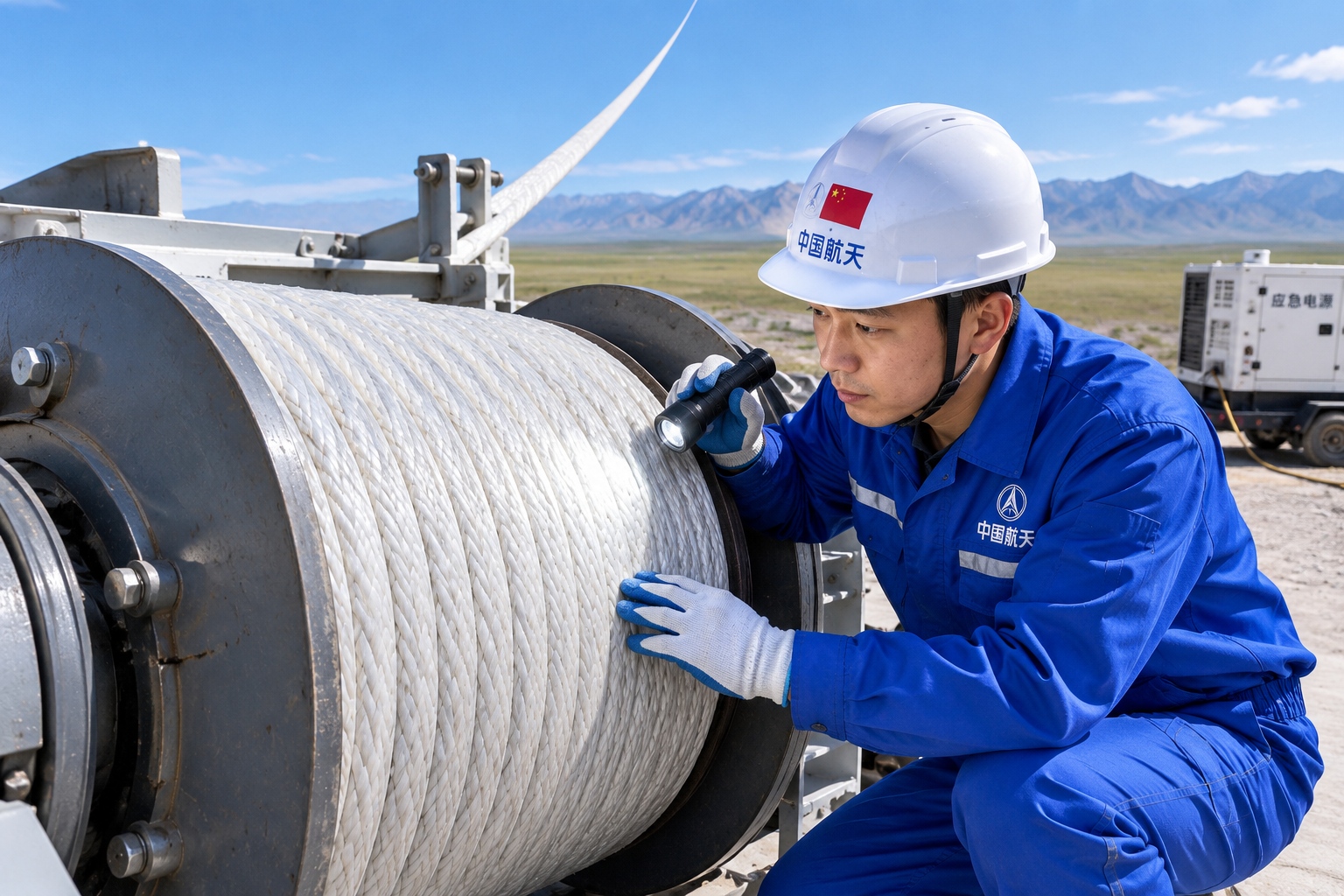
Tether life. The cable is the least glamorous and most critical part of the design. It has to survive ultraviolet light, abrasion, lightning and millions of load cycles without becoming heavy enough to cancel out the lift it depends on.
Cost. Cost per kilowatt-hour is the only number that ultimately matters, and it is not public yet. Winches, control software, ground crews and inspection all cost money, and early-stage systems tend to be expensive per unit of output.
Rules and paperwork. Grid connection standards, certification, insurance and liability rules for a machine that hangs in the sky above farmland do not exist in most countries yet. Writing them takes years, not months.
What any of this has to do with an electricity bill
Directly, almost nothing — yet. No city grid will be powered by the S4000 next year. But the indirect effects are worth spelling out, because that is how energy technology usually reaches ordinary people.
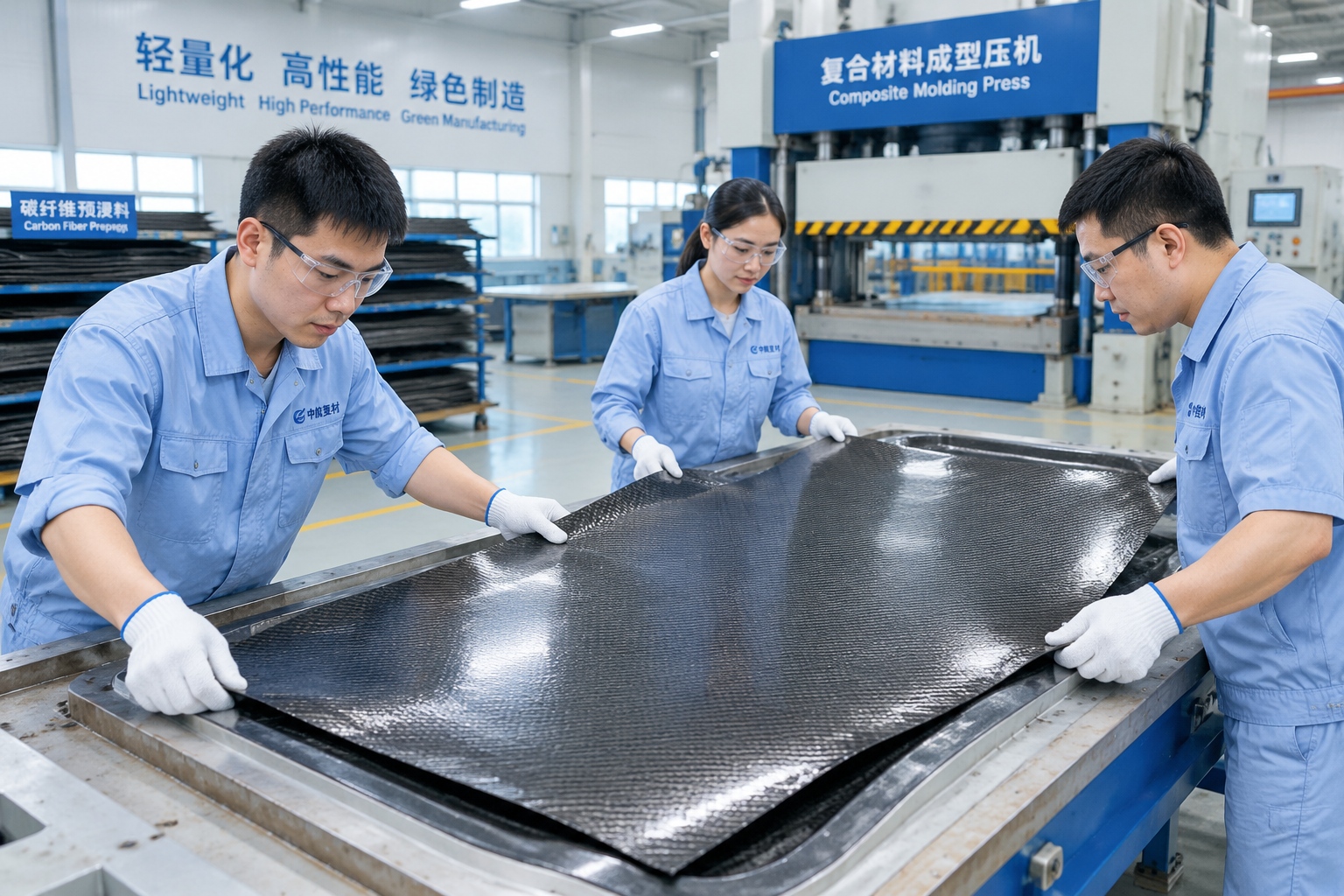
Start with jobs. China’s wind industry already employs hundreds of thousands of people making blades, generators, gearboxes, bearings and control systems, much of it in provinces such as Jiangsu, Guangdong, Inner Mongolia and Gansu. Airborne systems need a different component list — lightweight composites, high-strength tethers, winches, power electronics, flight-control software — but they draw on the same factories and the same pool of technicians. New product lines mean new positions for people who already know how to build things.
Then there is remote power. Islands, mining camps and border outposts in China still burn diesel trucked in at high cost. A tethered platform that can be packed onto a truck and flown for weeks without a crew would be a genuinely useful tool in those places, even if it never competes with a coastal wind farm.
Finally, the grid itself. China’s electricity mix is shifting faster than almost anywhere else — roughly 520 gigawatts of wind and about 890 gigawatts of solar installed by the end of 2024. Every new source adds pressure on grid operators to balance supply, and unusual sources such as airborne wind will only be adopted where they can prove they are predictable and controllable, not just clever.
Why this is happening in China
A few structural reasons, none of them mysterious.
First, the industrial base. China builds more wind turbines than anyone, which means gearboxes, composite tooling, power converters and test rigs are already available domestically and cheaply. A startup in Europe has to buy those things; a Chinese engineering group often already owns them.
Second, a specific engineering habit. Over the past fifteen years, China’s renewable sector has become very good at one move: take a technology demonstrated elsewhere at small scale, build a considerably bigger version, iterate in the field and push the cost curve down. Solar panels, lithium batteries and electric cars all followed a version of that path.
Third, staying power. Airborne wind is a long, uncertain research program. Most of the pioneering Western companies in this field have not survived — Google’s Makani shut down in 2020, and the Dutch developer Ampyx Power went bankrupt in 2022, while smaller firms such as SkySails and Kitepower continue at modest scale. State-linked energy engineering groups in China can carry a multi-year demonstration program that venture-funded startups find hard to sustain.
And a policy tailwind: the “low-altitude economy” — drones, air taxis and everything else sharing the air below a few thousand meters — has become an explicit government priority, which means airspace reform and regulatory attention are moving in the same direction as the technology.
What to watch next
For anyone tracking this field, a handful of measurable signals matter more than press releases:
- Continuous operating hours, not single flights. Weeks of unattended operation is the real threshold.
- Scale. Whether the S6000 and later versions arrive on schedule, and whether output scales with size rather than with luck.
- Grid-connected tests, including power quality data that a utility would accept.
- A published cost per kilowatt-hour. That single figure would change how serious the industry takes airborne wind.
- Rules: airspace designation, certification standards and insurance products for tethered machines above populated land.
An early engineering node, not a revolution
The S4000 is best understood as a checkpoint. It shows that a tethered wind platform can complete a full working cycle, which is more than most airborne wind concepts have managed. It does not show that the technology is cheap, reliable or ready for a utility to depend on.
Anyone who watched solar panels in 2005 or drones in 2010 has seen this stage before: a machine that works in principle, costs too much in practice, and is surrounded by rules that have not been written. Sometimes those machines go on to become infrastructure. Sometimes they stay prototypes forever.
What makes the S4000 worth a second look is not the flight itself. It is the fact that a country with the world’s largest wind supply chain, a serious energy transition target and a habit of turning demonstrations into factories has decided this one is worth testing end to end.
Start the discussion at forum.chinacomes.com