

A Hill, a Footpath, and 2,200 Years of Silence
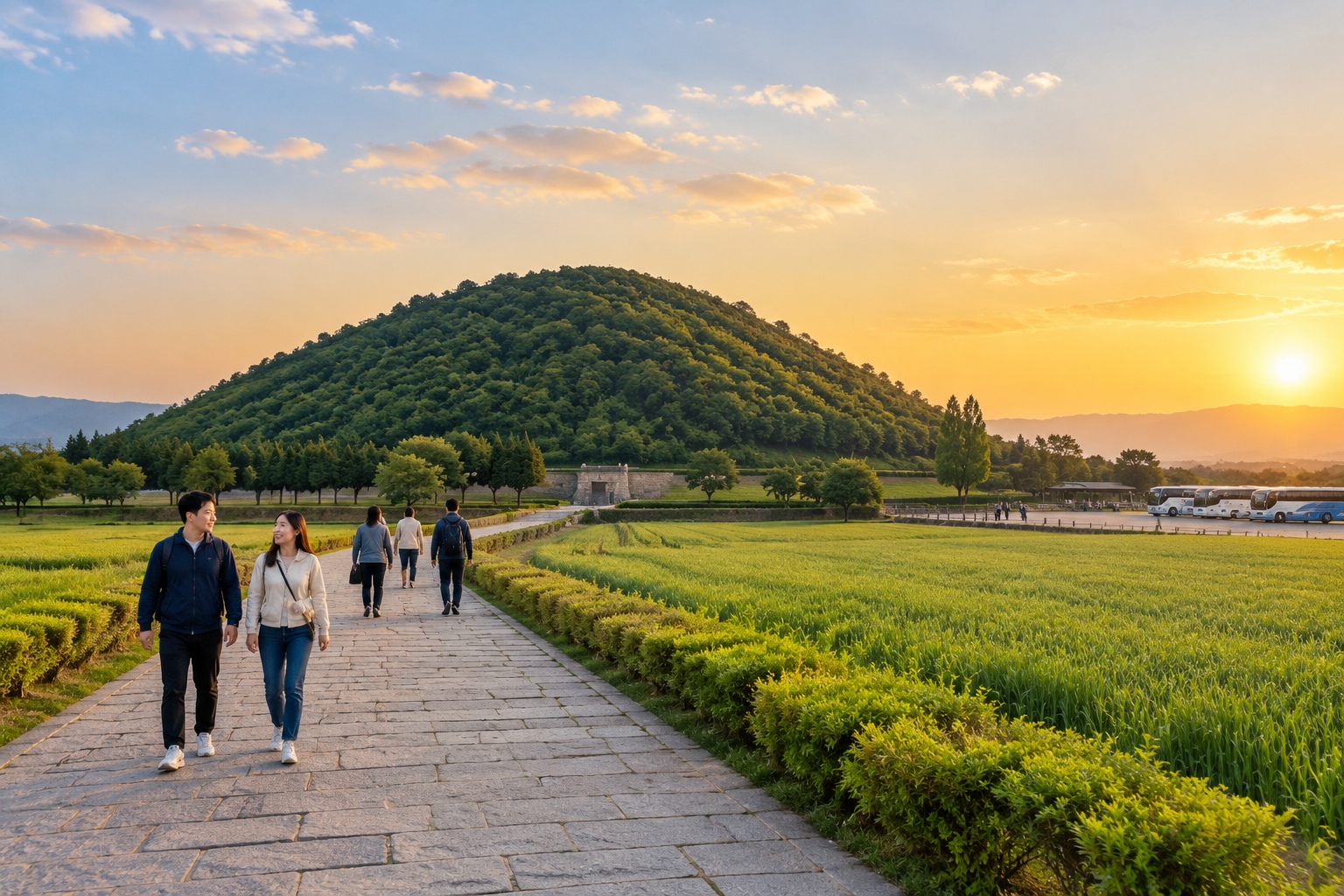
At the Emperor Qinshihuang’s Mausoleum Site Museum, 35 kilometres east of Xi’an, the tour buses pull into a car park the size of an airport apron. Almost everyone walks toward the three hangars holding the Terracotta Army. Almost nobody walks the other way, along a paved path that loops around a gentle, tree-covered hill about ten minutes off.
That hill is the tomb itself. Qin Shi Huang, the king who ended the Warring States period in 221 BC and declared himself the first emperor of a unified China, died in 210 BC, and this is where he was buried. The mound measures roughly 350 metres across at its base and still rises somewhere between 50 and 76 metres, depending on which side you measure; erosion and two thousand years of farming have flattened it unevenly. Farmland still presses against the fence.
Underneath the mound, according to geophysical surveys rather than excavation, lies a sealed underground complex at a depth of around 30 metres. In more than half a century of digging, nobody has touched it.
The Warriors Are the Front Yard
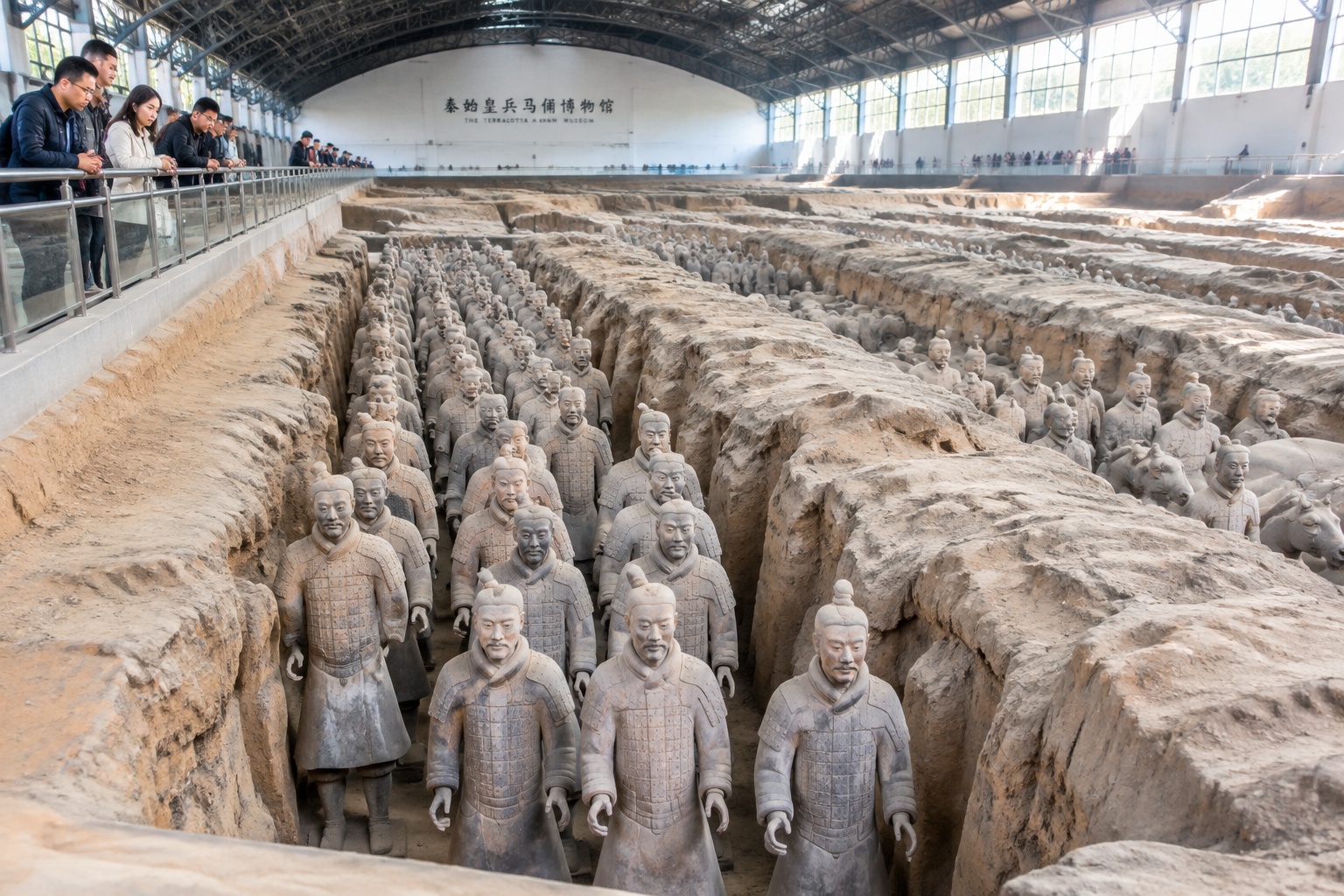
The Terracotta Army, found in 1974 when farmers digging a well hit a baked clay head, is only one piece of a much larger protected zone: roughly 56 square kilometres of pits, walls, roads and satellite tombs spread across the Lintong district. Archaeologists have identified more than 180 burial pits inside the cemetery walls, and new ones keep turning up.
Pit 1, the big one under the aircraft-hangar roof, is 230 metres long and holds an estimated 6,000 figures. Across all the pits the count reaches roughly 8,000 soldiers, archers, charioteers, horses and officers. Even now, after five decades of work, only a fraction of the whole site has been excavated. Most of it is still under fields.
What the Emperor Reportedly Took With Him
The main source is a historian named Sima Qian, who finished his Records of the Grand Historian about a century after the emperor’s death. He was not there, and he never claims to have been. But what he wrote has shaped every conversation about the tomb since.
According to Sima Qian, 700,000 conscripted labourers dug through three layers of groundwater. The burial chamber, he says, was furnished with palaces and towers for officials, filled with rare objects and treasures, and fitted with crossbows rigged to fire at anyone who broke in. The ceiling was decorated with heavenly bodies; the floor was shaped like the empire’s geography. Rivers and seas — the Yangtze, the Yellow River, the ocean — were made of flowing mercury.
Then, the historian adds, the craftsmen who knew the way in were sealed inside. Trees and grass were planted on top so the tomb would look like an ordinary hill.
The One Detail Scientists Could Actually Test
Mercury was the part nobody could ignore. In the early 1980s, and again during a large survey in 2002 and 2003, geologists sampled the soil above the mound and found elevated mercury concentrations compared with the surrounding ground. The readings are usually described as an anomaly rather than proof: mercury also drifts in from modern industry and from the cinnabar-rich rocks of the region.
Still, the pattern interested people, because cinnabar — mercury sulphide — was the red pigment used everywhere in Qin-era China, and because the rivers of mercury in Sima Qian’s account would plausibly leave exactly this kind of footprint. Nobody knows whether any mercury in the chamber is still liquid, still circulating, or long since evaporated into stone. There is no way to find out without opening it.
Why the Door Stays Shut
Ask Chinese archaeologists when the tomb will be opened and you get a version of the same answer: not now, not soon, possibly not in our lifetime. This is official policy, not just individual caution.
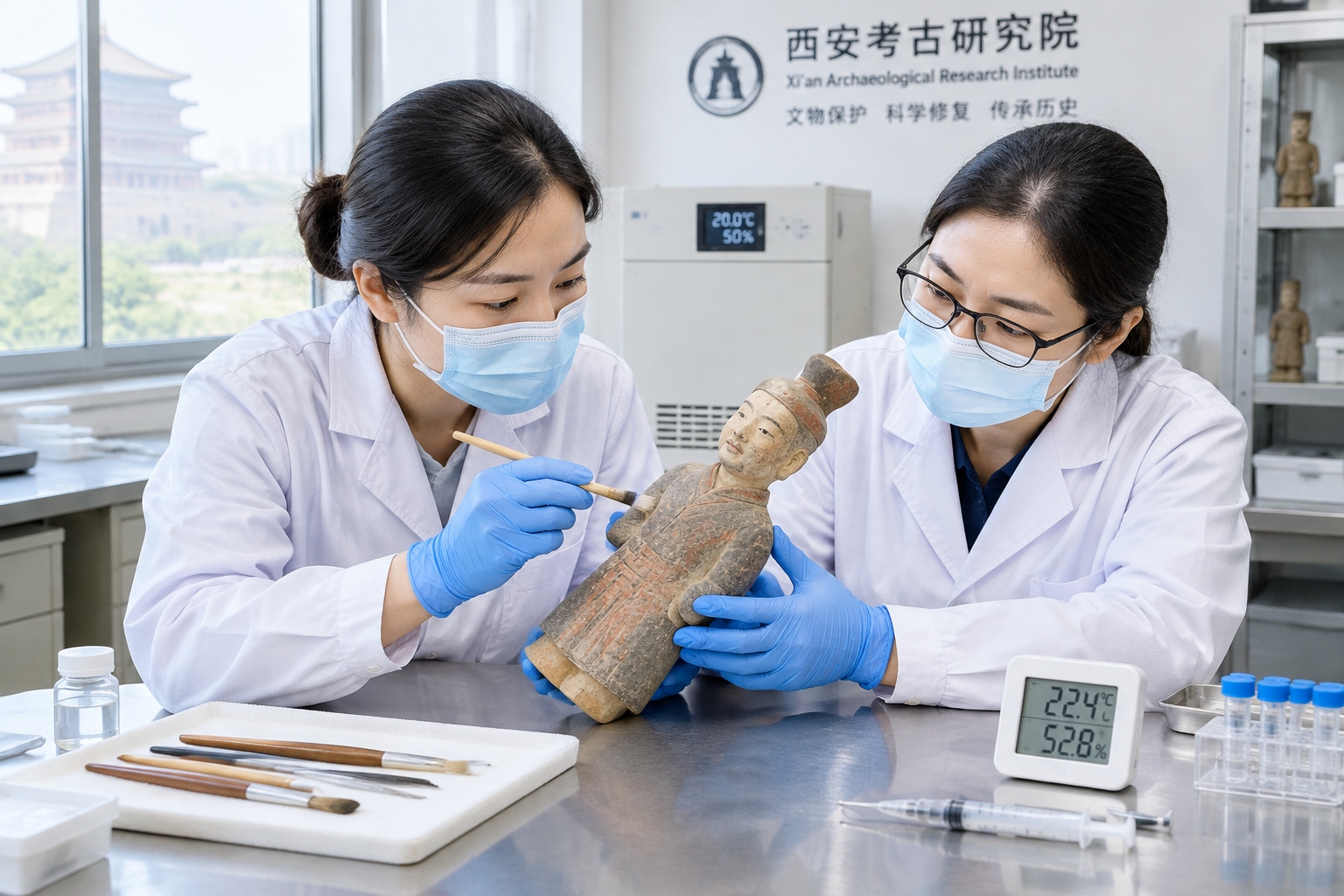
The most immediate reason is paint. The terracotta figures were originally fully coloured — cinnabar red, azurite blue, malachite green, bone white, plus two synthetic pigments known as Han blue and Han purple that chemists would not produce again for two thousand years. Within minutes of exposure to dry air, the lacquer underlayer curls and flakes off, taking the colour with it. That is why modern excavation at Lintong happens inside humidified conditions, with conservators working at the trench edge and figures misted to hold moisture.
The technology has improved enormously since the 1970s, but it has never been good enough for an entire sealed palace whose contents are unknown. Water is a second problem: the chamber sits below the local water table, and any large opening risks flooding that could destroy more than it reveals. A third consideration is simpler. A generation that digs up everything leaves nothing for the generations with better tools.
What Has Been Coming Out of the Ground
Refusing to open the tomb has not stopped archaeology here; it has redirected it. Some of the most interesting finds of recent decades came from pits far from the famous soldiers.
Pit K9901 produced a troupe of terracotta acrobats and strongmen — half-naked, muscled, clearly performers rather than troops, which hints at the entertainments of the Qin court. Pit K0007 held bronze water birds: cranes, swans and geese, the cranes standing taller than a person’s knee, arranged along a simulated riverbank. Pit K9801 contained hundreds of stone armour plates and helmets, wired together with bronze thread, far too heavy for a human to wear and almost certainly made for the afterlife.
In 1980, two bronze chariots were lifted from a pit about 20 metres from the mound: half-size, four horses each, with a driver, and so finely built that the harness fittings can still be moved. They are among the most celebrated bronzes ever found in China and rarely travel abroad.
Excavation in Pit 1 continues in slow, careful campaigns. Recent seasons have produced more officers and, occasionally, a figure with surviving traces of pigment — small victories that matter more to conservators than to headline writers.
The Town That Lives Off a Dead Emperor
Around the site, the mausoleum is not an abstraction. It is employment. Lintong has workshop after workshop casting replica warriors in every size and price bracket, from fridge magnets to life-size pieces that buyers ship overseas. Farmers sell pomegranates, the district’s most famous crop, and soft persimmon cakes from carts near the car park. Hotel staff, guides, ticket checkers and noodle-shop owners all depend on the flow of visitors.
One of the men who found the army in 1974, Yang Zhifa, spent decades as a local celebrity, signing books at the museum shop. He died in 2017. His village, Xiyang, is a fifteen-minute walk from Pit 1.
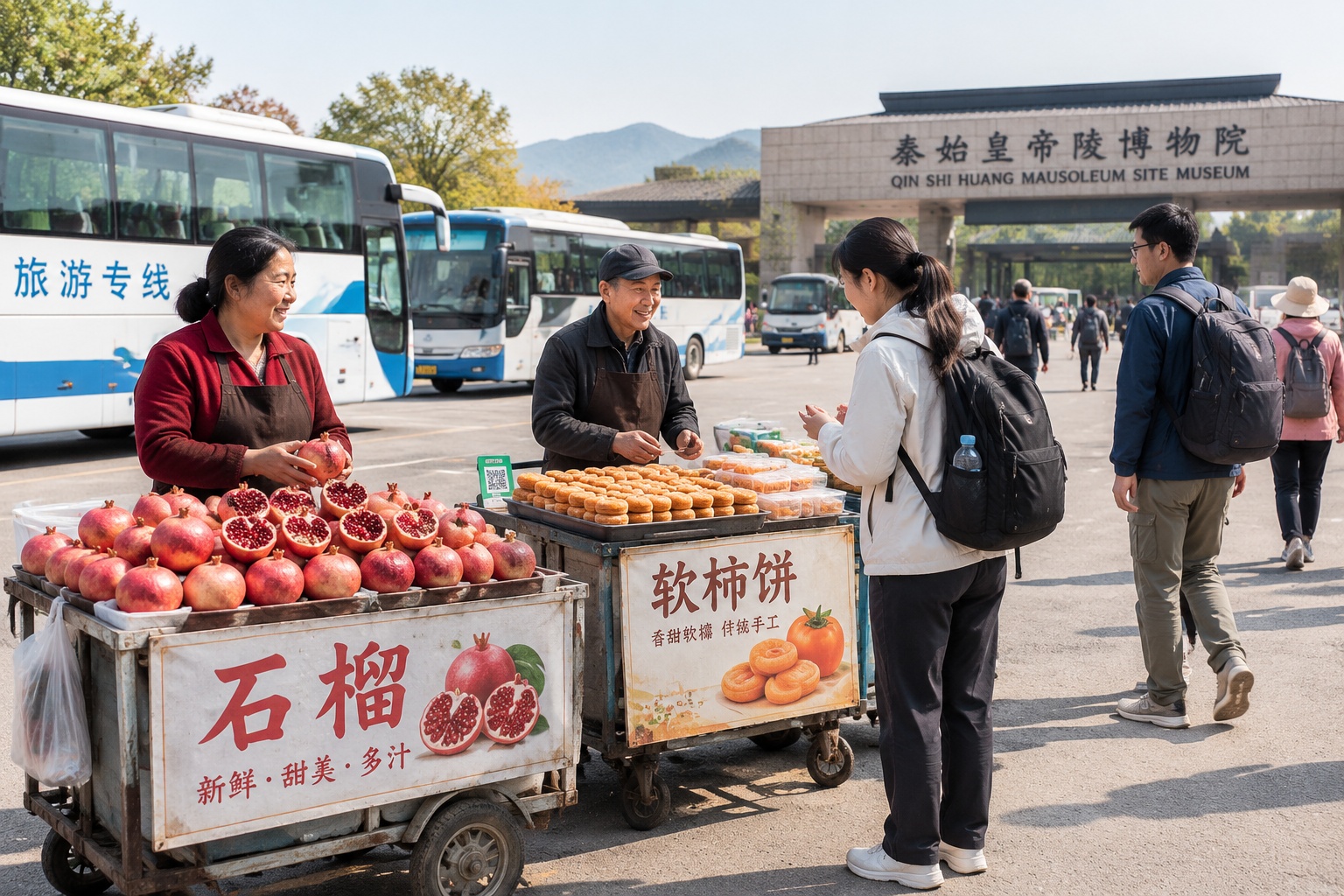
Visiting has changed, too. Tickets are booked days ahead on WeChat mini-programs and disappear fast during national holidays — part of a broader museum boom among young Chinese travellers. Inside Pit 1 there is no air conditioning; it is a vast, echoing shed, and on a July afternoon the crowd along the railings is dense. The mound, by contrast, is often nearly empty.
What Would Have to Be True Before Anyone Digs
Serious ideas exist. Chinese physicists have proposed mapping the interior with cosmic-ray muon detectors, the same technique used to find a hidden chamber inside Egypt’s Great Pyramid — no drilling, no opening, just particle shadows. Ground-penetrating radar, magnetometry and resistivity surveys have already produced rough images of the layout. Conservation labs keep testing better consolidants for ancient lacquer.
None of it answers the harder question. Whatever is inside — mercury, crossbows, a jade suit, a body that may or may not still be there — has survived 2,200 years precisely because it stayed shut. The most modern thing about this mausoleum is the decision to leave it alone, and to keep studying it from the outside with sensors and patience.
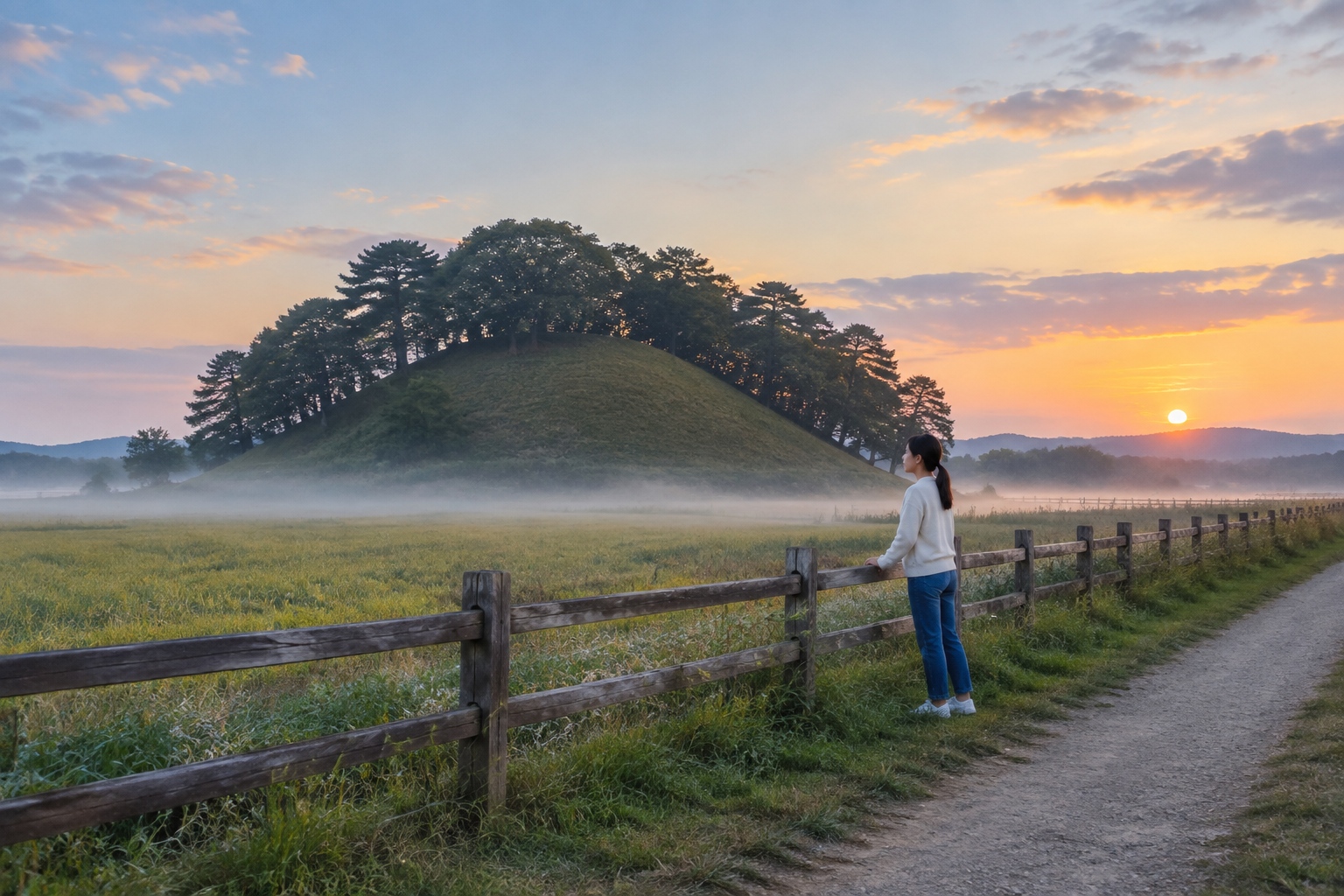
Stand at the fence at dusk, when the tour groups have gone and the fields go quiet, and the hill looks almost ordinary. That is the point. The first emperor’s final instruction, whether by design or by accident of history, was to be invisible — and for now, his descendants are honouring it.
Start the discussion at forum.chinacomes.com