
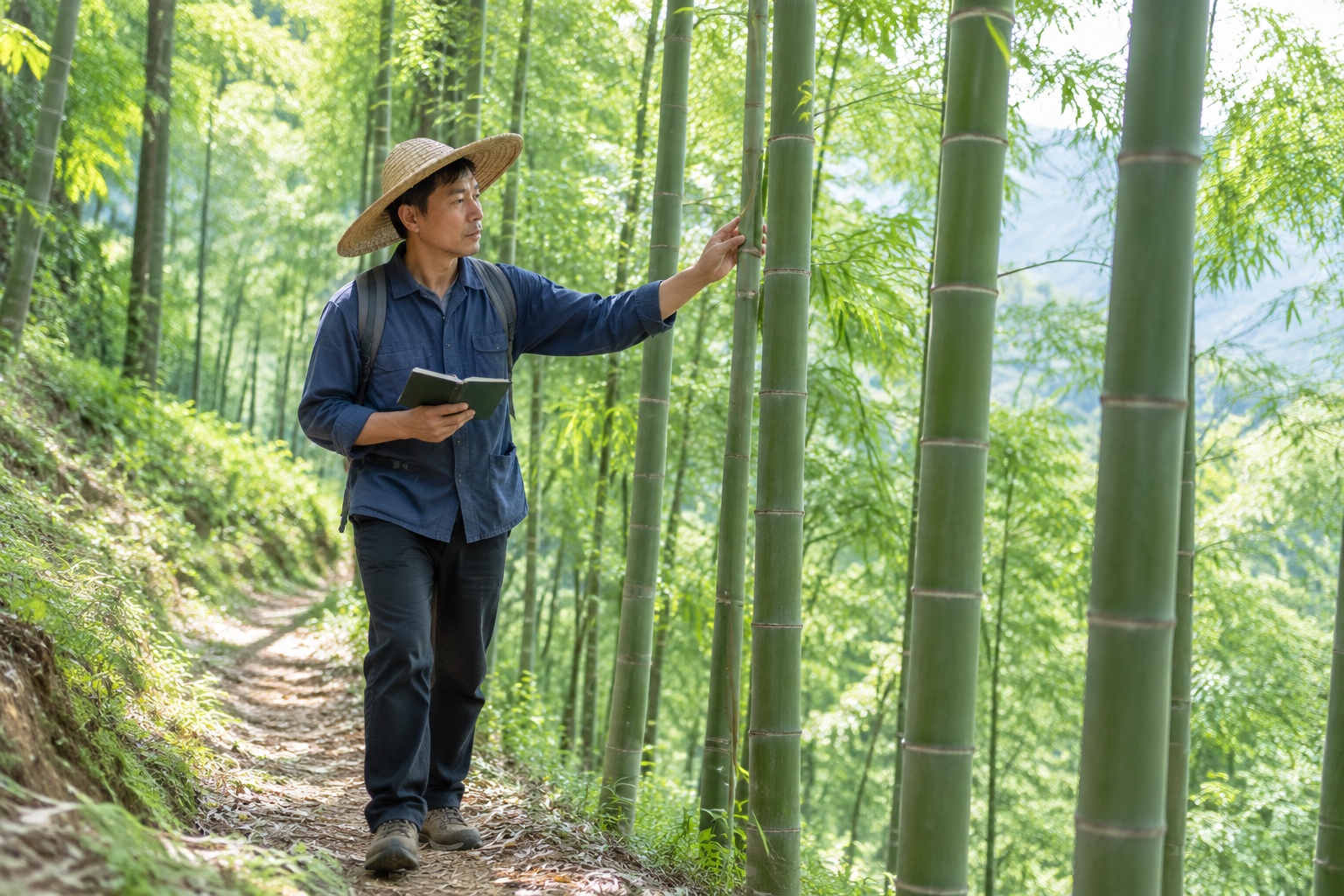

Bamboo Is Not a Tree—It’s a Giant Grass
If you walk through a bamboo forest in southern China, you might think you’re surrounded by slender trees. But you’re not. Bamboo is a grass—a member of the Poaceae family, the same group that includes wheat, rice, and your lawn. Some species can grow nearly a meter in a single day. That’s not a tree; that’s a grass on steroids.
The key difference lies underground. Bamboo spreads through a network of rhizomes, thick underground stems that send up new shoots. A single bamboo grove can be a clone—genetically identical stems connected by this subterranean web. This clonal growth is why bamboo can colonize a hillside so quickly. It doesn’t need seeds for everyday expansion.
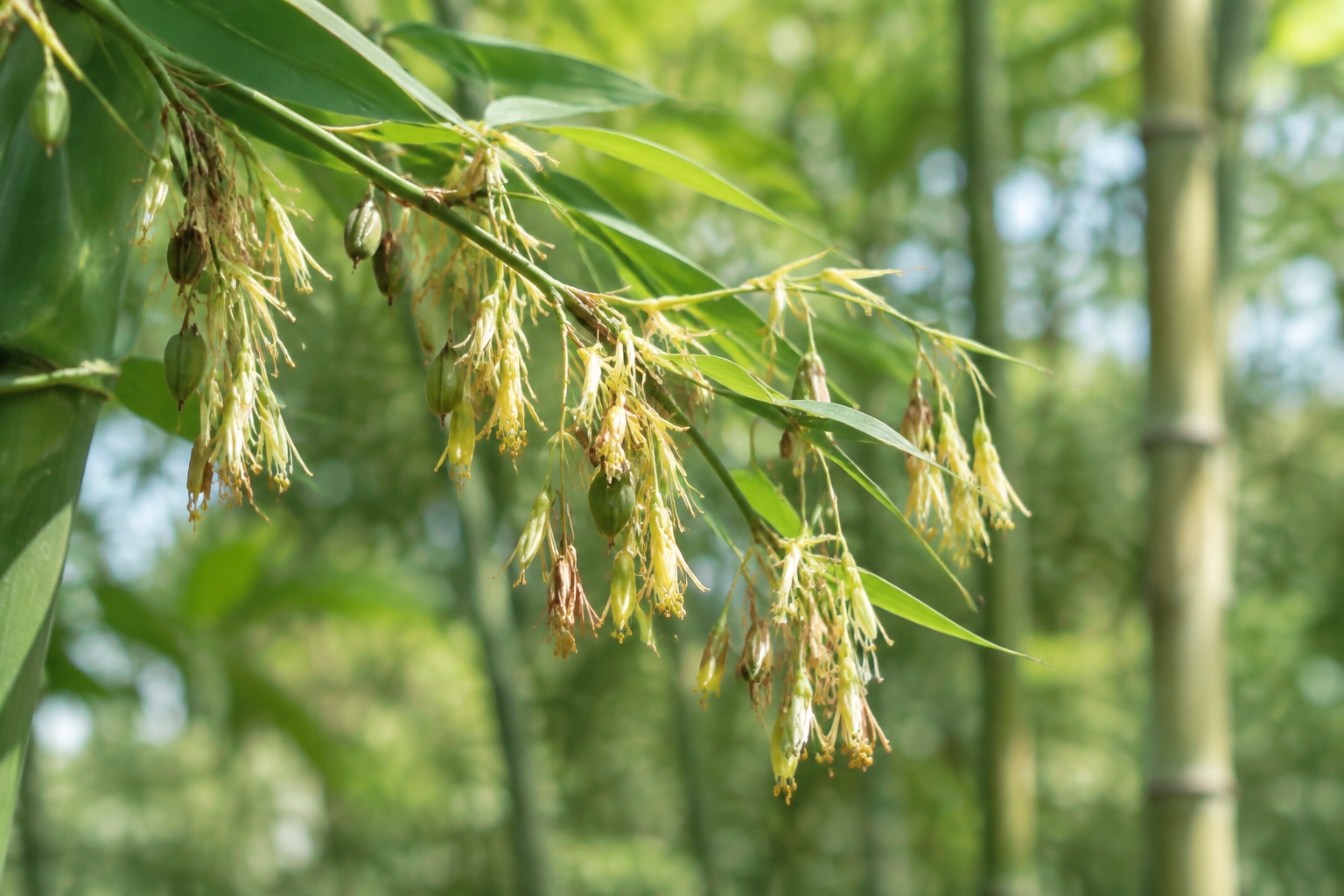
The Rare, Synchronized Flowering Event
Because bamboo usually reproduces by cloning, flowering is a rare event. Some species wait 40, 60, or even 120 years between flowerings. And when they do flower, they do it together. Entire forests of the same species will bloom at the same time, produce seeds, and then die.
This phenomenon is called “gregarious flowering.” It’s been documented in China for centuries. In the Qinling Mountains, arrow bamboo (Fargesia) is a favorite food of giant pandas. When arrow bamboo flowers, it can cover vast areas. The last major flowering in the 1980s led to widespread bamboo death in Sichuan and Shaanxi. Similar events have happened in India (where bamboo flowering was linked to rodent plagues) and in Japan.
Why would a plant do this? Scientists think it’s a survival strategy. By flowering all at once, bamboo overwhelms seed predators. Even if rodents eat many seeds, some will survive to sprout. The mass death also clears space and nutrients for the next generation.
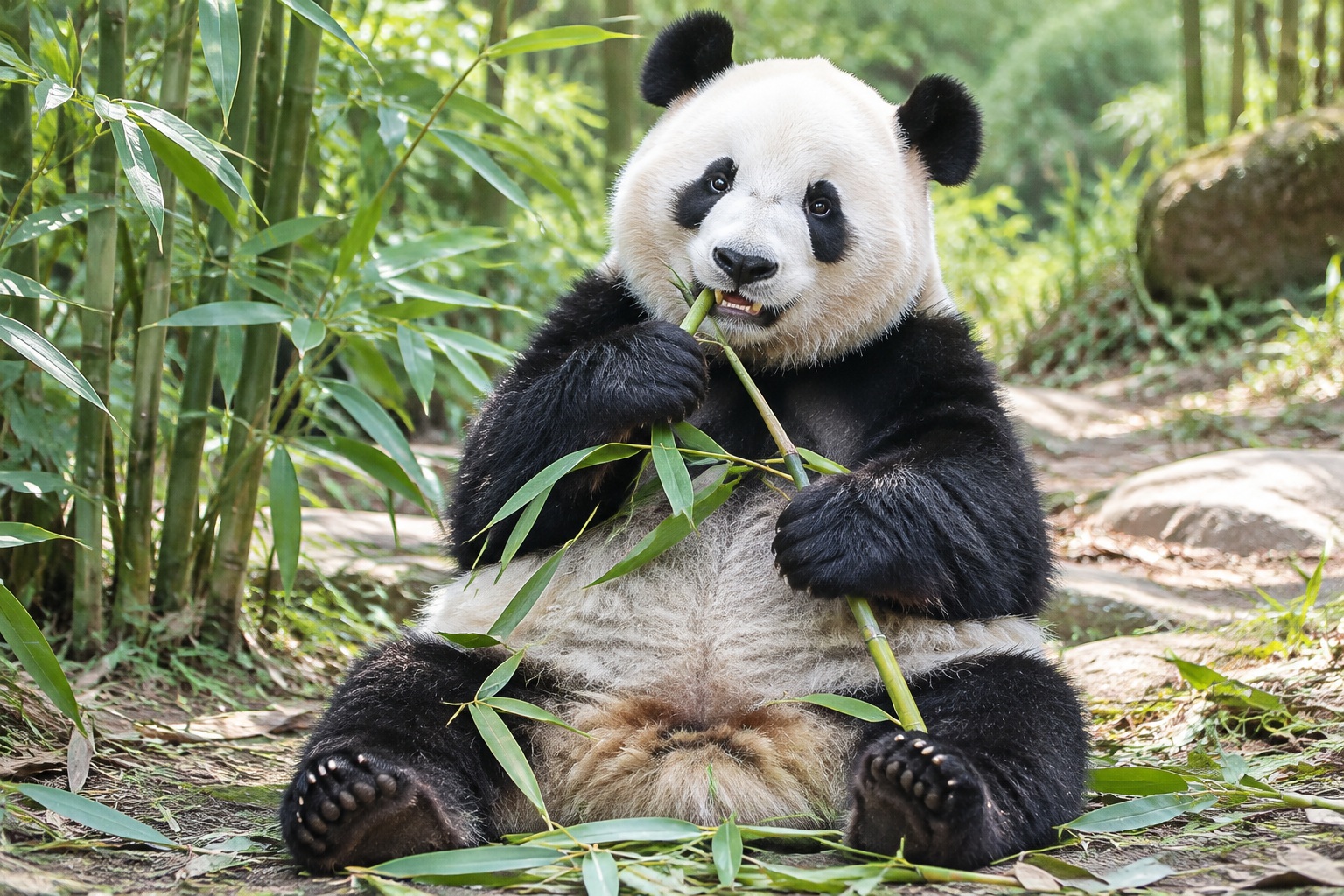
What Bamboo Death Means for Giant Pandas
Giant pandas eat almost nothing but bamboo. An adult panda spends up to 14 hours a day chewing through 12 to 38 kilograms of stems and leaves. So when a bamboo species dies across a whole region, it sounds like a disaster.
In the 1980s, when arrow bamboo flowered and died in China, hundreds of pandas were found starving. The government and conservation groups launched rescue efforts, bringing food to affected areas. But here’s the crucial point: pandas did not go extinct. They survived because they can switch to other bamboo species.
Pandas typically rely on two or more bamboo species in their home range. When one dies, they move to another. The problem arises when their habitat is fragmented by roads, farms, or development. Then they can’t easily reach the next bamboo patch. That’s why China’s network of panda reserves and corridors matters. It gives pandas options.
Still, a bamboo die-off is a stressful time for pandas. They may lose weight, and cubs may be born underweight. But it’s not an extinction event. It’s a cycle they have lived with for millions of years.
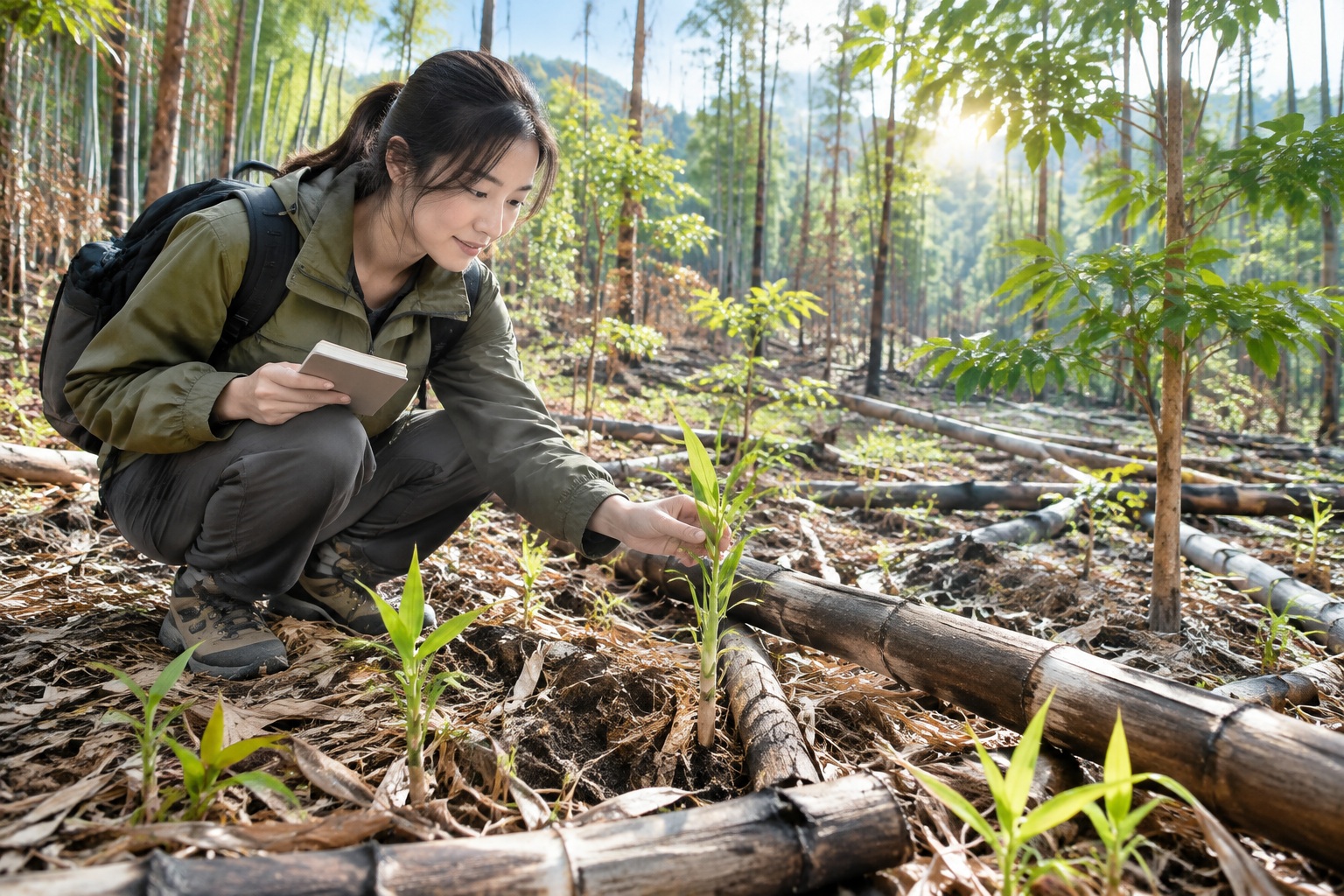
How Forests Regenerate After Bamboo Dies
When a bamboo forest dies, it doesn’t stay empty for long. The dead stalks fall, opening the canopy. Sunlight reaches the forest floor, which had been dark for decades. This triggers a burst of growth.
Bamboo seeds, scattered by the wind, germinate. But they are not alone. Seeds of trees, shrubs, and other grasses also sprout. For a few years, the area becomes a messy, diverse young forest. Bamboo seedlings grow slowly at first, but they eventually reclaim the space. Other trees may grow taller and shade them out, creating a mixed forest. Over decades, the bamboo may return to dominance—until the next flowering.
This cycle creates a patchwork of habitats. Some animals prefer dense bamboo; others need the open, regenerating forest. The dead bamboo also returns nutrients to the soil, feeding the next generation of plants.
Other Animals That Depend on Bamboo
Giant pandas are the most famous bamboo-eaters, but they are not the only ones. Red pandas, also native to China, eat bamboo leaves and shoots. Takins, large goat-antelopes, browse on bamboo. In Africa, mountain gorillas eat bamboo shoots. In Madagascar, lemurs rely on bamboo. And in China, bamboo rats (a type of rodent) feed on bamboo roots and seeds.
During a bamboo flowering event, these animals face both challenges and opportunities. The sudden abundance of seeds can cause rodent populations to spike—a phenomenon known as a “bamboo rat plague” in some regions. That can affect farmers. But it also provides food for predators like owls, snakes, and wild cats.
The relationships are complex. A single bamboo species can support dozens of species, from insects to mammals. When it dies, the whole community shifts.
The Myth of “Bamboo Flowers, Pandas Die”
You may have heard a scary headline: “Bamboo flowering threatens pandas with extinction.” It’s an exaggeration. Pandas have survived many bamboo flowering cycles over millions of years. The real threats are habitat loss, climate change, and human development.
That said, climate change could alter bamboo flowering patterns. Some studies suggest that warmer temperatures might make bamboo flower more frequently or unpredictably. If that happens, pandas could face more frequent food shortages. But they are not helpless. Conservationists are monitoring bamboo forests and planting different species to create a buffer.
For now, the bamboo cycle continues. It’s a reminder that nature operates on timescales much longer than our own. A bamboo forest you see today might be a hundred years old, and it might be waiting for its next synchronized flowering—a spectacle that few people ever witness.
Why This Matters Beyond China
Bamboo forests cover over 3 million hectares in China, and they are found across Asia, Africa, and Latin America. They store carbon, prevent soil erosion, and provide livelihoods for millions of people. Understanding bamboo’s strange life cycle helps us manage these forests better.
Next time you see a bamboo grove, remember: it’s not just a pretty backdrop. It’s a giant grass with a hidden clock, ticking toward a flowering event that could reshape the landscape. That’s an unseen story worth paying attention to.
Start the discussion at forum.chinacomes.com