
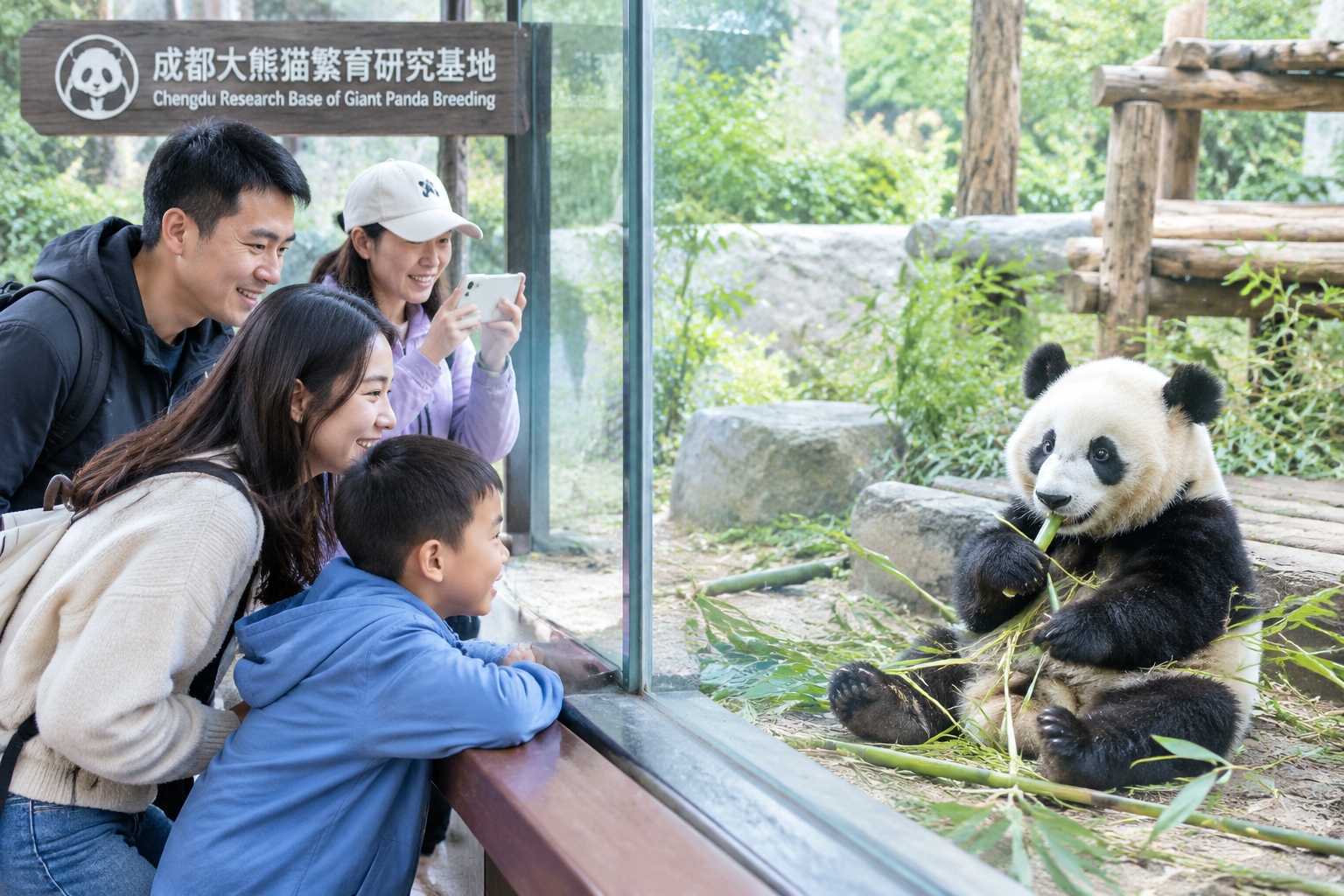

A Tuesday Morning in Chengdu
At 7:15 on a Tuesday morning in Chengdu, the line outside the giant panda breeding base already curls past the ticket gate. A kindergarten teacher named Li Ting holds a paper fan and a phone with 326 panda photos. She has come every month for two years. “I don’t know why,” she says, laughing. “They just make me feel calm.”
A few thousand miles away, in Tokyo, fans enter a lottery for a chance to see a single panda cub. In Washington, D.C., a webcam pointed at a panda enclosure draws millions of views. The giant panda is not just an animal. It is a global cultural icon.
From Diplomatic Gift to Global Symbol
In 1972, when President Richard Nixon visited China, Premier Zhou Enlai gave him two giant pandas, Ling-Ling and Hsing-Hsing. They arrived at the Smithsonian’s National Zoo in Washington, D.C., and became instant celebrities. More than 20,000 people visited on the first day. That moment cemented the panda’s role as a diplomatic gift—what we now call panda diplomacy.
But the panda’s path to global icon started earlier. In the 1950s and 1960s, China sent pandas to the Soviet Union and North Korea. The World Wildlife Fund (WWF) chose the giant panda as its logo in 1961, making it a symbol of conservation. The panda’s black-and-white face became a shorthand for protecting endangered species.
In 2016, the International Union for Conservation of Nature (IUCN) downgraded the giant panda from “endangered” to “vulnerable.” Wild panda numbers had risen to more than 1,800, thanks to decades of protection and bamboo forest restoration. China later established the Giant Panda National Park in 2021, a network of protected areas across three provinces. The panda became proof that conservation can work.
The Panda Fan Economy: Plushies, Movies, and Memes
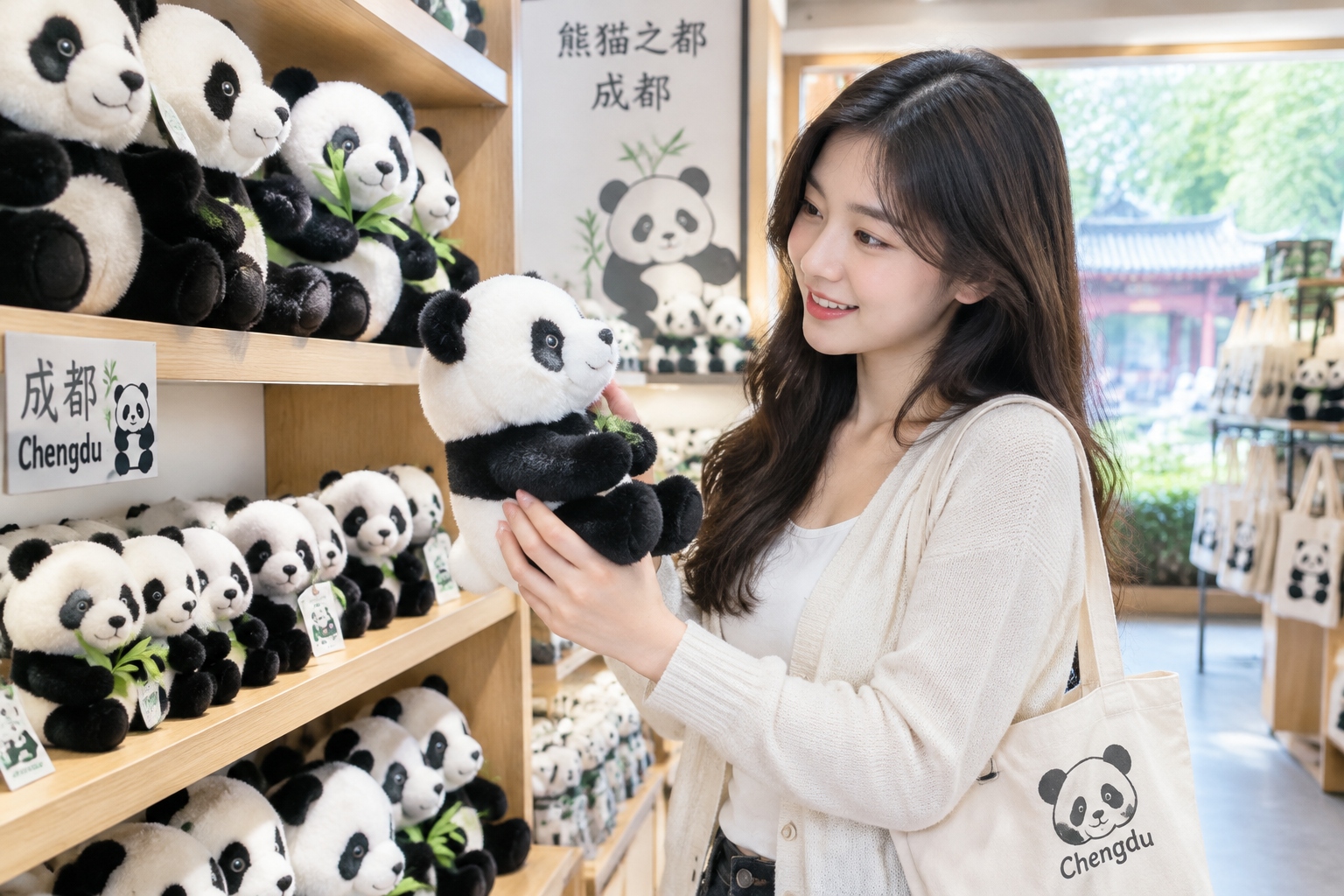
Walk into any souvenir shop in Chengdu, and you’ll see walls of panda plushies. Some are tiny keychains; others are as tall as a child. In 2023, a single panda-themed store in Chengdu’s Chunxi Road reported selling more than 10,000 plush toys in a month, according to local media. Online, panda memes spread on Weibo, TikTok, and Instagram. The 2008 film “Kung Fu Panda” turned Po into a global star, and its sequels added billions at the box office.
Japan has its own panda economy. When a panda cub named Xiang Xiang was born at Ueno Zoo in 2017, the zoo held a lottery for viewing tickets. More than 1.8 million people applied in the first month. Local bakeries sold panda-shaped bread; department stores stocked panda-themed bento boxes. In the U.S., the Smithsonian’s panda cam became a lockdown comfort for millions. In Europe, Edinburgh Zoo’s pandas Yang Guang and Tian Tian drew visitors from across the UK.
The fan culture is not only about buying things. It is also about sharing. On Chinese social media, a short video of a panda falling out of a tree can get millions of likes. Japanese fans make fan art. American fans join online watch parties. The panda is a rare subject that crosses language and politics.
Why the Chinese Word for Panda Is Not Just “Bear”
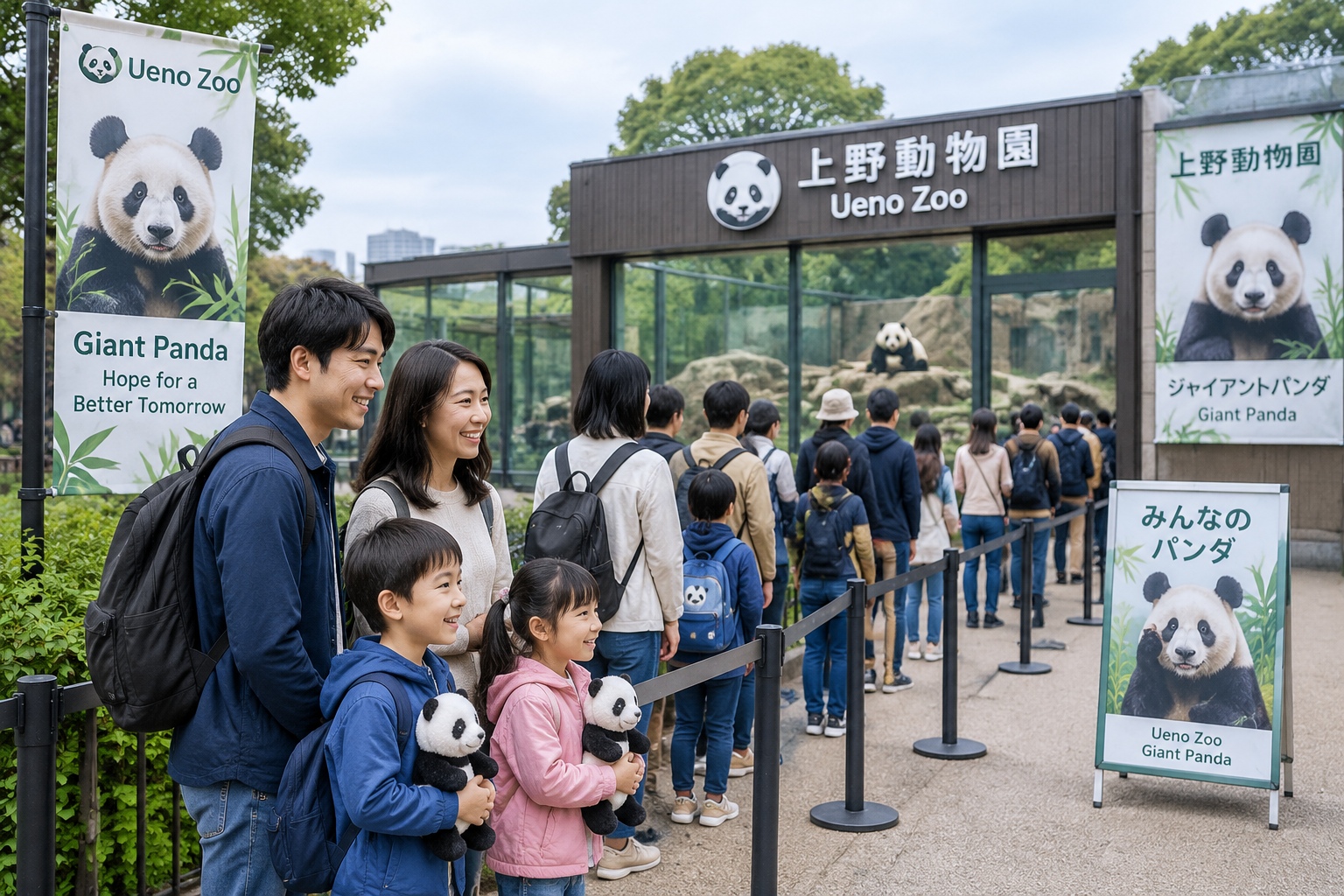
In Chinese, the giant panda is called “大熊猫” (dà xióngmāo), which literally means “big bear-cat.” The name is a bit of a puzzle. The animal is a bear, but the word “cat” suggests softness. Traditional Chinese culture had a complicated view of bears. In ancient texts, bears (熊) often represented strength, danger, and wild power. The legendary Yellow Emperor was said to have trained bears in battle. But pandas were rarely mentioned. They lived in remote bamboo forests and were not part of everyday folklore.
When the modern concept of the panda spread in the 20th century, Chinese people adopted it as a national symbol. The panda’s gentle image contrasted with the older, fiercer bear. It became a way to present China as peaceful and friendly—a sharp shift from the “bear” as a threat. This is different from how Western cultures often see bears: as both cuddly toys and dangerous predators. The panda neatly separated the two.
Panda Fever in Japan, the U.S., and Europe
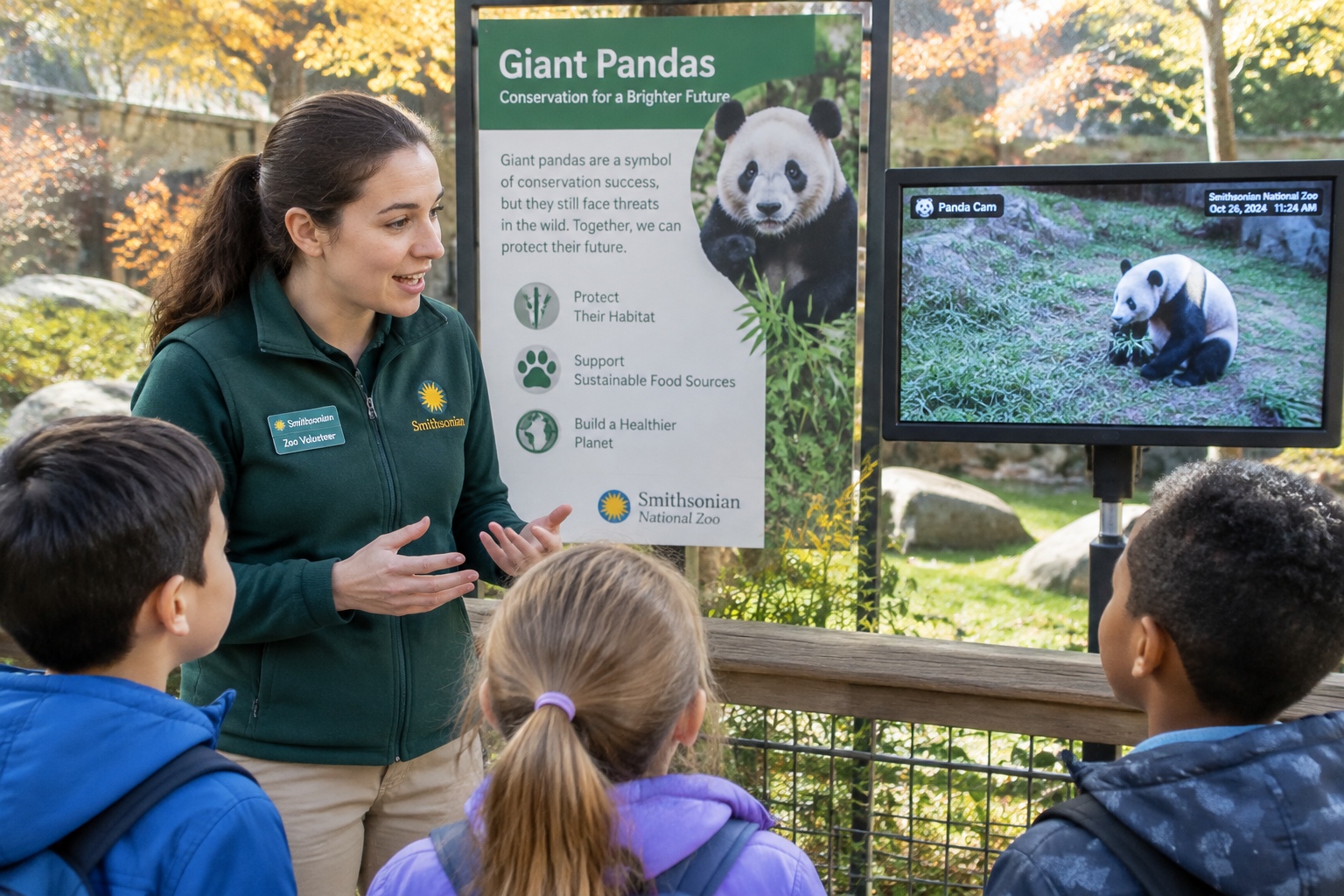
Each country has its own version of panda love. In Japan, the panda fits perfectly into the “kawaii” (cute) culture. Ueno Zoo’s pandas are treated like pop stars. Fans line up for hours, buy limited-edition goods, and cry when a panda leaves. When Xiang Xiang returned to China in 2023, Japanese fans gathered at the zoo to say goodbye. The emotional farewell made national news.
In the United States, panda enthusiasm often mixes with conservation. The Smithsonian’s National Zoo uses pandas to teach visitors about habitat loss and bamboo forests. Donations to panda conservation programs spike when a cub is born. In Europe, zoos like Berlin’s Tierpark and Madrid Zoo use pandas to draw attention to global wildlife protection. The local expressions differ, but the core feeling is similar: people find pandas irresistible.
There are also local snacks and traditions. In Japan, panda-shaped rice balls appear in convenience stores. In the U.S., panda-themed cupcakes are sold at zoo fundraisers. In the UK, a panda named “Sweetie” became a mascot for a climate campaign. The panda adapts to each culture while keeping its basic appeal.
The Cute Economy and Flagship Species Marketing

Economists call it the “cute economy.” Cute things trigger a caregiving response in humans. That response can be turned into spending. A 2022 study in the Journal of Consumer Research found that looking at cute images can improve focus and performance on tasks. For zoos and brands, pandas are a shortcut to that feeling.
Pandas are also a “flagship species.” In conservation, a flagship species is a charismatic animal used to raise money and awareness for a whole ecosystem. The panda is the ultimate example. WWF’s panda logo is one of the most recognized symbols in the world. When people donate to save pandas, the money often protects bamboo forests that are home to other animals, from red pandas to golden monkeys. In Chengdu, the panda base has become a major tourist attraction, supporting hotels, restaurants, and tour guides.
The cute economy has limits. Some critics say it encourages zoos to focus on charisma rather than biodiversity. Others worry that panda merchandise made in factories can harm the environment. But for many small businesses, the panda is a livelihood. In Chengdu alone, panda tourism generates billions of yuan each year, according to local government reports.
What Pandas Reveal About Us
Not everyone is swept up. Some Chinese visitors complain about crowds and ticket prices. Some conservationists argue that panda funding sometimes overshadows other endangered species. And real pandas are not always cute on demand. They sleep a lot, eat bamboo for hours, and can be surprisingly grumpy. But that may be part of the appeal. They are wild animals that happen to look like plush toys.
Back in Chengdu, Li Ting finishes her visit and buys a small panda keychain. She doesn’t plan to stop coming. “It’s not about the news,” she says. “It’s just a nice thing to do.” That simple feeling—shared by fans in Tokyo, Washington, and Edinburgh—may explain why the panda became a global cultural icon. It gives people a gentle, furry reason to care.
Start the discussion at forum.chinacomes.com