

Before a Panda Flies, Someone Files the Paperwork
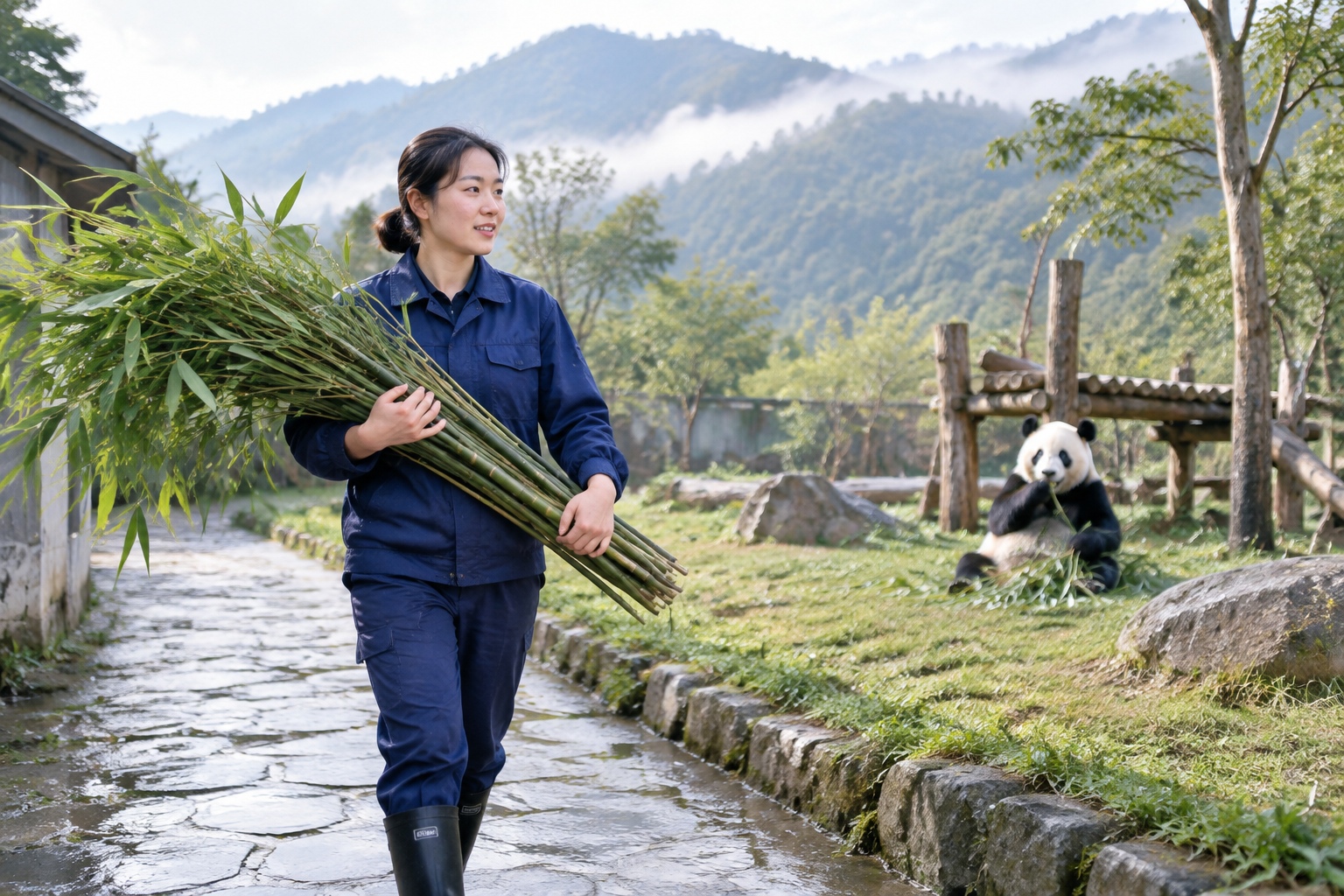
At the Dujiangyan base outside Chengdu, a panda that is about to become an international story spends its final weeks in a quiet, quarantined room. A keeper weighs it every morning, records how much bamboo it ate, checks its teeth and paws, and writes all of it down. Nothing about the scene looks like diplomacy.
On 27 June 2024, two young pandas, Yun Chuan and Xin Bao, left that world and landed in San Diego. They were the first pandas to arrive in the United States since 2019.
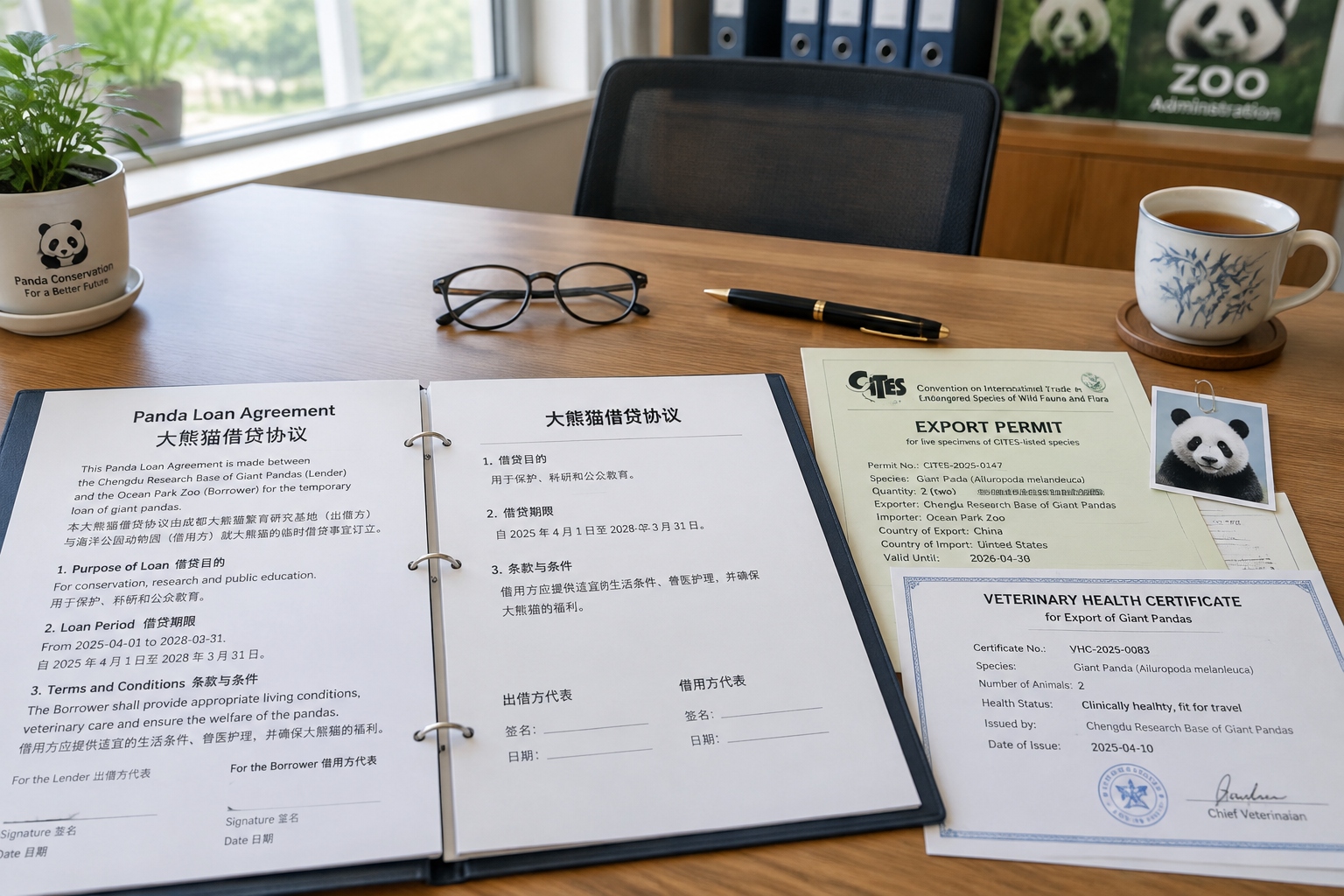
What the public saw was a photograph. What made the flight possible was a stack of documents: a research and conservation loan agreement signed between the zoo and the China Wildlife Conservation Association, export permits under CITES (the treaty that governs trade in endangered species), a veterinary health certificate, an import permit from the U.S. Fish and Wildlife Service, and customs arrangements at both ends.
That gap between a fluffy photo and a legal file is the part of “panda diplomacy” most people never see.
Pandas Are Diplomats With Permits
“Panda diplomacy” is a nickname, not an official programme. No ministry publishes a panda strategy. What exists instead is a set of rules built up over sixty years, and those rules decide who receives a panda, for how long, at what price, and who owns any cub.
Three things shape every deal. First, the giant panda sits in Appendix I of CITES, the strictest category, which bans commercial trade and requires permits from both countries for any cross-border move. Second, in the United States pandas are listed as endangered under the Endangered Species Act, so a zoo cannot simply buy or accept one — the Fish and Wildlife Service has to be satisfied that the arrangement serves conservation, not just ticket sales. Third, China’s own Wildlife Protection Law, first passed in 1988, classifies the panda as a first-class protected animal. It cannot be sold, and it never stops being Chinese property.
For a zoo director, this translates into something concrete: sign a ten-year renewable agreement, pay an annual fee, provide housing, staff and bamboo, allow joint research to be published, and hand the cubs back when they are old enough.
1941–1972: The Gift Era
Pandas entered diplomacy as presents. In 1941, while China was at war with Japan, the government sent two pandas to the Bronx Zoo in New York as a gesture of thanks for American medical and relief aid.
After 1949, the newly founded People’s Republic used pandas far more deliberately. Moscow received Ping Ping in 1957 and An An in 1959. Pyongyang received pandas in 1965. Between 1957 and 1982, China gave away roughly two dozen pandas to nine countries. The recipient list read like a map of Chinese foreign policy priorities at the time: the Soviet Union, North Korea, Japan, France, Britain, West Germany, Mexico, Spain and the United States.
These were gifts in the literal sense. No money changed hands, no contract set an end date, and the animals stayed where they were sent.
1972: Ling-Ling, Hsing-Hsing and the Queue Around the Block
The most famous gift followed Richard Nixon’s visit to China in February 1972. At a banquet in Beijing, Pat Nixon mentioned how much she had enjoyed the pandas she had seen. Premier Zhou Enlai replied that China would send some to the United States.
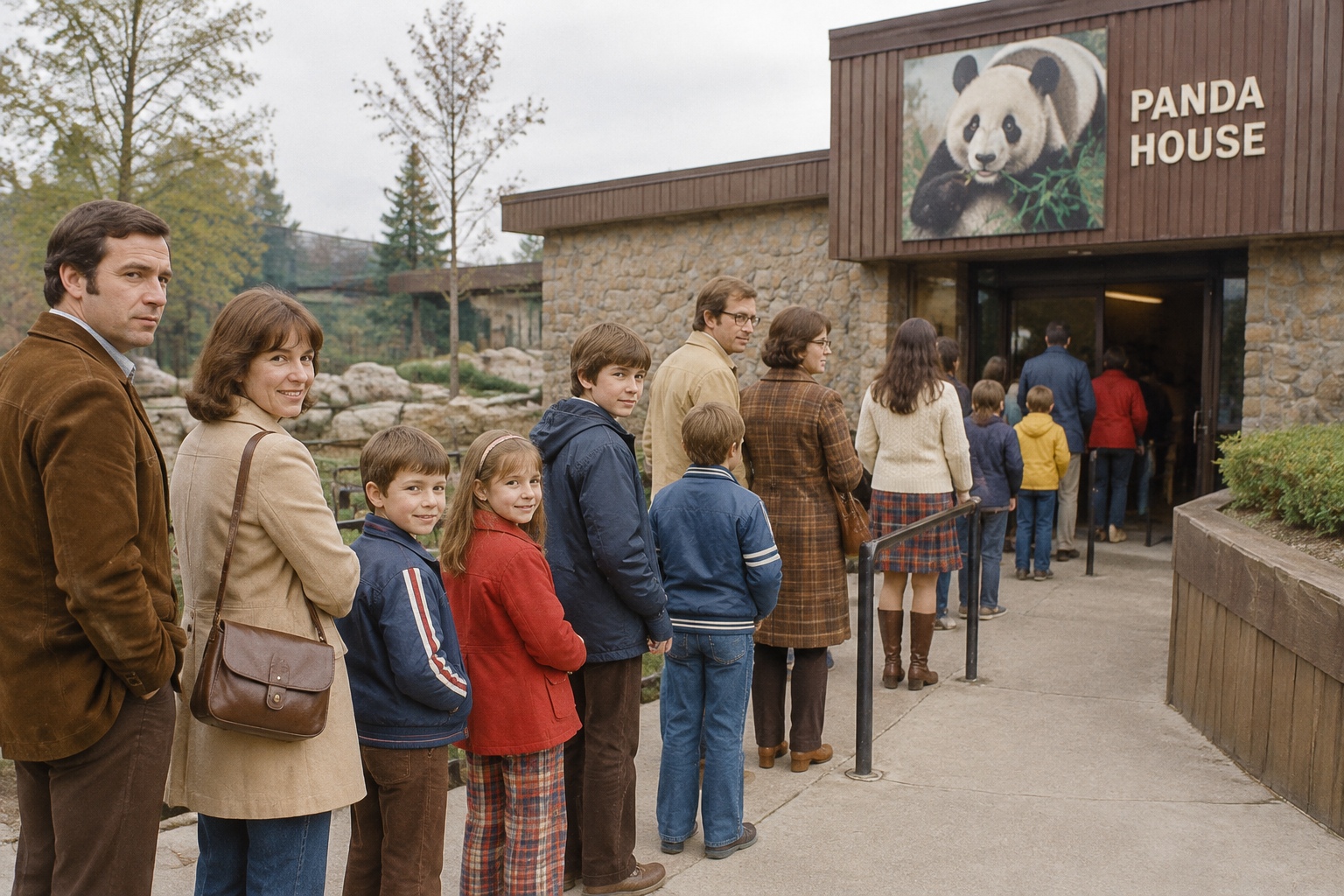
On 16 April 1972, Ling-Ling and Hsing-Hsing arrived at the National Zoo in Washington, D.C. Around 20,000 people filed past on the first day, and the pair stayed among the city’s most popular attractions for years. Japan received its own pair the same year, after the normalisation of relations, and the crowds in Tokyo looked much the same.
This was soft power in its most literal form. It was also a signal: a gift of this kind only travelled between countries whose relationship had just changed.
1984: The Year Gifts Became Contracts
By the early 1980s, the gift model had run into two problems. Wild panda numbers were falling, and a wave of bamboo flowering and die-off in Sichuan in the 1970s and early 1980s left the animals short of food; rescued, half-starved pandas filled the news. At the same time, China was starting to build the breeding and research centres that would need money and scientific partners.
In 1982, Beijing announced it would stop giving pandas away. From 1984, the animals travelled as loans instead. Two pandas were lent to the Los Angeles Zoo for the 1984 Olympic Games, and the arrangement drew criticism — from conservationists who worried that short exhibition loans turned a threatened species into a touring attraction, and from American regulators, who then wrote rules requiring any panda import to serve conservation rather than box-office appeal.
The framework that emerged is essentially the one still in use today: long-term loans, almost always to institutions with research capacity, with fees, reporting requirements and cubs that return to China.
What a Loan Agreement Usually Contains
Most agreements run ten years and can be renewed. The standard fee is around one million US dollars a year for a pair, with an additional payment when a cub is born; the money goes to Chinese conservation and research programmes. Any cub born abroad remains Chinese property and normally flies to China before its fourth birthday. That is why the pandas a foreign city falls in love with keep disappearing from its zoo.
The host zoo’s costs go well beyond the fee: enclosure upgrades, veterinary care, insurance and bamboo, which in some cities has to be flown in. Edinburgh Zoo’s pandas, which returned to China in December 2023, were reported to cost around one million pounds a year.
None of this makes a panda loan purely commercial or purely political. It is a hybrid, and critics on both sides say so: some argue the animals and the money are being used as leverage, while others argue the conservation results justify the whole arrangement.
The Half of the Story That Stays in Sichuan
Only a small share of the world’s pandas live abroad. More than 600 live in captivity, the great majority of them in China, and roughly 1,800 remain in the wild, according to the most recent national survey.
The Chengdu Research Base of Giant Panda Breeding, the Dujiangyan and Bifengxia centres, and the Wolong facilities are where most breeding, veterinary work and research happen. In 2021, China stitched dozens of existing reserves into the Giant Panda National Park, covering about 27,000 square kilometres across Sichuan, Shaanxi and Gansu — an area close to the size of Belgium — to reconnect habitat that roads and towns had cut apart.
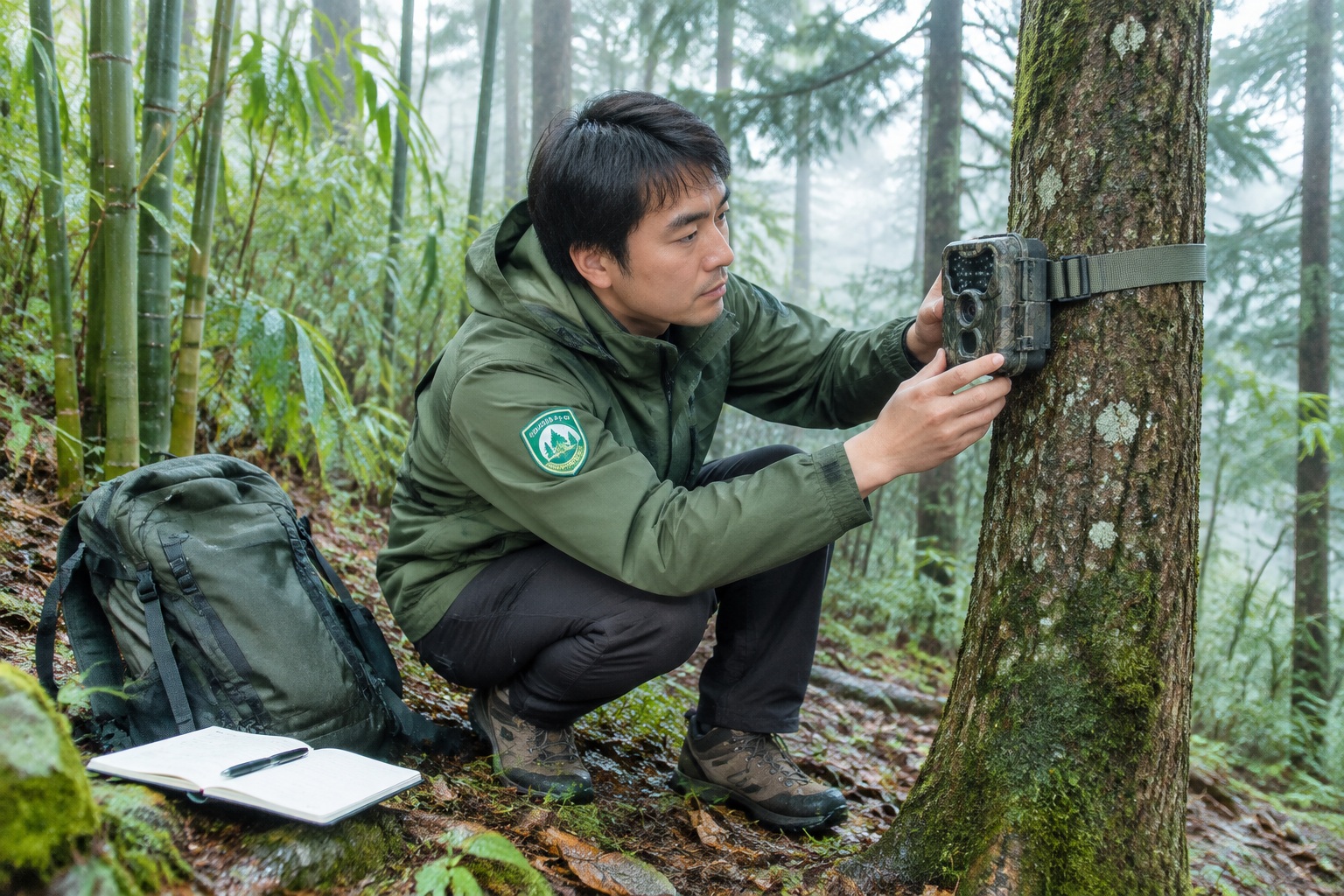
Inside the forest, the daily work looks nothing like a photo shoot. Rangers check camera traps, collect droppings for DNA analysis, clear bamboo corridors and monitor whether wild populations are actually mixing.
There is criticism here too. Captive breeding has relied heavily on artificial insemination and on swapping twin cubs between mothers — techniques some researchers call intensive but necessary, and others call a numbers game. In 2016 the IUCN moved the giant panda from “endangered” to “vulnerable”. Chinese scientists publicly disagreed, arguing that fragmented habitat is a bigger threat than the headline figure suggests.
2023–2024: Returns, Then a Restart
The past two years have been the busiest stretch in decades, in both directions. Ya Ya came home from Memphis in April 2023 after the death of her companion Le Le and a long campaign by Chinese social media users. Washington’s Tian Tian, Mei Xiang and their cub Xiao Qi Ji flew back in November 2023; Edinburgh’s pair followed in December; Atlanta’s four pandas left in October 2024.
At the same time, new loans were signed. Berlin’s Meng Meng gave birth to twins in August 2024. San Diego received Yun Chuan and Xin Bao, and Washington received Bao Li and Qing Bao in October 2024. The pipeline restarted under agreements that emphasise joint research more explicitly than the deals signed in the 1990s.
What to Look For in the Next Panda Headline
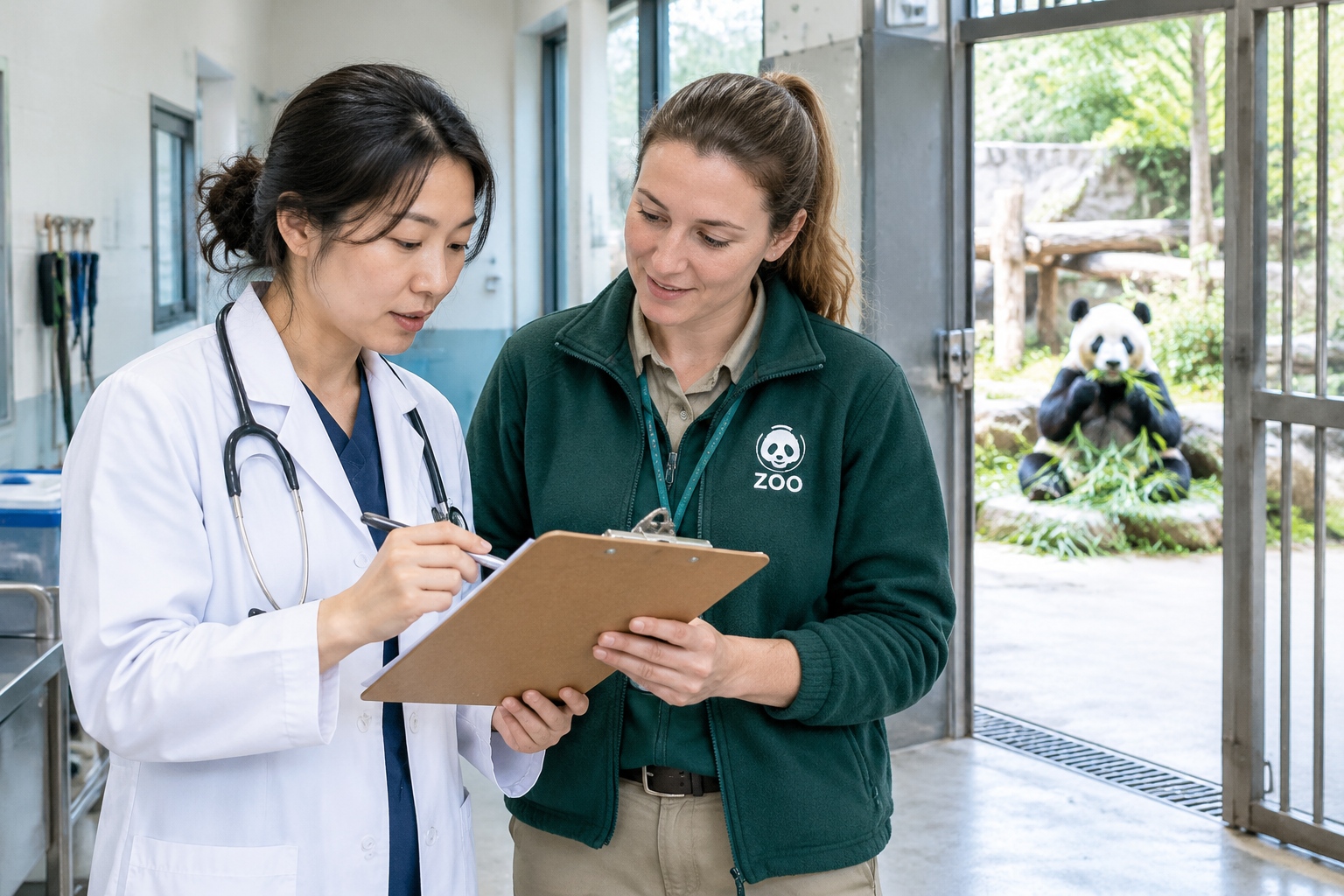
Three details tell you most of any panda story: which Chinese body signs the agreement, how long the loan runs, and whether the receiving institution has a research programme or mainly an exhibit. The last one matters most. A zoo that publishes papers with Chinese scientists, trains staff and funds fieldwork belongs to the model that replaced gift-giving in 1984. A zoo that only needs an appealing animal does not — and the permits are less likely to be granted.
The pandas themselves know nothing of this. But the long queues outside their enclosures, in Washington in 1972 and again in 2024, are the visible edge of a system that runs on contracts, treaties and conservation budgets, and has been quietly renegotiated several times since China sent its first pair to New York in 1941.
Start the discussion at forum.chinacomes.com