

Morning in a village that is also panda habitat
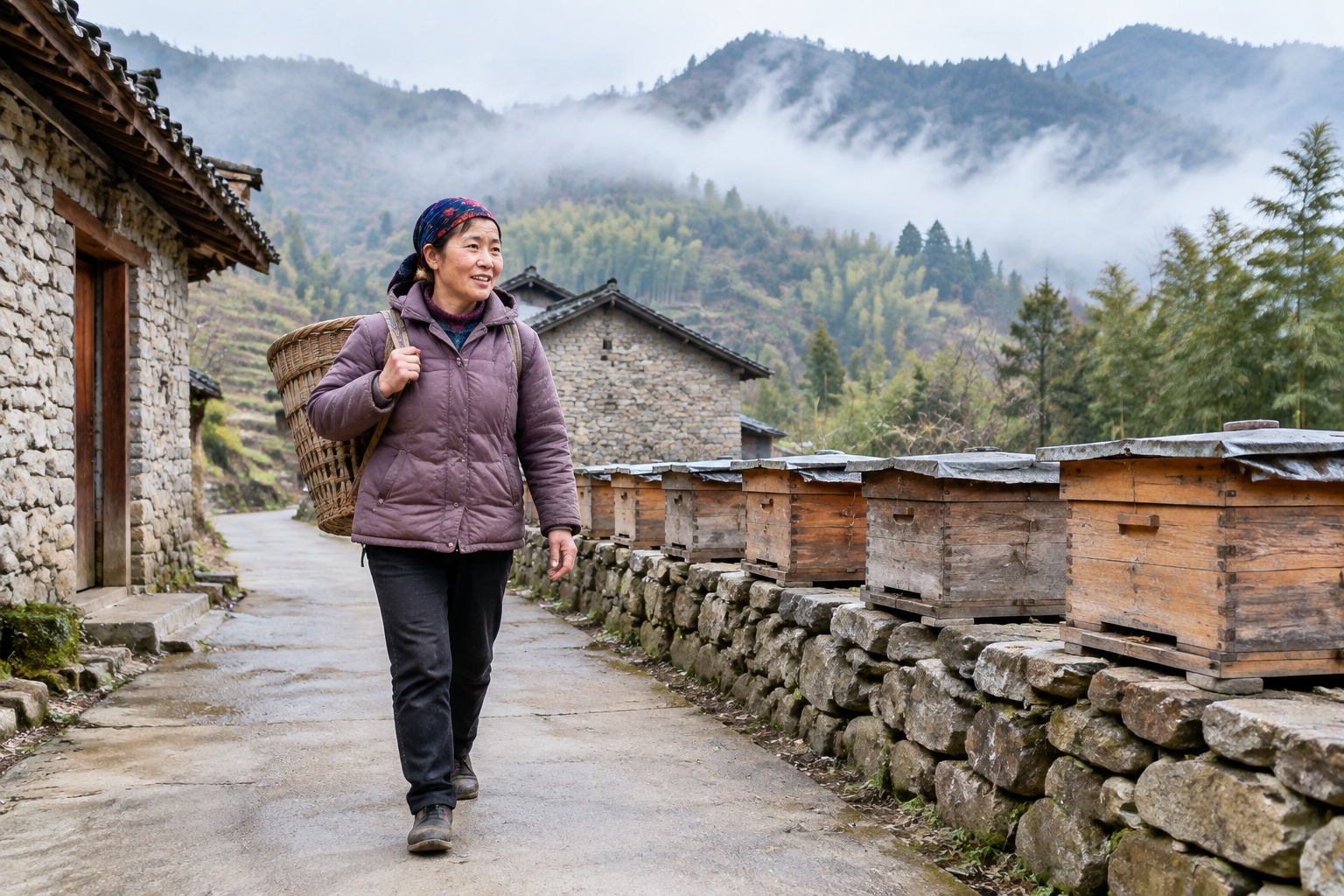
At 7:20 on a November morning, the fog in the valley below Guanba has not lifted out of the bamboo. Along the concrete lane, a woman in a padded jacket and rubber boots walks the row of wooden beehives stacked under the stone wall of her house, listening. The hives are quiet; bees stay inside when it is this cold. Behind her, the ridge rises in layers of dark green — oak, birch, and beneath them the arrow bamboo that a wild giant panda somewhere up there is already eating its way through, four or five kilos before noon.
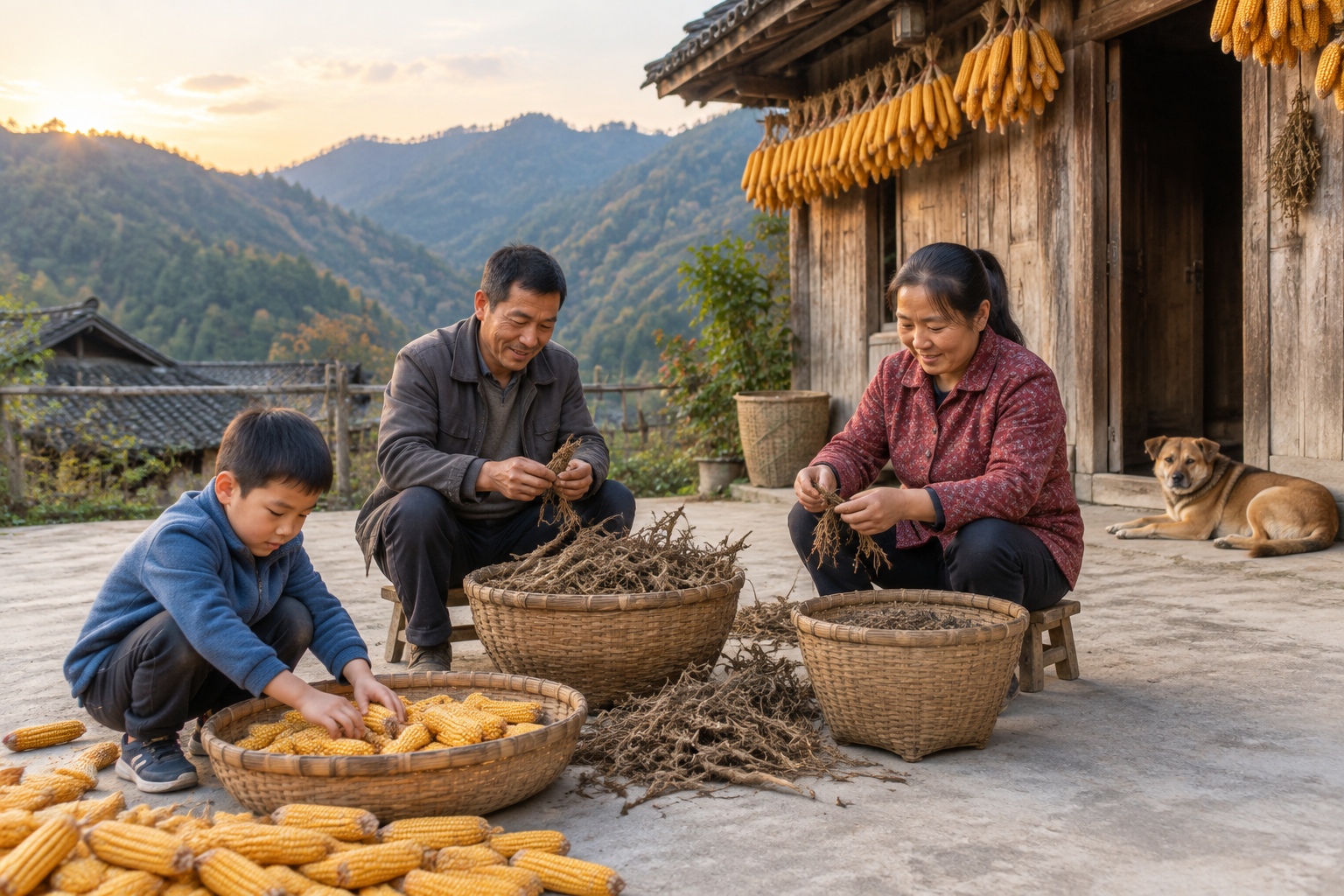
Guanba is a Tibetan village of roughly a hundred households in Mupi township, Pingwu County, in the mountains of northern Sichuan. It is also inside the Giant Panda National Park.
That single fact is where most outside conversations about pandas get complicated. The animal on the poster does not live in an empty wilderness. It has neighbors, and those neighbors have cattle, corn fields, dogs, children in county boarding schools and a monthly phone bill.
Inside the Giant Panda National Park, people are not visitors
China’s Giant Panda National Park was formally designated in October 2021, part of the first batch of national parks that also included Sanjiangyuan, the Northeast China tiger and leopard park, Hainan’s tropical rainforest and Wuyi Mountain. It covers about 27,000 square kilometers across Sichuan, Shaanxi and Gansu provinces, with roughly three-quarters of that area in Sichuan. The most recent completed national survey, published in 2015, counted 1,864 wild giant pandas, most of them inside or immediately around this patchwork of mountain forest.
The park boundary, though, also contains farmland, pasture, village lanes, small hydropower stations, temples, county roads and tens of thousands of residents. In places like Mupi township, the distance between a kitchen garden and a pile of panda droppings on a trail is often a few hundred meters.
This is not a new arrangement. For generations, the bamboo forests of the upper Yangtze watershed have been used by Tibetan, Qiang and Han households for grazing, fuelwood, medicinal herbs and bamboo shoots. Pandas and people have shared these slopes for a very long time. The question was never whether humans live in panda country. It is on what terms.
Who actually causes the trouble
Ask villagers across the panda’s range about wildlife conflict and the panda usually does not make the top three.
Wild boar come down at night and flatten a corn field in a single pass. Macaques strip walnut trees. Black bears break into beehives and, in autumn, into the sheds where corn is drying. Where leopards and wolves still live, livestock go missing on the high pastures. Compensation records in Sichuan’s mountain counties are dominated by these species, not by pandas.
Pandas do occasionally cross a line. In Pingwu and neighboring counties there are recorded cases of wild pandas killing sheep at night; the reaction in the village tends to be surprise rather than anger, because it happens so rarely. More common, and more serious, are the indirect ways people affect pandas: free-ranging dogs that chase wildlife and can carry canine distemper, a disease documented as a threat to pandas; wire snares set for musk deer, wild boar or bamboo rats, which a panda can step into and lose a paw; and cattle and yaks grazing the bamboo understory on ridge pastures, compacting soil and eating the young shoots pandas depend on.
Harvesting matters too. Bamboo shoots and high-value medicinal herbs — fritillary, tian ma, Paris polyphylla — are seasonal cash for households with few other options. Core zones of the park restrict these activities. That is a real loss of income for real families, and every rule on paper has to be enforced by someone who knows the person breaking it.
In 2023, the national forestry authority removed wild boar from the protected wildlife list, allowing regulated hunting in provinces where crop damage had become severe. It was a rare public admission that protection and compensation had not kept up.
Who pays when a bear takes a cow
Sichuan has spent years building a compensation system. In a number of counties, including Pingwu, the local government buys public liability insurance covering wildlife damage. A household reports a dead cow or a wrecked field; a village officer and an insurance assessor verify it; payment follows.
It is not perfect. Rates are fixed per animal and usually fall below market price, and the evidence rules are strict — photograph the carcass, keep the ear tag, do not move it. Villagers learn the paperwork the way farmers everywhere learn to deal with insurers. What the system does provide is something less visible: an official acknowledgment that the loss is real, and that it is not the household’s fault.
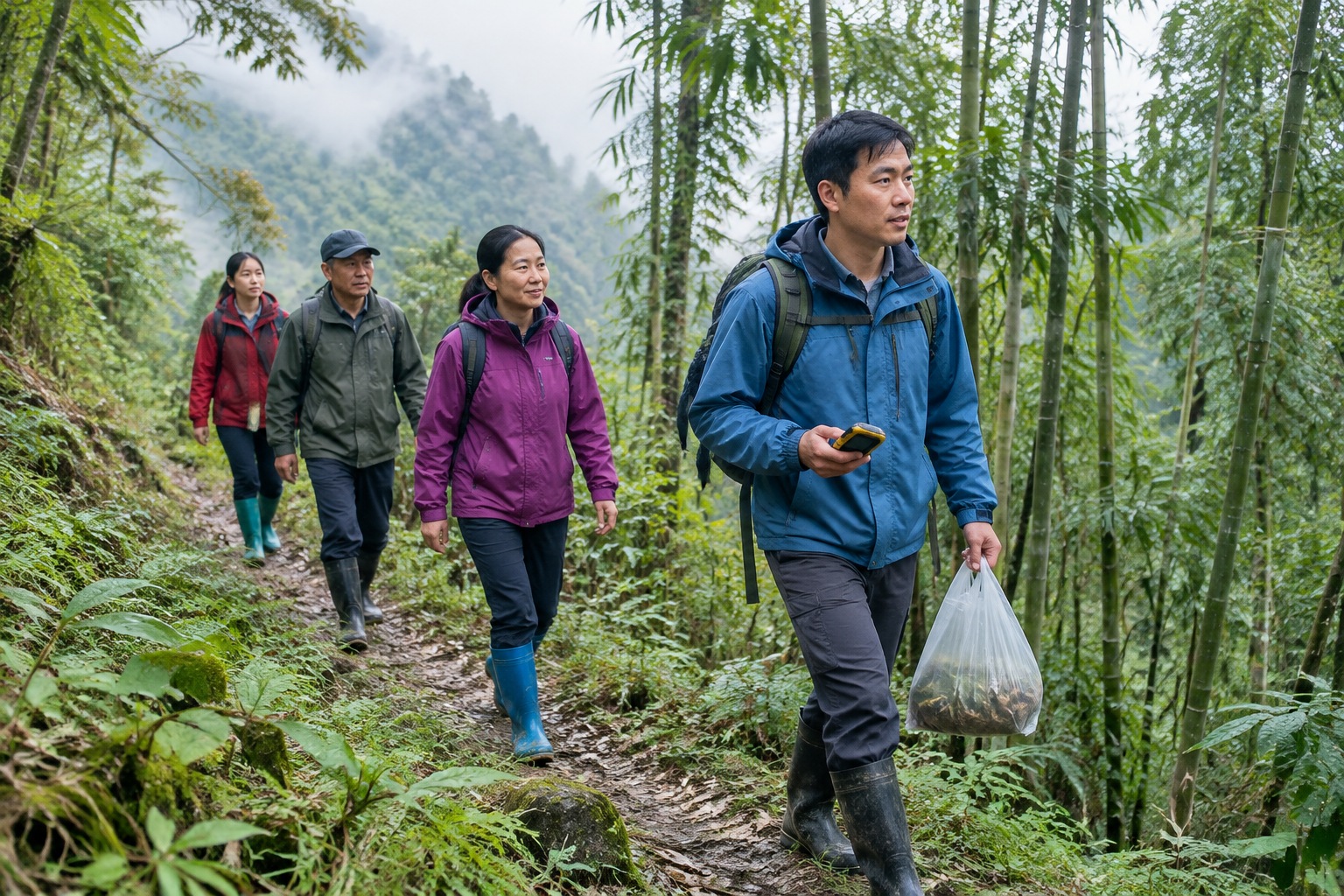
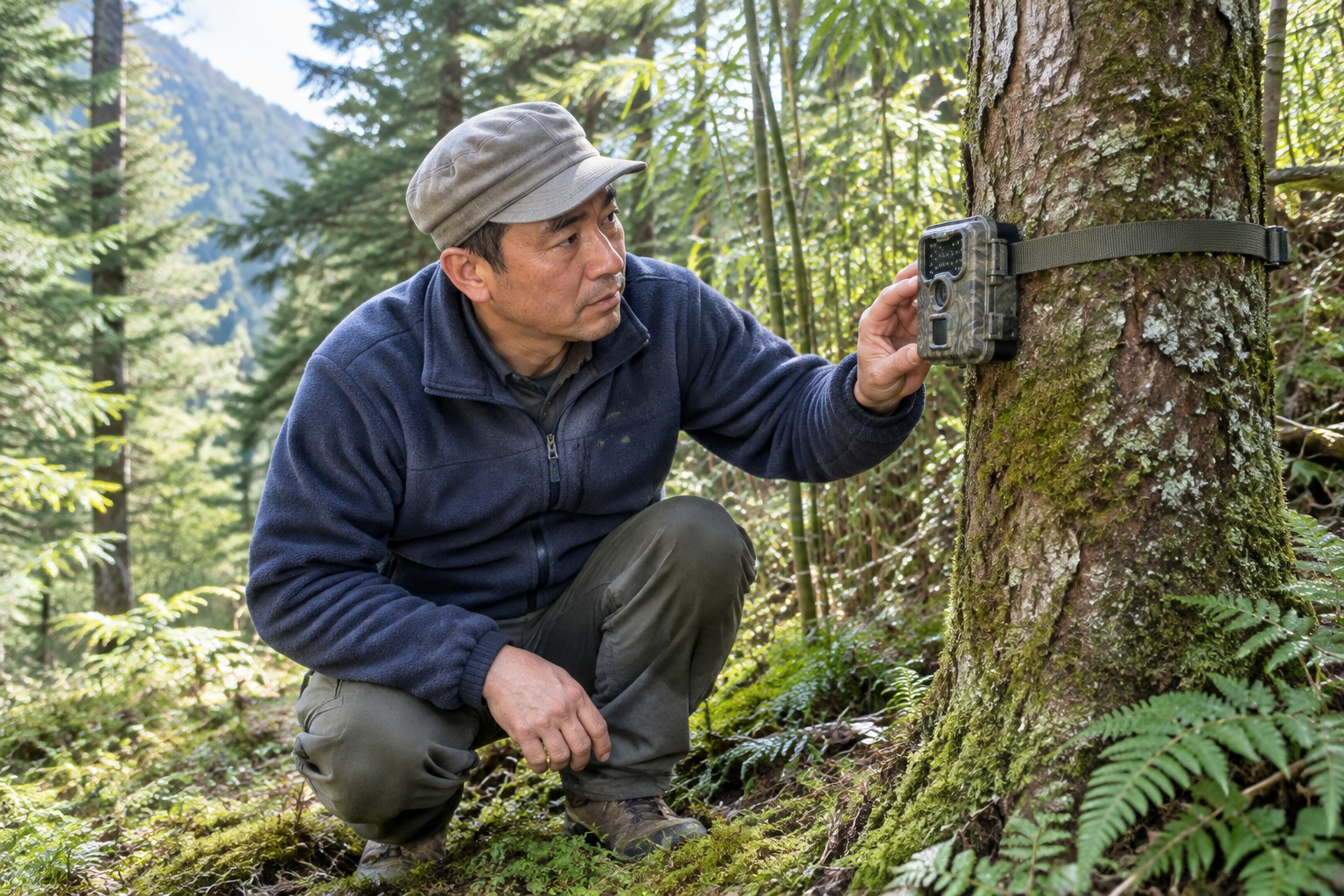
Alongside compensation sits community patrol work. In and around reserves such as Laohegou, a protected area of about 110 square kilometers in the same county, and Tangjiahe in neighboring Qingchuan, villagers are hired as monitors. They walk fixed routes, pull snares out of the undergrowth by the sack, swap batteries in infrared cameras, and log panda signs — droppings, feeding sites, claw marks — into a phone app. For a household the pay is modest but steady, and the skill it requires is exactly the skill older villagers already have.
Honey, herbs and homestays: earning without digging
The most convincing conservation pitch in these valleys is not a slogan. It is a jar of honey.
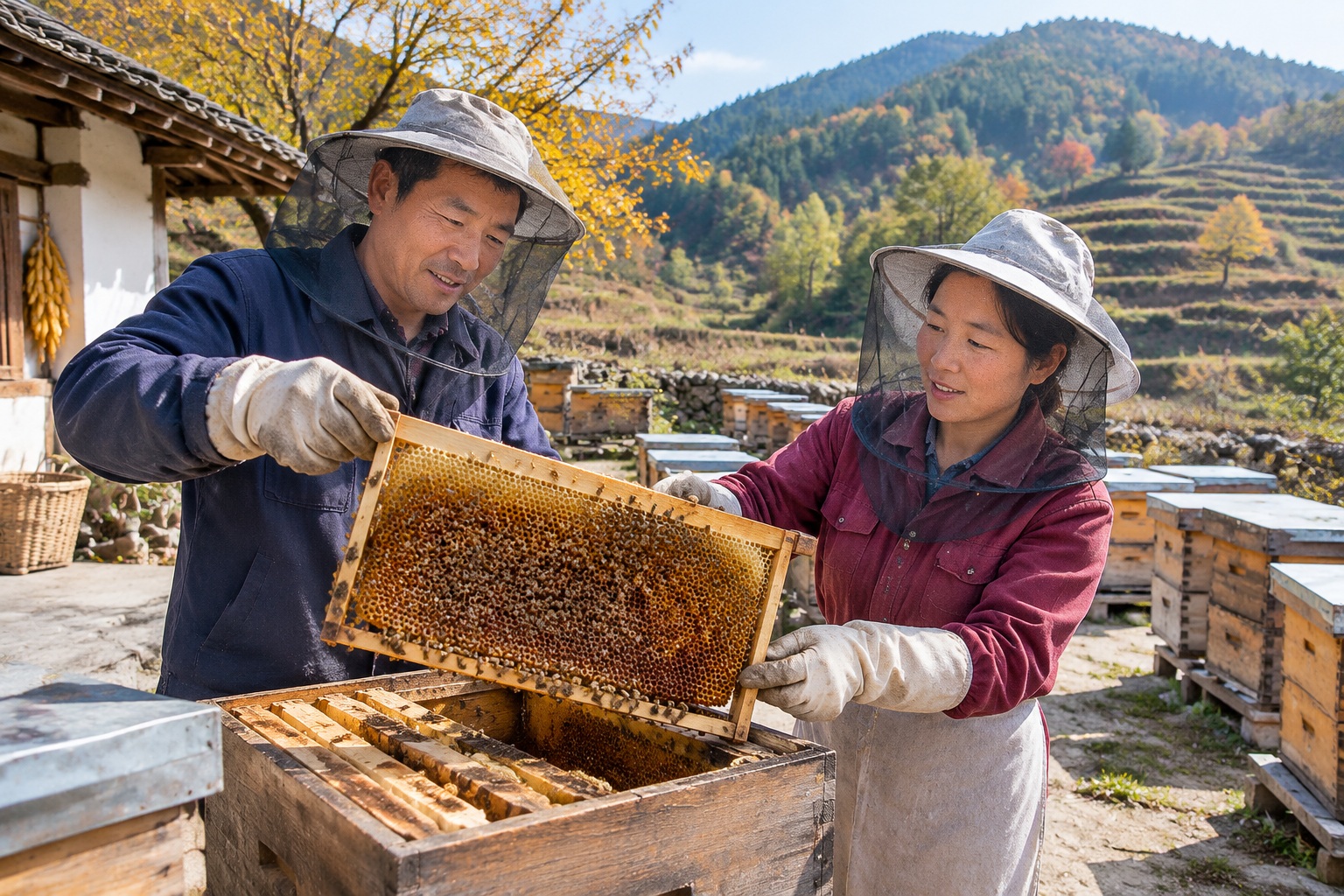
Beekeeping has become the flagship alternative livelihood in several panda-area villages. In Luoyigou, at the gate of the Tangjiahe reserve, the village cooperative sells branded honey. In Guanba, hives sit in household courtyards whose owners once hunted and cut more than they do today. Honey needs flowering forest, clean water and no pesticide drift, so the incentive lines up neatly with protecting the watershed. Sales run through e-commerce platforms and roadside farmstays, and a good year can bring a household more than a season of herb digging.
Other transitions are harder. Some villages now grow medicinal herbs in plots rather than collecting them from the wild, and a few have moved into nature education — city families paying to walk a forest trail, watch bees, and eat lunch cooked in a village kitchen. Grazing has been restricted or bought out in parts of the core zone, and some households have been relocated out of the highest-value habitat altogether. Every one of these changes has a winner and a loser, and the losers are usually older, poorer, or both.
Tibetan and Qiang neighbors
Mupi and the surrounding townships are largely Tibetan; further east, around Beichuan, the villages are Qiang. Local religious practice includes sacred mountains and prohibitions on hunting or felling in particular valleys, and these traditions have shaped the forest as much as any modern regulation.
It would be a mistake to turn that into a postcard. The same communities have hunted, logged and traded herbs for generations, and many households still earn what they can within the rules. What they bring to conservation is not innocence; it is knowledge. They know which slope the pandas cross in April, where the bamboo flowered and died, where the old logging road floods after heavy rain. Reserves increasingly rely on that knowledge, because no camera-trap network covers 27,000 square kilometers.
There is also a demographic problem nobody has solved. Patrol teams are aging. Young people leave for Chengdu, or for factory jobs on the coast, and the men and women who can read a mountain at a glance are in their fifties and sixties.
Not heroes, not destroyers
The easy versions of this story — villagers as poachers, or villagers as born conservationists — are both wrong. Ask people in these valleys and you get something more practical. Some are proud that their village is known as a panda village and that researchers keep coming. Others point out that the restrictions arrived before the income did, and that a rule protecting a forest can still feel like a rule taking something away.
Most describe the panda the way you would describe a neighbor with unusual habits: it lives here too, it occasionally causes a problem, and you would rather it stayed. The distance between a wild panda and a household in Pingwu is measured in meters, not metaphors, and it has been that way for a very long time.
Evening, back at the hives
By late afternoon the fog has burned off and the beekeeper has finished her rounds. A patrol team comes down the trail with a plastic sack of confiscated wire and a memory card pulled from a camera. On the ridge above, the bamboo is still being eaten.
Nobody in the village finds this remarkable. That is, in a way, the story: not a wilderness saved from people, but a mountain where two species with very different diets keep working out how to share the slope.
Start the discussion at forum.chinacomes.com