

The Stone That Everyone Touches
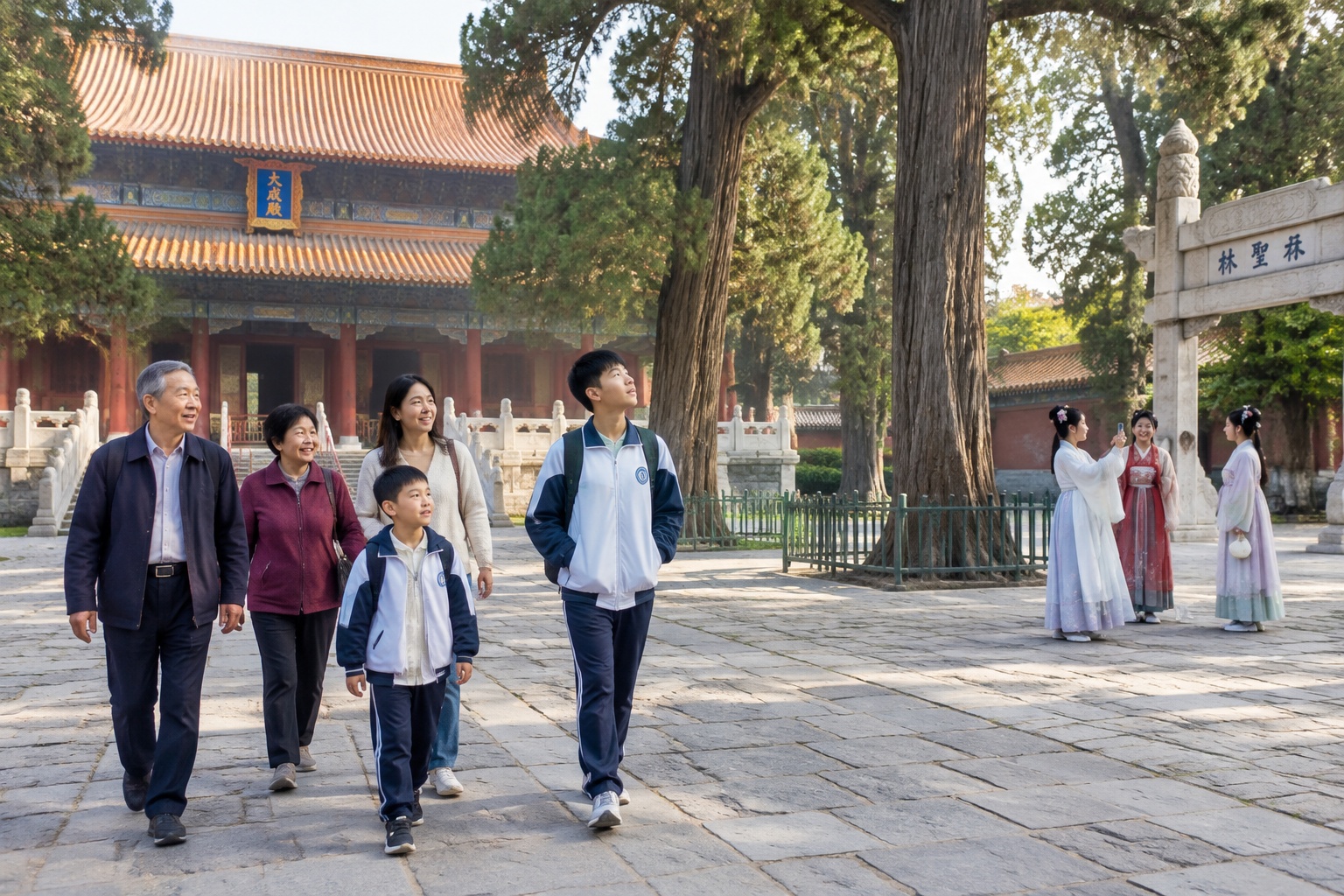
On a Saturday morning in late October, a woman in her forties stood in line at the Temple of Confucius in Qufu, a small city in Shandong province, about two hours south of Jinan by high-speed train. She was not there for the ceremony. The annual memorial ritual, with its slow drums and rows of officials in traditional robes, had happened a month earlier, on September 28. What she wanted was simpler: to touch a particular stone slab near the Dacheng Hall, the temple’s main building.
Her son, a high school senior, touched it first. Then she did. Neither said much. A guide nearby explained, in Mandarin and then in English for a small group of Malaysian tourists, that this stone is associated with good fortune in exams. The woman smiled, took a photo, and moved on.
Scenes like this happen thousands of times a day in Qufu. The city receives over five million visitors a year, according to local tourism figures, and the vast majority are not Confucian scholars or foreign sinologists. They are families, students, tour groups, and young couples in rented hanfu. They come for reasons that have almost nothing to do with the official ceremony and everything to do with how Confucius still lives in ordinary Chinese life.
What Qufu Is, and What It Isn’t
For readers outside China, the basics first. Confucius (Kongzi, 551–479 BCE) was a teacher and philosopher whose ideas about family, education, ritual, and social harmony shaped much of East Asian life for over two thousand years. Qufu is his hometown. The “Three Confucian Sites” — the Temple, the Family Mansion, and the Cemetery — form a UNESCO World Heritage complex that has been rebuilt and expanded for centuries. The temple itself is not a single building but a walled compound of courtyards, gates, and halls, roughly the size of a small university campus.
It is not a church in the Western sense. There is no congregation, no weekly service, no membership. Confucianism as it exists in China today is less a religion than a set of social habits: respect for teachers, emphasis on education, family obligation, and a certain faith in self-improvement through study. That distinction matters for understanding why people come.
The Ceremony Is Not the Main Event
The annual memorial ceremony — known as the jikong dadian — is impressive. It draws government officials, scholars, and descendants of Confucius from across Asia. Television cameras cover it. For a few hours each September, Qufu looks like a stage for official culture.
But the rest of the year tells a different story. On ordinary weekdays, the temple courtyards fill with school groups in matching jackets, retirees with walking sticks, and young people taking selfies under cypress trees that are said to be centuries old. The ceremony is the headline. The daily visits are the text.
Reason One: Exam Prayers
Ask a Chinese friend why they visited Qufu, and exam luck will come up quickly. China’s college entrance exam, the gaokao, is one of the most consequential tests in the world. Around 13 million students took it in 2024. For families, it is a year-long pressure point.
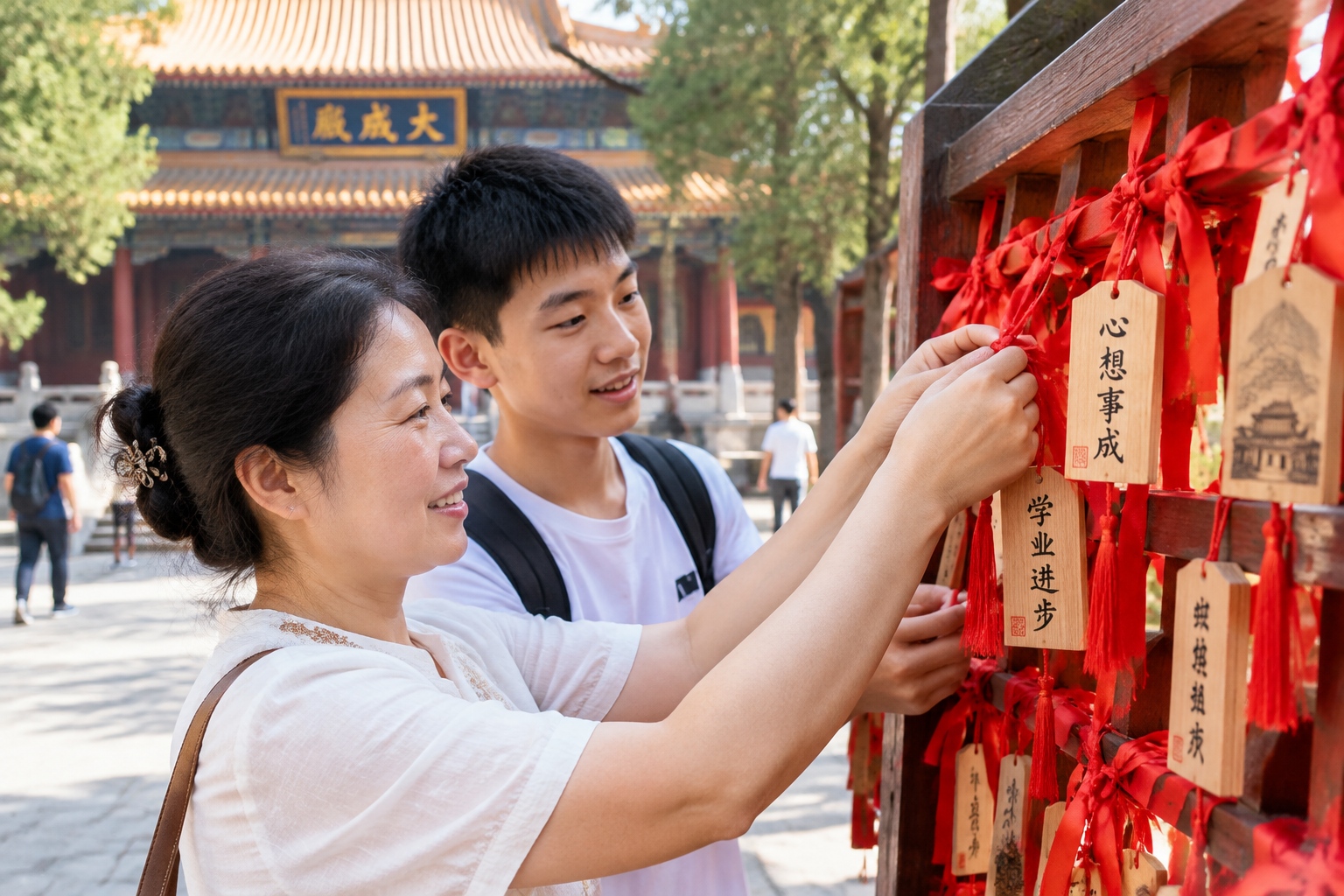
That pressure has created a quiet ritual economy around Qufu. Visitors buy red ribbons and wooden plaques, write names and wishes on them, and hang them on designated racks or trees. Some touch specific stones or sculptures associated with academic success. A staff member at the temple’s visitor center said the racks are cleared every few weeks because they fill up so fast.
This is not exactly prayer in the religious sense. Many of the people doing it would describe themselves as non-religious. It is closer to a lucky charm or a symbolic gesture — a way of saying, “I’m taking this seriously,” in a culture where exam results carry enormous weight.
Reason Two: The School Trip That Isn’t a Theme Park
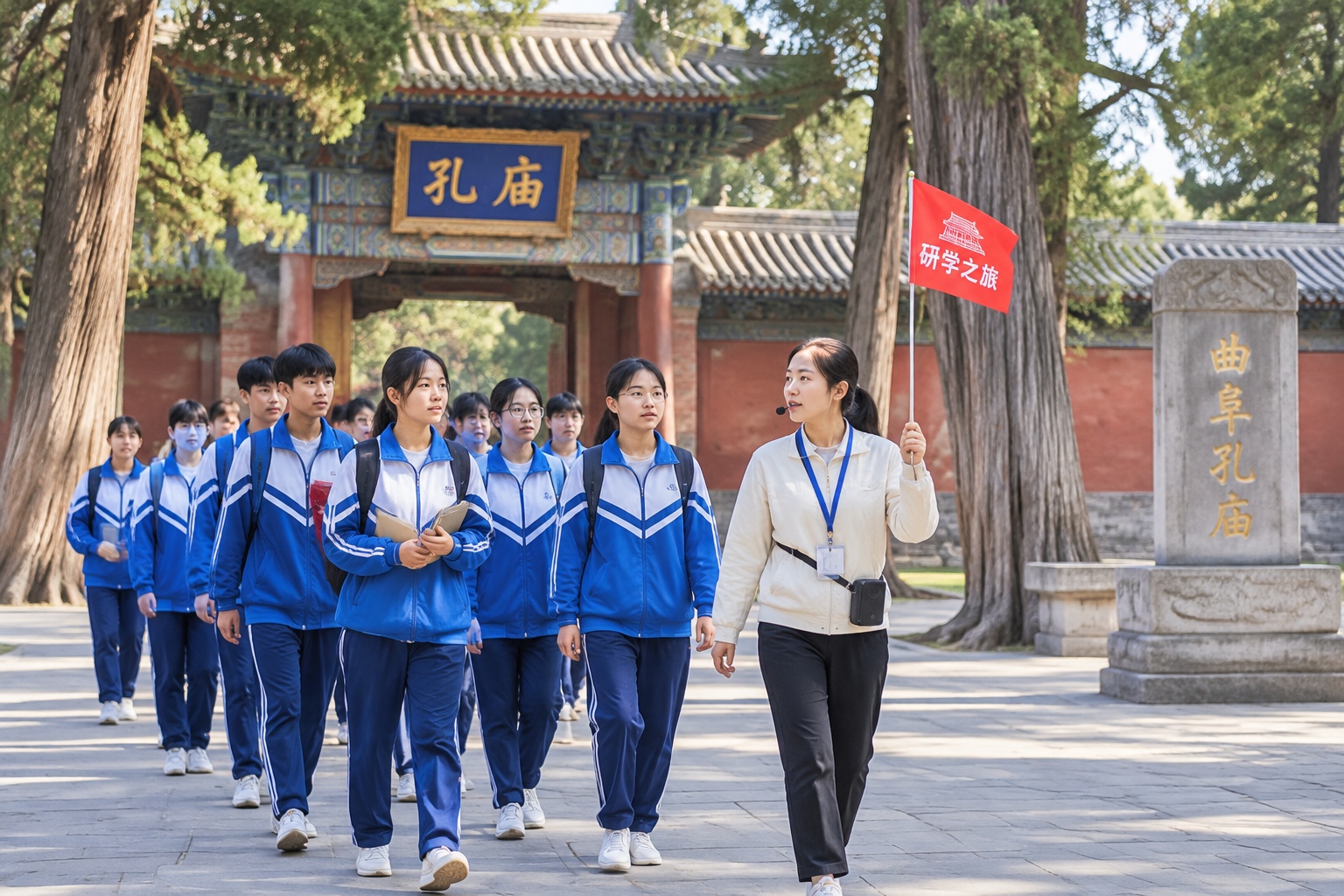
If you visit on a Tuesday morning in spring, you will likely see them: middle school classes in matching tracksuits, walking in loose lines behind a teacher holding a small flag. These are yanxue trips — “study tours” — a booming part of Chinese education. Schools across the country organize multi-day trips to historical sites, museums, and factories.
Qufu is a standard stop. The curriculum connection is obvious: Confucius is taught in every Chinese school, and his sayings appear in textbooks from primary level onward. But the trip is also social. For many students from smaller cities, it is their first time on a high-speed train or their first night in a hotel without parents.
Teachers I spoke with described the goal less as spiritual and more as “seeing the place behind the text.” One teacher from Henan said her students remembered the temple’s cypress trees better than any lecture.
Reason Three: Wearing the Past, Posting the Present
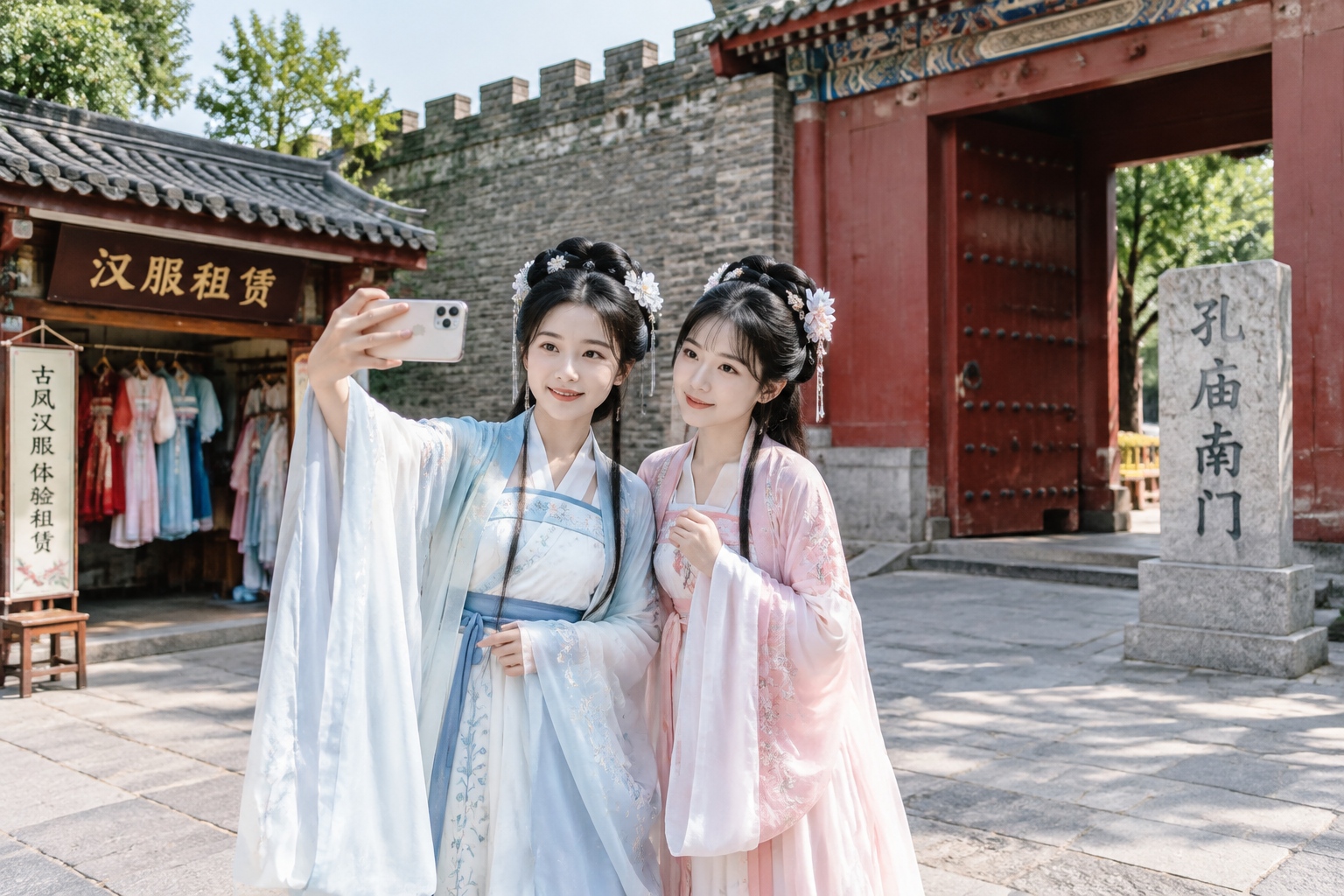
On weekends, the area around the temple’s south gate fills with hanfu rental shops. For about 100 to 200 yuan (roughly $14–28), visitors can rent a traditional robe, get their hair styled, and take photos in courtyards that have been photographed for centuries.
This is not unique to Qufu. Hanfu tourism has grown across China over the past decade, part of a broader interest in pre-modern aesthetics among younger Chinese. What makes Qufu different is the setting: the clothing matches the architecture in a way that feels less like cosplay and more like context.
Not everyone loves it. Some older visitors grumble that the temple has become a backdrop for photo shoots. But the crowds keep coming, and the local economy has adapted. Shops sell hanfu, hairpins, fans, and calligraphy sets alongside the usual souvenirs.
Confucius Without the Altar
Here is where foreign visitors often get confused. They arrive expecting either a religious site or a museum. Qufu is neither, exactly. It is a heritage site that functions as a public park, a school trip destination, a photo location, and a symbolic center all at once.
The Chinese state has supported a Confucian revival since the 2000s, funding temples, scholarships, and international Confucius Institutes (though many of those have closed or been rebranded abroad in recent years). But the everyday relationship most Chinese people have with Confucius is less institutional. It shows up in how parents talk about teachers, how companies organize hierarchies, how people describe filial duty, and how everyone from taxi drivers to professors quotes a handful of sayings without necessarily knowing their source.
In that sense, Qufu is less a place of worship than a place of recognition. People come to see where the ideas came from, even if they do not think of themselves as followers.
What Western Visitors Notice First
If you are from Europe or North America, the closest comparison might be a mix of things: the historical gravity of a cathedral, the educational function of a national museum, and the casual leisure of a city park. But none of those quite fits.
A French tourist I met near the Dacheng Hall put it well. “In France, a church is for God. Here, it feels like it’s for the family.” She meant that the visitors were not there to worship but to do something together — to mark a child’s exam year, to take a family photo, to walk and talk.
That distinction is easy to miss. It also explains why the temple feels busy but not solemn, crowded but not chaotic.

A Working Heritage, Not a Frozen One
Qufu is not a sealed historical zone. The temple sits inside a living city of about 600,000 people. Outside the walls, there are noodle shops, convenience stores, electric scooters, and apartment buildings. A McDonald’s operates a few blocks from the south gate.
This bothers some purists. But it also means the site is not a museum piece. Locals use the surrounding streets every day. Students ride bikes past the temple on their way to school. Vendors sell roasted chestnuts in autumn and cold drinks in summer.
The commercialization is real, and so is the crowding. On national holidays, the narrow paths between halls can feel like a subway at rush hour. But the alternative — a quiet, empty monument — would tell a different and less accurate story about how Confucius still functions in Chinese life.
Why They Keep Coming Back
The woman I met at the stone slab near Dacheng Hall did not describe herself as religious. She had come, she said, because her own mother had brought her here when she was a student. Now she was bringing her son.
That sentence, more than any ceremony, explains Qufu. The memorial ritual happens once a year. The family visits happen every day. Confucius is not worshipped here so much as remembered, argued with, photographed, and passed down.
For outside observers, that may be the most useful thing to understand. The temple is not a window into an ancient belief system frozen in time. It is a working part of contemporary Chinese life, used by people who may not know the Analects well but who know exactly why they came.
Start the discussion at forum.chinacomes.com