
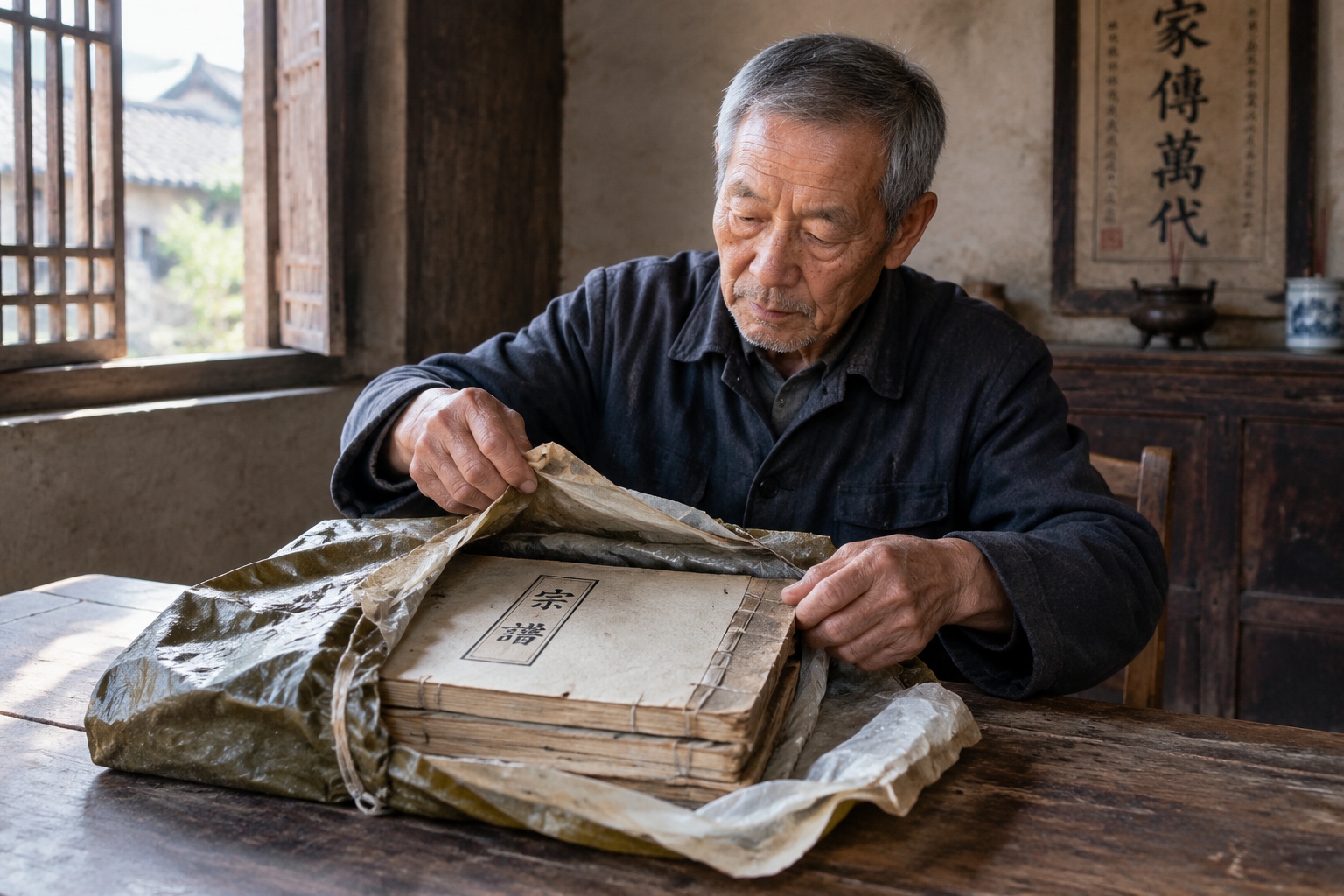

A bundle wrapped in oilcloth
The box came out from behind a false brick wall, and it smelled of camphor and old paper. Fang Dehai, now in his seventies, set it on the wooden table in the main room of his house in a village in southern Anhui, in a region historically known as Huizhou. He peeled back layers of oilcloth, then cotton wadding, then rice paper. Inside were four thread-bound volumes, their covers soft as cloth, the ink faded to the color of weak tea.
This is his family’s zupu—a genealogy. Not a single document but a running record of births, deaths, marriages, migrations, land disputes, and moral instructions, compiled and recompiled by his ancestors across roughly four hundred years. The earliest entries name a man who settled the valley during the Ming dynasty. The most recent, in blue ballpoint, were added by Fang himself in the 1990s.
“My father put this behind the wall in 1966,” he says, running a thumb along a water stain. “He told me where it was, and he told me not to tell anyone. I didn’t open it until he died.”
Why these books had to hide
To understand why a farmer would brick a book into his own house, you need a little background. For most of Chinese history, especially in the south, the extended family—the zongzu, or lineage—was the basic unit of rural life. A lineage owned land together, ran its own school, maintained an ancestral hall, and settled disputes among its members before anything reached a magistrate. The genealogy was that lineage’s constitution, census, and memory, all in one.
Keeping one was both an honor and a vulnerability. Genealogies made families visible, and visibility was dangerous in the twentieth century. During the Cultural Revolution (1966–1976), a campaign against the “Four Olds”—old ideas, culture, customs, and habits—turned ancestral halls into granaries and meeting rooms, and treated family genealogies as feudal relics to be surrendered and burned. Red Guards searched homes. In many villages, centuries of records went into bonfires in a single afternoon.
Fang’s father was not political. He simply could not bring himself to burn the names of the dead. So he did what thousands of others quietly did: he hid the book. People buried genealogies in sealed clay jars under pigsties, where no one wanted to dig. They sewed thin volumes into quilts and winter coats. They slid them above the beams of a kitchen, where smoke and soot would have ruined anything less durable than mulberry-fiber paper. One well-known account from Zhejiang describes a family that submerged its genealogy in a sealed tin inside the village well.
These were not the first crises these books had survived. Earlier generations had carried them away from the Taiping Rebellion in the 1850s and 1860s, which devastated the lower Yangtze, and from the Japanese occupation in the 1930s and 1940s. A genealogy that reaches us today has usually outlived at least one war and one fire, and the people who saved it are rarely remembered by name.
What a family record actually holds
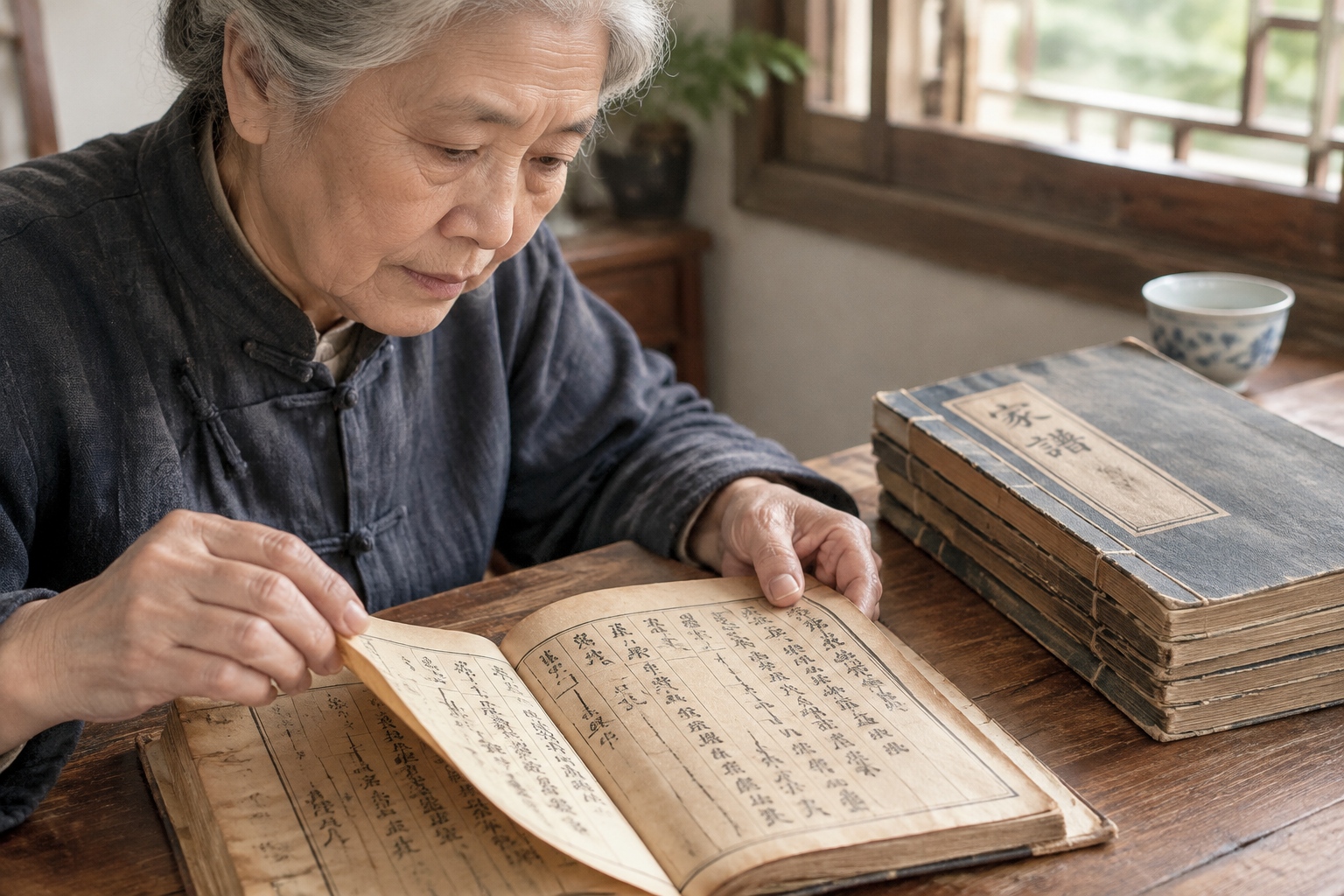
Open one of Fang’s volumes and the first thing you notice is that it is not just a list. There are family rules, written in formal language: honor your parents, do not gamble, do not sell lineage land to outsiders, send bright sons to study even if they are poor. There are short biographies—a woman widowed at twenty who raised four children alone, a man who drowned saving a neighbor’s child. There are generational naming charts, where each generation shares one character in its given name, so that two strangers meeting far from home can place each other instantly in the family tree.
For the people who kept them, genealogies were emotional infrastructure. They told you who you were and whom you were obligated to. They told a boy that the character in his name had been chosen two hundred years before he was born, and that someone two hundred years after him would carry the next character in the sequence.
They are also, almost by accident, extraordinary historical sources. Official histories recorded emperors and ministers. Genealogies recorded ordinary villages—when a harvest failed, when a branch of the family left to open rice paddies in another province, how land was divided and repaired after a flood. Historians studying migration, local economy, and daily life in pre-modern China increasingly turn to these records precisely because they describe the people the grand narratives left out.
A revival after the quiet decades
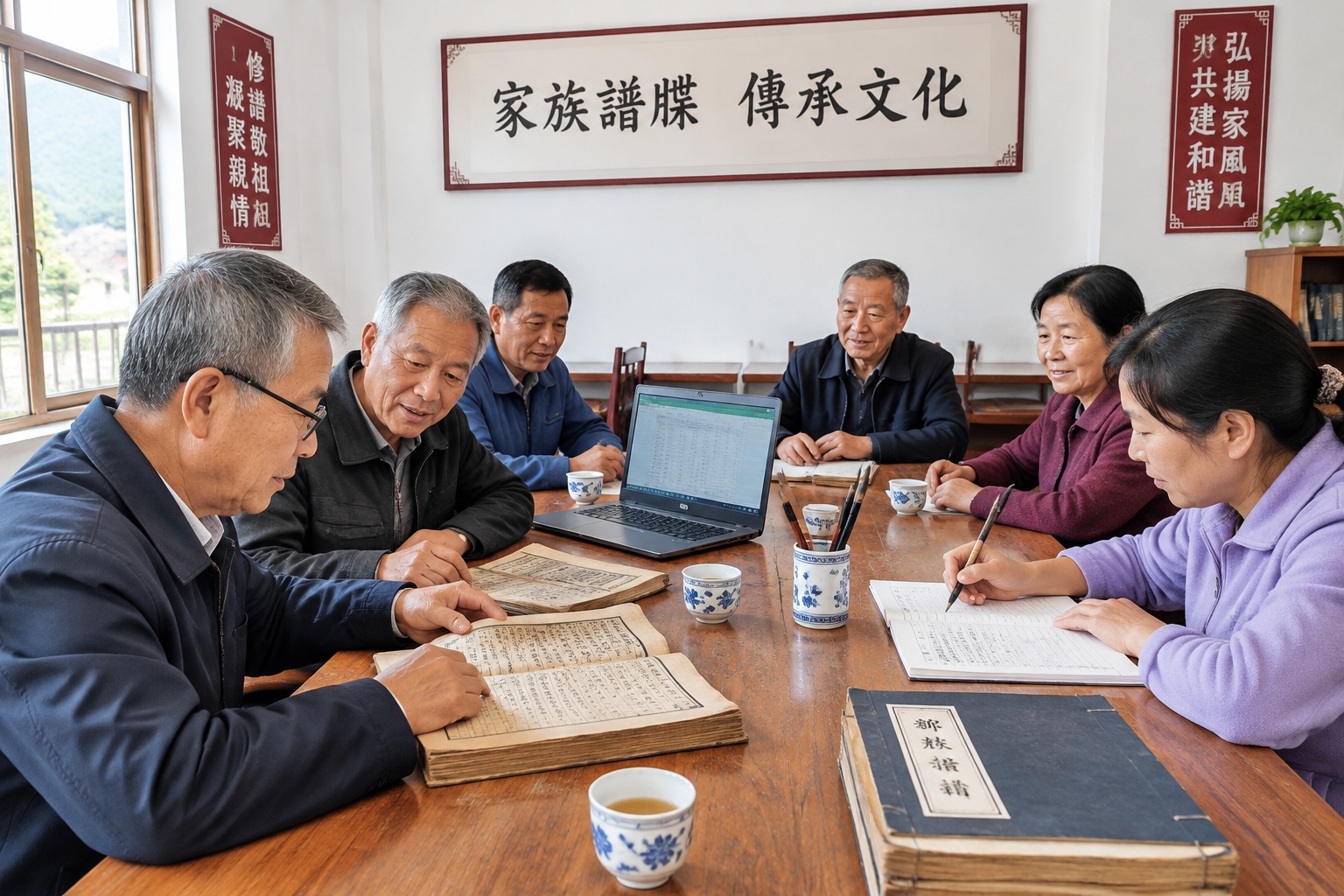
After the political campaigns ended and economic reform began in the late 1970s, something unexpected happened. Buried books came back out of walls and wells. Across the countryside, especially in Anhui, Jiangxi, Fujian, Zhejiang, and Guangdong, families began recompiling their genealogies—adding the births, deaths, and marriages that the hidden decades had gone unrecorded.
I have sat in on one of these compilation meetings. It looks less like scholarship than like a reunion with paperwork. Retired men argue over whether a cousin who moved to the city in 1985 should be listed under his birth village. Someone brings a laptop with a spreadsheet. Someone else insists the old brush-written format be preserved. Women’s names, historically often omitted or listed only as “née Wang,” now increasingly appear in full—a quiet change that says a lot about how family life itself has shifted.
From the wall to the server
The newest chapter in the survival of these books is digital, and the center of it sits in a reading room in Shanghai. The Shanghai Library holds what is widely described as the largest collection of Chinese genealogies in the world—on the order of three hundred thousand volumes, covering hundreds of surnames. For years it has been scanning them page by page and building searchable databases, so that a reader in Toronto or Singapore can look up a lineage without ever handling the fragile originals.
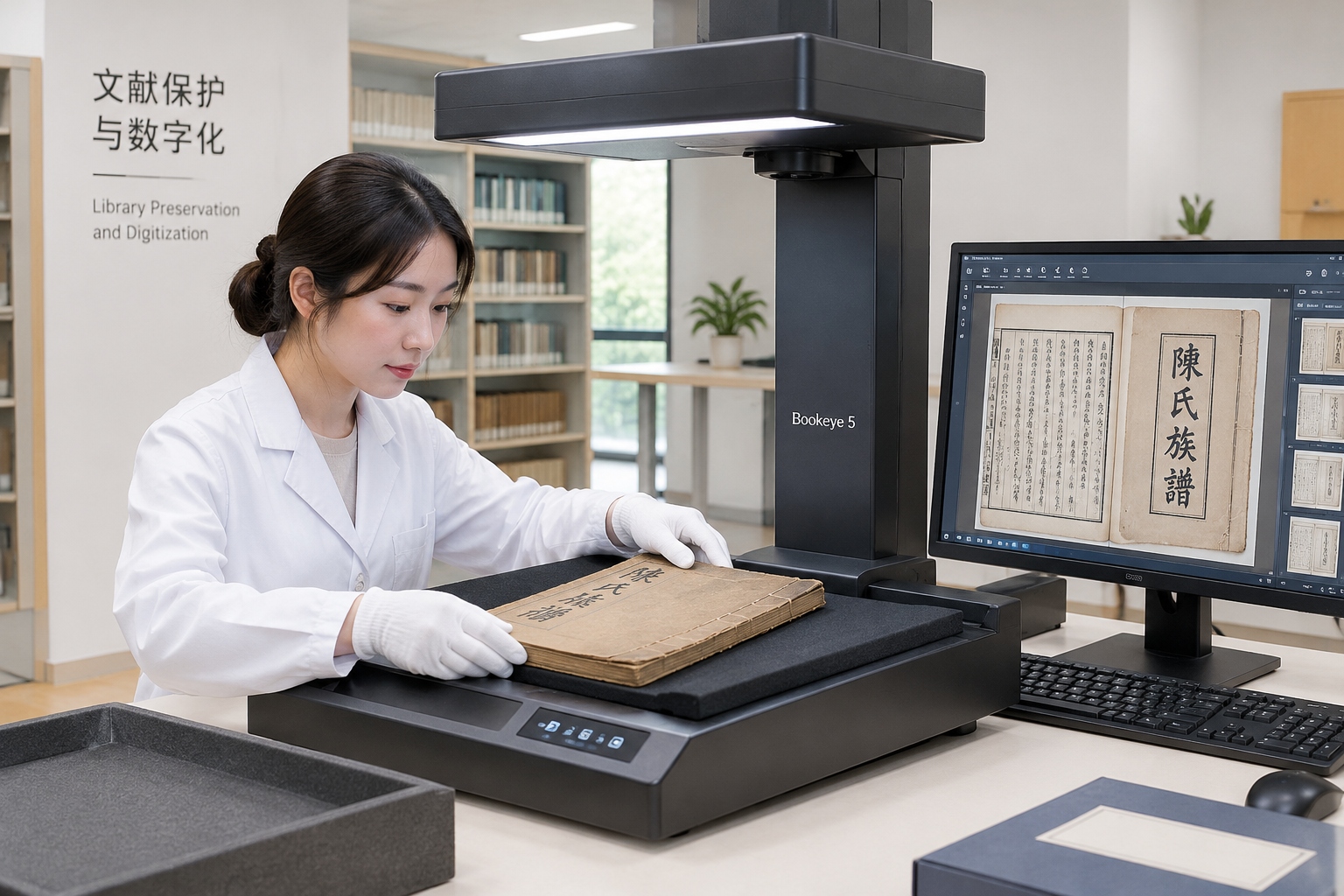
This matters more than convenience. Paper is mortal. The mulberry-fiber paper in Fang’s volumes is remarkably tough, but ink fades, mold spreads, and a single house fire can erase four centuries in an hour. Digitization is a form of hiding that finally does not depend on one person’s secret and one brick wall. A scanned genealogy can be copied endlessly and stored in many places at once.
Overseas Chinese communities drive much of the demand. People whose grandparents left Guangdong or Fujian generations ago now search these databases to find the village and the generational character that place them in a family they never met. Volunteer genealogists and institutions have digitized tens of thousands of these records, and family history platforms used worldwide now include large collections of Chinese lineage books.
Fang has mixed feelings about all this. He agreed to let a county cultural office scan his volumes, and he keeps a photographed copy on his son’s phone. But he still re-wraps the originals in oilcloth and returns them to a cupboard, not quite the wall anymore, but close.
“The phone is for them,” he says, meaning the grandchildren, the researchers, the strangers who share his surname. “The book is for us.”
Between those two sentences lies the whole story of how these records survived—carried not by institutions or emperors, but by ordinary people who decided, over and over for hundreds of years, that the names of their dead were worth keeping.
Start the discussion at forum.chinacomes.com