
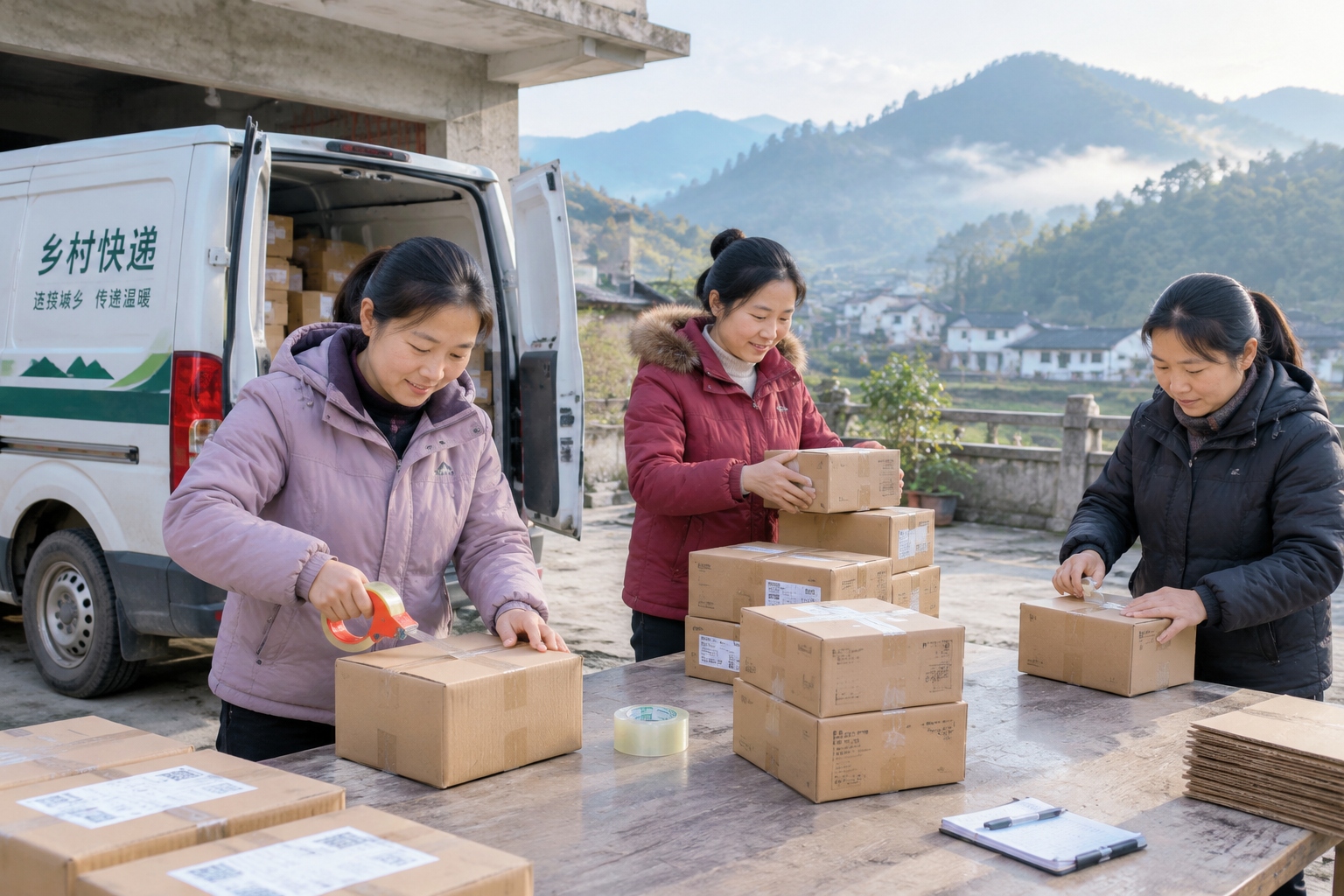

A courier van on a mountain road at seven in the morning
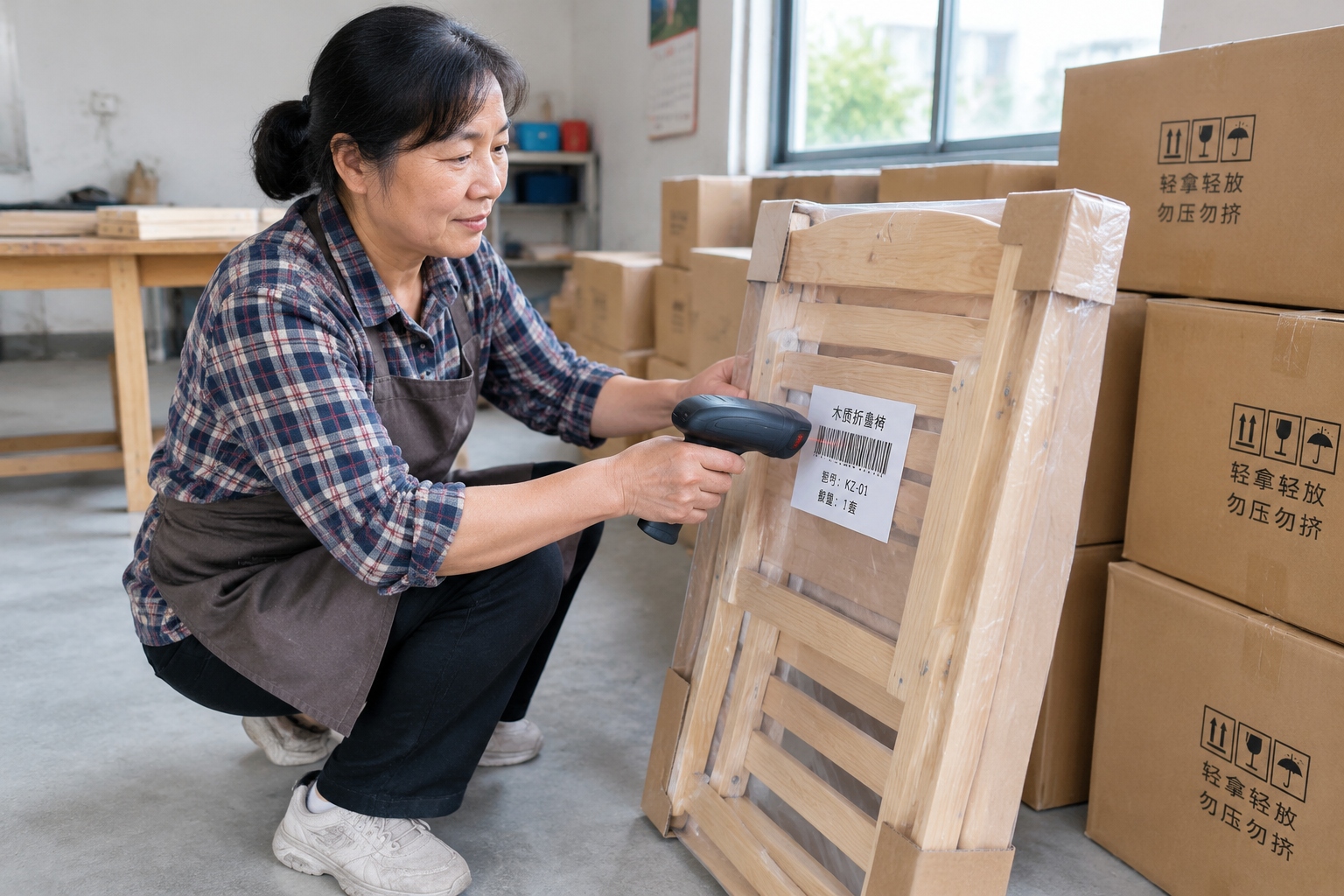
The first delivery van reaches Dongfeng Village before the fog lifts. It is just past seven, cold enough to see your breath, and the driver backs up to a low concrete building that used to be a grain store. Inside, three women are taping boxes shut. One of them, Zhang Guihua, is in her fifties. She has lived in this corner of Shandong her whole life. Twelve years ago she picked corn; this morning she is scanning barcodes on flat-pack chairs headed for an apartment in Chengdu, 1,500 kilometers away.
“My son taught me the scanner,” she says, not looking up. “Now I’m faster than him.”
Villages like this one have a nickname in China: Taobao villages. The term describes a rural settlement where a large share of households sell goods online, usually through Taobao, the country’s biggest consumer marketplace, owned by Alibaba. The official definition is specific: annual e-commerce sales above 10 million yuan and more than 100 active online shops or shops covering at least 10 percent of households. In 2009 there were three such villages. By the mid-2020s there were more than 7,000, spread across most of China’s provinces.
What actually changed: not the land, but the road out
To understand why this matters, you have to picture rural China before. For decades the problem was not that villages had nothing to sell. Many had plenty: honey, walnuts, cured ham, bamboo furniture, hand embroidery. The problem was distance. A craftsman in a mountain village could make a beautiful rosewood stool, but the only buyers were people who could physically reach him. Middlemen took most of the margin. Young people left for factory cities on the coast, and the villages aged and emptied.
E-commerce did not change the mountains. It changed the economics of distance. Suddenly that rosewood stool had a photograph, a price, and a national audience. The craftsman kept more of the money. And crucially, someone would come pick up the box.
That last part is the quiet engine of the whole story.
The logistics that reach the last village
China built one of the densest parcel networks on earth, and over the past decade it pushed that network down into places with no logic by Western shipping standards. A package from a village of 800 people now moves through county sorting centers, provincial hubs, and back down to a doorstep in another province, often within three days, often for two or three yuan.
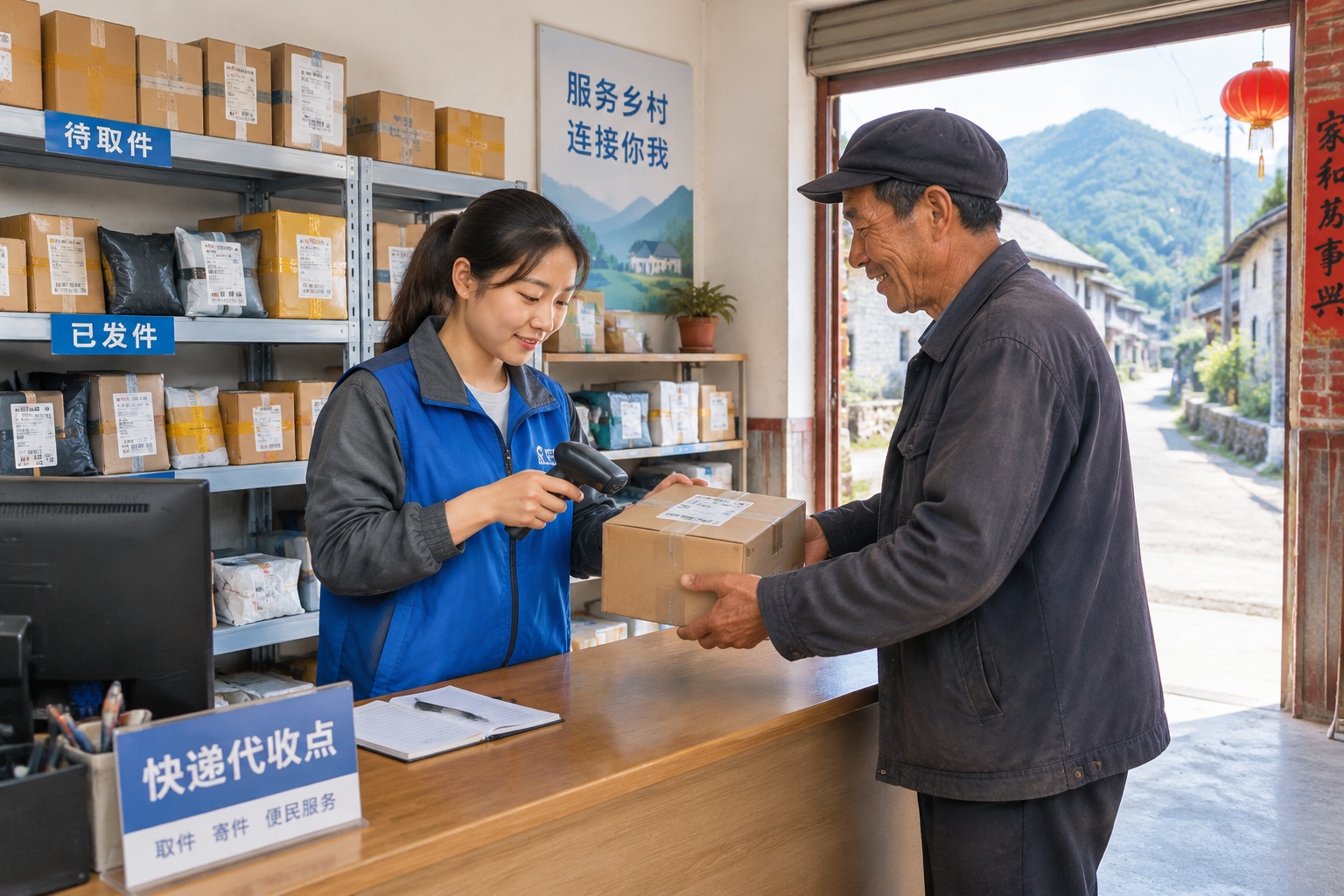
This did not happen by accident. Under a national policy usually translated as the Digital Village strategy, the government subsidized rural logistics stations, laid fiber and 4G into remote townships, and pressed delivery companies to serve areas that would never pencil out on their own. By 2023, express delivery reached essentially every township in the country. Pickup-and-dropoff points opened inside village shops, so a farmer no longer had to drive an hour to the county seat to mail an order.
I watched this in a Yunnan village known for wild mushrooms. During the summer rains, families walk into the forest at dawn, come back with baskets of porcini and chanterelles, and by noon those mushrooms are vacuum-sealed, photographed, listed, sold, and in a cold-chain box. A product that used to rot before it could reach a city now reaches a restaurant kitchen in Shanghai while it is still fresh. The mushrooms were always there. The three-day window is new.
How a village’s work changes
When a village goes online, the jobs multiply in ways that are easy to miss from the outside. Selling furniture is not just making furniture. Someone has to photograph it, write the listing, answer customer messages at midnight, pack it so it survives a rough road, handle returns, and keep the books.
In the furniture villages of Shandong’s Caoxian county, this created a strange and real local economy. Caoxian became famous for one specific thing: it supplies a huge share of China’s performance costumes and traditional hanfu clothing, sewn in household workshops and sold online. People joke online that “the whole country’s hanfu comes from Caoxian.” What started as a few families making graduation gowns turned into thousands of small shops. The county, long one of the poorer parts of its province, now has streets of two- and three-story houses with sewing rooms upstairs and packing tables downstairs.
The income shift is concrete. A household that earned a few thousand yuan a year from farming can clear ten times that running a small online shop, though the hours are long and the competition brutal. Many families now have at least one member who works entirely at a screen and a sewing machine, without ever leaving the county.
The returnees: young people choosing to come back
The most interesting change is who you meet. For thirty years the story of rural China was departure. Now, in the Taobao villages, you meet people in their twenties and thirties who came home on purpose.
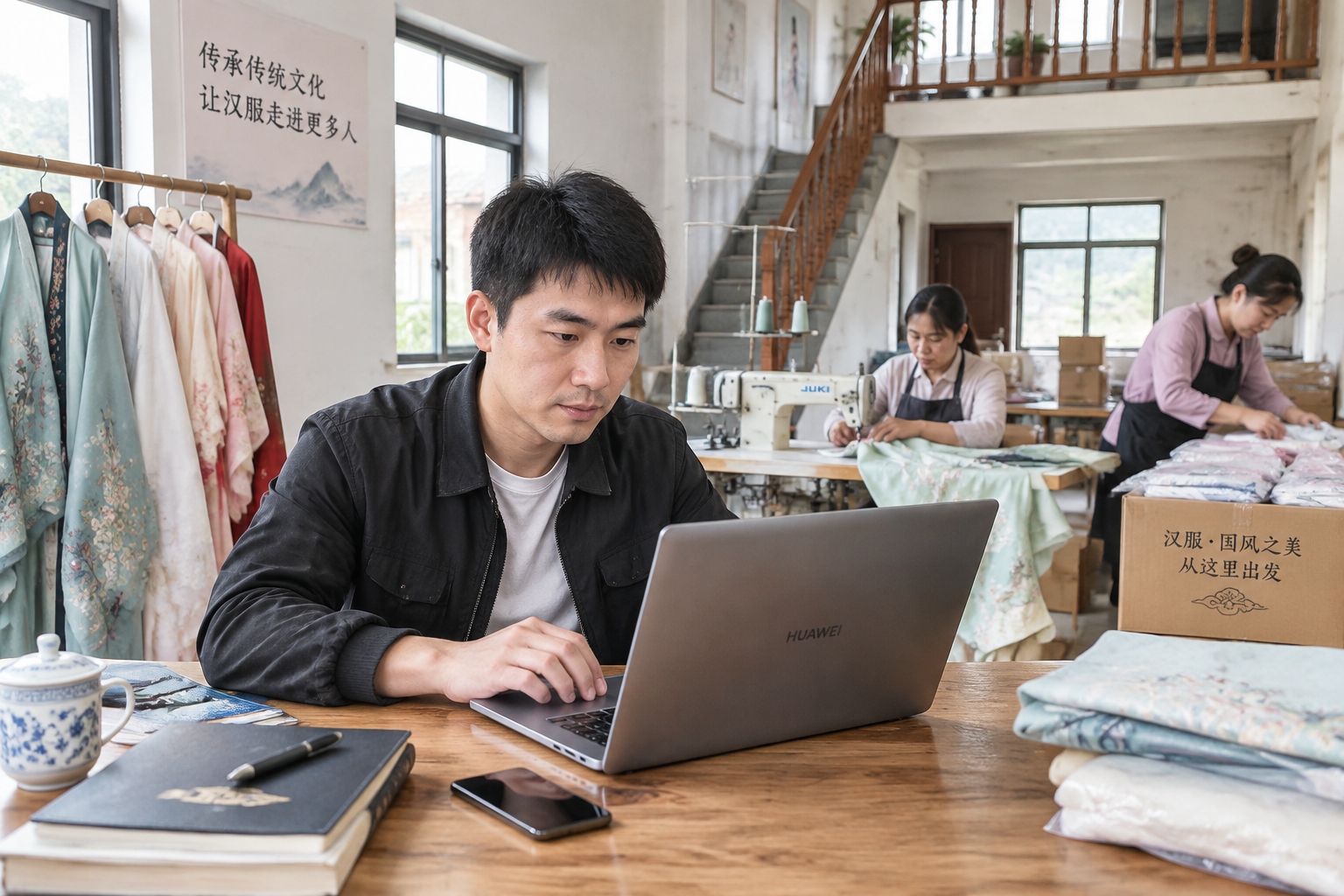
In Caoxian I met Li Wei, 29. He had spent six years in Hangzhou doing warehouse logistics for an e-commerce company. He learned how listings rank, how shipping deals are negotiated, how customer reviews make or break a shop. Then he came back to his home village, where his parents still ran a small costume workshop, and applied all of it. Within two years he was running a team of eleven, mostly neighbors and relatives, and shipping across the country.
“In Hangzhou I was renting a room smaller than my parents’ kitchen,” he told me. “Here I have the house, the business is mine, and my daughter grows up near her grandparents.” He is not sentimental about it. He talks about profit margins and return rates. But the math that once only worked in the big city now works at home, and that is the real reversal.
These returnees bring back more than labor. They bring the operational knowledge that a village cannot generate on its own: how to run livestream sales, how to read platform data, how to handle a sudden viral order. Some villages now run free training sessions in the community center, where a 23-year-old shows farmers twice his age how to film a product video on a phone.
Technology as the lever against poverty
China’s leadership frames this under the goal of common prosperity, the idea that growth should narrow the gap between rich coastal cities and poor interior regions rather than widen it. Whatever one thinks of the slogan, the mechanism in these villages is clear and testable. Give a remote producer a national marketplace, cheap reliable shipping, and mobile payment, and a meaningful share of them will build a business.
Mobile payment matters more than outsiders usually realize. In these villages almost no one carries cash. A grandmother selling eggs scans a QR code. This removed a whole layer of friction that used to lock rural sellers out of the modern economy.
The results show up in the national numbers. China declared the end of extreme rural poverty in 2020, lifting the last tens of millions of registered poor above the line. E-commerce was not the only reason, infrastructure and direct support mattered enormously, but in thousands of specific villages it was the thing that turned a one-time subsidy into a lasting income.
The texture that doesn’t fit a slogan
It would be dishonest to make this sound frictionless. Many Taobao villages crowd into the same product, prices collapse, and margins thin to almost nothing. The work is relentless; peak shopping festivals mean weeks of eighteen-hour days. Older villagers often cannot do the digital parts at all and depend entirely on younger family members. And platform rules can change overnight in ways a small shop cannot influence.
Still, stand in that former grain store at seven in the morning, watch the van pull away loaded with boxes, and the basic fact is hard to argue with. A woman who once had no way to sell her work to anyone beyond walking distance now ships it across a continent. The mountains did not move. The road out finally did.
Start the discussion at forum.chinacomes.com