

Imagine you find a Chinese supplier on Alibaba offering the same appliance you import at 40 percent below your current cost. The product images look perfect and the customer service team replies within minutes. Yet when you request a live video walkthrough, you are told the factory floor is closed for a security audit. How do you separate established manufacturers from shell trading companies with a fake address? This guide provides a simple, action-oriented checklist for verifying Chinese factories. It walks you through seven red flags and five green lights, using official records, live visits, third-party inspections, sample testing and customer references.
Before Anything Else: Check the Official Corporate Register
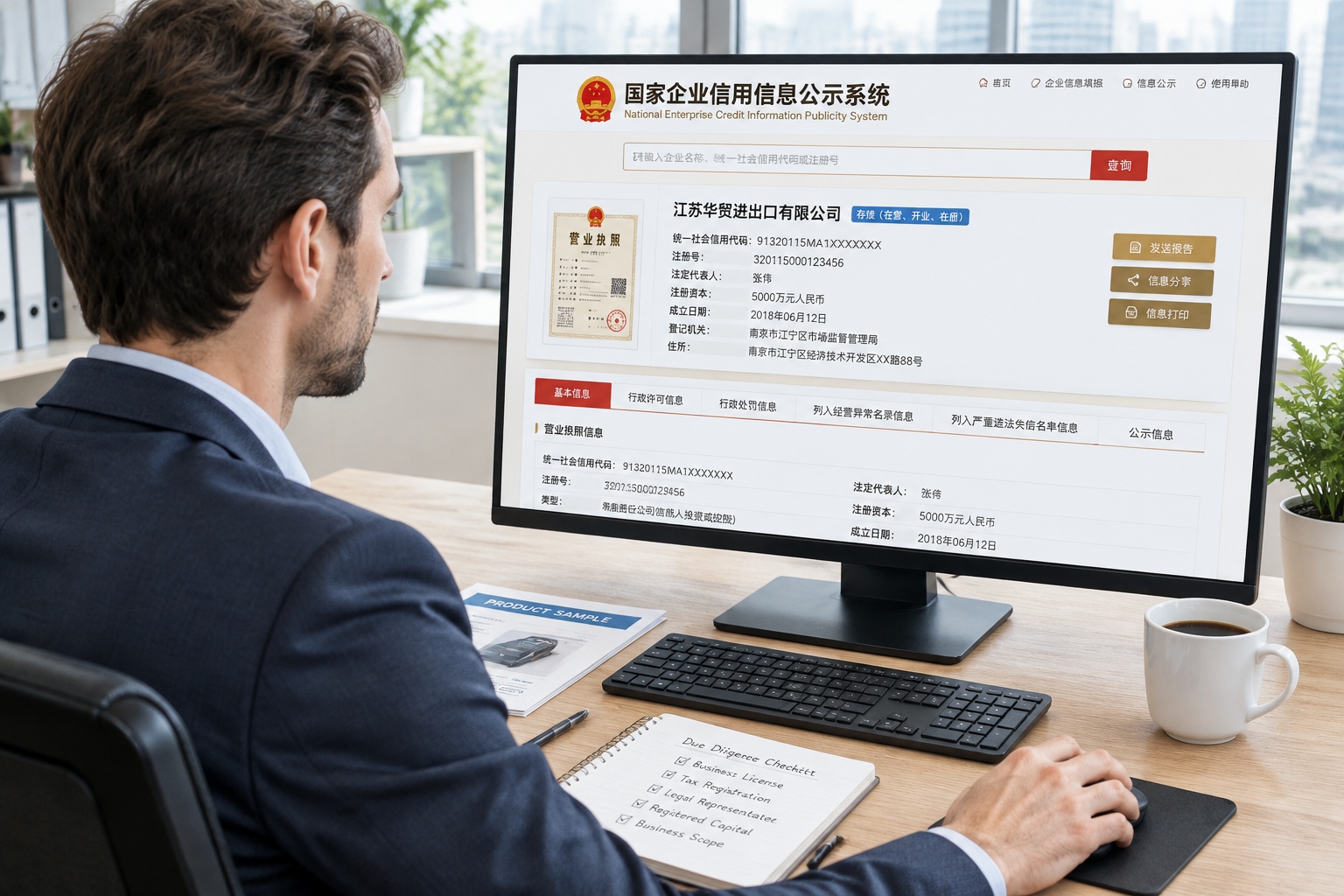
Every legally registered company in China is listed on the National Enterprise Credit Information Publicity System, run by the State Administration for Market Regulation. The website is www.gsxt.gov.cn. You can search by the company’s Chinese name or unified social credit code. Stop when three things fail: the registered legal person is not the owner or manager you are dealing with; the business scope does not mention your product category; or the registered address is in a city far from the factory location they email you from. Cross-check the 18-digit unified code on the company’s business license. If they hesitate to share it, that’s an instant red flag.
7 Red Flags That Should Make You Walk Away
1. Price is dangerously lower than the market average
A Chinese manufacturer can save you 15 to 25% compared with developed-country suppliers and still operate profitably. But when the quote is 40% below every other quote you have collected, someone will have to be cut. It might be the grade of steel, the thickness of packaging, the quality of paint, or the warranty you think you are buying. If you push for an explanation, a real manufacturer can break down material and labor costs. If you hear ‘because of cheap labor’ alone, be careful. Cheap labor doesn’t make a CNC milling machine cheaper.
2. The official registration doesn’t match the seller’s story
Search the company name on the National Enterprise Credit Information Publicity System. Look for the date of establishment – a factory established one month ago may be a shell. Check the business scope. A company registered for ‘trading services’ but not ‘manufacturing’ is legally a trading firm. Also compare the registered capital with typical capital for your product. You do not need huge capital, but a registered capital of 10,000 RMB (about 1,400 USD) suggests a very small operation. Inconsistency between your contact person’s business card and the legal representative is a warning.
3. They avoid live video calls or in-person visits
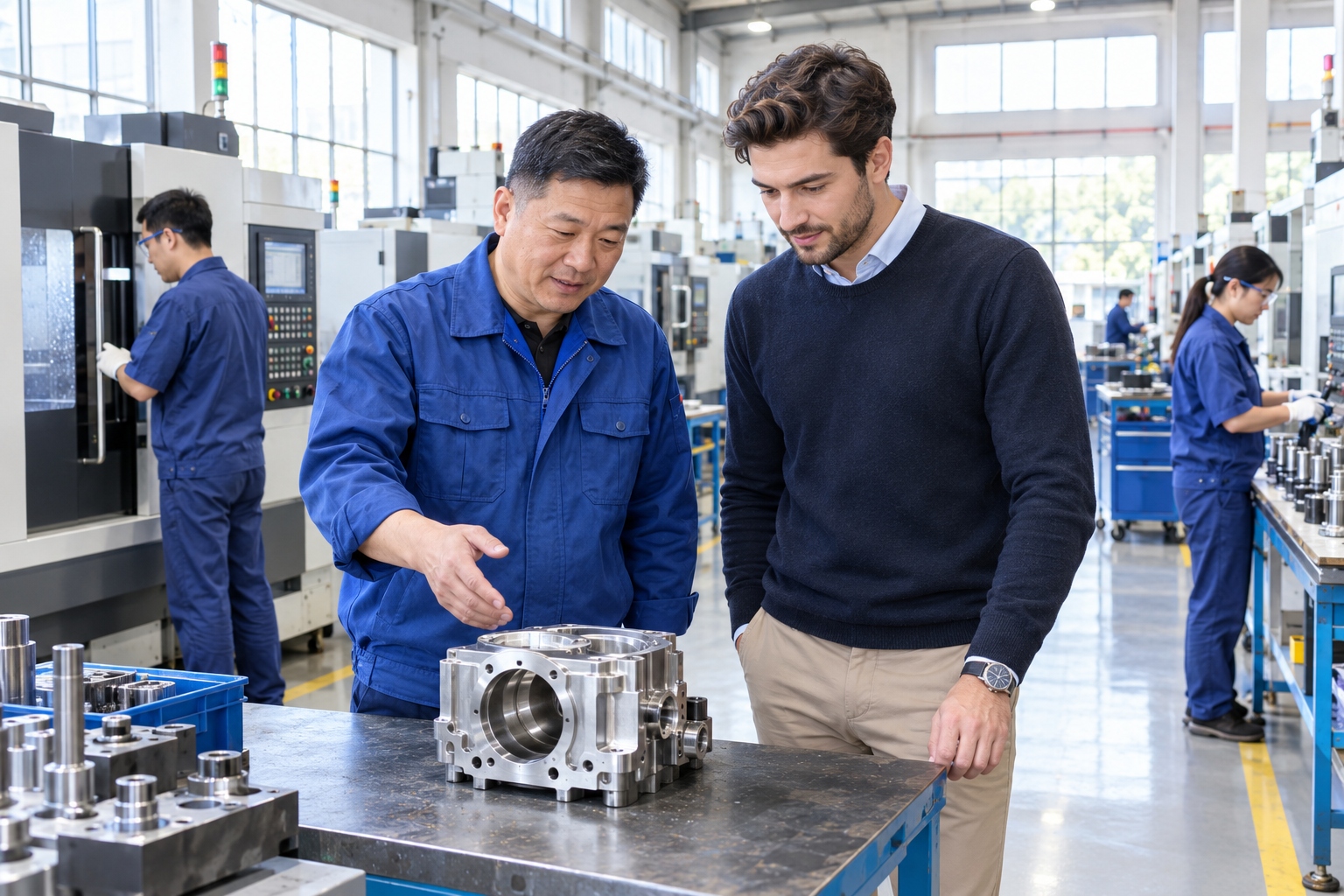
If you ask to see the production line in real time, and they answer with a pre-recorded video, think again. Most real factory owners are happy to move a laptop onto the shop floor and show you the machines. If they claim they are too busy or security does not allow, insist on an immediate virtual meeting with a specific date and time. If you are in China, a reliable supplier should welcome a visit. A trading company may still invite you, but might bring you to another factory and pretend it’s theirs. Look for their own branded signage, workers with uniforms, and the machinery actually in use. If the owner stumbles on the diameter of their injection molding machine, there’s a problem.
4. Upfront payment demands exceed what any bank would consider reasonable
Standard practice in China is usually 30% deposit with the rest before shipment, or 30% deposit and 70% against a copy of the bill of lading. If they ask for 50-60% before any sample is approved or before production starts, you lose most of your leverage. You can use a credit check on the company, but even a strong financial report cannot ensure delivery. We have seen suppliers disappear after collecting 60% deposits. If a seller pushes for Western Union or a personal account, end the conversation. A real manufacturer will accept payment to a corporate bank account and is open to an L/C at sight for larger first orders.
5. Their certifications are only presented as screenshots without verifiable ID
In China, many companies purchase fake certificates from street-side ad posters. Genuine ISO, CE, UL, or IATF documents have a certificate number and an issuing body you can contact. The certificate often includes the company’s legal name, address, and scope. Use that number to verify with the certifying agency or ask for an audit report. An exporter who says ‘we just don’t have the email because our consultant lost it’ is probably hiding the fact that they never had one. Third-party inspection companies such as SGS or Bureau Veritas can also validate the manufacturing system. Include this step as part of your pre-order due diligence.
6. The company has no traceable history outside its own shop window
Ask for export volumes for the past three years. Ask about the factory’s main client countries and if they have a customs declaration record. A new supplier might be completely legal, but they must prove their experience. Search for the company name on LinkedIn or trade databases like Panjiva. A credible factory will have a company email address on a corporate domain, not just a gmail or wechat. Visit their physical location on Google Maps satellite view: do you see a large factory with cargo trucks? If the address points to an apartment block, be careful. Also, check the age of their website domain and whether that domain has older content from other industries.
7. Customer references are nothing but generic praise or unavailable
The strongest signals are ambiguous: no references, or only one reference full of superlatives. Ask for two customers in your country or in your product category who have bought at least a similar order volume. Contact them by phone or e-mail, not through the supplier. Ask if production defects occurred and how they were handled. If the factory offers to give you three reference contacts but those contacts all have email addresses on the same domain, you are likely talking to friends. Cross-check through freight forwarder records or by asking the factory’s shipping agent for a shipment history. Those data are hard to fake.
5 Green Lights That Show a Factory Is for Real
1. The official registration is consistent, detailed, and shows manufacturing scope
On the national public registry, the company’s social credit code, legal representative, and address match the website and email signature. The year established is not fresh but supports their claim that they produced goods for several years. The business scope spells out ‘production’ and ‘processing’ of the specific type of product. The annual report says they employ more than 50 people, and export data can match your product. That is the foundation for all future trust.
2. They invite a third-party audit — and even offer to pay
Factories that are confident usually agree to an independent audit by SGS, Bureau Veritas, Intertek, or smaller specialized firms. You pay for the first audit normally, but a supplier may split the cost or take care of it if you sign a long-term agreement. During that audit, an inspector verifies the ownership, on-site equipment, quality control, and employee safety. The result is documented. Smart buyers require an audit report before placing a large order. This is not expensive: a basic supplier audit costs roughly 300–800 USD depending on the region and duration, which is far less than a failed container.

3. Your sample order gets the same care as a full production order
When you request samples, watch their response. A reliable supplier will ask for your measurements, material requirement and a factory-specific testing standard. They will ship the sample with a photo of a scale reading, serial weight, color card, and a test report from their QC. Sample cost is usually charged, but they should deduct it from the bulk order. Equally important, they explain clearly whether the sample is made in a dedicated sample machine or on actual production line. If they deliver on time and with measurement details, they are likely to follow the same discipline during mass production. If the sample is a one-off crafted pearl and the mass production is a mess, ask for a pre-production sample after raw materials are on site.
4. Their production schedule and lead times are realistic and documented
Real factories manage full calendars. When you give a target delivery date, a credible supplier will ask for the raw material order date and specify how many production days are available. They can tell you which production line and shift will be used for your order. They may even show you photos of the material inventory or give you a production milestone report on a regular schedule. If a supplier promises any date without asking for order size or specifications, they are just making you feel good. This green light is really about discipline: a factory that documents steps is likely to document quality too.
5. They introduce you to at least two clients with a similar buying profile
Ask for a reference who has imported a similar product from them in the past 12 months. A good exporter will ask those clients for permission, then give you the contact. Some reputable factories will even let you talk to their logistics forwarder in charge of customs for their shipments. That’s an independent channel to learn about actual export volume and product types. If they are hesitant, they may be anxious that a negative comment could arise. But a legitimate factory knows that transparency helps close deals. They may ask you to sign a non-disclosure, yet the introduction is the most convincing proof that you are not dealing with a one-time shell.
Five-Minute Verification Checklist
Print this before you start a new conversation with a Chinese factory.
- Search the company’s Chinese name on the National Enterprise Credit Information Publicity System (gsxt.gov.cn). Confirm the legal name, address and unified social credit code.
- Open Google Maps satellite view and check whether the registered address actually looks like a factory building.
- Demand a live video walking through the production line, with a specific date and time. If the factory is not open for you to visit, ask for the reason in writing.
- Request a sample with a full QC report and take a video of the sample being weighed or tested.
- Arrange a third-party inspection before shipment, or at least a pre-production meeting.
- Contact two former clients whose order type and order quantity are similar to your own.
- Compare quotes against a reasonable estimate of material costs plus typical processing. If it is too far below, it is not a bargain, it is a gamble.
Verifying a Chinese factory is a skill any importer can learn. You are not looking for perfection. You are looking for consistent, verifiable behavior in the public record, on the production floor, and in the sample box. By using this checklist, you reduce the chance of discovering a costly surprise six months after the deposit leaves your bank.
Start the discussion at forum.chinacomes.com