

One Sheet, Eight Figures
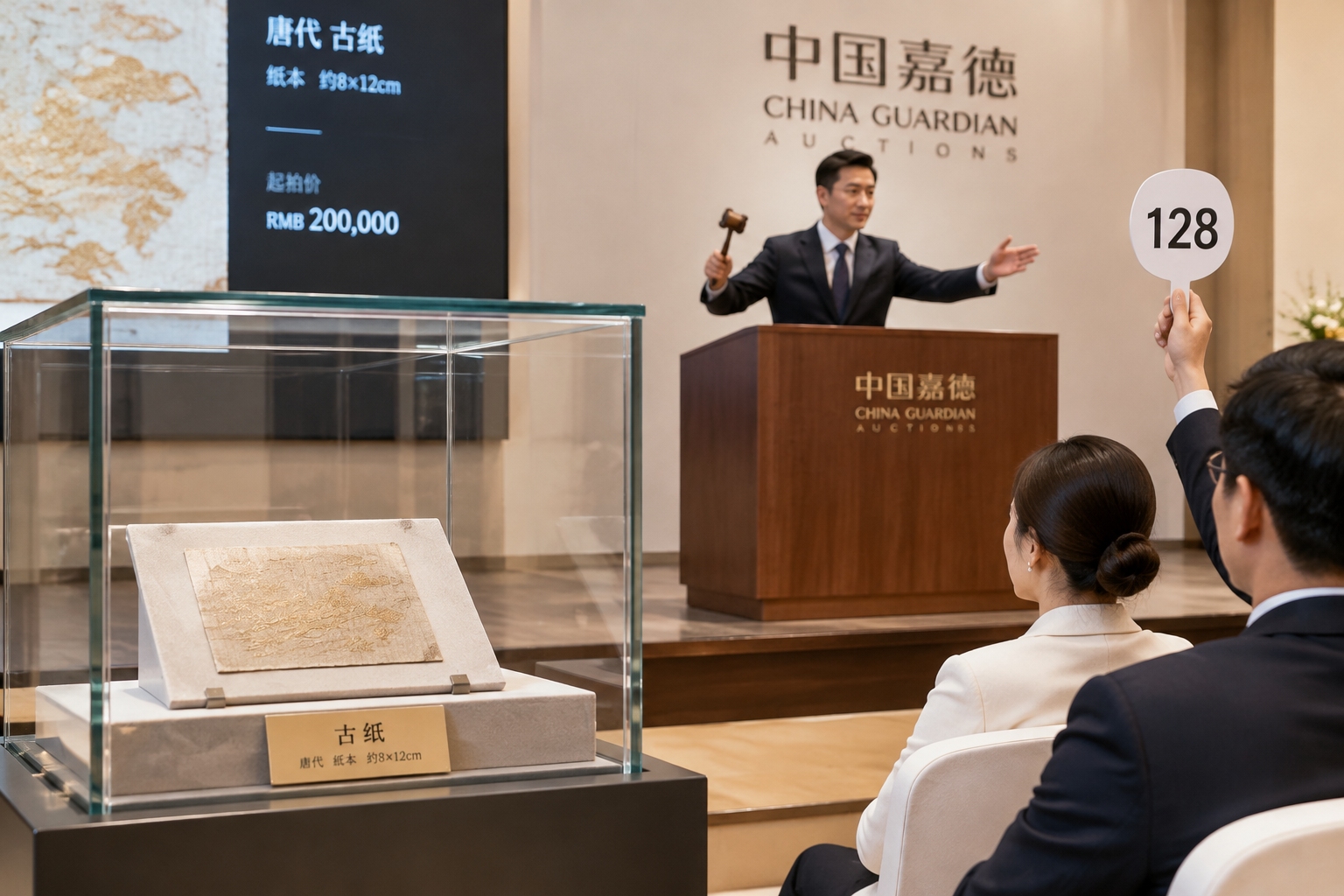
Imagine a pale yellow sheet of paper, slightly larger than an A4 page, displayed in a glass case at a Beijing auction house. The auctioneer’s hammer falls, and the paper is sold for over 2 million yuan ($280,000) — enough to buy a brand-new Porsche 911. This isn’t a masterpiece of painting or a signed manuscript. It’s a sheet of imperial waxed paper (kù là jiān) made in the Qing Dynasty palace workshops, and it’s far from unusual in the world of Chinese four treasures auctions.
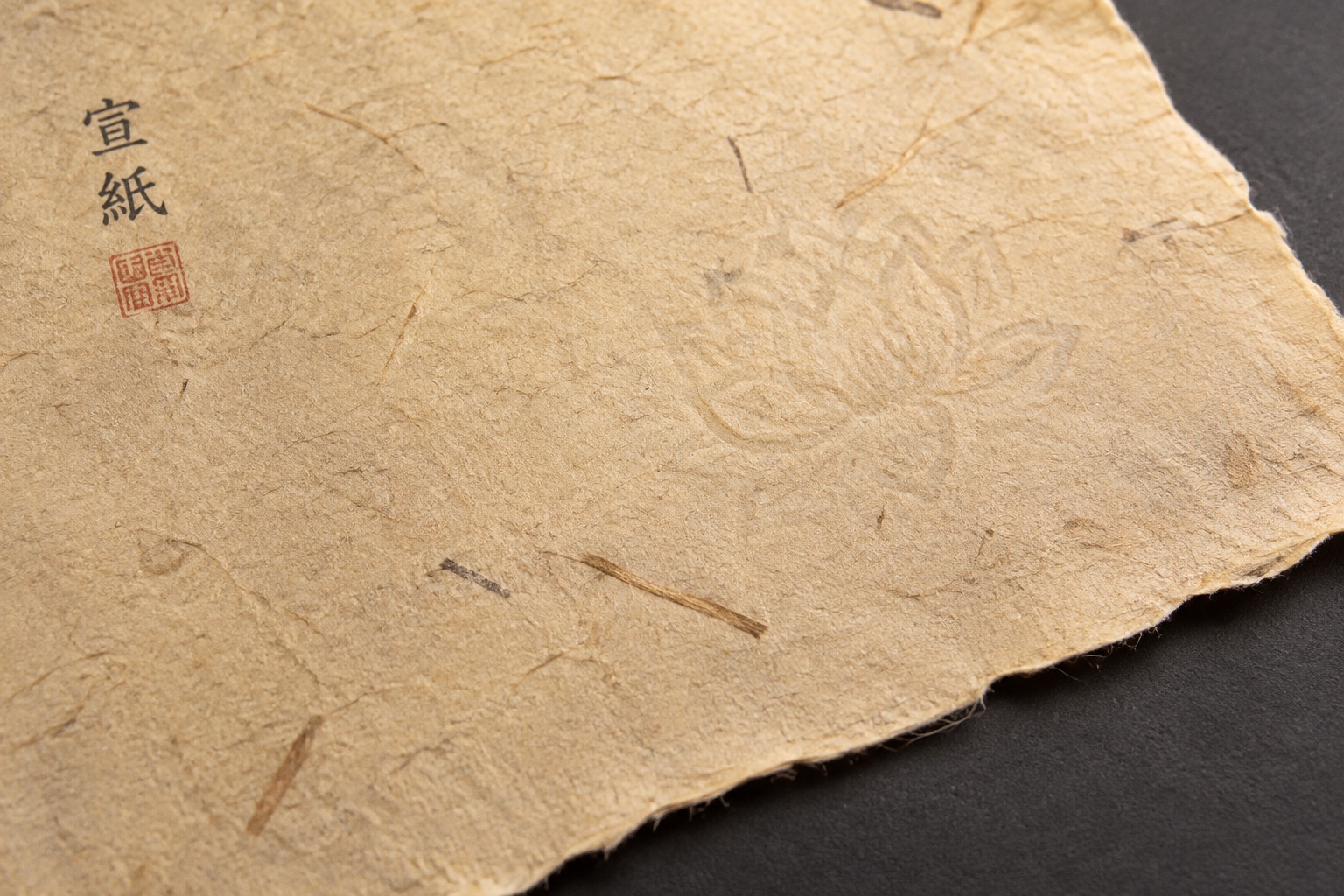
In recent years, the auction market for the “Four Treasures of the Study” — brush, ink, inkstone, and paper — has experienced a boom. While ancient inksticks and inkstones have long been collected, ancient paper has quietly become one of the most surprising high-value categories.
The Four Treasures of the Study
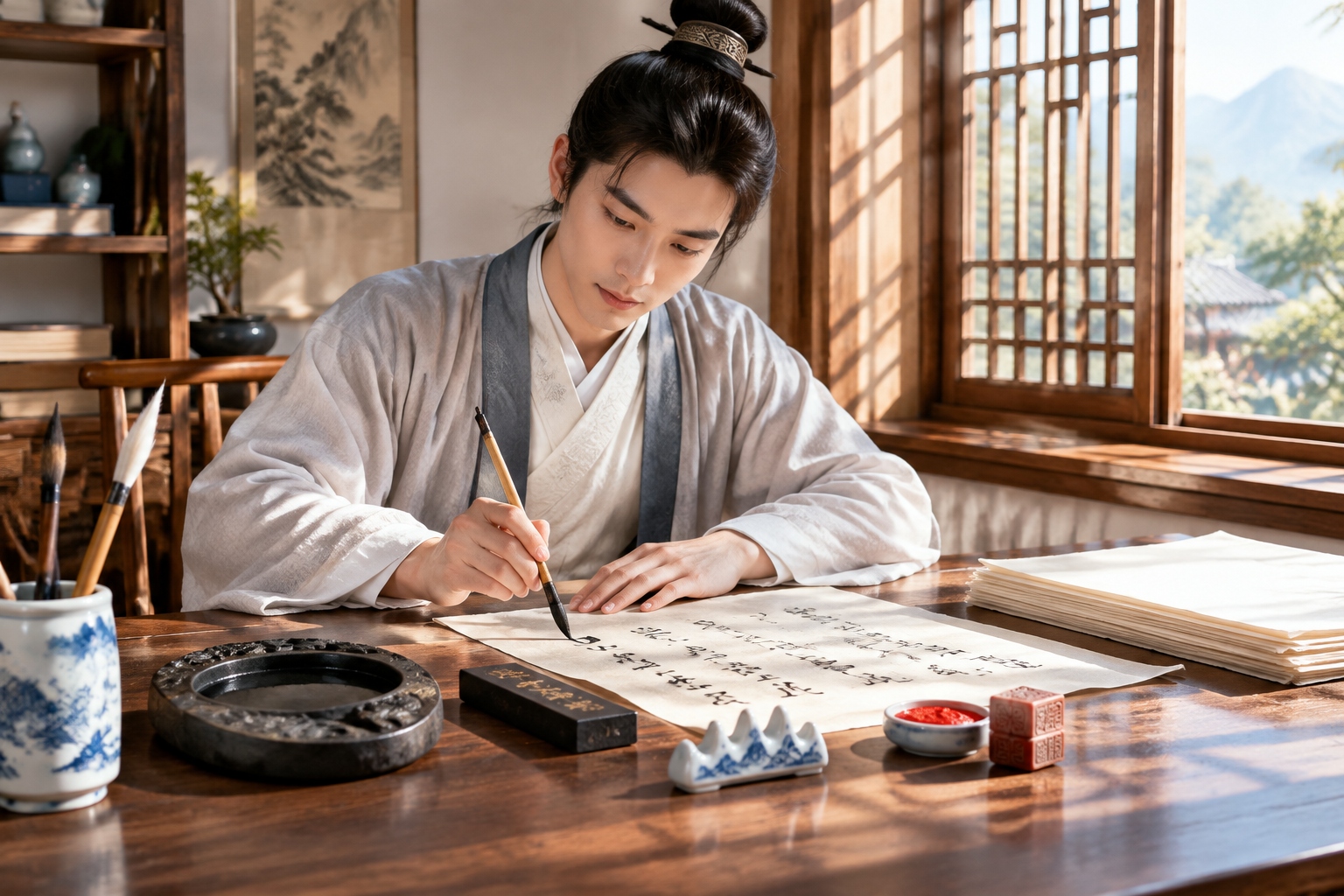
The set of writing tools known as wén fáng sì bǎo (study-room four treasures) is central to Chinese calligraphy and painting. For over a thousand years, these items were more than tools; they were aesthetic objects, status symbols, and embodiments of the scholar-official culture. Among them, paper is arguably the most fragile. A brush can be restored, an inkstone can be polished, but paper decays. That fragility is exactly what makes old sheets so scarce — and so valuable.
Why Is Old Paper Worth a Luxury Car?
Rarity: The Physics of Survival
Handmade paper in ancient China was produced from mulberry bark, bamboo, hemp, and other plant fibers. The process was slow and painstaking, often taking months to complete. Each sheet was also a piece of regional craftsmanship. But after it was made, the paper faced a lifetime of threats: humidity, insects, mildew, fire, war, and simple wear. It is estimated that less than one-tenth of one percent of paper produced before the 19th century survives today in any usable condition. A single intact sheet from the Ming or Qing dynasty is therefore far rarer than a painting by a famous artist, and collectors now treat it accordingly.
Lost Techniques
Some ancient papers are valuable because nobody can make them anymore. The famous “Chengxintang paper” from the Southern Tang (10th century) is a legendary example. Its precise recipe and manufacturing method have completely vanished. Modern attempts to reproduce it rely on educated guesses and still miss the original’s distinctive surface and absorbency. When a craft is truly lost, the surviving examples become irreplaceable artifacts.
Imperial Provenance and Historical Aura
Many of the most expensive sheets were made for the imperial court. The “waxed paper” mentioned earlier was coated with a special wax blend, making it smooth, water-resistant, and ideal for festive couplets or imperial edicts. Such paper often carries the emperor’s reign mark or a calligrapher’s inscription. Ownership of an object with clear imperial provenance is not just a purchase — it’s a direct connection to a history that many Chinese collectors revere.
Market Dynamics: More Money, More Buyers
Since the 2000s, the Chinese art market has matured dramatically. A rising class of wealthy collectors, many of them entrepreneurs in tech and finance, has looked beyond contemporary art and traditional paintings. They are rediscovering the four treasures as tangible cultural heritage with deep roots in Chinese identity. Dedicated auctions for four-treasures items, held by major houses like China Guardian and Poly Auction, have seen a steady influx of bids. Industry data suggests that the average price of top-tier four-treasures items has doubled in the past decade, and rare examples routinely outperform other luxury assets.
The Market Today: An Expanding Niche
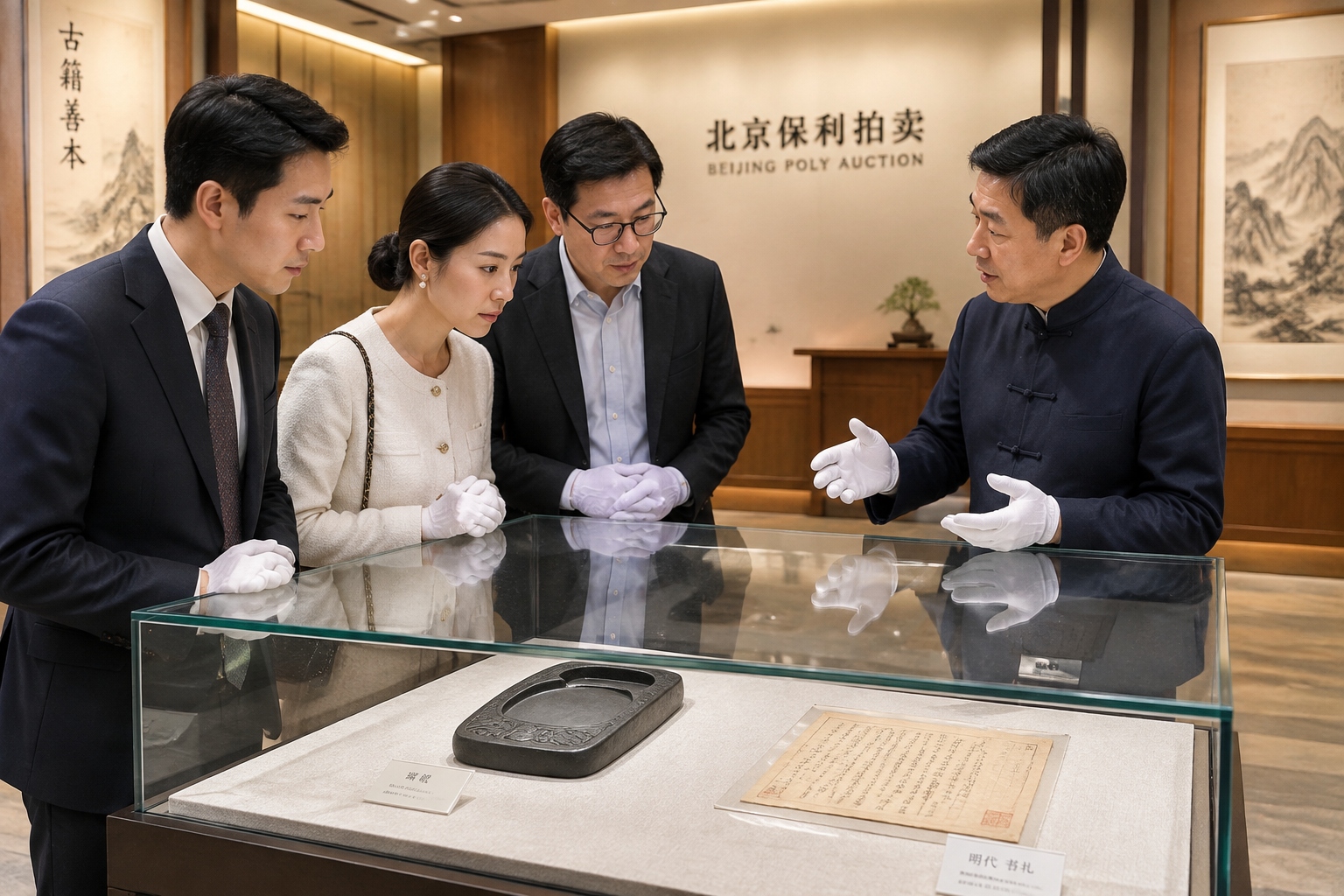
Although ancient paper grabs headlines, it is part of a broader ecosystem. Fine inkstones from Duanxi or Shexian quarries can fetch millions of yuan. Antique inksticks and brushes are also prized. In fact, the four treasures market is now a fully institutionalized segment, complete with specialist appraisers, restoration workshops, and dedicated exhibitions. Auction previews offer a rare chance to see these objects up close — and they draw crowds not only of older collectors but also of young professionals who were first exposed to calligraphy through social media.
Online platforms have also expanded access. Major auction houses stream previews and bidding online, allowing buyers in New York, London, or Melbourne to join without flying to Beijing. This international participation is pushing prices even higher for the rarest pieces.
Getting Started: A Playbook for New Collectors
Start with More Recent Pieces
You don’t need a seven-figure budget to enter this world. Paper produced in the late Qing or the Republic of China (1912–1949) can be acquired for a few hundred to a few thousand yuan. Even xuan paper from the 1960s–70s, still high quality and officially stamped, is a good starting point and tends to appreciate steadily.
Learn the Basics of Authentication
Fakes are a real risk. Study the texture and fiber structure under a magnifying loupe. Genuine old paper has a soft, layered feel and a natural deckle edge. Look for watermarks and any stamped marks from the imperial workshops or famous makers. Provenance records — from a palace inventory or a renowned collector’s seal — increase value and confidence.
View Before You Bid
Digital photos can hide damage. Auction previews are essential. Touch the paper (with gloves) to check flexibility and thickness. Ask about restoration. If you’re buying online, request a condition report and extra photos.
Proper Storage Matters
If you own a piece of ancient paper, protect it from light, humidity, and temperature swings. Ideally, store it flat in a moisture-free box lined with acid-free tissue. If you mount it for display, use a UV-protective frame and avoid direct sunlight. Handled correctly, your collection can be passed on to the next generation.
The Price of Legacy
When a single sheet of paper earns a price equivalent to a luxury car, it’s not merely a sign of speculation. It reflects an appreciation of handcraft that took centuries to refine, the rarity of materials that cannot be recreated, and the emotional value of holding a piece of a civilization’s memory. For new buyers, the four treasures market offers a way to participate in China’s cultural history — and maybe, just maybe, to own a legacy that outlasts any automobile.
Start the discussion at forum.chinacomes.com