
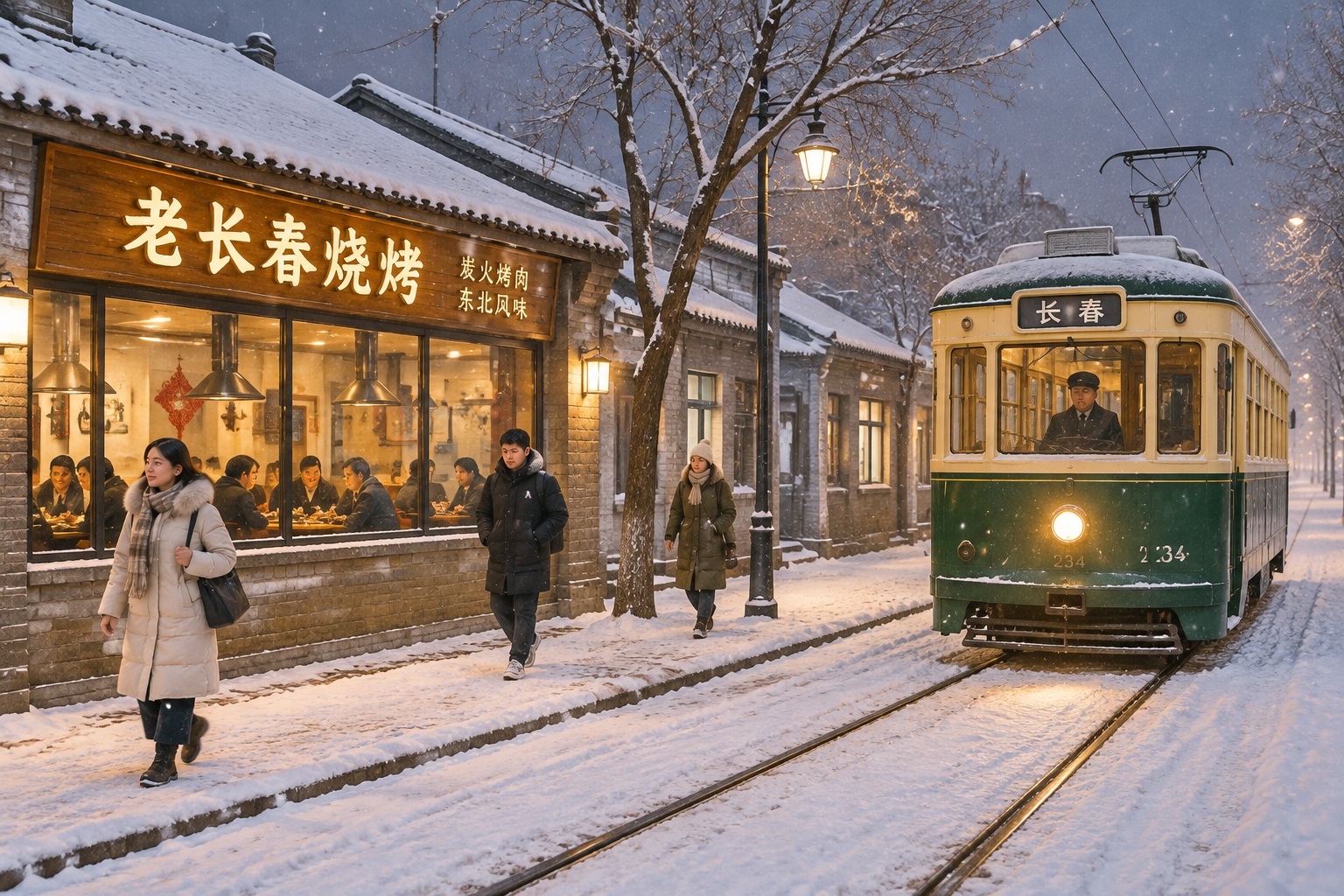

Stomping Feet and the Smell of Charcoal
It is 7:40 p.m. in Changchun, the capital of Jilin Province, and the outdoor thermometer reads minus 21 degrees Celsius. A woman in a puffy white coat pushes through the heavy plastic curtain of a barbecue restaurant on Guilin Road. She stomps her boots three times on the rubber mat — a small ritual every customer performs here in winter. Snow falls from her shoulders. The door swings shut behind her, and the cold disappears.
Inside, the air is thick with charcoal smoke and the sharp, savory smell of cumin and chili powder. Small round tables fill the room. At each one, a metal grill sits in the center, glowing orange. People lean forward, hands hovering over the heat. The windows are fogged. Someone has drawn a smiley face in the condensation.
This is not a special night. It is a Tuesday.
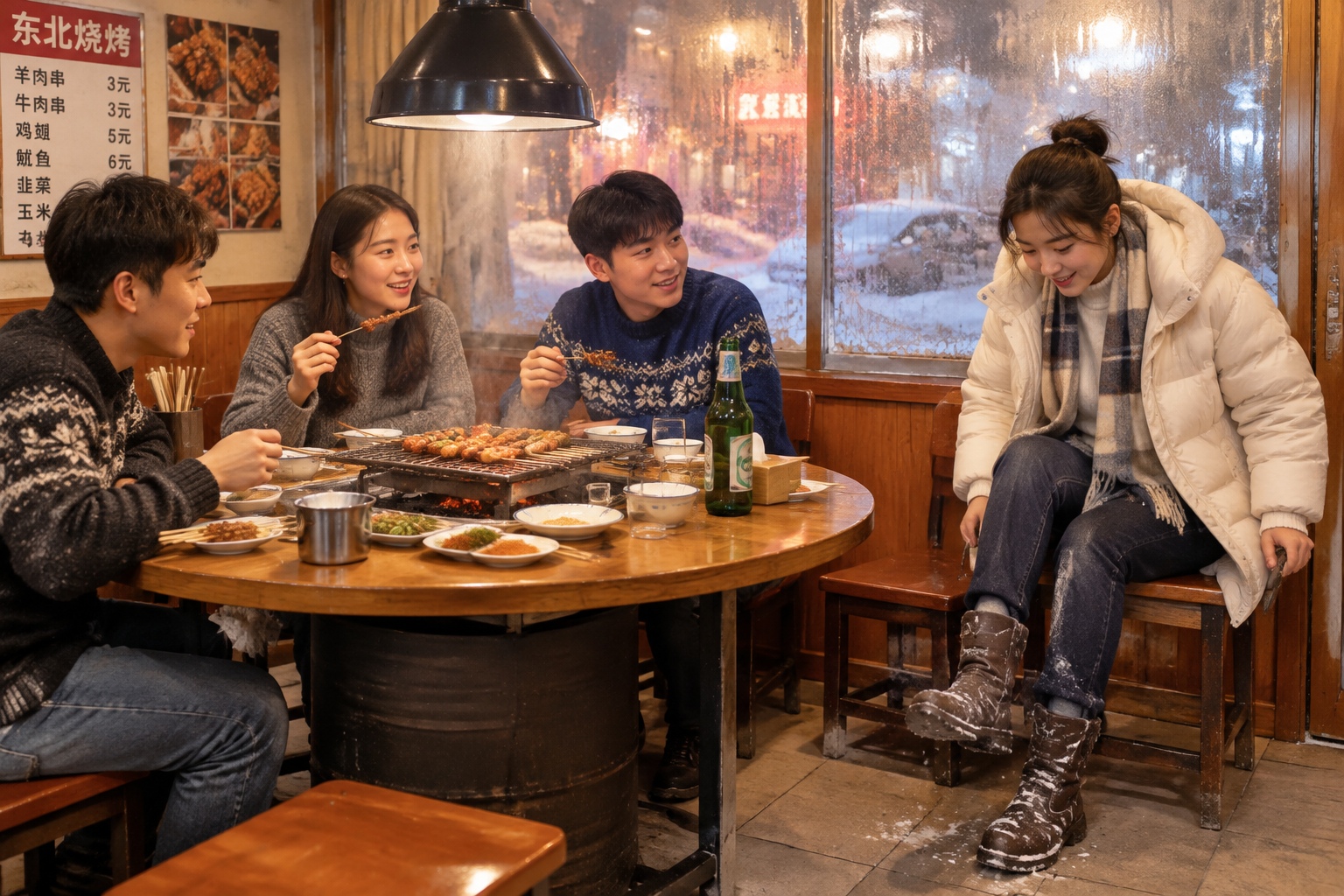
A Tram Through the Snow
Two blocks away, the No. 54 tram rattles along its tracks. The tram line has run through this part of Changchun since 1941, when the city was under Japanese occupation. Today it is one of the few remaining tram systems in China, and locals treat it with a quiet affection. In winter, the old green-and-cream cars become moving snow globes. Frost patterns creep across the windows. Passengers in thick coats sit shoulder to shoulder, some dozing, some scrolling on their phones.
The tram passes Hongqi Street, where the headquarters of FAW Group — China’s first automaker — looms behind a row of snow-covered pine trees. At 8:15 p.m., the shift-change crowd boards. Men and women in blue factory jackets fill the seats. Some carry insulated lunch bags. A few wear the red armbands of model workers. The tram slows, the doors hiss open, and more cold air rushes in before the warmth returns.
For many people here, the tram is not nostalgia. It is simply how you get home.
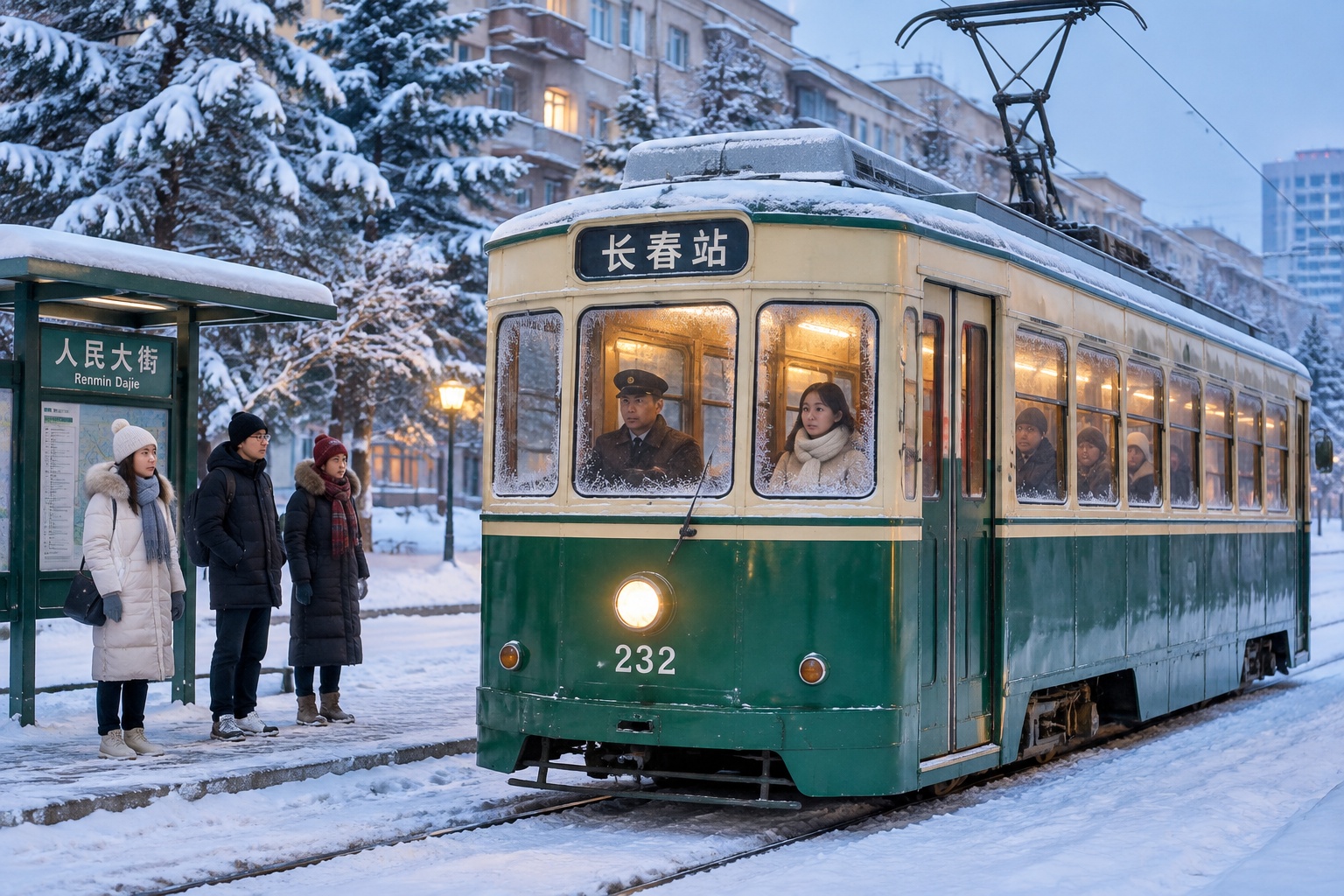
Why Northeast BBQ Tastes Different
Changchun sits in China’s Northeast, a region known for brutal winters, heavy industry, and food that does not pretend to be delicate. Northeast-style barbecue — dongbei shao kao — is built for this climate. The portions are large. The flavors are bold. The skewers come fast: lamb, beef, chicken wings, corn, eggplant, enoki mushrooms wrapped in tofu skin. A small dish of dry spice mix sits on every table. You dip the meat. You eat. You order more.
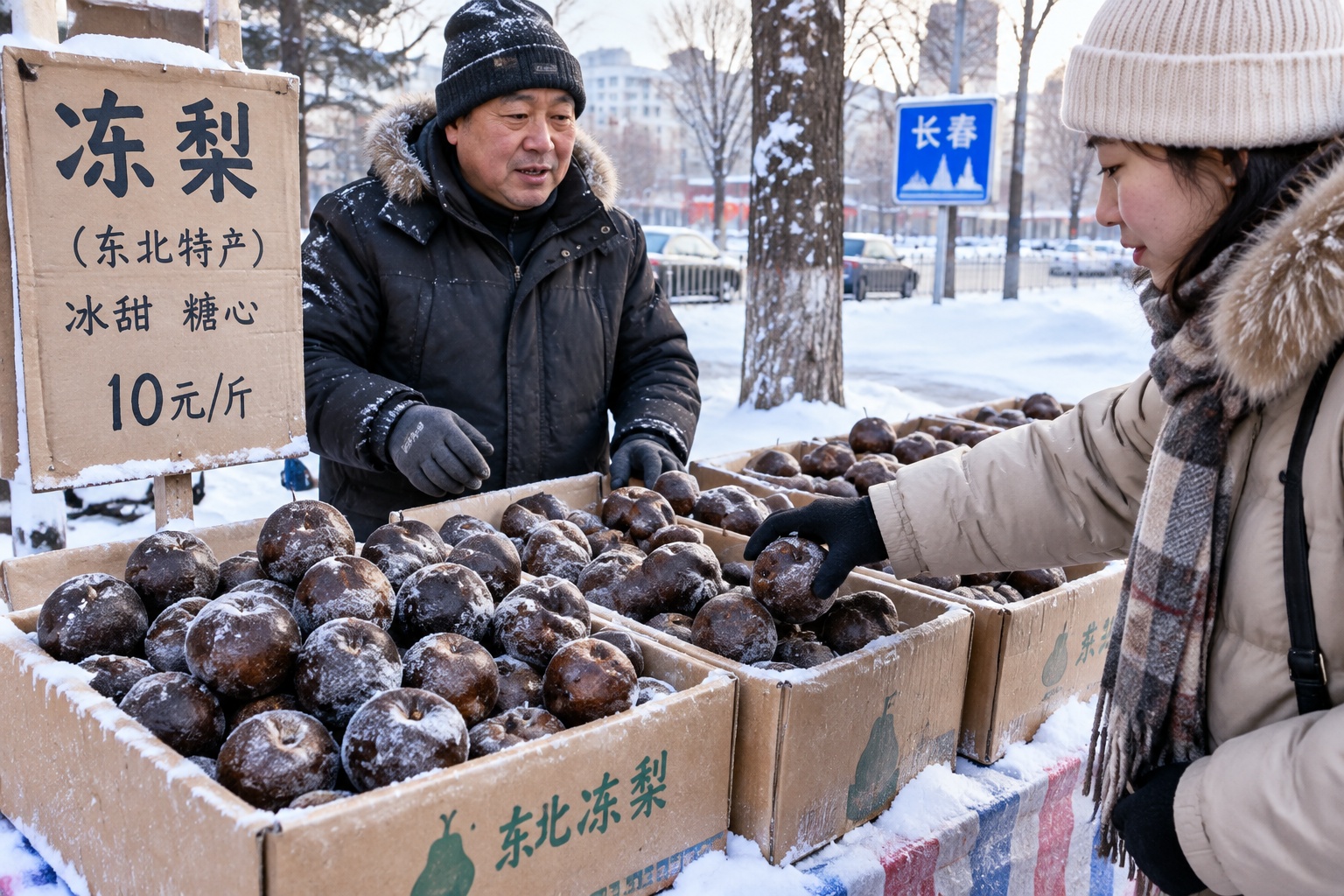
Then there is the frozen pear, or dongli. In winter, street vendors sell them from cardboard boxes. The pears are hard as stones, their skins dark brown. You soak them in cold water for twenty minutes. A thin shell of ice forms around each one. When you bite through, the flesh is sweet and slightly grainy, like a sorbet that grew on a tree. It is a winter food, and everyone here has a memory of eating one.
In the barbecue restaurant, a group of four friends order a plate of frozen pears to finish their meal. They crack the ice with their teeth and laugh. One of them, a 26-year-old named Liu Yang, works at an auto parts factory. “In summer, we eat outside,” he says. “In winter, we eat here. Same food, different season. But the winter feels more like home.”
Shift Change at FAW
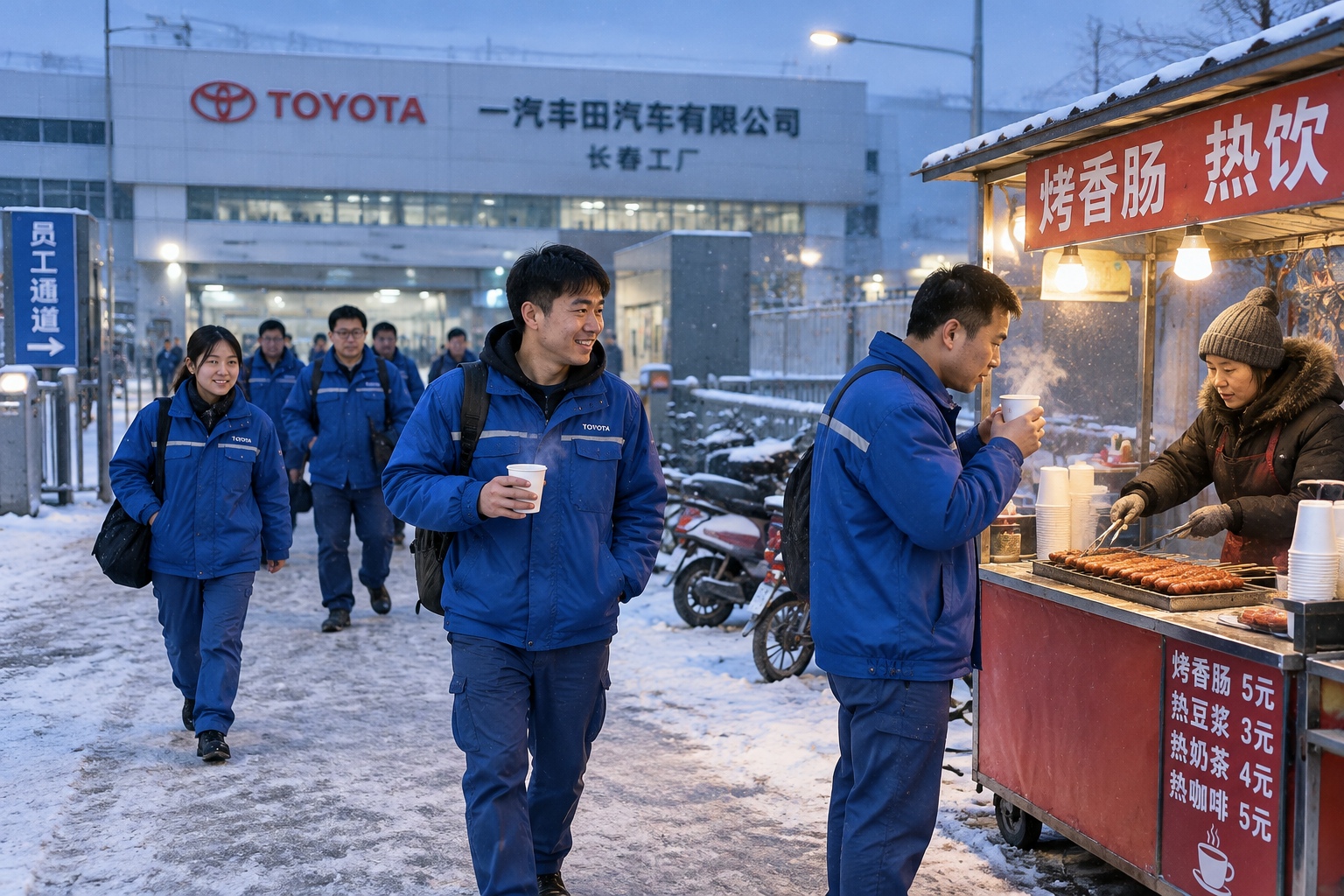
The FAW Group — First Automobile Works — was founded in 1953. It built China’s first domestically produced passenger car, the Hongqi, and for decades it has been the economic spine of Changchun. Tens of thousands of people work in its factories and offices. When the evening shift ends, the streets around the plant fill with bicycles, electric scooters, and buses.
At 8:45 p.m., a line of food stalls appears near the factory gates. Vendors sell grilled sausages, baked sweet potatoes, and hot soybean milk. Workers stop, buy something small, and eat standing up. The steam rises from their paper cups. The snow keeps falling. No one seems to hurry.
This is a city that has learned to move at winter speed. You do not rush in minus 20 degrees. You walk carefully. You keep your hands in your pockets. You stop for warm food.
Warmth in a Cold Climate
What holds a winter city together? Not just heating pipes and insulated windows, though those matter. In Changchun, the answer is public life. The barbecue restaurants stay open until 2 a.m. The trams run on schedule. The street vendors keep selling frozen pears even when the temperature drops below minus 25. The city does not shut down. It adjusts.
On the tram home, a woman in her 60s sits with a bag of groceries between her feet. She has lived in Changchun her whole life. “The snow used to be deeper,” she says. “The winters used to be colder. But the tram is the same. The barbecue is the same. We are still here.”
The tram turns a corner. Through the frosted window, the city slides past — apartment blocks with lit windows, snow-covered cars, a man walking a dog in a thick coat. The woman closes her eyes. The tram rocks gently. Outside, it is still snowing.
Start the discussion at forum.chinacomes.com