
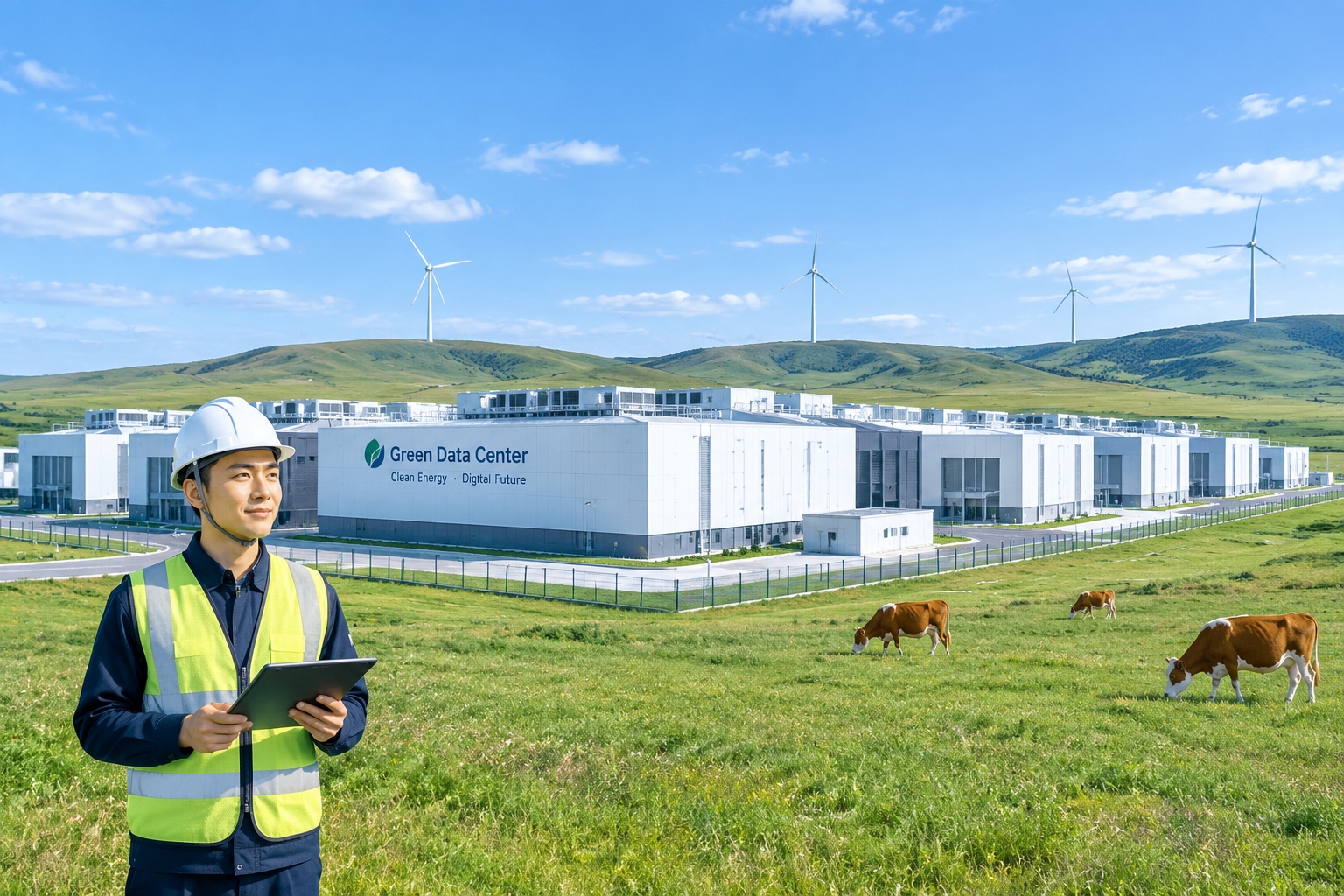

The Cool Breeze That Stores Your Data
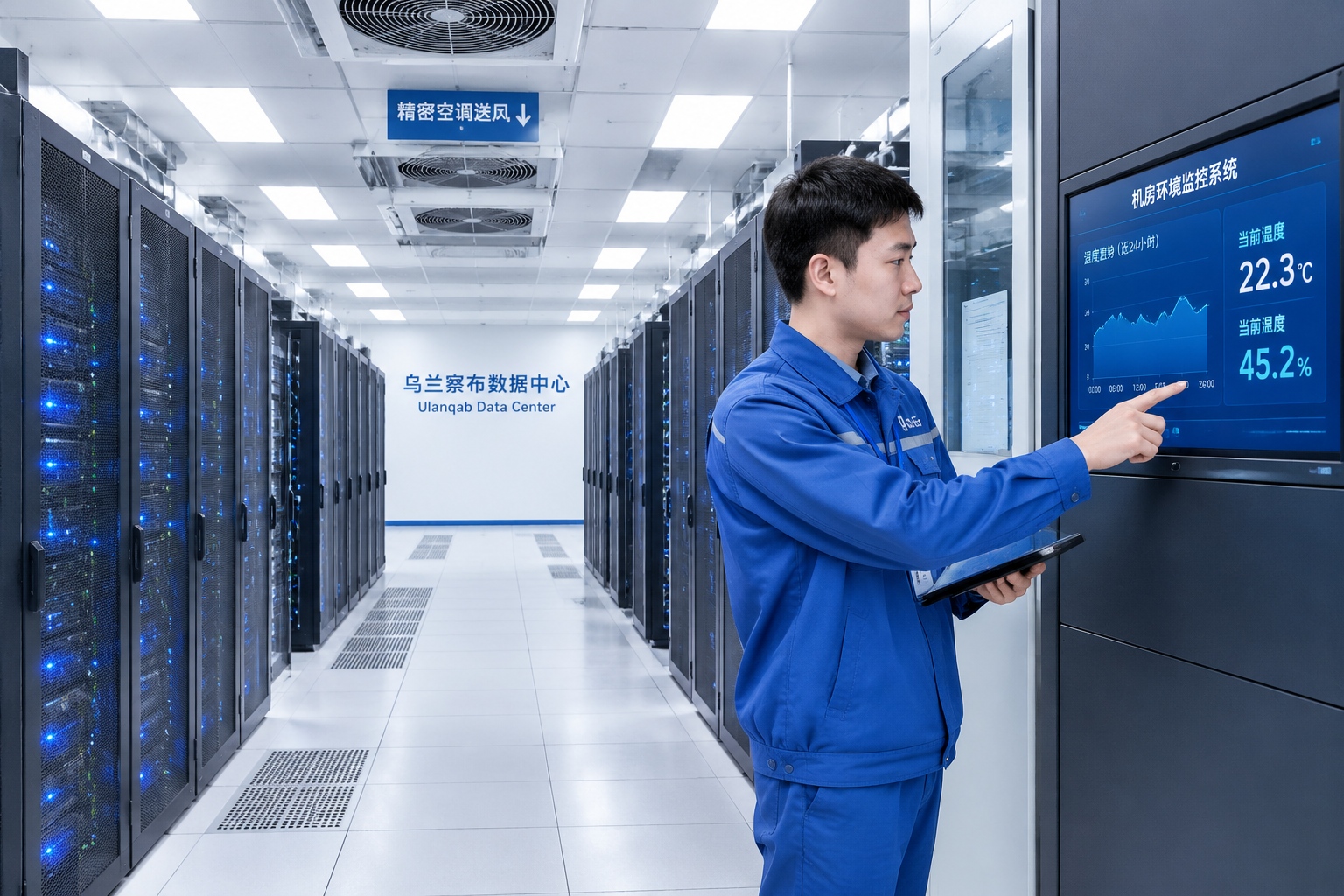
On a summer afternoon in Ulanqab, the temperature rarely climbs above 22°C. In the control room of a Huawei Cloud data center, engineer Zhang Wei glances at the outdoor thermometer and nods with satisfaction. The air conditioning system is barely working. The servers — thousands of them humming in rows — are being cooled almost entirely by the ambient air. “We only need chillers when the temperature exceeds 30°C, which happens maybe a dozen days a year,” he says. “That’s why our Power Usage Effectiveness (PUE) stays below 1.2, while the national average for data centers is around 1.5 or higher.”
This is the secret that has turned Ulanqab from a quiet livestock trading town into a destination for the world’s largest cloud providers. Apple, Alibaba, Tencent, Huawei, and China Mobile have all built massive data centers here. The city is now part of a well-known phrase in China’s tech industry: “南贵北乌” (South Guizhou, North Ulanqab), referring to the two inland locations that have become the country’s primary data center corridors — Guiyang in the south and Ulanqab in the north.
Why Data Centers Need a Cold Home
To understand Ulanqab’s appeal, you have to understand a basic physics problem: a server room full of computing equipment generates enormous amounts of heat. Cooling accounts for 30 to 40 percent of a data center’s total electricity bill. In tropical or temperate regions, that cooling requires energy‑hungry compressors and chillers. But in Ulanqab, which sits at an altitude of 1,400 meters with an average annual temperature of just 4.3°C, the air itself is a natural coolant. For about 10 months of the year, outside air can be filtered and blown directly into the server halls, cutting cooling costs by more than half.
China’s national data center energy consumption is rising rapidly, driven by cloud computing, AI training, and the national “East Data, West Computing” project, which aims to shift computing resources from the crowded coastal cities to the resource‑rich interior. Ulanqab is a key node in this strategy. By 2023, the city had already deployed over 1.5 million servers, with a total capacity planned to exceed 5 million by 2025.
Green Energy: The Wind and Sun of the Prairie
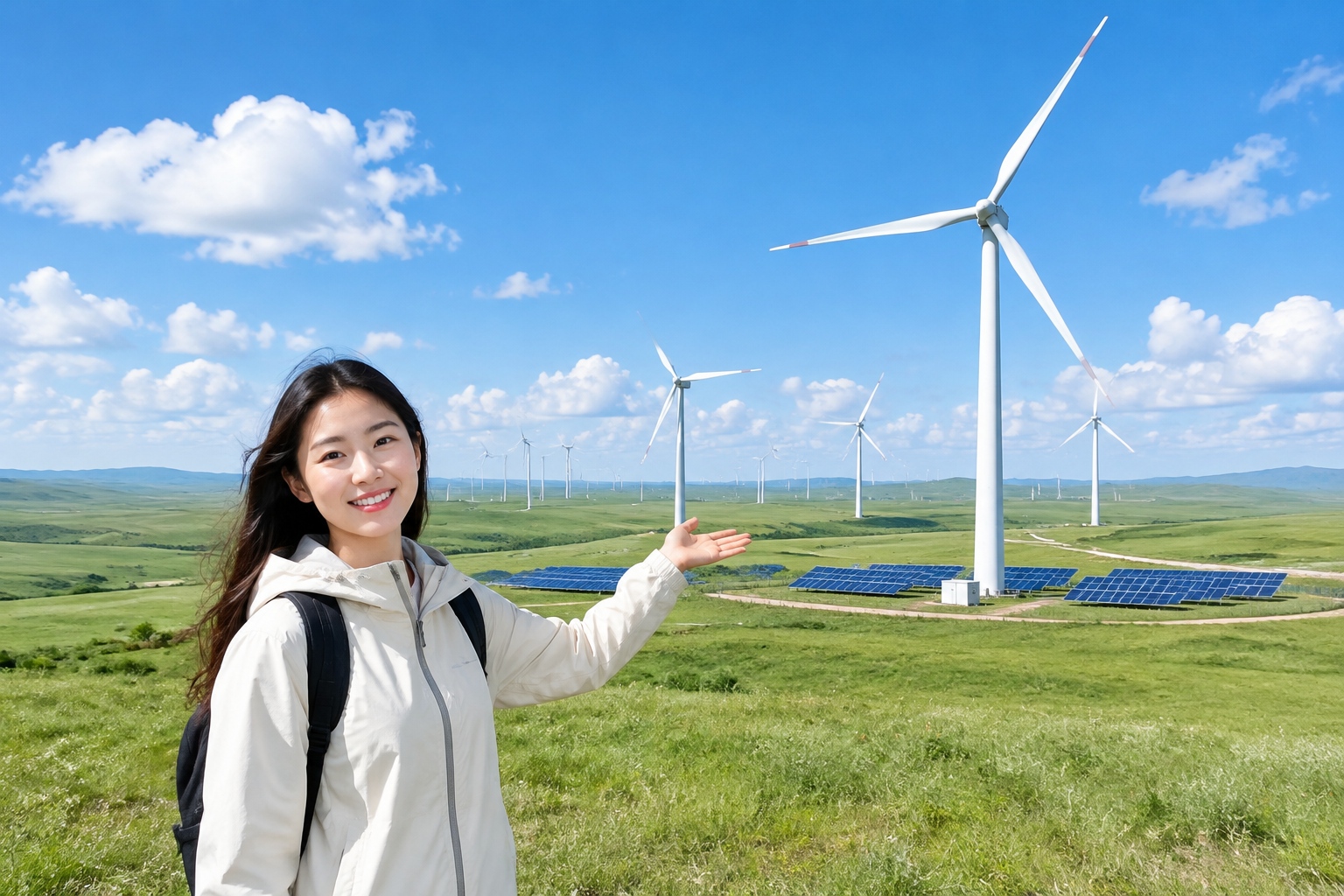
Cool air alone is not enough. Data centers are voracious consumers of electricity. A single large facility can draw as much power as a small town. Ulanqab’s second advantage is its abundant renewable energy. The city sits in one of China’s windiest regions, and its vast grasslands also receive plentiful sunshine. Over 40 percent of the local electricity grid now comes from wind and solar. The city government has actively encouraged data centers to sign long‑term green power purchase agreements, locking in electricity prices that are 30‑40 percent lower than the national average.
In 2022, Apple announced that its Ulanqab data center would be powered entirely by renewable energy, matching its global commitment to a carbon‑neutral supply chain. “We chose Ulanqab not just because it’s cold, but because it’s clean,” said a company spokesperson in a press release. “The combination of low‑carbon energy and low‑latency connectivity to Beijing makes it an ideal location.”
Latency is the third piece of the puzzle. Ulanqab is about 340 kilometers northwest of Beijing, connected by high‑speed fiber optic cables. The round‑trip network delay between the two cities is under 10 milliseconds — fast enough for real‑time applications like cloud gaming, autonomous driving simulation, and financial trading. This proximity to China’s largest consumer market, combined with the cost advantages of the interior, creates a unique value proposition.
From Prairie to Server Aisle: The Human Story
For local residents, the data center boom has brought visible change. On the outskirts of town, what was once horse pasture now hosts rows of white server buildings, each the size of a football field. Li Na, a 28‑year‑old network engineer who grew up in Ulanqab, returned to her hometown after college. “When I told my classmates I was going to work at a data center, they thought I was joking. They said, ‘What’s a data center doing on the prairie?’” she laughs. “Now many of them are applying for jobs here. The pay is competitive with Beijing, but the cost of living is much lower.”
According to the local government, the data center industry has created over 10,000 direct jobs in Ulanqab, many of them in technical fields such as server maintenance, network operations, and cybersecurity. Ancillary businesses — construction, logistics, catering, and housing — have also boomed. The city’s GDP grew by 8.2 percent in 2023, outpacing the national average.
But the transformation is not without challenges. Water scarcity is a growing concern. Although Ulanqab uses air‑side economizers for most of the year, some evaporative cooling systems still require water. The city has responded by investing in water‑recycling technologies and shifting to closed‑loop cooling systems. Another challenge is the need for a skilled workforce: many technicians still need to be recruited from outside the region, and the local education system is racing to train more talent.

What Ulanqab Means for the Global Data Center Industry
Ulanqab’s story is part of a larger global trend: data centers are moving to places where energy is cheap and climate is cool. Iceland, the Nordic countries, and the American Pacific Northwest have all attracted similar investments. But Ulanqab is distinct because of its scale and speed. In less than a decade, a city that was barely on the tech map has become a critical node in one of the world’s largest digital economies.
For international readers, Ulanqab offers a window into how China is solving the tension between economic growth and environmental constraints. By locating data centers in the windy, cold interior, the country can reduce the carbon footprint of its digital infrastructure while also developing the inland economy. It’s a balancing act that many other nations are also trying to achieve.
As Zhang Wei, the engineer, prepares to head home after his shift, he glances at the sky. The wind turbines on the distant hills are spinning steadily. “This is the future,” he says. “The data flows like a river, and the wind keeps it running.”
Start the discussion at forum.chinacomes.com